
Oxford Events
Stage Watch: The Hunger Games, The Price, Kinky Boots, Death Note & Operation Mincemeat


Welcome to your round-up of unmissable West End and touring theatre.
From epic dystopian battles to heart‑stopping musicals and unforgettable West End sensations, this edition of Stage Watch rounds up the hottest shows coming to London and Oxford stages.
The Hunger Games: On Stage
Troubadour, Canary Wharf Theatre, London. On sale from 09 March 2026.
The first-ever stage adaptation of Suzanne Collins’ internationally acclaimed novel and Lionsgate blockbuster film is here. Brought to life by an award-winning creative team including playwright Conor McPherson and director Matthew Dunster, The Hunger Games: On Stage immerses audiences in the high-stakes world of Panem.
Step into a dystopian future where 24 young tributes are pitted against one another in a deadly arena, and every choice is a matter of life or death. Katniss Everdeen emerges as a fearless heroine whose courage and ingenuity ignite rebellion against a ruthless Capitol. Expect jaw-dropping set designs, intense fight sequences, and cutting-edge lighting and sound that pull you straight into the arena. This production promises a gripping theatrical experience, combining the tension of the original story with the immediacy and intimacy of live theatre.
Best for: Fans of epic adventure, action-packed storytelling, and the Hunger Games saga.
Tips: Arrive early to soak in the immersive atmosphere of the theatre; the staging is intricate and best appreciated from the first row of your section.

The Price
Marylebone Theatre, London. 17 April to 17 June.
Arthur Miller’s searing family drama returns in an exclusive production starring two-time Olivier Award-winner Henry Goodman alongside Faye Castelow, Elliot Cowan, and John Hopkins. The Price explores the complex, often painful dynamics of family relationships, as estranged brothers reunite to sell their late father’s possessions in a cluttered New York attic.
What begins as a simple transaction transforms into a fierce emotional reckoning. Decades of resentment, sacrifice, and hidden truths surface, creating tension, heartbreak, and moments of dark humour. Under the direction of a meticulous creative team, this production showcases Miller’s astute observations on human behaviour, morality, and the weight of personal decisions. Expect a psychologically rich evening that lingers long after the curtain falls.
Best for: Lovers of classic drama, character-driven stories, and powerful performances.
Tips: Ideal for those who enjoy reflective theatre and nuanced storytelling; seating close to the stage enhances the intimacy of this emotionally charged production.

Kinky Boots
The Coliseum, London. From 17 March 2026. Save up to 40%
Fall head over heels with Kinky Boots, the multi-award-winning musical based on a true story, now returning in a brand-new West End production. Starring Strictly Come Dancing’s Johannes Radebe and multi-platinum-selling Matt Cardle, this joyous, uplifting show bursts with vibrant energy, dazzling costumes, and heartfelt storytelling.
Follow Charlie and Lola as they save a struggling shoe factory with a bold vision and an unexpected partnership with drag queen sensation Lola. Featuring Tony and Grammy Award-winning music and lyrics by Cyndi Lauper and a hilarious book by Tony Award-winner Harvey Fierstein, Kinky Boots is a rollercoaster of laughter, emotion, and unforgettable songs. From high-energy ensemble numbers to intimate moments of reflection, the production celebrates courage, authenticity, and the power of friendship.
Best for: Fans of feel-good musicals, high-energy dance, and inspiring true stories.
Tips: Book early for premium seats to fully appreciate the choreography and costume details; stay for the finale – it’s a showstopper.

Death Note: The Musical
Barbican Theatre, London. From 30 July 2026.
Based on the legendary manga phenomenon by Tsugumi Ohba and Takeshi Obata, Death Note: The Musical arrives in London after critically acclaimed productions in Japan and Korea. With over 30 million copies sold worldwide, the story of Light Yagami—a student who gains the power to decide who lives and dies—is a globally recognised cultural phenomenon.
Reimagined for the London stage in collaboration with original Japanese producers HoriPro, this production features an electrifying score by Tony, Grammy, and Emmy nominee Frank Wildhorn, lyrics by Jack Murphy, and a book by Ivan Menchell. Audiences can expect a thrilling blend of suspense, moral dilemmas, and dazzling stagecraft, with dynamic choreography and intense performances that bring the psychological tension of the original story vividly to life. It’s a bold, immersive theatrical experience that challenges your perception of justice, power, and consequence.
Best for: Fans of dark thrillers, anime enthusiasts, and lovers of innovative, visually striking musicals.
Tips: Keep track of every detail—this show is packed with plot twists and subtle visual cues that reward careful attention.

Operation Mincemeat: A New Musical
New Theatre Oxford. 31 March to 04 April 2026.
Olivier Award-winning Operation Mincemeat is a fast-paced, hilarious retelling of one of the most audacious true stories of World War II. Following a record-breaking West End run with 77 five-star reviews, this Tony-nominated musical is now delighting audiences in Oxford.
In 1943, the Allied forces gamble on a stolen corpse, a fake love letter, and an unlikely cast of characters to deceive Hitler and change the course of the war. Equal parts Singin’ in the Rain and Strangers on a Train, the production is packed with chaotic humour, clever staging, and show-stopping musical numbers that make history both thrilling and absurdly funny. Expect a story told with wit, heart, and theatrical ingenuity, where every moment brims with energy and suspense.
Best for: History buffs, fans of dark comedy, and lovers of inventive musical theatre.
Tips: The rapid pace of the show rewards attention to detail – catch every witty aside and musical gag for maximum enjoyment.
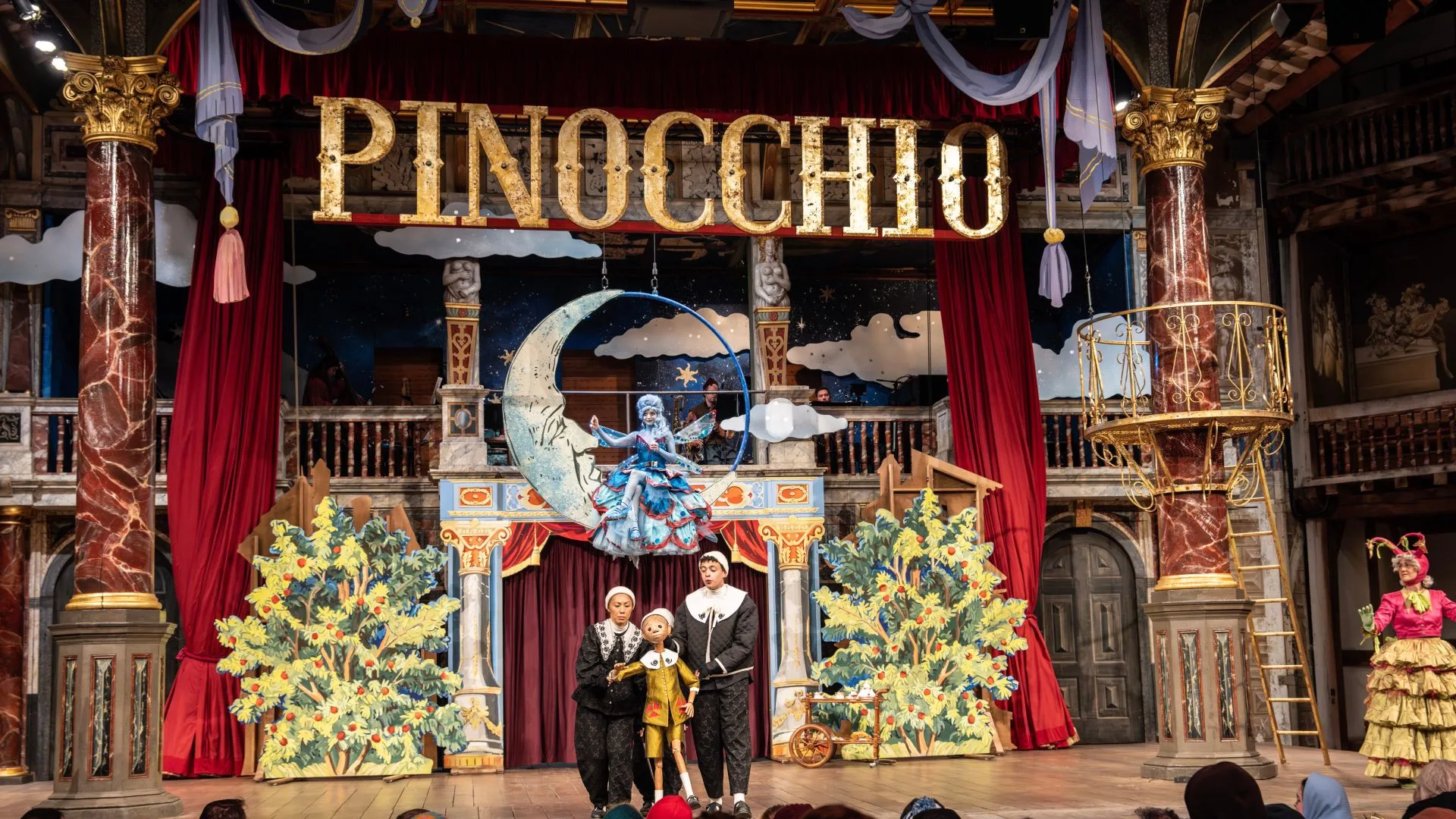
From a timeless fairytale reimagined at Shakespeare’s Globe to a much-loved children’s classic returning to the stage, this season’s theatre line-up moves between family entertainment, literary adaptation, celebrity-led drama and the enduring pull of a cinematic favourite.
There is plenty here for audiences looking beyond the obvious, too: Affluenza brings a rising television star to the London stage for the first time, while Ballet Shoes revisits a beloved story about three young women determined to make their own way in a world that expects something different of them. And for anyone who simply wants a great night out, Dirty Dancing brings one of cinema’s most recognisable romances back to Oxford.
Pinocchio
Globe Theatre, London.
Booking from 28 Nov 2026 to 03 Jan 2027. Tickets from £6.00
The story of the wooden puppet who longs to become human receives a fresh musical treatment at Shakespeare’s Globe, with Pinocchio placing Geppetto and his creation at the heart of a tale about family, belonging and the desire to escape the confines of an expected life.
Written by Charlie Josephine, whose previous work includes I, Joan at the Globe and Cowbois at the Royal Court, with music and lyrics by Jim Fortune, the production promises a distinctly theatrical take on the familiar story. Geppetto is presented as a restless maverick dreaming of a life beyond his traditional town; together, he and Pinocchio embark on a journey that becomes as much about discovering what it means to be human as it is about adventure.
Directed by Globe Associate Artistic Director Sean Holmes, the production combines live music with the kind of exuberant humour that should make it an appealing festive choice for a mixed-age audience. Previous productions have attracted four-star notices from The Telegraph, The Guardian, The Independent and The Reviews Hub, with WhatsOnStage describing it as a “beautiful new musical”.
Best for: Families looking for a substantial festive theatre experience, fans of inventive musical theatre, and audiences who enjoy classic stories with a contemporary sensibility.
Tips: The running time is approximately 2 hours 10 minutes including an interval. Age guidance is 5+, making it particularly suited to families with primary-school-age children and upwards.
Peppa Pig’s Big Family Show!
Theatre Royal Haymarket, London.
Booking from 04 Dec 2026 to 03 Jan 2027. Tickets from £12.00. Save up to 44%
Christmas at the theatre gets a distinctly oinktastic makeover as Peppa Pig and her family return to the Theatre Royal Haymarket in a new live adventure. This time, there is a new arrival on the way, and Peppa, George, Mummy Pig and Daddy Pig have a house to prepare before baby Evie arrives.
The premise is deliberately close to the everyday world familiar to the show’s youngest fans: there is building, decorating and plenty to organise, with the audience invited to help the family get everything finished in time. Music, adventure and surprises provide the theatrical framework, turning a recognisable television world into an accessible first stage experience.
At around 1 hour 20 minutes including an interval, it is also sensibly paced for younger theatre-goers. The production allows babies under 12 months to sit on an adult’s lap without a ticket, while prams and buggies can be left in the theatre cloakroom, subject to space.
Best for: Pre-school and early-years audiences, first-time theatre-goers, and families looking for an easy introduction to live performance.
Tips: The short running time makes this one of the more manageable family theatre outings. Babes in arms are permitted, although cloakroom space for collapsed prams and buggies is limited.
Affluenza
Riverside Studios, Studio 2, London.
Booking from 26 Sep to 21 Nov 2026. Tickets from £30.00
Noah Schnapp, best known for playing Will Byers in Stranger Things, makes his professional stage debut in Affluenza, a drama set among the ultra-wealthy world of the Hamptons. He appears alongside Janette Manrara, Juliet Cowan, Wallis Currie-Wood and Rupert Young.
The play takes its starting point from the controversial idea of “affluenza” — whether extreme privilege can distort a person’s understanding of responsibility and right and wrong. A teenager’s drunken car journey ends in devastation, leading to a legal case that raises uncomfortable questions about wealth, family influence and the workings of the American justice system.
Rather than treating privilege simply as a backdrop, Affluenza looks at its consequences: the expectations inherited through family, the power available to those who possess it and the moral choices made when wealth changes the rules. Schnapp’s stage debut adds another layer of interest, particularly for audiences familiar with his television work.
The production is part of a five-play season at Riverside Studios, with further creative and casting information still to be announced.
Best for: Audiences interested in contemporary drama, stories about wealth and privilege, and those curious to see a familiar screen actor take on the stage for the first time.
Tips: Running time, age guidance and content warnings are yet to be confirmed, so check the theatre’s information before booking. The subject matter suggests a more serious and potentially challenging evening than the family productions elsewhere in this selection.
Dirty Dancing
New Theatre Oxford.
06 to 10 Oct 2026. Tickets from £19.69
Some films become so embedded in popular culture that their stories seem almost impossible to separate from the music that accompanies them. Dirty Dancing is one of them, and its stage incarnation returns to Oxford with the romance of Baby and Johnny, the heat of summer and a soundtrack packed with songs that have become cultural touchstones.
The story follows Baby and Johnny, two fiercely independent young people from very different worlds whose meeting transforms what should have been an ordinary summer. The stage production recreates that emotional collision through dance, music and the familiar story of rebellion, first love and self-discovery.
For fans of the original film, much of the appeal lies in the soundtrack: Hungry Eyes, Hey! Baby, Do You Love Me? and, inevitably, The Time of My Life all feature. But the production also leans heavily into its live theatrical energy, with a large cast of dancers bringing the choreography and physicality of the story into the theatre.
With a running time of just over two hours including an interval, this is the most straightforwardly nostalgic choice of the five — a production designed to send audiences out humming the soundtrack.
Best for: Fans of the original film, musical theatre audiences, dance lovers and anyone after a feel-good evening of romance and nostalgia.
Tips: The production contains the songs and dance moments audiences will be expecting, but its appeal is rooted in the emotional story as much as the spectacle. At New Theatre Oxford from 06 to 10 October, it is the obvious choice for a big-screen classic brought into a live setting.
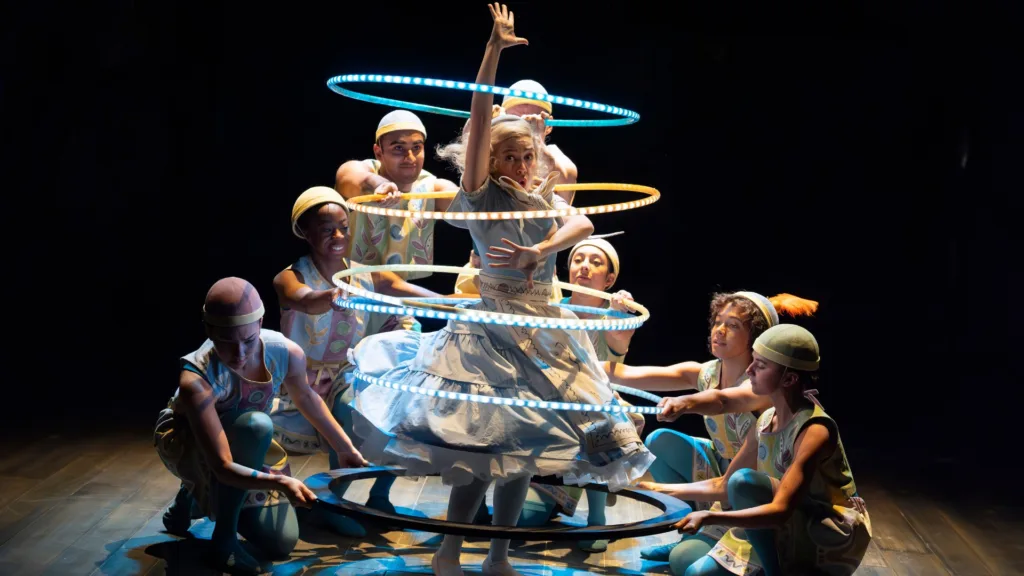
Ballet Shoes
New Theatre Oxford.
05 to 08 Jan 2028. Tickets on sale from 24 Sep
Noel Streatfeild’s Ballet Shoes returns in a new stage adaptation that puts ambition, sisterhood and female independence at the centre of its story. Adapted by Kendall Feaver and directed by Katy Rudd, this reimagining brings a beloved children’s classic into the theatre while retaining the spirit of the original.
Set in a crumbling house filled with dinosaur bones and fossils, the story follows three adopted sisters — Pauline, Petrova and Posy — as they grow up and begin to discover distinct ambitions of their own. Under the guidance of their guardians and an assortment of unlikely lodgers, each must find a way to pursue what she loves while helping to keep the family together.
What gives the story enduring appeal is the contrast between the sisters. Their ambitions are not identical, and neither are their routes into adulthood. Against a world that places limits on women’s choices, Ballet Shoes becomes a story about finding an identity, supporting the people around you and refusing to let circumstances dictate the size of your dreams.
The production has been described by The Guardian as “spectacular”, with Rudd — whose credits include The Unlikely Pilgrimage of Harold Fry and Nanny McPhee — directing the adaptation. Casting is still to be announced, with a note that Anton Du Beke will not appear in any performances.
Best for: Families, fans of classic British children’s literature, and audiences drawn to stories of ambition, sisterhood and finding your own path.
Tips: The Oxford run is scheduled for January 2028, with general sale opening on Thursday 24 September. Casting is still to be announced, so the eventual line-up will be worth watching as the production develops.
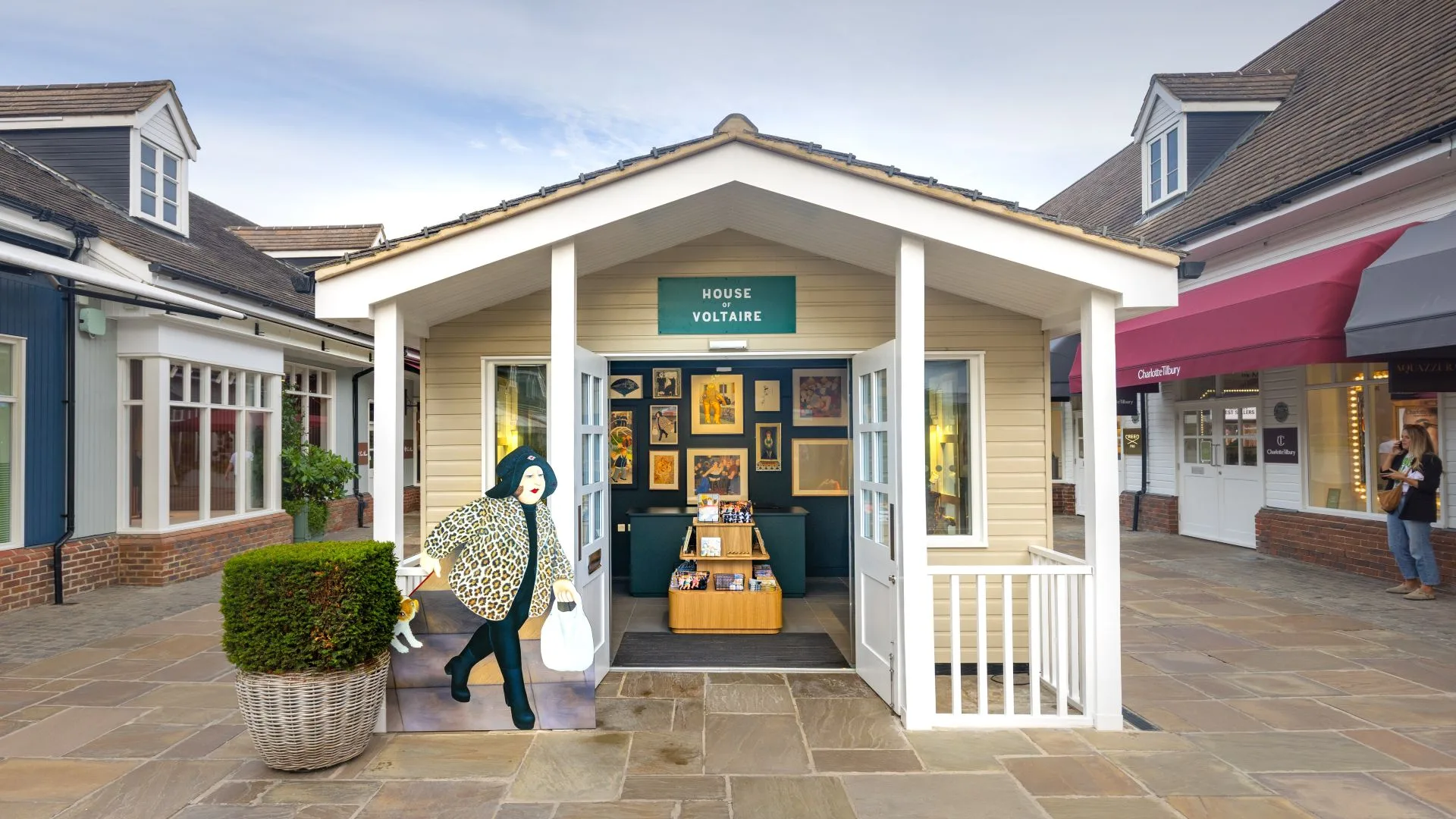
Beryl Cook and Friends brings the much-loved British artist’s exuberant characters out of the frame and into the Oxfordshire landscape, marking what would have been her 100th birthday.
There is something particularly fitting about encountering Beryl Cook’s characters somewhere people have come to enjoy themselves.
A woman in a flamboyant dress appears among the shops. Elsewhere, figures garden, dance, shop and socialise. A pigeon watches from the greenery, while dogs and cats join the cast. Around them, visitors continue on their own journeys through Bicester Village.
For the next few weeks, Cook’s world has become part of the Oxfordshire landscape.
Beryl Cook and Friends, presented by House of Voltaire and Bicester Village, opened on 10 September — the day Cook would have turned 100 — and transforms the mile-long shopping destination with life-size cutouts, murals and installations drawn from some of her best-known paintings.
Cook, who died in 2008, became one of Britain’s most recognisable artists during the 1970s. Largely self-taught, she developed a visual language that was immediately distinctive: colourful, boldly drawn characters caught in moments of pleasure, mischief and everyday life.
Her subjects were rarely grand. They ate, drank, danced, shopped, gardened and went out. Yet Cook had an instinct for finding something theatrical in the ordinary.
That quality makes the Bicester installation particularly effective.
Rather than asking visitors to stand in front of a painting and look in, the project places them inside Cook’s world. Her characters occupy benches, balconies, green spaces, signposts and other parts of the Village, creating unexpected encounters as visitors move through the site.
One of the most recognisable installations is a full-scale recreation of Breakfast at Elvira’s, Cook’s 1996 painting inspired by the neighbourhood café originally run by her son and daughter-in-law.
It is the kind of scene that lends itself naturally to photography — and to the playful interaction that has always been part of the appeal of Cook’s work.
Visitors can pose alongside the characters, while other details are easier to discover by simply wandering. Look closely and the installation extends beyond its human figures, with Cook’s characteristic animals appearing among the trees and planting.
The project also places Cook in conversation with artists working today.
A House of Voltaire pop-up features editions and merchandise alongside specially commissioned work by artists and designers including Ashish, Jeremy Deller, Patrizio di Massimo, Anthea Hamilton, Chantal Joffe, Ella Kruglyanskaya, Linder and France-Lise McGurn.
Works by Stanley Spencer and Louis Wain, two artists who influenced Cook, provide a further connection between her work and the wider history of British art.
It is an approach that reflects the renewed interest in Cook’s work in recent years. A 2024 Studio Voltaire exhibition, Beryl Cook / Tom of Finland, became the organisation’s most visited exhibition in its history, while a retrospective at The Box in Plymouth earlier this year drew record audiences.
The centenary project therefore arrives at a moment when Cook’s work is being reconsidered by a new generation.
There is a more lasting legacy to the Bicester project, too.
The collaboration marks the beginning of a three-year partnership between Bicester Village and Studio Voltaire, providing funding for the arts organisation’s Learning Programme. The programme works with schools, colleges and community groups, offering free artist-led workshops, drop-in activities and skills development.
That makes the installation more than a seasonal visual intervention. Alongside the commercial and cultural spectacle, the partnership is intended to create opportunities for people who might otherwise have limited access to creative activities.
For Cook’s family, meanwhile, there is an obvious personal resonance to seeing her characters populate the Village.
Her granddaughter Sophie Howe has described the project as a playful tribute to an artist who loved watching people enjoy themselves, laugh and dress up.
It is perhaps the simplest way to understand why Cook’s work continues to lend itself so readily to public spaces.
Her paintings were never really about perfection. They were about people — often imperfect, frequently outrageous and usually having a good time.
At Bicester Village, those people have stepped out of the paintings.
For visitors wandering between the shops and cafés this autumn, Cook’s characters are no longer confined to a canvas. They are waiting around the next corner, sitting in the garden, appearing above a doorway or sharing the pavement.
And, 100 years after Cook’s birth, they are still enjoying themselves.
The Beryl Cook and Friends installation runs from 10 September to 25 October 2026. Bicester Village is open Monday to Friday from 9.00am to 8.00pm, Saturday from 9.00am to 9.00pm and Sunday from 10.00am to 7.00pm.
Oxford Events
Stage Watch: Avenue Q, White Rabbit Red Rabbit, I’m Every Woman, As You Like It & Tosca
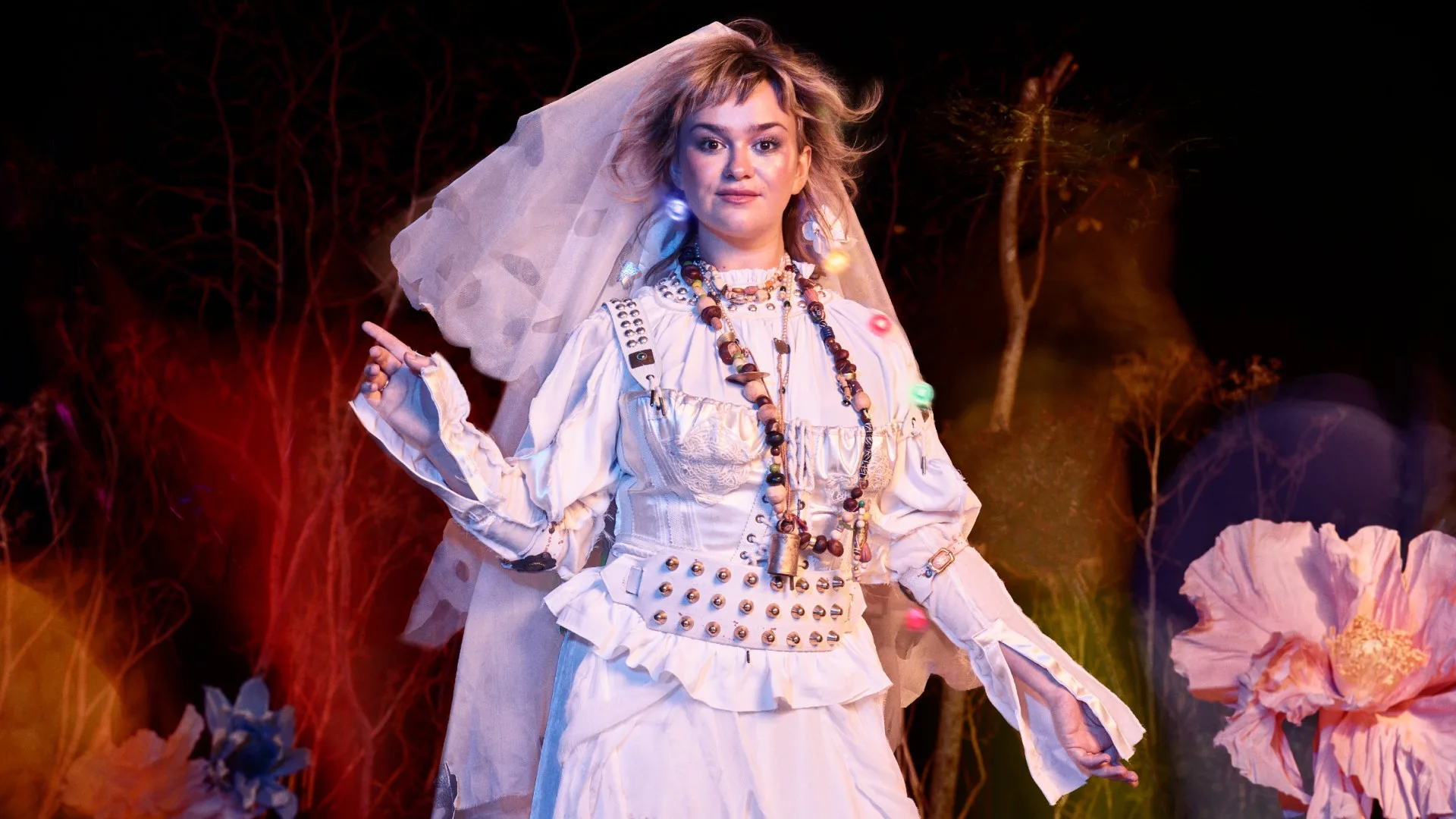
Stage Watch brings together a curated selection of upcoming theatre, musicals, opera and live performance from London and across the broader Oxfordshire region – from returning West End favourites and bold Shakespearean reinventions to experimental theatre and major operatic productions.
This selection moves between the exuberance of musical theatre, the intimacy of a one-off theatrical experiment and the timeless drama of Shakespeare and Puccini. There are puppets and pop anthems, a forest transformed into a festival, and an opera bringing an international cast and the Oxford Philharmonic Orchestra to the New Theatre Oxford. Together, they offer five very different reasons to make a date with the stage this week.
1. Avenue Q
Shaftesbury Theatre, London. Booking until 3 January 2027.
Two decades after first making its mark in the West End, Avenue Q returns to the Shaftesbury Theatre with its gloriously irreverent mix of puppetry, musical comedy and distinctly adult humour.
Fresh out of college and uncertain about what comes next, Princeton arrives on New York’s rundown Avenue Q, where he encounters a colourful collection of neighbours grappling with work, relationships, money and the awkward business of becoming an adult. Beneath the jokes and infectious musical numbers is a surprisingly warm story about finding your place in the world.
The production reunites original Broadway director Jason Moore and original puppet designer Rick Lyon, bringing back the distinctive combination of human performers and puppets that helped make the show a theatrical phenomenon. With music and lyrics by Robert Lopez and Jeff Marx, Avenue Q remains knowingly mischievous while retaining an affection for its flawed, lovable characters.
Best for: Fans of musical comedy, unconventional theatre and shows that are decidedly not aimed at children.
Tips: This is adult-themed musical theatre despite the puppets, with strong language and mature content. The age recommendation is 13+ and running time is approximately 2 hours 15 minutes, including an interval.

2. White Rabbit Red Rabbit
Duchess Theatre, London. Booking until 2 November 2026.
Few theatrical experiences begin with quite this much uncertainty. White Rabbit Red Rabbit, Nassim Soleimanpour’s celebrated theatrical experiment, returns to the West End for its 15th anniversary – and no performer knows exactly what awaits them.
Each performance begins with an unopened envelope containing a script the actor has never seen. There is no rehearsal and no director guiding the action. Instead, the performer encounters the work for the first time alongside the audience, creating a theatrical event that can never quite be repeated.
First performed in 2011 and subsequently translated into more than 30 languages, the play uses its unusual premise to explore obedience, choice, power and freedom of expression. Its origins in contemporary Iran give the experiment a deeper political and philosophical dimension. At the same time, its deliberately unpredictable structure makes the relationship between actor and audience part of the drama itself.
The rotating line-up adds another layer of intrigue, with performers including David Harewood, Mel Giedroyc, Adam Buxton, Christopher Eccleston, Riz Ahmed, Nish Kumar and John Bradley among those taking on the challenge.
Best for: Curious theatre-goers, lovers of experimental performance and anyone looking for something genuinely unpredictable.
Tips: Every performance is different, so the choice of performer can be part of the attraction. The production is recommended for ages 14+ and contains themes that may be unsettling. Running time is approximately 60–70 minutes, without an interval.
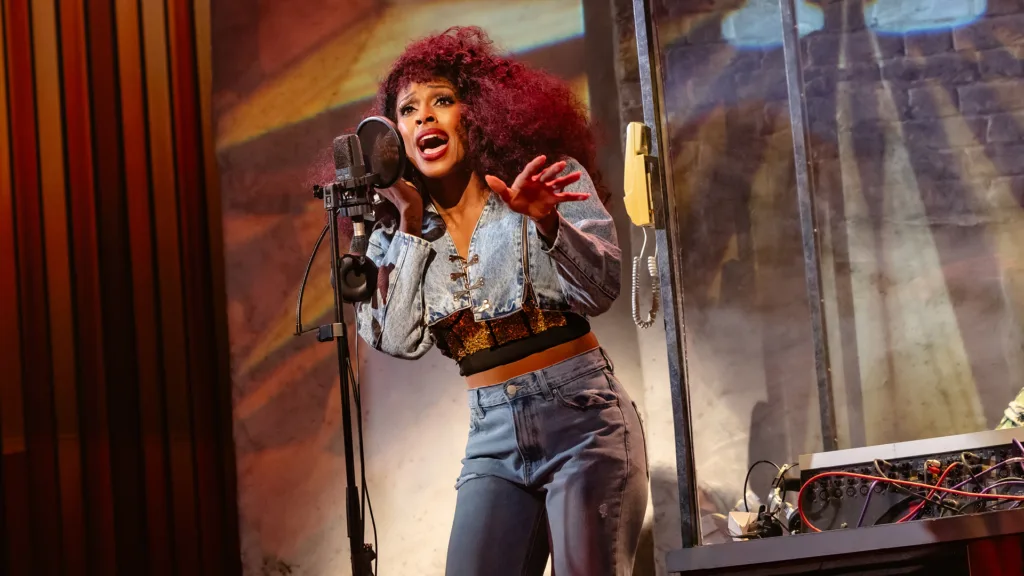
3. I’m Every Woman – The Chaka Khan Musical
Troubadour Wembley Park Theatre, London. Booking until 27 September 2026. Save up to 59%.
The extraordinary career of Chaka Khan comes to the stage in I’m Every Woman, a new musical tracing the life, music and resilience of one of popular music’s defining voices.
With 22 albums, 25 chart hits, 70 million records sold and a career spanning five decades, Khan’s story provides plenty of material for a large-scale musical. Alexandra Burke takes on the central role, bringing her own formidable vocal credentials to a production built around songs including I Feel for You, Tell Me Something Good, Ain’t Nobody, Sweet Thing and Through the Fire.
But this is intended to be more than a concert with a narrative attached. The production explores the woman behind the superstar – from her rise to international fame to the personal battles and pressures that accompanied life in the spotlight. Figures including Prince, Stevie Wonder, Joni Mitchell and Steve Winwood also feature in the story, placing Khan within the wider musical landscape she helped shape.
Directed by Racky Plews and choreographed by Ebony Clarke, the production promises a mixture of spectacle, biography and some of the most recognisable music of the past half-century.
Best for: Chaka Khan devotees, soul and R&B fans, and anyone who likes their musical biographies packed with big songs.
Tips: Alexandra Burke does not perform as Chaka Khan at Thursday evening performances, Saturday matinees or the Sunday 23 August performance, when Jordan Frazier takes the role. Running time is approximately 2 hours 40 minutes, including an interval.
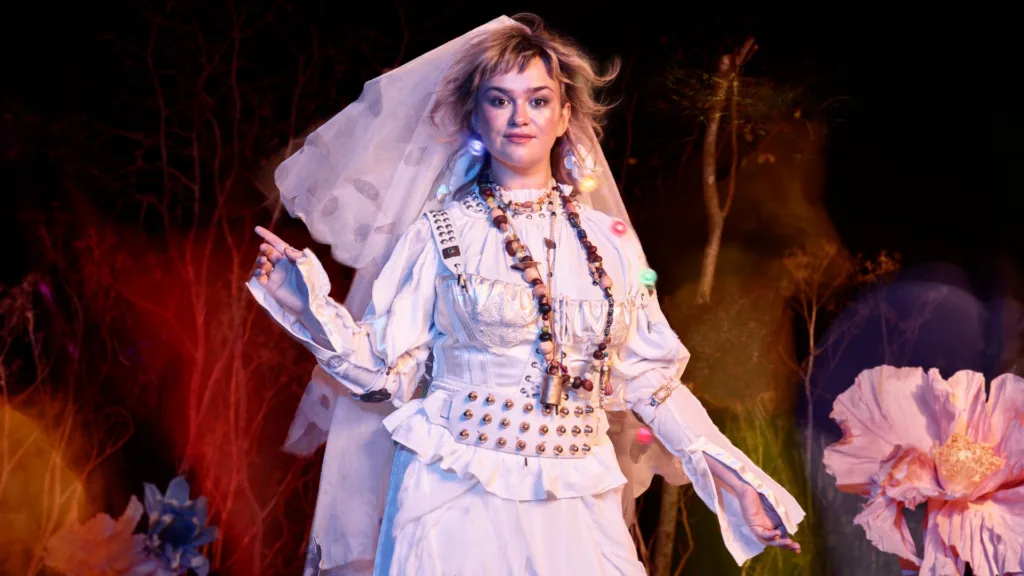
4. As You Like It
Globe Theatre, London. Booking until 25 October 2026. Tickets from £6.00. Save up to 44%.
Shakespeare’s Forest of Arden gets a distinctly contemporary makeover in this new As You Like It at the Globe, where the pastoral escape becomes something closer to a euphoric forest festival.
When Rosalind, Celia and their companions flee the restrictive world of the court, they find themselves in a place where conventional rules begin to loosen. In the Forest of Arden, identities shift, relationships flourish, and love becomes considerably less interested in social boundaries.
Co-directed by Sean Holmes and Charlie Josephine, this production promises an As You Like It driven by music, physicality and celebration. The Globe’s famously immediate relationship between actors and audience should lend particular energy to a comedy built around disguise, mistaken identity, desire and self-discovery.
The result is Shakespeare with its sense of playfulness firmly intact – a production that embraces the muddy, unruly spirit of the woods rather than treating Arden as simply a picturesque backdrop.
Best for: Shakespeare newcomers, seasoned Globe audiences and anyone drawn to lively, music-filled productions of the classics.
Tips: Expect a physical and celebratory interpretation rather than a traditional period piece. Running time is currently to be confirmed. Performances run until 25 October.

5. Tosca
New Theatre Oxford. Thursday 24 and Saturday 26 September 2026.
Few operas arrive with a cast quite as formidable as this new production of Puccini’s Tosca, coming to Oxford for just two performances.
Presented by Oxford International Opera, the fully staged production brings together Welsh bass-baritone Sir Bryn Terfel as the ruthless Scarpia and award-winning soprano Carmen Giannattasio as Tosca, with lyric tenor Saimir Pirgu making his UK debut in the role of Cavaradossi.
Set against the political turmoil of Rome, Puccini’s opera combines passion, jealousy, power and betrayal in a drama that moves with almost cinematic intensity. P Burton-Morgan directs a new production designed by Anthony Lamble, bringing the classic story into a modern setting while retaining its emotional force.
The musical forces are equally significant. Marios Papadopoulos conducts the Oxford Philharmonic Orchestra, which becomes an integral voice in the drama alongside the Oxford Philharmonic Choir and an international cast of singers. For Oxford audiences, it represents an unusually ambitious operatic event on home ground – and Terfel’s appearance as Scarpia carries particular significance as his final staged production of Puccini’s Tosca.
Best for: Opera newcomers and devotees alike, particularly those wanting to experience a major international cast with a leading British orchestra.
Tips: With only two performances in Oxford, this is one for the diary rather than the spontaneous theatre trip. The New Theatre hosts the production on Thursday 24 and Saturday 26 September 2026.


Aaron Ramsey gives Luka Lynch update after Oxford United absence

When is an ebike not an ebike? When it has a powerful, illegal engine. Get this menace off our roads | Peter Walker

Oxford United stars receive UEFA Nations League squad selection
-

 Oxford News3 weeks ago
Richard Hammond takes control of classic car company
-

 Business & Technology4 weeks ago
Apprentices say AI is reshaping tech skills demand
-
 Oxford News4 weeks ago
Royal Mail customer notice to anyone writing addresses by hand
-

 Business & Technology4 weeks ago
UK flight school collapsed into liquidation
-
 Oxford Events3 weeks ago
Stage Watch: Now You See Me, Comedy About Spies, Standard Of Living, Every Woman & Silence of Lambs
-

 Oxford Events3 weeks ago
What’s on in Oxfordshire this September
-

 Oxford Events3 weeks ago
Supercar invasion: Salon Privé 2026 to bring a slew of UK automotive debuts
-

 Oxford News3 weeks ago
King Charles applauded as Dragons’ Den star among 26 to lose MBE