
Traffic & Transport
Revealed: the new affordable commuter hotspots in Great Britain | Property

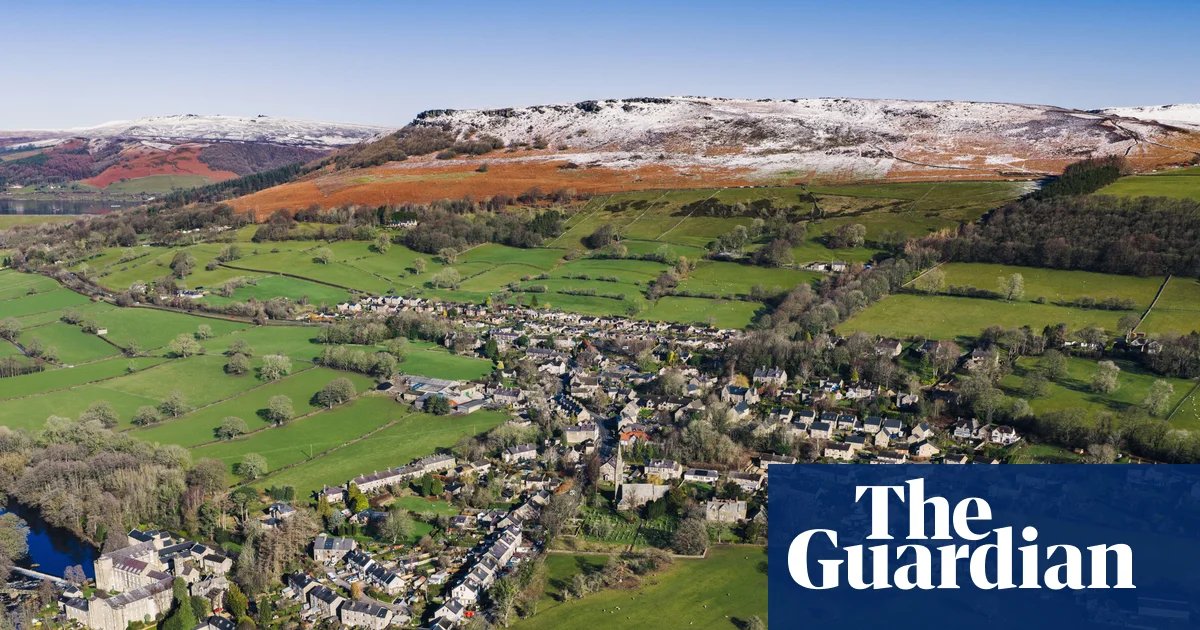
The commuter belt is being redrawn. During Covid, in the hope that remote working would stick, buyers broke free from conventions and transformed the housing map. A race for space – and to the coast and rural areas – were the stories of the pandemic.
As the call back to the office intensified, this trend unwound and homebuyers began targeting the more traditional commuter zones once again. Unfortunately, the homebuying landscape is very different to five years ago and some of those locations are unaffordable.
The cost of living is significantly higher, as are mortgage repayment costs. There is arguably little help now for first-time buyers and, while house prices in London have softened (in some areas), the capital remains entirely unaffordable for many.
Priced-out first-time buyers are competing with second and third steppers for homes in the commuter belt, and with downsizers who are relocating from rural locations to be close to transport links and grandchildren.
“Britain’s traditional commuter belts have shrunk back down after the pandemic, but they are not as compact as they were before, with buyers searching for value,” says Frances McDonald of Savills. That translates as being pushed into new areas where prices are still affordable.
“New infrastructure has driven changes, too,” she adds. As an example, she says: “The Elizabeth line has opened up the westerly home counties for those working in the City and Canary Wharf.”
Research from Savills shared exclusively with Guardian Money reveals the new affordable commuter hotspots – suburbs, towns and villages with a direct service into London, Birmingham, Manchester and Edinburgh. These are places where entrances and exits into the local railway station have soared since before the pandemic as commuters get cute and hunt out new locations that work for them.
The analysis takes railway station use and house prices into account and combines them to show which locations are proving popular and yet affordable in 2026.
London’s commuter belt
Travel time 19–29 minutes
Iver, Buckinghamshire
Train time: 24 minutes (into London Paddington). Season ticket cost: £2,868 a year. Average house price in 2025: £539,575
Iver ticks a lot of boxes. Average house prices reflect the fact it is in Buckinghamshire rather than Greater London. The Elizabeth line stops at Iver station (actually in neighbouring Richings Park) and reaches Canary Wharf in just over 40 minutes. There is a gym, a park, a village hall, a fish and chip shop, a primary school (with a “good” rating from Ofsted) and two pubs. It is part of a belt of villages: Iver Heath, Richings Park and Shreding Green, all to the north-east of Slough and all popular with commuters.
Shenfield, Essex
Train time: 23 minutes (into London Liverpool Street). Season ticket cost: £4,008 a year. Average house price in 2025: £656,159
The rail service from Shenfield into London is “turn up and go”, says Stephen White of Savills. “There is a train about every five minutes, so you don’t need to keep an eye on the time.” For first-time buyers, the cluster of flats around the station presents a chance to get on the ladder, with prices from £170,000, but it is mainly families buying in Shenfield and the wider Brentwood area, drawn by schools and green space. “We see a lot of buyers from Wapping, Islington and Shoreditch – often they have small children and want a larger home,” White says. There’s a four-bedroom detached house for sale for £850,000 on the edge of parkland, while the bigger five-bedroom properties break through the £1m threshold. There is better value for money in neighbouring villages, according to Paul Cromwell of Bairstow Eves. He suggests Pilgrims Hatch and Doddinghurst.
Twyford, Berkshire
Train time: 21 minutes (into London Paddington). Season ticket cost: £4,764. Average house price in 2025: £553,597
More expensive than Reading but cheaper than Henley-on-Thames or Marlow, Twyford has a village-like feel and a thriving scene of independent cafes, bars and restaurants. There are yoga studios, and the Bia Cycling Club (women only) takes to the surrounding lanes. Big events include the fete in the summer and a beer festival. House prices have ticked up with the arrival of the Elizabeth line, says Haydon Canavan of Grapevine estate agents. “This is a busy local market, with families moving out of London for the schools and to get more house for their money,” he says. Two-bedroom cottages start from £375,000 and three-bedroom, semi-detached homes from £600,000. The most desirable roads, London Road and Wargrave Road, are lined with big detached properties that cost more than £1m. The neighbouring village of Charvil is slightly cheaper and a 15-minute walk to the station.
Travel time 30–59 minutes
Prittlewell, Essex
Train time: 55 minutes (into London Liverpool Street). Season ticket cost: £5,120. Average house price in 2025: £295,326
The suburb of Prittlewell sits to the north of Southend-on-Sea and is home to Southend high school for boys and the university hospital, and close to the airport and open countryside. The Palace theatre is a short walk away, and it is under two miles to the seafront and Chalkwell Beach. Priory Park provides 18 hectares (45 acres) of green along with tennis courts, bowling greens, basketball courts and formal gardens. Just beyond the park is a Waitrose and the Garon Park golf complex. “Most buyers come from London, Ilford and Barking [and are] relocating to be close to the grammar schools,” says Mark Newman of Winkworth estate agents. “There are more houses on the market currently than flats.”
Folkestone West, Kent
Train time: 52 minutes (into London St Pancras International). Season ticket cost: £7,180. Average house price in 2025: £310,304
A cheaper and smaller alternative to Brighton, with a growing cultural scene. The maritime town is in the throes of a nine-hectare (23-acre) regeneration project transforming the old harbour and railway station into an entertainment and food hub. The promenade is now lined with bars and restaurants, live music venues and food stalls, and at the tip of the harbour arm is a champagne bar housed in the old lighthouse. Residential projects on the surrounding land are under way. For art galleries, head down the cobbled old high street. “Folkestone offers an ideal balance for those commuting two to three days a week,” says Claire Reene of Bairstow Eves. “We are seeing strong demand for period homes near the two train stations. As most buyers want easy access to transport, homes in town are selling faster than those in surrounding villages.” Average prices for semi-detached homes start from about £350,000 to £400,000, and detached homes from £450,000.
Colchester, Essex
Train time: 47 minutes (into London Liverpool Street). Season ticket cost: £6,700. Average house price in 2025: £285,722
Just south of the Suffolk border, commuters come here for access to London, Cambridge or Ipswich and to be surrounded by countryside. Known as Britain’s oldest recorded town, with its centre encircled by ancient Roman walls and an 11th-century castle, Colchester was upgraded to city status as part of the Jubilee celebrations in 2022. It is fast-growing with plenty of new-build developments on the edge. There is high demand for the villages of Great Bentley (with a 17-hectare, or 43-acre, village green) and Alresford (six miles south of the city), according to Simon Andrews of Abbotts estate agents. “We have highly sought-after schools in the area, too, such as Colchester Royal grammar school and St Mary’s Colchester,” he adds.
Sandy, Bedfordshire
Train time: 49 minutes (into London St Pancras). Season ticket cost: £6,152. Average house price in 2025: £310,337
For its size, Sandy has a lot of state primary schools and one secondary school (Sandy secondary school), all rated “good” by Ofsted, making it a convenient place for families to settle. “Buyers get a lot more for their money than in Hitchin and Stevenage, as it is slightly further out of London,” says Santino Diniro of Taylors estate agents (and Bedfordshire is generally cheaper than Hertfordshire). The number of schools is dwarfed by that of pubs and restaurants, including the 18th-century Queen’s Head, Pecoro (pizza restaurant) and the Indian restaurant the Ivory Lounge. The community comes together at the carnival and garden and craft show. There are after-school clubs and crystal workshops at the coffee shop Brew and Renew, and forest bathing at the Lodge – the RSPB’s headquarters. Michael Graham is selling a detached, four-bedroom, period property on the edge of town for £640,000.
Travel time 60–89 minutes
Corby, Northamptonshire
Train time: 71 minutes (into London St Pancras). Season ticket cost: £10,624. Average house price in 2025: £225,245
Corby used to be the largest town in England without a railway station. One was built in 2009, and the old industrial town has risen in popularity as a commuter destination ever since. It has plenty of green pockets – West Glebe Park and Great Oakley Park, for example – and it is a half-hour drive to Rutland Water. On the outskirts is Rockingham Forest Park, 200 square miles of ancient woodland. Investment has been poured into the town, namely the Corby East Midlands International Pool and the Cube – an innovative, award-winning civic hub that houses the council, the town hall, the library, arts exhibitions and shows. Homebuyers are attracted to the nearby villages: Little Stanion and Stanion, Great Oakley, Rockingham and Cottingham, says Chris Smith of William H Brown, who sees a lot of buyers signing up for new-build homes at the Priors Hall Park development on the edge of town.
Retford, Nottinghamshire
Train time: 87 minutes (into London King’s Cross). Season ticket cost: £14,504. Average house price in 2025: £212,487
On the east coast mainline, this market town works for those heading to London two to three days a week, as well as those commuting to Nottingham, Lincoln or Sheffield. Around the market square are cafes and restaurants; there’s bottomless brunch on offer at the Glass Lounge and vegan options at Honey & Fig. There are also local independent breweries such as The Brew Shed and traditional country pubs in the outlying villages. “While many value Retford’s fast east coast mainline services, more buyers are choosing surrounding villages – places such as Barnby Moor, Sutton cum Lound, East Markham and Clarborough – for character homes, bigger gardens and a strong sense of community,” says Roo Fisher of Savills. Local beauty spots include Clumber Park in Sherwood Forest and Idle Valley nature reserve. There are two “good” secondary schools in the town: the Elizabethan academy and Retford Oaks academy. In the heart of the town is a grand Georgian home on sale with five bedrooms for £695,000 with Fine & Country estate agents.
Travel time 90–119 minutes
Doncaster, South Yorkshire
Train time: 91 minutes (into London King’s Cross). Season ticket cost: £16,024. Average house price in 2025: £148,803
The LNER service options between Doncaster and London suit commuters making the trip to the capital a few times a week. Emma Power of Blundells estate agents says Doncaster attracts commuters who want value for money. She deals with buyers heading out into the villages of Sprotbrough, Cusworth, Armthorpe, Bessacarr, Cantley and Wheatley – all about 10 to 15 minutes from the centre and popular with cyclists because of the scenic routes. There is plenty to be excited about: “The St Leger [horse racing] festival attracts thousands of people to the racecourse each year, over four days, the airport (the Doncaster Sheffield airport) is expected to reopen in 2027-28, and the area is home to Yorkshire Wildlife Park.” She cites bucolic walks around Cusworth Hall and Potteric Carr nature reserve. Property in these villages is far more expensive than within Doncaster itself, with trophy homes that exceed the £1m mark.
Gloucester, Gloucestershire
Train time: 100 minutes (into London Paddington). Season ticket cost: £16,228. Average house price in 2025: £224,850
The stream of families relocating from London to the Cotswolds remains steady after the race for space. Gloucester is a gateway to the south Cotswolds but property here is more affordable than the celebrity-studded, golden area around Chipping Norton. Lucinda Eaton of the buying advisers Property Vision cites Painswick as an example of a chocolate box village close to Gloucester. The fastest trains from Gloucester and neighbouring Cheltenham take a similar time to arrive in London, and yet the average house price in Gloucester is more than £100,000 lower. There is a grammar school system in Gloucester: the boys-only (until sixth form) Sir Thomas Rich’s school, the girls-only (again until sixth form) Denmark Road high school, and the mixed Crypt school. The increase in commuters using Gloucester station reflects the shift west from Oxfordshire to Gloucestershire and Worcestershire for pretty villages at lower prices, Eaton says.
Birmingham
Wootton Wawen, Warwickshire
Train time: 43 minutes (into Birmingham Moor Street). Season ticket cost: £1,880. Average house price in 2025: £520,711
Wootton Wawen is south of Birmingham, beyond Redditch. It is one of a cluster of commuter villages. There is more value to be had in the surrounding villages, it seems. There is a three-bedroom cottage in almost 1.2 hectares (three acres) with a tack room and stables for £799,950, and a three-bedroom 1970s house for £325,000. The village sits on the River Alne and has two pubs, a primary school and the Yew Tree Farm Shopping Village.
Hartlebury, Worcestershire
Train time: 51/44 minutes (to Birmingham Moor Street and Snow Hill). Season ticket cost: £1,552. Average house price in 2025: £376,790
Worcestershire’s market towns and villages have become the Cotswolds of the Midlands, and are far more reasonable. The strip of villages to the north of Worcester also provides easy and quick access into the vast employment hub of Birmingham. Hartlebury is one such village. It has a castle and a common and several pubs (the Tap House and the Mitre Oak). Worcester is only a 20-minute drive away, while Kidderminster and Bewdley are on the doorstep. Wyre Forest nature reserve suits little explorers with a play park, while keen cyclists and walkers head to the Malvern Hills. There is a three-bedroom period cottage in Hartlebury listed on Rightmove for £260,000.
South Wigston, Leicestershire
Train time: 49 minutes (into Birmingham New Street). Season ticket cost: £3,972. Average house price in 2025: £249,811
Wigston is well placed to access London and Birmingham. The former requires a change at Leicester (only six minutes away on the train) while there is a direct service from South Wigston station to the capital of the Midlands. This suburb to the south of Leicester has plenty of period housing stock and a host of “good” primary schools to choose from, and several “good” secondary school options, too: Wigston Academy and Wigston College. Leicester grammar school is on hand. South Leicester rugby football club is based here and is a major part of the community. In terms of green space, there are country parks, the Grand Union canal and Glen Gorse golf club.
Manchester
Holmes Chapel, Cheshire
Train time: 42 minutes (into Manchester Piccadilly). Season ticket cost: £3,260. Average house price in 2025: £350,304
Harry Styles has put Holmes Chapel on the map. He grew up in the town – eight miles north of Crewe and 21 miles south of Manchester – and worked at the bakery. Last year, a mural of the superstar was unveiled at the station. “A walking tour has been established that starts at the station and leads to key sites tied to his youth,” says Crispin Harris of Jackson-Stops estate agents. But there is more to Holmes Chapel than Styles. The historic village has a medieval church and charming cottages. There’s a new artisan market, a doctor’s surgery and a secondary school (Holmes Chapel comprehensive school, ranked good). Four-bedroom detached houses start from about £425,000.
Styal, Cheshire
Train time: 43 minutes (into Manchester Piccadilly). Season ticket cost: £1,596. Average house price in 2025: £411,992
Styal is well positioned for Manchester airport as well as the city centre. The direct trains are less frequent and slightly slower than those running from neighbouring Wilmslow, which is classed as being part of the well-heeled Cheshire “Golden Triangle”. Andrew Thorpe of Savills says: “Styal is a popular and convenient spot and new-build property prices per square foot are about 25% cheaper than in Wilmslow. We see a lot of buyers moving back to the north-west from London, as well as families moving out of Manchester.” Styal sits near the banks of the River Bollin and is best known for its old cotton mill, now maintained by the National Trust. Many of the period cottages in the village were built for the mill workers in the late 18th and early 19th centuries.
Bamford, Derbyshire
Train time: 55 minutes (into Manchester Piccadilly). Season ticket cost: £3,560. Average house price in 2025: £523,615
This is one for climbers. In under an hour, commuters working in Manchester can be among the crags of the Peak District national park. Bamford, nestled in the Hope Valley, is surrounded by beauty spots: Ladybower reservoir, Hordron Edge stone circle and Bamford Edge, with popular routes up the latter’s jutting buttresses. The Hope Valley climbing and training centre is based in Bamford, too. The station for this village is a 15-minute walk away, which, not surprisingly, involves a hill. The social hub of the village is the Anglers Rest pub, owned by the community, and with a post office. There’s a primary school, a bakery and a village hall. “Bamford combines beautiful countryside living with practical convenience and great amenities. Properties here hold their price,” Jackson-Stops’ Harris says.
Edinburgh
Camelon, Stirlingshire
Train time: 36 minutes (into Edinburgh Waverley). Season ticket cost: £2,396. Average house price in 2025: £173,381
The old industrial village of Camelon has become a suburb of Falkirk, which lies in the Forth Valley between Scotland’s two biggest cities. “Even though Camelon has a direct rail service to Edinburgh and Glasgow (similar journey times for each) it has remained under the radar for many buyers until recently. Buyers are being drawn by housing that still feels very sensibly priced, as well as the rail network,” says Andrew Ligertwood of Strutt & Parker estate agents. “What often surprises people is how quickly the town gives way to open space,” he adds. The Forth & Clyde canal is close by, with walking and cycling routes and surrounded by parkland. There are plenty of places to eat without needing to go into Falkirk, such as the Canal Inn and the new restaurant Sea-Salt. Falkirk golf club is on the doorstep.
Fauldhouse, West Lothian
Train time: 36 minutes (into Edinburgh Waverley). Season ticket cost: £2,224. Average house price in 2025: £155,947
Fauldhouse is one of a strip of villages running alongside the A71 as it heads south-west out of Edinburgh, and is enveloped entirely by green and blue spaces, such as Polkemmet country park, Greenburn golf club and Cobbinshaw reservoir. The last is a site of special scientific interest and an important spot for pink-footed geese (and anglers). Overlooking the golf course is a bar and lounge at the golf club, and the Flagstick restaurant is next door. In the centre of the village is the Heatherbell Inn, a community centre and two primary schools. According to Ligertwood, Fauldhouse, and the neighbouring village Addiewell (also with a direct train line to Edinburgh), offer good, family-size homes, on the edge of open countryside. “These places are increasingly becoming considered moves rather than compromises.”
Stirling, Stirlingshire
Train time: 39 minutes (into Edinburgh Waverley). Season ticket cost: £2,396. Average house price in 2025: £215,224
In the centre of Scotland, and the gateway to the Highlands, Stirling is a historic city with a vibrant cultural scene. It appeals to students, first-time buyers, families and downsizers alike. Stirling Castle was the childhood home of Mary, Queen of Scots, and has views across the town and to the River Forth. There’s the National Wallace Monument and the Stirling Smith Art Gallery & Museum, and a string of festivals, from whisky and literature to beer and vegan food. “Stirling remains a firmly established commuter town and is emerging as a great alternative to Edinburgh for those buyers priced out of the capital,” Ligertwood says. “Kings Park is a favourite with families – a Victorian conservation area, with good schools, sports clubs and a hospital,” he adds.
Methodology
Savills worked out the best-value areas for housing with a station, and a direct line to London, Birmingham, Manchester or Edinburgh, that have seen station entry and exit numbers exceed their pre-pandemic levels – an indication of demand. Train times quoted are fastest journeys. Data sources: National Rail, Office of Rail and Road, Land Registry
Traffic & Transport
Number of cloned number plates on UK roads at record high, data shows | Transport
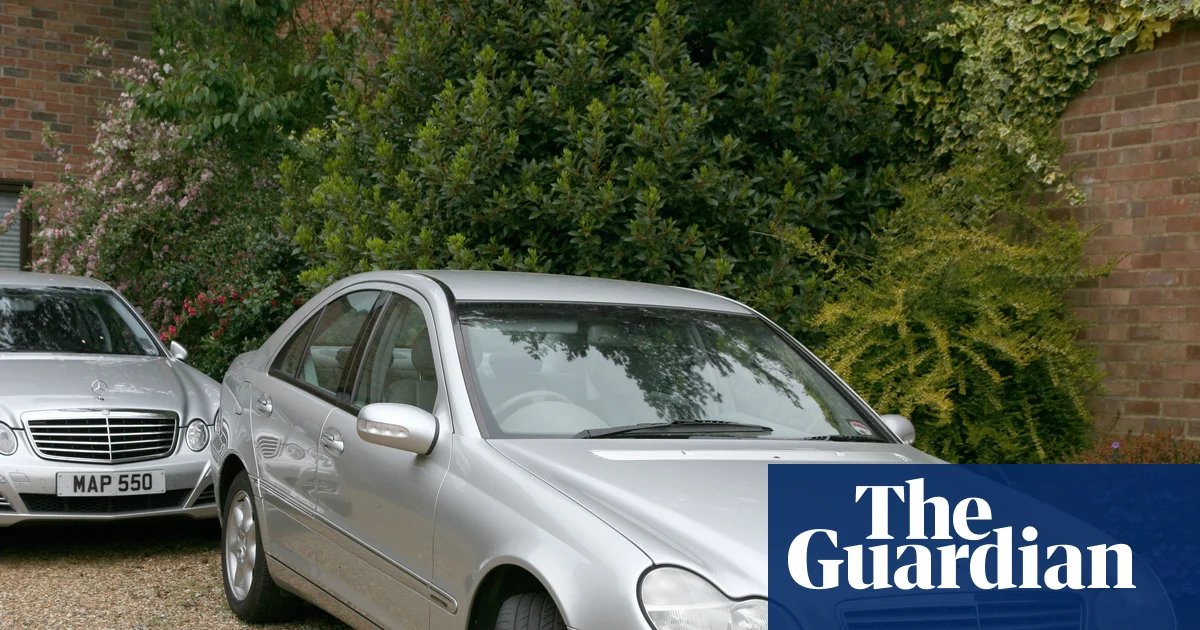
The number of reported “cloned” vehicles involved in offences on UK roads has reached a record high, official data shows.
More than 11,400 drivers contacted the DVLA last year after being issued with fines for offences they said they did not recognise or accept responsibility for – most of which are believed to be down to cloning, where a number plate is copied fraudulently on similar vehicles to avoid enforcement cameras.
The number of complaints about misattribution was 9% higher than in 2024 and almost double the figure recorded in 2018, according to the RAC motoring organisation, which analysed data obtained under freedom of information requests.
The rising figures underscore concerns about the number of illegal number plates in use, allowing criminals to evade detection and dangerous drivers to avoid being caught.
Although drivers should provide number plate suppliers with the V5C vehicle logbook and proof of identity, an investigation last year uncovered more than 130 official suppliers in the UK willing to sell cloned versions, which allow drivers to dodge police and congestion charges.
Cloning vehicles has left many innocent car owners having to struggle to prove they were not responsible when enforcement camera images apparently caught their vehicle committing offences.
A parallel concern is the use of “ghost” plates which are designed to be unreadable by the UK’s 18,000 automatic number plate recognition (ANPR) cameras, which enforce safety measures such as speed limits or lane closures on smart motorways.
The RAC said the UK needed to overhaul an outdated and poorly regulated number plate system. Its head of policy, Simon Williams, said: “If number plate suppliers were carrying out all the checks they’re supposed to, it would be much harder for dodgy drivers to buy cloned plates in the first place. It’s only when a fine arrives at a vehicle keeper’s home address that they realise someone else is driving around using their vehicle’s number plate illegally.”
He said that more also needed to be done to catch drivers with ghost plates, “whether that’s more police officers being equipped with handheld devices that can detect if plates are unreadable, updating ANPR cameras and introducing higher security standards for number plates and for those who produce them”.
The government last month said there would be a new nationwide crackdown on illegal number plates, with funding from the Department for Transport for a new roads policing team. A new National Roads Policing Coordination Centre would share intelligence as well as trialling new technology such as specialised goggles to detect number plates that have been designed to be unreadable by cameras.
after newsletter promotion
Drivers using an incorrectly displayed number plate can be fined up to £1,000.
A Department for Transport spokesperson said: “We’re cracking down on illegal number plates with significant investment in a new roads policing team and innovative tech to stamp out the scourge of cloned numberplates.
“Illegal number plates help facilitate crime, and we are supporting the police to work with the DVLA to make it easier to report these crimes and support victims through a new digital tool.”
Traffic & Transport
‘A big responsibility’: Clifton Suspension Bridge master hails £7.6m renovation | Bristol
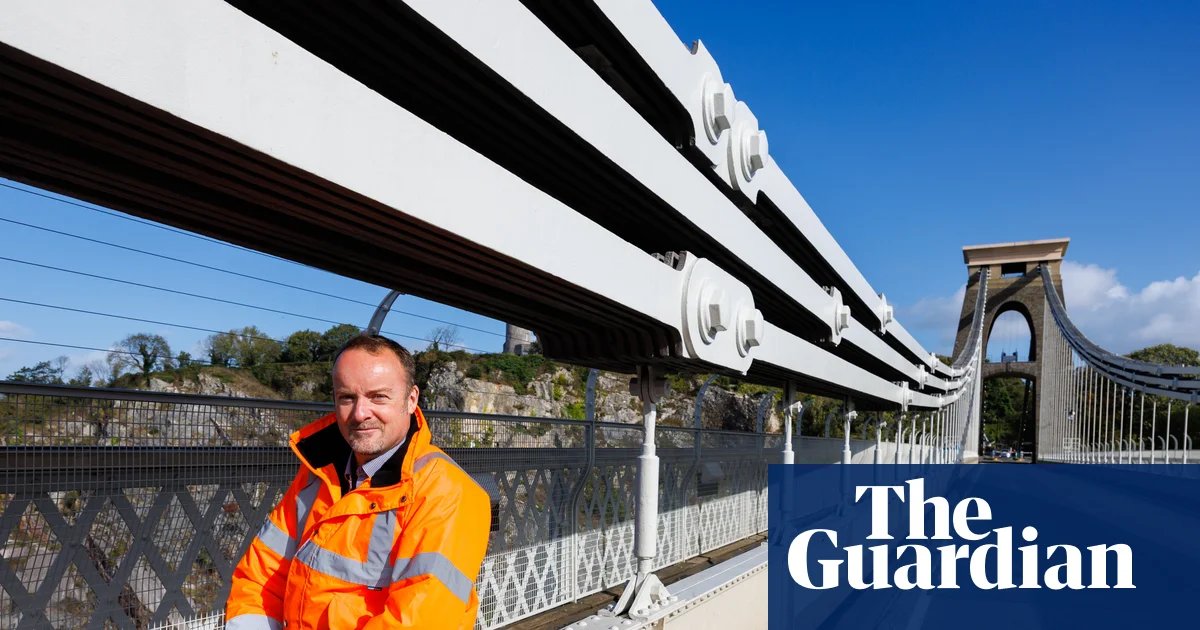
The job does not give the holder age-old perks such as the right to drive sheep across the great structure, but the title “bridge master” does have a certain ring to it.
“I don’t tend to say I’m the bridge master when I’m at a party,” said Tristan Ralph, the current holder of the title. “But people do seem to know and bring it up. It’s a job less ordinary, isn’t it? It’s a Victorian sounding title and people are really, really interested.”
There is, however, nothing ceremonial about the title. Ralph is in charge of maintaining and running the Clifton Suspension Bridge, a UK feat of engineering, without any public money.
“It does feel a big responsibility,” said Ralph. “When the chairman of the trustees rang to say we’d like you to do it, you suddenly feel the pressure. It’s so famous and people in Bristol, quite rightly, are proud and almost possessive of it. Bristolians think: ‘It’s our bridge.’”
The bridge master – and the not-for-profit charity the Clifton Suspension Bridge Trust – have the task of maintaining the bridge “in perpetuity”. “I’m a temporary custodian,” Ralph said. “When I’m finished, I have to make sure it is handed on in just [as] good a condition or better than I inherited it.”
Ralph, a bridge engineer by profession, was speaking to mark the conclusion of a large refurbishment project that has taken two and a half years and involved hand-painting more than 4,000 original iron chain links and installing an energy-efficient lighting system. It has cost about £7.5m. “It’s been a big job,” he said. “But it’s come pretty much bang on budget, which is rare these days.”
That is important because, to many visitors’ surprise, the bridge does not receive public funding. “The upkeep of the bridge, the running of it, the salary costs and everything are all paid only by our toll money,” said Ralph. “People think that we might get something from local or central government. But, no, it’s just the toll money.”
Motorised vehicles – including motorcycles – pay £1 to cross the bridge. There is no charge for pedestrians, cyclists or horse riders. As well as being a beautiful structure, it is also a vital part of Bristol and North Somerset’s transport system.
Ralph said: “It draws the tourists in. We get visitors from hundreds of countries every year but primarily, it’s still a vital piece of local infrastructure. If the bridge wasn’t here, the difference it would make to Bristol traffic would be incredible. We average over 8,000 vehicles a day still. Maintaining it as a transport link is utterly vital.”
The end of the refurbishment does not mean Ralph can rest on his laurels and spend more time hobnobbing with members of the Bridge Owners Forum.
“In a few years, we’ll need to paint the underside of the bridge. The under-bridge gantry unit itself will be replaced over the coming years. So there’s always something. We need to keep on top of things. It’s like your house or your car. If you just ignore it, don’t do things for a couple of years, they start breaking down.”
As in most walks of life, the climate emergency is a challenge Ralph and the trust are having to face. “We were monitoring the bridge daily in the summer with the very hot weather. And maybe if the bridge was being designed today, there would be a little bit more robustness around wind.”
The prevailing south-west wind is not usually a problem and the bridge rarely has to close but if it blows directly through the Avon Gorge it can be more difficult. “We need to keep an eye at both the magnitude of any wind events but also their frequency,” Ralph said.
The engineer admires the bridge’s designers, including Isambard Kingdom Brunel. “It’s remarkably advanced for its time.”
And there is no sign that its days are numbered, largely because the Victorians did not skimp. Ralph said: “There are three layers of chains. The original Brunel design only had two, but because it went from a timber design to a cast-iron deck, they upped it to three.
“There’s a little bit of comfort in there. Today there might be pressure to say, well, can you keep it to two, but in Victorian times they did like to add a little bit of meat on the bones.
“It doesn’t have a finite life. There’s no end date in our plans. We all just keep it going in the highest standards as we can. It’s in really good condition as long as we keep doing what we need to do, keep our attention on it and don’t let things drift. Forever is a long time but there’s no reason why we have any need to worry at the moment.”

Uber has begun a trial of autonomous vehicles on the streets of Manchester as it looks to bring robotaxis to cities around the UK.
The first self-driving cars are operating, using the technology of its partner firms Pony and Verne, with whom Uber recently launched Europe’s first autonomous taxi service in the Croatian capital, Zagreb.
Uber said it was “excited to take this first step toward making this technology accessible to people across the UK”.
In social media posts, Verne said it had “started our autonomous vehicle testing in Manchester”, while Pony said there were “plans to bring robotaxis to the city” and that testing was under way.
The tests involve the company mapping the streets of the city in north-west England with a safety driver behind the wheel and no passengers.
Limited passenger services started last month in London, but with a safety driver in the front seat of cars supplied by Wayve under Transport for London’s licensing rules for private hire vehicles.
The next steps are unclear. Opposition from Uber drivers, their unions and the capital’s politicians to the rollout of robotaxis is mounting. The GMB and ADCU unions have both said thousands of drivers jobs will be lost and have called for help for those affected.
A critical report from London assembly’s transport committee this week called for the government to devolve authority over autonomous taxi services.
It said there was “considerable uncertainty about many of the claimed benefits of autonomous passenger vehicles”, and fears over the impact on public transport and congestion, as well as safeguarding and accessibility for disabled passengers.
There has been no official application to launch passenger services in Manchester so far, and the vehicles are operating under government licence via the Driver and Vehicle Standards Agency (DVSA) and the Department for Transport.
A spokesperson for Transport for Greater Manchester said it wanted the city’s taxis to be the safest in the country.
after newsletter promotion
“New technologies play an increasingly important role in the growth of our city region,” they said. “But they need to be introduced responsibly, safely and with real thought about what it means for our residents.
“Although no applications have been made to operate driverless taxis in the Greater Manchester, we’re aware of potential interest from companies to do so.
“Safety will always be our top priority, and we will need strong assurances that no vehicles will operate on our roads that pose any risk to residents.”
Uber said it expected to offering robotaxi trips in as many as 15 cities worldwide by the end of 2026, mainly in the US and the Middle East.


Oxford United player ratings in bizarre Mansfield Town draw

Number of cloned number plates on UK roads at record high, data shows | Transport

LIVE: Mansfield Town 1-1 Oxford United – Two red cards as U's down to nine men
-

 Oxford united FC4 weeks ago
Chris Gunter steps away Wales role to focus on Oxford United
-

 Oxford University3 weeks ago
New to the Oxford English Dictionary this September
-
 Traffic & Transport2 weeks ago
How poor public transport policy is putting the brake on cities | Road transport
-
 Student Life3 weeks ago
Oxford partnership allows OpenAI to use rare Bodleian texts to train ChatGPT
-

 Oxford united FC1 week ago
LIVE: Exeter City vs Oxford United – Jersey Mike's Trophy group stage
-

 Traffic & Transport2 weeks ago
Why should I have to pay more for buses if I don’t use a smartphone? | Bus fares
-

 Oxford united FC2 weeks ago
Northern Ireland fans laud Oxford United defender Ciaron Brown
-
 Oxford Events3 weeks ago
Four days of equestrian spectacle at 2026 Blenheim Palace International Horse Trials