
UK News
Resident doctors begin longest strike yet as Streeting accuses BMA of hypocrisy over pay – UK politics live | Politics

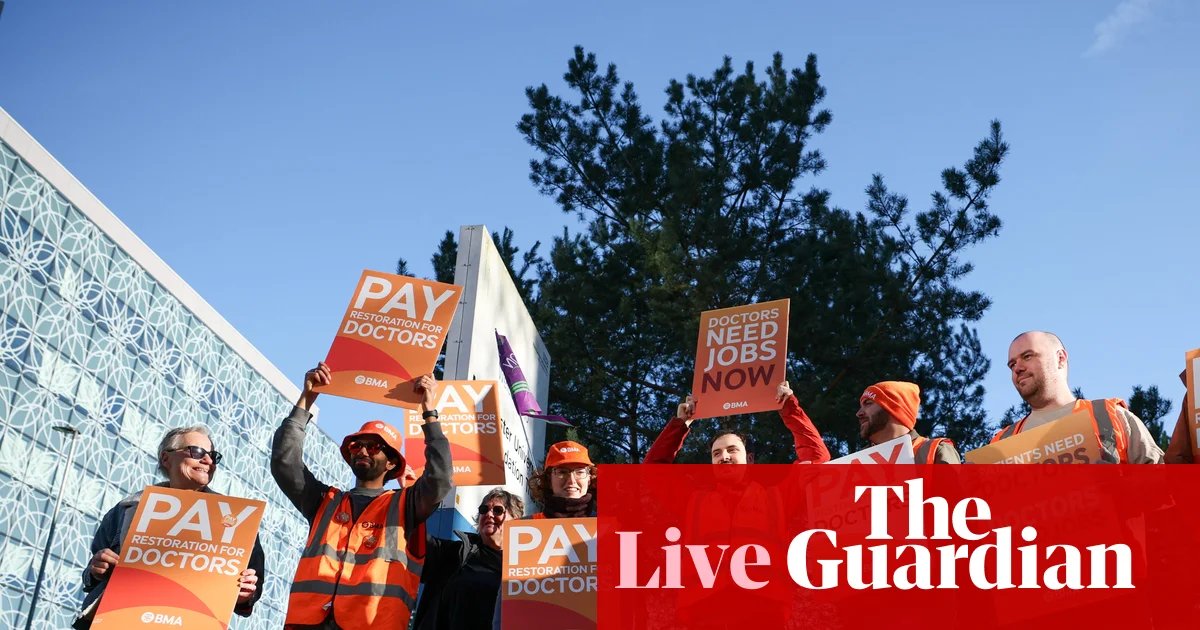
Wes Streeting says strikes by resident doctors have cost country £3bn over past 3 years as fresh walkout starts
Good morning. Resident doctors in English hospitals started a six-day strike at 7am this morning. Many of them will continue to work, but there will be enough of them joining the strike to have a significant impact on the care hospitals can deliver. It is the 15th resident doctors (who used to be known as junior doctors) have been on stage since they launched a campaign in 2023 to get their pay back to the equivalent level it used to be before austerity kicked in after the financial crash.
This morning Wes Streeting, the health secretary, deployed a new statistic in his PR battle against the BMA, the doctors’ union organised the strikes. He confirmed a figure highlighted in the Daily Mail’s splash saying strikes by resident doctors have now cost the country £3bn.
In an interview with the Today programme, asked if that was an official government figure, Streeting replied:
We think that strikes cost £50m a day. And so that is, an accurate reflection of the cost of these strikes.
But, when it was put to him the BMA is saying that £3bn is about what it would have cost to give the resident doctors the pay rise they are demaning, Streeting would not accept this. He replied:
What is true is that in order to deliver a full pay restoration back to 2008 levels, using the RPI account of inflation, it would cost in the order of £3bn a year.
Let’s then assume that other NHS staff would understandably demand the same. Then that cost would be more like £30bn a year. That is more than the entire cost of the Ministry of Justice’s entire budget for running the criminal justice system.
Now, this goes to the heart of the intransigence of the BMA. Despite being the biggest winner by a country mile of public sector pay increases – since this government came in, 28.9% is what they got from us – within weeks of taking office, they still went out on strike.
Andrew Gregory and Peter Walker have more from what Streeting has been saying about the strike here.
I will post more from Streeting’s broadcast interviews this morning shortly.
Here is the agenda for the day.
7am: Resident doctors started a six-day strike in England. (Rather, some of them did – in the past, many doctors have chosen to work rather than to join the BMA strike.)
9.15am: John Swinney, SNP leader and Scottish first minister, holds a campaign event focused on fuel prices. Anas Sarwar, the Scottish Labour leader, is holding a campaign event focused on pothole policy (at 9.30am), and Russell Findlay, the Scottish Conservative leader, is launching his manifesto (at 2pm).
11.30am: Downing Street holds a lobby briefing.
Morning: Ed Davey, the Lib Dem leader, is campaigning in Newcastle.
12.30pm: Nigel Farage, the Reform UK leader, is holding a press conference in Warwickshire.
Afternoon: Military planners from around 35 countries interested in plans to keep the strait of Hormuz open after the Iran war ends meet to discuss options at the UK’s Permanent Joint Headquarters in Northwood, north-west London.
If you want to contact me, please post a message below the line when comments are open (between 10am and 3pm), or message me on social media. I can’t read all the messages BTL, but if you put “Andrew” in a message aimed at me, I am more likely to see it because I search for posts containing that word.
If you want to flag something up urgently, it is best to use social media. You can reach me on Bluesky at @andrewsparrowgdn.bsky.social. The Guardian has given up posting from its official accounts on X, but individual Guardian journalists are there, I still have my account, and if you message me there at @AndrewSparrow, I will see it and respond if necessary.
I find it very helpful when readers point out mistakes, even minor typos. No error is too small to correct. And I find your questions very interesting too. I can’t promise to reply to them all, but I will try to reply to as many as I can, either BTL or sometimes in the blog.
Key events
Streeting accuses BMA of hypocrisy, saying it’s giving its staff pay rise well below what resident doctors offered
In his interviews this morning Wes Streeting, the health secretary, accused the BMA of hypocrisy over pay because the organisation is offering its own staff far less than the resident doctors are demanding.
He told BBC Breakfast:
And here’s the real kicker; having rejected this deal because the pay offer apparently wasn’t good enough at 4.9%, the BMA are offering their own staff 2.75% on affordability grounds.
Why does the BMA think they can get away with telling their own staff they only get 2.75% because that’s all they can afford, whilst rejecting a 4.9% offer because that’s all the government can afford.
It seems to me, the BMA aren’t willing to put their hands in their own pockets to pay their own staff, but they’re very happy to try and fleece your viewers, asking them to pay even more in tax than I think this country can afford.
He made the same point in an interview on Today, explaining what the BMA was doing and adding: “There’s a word for that.”
In a separate interview on the Today programme, Jack Fletcher, chair of its resident doctors committee, said that he was not responsible for what the BMA paid its staff and that he supported their right to go on strike.
Wes Streeting says strikes by resident doctors have cost country £3bn over past 3 years as fresh walkout starts
Good morning. Resident doctors in English hospitals started a six-day strike at 7am this morning. Many of them will continue to work, but there will be enough of them joining the strike to have a significant impact on the care hospitals can deliver. It is the 15th resident doctors (who used to be known as junior doctors) have been on stage since they launched a campaign in 2023 to get their pay back to the equivalent level it used to be before austerity kicked in after the financial crash.
This morning Wes Streeting, the health secretary, deployed a new statistic in his PR battle against the BMA, the doctors’ union organised the strikes. He confirmed a figure highlighted in the Daily Mail’s splash saying strikes by resident doctors have now cost the country £3bn.
In an interview with the Today programme, asked if that was an official government figure, Streeting replied:
We think that strikes cost £50m a day. And so that is, an accurate reflection of the cost of these strikes.
But, when it was put to him the BMA is saying that £3bn is about what it would have cost to give the resident doctors the pay rise they are demaning, Streeting would not accept this. He replied:
What is true is that in order to deliver a full pay restoration back to 2008 levels, using the RPI account of inflation, it would cost in the order of £3bn a year.
Let’s then assume that other NHS staff would understandably demand the same. Then that cost would be more like £30bn a year. That is more than the entire cost of the Ministry of Justice’s entire budget for running the criminal justice system.
Now, this goes to the heart of the intransigence of the BMA. Despite being the biggest winner by a country mile of public sector pay increases – since this government came in, 28.9% is what they got from us – within weeks of taking office, they still went out on strike.
Andrew Gregory and Peter Walker have more from what Streeting has been saying about the strike here.
I will post more from Streeting’s broadcast interviews this morning shortly.
Here is the agenda for the day.
7am: Resident doctors started a six-day strike in England. (Rather, some of them did – in the past, many doctors have chosen to work rather than to join the BMA strike.)
9.15am: John Swinney, SNP leader and Scottish first minister, holds a campaign event focused on fuel prices. Anas Sarwar, the Scottish Labour leader, is holding a campaign event focused on pothole policy (at 9.30am), and Russell Findlay, the Scottish Conservative leader, is launching his manifesto (at 2pm).
11.30am: Downing Street holds a lobby briefing.
Morning: Ed Davey, the Lib Dem leader, is campaigning in Newcastle.
12.30pm: Nigel Farage, the Reform UK leader, is holding a press conference in Warwickshire.
Afternoon: Military planners from around 35 countries interested in plans to keep the strait of Hormuz open after the Iran war ends meet to discuss options at the UK’s Permanent Joint Headquarters in Northwood, north-west London.
If you want to contact me, please post a message below the line when comments are open (between 10am and 3pm), or message me on social media. I can’t read all the messages BTL, but if you put “Andrew” in a message aimed at me, I am more likely to see it because I search for posts containing that word.
If you want to flag something up urgently, it is best to use social media. You can reach me on Bluesky at @andrewsparrowgdn.bsky.social. The Guardian has given up posting from its official accounts on X, but individual Guardian journalists are there, I still have my account, and if you message me there at @AndrewSparrow, I will see it and respond if necessary.
I find it very helpful when readers point out mistakes, even minor typos. No error is too small to correct. And I find your questions very interesting too. I can’t promise to reply to them all, but I will try to reply to as many as I can, either BTL or sometimes in the blog.
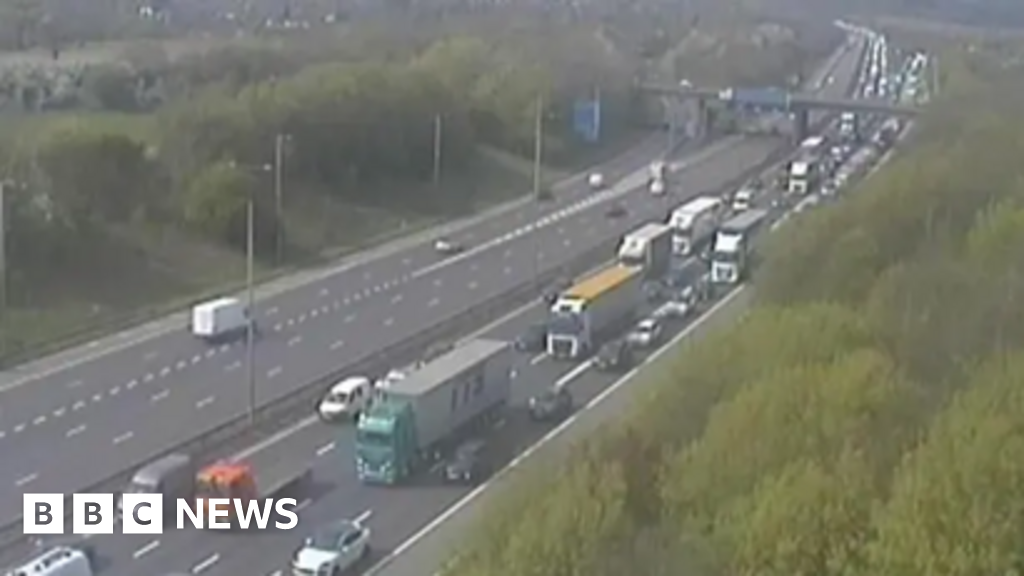
Four people in a minibus were also taken to hospital, Leicestershire Police say.
Source link
UK News
Middle East crisis live: US and Iranian envoys arrive in Islamabad for conditional peace talks | US-Israel war on Iran
Interim summary
For those of you just joining us, welcome to our live coverage of events in the Middle East with talks between Iranian and US officials scheduled to begin in Islamabad. Stay tuned here for all the updates – but first, a quick recap.
-
The US delegation has touched down ahead of high-stakes talks with the United States on Saturday, joining Iran’s delegation which had arrived earlier. The US side is led by the vice-president, JD Vance, alongside the special envoy, Steve Witkoff and Jared Kushner.
-
Iran’s delegation is headed by the powerful parliamentary speaker Mohammad Bagher Ghaliba, reportedly accompanied by Abbas Araghchi, Iran’s foreign minister; Ali Akbar Ahmadian, secretary of Iran’s defence council; Abdolnaser Hemmati, governor of Iran’s central bank; and several members of the Iranian parliament. Ghalibaf said earlier on Friday that two previously agreed measures – a ceasefire in Lebanon and the release of Iran’s blocked assets – “must be fulfilled before negotiations begin”. Israel and the US have denied that the ceasefire extends to Lebanon.
-
The planned talks come as Trump threatened fresh strikes if talks fail, adding that the Iranians “have no cards” and the only reason they are alive “is to negotiate”. Trump told the New York Post that the US is loading its warships with the “best weapons” in case talks with Tehran fail. “And if we don’t have a deal, we will be using them and we will be using them very effectively,” he said.
-
Meanwhile, Lebanon and Israel have agreed to meet in Washington on Tuesday to discuss a ceasefire and to set a date to begin talks. The conversation on Tuesday will be mediated by the US and take place at the state
-
Lebanon’s health ministry has updated the death toll from Israel’s most brutal strikes on the country in years on Wednesday to 357 killed. It brings the total killed in Lebanon since Israel renewed its offensive on 2 March to more than 1,953 people. The number of people wounded stands at 6,303, the health ministry added.
-
US intelligence reports that China is preparing to send new air defence systems to Iran over the new few weeks, CNN reports, citing anonymous sources. The US state department, White House and Chinese embassy in Washington did not immediately respond to requests for comment from Reuters.
Key events
Shah Meer Baloch
In an address to the nation before the talks, Pakistani prime minister Shehbaz Sharif said the upcoming US-Iran talks in Islamabad were “make or break,” warning the next phase will determine whether a lasting ceasefire can be secured.
An Iranian delegation led by speaker Mohammad-Bagher Ghalibaf landed in Islamabad on Friday night, with Pakistani jets escorting the Iranian planes as they entered the country’s airspace. Pakistan’s army chief, Asim Munir, and foreign minister, Ishaq Dar, received the Iranian delegation led by Ghalibaf.
Ghalibaf said in a statement after reaching Islamabad: “Iran has come in good faith, but doesn’t trust the US. Iran is ready for an agreement if the US presents a genuine deal and recognises Iran’s rights.”
A statement by the foreign minister, Dar, expressed hope for constructive talks. Dar said Pakistan would continue to facilitate sustainable and long-lasting solution between the parties. He said he hoped the both parties would engage in constructive talks.

Hannah Ellis-Petersen
Here’s the full list of members of the Iranian delegation.
-
Mohammad Bagher Ghalibaf, the head of the delegation and the Iranian parliamentary speaker;
-
Seyed Abbas Araghchi, the foreign minister;
-
Reza Amiri Moghadam, the ambassador to Pakistan;
-
Ali Akbar Ahmadian, a member of the Supreme National Security Council of Iran;
-
Ali Bagheri Kani, the deputy to the Supreme National Security Council and former acting foreign minister;
-
Esmael Ahmadi Moghadam, the president of the National Defense university;
-
Mohammad Jafari, the assistant to the secretary of the Supreme National Security Council;
-
Naser Hemati, the governor of Iran’s central bank;
-
Kazim Gharibabadi, a deputy foreign minister;
-
Majid Takht e Ravanchi, a deputy foreign minister;
-
Valiollah Nouri, a deputy foreign minister;
-
Esmail Baghaei, a deputy foreign minister and spokesperson for the Iranian ministry of foreign affairs;
-
Abolfazl Amouei, an Iranian MP;
-
and Mohammad Nabavian, an Iranian MP.
As we wait for the Islamabad talks to commence, the conflict in the Middle East continues as we see in these images from the last 24 hours.
The UK will host a strait of Hormuz meeting next week, bringing together multiple countries aiming to restore free movement of ships through the strait, which has been blockaded by Iran since the beginning of the war and inflicted heavy damage on the global economy.
A British official told AP that the meeting will oppose the idea of tolls being charged for passage through the waterway, as proposed by Iran as part of ceasefire negotiations.
The meeting follows a foreign minister’s call on 2 April involving about 40 countries and a military planning meeting attended by about 30 nations. The UK prime minister, Keir Starmer, said that it is essential to have a “viable plan” to reopen the strait and get the global economy moving.
Photograph: Morteza Nikoubazl/NurPhoto/Shutterstock
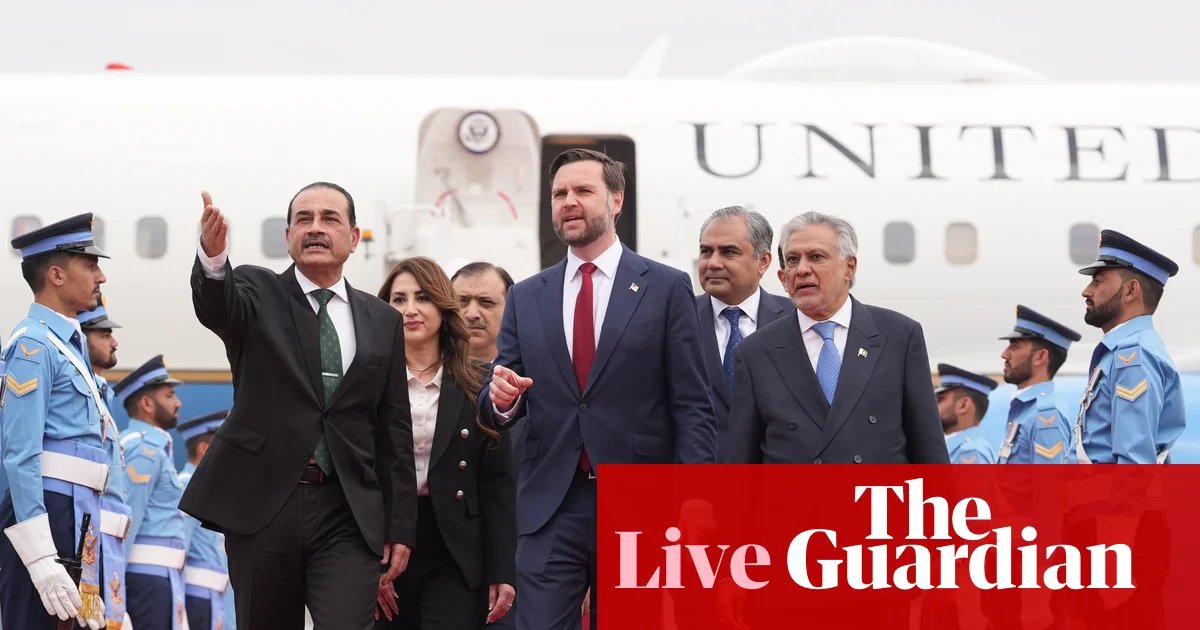
US delegation touches down in Islamabad
A plane carrying the US envoys headed for talks with Iran has touched down in Pakistan’s Islamabad, sources told Reuters.
The delegation is led by the US vice-president, JD Vance, and includes president Donald Trump’s special envoy, Steve Witkoff, and son-in-law, Jared Kushner. The Iranian delegation had already arrived earlier.
About 100 members of an advance US team are already in the city, a Pakistani source told Reuters.
The meeting is the first since the outbreak of the war more than a month ago. Both sides have claimed conditions before the onset of negotiations, with Iran demanding an end to Israeli strikes in Lebanon and the US concerned with nuclear weapons and the fate of transit through the strait of Hormuz.
The Athens-based Marine Traffic said on Friday that only 14 vessels – only half of which were loaded – have crossed the strait of Hormuz since a ceasefire was declared, according to AP.
Vessels exiting the Gulf accounted for 70% of vessels, the group posted on X, with “sanctioned or shadow-fleet-linked vessels account[ing] for nearly two-thirds of all crossings”.
Before the conflict, over 100 ships passed through the strait each day – most with oil outbound to Asia.
US intelligence reports China preparing to send air defence systems to Iran in next few weeks
US intelligence indicates China is preparing to deliver new air defence systems to Iran within the next few weeks, CNN reports, citing three people familiar with recent intelligence assessments, according to Reuters.
The network said Beijing could be routing shipments of shoulder-fired anti-air missiles known as MANPADs through third countries to mask their origin, citing unnamed sources. The US state department, the White House and the Chinese embassy in Washington did not immediately respond to requests for comment from Reuters.
President Trump and Pakistani officials have confirmed that China helped step in to push Iran to accept a tentative ceasefire. But while the Chinese government says it backs the ceasefire, it has not to date tried to claim any diplomatic credit as a security guarantor, with a spokesperson for the Chinese embassy in Washington merely saying “as a responsible major power, China will continue to play a constructive role and make efforts to de-escalate tensions”.
Lebanon’s health ministry say the provisional death toll from Israeli strikes on Wednesday had risen from 303 to 357, with 1,223 people wounded, AFP reports, with Israel claiming to have killed 180 militants in those attacks. The Israeli military say Hezbollah had fired around 30 projectiles into Israel and claims to have “dismantled” more than 4,300 Hezbollah sites in Lebanon since fighting began.
Digital monitor Netblocks says Iran’s internet blackout has lasted over a thousand hours, AFP reports.
While Iran’s domestic intranet remains operational, access to the global internet has been restricted since February.
“It is the Israeli public that holds Netanyahu’s fate in its hands,” writes Jonathan Freedland, writing on the role of the Israeli PM in the current Middle East tensions.
“What record will he be able to present to that domestic electorate, the one that judges him by his own lights? … Netanyahu-ism has gained nothing, and it has come at a monstrously high price.”
Read more of his analysis below:
In Islamabad, mutual mistrust remained the order of the day, Agence France-Presse reports.
“We have good intentions but we do not trust,” Iranian state TV quoted the head of the Iranian delegation, parliamentary speaker Mohammad-Bagher Ghalibaf, as saying upon his arrival. “ Our experience in negotiating with the Americans has always been met with failure and broken promises”.
JD Vance, the US vice-president and head of their delegation, was equally wary. “If [the Iranians are] going to try and play us, they’re going to find the negotiating team is not that receptive,” he told reporters.
Donald Trump has said his top priority is to ensure the Islamic republic cannot have a nuclear weapon – “That’s 99% of it” – but stopping the continuing Israeli strikes on Lebanon, a key demand from Iran as a condition of the truce, as well as the precise terms for allowing shipping traffic through the blockaded strait of Hormuz will also play a key part.
The Iranian side say negotiations cannot begin without commitments on Lebanon and on unblocking Iranian assets seized as part of sanctions. Israel and the US’s position is that that Lebanon is not part of the ceasefire.
Trump, posting on social media, said “The Iranians don’t seem to realize they have no cards, other than a short term extortion of the World by using International Waterways. They only reason they are alive today is to negotiate!”
Pakistan’s prime minister Shehbaz Sharif says making progress will be hard work. “This is the stage which, in English, is called the equivalent of ‘make or break’,” he said.
In Islamabad, all routes leading to the Serena hotel, which is hosting the talks, were blocked off with heavy security, with banners and signs along the expressway heralding the “Islamabad Talks”. But in Tehran, a 30-year-old local told AFP he was skeptical negotiations would be successful, describing most of what Trump says as “pure noise and nonsense”.
Islamabad continues to prepare for the upcoming ceasefire talks and the arrivals of delegates in Pakistan’s capital. Here are some new images coming into the newsroom today.
Opening summary
Hello, and welcome to our live coverage of events in the Middle East with talks between Iranian and US officials scheduled to begin in Islamabad in just a matter of hours.
Stay tuned here for all the updates. If you are just joining us, below is a quick recap of the latest news
-
Iran’s delegation has arrived in Islamabad ahead of high-stakes talks with the United States on Saturday, which the Pakistani prime minister described as “make or break” for achieving a permanent ceasefire. The delegation is headed by Iran’s powerful parliament speaker Mohammad Bagher Ghalibaf, and he is reportedly accompanied by Abbas Araghchi, Iran’s foreign minister, Ali Akbar Ahmadian, secretary of Iran’s defence council, Abdolnaser Hemmati, governor of Iran’s central bank, and several members of the Iranian parliament. Ghalibaf said earlier on Friday that two previously agreed measures – a ceasefire in Lebanon and the release of Iran’s blocked assets – “must be fulfilled before negotiations begin”.
-
US vice-president JD Vance, who is en route to Islamabad, said he was “looking forward to negotiations” and expected them to be positive – though he warned Iran not to “play” the US. He is leading the US delegation and will be accompanied by Donald Trump’s special envoy Steve Witkoff and Trump’s son-in-law Jared Kushner.
-
The planned talks come as Trump threatened fresh strikes if talks fail, adding that the Iranians “have no cards” and the only reason they are alive “is to negotiate”. Trump told the New York Post that the US is loading its warships with the “best weapons” in case talks with Tehran fail. “And if we don’t have a deal, we will be using them and we will be using them very effectively,” he said.
-
Meanwhile, Lebanon and Israel have agreed to meet in Washington on Tuesday to discuss a ceasefire and to set a date to begin talks. The conversation on Tuesday will be mediated by the US and take place at the state department.
-
Lebanon’s health ministry has updated the death toll from Israel’s most brutal strikes on the country in years on Wednesday to 357 killed. It brings the total killed in Lebanon since Israel renewed its offensive on 2 March to more than 1,953 people. The number of people wounded stands at 6,303, the health ministry added.
-
Lebanon’s president, Joseph Aoun, said on Friday that 13 state security personnel were killed in an Israeli strike on a governmental building in the southern city of Nabatieh. In a statement, Aoun condemned continued Israeli attacks and said targeting state institutions would not deter Lebanon from defending its sovereignty.

Sion documented his weight loss journey online and was shocked to find a company was using his photos.
Source link



-

 Crime & Safety3 weeks ago
Police race to crash on Oxfordshire A34 with severe traffic building
-

 Oxford News4 weeks ago
Schwarzman Centre to open doors to public with major celebration
-
 Oxford News4 weeks ago
Gary Lineker’s nephew-in-law death inquest to be next week
-

 Oxford Events4 weeks ago
Michelin Guide Oxfordshire Restaurants – The Oxford Magazine
-

 Jobs & Careers4 weeks ago
Explore our Careers
-

 Oxford News4 weeks ago
Professor Rebecca Eynon elected to prestigious Academy of Social Sciences Fellowship
-

 Crime & Safety7 days ago
American Akita and a French Bulldog seized after dog killed
-

 Oxford News4 weeks ago
Expert Comment: The Pentagon-Anthropic dispute reflects governance failures – with consequences that extend well beyond Washington