Student Life
Record 15,000 runners participate in Oxford Half Marathon
A record 15,000 runners took to the streets of Oxford to complete the annual half marathon on Sunday 11th October. Thousands of supporters lined the course to cheer the runners. Alex Miell-Ingram won the race in 1 hour, 7 minutes, and 21 seconds.
Many ran the half marathon for charity. Helen and Douglas House, the world’s first children’s hospice, was the headline charity partner, with 300 people running in support. The charity supports terminally ill children and their families in Oxfordshire. This year, it aims to raise £200,000, the cost of funding a hospice bed for one year.
Twenty people ran for Asylum Welcome, a charity which provides advice and support for refugees and asylum seekers living in Oxfordshire. Among them was the charity’s Joint CEO Dr Hari Reed. The group hope to raise £10,000.
The Lord Mayor of Oxford, Chewe Munkonge, was among the 15,000 runners on Sunday. He ran the half marathon to raise funds for Sobell House Hospice, one of this year’s charities, which provides specialist palliative care. Munkonge said he would not wear his mayoral regalia on the course, saying: “This Sunday, I’ll be swapping the mayoral chains for running shoes”. “This will be my first half marathon, so there are definitely some nerves,” he added.
Simon Lewthwaite, who has epilepsy, ran his first half marathon in an official NHS patient hospital gown to raise money for Oxford Hospitals Charity. He said that completing it with epilepsy would be “an even greater test of resilience and determination”.
The Oxford Half Marathon began in 1988 and was won by athlete Bill Domoney in 1 hour 11 minutes and 14 seconds. The 51 Rotary clubs in the area organised the race to raise money for the PolioPlus campaign, a programme aiming to eliminate six killer diseases. People came from overseas to run past Oxford’s historic hotspots, and the oldest entrant, veteran Arthur Stone, was aged 70 at the time. Oxford’s Rotary clubs continued to organise the event until 1993.
The half marathon returned in 2011, with 1,800 runners. Just two years later, in 2013, it had 5,500 runners, and the number of runners and spectators has grown steadily year on year. In 2025, more than 13,000 runners signed up and places sold out in January. That year, the event raised over £1.5 million for more than 180 charities.
Cherwell spoke to students who ran the race. Ioanna Bezirtzoglou, a third-year DPhil student at Pembroke, ran as part of Oxford Girls’ Running Club and volunteered at the race last year. She ran dressed as a princess. “I love the fact I have a community as encouraging as Oxford Girls Running,” Ioanna told Cherwell. “Having volunteered last year at the Oxford half, it’s so exciting to be able to run it this year!”
Dina Graham from Pembroke told Cherwell that “the energy from the crowd really carried me through and was a highlight throughout”. “People stood outside their homes with bowls of sweets that you could grab,” she added. Dina ran for Maggie’s, a charity for people with cancer. “It was motivating to raise money to support them. It gave a purpose and a reason why I’m running.”

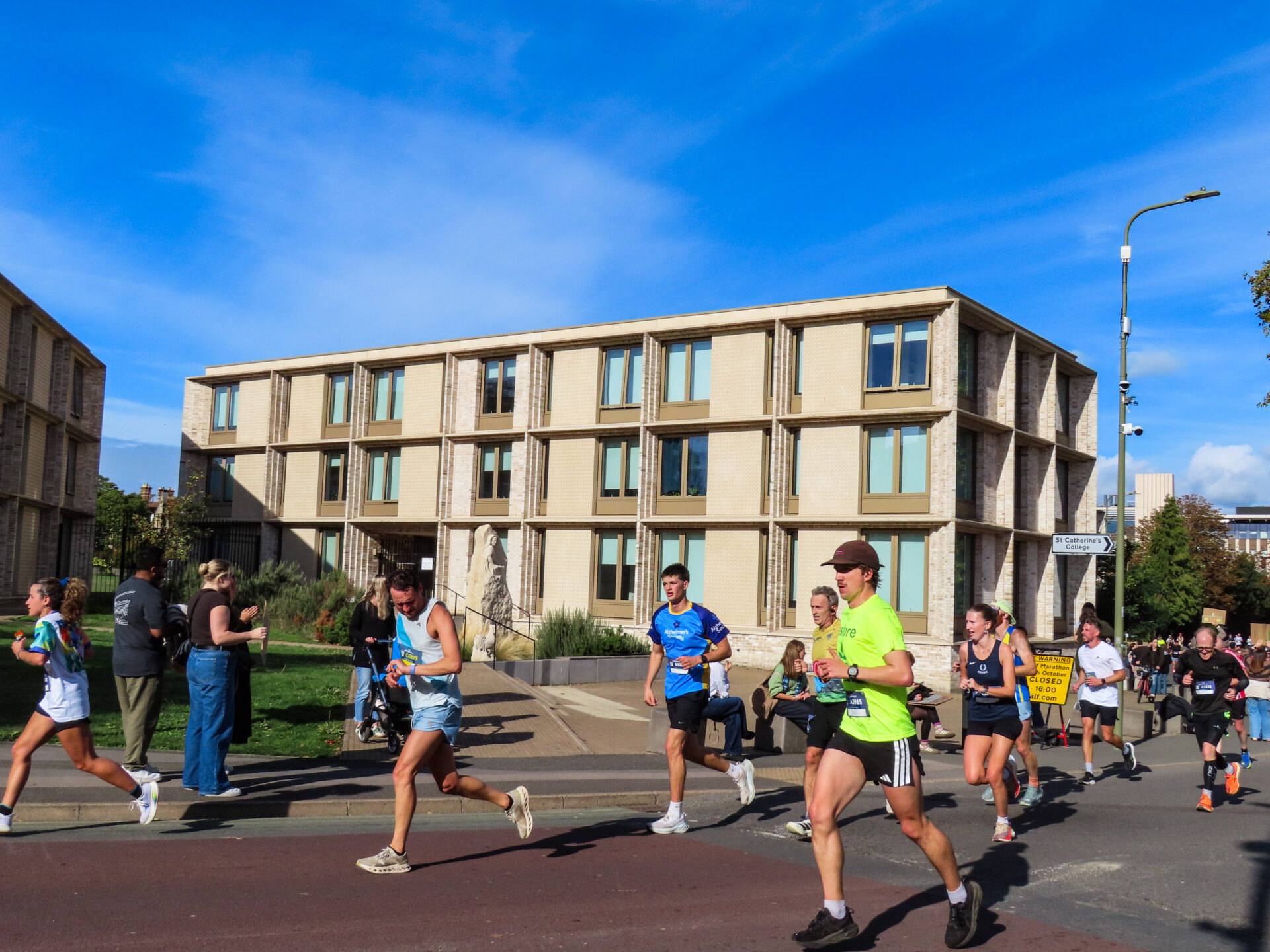
This year, the race sold out general entries in less than three weeks – three months faster than in 2025. This puts it ahead of wider industry averages, even as the half marathon industry is expanding overall. The latest Mass Participation Pulse report shows events are selling out ten days earlier than in 2024, and almost a month earlier than 2023. The Hackney Half Marathon, for instance, has also sold out its tickets faster year on year, having sold out in two days for the 2026 race.
With record popularity and turnout in 2026, the Oxford Half has now cemented its place in Oxford’s sporting calendar. What was once an event with little more than 1,000 runners has now become an unmissable fixture involving 15,000.
Image credits: Maryam Nawaz, with permission