
Student Life
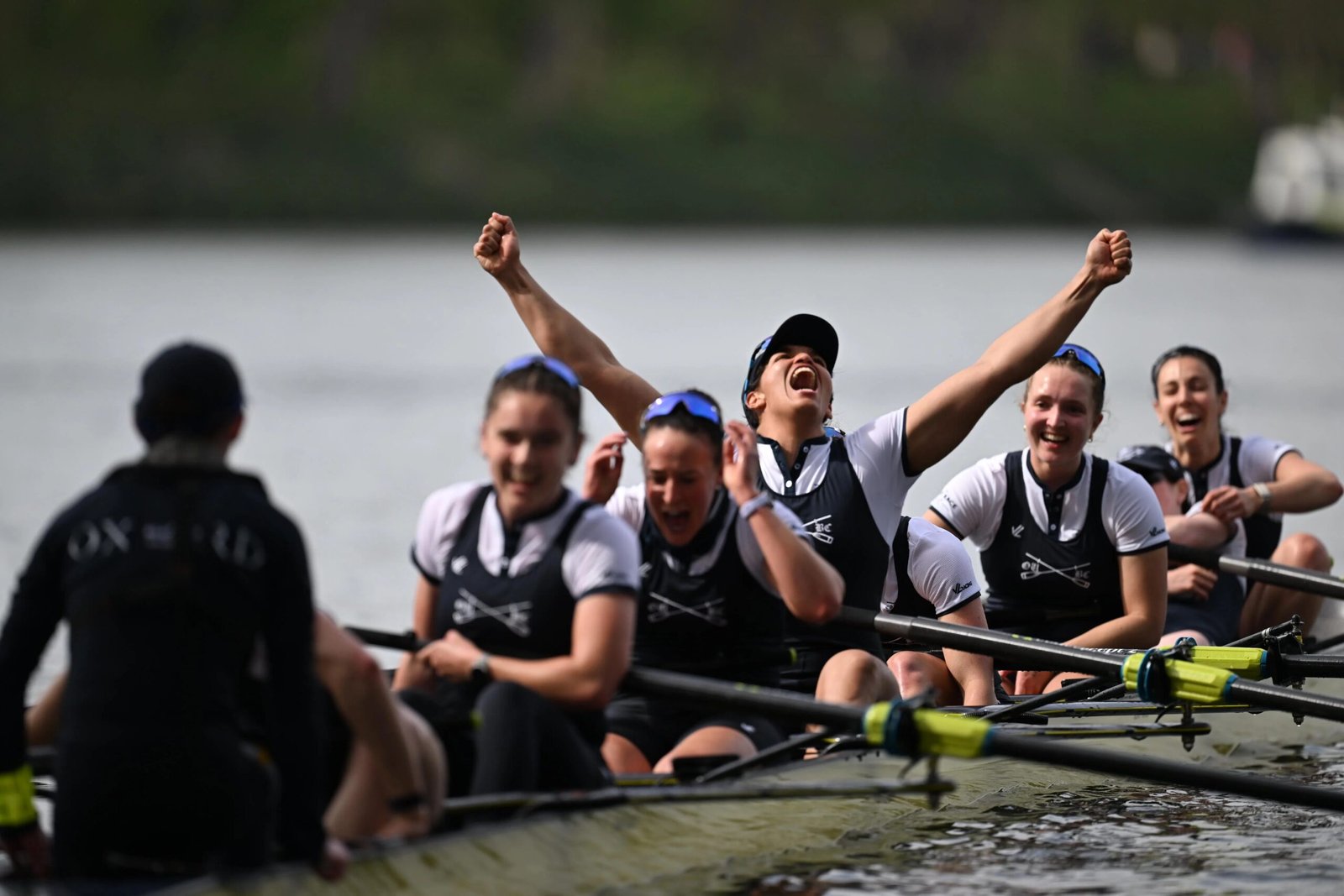
Oxford’s women triumph in historic 80th boat race

An historic sporting challenge
The stakes were high for Oxford going into this year’s annual boat race against Cambridge, who have proved dominant over much of the past decade.
A truly memorable and spirited contest on the river today. I could not be prouder of all our crews and coaches.
The University of Oxford’s Vice-Chancellor, Professor Irene Tracey CBE FRS FMedSci
An event harking back to 1829, this year marked the 171st men’s boat race, and the 80th women’s race. Since 2015, both races have been held on the same day and the same Championship Course. The 4.25-mile stretch of the river Thames is more than three times the distance of a standard Olympic rowing course, running through west London between Putney and Mortlake.
Oxford dominate the 80th women’s boat race
Olympic bronze medallist Heidi Long led the Oxford women’s crew as stroke, joined by fellow veteran rowers Annie Anezakis and Sarah Marshall who have rowed as Oxford blues three times previously. For the first time since 2004 the race featured a sibling rivalry, with Oxford rower Lilli Freischem going head-to-head against her sister Mia representing Cambridge.
Cambridge’s women won the coin toss and, in a departure from their previous year’s strategy, chose Surrey station, seeking the strategic advantage it would confer of being on the inside bend at Hammersmith Bridge.
But Oxford’s seasoned cox, Louis Corrigan, together with stroke Heidi Long, knew exactly how to respond. Seizing the opportunity of the calmest waters at the start of the course, they erupted from Middlesex station at great pace, stealing an early lead from Cambridge, and swiftly putting their rivals on the backfoot.
Both teams battled to take advantage of the fast-flowing central tidal waters, but three minutes into the race, Oxford were clear of the Cambridge boat, clocking 36 strokes per minute, with Long keeping up the ambitious pace for her crew.
Going into the first mile point, Cambridge trailed Oxford by 4.5 seconds. They raised their stroke rate to 38 per minute going under Hammersmith Bridge, determined to regain a leadership position going into the Hammersmith bend, but Oxford pulled clear and held the most efficient line.
Coming out of Surrey bend, strong winds clashed with the incoming tide, creating white-capped waves. Going into the eleventh minute, Cambridge’s cox set a bold route for his crew, using his local knowledge of the Thames to seek a more wind-sheltered route, sacrificing the faster-flowing tidal current in pursuit of flatter surface water. But Oxford responded defiantly, with cox Corrigan steering in front of the Cambridge boat and taking control of the inner path.
Oxford held the advantage approaching the three-quarter mark at Barnes Bridge. The rowers’ faces showed the tenacity required to keep Cambridge at bay. Turning into the final stretch, both crews faced a long slog against strong headwinds.
Having reduced Oxford’s lead to eight seconds, Cambridge launched another attack, crossing the river once again to take a tight inside line. But Oxford held their nerve, and sustained their unrelenting pace. Pulling three boat lengths clear of Cambridge they secured a decisive victory, ending a nine-year dry spell and reclaiming the trophy.
Cambridge claim victory in the men’s race
Cambridge were regarded as the favourites going into this year’s men’s race, having recently beaten the British and Dutch national eights in development team fixtures.
Oxford’s men chase Cambridge in the 2026 Boat Race. Image credit: The Boat Race
Winning the coin toss, Cambridge’s men similarly chose to start from Surrey station, forcing Oxford once again onto the less-favoured Middlesex launch.
With expectations high, Cambridge fired out of the blocks at 47 strokes per minute. But Oxford’s men responded in kind, defying expectations and keeping pace with their rivals.
The umpire called on both crews to hold their lines and avoid oar clashes as both crews chased the fast water. Oxford’s men held on tightly, trailing by just two seconds at the five-minute mark, and still in close pursuit of their rivals crossing the half-way point.
Going into the eleventh minute, the Cambridge crew successfully manoeuvred ahead of Oxford, consolidating their lead and going on to claim victory. Oxford’s crew kept Cambridge under pressure throughout, finishing less than four boat lengths behind. This marks the seventh win for Cambridge’s men out of the past eight Boat Races.
A globally-watched tradition
With an estimated 200,000 spectators watching from the banks of the river Thames, and millions of people viewing broadcasts around the world, the Oxford and Cambridge Boat Race is one of the most renowned and historic amateur sporting events.
The University of Oxford’s Vice-Chancellor, Professor Irene Tracey CBE FRS FMedSci, said, ‘A truly memorable and spirited contest on the river today. I could not be prouder of all our crews and coaches. It’s been a long time coming but how thrilling to see Oxford’s women securing an historic victory today – huge congratulations to one and all. The physical and mental grit on display today was so inspiring alongside the technical skill they showed in the face of ever-challenging river conditions. Thanks to all the supporters, and my warmest congratulations go also to the winning Cambridge crews and coaches.’
The records now stand as 89-81 in the favour of Cambridge Men and 49-31 in the favour of Cambridge Women.
Find out more about The Boat Race 2026.
See also: Men’s Boat Race results and Women’s Boat Race results.
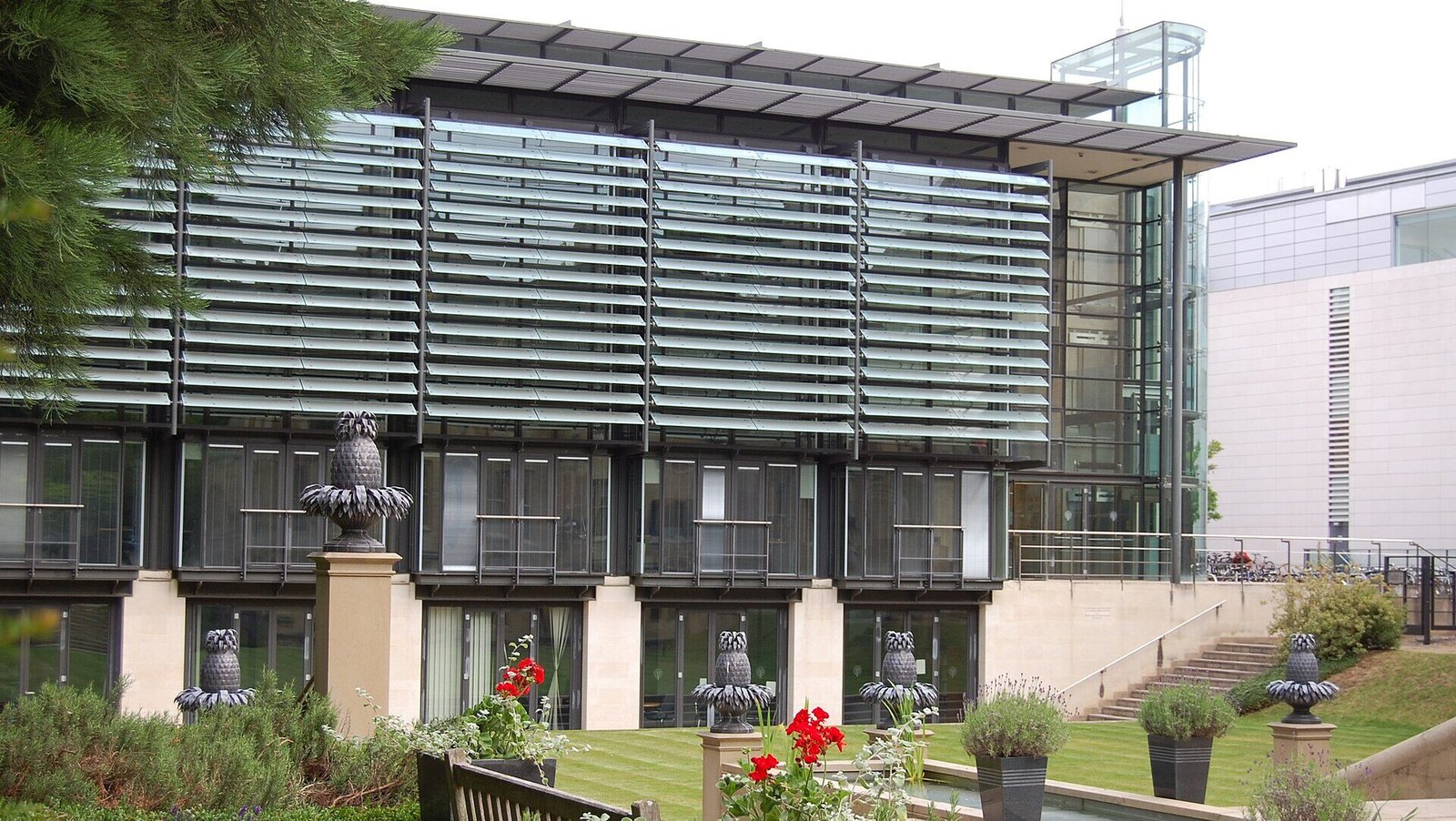
The Rothermere American Institute (RAI) has announced a major donation to fund a new Associate Professorship in US Politics and support the launch of a specialist postgraduate course in the field.
The post, known as the “Churchill Chair”, will be the University of Oxford’s first permanent academic position dedicated to US politics. The role is intended to expand Oxford’s teaching and research in an area that has previously lacked a dedicated postgraduate offering.
Alongside the new chair, the RAI plans to use the anonymous donation to introduce a one-year Master’s degree in contemporary US politics and government. If launched, it would mark the first time Oxford has offered a specialist postgraduate course focused solely on American politics.
A spokesperson for the Institute told Cherwell that the development would be key to Oxford’s broader strategy for strengthening its study of US politics and international relations. The spokesperson added that: “We have a high profile in the US and a long tradition of studying America ‘from the outside in’.” The Institute regularly hosts public events and runs the podcast The Last Best Hope?, positioning itself as a hub for debate and analysis on the United States.
The decision to launch a new postgraduate course comes amid renewed focus on the US’s global role. In a comment to Cherwell, the Institute explained that recent political developments have made “more explicit the underlying reality of the asymmetrical nature of the UK-US relationship”, adding that “everyone thinks they know America because it is culturally so dominant” but that this can obscure the need for more “clear, evidence-based” academic analysis. Professor Adam Smith, Director of the RAI, described the donation as an “extraordinary vote of confidence” in the Institute’s work.
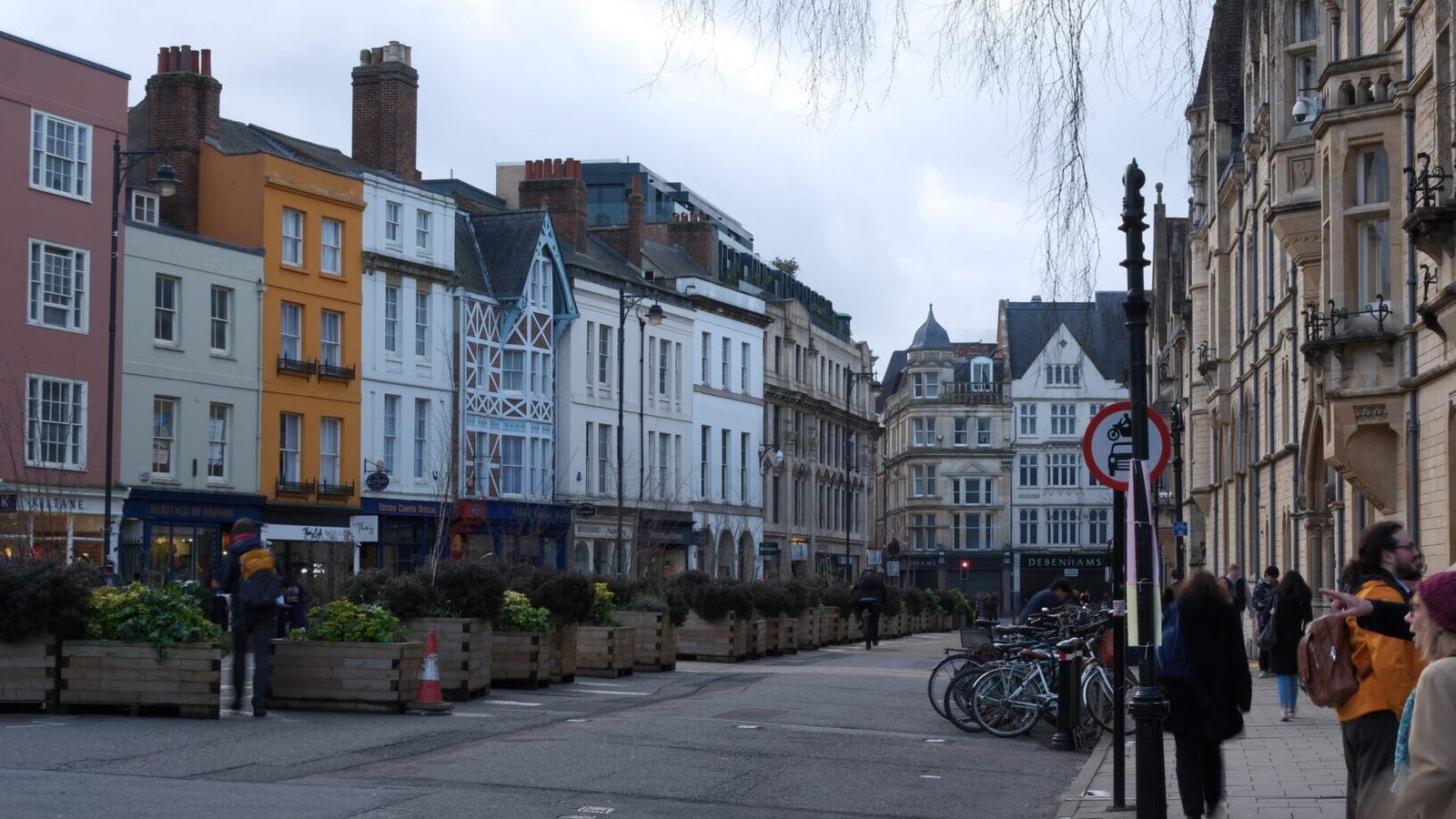
Chancellor of the Exchequer Rachel Reeves has announced plans for a Greater Oxford Development Corporation, which would double funding for infrastructure development across the Oxford-Cambridge corridor.
It follows a similar Development Corporation being announced for Greater Cambridge earlier this year. The Chancellor announced £800 million of combined funding for the two development corporations, incorporating the £400 million originally allocated to the Cambridge project.
Giving the annual Mais Lecture to the Bayes Business School in London, Reeves also committed an additional £500 million to supporting transport in Oxford, and pledged to “acquire land through compulsory powers” where “landowners are intransigent, or insist on unreasonable demands” to support the project. This would force landowners to sell property to allow for infrastructure developments.
The corporation will support infrastructure development in Oxford and surrounding areas, alongside improvements to transport links across the “Oxford-Cambridge Growth Corridor”. According to the BBC, the area between Oxford and Cambridge is one of the only UK regions outside of London that is a net contributor to the UK economy.
In a press release, Leader of Oxford City Council Susan Brown told Cherwell: “This has the potential to be a game-changer for the city, county and country. A well-designed, central-government-backed development corporation for Greater Oxford should bring both the powers and funding required to deliver the housing, infrastructure, and economic growth at scale that we urgently need.
“We have made it clear in our plan for Local Government Reorganisation that a development corporation would likely be needed to help deliver the 40,000 homes – including 16,000 affordable homes – and 12m sq foot [sic] of commercial space we are proposing as part of a new Greater Oxford Council.”
The University of Oxford has welcomed the proposal. A spokesperson for the university told Cherwell: “Oxfordshire is one of the world’s leading innovation ecosystems, but constraints in transport, utilities and housing are limiting its full potential. A government-led Development Corporation could provide the long-term coordination needed to unlock critical infrastructure, attract private investment and support sustainable, inclusive growth.
“By bringing together national and local partners, it would help ensure that growth is well-managed and delivers tangible benefits for communities, while strengthening the region’s role in driving innovation and economic growth across the UK.”
The Government has also announced plans for a new “national forest” in the Oxford-Cambridge Corridor, holding a competition for a partner to deliver “nature recovery alongside sustainable urban growth”. It will be the second national forest under the current government, with plans to plant a new forest near Bristol announced last March.
Student Life
Oxford University’s Nuffield Department of Primary Care launches International Advisory Board
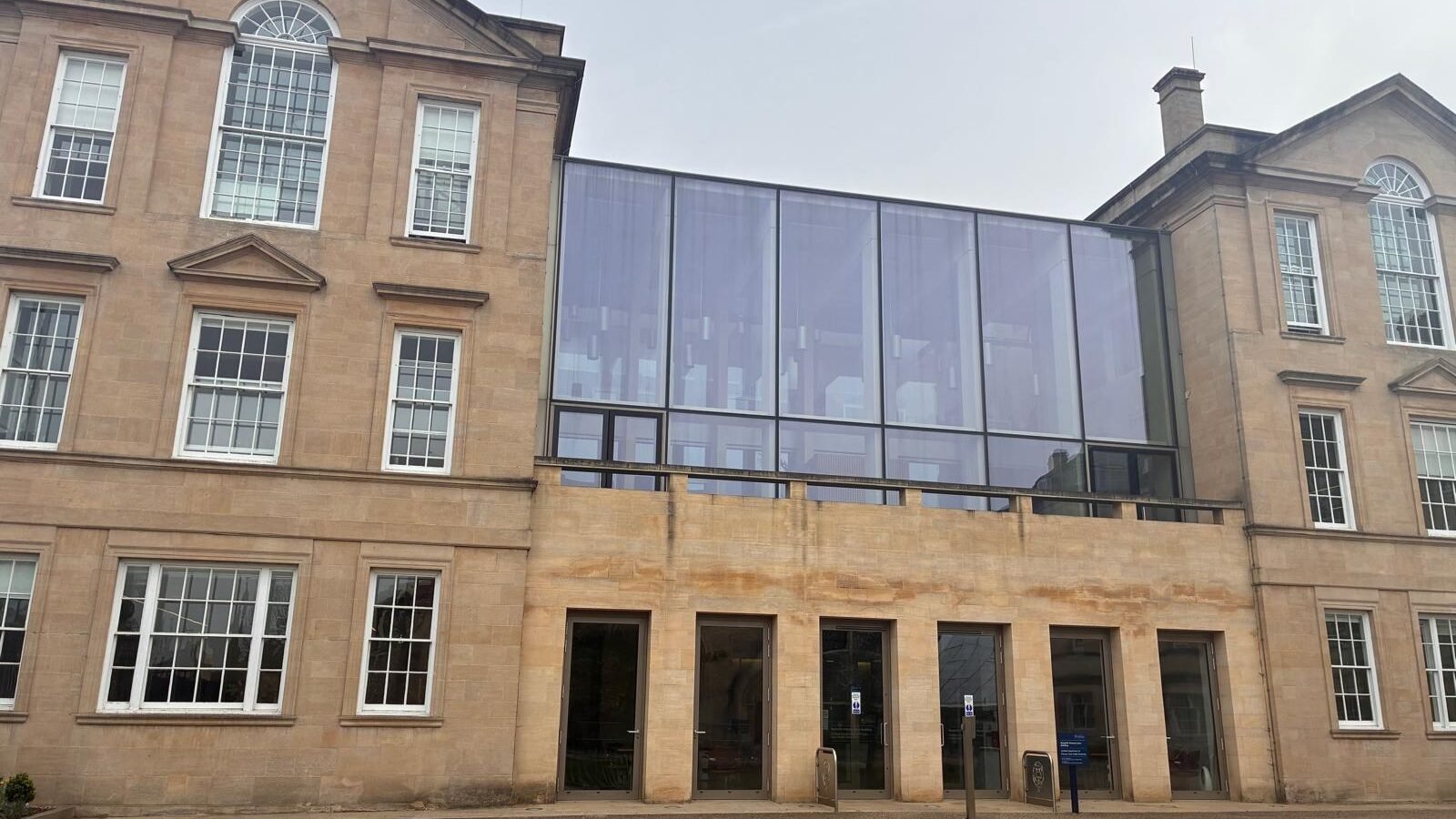
The Nuffield Department of Primary Care Health Sciences has recently announced a new International Advisory Board (IAB) to provide independent advice and international perspectives to support the Department’s Strategy 2025-2030.
The Nuffield Department of Primary Care Health Sciences is responsible for developments in academic primary care, with an emphasis on research and education. Established in 1997 with the appointment of Professor Godfrey Fowler OBE to a Personal Chair in General Practice, the department has since grown to contain more than 500 members of staff. It aims to deliver innovative approaches to primary health care both within the UK and internationally.
The IAB has been established to support the overarching goal of extending the Department’s innovation. Professor Sir Aziz Sheikh, Head of the Nuffield Department of Primary Care Health Sciences, told Cherwell: “Primary care and global health are changing rapidly, and we believe an independent, international perspective strengthens our ability to respond responsibly and effectively. Our International Advisory Board (IAB) has been established to operate as a ‘critical friend’ offering a constructive challenge at a key stage in our development.”
The Department’s Strategy 2025-2030 aims to shift health policy towards a community-based primary care approach, particularly for those living with long-term conditions such as diabetes, chronic respiratory problems, and mental health disorders. Personalised care in the form of personal health management is key to the Strategy’s goal of reducing health inequalities. An environmentally-friendly and sustainable model of care is equally important in the department’s strategy, with an emphasis on support from AI capabilities and digital infrastructure.
Professor Sheikh told Cherwell: “The world is transitioning to primary care-based models of healthcare as governments strive to achieve equitable universal health coverage. From parts of the world with more developed national health systems, it is now clear that primary care is often where pressures on health systems first appear. Drawing on experience across different countries and systems will help us anticipate trends earlier and align our research and education accordingly.
“The IAB’s role is advisory rather than operational, but it will help ensure our work remains relevant to practice and policy – globally. By providing independent scrutiny, we hope that they will support our aims of translating research into real improvements in care quality, equity, and health outcomes. We also hope that they will help provide important insights into key opportunities to enhance our educational offerings to our undergraduate and postgraduate students.”
The board of the IAB is chaired by Victor J. Dzau, President of the National Academy of Medicine. Members of the board include David Bates and Ajay Singh of Harvard Medical School; Jenny Harries, former Chief Executive of the UK Health Security Agency; Paul Little of the University of Southampton; and Mairi Gibbs, the CEO of Oxford University Innovation. The board will hold its first meeting in April 2026 and will meet regularly to provide strategic advice to the Department’s leadership.



-

 Crime & Safety2 weeks ago
Oxford: ‘Next generation’ LimeBikes in city from today
-

 Jobs & Careers3 weeks ago
Why Join Oxford | Oxford University Jobs
-
 Jobs & Careers3 weeks ago
Explore our Careers
-
 Oxford Events3 weeks ago
Oxford News and Events, What’s on in Oxford, Exhibitions
-

 Jobs & Careers3 weeks ago
Internal Job Board for University vacancies
-

 Student Life3 weeks ago
The independent cinema battling Oriel College to stay open
-

 Oxford Events3 weeks ago
Michelin Guide Oxfordshire Restaurants – The Oxford Magazine
-

 Crime & Safety3 weeks ago
Crash partially blocks A40 and causes severe Oxfordshire traffic