
UK News
Nike’s high-tech 2026 World Cup jerseys have a shoulder problem | World Cup 2026

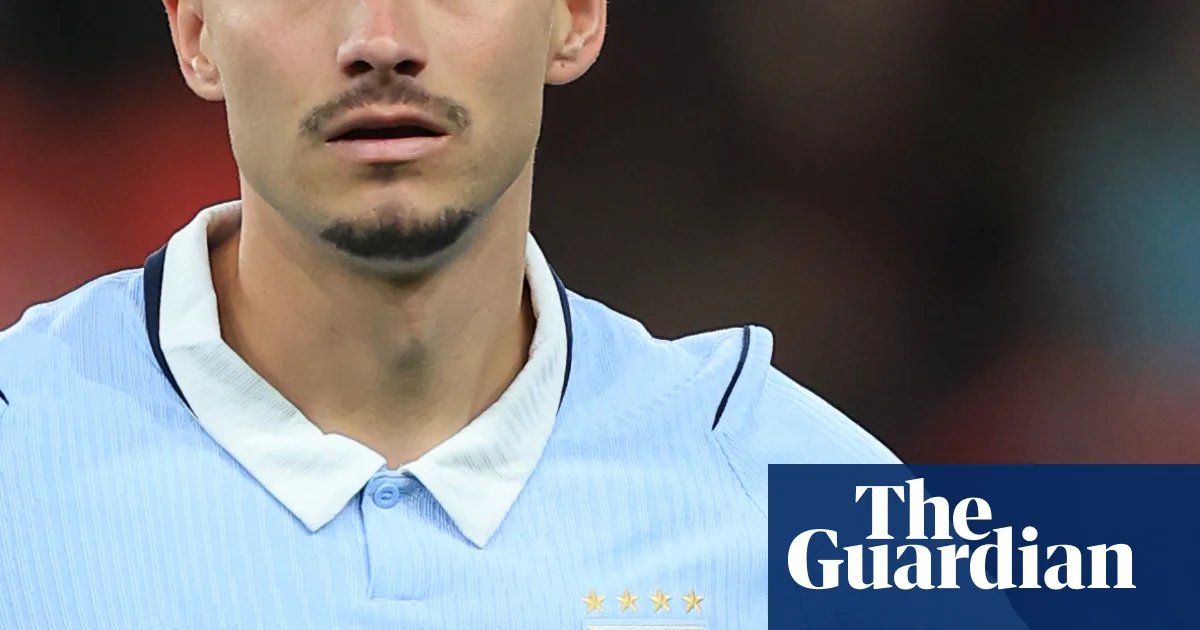
When Nike rolled out their collection of World Cup kits in late March, fans and pundits alike largely approved. The US men’s national team got arguably their most distinctive pair of shirts in decades, while other federations – France, Canada and Nigeria among them – earned strong reviews.
This month, when players took the field in the kits for the first time, many fans couldn’t help but become fixated on one singular detail of the new shirts: a somewhat unsightly bulge along the shoulder seam.
On some kits – like the US’s striped home kit – the bulge was barely noticeable. On others, like the elegant, understated shirt sported by French megastar Kylian Mbappé, it was borderline comical. Several Uruguay players sported maybe the most ill-fitting seams of the bunch, making them look a bit like Shredder, the Teenage Mutant Ninja Turtles villain, in a friendly against England.
On social media and around the internet, fans reported similar issues with their own purchases. Some reported some success alleviating the issue by using a steamer, or washing them before wearing them. Others, like one Canadian fan who shelled out $135 for his shirt, were a lot angrier.
“The way the shoulders are sewn together just makes them bunch like this no matter what,” that fan wrote on Reddit. “I think they might work if your shoulders are narrow – I have wider shoulders and there’s just no way to not make this shoulder line not bunch. This is a stupid, STUPID design.”
Some wondered if anyone at Nike was taking note. They were.
In a statement to the Guardian, Nike acknowledged the issue with shoulders, and said they’re looking into what can be done about it – if anything.
“During the recent international break, we observed a minor issue with our Nike national team kits, most noticeable around the shoulder seam,” the company said via a spokesperson. “Performance is unaffected, but the overall aesthetic is not where it needs to be.”
Indeed, it’s an uncharacteristic flub from the sportswear giant, who touted the design and technology of the kits upon their release. Outdoor matches at this summer’s World Cup, played in the US, Canada and Mexico, may be among the hottest ever played in tournament history, an issue Nike said would be addressed through the “Aero-FIT” design that serves as the framework for all of its authentic World Cup kits.
“[Aero-FIT] leverages computational design and a highly specialized, stitch-specific knitting process to help athletes stay cool,” the company’ marketing material reads.
A source familiar with that design process told the Guardian this week that Nike’s “computational design” process is driven by performance data, and incorporates elements of AI to work alongside the company’s designers as they craft a product. It is not yet known, though, whether the error was in the design of the shirts, or in their production.
A source familiar with Nike’s rollout said on Tuesday that the company is now in conversation with partner federations and vendors as they weigh any next steps. It remains to be seen if the kits will be redesigned in some way, and what – if any – recourse will be provided to fans who are unsatisfied with the fit of the shirt. In either case, fixing the issues would constitute a massive logistical lift, both because of the tight turnaround with the World Cup kicking off in just over two months, and because of the number of jerseys that have already been sold.
“We are a global team of best-in-class designers, creators and dreamers who spend every day thinking about how to innovate, challenge ourselves, and take risks that push the beautiful game,” the company said in its statement to the Guardian. “We always hold ourselves and our products to the highest standards and this fell short. We’re working quickly to make this right for players and fans, because every kit should reflect the care, precision and pride that the game deserves.”
Nike has been making soccer kits since 1979, when they outfitted the Portland Timbers of the now defunct North American Soccer League. They entered the European market in 1983 when they partnered with Sunderland and rolled out their first national team shirt in 1994: a Nigeria strip that was used only once, in a friendly against England. By 1995, they’d expanded that operation to include many other national teams including the United States, who have used Nike ever since, and will remain with them until at least 2033, when their current long-term agreement ends.
England have worn Nike kits since 2013, and the current deal with the FA runs until 2030.

Keir Starmer has said he is “fed up” with the effect that Donald Trump’s actions in the Middle East are having on the British public, while appearing to draw a comparison between the US president to Vladimir Putin.
Speaking to ITV’s Robert Peston on Thursday, the prime minister said: “I’m fed up with the fact that families across the country see their bills go up and down on energy, businesses’ bills go up and down on energy because of the actions of Putin or Trump across the world.”
Starmer, who has been heavily criticised, and at times even mocked, by Trump for not committing British forces to the war on Iran, also appeared to condemn Benjamin Netanyahu for Israel’s continued strikes on Lebanon, despite Iran calling for Lebanon to be included in the ceasefire that was agreed on 7 April.
“That should stop – that’s my strong view – and therefore, the question isn’t a technical one of whether it’s a breach of the agreement or not,” Starmer said.
It came as Starmer and Trump spoke on Thursday about the need for a “practical plan” to get shipping going through the strait of Hormuz after the Middle East ceasefire.
A Downing Street spokesperson said: “The prime minister spoke to President Trump from Qatar this evening. “The prime minister set out his discussions with Gulf leaders and military planners in the region on the need to restore freedom of navigation in the strait of Hormuz, as well as the UK’s efforts to convene partners to agree a viable plan.
“They agreed that now there is a ceasefire in place and agreement to open the strait, we are at the next stage of finding a resolution. The leaders discussed the need for a practical plan to get shipping moving again as quickly as possible.”
Starmer also said that, while Britain did not have “access to all the details of the ceasefire”, he disagreed with the attacks on Lebanon, stating “let me be really clear about it – they’re wrong.”
Writing in the Guardian on Thursday, Starmer said he did not want Britain to be “a country where people are not at the mercy of events abroad”. He added that while the responses of previous governments to world events were to simply “manage the crisis, find a sticking plaster and then desperately try to reassert the status quo”, he promised that his government would do better, stating: “This time, it will be different. The war in Iran must now become a line in the sand, because how we emerge from this crisis will define all of us for a generation.”
The prime minister’s relationship with Britain’s allies has been noticeably strained since the US and Israel’s war with Iran began in late February, with Starmer and other European leaders being repeatedly chastised and belittled by Trump and other prominent members of his administration.
These have included sharing a video from the sketch show SNL UK in which Starmer is portrayed as being scared of Trump and trying to avoid his call, and stating that he is “no Winston Churchill” due to his perceived inaction in aiding the US.
Others on the receiving end of Trump’s ire include the French president, Emmanual Macron. Trump claimed Macron’s “wife treats him extremely badly” and even suggested that she hits him, claiming that Macron was “still recovering from the right to the jaw” when he spoke to him earlier in the month.
The Spanish prime minister, Pedro Sánchez, who has been outspoken in his disapproval of the war in Iran and the conflict in Gaza, has been one of Trump’s most vocal detractors. In response, the president has threatened to cut off all trade and suggested that if the US wanted to use Spain’s bases in the region, they would take them by force, stating: “If we want, we can just fly in and use it. Nobody is going to tell us not to use it.”
Official rating
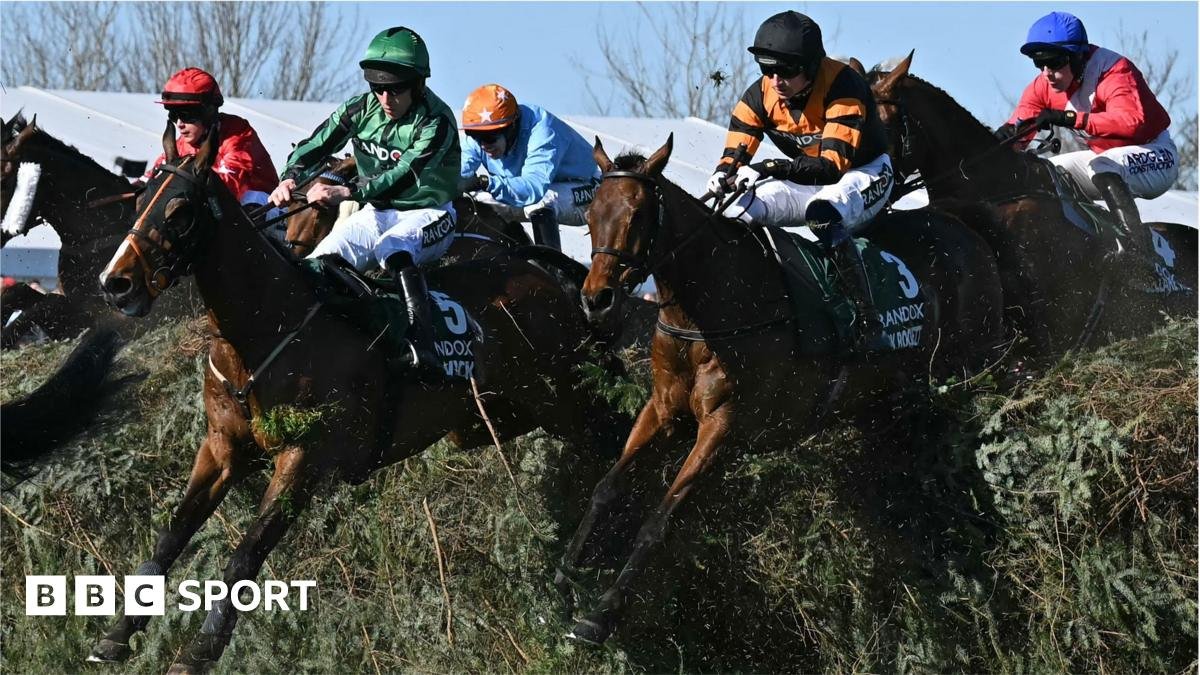
Every horse in training is giving an official rating by the handicapper based on the level that they run to. Fourteen of the past 16 winners have been rated 146+, with 13 of those between 146 and 160. I Am Maximus and Nick Rockett were rated 159 and 163 going into the past two editions so a higher mark may be a positive.
Runs since September
In the first seven runnings this decade, five winners had run six times since September, with the others having five and three outings.
That trend has settled down in the past 10 years, with the average being four runs. Noble Yeats had seven before his 2022 run, while five had been in three races.
No winner in the past 25 editions has run fewer than three times that season.
Trainer location
An English trainer last won the race in 2015, with an Irish trainer winning seven of the nine since. Scot Lucinda Russell has had two winners, though she has no runners this year.
Breeding
Of the 24 hours to win the race this century, 18 were Irish-bred, four were French-bred and two British-bred.
Finish last time out
Of the past 25 winners, 11 have finished in the top two of their previous run.
Six of the past eight winners also won their previous race, though Noble Yeats was ninth and Minella Times pulled up.
Four of the six winners before that had finished in the top four too, so the trends suggest form is a factor.
Career falls
Every winner this century except Auroras Encore had two or fewer falls in their career prior to the race.
In the past decade, Minella Times is the only horse to have fallen in their career and won the Grand National.
Won over three miles or more
Twenty one of the 24 different horses to have won this century have all registered at least one career win over three or more miles before winning the National.
Eighteen of them have won more than two races over that trip, though two of the past five aren’t included in that group.
Days since last run
The average break between runs for the past 10 winners is just over 41 days, with a range of 24-84 days.
If you take out the two highest and lowest, you’re left with a gap of 36 days.

What would Marcus Aurelius have made of the Kardashians? Would Seneca have been amused by mindfulness apps? These were questions I had never consciously pondered before reading Maria Semple’s new novel. Neither, in my irrational and unvirtuous state, had I spent much time considering the application of Stoic philosophy to any other key aspects of modern life.
Semple, best known for her exuberant, ingenious bestseller Where’d You Go, Bernadette?, here presents us with Adora Hazzard, Stoic philosopher and divorcee. Adora lives a contented life on New York City’s Upper West Side, spending her days tutoring the twin sons of an old-money family in philosophy and seeking to live according to Stoic virtues, without recourse to destabilising “externals”. But her settled life is soon disrupted by that most classic of externals, the handsome stranger. “Curse these alluring men who throw us off our game!” (Marcus Aurelius, paraphrased.)
What follows is tricky to categorise. Is it a knockabout comedy about the collective power of midlife women? (No, it isn’t, though it seems to gesture in that direction at the start.) An art heist caper? (Sort of.) A thriller? (A bit.) A romcom? (Sort of, I guess?) A cry of female rage? (Briefly.) A paean to the virtuous joys of Stoic philosophy? (100% yes!) Ultimately Semple seems to have resolved not to agonise over genre for too long. We could look at this as a gift: several books for the price of one.
Stoicism is not traditionally – I know this won’t hurt Marcus Aurelius’s feelings – very sexy, but Semple makes it feel fresh and exciting. Reflecting on a conversation with another character, Adora says, “I was all over the place. Which is what happens when I get started on Stoicism. Fuelled by enthusiasm, I talk faster and faster, bouncing between subjects, repeating myself. It’s like running downhill. … All I can do is keep going and pray I’ve got a shred of dignity left when I reach the bottom.” Adora’s enthusiasm is contagious. For some time after finishing the book, I found myself murmuring, when encountering a mishap, “The cucumber is bitter. Throw it away.” (Marcus Aurelius again.)
And Semple writes with immense charm. The book fizzes with funny lines, as when Adora remarks of one incidental character, with startling specificity, “His face looked weirdly polished, like a Polly Pocket doll that had been licked.” The madcap energy works well for long stretches of the book. Characters come and go. We get to know some of them. Plotlines come and go. We’re able to follow some of them. It’s buoyant and fun.
But at times this merry chaos tips over into a less satisfying disjointedness. There is a clunky section in which the deterioration of Adora’s marriage is charted through time-stamped nuggets, anchored to a whistlestop tour of the big hits from the recent political landscape: “Spring of 2016: I got swept up in Bernie mania”; “September of 2018: #MeToo erupts”, and so on through Brett Kavanaugh, Trump, George Floyd, the riots, some of these elements thematically pertinent but none given enough space in the narrative to feel properly relevant. Meanwhile, Adora’s ex-husband Hal is not fleshed out enough for us to care much about either the beginning or end of the marriage.
Elsewhere, Semple’s energy and economy with backstory are brilliantly deployed, as in the fast and harrowing account of Adora’s ill-fated career as a comedy writer. This compelling section is, in some ways, the centre of the novel (I’m hedging here because Adora’s embrace of Stoicism leads her to reframe how she views this episode), and its strongest element.
The book is a zany high-wire act and the main plot, which at times seemed like a shaggy dog story, is ingeniously wrapped up at the end. For me, the whole doesn’t really cohere, but as Marcus Aurelius said, everything is perspective, not truth. I felt both cleverer and sillier after finishing this book, which is a lovely way to be left.



-
 Oxford Events4 weeks ago
Michelin Guide Oxfordshire Restaurants – The Oxford Magazine
-

 Oxford News3 weeks ago
Gary Lineker’s nephew-in-law death inquest to be next week
-

 Oxford News4 weeks ago
Schwarzman Centre to open doors to public with major celebration
-

 Crime & Safety3 weeks ago
Oxford: ‘Next generation’ LimeBikes in city from today
-
 Jobs & Careers3 weeks ago
Explore our Careers
-
 Student Life3 weeks ago
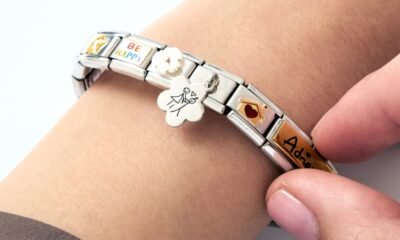
The Art of Personalised Jewellery: Why Engraved Bracelets Are the Ultimate Keepsake
-

 Crime & Safety3 weeks ago
Wiltshire 12-year-old girl with Oxfordshire links missing
-

 Jobs & Careers3 weeks ago
Why Join Oxford | Oxford University Jobs