
Traffic & Transport
Military aircraft reportedly blamed for UK air traffic control outage | Air transport

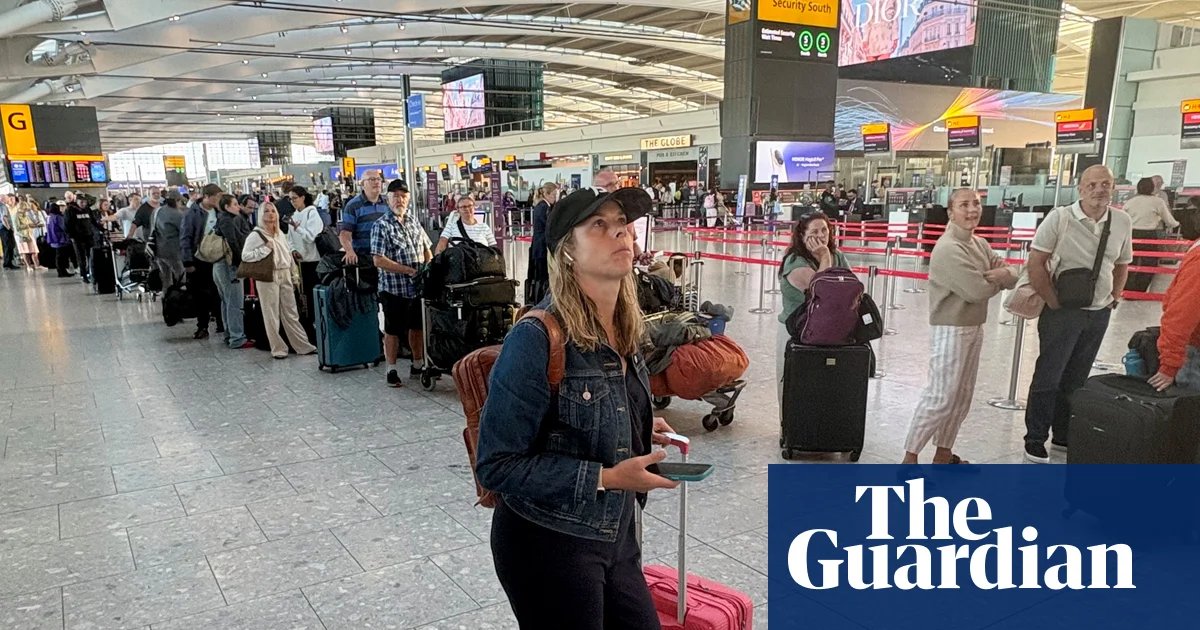
The air traffic control outage that caused thousands of flights to be grounded across the UK earlier in the week was caused by a military aircraft entering “spurious” flight data into the system, according to a report.
Hundreds of thousands of passengers were affected after more than 2,000 flights were cancelled on Tuesday when the system used by the National Air Traffic Services (Nats) shut down for four hours.
According to the Financial Times, four people briefed on the incident claimed that the shutdown was caused by a flight plan submitted by a UK military aircraft, which caused a meltdown in air traffic control systems used by Nats which remained unfixed for several hours.
The paper also reported that Nats operations officer Kathryn Leahy called the operations managers of numerous airports and airlines, and “tensions boiled over” after Leahy informed them their flight processing system did not have a dedicated backup due to Nats being in the midst of a “complete overhaul of its systems” and because the amount of data it keeps meant duplicating it would cost “vast amounts”.
The crisis has put pressure on Martin Rolfe, the chief executive of Nats, who was summoned to a meeting by transport secretary Heidi Alexander on Wednesday.
Alexander, who said she did “not believe the issue was unavoidable”, was understood to have given Rolfe a week to report on the causes of the shutdown, while also commissioning an independent review by the Civil Aviation Authority (CAA) into the incident.
The outage is the most serious to affect British commercial airspace since August 2023, when a technical problem led to almost 1,600 flights being delayed. Nats came under fire after that episode, with the CAA setting out 34 recommendations to improve its systems to avoid similar incidents, all of which were said to have been fully implemented.
Rolfe ruled out a cyber-attack, which was initially suspected, saying he “believes we’ve never seen an incident happen more than once, so this will be something different that we’ve never seen in 50 years of operation”.
Numerous airlines have already called for Rolfe to resign or be fired over the outage. Ryanair’s chief executive, Michael O’Leary, accused Rolfe of “telling lies to save his own skin” and said his position was “untenable”.
O’Leary added: “We don’t need more investigations, we don’t need more reports and we don’t need another parliamentary committee hearing where Martin Rolfe will promise change, will promise resilience and will promise an effective backup system.”
The delays led to someaircraft full of passengers being stuck waiting for information for more than four hours, while flights due to arrive in the UK were diverted to different airports, with some forced to land in Germany.
Despite the far-reaching effect of the outage, it was understood that passengers affected were unlikely to be able to claim compensation, as delays were due to “extraordinary circumstances”.
The Ministry of Defence has said there was no wrongdoing on the part of the military.
A spokesperson from the MoD said: “We do not believe there’s any indication of an error on the part of the military. This is subject to the live Nats investigation, so it’d be inappropriate for us to comment further while that’s ongoing.”
Traffic & Transport
London Underground workers exposed to asbestos without protective masks, documents reveal | Asbestos

Hundreds of London Underground workers could have been exposed to asbestos for almost 20 years without protection required under safety regulations, according to documents seen by the Guardian.
Under 2002 rules on controlling asbestos and other hazardous materials, employers are required to take a series of precautions, including ensuring exposed workers are given individually fitted face masks to prevent inhalation of toxic dust.
Emails and minutes of meetings reveal that London Underground managers admitted that face-fitted masks were not issued to staff until as late as 2020.
The documents suggest Transport for London (TfL), the public body responsible for London Underground, is at risk of more expensive legal claims after already paying out more than £7m in asbestos-related compensation and legal fees.
The documents were disclosed as part of an employment tribunal hearing brought by a former London Underground cleaner, Micky Steeds, who successfully claimed he was unfairly dismissed after raising concerns about exposure to asbestos and other toxic dust.
In one set of minutes, a manager said he had no recollection or record of face-fitted masks being issued in 2018 to the team responsible for cleaning dust from vents, which included asbestos-sheathed cables. He said such masks were not introduced to London Underground’s civils teams, responsible for all the tube buildings, until late 2020.
In December 2020, another manager who was head of lifts and escalators said: “A lot of people aren’t face-fitted,” adding: “Staff shouldn’t have worked without face fit, but it has happened.”
He blamed the failure on a lack of training.
In 2019, an email from a third manager said allowing Steeds to carry on working without a face-fitted mask was oversight that would be rectified in future. In a 2023 email, a fourth manager admitted that asbestos dust fibre sampling, which is also required under the law, was not conducted.
TfL has recorded more than 20,000 asbestos-containing materials across its network, according to data released under freedom of information to Confront Power – an investigative newsletter on industrial harms.
TfL insists it has controls in place to manage the risk of asbestos exposure to its staff and the public. In an email in December 2022, a senior engineer responsible for hazardous materials said test results showed levels were “below the relevant workplace exposure limits for both respirable and inhalable dust”. But he said dust being cleaned contained “traces of asbestos fibre occasionally”.
But Steeds and one of his former colleagues point out that tests were not conducted while the asbestos was being cleaned and disturbed.
And minutes of meetings between staff and a manager also revealed issues with damaged asbestos, which is more dangerous. One experienced cleaner said he encountered asbestos on cables 90% of the time and sometimes: “Broken chunks of asbestos or cable shearing.”
Asked what he did when he found asbestos, he said: “We would just carry on and use common sense … don’t bash cables and do what you can.”
Catriona Ratcliffe, a solicitor from the personal injury team at LeighDay, said: “Where the asbestos materials are damaged or in poor condition, the risk of exposure is higher because there is more opportunity for the fibres to be released into the atmosphere.”
Earlier this year Ratcliffe secured a six-figure settlement from TfL for a former inspector who was diagnosed with sarcomatoid mesothelioma 27 years after supervising the removal of asbestos from the Northern Line.
She said the documents in Steeds’ case could result in more injury claims. She added: “If someone is exposed to asbestos over many years, even at low levels, that is going to put that person at risk. And if the employer had knowledge of the risk of exposure, that could result in a legal claim if they have not taken the precautions required under regulations.
“Under the control of asbestos regulations [if exposure to asbestos is unavoidable] employers should be giving workers full protection including face-fitted respiratory masks to reduce that risk as far as possible.”
Steeds, who was not fitted with a proper mask for 15 months, said: “Over the years, TfL must have put the health of hundreds of workers at risk by failing in their legal duty to provide fitted masks. It makes me so angry that even when I told them about it, they ignored my concerns and tried to cover it up. The incompetent managers who allowed this to happen now have serious questions to answer.”
Rob Donnan, a former LU cleaner who is appealing against an employment tribunal’s rejection of his claim for unfair dismissal, said he worked without a fitted mask for three years. He estimated that up to 80 cleaners in the vents department alone were not fitted with masks between 2002 and 2020 and that a further 300 staff in the escalator department were similarly unprotected.
A TfL spokesperson said: “We have strict controls in place, in line with the government’s control of asbestos regulations, which ensure customers and staff are not at risk from exposure to asbestos when travelling or working on the tube network. Our specialist teams monitor and manage locations where asbestos has been found to ensure the safety of everyone travelling or working on the network.”
They added that, as TfL was appealing against Steeds’ successful tribunal ruling, it was unable to comment further.
Traffic & Transport
Thousands of ebikes seized by London councils as anger rises over blocked paths | Cycle hire schemes

London boroughs have seized at least 3,000 ebikes this year, a Guardian investigation has found, as hire companies face growing calls to stop bicycles littering streets and blocking pavements.
Local authorities across the capital have seized 3,393 hazardously parked or abandoned ebikes so far this year, 23% higher than the number seized during all of 2025.
Lime, the California-based bike rental company, accounted for more than 2,000 of the seizures this year, according to figures provided by 19 reporting authorities under a freedom of information request. The rival bike company Forest ranked second, at 978 seizures overall, followed by Voi at 103.
Dockless ebikes have surged in popularity in recent years as a cheaper and greener alternative to other modes of transport. One in 10 of the 1.5m daily cycle journeys in the city are made using dockless ebikes, according to estimates by Transport for London (TfL).
However, campaigners are calling on providers to do more to prevent buildups of their bikes on pavements and roads.
“Irresponsibly parked ebikes cause a lot of problems,” said Zak Viney, of the campaign group Living Streets. “It prevents people from walking and wheeling on the street safely.”
Erik Matthies, policy lead at the Royal National Institute of Blind People, said the rise in abandoned ebikes was overwhelming blind and partially sighted people, as well as elderly people and wheelchair users.
“People are having collisions and injuries due to bikes left on the pavement, and the problem is getting worse,” he said. “There are blind people who tell us they do not go out on their own any more and they do not make journeys that they used to.”
The Guardian sent freedom of information requests to all the 21 boroughs across London that have dockless bike contracts, as well as the City of London, the authority that manages the financial district in the centre of the capital. Of these, nine said they did not seize or fine any bike operators, and three either did not reply within the deadline or said they did not hold the information.
James Slater, a councillor in Camden, said ebikes had been left in resident parking bays and had obstructed traffic on roads. “During the solar eclipse we had swarms of ebikes around Primrose Hill and Hampstead Heath,” he said. “The operators have a responsibility to make sure the bikes are not causing a public nuisance.”
Bike operators argue councils are not investing sufficiently in building more parking bays, which could prevent the buildup of poorly parked bikes on pavement.
Meanwhile, councils have bemoaned a lack of centralised regulation across London, which they argue would make planning easier.
Slater said the regulation across London was like a “jigsaw puzzle”.
“We need to have a London-wide approach,” he said. “It’s very difficult for 32 councils in London to all have slightly different policies, and in some cases different operators on borough boundaries.”
after newsletter promotion
The English devolution bill, passed in April, gives local authorities in England fresh powers to license rental ebike operators and set requirements around parking, safety and accessibility standards.
In London, the new licensing powers go to TfL, which is expected to create a single capital-wide regulatory framework for dockless ebike operators. The mayor of London’s office said it was working closely with TfL and the Department for Transport on the secondary legislation required to implement “much-needed controls as quickly as possible”.
A spokesperson said: “It’s vital that safety improvements sit at the heart of any future regulation to ensure the industry can continue to thrive. The mayor continues to urge all dockless operators to fully engage with London boroughs and TfL to ensure their services work well for all Londoners.”
Lime said the fact it was the biggest ebike operator in London should be taken into account when considering the number of its bikes seized, adding that these incidents mostly occurred at overcrowded parking bays.
“The vast majority of our riders end their trips responsibly, and a very small proportion of total rides result in seizures and fines by councils,” a spokesperson said.
“We recognise that parking is a challenge across the industry largely due to ebike parking not keeping pace with growing demand for rental ebike services.”
Forest also said the number of designated parking bays had not kept pace with demand, adding that it was “working close with boroughs to encourage responsible parking and ensure our service works for everyone”.
A Voi spokesperson said: “Voi vehicles should never be parked in a way that blocks access routes, lift areas, pavements, entrances or emergency routes. We recognise the particular impact poor parking can have on disabled people, parents with pushchairs and people using mobility aids, and we take reports of obstruction seriously.”
Traffic & Transport
New battery-powered trains will ‘bring faster journeys to north’ | Rail transport
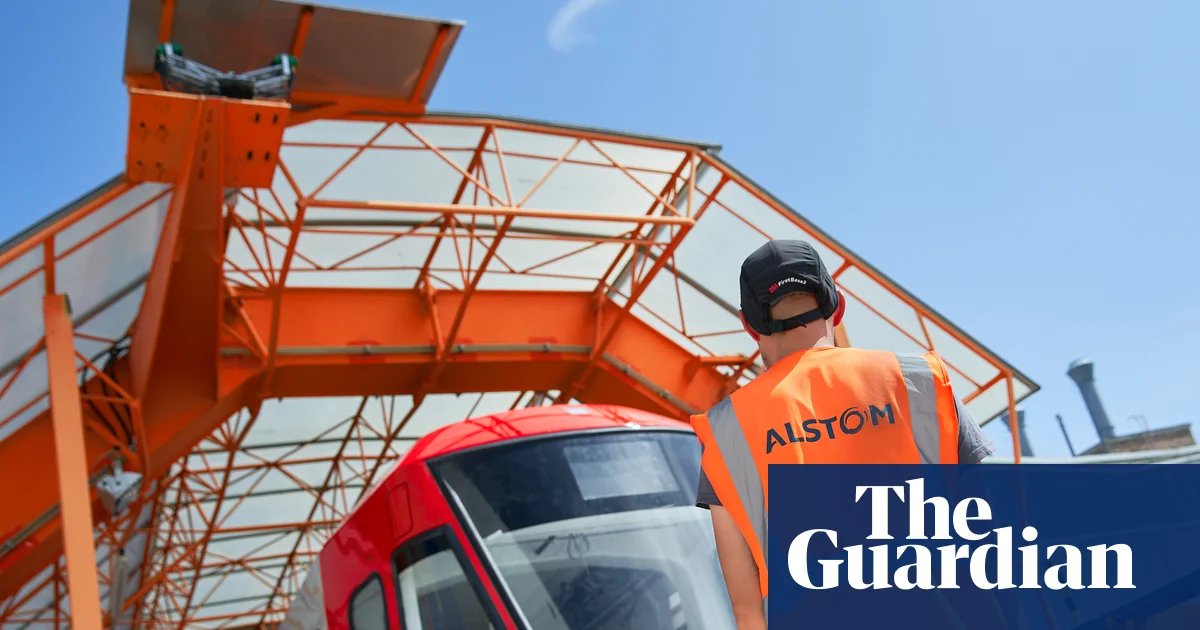
No 10 has announced the construction of a new fleet of battery-powered trains that will “bring faster, more reliable journeys to the north”.
The 29 new trains, which will be run by TransPennine Express, are set to be built in Alstom’s Litchurch Lane works in Derby from 2028, which the government says will support 350 local jobs, as well as nearly 6,000 across the UK.
The new fleet will be made up of Adessia Stream trains, a battery-powered model that will be the first of its kind to be used for long-distance mainline journeys in the UK when it enters service in 2034.
Prime minister Andy Burnham, who uses trains regularly to move between London and Manchester, highlighted the need for more reliable and efficient services, with the new trains pitched as making journeys between major northern cities shorter while increasing capacity on rail networks by 30% in the next decade.
Burnham said: “I’ve lost count of the number of times someone has stopped me to tell me about the train that never came. And when that happens, it means missed shifts, missed appointments and missed opportunities.
“Today that starts to change. These 29 new trains will bring faster, more reliable journeys to the north, and thousands of British jobs for the next generation.
“It’s exactly what Great British Railways is all about – taking back control of the basics and getting Britain believing again.”
As well as speed and capacity, the new trains are set to run without emissions even on non-electrified stretches of the network, while also having more accessible step-free boarding and onboard wifi.
Transport secretary Heidi Alexander also praised the announcement, calling it a sign of how Great British Railways “will deliver better journeys for people while backing British business” and allowing passengers to “wave goodbye to overcrowded, delayed diesel trains and step onboard faster electric trains which are fit for the future”.


LIVE: Oxford United 3-0 Burton Albion – Sibley, Dembele and O'Donkor secure win

Oxford United secure patient three-goal win over Burton Albion

LIVE: Oxford United vs Burton Albion – U's look to build on Leicester rout
-

 Oxford News4 weeks ago
Museum evacuated and Oxford University closed amid incident
-

 Oxford News3 weeks ago
Richard Hammond takes control of classic car company
-

 Business & Technology4 weeks ago
Love Island unknowns outshine influencers in growth
-

 Business & Technology4 weeks ago
Apprentices say AI is reshaping tech skills demand
-

 Oxford News4 weeks ago
Royal Mail customer notice to anyone writing addresses by hand
-

 Oxford Events3 weeks ago
Stage Watch: Now You See Me, Comedy About Spies, Standard Of Living, Every Woman & Silence of Lambs
-

 Business & Technology4 weeks ago
UK flight school collapsed into liquidation
-

 Oxford Events2 weeks ago
What’s on in Oxfordshire this September