
UK News
Middle East crisis live: US insists Iran has not rejected proposal to end war amid mounting confusion | US-Israel war on Iran

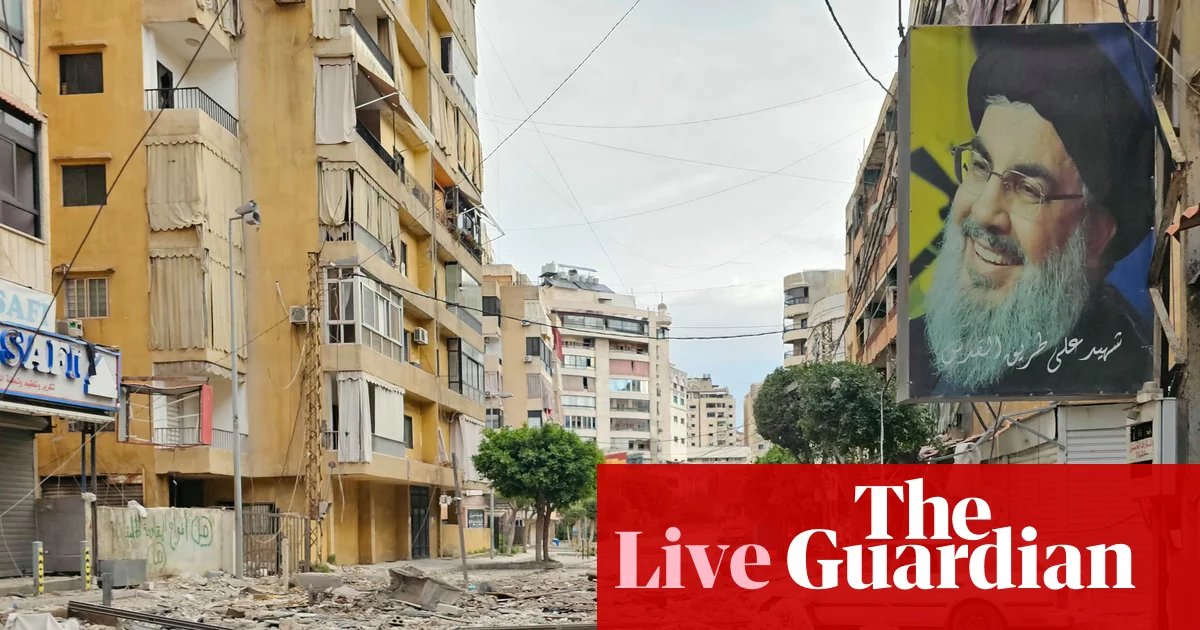
White House insists Iran has not rejected US peace proposal
Asked about reports that Iran has rejected the US 15-point plan to end the war, Leavitt says “they have not” and insisted talks are continuing.
She says:
However, I saw a 15-point plan that was floated in the media. I would caution reporters in this room from reporting about speculative points, speculative plans from anonymous sources.
The White House never confirmed that plan. There are elements of truth to it but some of the stories I read were not entirely factual.
Key events
Leavitt is then asked about Trump’s repeated comments recently that regime change has been achieved in Iran.
“Has it not?” she cuts in. “Their entire leadership has been killed, and nobody has really seen or legitimately heard from this alleged new leader, so wouldn’t you say there’s been a change in the regime?”
She goes on: “There’s been a change in the regime leadership, which is what the president said, so thank you for confirming he is right.”
Mojtaba Khamenei, son of the late Ayatollah Ali Khamenei, who was assassinated in the initial US-Israeli strikes on Tehran on 28 February, was named supreme leader earlier this month. He was injured in that attack, and has not been seen or heard in public since, though written statements have been released in his name, fuelling speculation about the extent of his injuries. Trump has speculated he could even be dead, and had previously expressed his disapproval of him as leader.
Leavitt is then asked whether Trump still believes the US should have a role in choosing Iran’s new leadership. She replies:
I think the president obviously believes the US wants to have someone in leadership in the Iranian regime that will be much more favourable, that would would be willing to with the US, that would no longer chant ‘death to America’ … These would all obviously be good.
Amid mounting confusion over the 15-point plan, Leavitt is asked a follow-up question.
Q. Just to follow up, because you said that some of the information that’s been out there about the 15-point plan is inaccurate. Can you say what is accurate with respect to ballistic missiles, the nuclear ambitions and the strait of Hormuz, which are things that the president has laid out that he wants to see a couple of times in the past?
Here is the White House press secretary’s brow-raising reply:
If you’ve heard it from the president of the United States, obviously it’s true, as well as the objectives of Operation Epic Fury.
She is also pressed on criticism that Trump’s approach has shifted from demanding that Iran can’t have a nuclear weapon to tighter restrictions on nuclear enrichment generally.
The president has been “quite clear” on what he wants to see from the Iranian regime, she says, without clearing anything up.
Leavitt is then asked what has changed that has made JD Vance emerge as a more active participant in negotiations with Iran.
“I don’t think anything has changed,” Leavitt says. “The vice-president has always been a key member of the president’s right hand man and a key member of the president’s national security team. He’s been part of these discussions, throughout this entire course of the administration.”
She added: “The vice-president has been by the president’s side every step of the way, and any reporting otherwise is just completely false. I see him in the room, again, the president seeks his counsel on all matters, both foreign and domestic.”
It was reported on Tuesday via Pakistani sources that Vance was being put forward as a probable chief negotiator from the US side if talks went ahead – after Iranian sources said they would refuse to sit down with Trump’s Middle East envoy, Steve Witkoff, or Trump’s son-in-law Jared Kushner, who led the nuclear negotiations with Iran before the war, and with whom there was “zero trust”.
White House avoids question of whether US boots on the ground needed to reopen strait of Hormuz if talks fail
Leavitt is then asked if the only other option to reopen the strait of Hormuz if negotiations with Iran fail is to put US boots on the ground, given that the US’s allies have said they’re either unable or unwilling to assist.
Leavitt says she won’t answer a hypothetical question, and that the decision is for the president, as commander-in-chief, to make.
Next, Leavitt is asked if the United States is providing support for Israel’s offensive in Lebanon, and if Trump is concerned that more than a million people have been displaced.
On the first part of the question, Leavitt says she’s “not in a position to comment” on this.
On the second part, she says “of course” Trump is concerned and that is why it’s important to “eliminate the threat” of the Iranian regime and their proxies, including Hezbollah.
That’s why Trump “wants to see this move as quickly as possible over the next couple of weeks”, she says.
White House insists Iran has not rejected US peace proposal
Asked about reports that Iran has rejected the US 15-point plan to end the war, Leavitt says “they have not” and insisted talks are continuing.
She says:
However, I saw a 15-point plan that was floated in the media. I would caution reporters in this room from reporting about speculative points, speculative plans from anonymous sources.
The White House never confirmed that plan. There are elements of truth to it but some of the stories I read were not entirely factual.
White House: Trump’s preference is peace – but is prepared to ‘unleash hell’ on Iran
Leavitt says that following president Donald Trump’s “powerful threat” at the weekend, it was made clear to the US that Iran wanted to hold talks.
She says Trump is “willing to listen” and says he has been engaged in constructive discussions, leading to the postponement of planned strikes against Iran’s energy infrastructure.
She adds:
The president’s preference is always peace. There does not need to be any more death and destruction.
But if Iran fails to accept the reality of the current moment, if they fail to understand that they have been defeated militarily and will continue to be, president Trump will ensure they are hit harder than they have ever been hit before.
Leavitt says Trump is not one to bluff and that he is prepared “to unleash hell”.
US military ‘annihilating’ Iran’s navy, destroyed 140 vessels – Leavitt
White House press secretary Karoline Leavitt says that the United States is “annihilating” the Iranian navy, “steadily degrading its ability to terrorist merchant ships”.
Speaking at a press conference, she said:
Just over three weeks in, it is abundantly clear that Operation Epic Fury has been a resounding military triumph.
More than 9,000 enemy targets have been struck to date. Compared to the start of the operation, Iran’s ballistic missile and drone attacks are down by roughly 90%.
She said the US is also “annihilating” Iran’s navy, having destroyed 140 vessels, including almost 50 mine-layers, adding:
This is the largest elimination of a navy on the face of the planet in a three-week period since World War II.
We are keeping an eye on the White House briefing with Donald Trump’s press secretary Karoline Leavitt.
It is due to start imminently and any lines relevant to the Middle East crisis, specifically the US-Israeli war on Iran, will be covered here.
Stay tuned.
A joint statement by Kuwait, the United Arab Emirates, Bahrain, Saudi Arabia, Qatar and Jordan on has called on Iraq to take the necessary measures to immediately stop attacks launched against neighbouring countries from Iraqi territory.
The statement said the call comes to preserve “brotherly relations” and avoid further escalations.
Since the start of the Israeli-US war on Iran, Iran-backed Iraqi militias have claimed responsibility for attacks on several US bases in the region.
Russia said Wednesday it was “deeply outraged” by a reported strike on the grounds of Iran’s Bushehr nuclear power plant, which it partially constructed and helps operate.
“We are extremely outraged by this reckless, irresponsible manifestation of a disastrous course,” the Russian foreign ministry said in a statement on its website.
A projectile landed within the plant’s compound on Tuesday night, Iran’s atomic energy organisation said, accusing the United States and Israel of being responsible.
Stefanie Glinski
The days after Nowruz, the Persian New Year, are usually a bustling time in Tehran, with spring arriving, trees blossoming, businesses reopening after the holidays, and people returning to work and school.
This year, however, Iranians are trying to maintain a semblance of ordinary life against the constant backdrop of explosions, airstrikes – and a conflict many fear may drag on for weeks or months.
“More and more, people are starting to normalise this war,” said Farhad, a photography editor in Tehran. “It’s difficult, but we’re adapting and trying to return to our daily lives as much as possible. There’s no alternative. We’re tired. We just want peace.”
Explosions lit up the city’s skyline overnight on Wednesday as Israel launched fresh airstrikes, but by the morning, joggers were exercising again in the sprawling Pardisan Park. Schools and universities remain closed since the start of the war, but shops, restaurants and cafes are slowly reopening.
Aylar, a 39-year-old human rights worker who spent the first weeks of the war sheltering in her apartment with her cats, said that she had paid for an expensive VPN to try to circumvent the internet blackout imposed by Iranian authorities so she can talk to relatives abroad. “On the same day, I also went for coffee and chocolate cake with friends on what felt like a sunny spring day. These conflicting realities are bizarre,” she said.
Filipino defence minister Gilbert Teodoro, whose country has declared an energy emergency as a result of the Middle East war, has said that the strait of Hormuz must be reopened “immediately”.
Iran has virtually closed the vital strait since the US-Israeli strikes that started the war on 28 February, causing global oil and gas prices to soar.
On Tuesday, Philippines president Ferdinand Marcos declared a state of “national energy emergency,” citing risks to the domestic fuel supply and energy stability created by the war in the Middle East.
“It is of vital importance to us that the strait of Hormuz be opened immediately and kept safe,” Teodoro told AFP in an interview in Paris.
“Not only for the seafarers, but also for Philippine consumers. The poor Filipinos who need to pay astronomical prices for electricity, fuel, and power. I think the effects are worldwide.”
Iran could open a new front in the Bab al-Mandab Strait if attacks are carried out on Iranian territory or its islands, Iran’s semi-official Tasnim cited an unnamed Iranian military source as saying on Wednesday.
Yemen’s Iran-aligned Houthi group has previously launched attacks in the region where the strategic Bab al-Mandab Strait is located, Reuters reported.
Saeed Shah
Iran has sent a warning to the United States that it will carpet bomb its own territory to attack any American troops landing there, according to diplomats from a third country who passed on the threat to Washington.
The US is sending thousands of ground troops to the Middle East, which could be deployed to forcibly lift the Iranian blockade of the strait of Hormuz, which is choking global oil and gas supplies from the Gulf. Kharg Island, a tiny island in the Persian Gulf, is thought by analysts to be a likely target for invasion.
Tehran is willing to bomb its own infrastructure at Kharg Island, a crucial export terminal for Iranian oil, or elsewhere, to target American soldiers there. Iran believes that, as any landing party will have limited missile defences available, this would mean a bloodbath for US forces.
“Iran says that they don’t care that they will have to blow up their own territory,” a diplomat involved told The Guardian. “They will do it to kill American soldiers.”
The presence of Americans on Iranian soil would cross a new red line for Iran. The US military could aim to seize territory, in order to make Iran open the strait. Aside from Kharg, options include deploying the forces along Iran’s coastline or taking one of the other small islands.
Hezbollah chief Naim Qassem said Wednesday that negotiating with Israel under fire would amount to “surrender” for Lebanon, as Israel launched new strikes and Hezbollah said it was targeting Israeli troops.
UN secretary-general Antonio Guterres warned that “the Gaza model must not be replicated in Lebanon”, a comparison previously drawn by Israel officials talking about operations in Lebanon.
“Hezbollah must stop launching attacks into Israel. And Israel must stop its military operations and strikes in Lebanon, which are hitting civilians the hardest,” Guterres told reporters at the United Nations.

William Christou
Iranian officials expressed initial disapproval of a US ceasefire plan on Wednesday, even as intermediaries suggested direct talks between the two could start as early as this weekend.
Representatives from Pakistan who reportedly delivered the US plan to Iran told the Associated Press that it was a 15-point proposal that would include sanctions relief for Iran, dismantling Iran’s nuclear programme, restricting its use of missiles and reopening the strait of Hormuz, a chokepoint for about 20% of the world’s oil.
An Egyptian official also suggested it would restrict Iran’s support for armed groups across the Middle East. Some of these proposals proved to be intractable sticking points in negotiations before the war began.
A senior Iranian official speaking to Al Jazeera described it as “extremely maximalist and unreasonable”, while other officials said the country was still reviewing the proposal, despite viewing it as too favourable to US demands.
Iran had previously scoffed at the diplomatic effort and mocked the US president, Donald Trump, claiming Washington was negotiating with itself. Overnight and on Wednesday, Tehran launched even more attacks on Israel and Gulf countries, including an attack that sparked a huge fire at Kuwait international airport, while Israel continued its bombardment of Iran.
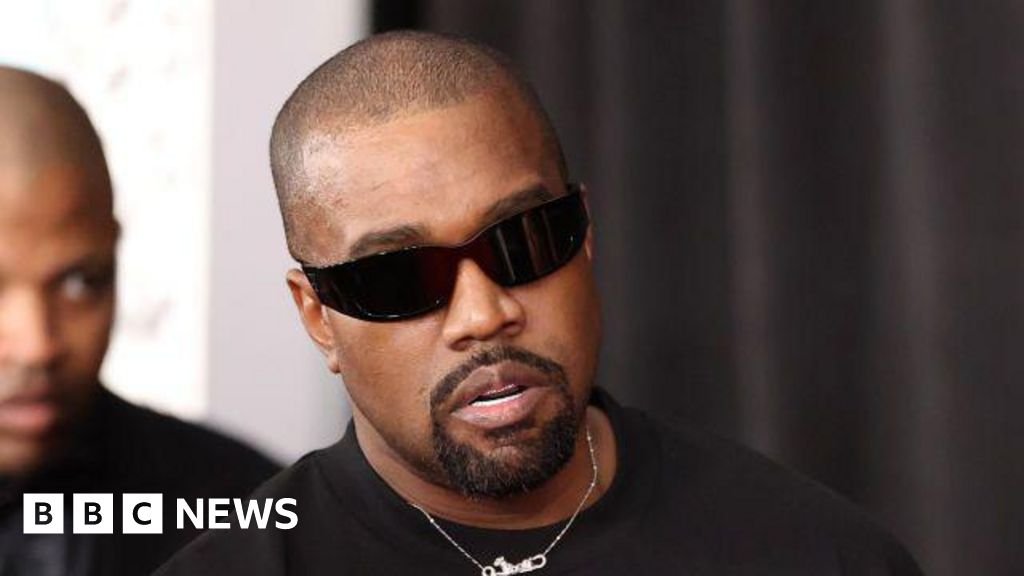
It will be his first UK performance in over a decade and since he received criticism for antisemitic comments.
Source link
Morning opening: Focus on Ukraine

Jakub Krupa
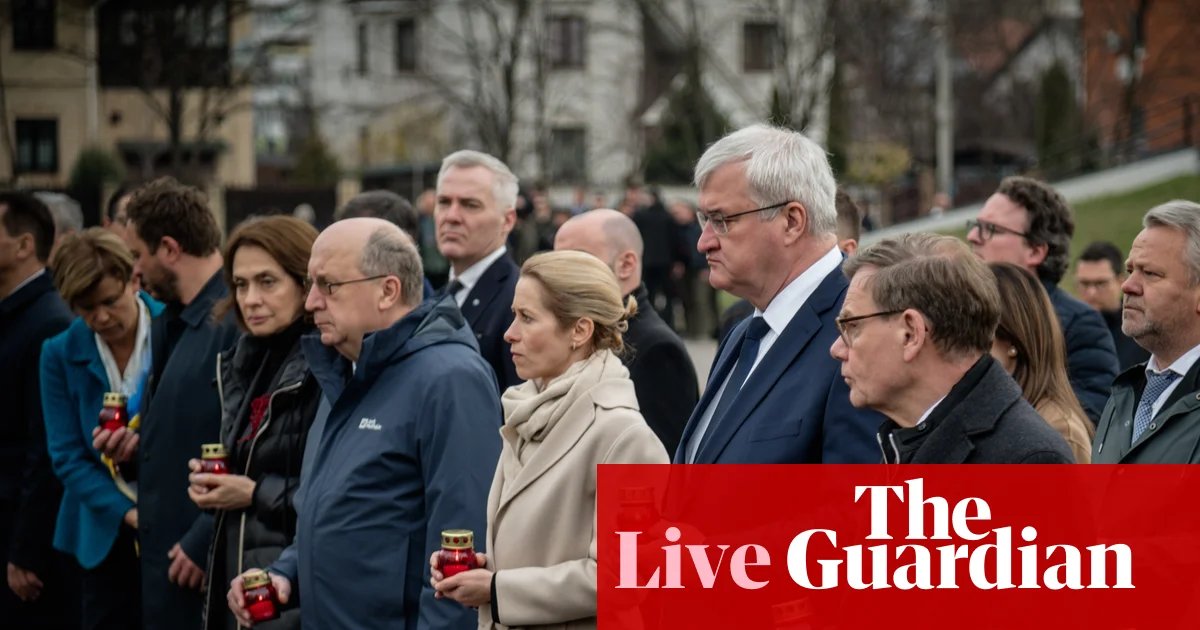
Several EU ministers are expected in Bucha, Ukraine, today to mark the fourth anniversary of the town’s liberation and the massacre that became one of the early symbols of the Russian aggression against Ukraine.

The anniversary marks a rare moment in recent weeks when the EU’s attention focuses back on Ukraine amid growing concerns about fallout from the Iran war. The EU’s top diplomat, Kaja Kallas, leads the delegation.
The ministers will discuss what needs to be done to ensure accountability for war crimes committed during the war through a special tribunal, which still needs more political backing and funding to come into existence.
Ukraine’s foreign minister, Andrii Sybiha, said in a post on social media:
“The scale of Russian atrocities in the course of its aggression is unseen on European soil since WWII. The crime of aggression is the root cause of them all. There must be accountability and there will be no amnesty for Russian criminals, including the highest political and military leadership of the Russian Federation.”
He drew a comparison with the Nuremberg trials against leaders of defeated Nazi Germany, saying the new tribunal was needed to “prevent such horrible crimes from repeating again in the future.”
But no progress is expected to be made on thorny issues of the EU’s €90bn loan to Hungary and the 20th package of sanctions against Russia, both of which continue to be blocked by Hungary.
Let’s see what the day brings.
Separately, EU energy ministers are holding a call later today to discuss the impact of the crisis in the Middle East on energy prices as some countries push with unilateral measures that they argue are needed to limit the impact on their economies.
I will also keep an eye on Denmark where the coalition talks continue after last week’s parliamentary election, which ended with a political deadlock.
It’s Tuesday, 31 March 2026, it’s Jakub Krupa here, and this is Europe Live.
Good morning.
Key events
Italy denies use of Sicily airbase to US aircraft carrying weapons for Iran

Angela Giuffrida
in Rome
Italy has denied use of an airbase in Sicily to US military craft carrying weapons for the war in the Middle East.
A source at the Italian defence ministry confirmed a report in Corriere della Sera that “some US bombers” had been due to land at Sigonella – a key US navy installation and Nato base – before heading to the Middle East.
According to treaties signed in the late 1950s, the US navy can use the base for logistical and training purposes but not as a transit hub for aircraft used to transport weapons for war unless in an emergency situation, permission for which needs to be approved in parliament.
The source said the US had sought permission to land aircraft that do not fall within the treaty, but was denied because there was no time to seek authorisation in parliament. It is unclear when the US had planned to land the aircraft.
For days, politicians in Sicily from Italy’s leftwing opposition parties have been urging Giorgia Meloni’s far-right government to clarify the situation at Sigonella after activity at the base increased since the start of the war in Iran and asked it to block the US from using bases in Italy for involvement in the conflict. Italy hosts seven US navy bases.
‘What is in it for the US?,’ Rubio asks about Nato amid standoff over using Nato bases for Iran operations
Another big story getting lots of attention in Europe today is the escalating standoff between the US administration and European Nato countries over their reluctance or refusal to support the US offensive operations in Iran.
Over the past few weeks, Trump repeatedly criticised Nato countries, saying they “have done absolutely nothing,” labeling them as “cowards,” and saying the US would “never forget” their refusal to help.
In the latest sign of tensions, US secretary of state Marco Rubio lashed out at Spain and other Nato allies overnight, telling Al Jazeera that it was “very disappointing” to see partners deny its request to use their airspace.
On Monday, Spain said it has closed its airspace to US planes involved in the war, stepping up Pedro Sánchez’s opposition to the conflict.
Rubio responded to the news by saying:
“I think it was very disappointing … and … look, the president and our country will have to re-examine all of this after this operation is over, but one of the reasons why Nato is beneficial to the United States is it gives us basing rights for contingencies.
It allows us to station troops and aircraft and weapons in parts of the world that we wouldn’t normally have bases, and that includes much of Europe.
And to see that in a time of need, [when] the United States has identified a grave risk to our national security and our national interests, and we needed to conduct this operation, we have countries like Spain, a Nato member that we are pledged to defend, denying us the use of their airspace and bragging about it, denying us the use of our of their bases – and there are other countries that have done that as well – and so you ask yourself, well, what is in it for the United States?”
Jakub Krupa
It’s worth adding that similar incidents were recently reported in Lithuania, Latvia and Estonia as Ukraine continues targeting Russia’s Baltic Sea coastal areas, including the port of Ust-Luga.
Estonia reported a number of suspected drones even last night, with a senior defence official telling media that “for the ninth consecutive day, military activity has been ongoing in Estonia’s neighboring Leningrad oblast at a level of intensity not seen since 1944,” Estonian broadcaster ERR reported.
‘The war has come close,’ Finnish PM says after drones fell in Finland

Miranda Bryant
Nordic correspondent
Meanwhile, the Finnish prime minister, Petteri Orpo, has said the war in Ukraine has “come close” after two drones fell on Finnish territory, but insisted that it did not constitute a military threat.
Two drones crashed in south-eastern Finland on Sunday – one north of Kouvola and one in Luumäki – in what is being treated as suspected territorial violations. One of the drones has been identified as Ukrainian.
Defence forces say they are carrying out almost daily surveillance and reconnaissance flights in response to the situation and Ukrainian drone operations near Finland on Russian oil facilities.
Orpo said in a press conference this morning: “The war has come close, and the effects have extended beyond our country’s borders”. But, he added, that Ukraine has right to defend itself and there is nothing to suggest that the drones were deliberately directed at Finland and therefore not a military threat.
“On Sunday morning, two drones fell in Finnish territory,” Orpo said.
Let’s remember what this is about: Russia is continuing its large-scale war of aggression for the fifth year, and Ukraine has the right to defend itself.
He added: “Last night, there were observations in the Baltic countries that drones had been seen nearby, meaning they were heading towards the Gulf of Finland.”
Major General Timo Herranen, of the Finnish defence forces, said that last night Finnish fighter jets were “in the air almost the entire time”.
On Sunday, the Finnish president Alexander Stubb said “there is no military threat to Finland”, adding that authorities responded immediately.
Monitoring and investigations, he said, were ongoing. “Finland is prepared to monitor and secure our territory.”
More details emerge on Hungarian foreign minister’s alleged links with Russia
Speaking of the €90bn loan and EU sanctions against Russia, and Hungary’s role in all of this, more details have now emerged alleging close contact between Hungary’s foreign minister Péter Szijjártó and senior Russian ministers.
A joint investigation by The Insider and four regional media VSquare, DelfiEE, FrontStory and the Investigative Center of Ján Kuciak, published this morning, alleged that Szijjártó regularly discussed the EU’s confidential plans on sanctions with Russian officials, actively looking for ways to block or delay their adoption.
In a series of conversations reported by the outlets, the Hungarian foreign minister reportedly told Russia’s foreign minister Sergei Lavrov that he is “always at your disposal” and offered help with removing certain individuals from EU sanctions.
Former Lithuanian foreign minister Gabrielius Landsbergis confirmed the authenticity of one of the exchanges that Szijjártó reportedly relayed onwards to the Russians.
One of the authors of the article, Szabolcs Panyi, one of the country’s most prominent investigative journalists, was last week accused by the Hungarian government of spying for Ukraine, a move widely condemned by media rights watchdogs.
The five media outlets said Szijjártó did not reply to their request for comment.
He has responded on X this morning seeking to ridicule the reporting by saying “they proved that I say the same publicly as I do on the phone. Nice work!”
“For four years we have been saying that sanctions are a failure, causing more harm to the EU than to Russia. Hungary will never agree to sanction individuals or companies essential for our energy security, for achieving peace, or those with no reason to be on a sanctions list,” he said.
Szijjártó had previously dismissed earlier reporting on this as fake news, but confirmed he held some calls with third-country partners, saying this was part of routine diplomacy.
The report is likely to cause further frustration in Brussels and in EU capitals amid growing anger over Hungary’s close relations to Russia, with both prime minister Viktor Orbán and Szijjártó regularly visiting Moscow.
The latest relevations come less than two weeks before the critical parliamentary election in the country, which could see Orbán ousted after 16 years in power.
It’s safe to say we are very likely to see someone ask the Commission for their reaction at their midday briefing later today.
Bucha ‘symbolises cruelty of Russia’s war’ against Ukraine, EU’s Kallas says
EU top diplomat Kaja Kallas said the Bucha massacre “has come to symbolise the cruelty of Russia’s war” against Ukraine as she vowed to bring Russia into account for its actions during the conflict.
“Four years after these mass killings, we remember the victims. What happened here cannot be denied,” she stressed.
She added the EU was “committed to ensuring that these crimes do not go unpunished, including by supporting the Special Tribunal for the Crime of Aggression, alongside the Claims Commission.”
“Russia must be held accountable for what it has done to Ukraine,” she said.
She earlier said the bloc “will keep providing military, financial, energy, and humanitarian support” to Ukraine.
Morning opening: Focus on Ukraine
Jakub Krupa
Several EU ministers are expected in Bucha, Ukraine, today to mark the fourth anniversary of the town’s liberation and the massacre that became one of the early symbols of the Russian aggression against Ukraine.
The anniversary marks a rare moment in recent weeks when the EU’s attention focuses back on Ukraine amid growing concerns about fallout from the Iran war. The EU’s top diplomat, Kaja Kallas, leads the delegation.
The ministers will discuss what needs to be done to ensure accountability for war crimes committed during the war through a special tribunal, which still needs more political backing and funding to come into existence.
Ukraine’s foreign minister, Andrii Sybiha, said in a post on social media:
“The scale of Russian atrocities in the course of its aggression is unseen on European soil since WWII. The crime of aggression is the root cause of them all. There must be accountability and there will be no amnesty for Russian criminals, including the highest political and military leadership of the Russian Federation.”
He drew a comparison with the Nuremberg trials against leaders of defeated Nazi Germany, saying the new tribunal was needed to “prevent such horrible crimes from repeating again in the future.”
But no progress is expected to be made on thorny issues of the EU’s €90bn loan to Hungary and the 20th package of sanctions against Russia, both of which continue to be blocked by Hungary.
Let’s see what the day brings.
Separately, EU energy ministers are holding a call later today to discuss the impact of the crisis in the Middle East on energy prices as some countries push with unilateral measures that they argue are needed to limit the impact on their economies.
I will also keep an eye on Denmark where the coalition talks continue after last week’s parliamentary election, which ended with a political deadlock.
It’s Tuesday, 31 March 2026, it’s Jakub Krupa here, and this is Europe Live.
Good morning.
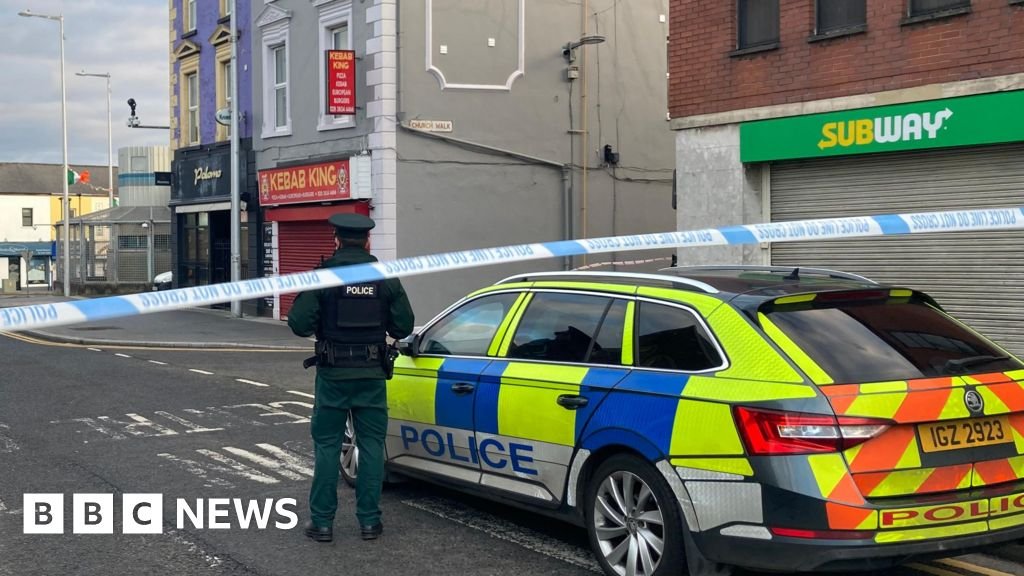
A delivery driver was forced to drive a suspicious device to Lurgan police station after being threatened, police say.
Source link



-

 Crime & Safety2 weeks ago
Oxford: ‘Next generation’ LimeBikes in city from today
-

 Jobs & Careers2 weeks ago
Why Join Oxford | Oxford University Jobs
-

 Jobs & Careers2 weeks ago
Explore our Careers
-

 Student Life2 weeks ago
The independent cinema battling Oriel College to stay open
-

 Oxford Events2 weeks ago
Michelin Guide Oxfordshire Restaurants – The Oxford Magazine
-

 Oxford Events2 weeks ago
Oxford News and Events, What’s on in Oxford, Exhibitions
-

 Jobs & Careers2 weeks ago
Internal Job Board for University vacancies
-

 Crime & Safety2 weeks ago
Crash partially blocks A40 and causes severe Oxfordshire traffic