
Traffic & Transport
List of buses as Andy Burnham announces £2 bus fare cap for passengers

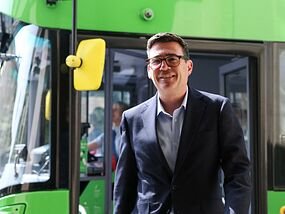
The Prime Minister hopes the reduced everyday travel costs will help ease the cost-of-living burden for passengers
Source link
Traffic & Transport
Air traffic control issue causes flight delays and disruption across UK | Airline industry
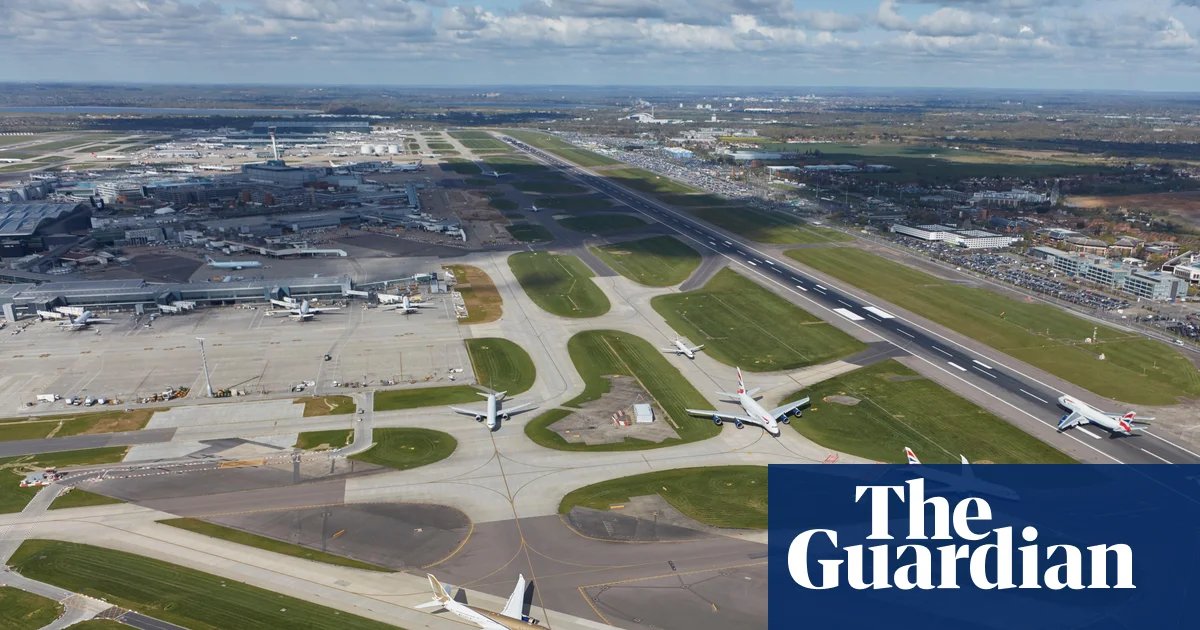
Flights around the UK are facing delays and disruption due to an air traffic control issue which has affected a string of airports including Heathrow and Gatwick and is expected to take “some time” to resolve.
Departures from London airports are most severely affected, with few take-offs since a fault was reported early on Tuesday afternoon.
Most flights due to depart Heathrow, Gatwick, Stansted and London City airports since 2pm appeared to have been delayed or are yet to take off. Flights from other airports around the UK, including Manchester, Edinburgh, Birmingham and Belfast airports, have also been affected.”
The air traffic control service Nats said at 1.46pm that it was “investigating a technical issue which is causing some disruption to flight departures”.
Nats later added that it had identified the problem, which was in its flight processing system. It said: “Our engineers are on site and working urgently to resume normal operations as quickly as possible. We recognise the ongoing disruption to travel, for which we sincerely apologise.
It continued: “Flights are still departing and airspace is open, but recovery will take some time. We will provide further updates as soon as possible.”
The UK’s biggest airport, Heathrow, said planes were continuing to arrive, although Eurocontrol said some inbound flights were being held at airports abroad, with disruption likely to continue until the evening.
In a statement, Heathrow added: “We are supporting our local Nats team in their efforts to resolve the issue as quickly as possible. We will provide updated information when we have it.
“We apologise to those disrupted and advise passengers to check with their airline for latest flight information.”
Heathrow’s website showed several flights due to depart this afternoon have been cancelled. British Airways said it was experiencing some disruption and was in touch with its customers.
Belfast City airport warned of “some disruption” to flights after the technical issue affecting Nats.
“Due to the technical issue referenced below, there may be some disruption to flights due to arrive in and depart from Belfast City airport,” they said in a statement.”
A Birmingham airport spokesperson apologised to customers and advised them to “arrive at Birmingham airport (BHX) in line with their airline’s check-in requirements and to contact their airline directly for the latest flight information and updates.”
Edinburgh airport said it was aware of the issue which “may impact operations”.
Traffic & Transport
Here in Liverpool, buses are back under public control – and that’s great for the only people who really matter | Steve Rotheram
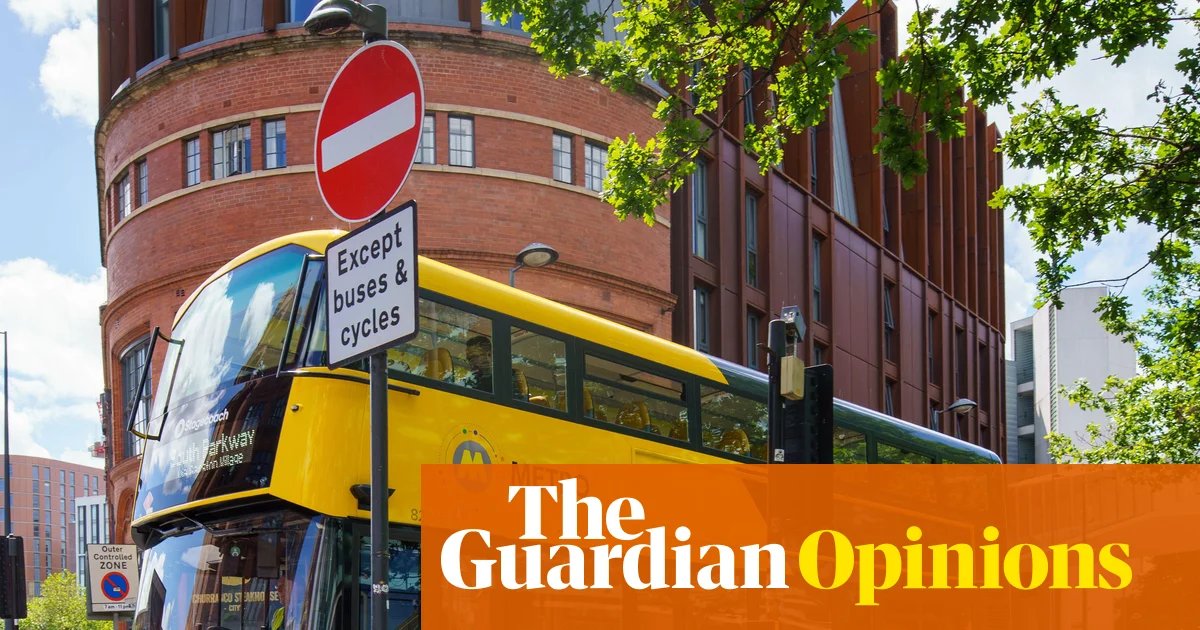
One of the best-known scenes from the TV series The Inbetweeners is the four angst-ridden teenage characters shouting abuse at people queueing at a bus stop. Only losers take the bus, is the point – except they use a much ruder word. There’s also a statement, misattributed to Margaret Thatcher, that any man over the age of 26 using a bus was a loser. This idea is deeply ingrained.
But when I was an MP it became obvious that there wasn’t the same stigma attached to jumping on the bus in London as there often was in other big cities. It often wound me up that the rest of the country was expected to accept a suboptimal public transport system – so much so that it could be joked that only losers would use it – while London retained its excellent bus service, which it ran under public control.
And I remember thinking: why can’t we have something like this at home in Liverpool? Well, last weekend Liverpool city region combined authority began to roll back the Thatcherite belief that private was all good, while public was all bad. For the first time in four decades, buses in the Liverpool city region have begun to be brought back under public control, starting in St Helens in Merseyside before spreading across the rest of the region.
What does this mean? Instead of private operators deciding where and when buses run, we will set the routes, fares and standards. Our franchised buses will still be operated by third parties. But we will set the rules, decide what kind of network our communities need and hold operators accountable for delivering it. It is the biggest change to public transport in our region for generations. Nobody standing at a bus stop at six in the morning cares about the finer points of franchising legislation. But they do care whether the bus turns up; whether they can get to work on time, get their kids to school or college, or make it to a hospital appointment.
Public control means we can start putting passengers first, with more frequent services, more evening and weekend buses, better connections to hospitals and railway stations and simpler fares. And we have kept single bus fares capped at £2, the price they have been for the past four years.
Change will be immediate. A new express service now connects St Helens directly with Liverpool John Lennon airport. For a family heading on holiday, that may mean avoiding airport parking charges. For somebody looking to work at the airport, it could open up a job. These changes will make a massive difference to people’s lives.
And, for me, that gets to the heart of the argument for public control. A bus route that helps somebody take a job, gets a student to college or allows an older person to remain independent has a value that won’t always show up on an operator’s balance sheet. Markets have their place. But public control allows us to ask not simply, “does this route make money?” but “do our people need it?”
That principle doesn’t stop with buses. We have bought a £500m fleet of new trains and are working towards bringing Merseyrail services into public ownership in 2028. In the coming weeks, the Royal Daffodil – our first new ferry ’cross the Mersey in 60 years, built by a loyal local workforce – will make its maiden voyage.
For decades we were told that privatisation and deregulation would inevitably deliver better services and that the government’s job was to get out of the way. The experience of millions of passengers tells a different story.
When he was mayor of Greater Manchester, Andy Burnham and I spent years working together to make that case and show what can be achieved when local leaders have the power to shape the services their communities rely on. Now we have a Labour government bringing our railways back into public ownership and giving local leaders more power over the essentials that ordinary people depend on.
after newsletter promotion
After decades in which the state steadily retreated from people’s lives, we have an opportunity to prove that active government can be a force for good again. That is what started in St Helens last weekend.
I want the Liverpool city region to have the best public transport system in the country. I want people to come here, get on one of our buses, trains or ferries, see what we have built and go home asking the same question I used to ask in London: why can’t we have this at home?
Traffic & Transport
London Paddington fire causes rail chaos as Heathrow trains cancelled | Public transport
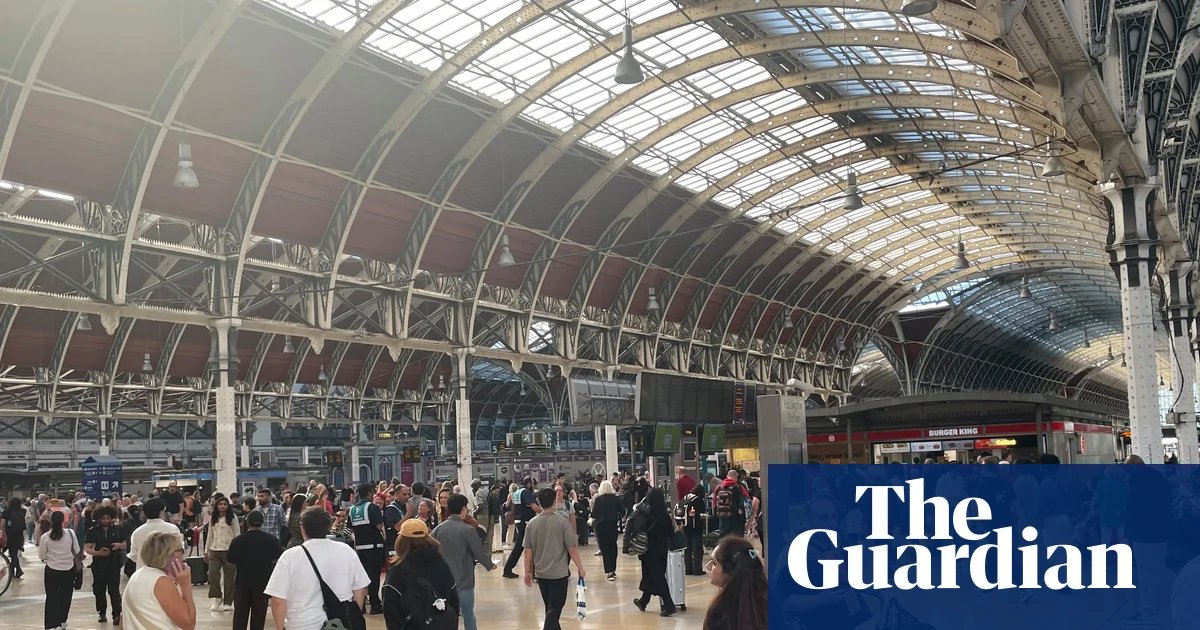
A fire near a train track in the London Paddington area has caused major disruption, with services to Heathrow airport cancelled.
The fire caused an electricity supply failure which has left all lines between Paddington and the airport blocked, National Rail said.
Cancellations and delays to services are expected until 7.15pm, it added.
Photos on social media show large plumes of smoke rising from the Paddington area.
Great Western Railway (GWR) services to Reading have been cancelled, while the Elizabeth line is part-suspended.
No trains are running in either direction between Paddington and Heathrow, the Heathrow Express said.
The airport advised passengers to leave extra time for their journeys, adding that the Piccadilly line, which runs services to the airport, is also experiencing delays.
Transport for London (TfL) said the Elizabeth line is suspended between Paddington and Heathrow terminals four and five, and between Paddington and Reading, while the line to Abbey Wood is experiencing severe delays.
There are severe delays across the entire Piccadilly line due to an earlier trespasser at Hammersmith, according to the TfL website.
GWR said trains may be cancelled, delayed or terminated at and started back from Reading, with disruption expected until 7pm.
The London fire brigade has been contacted for comment.


Mark Harris amongst Oxford United goals in League One revival

Jamie Cumming injury update issued after Oxford United thrash Foxes

Air traffic control issue causes flight delays and disruption across UK | Airline industry
-
 Oxford News4 weeks ago
Train cancellation alert amid ‘fault’ near London Paddington
-
 Oxford News4 weeks ago
Museum evacuated and Oxford University closed amid incident
-

 Business & Technology4 weeks ago
Currys rolls out NiCE software to unify customer service
-

 Business & Technology3 weeks ago
Apprentices say AI is reshaping tech skills demand
-

 Oxford Events4 weeks ago
Wilderness Festival 2026: four days of music, food, art and wild escapism
-

 Business & Technology4 weeks ago
Love Island unknowns outshine influencers in growth
-

 Oxford News2 weeks ago
Richard Hammond takes control of classic car company
-

 Oxford News4 weeks ago
Oxford’s iconic shark in roof celebrates 40th anniversary