Connect with us

Business & Technology

Keen AI wins funding for shared grid monitoring model

Published

on


SOFIAH NICHOLE SALIVIO

News Editor

Keen AI has secured £355,985 in Alpha-phase funding from Ofgem’s Strategic Innovation Fund to develop a shared artificial intelligence model for monitoring electricity grid assets. The project is backed by all three of Great Britain’s transmission operators.

The system, known as Foundational Shared Model Operations, or FoSMo, is being developed with National Grid as lead partner. It also includes SP Energy Networks, SSEN Transmission, UK Power Networks and Electricity North West. The group aims to create a single model trained on anonymised data from different networks, which each operator can then adapt for its own use.

Operators currently develop separate computer-vision systems to inspect many of the same assets, including pylons, cables, insulators and fittings. That increases costs and can limit the number of examples available to train models to detect rare defects.

FoSMo is intended to standardise how visual data is collected and analysed across participating networks. By pooling anonymised datasets, operators would gain access to a broader base of information than any one company could assemble alone.

The funding follows a proof of concept carried out with National Grid. The Alpha phase expands the work to cover transmission and distribution operators across Britain’s electricity system.

Shared model

The consortium estimates the shared approach could save about £22.6 million over five years if adopted across all participating operators. The savings would come from avoiding parallel development of similar models and reducing faults through earlier detection of asset problems.

Once fully adopted, the project is also projected to prevent about 85,000 customer interruptions a year and 5.2 million minutes of lost power. The focus is on identifying defects in overhead line components before they lead to service failures.

Britain’s electricity network is physically interconnected, but the software used to inspect assets has largely been developed in isolation by individual operators. Because faults and damaged components are relatively uncommon, a single network owner may not gather enough examples to train a model with consistent accuracy across all asset types and conditions.

Keen AI has previously worked with electricity transmission and distribution customers in Britain and overseas. It has processed more than one billion images and will act as FoSMo’s technical steward, including developing, maintaining and hosting the models in the UK.

Domestic control

Domestic hosting is a central part of the project. The companies involved say the model is designed so data remains under the control of each asset owner, with an emphasis on limiting data collection and long-term storage.

That reflects a wider policy focus on the electricity network as critical national infrastructure. The government has identified the grid as a national priority as it prepares for major expansion to support electrification and decarbonisation.

Supporters argue that a shared model built and hosted in Britain would allow operators to retain control over a key layer of digital infrastructure rather than rely on fragmented systems or overseas suppliers. They also see it as a way to provide a common monitoring framework as new overhead lines, substations and grid connections are added.

A wider rollout would come as network companies face growing pressure to manage ageing assets while expanding the system. Automation in inspection and condition assessment has become a greater focus as operators seek to identify equipment issues earlier and reduce the risk of faults.

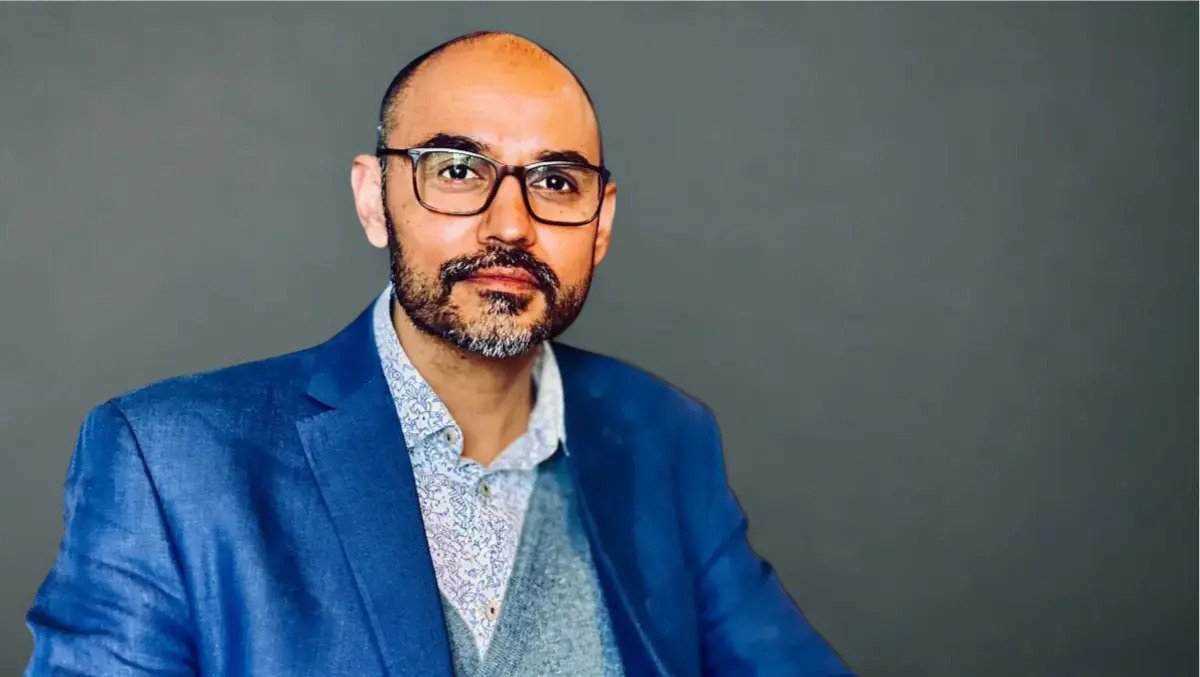
Amjad Karim, Chief Executive Officer and Founder of Keen AI, set out the rationale for the approach. “The UK is investing tens of billions in its electricity network. We can either build the AI that manages it ourselves or hand that capability to someone else. FoSMo keeps it here, with AI developed collaboratively, data owned by the industry, and only getting better as the grid expands. When every major network operator shares what they know about their assets, we end up with something more robust than any of them could build alone. That’s how the UK can future-proof a grid that’s about to double in size,” Karim said.

National Grid said the project could support network upgrades while reducing duplicated work across the sector. “We recognise the significant value that AI tools can bring to enhancing operational insight and efficiency, so we’re very pleased to work with Keen AI on this project. By pooling data and expertise, the model has the potential to support our upgrades of the grid while also making considerable cost savings across the industry,” Ward said.



Source link

Continue Reading
Click to comment

Leave a Reply

Your email address will not be published. Required fields are marked *

Business & Technology

Cotswolds entrepreneur turns nit problem into business

Published

on


Nit Happens, based in Kingham, Oxfordshire, was launched by Ewelina Szulc-Barnsley, who turned her experience of helping friends and family with head lice into a fully-fledged business.

The service offers in-home lice removal using natural products and has gained a loyal customer base across the North Cotswolds.

Ms Szulc-Barnsley said: “It’s definitely not a glamorous business, and probably not a job many people would choose at first glance, but that’s exactly why there’s such a need for it.

“Families are often stressed, overwhelmed and embarrassed when dealing with head lice, and I wanted to create a service that genuinely helps people without harsh chemicals or shame.

“What started as helping friends and family has turned into a business I’m incredibly proud of.

“Now I want to help other women create the same opportunity for themselves.”

With growing demand for her services, she is now developing a franchise model to support other women in building flexible, family-friendly businesses of their own.

The business focuses on a calm, judgement-free approach and uses only chemical-free products, essential oils, and specialist lice-removal equipment.

Ms Szulc-Barnsley believes franchising could offer a path to business ownership without the uncertainty of starting alone.

She said: “I want to create a franchise model that gives women the training, support and encouragement to build something for themselves.”


Source link

Continue Reading

Business & Technology

Tes appoints Wayne Strydom as Head of AI innovation

Published

on


SOFIAH NICHOLE SALIVIO

News Editor

Tes has appointed Wayne Strydom as head of AI and innovation as it develops its Tes360 platform for schools and trusts.

Strydom brings more than 10 years of experience in AI strategy, digital transformation and technology delivery across large organisations. His role includes shaping Tes’s AI strategy, supporting responsible innovation across the business and identifying ways schools and educators can use advances in artificial intelligence.

The appointment adds a senior AI-focused role to Tes’s leadership team at a time when education groups are weighing how generative AI and related tools can be used in classrooms and school administration. For suppliers to the sector, that debate has increased pressure to demonstrate clear governance around data use, oversight and ethics.

Strydom has previously built and scaled AI and digital service divisions and led transformation programmes for major organisations. Tes also pointed to his earlier connection to education through a technology business aimed at helping underserved communities build skills for entering the workforce.

Tes provides schools and trusts with software and services covering timetabling, special educational needs and disabilities provision, behaviour management, staff wellbeing, parents’ evenings, recruitment and professional development. It also publishes Tes Magazine, giving the group a presence in both software and education media.

At the centre of its product strategy is Tes360, a connected platform designed to bring together information from across school operations. The aim is to give school leaders and trust executives a broader view of activity across their organisations.

AI focus

Tes is positioning AI as part of that broader platform strategy rather than as a standalone product line. The approach reflects a wider trend in education technology, with suppliers embedding AI into existing workflows such as planning, analysis and administrative tasks instead of offering isolated tools.

For Tes, the focus is on reducing repetitive work and generating insights from data already held across the platform. That is particularly relevant for school groups facing budget pressure, staffing constraints and growing demand for clearer oversight across multiple sites.

“Education has always been about people, and AI should strengthen the incredible work that teachers, school leaders and education professionals already do,” said Wayne Strydom, head of AI and innovation at Tes.

“My focus is on helping Tes further harness AI responsibly and ethically. The goal is not to replace human judgement, but to remove friction, automate repetitive tasks and empower educators with richer, more actionable insights derived from the unparalleled breadth and depth of the Tes platform that no other technology provider can achieve.”

“What attracted me to Tes was the opportunity to combine my passion for education with an organisation that is already making a meaningful difference to schools and learners. Tes360 is a foundation for innovation, and I’m looking forward to working with teams across the business to explore how AI can help us deliver even greater value for our customers.”

Platform strategy

Tes traces its roots back more than a century and has expanded from publishing into software and services for schools. In recent years, many education suppliers have tried to connect products acquired or developed across different parts of school management to create more unified platforms.

That has made interoperability and data sharing more important to commercial strategy. A connected system can create cross-selling opportunities for vendors, but schools also want assurance that data is handled carefully and that any automation does not undermine professional judgement.

Governance, ethics and data responsibility are central to Tes’s approach as AI becomes more prominent in education. Those issues carry particular weight in a sector dealing with children’s information, safeguarding responsibilities and high expectations around transparency.

Rod Williams, Chief Executive Officer at Tes, said: “Wayne brings a combination of deep technical expertise, strategic vision and a passion for education. Throughout his career, he has demonstrated an ability to translate complex technologies into practical outcomes that deliver value. As we continue to evolve Tes360 and develop new ways to support schools, this experience will help ensure we remain at the forefront of responsible innovation.”

The hire suggests Tes wants more formal leadership around how AI is developed and applied across its products and internal operations. For school customers, the practical test will be whether those tools save time and improve decision-making without adding complexity.

Strydom’s appointment follows the launch of Tes360 and marks another step in the company’s push to build a broader software platform for schools and trusts. His role will focus on how AI is introduced across that platform and how those tools align with the sector’s demands for trust, oversight and clear educational value.


Source link

Continue Reading

Business & Technology

‘Leading’ UK wardrobe firm facing court over £1m debts

Published

on


Draks Interior Door Systems Limited, based in Upper Heyford, is the subject of a winding-up petition brought by HM Revenue and Customs, lodged on May 7 and due to be heard at the High Court on June 24.

The national firm has been one of the UK’s leading designers and manufacturers of design-led, premium quality wardrobes and room dividers for the last 25 years.

READ MORE: Electric car company collapses into administration with £56m debt

Accounts filed for the year to September 30, 2024, show net assets of £24,770, down from £371,582 a year earlier, with current liabilities of just over £1m falling due within 12 months.

A winding up petition is a serious formal legal document presented to the court by a creditor (or sometimes a shareholder) to force an insolvent company into compulsory liquidation.

It is a powerful legal mechanism intended to close down a business that cannot pay its financial liabilities.

The business remains listed as open on Google, and there is nothing to suggest any difficulties on its website.

Draks Interior Door Systems Limited’s directors Chris Ayres and James Fletcher have been contacted for comment, but no response was given at the time of publication.

According to its website, Draks makes all its own wardrobes and door dividers on site in Oxfordshire.


Source link

Continue Reading

Trending