
Student Life
“It is becoming increasingly complex to even visualise what modern war is”: Dr Nathaniel Brunt on photography, archives, and how to understand and represent conflict.

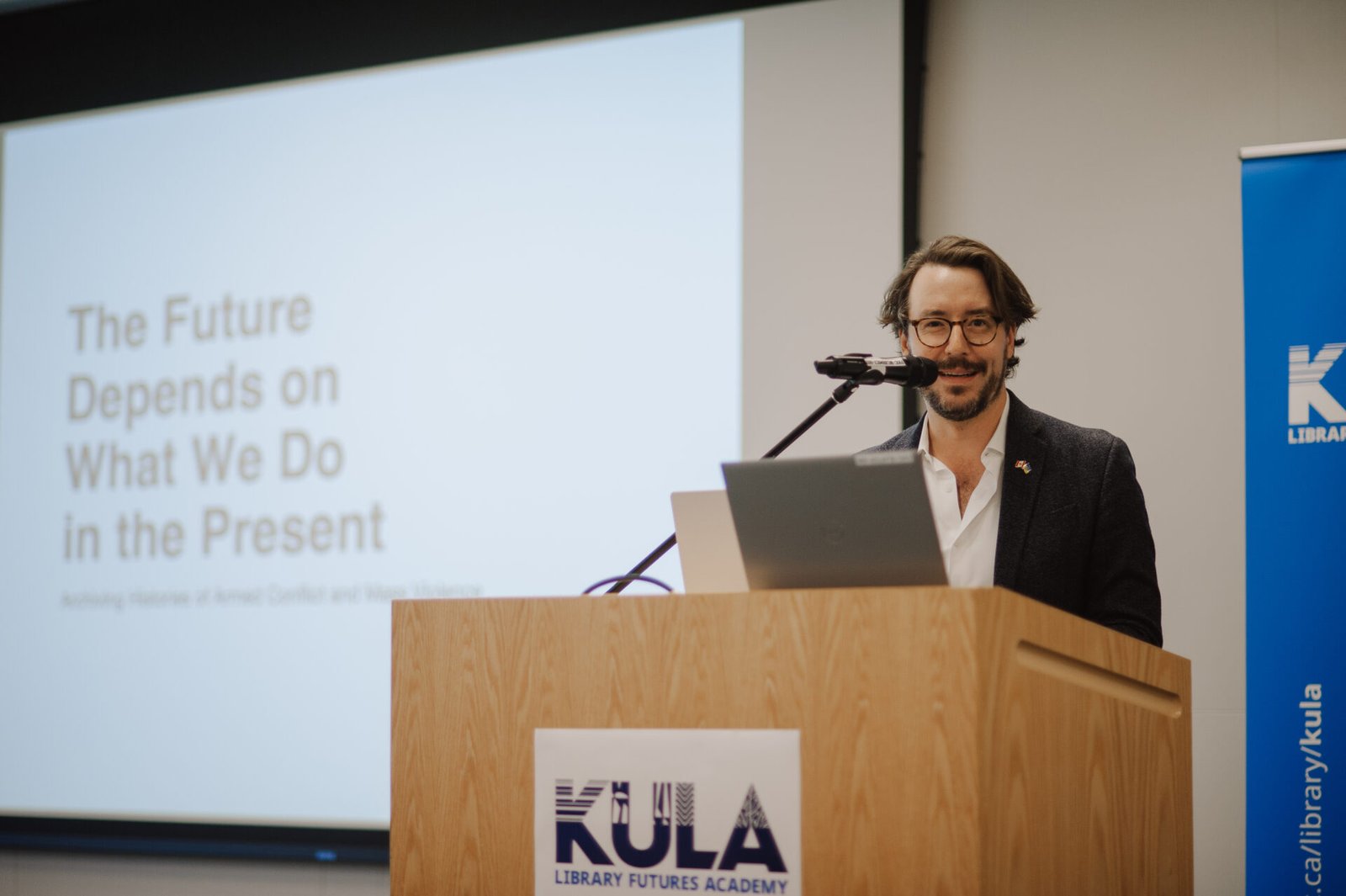
The photographs that accompany Dr Nathaniel Brunt’s talk are both beautiful and harrowing, as scenes of daily Yazidi life are interspersed with images of the funerals of young Kashmiri men caught up in militant insurgency. Brunt observes: “Anybody can look at a photograph and draw something from it.” His work certainly elicits a powerful emotional response.
I sat down with Brunt a day before his talk at the Weston Library, in which he discussed his work as a documentary photographer and scholar working primarily in Kashmir and Northern Iraq. He first visited the Kashmir Valley in 2013, where the long-standing territorial dispute between India and Pakistan has led to almost eight decades of violence. Encountering family photographs that offered an alternative perspective of the conflict and the lives shaped by it led Brunt to reflect on how these “vernacular archives” intersected with his own photographic practice. His PhD research brought together various disciplines – photojournalism, historical research, and archival practice – to interrogate how conflict is represented visually.
We begin our conversation by discussing what makes photography such an effective medium for understanding conflict. For Brunt, its potential lies in its apparent simplicity: “It is a very simple medium, a very simple means of communication.” The immediacy of a photograph and its affective power over the viewer is perhaps also explained by the medium’s ubiquity in today’s world. With smartphones having vastly expanded access to image-making and sharing, Brunt sees images as an integral “part of our language and our day-to-day lives”, allowing them to speak across languages and cultures.
Yet in the complex reality of war, photographs can distort as much as they can illuminate. A single image, Brunt explains, can flatten the nuances of conflict: “There is probably a binary between good and evil going on, victim and perpetrator, these kinds of things. And the reality of any sort of conflict is it’s often far more complex than that.”
Later in our discussion, Brunt expands on the problems with the ways that Western media captures war: “We want conflicts to be clean in the sense [that] we want a good guy, and we want a bad guy. We want to be able to support one side and see the other as an enemy. Whereas in the kind of conflicts that I’ve covered, like Kashmir, it’s changed very much over time. Especially in an insurgency, with the blending of insurgent groups with civil society groups and human rights groups, it is very hard to pick out who’s necessarily a good guy or a bad guy. It is all very murky.”
By bringing his images into dialogue with other visual materials within a culture, Brunt’s projects seek to resist these kinds of overly simplistic and reductionist interpretations: “I’ve started to think about it over time as this process of stepping back and trying to understand the position of my image as a very small contribution to the broader ecosystem of photography that may go on in a conflict.”
This commitment to a richer, more multifaceted understanding of conflict is central to The Sersal Project, which focuses on the Yazidis in Northern Iraq and its diaspora population. Brunt founded the project with his colleague Marc Marin Webb in 2024, after Webb unearthed a collection of photographs of daily Yazidi life, which were taken on an American archaeological expedition in the 1930s and held at the University of Pennsylvania’s museum. Their aim was to repatriate these photographs from an inaccessible institutional archive and reunite them with the Yazidi community by exhibiting them in the places where they had originally been taken.
In the context of the genocide perpetrated by the Islamic State of Iraq and Syria (ISIS) against the Yazidis in Sinjar in 2014, these photographs carry immense significance. During the atrocities of the two-week campaign, where more than 5000 Yazidis were executed and over 6000 women and children were trafficked into slavery, family photo albums were abandoned as people fled their homes, resulting in much of the personal visual history of the Yazidis being lost.
ISIS also actively targeted the Yazidis’ cultural heritage, destroying the places through which collective memory is sustained in their oral culture. Brunt explains: “ISIS went around and blew up all the shrines, which are the core aspects of the ways that history is communicated to younger generations.”
By displaying images of everyday life in the streets of places such as Bashiqa-Bahzani, where the walls still bear the scars of the brutality of 2014 through bullet markings and murals depicting the abductions of children, The Sersal Project introduces an alternative depiction of Yazidi life into these spaces.
Brunt describes how more than a decade after the genocide, many Yazidis want to be seen as more than victims: “Most of the people in the West know the Yazidis only for those two weeks that they were stuck on the mountain or for the women who were captured and sold into sexual slavery.” Whilst having photographic documentation of ISIS’s crimes is important as a form of evidence and recognition, Brunt explains how the project creates space for a different kind of visual representation, one where the Yazidi community can see themselves beyond and distinct from the horrors of their recent history. The photographs from an archaeological dig over a hundred years ago now take on a new meaning and purpose in this context: “Something they can be proud of in their culture, a positive aspect of their culture.”
For Brunt, one of the central questions of his work is thinking about the ways in which archival materials can be activated and put to use in places like Iraq and Kashmir. “Preservation in a weird way is not our major priority”, Brunt explains, “we’re really interested in the potential of what an archive represents”. Indeed, the project collaborated with a local music group in Sinjar, the Mirzo Music School, whose members performed traditional folk songs at the exhibition and developed new music in response to the images. Brunt describes how this multidimensional encounter between visual and oral culture enabled an “interesting dialogue between past and present” and transformed remembrance into an active, collective process in the Yazidi community.
One example that has clearly stayed with Brunt powerfully illustrates the project’s tangible impact in these communities. When someone recognised the groom in a series of wedding photographs from the institutional collection, Brunt and his team were led to the very house in Bashiqa depicted in the images, which had miraculously survived the 2014 attacks. There, they were introduced to the groom’s grandson, who had never seen the images of his grandparents’ wedding. Just a few months ago, Brunt met the groom’s son, now living in Germany, and used these photographs to open a conversation about his family’s story. It is exactly this kind of encounter that Brunt’s work makes possible.
I ask Brunt about how he establishes the relationships necessary to undertake a project of such weight and with such delicate sensitivities. His response reflects the truly collaborative and participatory methodology that he has spent decades cultivating: “These kinds of projects are not things that you could do through a Zoom call. You’ve got to be there on the ground, meeting people, developing relationships … you’re often sitting down for a million glasses of tea and smoking a million cigarettes, especially being in Iraq.”
Time is essential not only to ensuring that a project remains strongly aligned with the community it represents but also to allowing Brunt to reflect critically on his own approach: “I keep coming back to the idea about time, but it’s the idea of slowness. I have been able to come back each year, back to work that I’ve been doing in the field and spend a lot of time with it and really think about what I’m doing.” This pace, he explains, creates room to consider the ethical questions at the heart of his practice: “What are we trying to actually achieve here, and how are we actually trying to do something positive for the community that we are working with?”
The digitisation of the photographs is central to this ethos, reflecting the project’s commitment to activating the images beyond the project itself. Through a QR code, anyone can access a digital drive containing the images, enabling them to circulate throughout the Yazidi diaspora. As Brunt explains, the photographs are repurposed in new contexts, shared across platforms and even made into AI-generated videos, allowing people to connect with these images on their own terms: “It is about making things usable, so that people can use the raw resources of the photographs and do something with them.”
For younger generations of Yazidis, and especially those displaced by ISIS’ campaign, this is particularly important. Brunt observes how young people growing up in internally displaced person (IDP) camps in Iraq, and in Germany, where Brunt is currently working, are curious about their history and culture: “They have a lot of questions about where they came from, and there’s been a real drive to really dig into this kind of stuff.” The Sersal Project responds to this need, offering a way to reconnect with a heritage brutally disrupted after 2014.
Looking ahead, the next phase of the project will focus on scaling its work globally. Brunt hopes to expand into Syria, where there is a significant Yazidi population, and in 2027, funding will support initial exploratory work in the United States and Canada, where substantial diaspora communities also offer opportunities to extend the project’s reach. Ultimately, the ambition is to develop an adaptable model that can operate beyond the Yazidi context and support other communities seeking to engage with their visual heritage.
Towards the end of our discussion, Brunt observes: “it’s becoming increasingly complex to even visualise what modern war is.” Indeed, the images emerging from the battlefield of Ukraine, where drone footage enables every aspect of war to be recorded, or from Gaza, where the sheer scale of the destruction challenges the limits of representation, underscore the difficulty of making contemporary warfare comprehensible.
For Brunt, a possible solution lies in shifting the focus towards the personal and familial realities of conflict, looking at “the way that war or mass violence completely disrupts the domestic space and families. There’s something really powerful about that for me at least”. Brunt’s work not only offers a means of comprehending the nature of modern conflict, but also serves as an important point of connection and recognition for the communities whose experiences it seeks to represent.

Oxford’s first Trans Requiem premiered in Somerville Chapel last Saturday. Barnabas Sharp, the Oxford-based composer behind the event, told Cherwell: “It was time for a requiem to be written for the trans+ community. Their struggles, their mourning and their hope brought into music”. Sharp, a graduate musician and regular performer, composed a piece combining classical music and the trans experience. It was titled ‘Trans Requiem: a Pseudo-Sacred Cantata’ and hoped to illustrate what it is like to be trans, non-binary, or gender diverse in the current political climate.
The requiem was entirely self-written to avoid any religious affiliation, therefore following a unique structure, style, and text. Sharp told Cherwell that they aimed to “comfort and lift the spirits for those it was composed for, inform our allies and the unaware masses how much our community has been suffering by violence and death”.
The organisers behind the event, RETUNE Project, told Cherwell: “We hope trans+ audiences feel seen and represented by this piece, while cis audiences gain a deeper understanding of the challenges facing trans+ people in the UK currently. Above all, we hope it demonstrates the power of music to create a sense of belonging.”
RETUNE, a charity which was founded in 2023, produces concerts and resources to create a space for systemically marginalised musicians. The Operations Lead of RETUNE, Erin Townsend, told Cherwell: “The trans+ community is close to our hearts, particularly in a time when the media so often overlooks the humanity of trans people. There is no doubt that trans people have just as much of a place in classical music as anyone else.”
Speaking to Cherwell, the conductor Esme Harper said: “Given the levels of hate and disinformation that our community continues to face, I believe music can be a particularly powerful medium through which to bring these issues to the fore.” Soprano soloist Ella Taylor’s incredible voice was a poignant part of the performance. The Cantata combined themes of loss, joy, grief and hope, heavily inspired by Brianna Ghey’s tragic murder in 2023.
The audience’s reaction was profoundly positive, with audience members emotional in sombre moments as the music grew heavy. Reprogrammed for the day after Trans Remembrance Day, it followed a vigil on 20th of November organised by Oxford University LGBTQ+ Society and Oxford for Trans Rights. About 30 people assembled in Radcliffe Square. A member in attendance told Cherwell: “It was dark, and each person was given an electrical light, balancing it in their hands. People gathered around giving personal accounts of their experience, calling out to others to reach out in times of need, sharing their love and their grief.
“On a day like Trans Day of Remembrance, we remember those that are no longer with us, share in the joy and struggle of today and look forward to all that we have ahead. Today is not easy, tomorrow might not be, but it is certain, and we are continuously reminded that we cannot do it alone.”
The Oxford LGBTQ+ society will take part in a march and vigil against gendered violence as trans people continue to be among the most targeted groups facing gender-based hate crimes. The gathering ‘Take Back the Night’ will happen on Saturday 28th November.
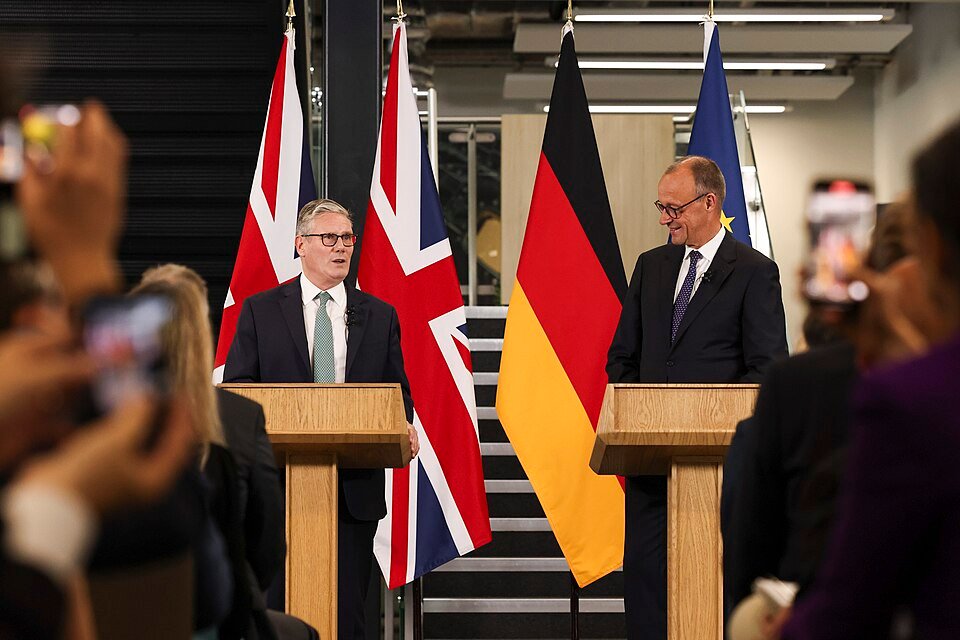
This week, Oxford will hold the first-ever German-British Conference from 27th to 29th November. With speakers including the University’s Chancellor William Hague it aims to bring “Britain’s and Germany’s political and industrial leaders together to argue the relationship out in public and build it in private”.
The original idea for the event came from the University’s German society whose President and Secretary sit on the conference’s executive organising committee.
Around 500 guests are expected to attend the conference, which will host 125 speakers over three days. Over 30 panels will be held at the Saïd Business School, with a conference gala at the Natural History Museum on Friday evening, and a speaker’s dinner at Rhodes House the following evening.
Notable speakers include former Foreign Secretary and University Chancellor Lord William Hague and Dame Annelise Dodds, the MP for Oxford East. The conference’s programme also includes Dame Emily Thornberry, the Chair of the Commons Foreign Affairs Committee, and former First Minister of Wales Mark Drakeford. Louis Mosley, the CEO of Palantir for the UK and Europe, is also listed as a speaker.
Speaking to Cherwell, the founding secretary and PPE student Florian Fabricius said that “there is even more momentum now to bring these countries together”, referring to the ten-year anniversary of the Brexit referendum and the subsequent “lack of initiative to foster dialogue without an institutional framework”. He added: “With the current transatlantic geopolitical shifts, I think there is a longing to see stable European relations between Britain and the continent.”
The programme will explore how the UK and Germany collaborate on diplomacy, defence, and technology, one year after the Kensington Treaty. The Treaty, the first bilateral friendship treaty signed between the two countries since the Second World War, includes agreements on defence, a direct UK-Germany rail service, and mutual commitment to climate policy. Panel sessions are set to cover AI regulation, Western support for Israel, and engaging Generation Z with politics, amongst other topics.
Frank-Walter Steinmeier, the President of Germany, has endorsed the conference, stating that: “The Federal President expressly welcomes the fact that the German-British Conference has set itself the task of creating a platform for open dialogue between German and British figures from the worlds of politics, academia, business, defence and civil society. In doing so, the conference is making a valuable contribution to consolidating the close and multifaceted relations between Germany and the United Kingdom.”
The conference’s partners include McKinsey & Company, Lufthansa Group, and the British-German Association, as well as student societies such as the Oxford University German Society and its counterpart in Cambridge, the Oxford Diplomatic Society, and the Oxford Politics Society. Ludwig Illies, the president of the Oxford University German Society and founder and co-chair of the conference, told Cherwell: “There is quite a big support system to help make this happen. We sent thousands of emails to so many institutions, so a lot of hard work went into this.”
Illies added that he is keen to see how the conference will shape future conversations around British-German relations. “I think we only received so much support because people saw the value in establishing such a forum, so I’m really curious to see what will follow – how conversations will be implemented, if there will be more traction, the follow-up meetings and policies – and who will be able to foster these relations beyond this one weekend.”
Student societies are also hosting events around the conference. The Oxford Union will host a shadow event while the Oxford Europeanist society and the Strategic Studies Group will host the German ambassador to the UK on Friday (the conference’s opening day).
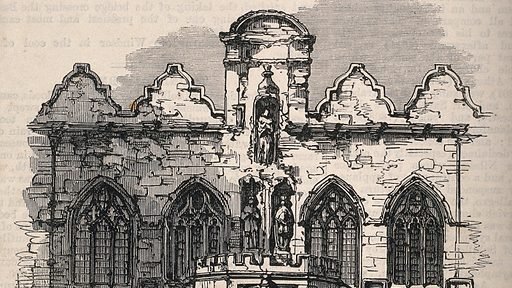
Sitting across from the short, bespectacled man in the tight suit, it was hard to believe he had been the focus of the past weeks’ controversy. Beyond Cofnas’s anxious window-glancing and uninspiring public speaking, the library felt like a poorly attended late-night JCR meeting. The only things reminding us of the external onslaught were the unwavering chants of “is your mother proud of you?” and “your views are pseudoscience” echoing from the quad below, and the journalists glancing at their watches.
I’d started my evening by interviewing Oriel friends as they gathered in solidarity in Oriel’s second quad to protest against the talk. Everyone was outraged that the Oxon Universities’ Reform Society had invited such a person to express his views in their college. Oriel students’ home was being dragged through the dirt, and as the protesters outside chanted “Oriel we know you like some old eugenics”, I felt almost embarrassed walking into the talk under their gaze. Once inside, my job was simple: to report the goings-on of the talk to the Cherwell journalists outside so that they could publish live updates.
I decided to try my hand at getting to know the audience. “No comment” was the first response I received. One stern-looking American defiantly said this before I barely had the chance to open my mouth. I moved on to the jovial middle-aged man putting on a larger-than-life appearance. He argued for the importance of listening to “new ideas” which will always threaten “those committed to the old”. He brought up philosophers of science (who I thought would only ever be mentioned in my tutorials) to defend the importance of attending Cofnas’s talk. It was Edward Dutton, I later found out, the far-right influencer and race pseudo-scientist. A skittish local writer, Joshua Webster, in tapered red chinos who claimed to be “undecided on the topic”, convinced me that I had observed a complete cross-section of the audience, so I resigned myself to networking with the other journalists while we waited.
The Oxon Universities’ Reform Society President, Vittorio Cuneo-Flood, reassured us that the talk was going ahead. The ongoing siege was merely a delay. Another 15 minutes passed. Inside, the hushed chatter of those labelled as racists. Outside, the cacophony of the protest. And then he arrived. Vittorio read a pre-written statement on behalf of the Proctors outlining that we were not to interrupt the talk. Then, an introduction by an Oxon Universities’ Reform Society moderator outlining Cofnas’s troubled history with academic institutions.
Cofnas was met by loud applause from a small group sitting at the front. The rest of us sat at the back awkwardly engaged in sporadic note-taking. His argument was divided into two parts: a condemnation of the “equality principle” underwriting DEI, followed by a history of how his own view had become marginalised and discredited. An incoherent, rambling style made Cofnas’s lecture appear like the words of a man desperate to share the thoughts ruminating in his head.
The noise of the protest outside was unrelenting. It would undulate, an endless backdrop to Cofnas’s inflammatory and provocative comments, turning the heads of the audience and speaker alike with every spike in intensity. Meanwhile, Cofnas droned on, constantly citing studies by forgotten and disproven academics. It was an hour of listening to a host of outrageous claims concerning the “substantial differences in overall brain size of different races” and insensitive comments alleging that Jason Arday was the author of plagiarised articles. The trouble was that I was neither interested in what he had to say, nor able to at that moment call out his lies – for I could never be as well-read on “racial realism” as any of the extremists in the room.
So I sat, and I waited. The talk continued mostly uninterrupted, except for a moment when the doors behind us were closed. Only later did I find out that my editor had considered telling me to leave for my own safety. Cofnas was given a microphone to help him speak over the chants booming from beyond the windows. Soon enough, Vittorio hurried him along to the end of his talk. A quick Q&A followed, where a Guardian journalist asked Cofnas whether he would “apologise to Jason Arday’s family”, to which Cofnas unremorsefully snarked that “the implication is that I’ve done something wrong by pointing out corruption by a powerful public figure… is that it?” and that others should be the ones to “receive these pointed questions”. It was a nice contrast to the other questions, which seemed designed to appease Cofnas and treat him as a legitimate academic. Afterwards, Cofnas slithered away through a back door into the night, escorted by proctors and security.
Then limbo: I found myself stuck in a room with unsavoury characters with whom I shared the common project of survival. Unsure how I would be received outside, I texted “don’t shoot” to my friends in the protest and was able to confidently walk out the front door and return to the embrace of familiar arms in the quad below. Luckily, I had made my status as a reporter known before, so I was greeted with smiles rather than boos.
I’ve since wondered who the real winners and losers of the situation have been. Despite the strength of the public outcry, Cofnas and his supporters have never had a bigger platform. It is true that fewer than 30 of the 110 seats were filled in the hall, but there is not a student in Oxford who doesn’t know Nathan Cofnas’s name or views now. All this for an uncharismatic and tainted man. It seems that Oxon Universities’ Reform Society, and in particular Vittorio, have succeeded in making themselves known. When otherwise they should have been just a footnote in Oxford’s long history of controversial speakers, their cause is now championed by right-wing news outlets such as GB News – with Free Speech Union external affairs officer Connie Shaw reporting on the talk.
My college has been shaken. Not just by the experience of the night, which involved students being locked out of their home and being intimidated by protesters, but also by the hostile coverage of their college. Oriel’s JCR Vice-President Gabriela Panova lamented that “comments online have substantially misrepresented both the role of Oriel College and the actions undertaken by the JCR”, which attempted to “provide students with meaningful opportunities to express their concerns”. Indeed, Oriel’s Provost reiterated in his address the morning after the event: “We [Oriel] did not ask for this event at our college.” One need look no further than the JCR’s statement condemning the event (which received 135 out of 149 votes) alongside similar MCR and SCR statements to understand how the student and governing body feel. Watching a man whose stated views actively target members of our community being hosted in our home to spread his hate speech has been nothing short of nightmarish.
So an event held under false pretences with a dull speaker and a small, discredited audience has spread racist thought and ideology. Even the instigators, Oxon Universities’ Reform Society, can’t be said to have benefitted. They find themselves officially distanced from Reform UK and rightfully ostracised. Perhaps this was a success of the protest. An added consequence has been the besmirching of the name of a community which did its best to cope under the circumstances, as well as the direct harm caused to the members of that community – most notably to the beloved head porter who was stampeded while protecting students. We must reflect on how things reached such a tragic state, and how our supposedly inclusive learning space was invaded by a man such as Nathan Cofnas.
Civil wars rarely have winners, and this was certainly no different.
In response, Nathan Cofnas told Cherwell: “Brain size is moderately correlated with intelligence. On average, Africans have smaller brains than Europeans, who have smaller brains than East Asians. These facts are not disputed in the scientific literature. Any informed person who says otherwise is lying.
“An argument is considered “outrageous and insensitive” if it poses a serious threat to wokism. My view is that we should be allowed to challenge that false ideology.”
In response, Oriel College also told Cherwell: “Oriel College did not choose to bring this event to our community but acted correctly to ensure the safety of our students while securing lawful freedom of speech for all. Thames Valley Police are responsible for managing public protests.”


Plans submitted for Oxford Covered Market’s revamp

“It is becoming increasingly complex to even visualise what modern war is”: Dr Nathaniel Brunt on photography, archives, and how to understand and represent conflict.

Trans Requiem makes world premiere in Somerville College chapel
-

 Student Life4 weeks ago
The Vinted paradox: Consuming our way out of overconsumption
-

 Oxford united FC3 weeks ago
Dogs, drones and extra police powers for Oxford United game
-

 Oxford united FC4 weeks ago
Oxford United beat Stockport 1-0 in statement victory
-

 Oxford united FC4 weeks ago
LIVE: Barnsley 1-0 Oxford United – Yoganathan puts 10-man Tykes ahead
-

 Oxford united FC4 weeks ago
Oxford United leaders criticised as results hide concerns
-
 Student Life4 weeks ago
Oxford University wins at local climate awards
-
 Student Life4 weeks ago
St Anne’s to close nursery called a ‘lifeline’ for women at Oxford
-

 Oxford united FC3 weeks ago
Aaron Ramsey explains Brannagan and Brown Oxford United absence