
Traffic & Transport
Heathrow third runway likely to affect health of millions nearby, official report warns | Heathrow third runway

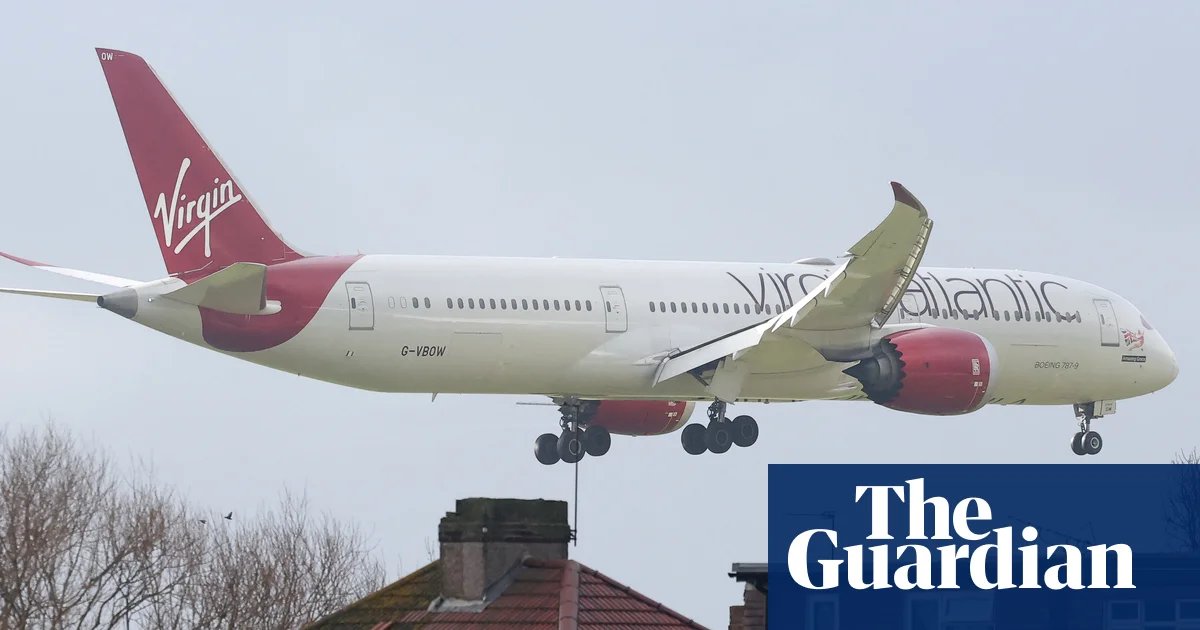
Construction of a third runway at Heathrow is likely to have significant adverse effects on the health and wellbeing of up to 3 million people living nearby, an official report has said, as the government launched the next stage of its rapid airport expansion plan.
An analysis for the Department for Transport has found that expanding London’s hub airport could have “major adverse” impacts on the health of the most local population.
Construction and operation of the third runway will worsen not just noise and air quality, but could also harm access to housing, education, healthcare, open space, and transport, the report bythe consultants Aecom said. Heathrow’s expansion will impact water quality, weaken community identity and cohesion, worsen landscapes and townscapes, and affect climate change mitigation and adaptation, it added.
The impact analysis of the new policy said construction of a third runway would likely be beneficial for jobs, income, education, skills, and training. But the report concluded: “Adverse effects are considered likely with regard to the other determinants which cover environmental and social considerations, and many of these have potential to be significant.”
While the report is expected to help shape measures to mitigate the effect on residents, it says the impacts cannot be fully offset. The DfT was approached for comment.
The disclosure came in supporting documents as the government announced another milestone in expansion, the accelerated publication for consultation of a draft national policy statement backing the third runway.
the transport secretary, Heidi Alexander, said: “Today’s consultation is a positive step towards realising the benefits of a third runway, by giving businesses, communities, and the public the chance to help shape this key project at one of the world’s most successful hub airports.
“We are determined to move quickly and responsibly to set a framework for future expansion at Heathrow that will meet the needs of local people and the country on the key issues of noise, air quality, climate change and economic growth.”
MPs will vote on whether to approve the policy, which is now known as the Heathrow Expansion national policy statement rather than covering airports nationwide.
The previous policy statement was voted through under the Conservatives after the Airports Commission judged that only one runway could be built in south-east England without breaching climate commitments. Labour has since approved expansion at London’s Stansted, Luton and Gatwick airports.
The chancellor, Rachel Reeves, has been a champion of the third runway but is widely expected to leave office if Andy Burnham wins the Makerfield byelection and succeeds Keir Starmer as leader.
She said: “Growth is this government’s top priority, and we are backing the builders to get Britain moving. An expanded Heathrow would support over 60,000 good local jobs and deliver up to £42bn in benefits to the UK – strengthening vital links and improving connectivity across the country.”
Speaking at a conference in London earlier, Reeves said: “Somebody had to bite the bullet … In the last 18 months, we’ve made more progress on Heathrow than the last government made in 14 years. And I am determined that by the time of the next election, there are spades in the ground.”
Heathrow is seeking to build a 3,500-metre runway, which would require the M25 motorway being moved and the compulsory purchase of about 800 homes. The scheme, which is estimated to cost £33bn, would allow the airport to operate up to 756,000 flights with up to 150 million passengers each year.
Heathrow’s chief executive, Thomas Woldbye, said the consultation on the third runway plan represented “something Britain has often found difficult in recent years: progress”.
He added: “Our plan is privately funded by some of the largest investors in the world, widely supported by businesses, trade unions and communities across the country and it’s ready to go after years of scrutiny. We will now focus on securing planning permission and delivering this vital project.”
Paul McGuinness, the chair of the No 3rd Runway Coalition, said the expansion plans were “lurching towards farce” and there would be a “decade of destruction” around the airport in bulldozing houses and land before any runway was built.
He said airlines would be forced to pay ever higher charges and could be out-priced, adding: “No wonder an airline boss has called it HS2 all over again. It seems extraordinary that this government seems committed to repeating those mistakes.”
Celeste Hick, the policy manager at the campaign group Aviation Environment Federation, said the government was rushing policy through “with very little meaningful consultation with the very people” who would pay the price – “communities living under the flight paths and those whose homes will be destroyed or rendered uninhabitable”.
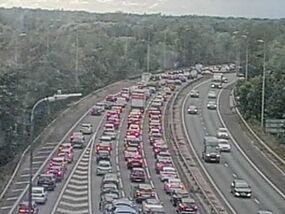
A stretch of the motorway has been closed due to a police-led incident.
Source link
Traffic & Transport
‘Leicester Square, please guv’: Self-driving taxis cleared for London streets ‘later this summer’ | Self-driving cars
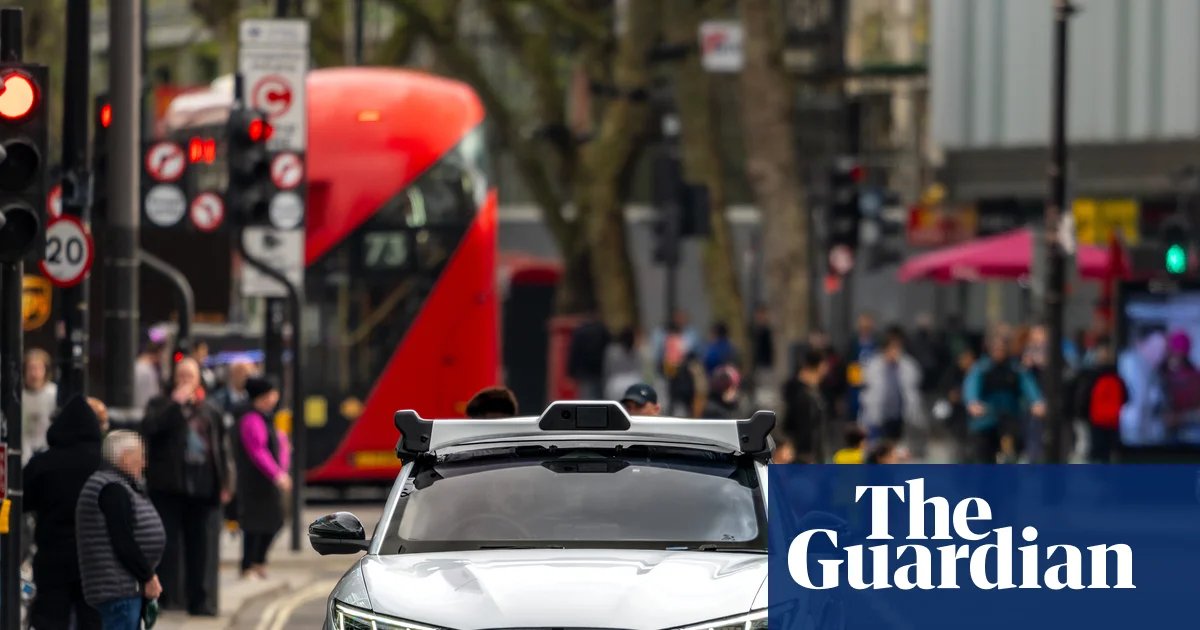
The taxi app company Uber and the autonomous technology developer Wayve have been granted the first minicab licences in London, allowing them to offer self-driving taxi rides to paying customers – but with a human safety driver in place, for now.
The companies said they would start trips in the UK “later this summer” before the full public launch.
The San Francisco-headquartered Uber and London-based Wayve are racing against the Google-owned Waymo and its Chinese equivalent Baidu’s Apollo Go to launch self-driving taxi services in London. Their progress is being watched closely because the British capital will be one of the first cities in the world to have American and Chinese tech firms operating on the same roads.
Uber and Wayve said more than 100,000 Londoners were on their waiting list for the self-driving taxis.
Transport for London (TfL), the capital’s licensing authority, granted 15 private hire vehicle licences to Ford Mustang Mach-E vehicles equipped with Wayve’s artificial intelligence driving software, as well as surround cameras and radar. The companies said TfL had confirmed they reached the required safety standards.
A TfL-licensed private hire driver will sit in the driver’s seat during trips to intervene if necessary, although the software is expected to control the car.
The next step, of operating the taxis without a driver, will require Uber and Wayve to seek approval via a new process, known as an automated passenger services permit, with the government’s Driver and Vehicle Standards Agency.
TfL said it would monitor the use of the vehicles, and was ready to intervene if passenger safety was compromised.
A TfL spokesperson said: “Safety is our top priority. Any new vehicle licensed to carry passengers on London’s roads must align with our Vision Zero goal of eliminating all deaths and serious injuries from collisions on London’s streets by 2041.”
Wayve, which was co-founded by the New Zealand-born Alex Kendall, has been testing its tech in London since 2018 with safety drivers. In previous demonstrations to the Guardian the car has navigated most of the obstacles of north London’s busy roads, although the safety driver was forced to intervene at one point.
Sarah Gates, Wayve’s vice-president for global affairs and assurance, said: “This licence is an important step towards giving Londoners the chance to experience autonomous driving technology.
“The responsible deployment of these vehicles will bring us safer, cleaner and quieter streets, and we’re proud to continue working alongside regulators, communities and the public as we take the next steps towards making autonomous rides a reality in the capital.”
Driverless taxi services are already operating in several cities around the world, although mainly in the US and China, where most of the software developers are based. However, US companies are essentially blocked from China, and vice versa, meaning they have not had to compete directly.
after newsletter promotion
Uber abandoned its own efforts to develop self-driving technology in 2020, but it is working with several partners around the world who are in turn using different systems. That includes the Chinese company WeRide, which is operating driverless taxis in Abu Dhabi, UAE.
Wayve is also working with the Japanese manufacturer Nissan on integrating its tech in private cars.
Uber’s global head of autonomous mobility operations, Annie Duvnjak, said: “This licence is a key milestone in bringing autonomous rides to London on Uber.
“Our interest list has seen an incredible response from Londoners who are excited to experience Wayve’s British-built autonomous driving technology.”
The news came as Uber reported better than expected second-quarter gross bookings of $58.02bn (£43bn), but said earnings for the next quarter would fall below Wall Street forecasts.
Uber said earnings per share would come in between 84 cents and 88 cents, compared with analysts’ expectations of 89 cents, with foreign exchange costs trimming booking growth.
The company also outlined plans to spend more than $10bn on autonomous vehicles over the coming years, although it did not provide a specific timeline.
Traffic & Transport
Gatwick airport to open second runway after legal challenge fails | Gatwick airport
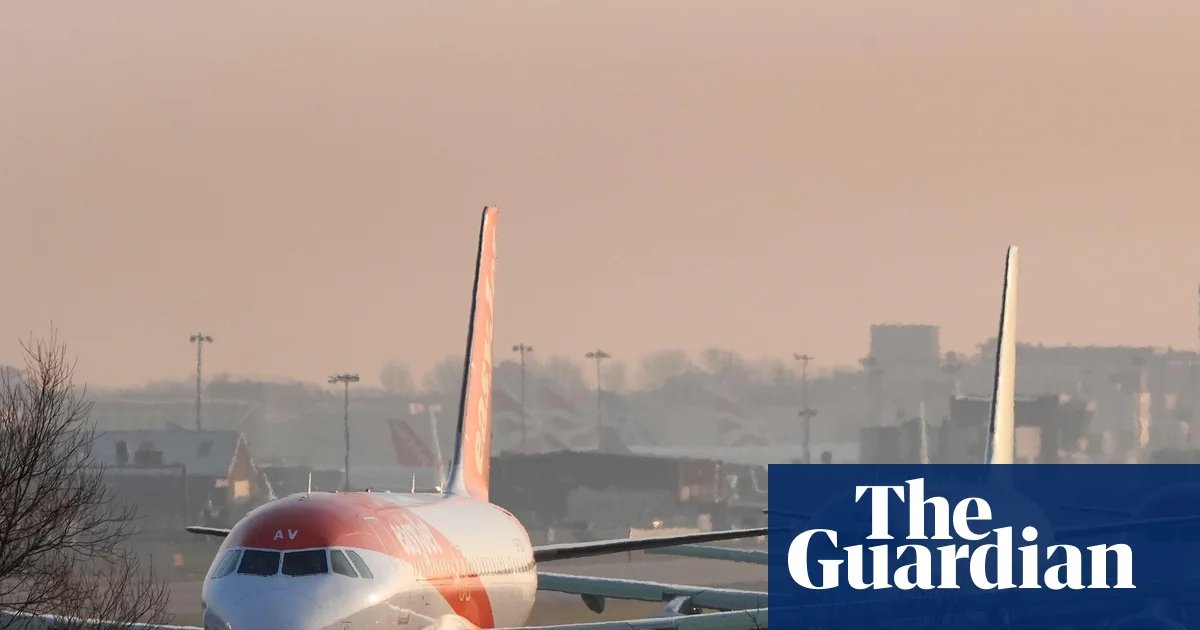
Gatwick airport is to start development of its second runway after campaigners lost a legal challenge to the plans.
The court of appeal on Tuesday dismissed a bid by local campaign groups to challenge an earlier high court ruling that the scheme could proceed.
The £2.2bn project, approved by the transport secretary, Heidi Alexander, in September, will allow about 100,000 more flights a year to use Britain’s second busiest airport.
Pierre-Hugues Schmit, the Gatwick chief executive, said the airport was “very pleased that this ruling brings to an end an eight-year planning and legal process which has carefully tested and scrutinised every aspect of our expansion plans on multiple occasions”.
The plans will involve the West Sussex airport slightly repositioning its emergency runway and using it routinely for short-haul passenger aircraft. It is now among the busiest single-runway airports in the world, but hopes to have the second runway in operation as early as 2030.
The government declared the court ruling a “major milestone for Gatwick and for local communities”.
Alexander said: “Around 13 million more passengers and 100,000 more flights will give holidaymakers greater choice and strengthen global links to help make the UK one of the most attractive places in the world to invest.
“We’ll back expansion that supports growth and our climate goals. To drive forward sustainable change, we’re also investing more than £219m for green fuel production to cut emissions from flying and secure the future of aviation.”
Campaigners had sought a judicial review of the Department for Transport’s decision to approve the plans, arguing that the government did not properly assess the scheme’s climate impact.
after newsletter promotion
One of the applicants, Peter Barclay, the chair of Gatwick Area Conservation Campaign, said he was disappointed with the ruling but added: “It is time for governments to wake up and realise that saying yes to the expansion of any and every airport will not kickstart the economy … It will further lock in aviation’s climate, noise and air pollution impacts, increase congestion on roads and public transport and blight local communities.”
Meanwhile, Luton Rising, the council-owned company behind Luton airport, announced that all legal challenges to its expansion plans had now been cleared. The supreme court has dismissed any final possibility of appealing a high court ruling last November upholding Alexander’s signoff on plans to increase the airport’s annual capacity from 19 million to 32 million passengers by the mid-2040s.
The airport owner said it would create up to 11,000 new jobs and generate up to an additional £1.5bn in annual economic activity, and pledged strict controls on noise and carbon emissions, air quality and surface access to the airport.



-

 Business & Technology3 weeks ago
HSBC UK & Visa test AI shopping with live payments
-

 Business & Technology4 weeks ago
Mouser warns against viral hacks to cool overheating phones
-

 Business & Technology3 weeks ago
Valarian lands USD $50 million backing for sovereign AI
-

 Oxford News4 weeks ago
New romantasy bookshop attracts queues of customers
-

 Business & Technology4 weeks ago
Kane tops England influencer rankings after Mexico win
-

 Business & Technology4 weeks ago
SNP & Palantir launch AI tools for SAP transformations
-

 Oxford News4 weeks ago
DWP now checking bank accounts for Universal Credit and Pension Credit
-

 Oxford Events4 weeks ago
Henley Festival 2026 highlights: Five nights of unforgettable performances and festival moments