
Traffic & Transport
Happy birthday! What deals and discounts does your age unlock? | Consumer affairs


Have you just unwrapped some presents? Been sitting in a soft play centre and watched a toddler blow out some candles? Double-checked what time the party starts later?
With 26 September being statistically the most common day to have a birthday in England and Wales, according to the Office for National Statistics, it is quite possible that you or someone close to you is marking another trip around the sun.
Even if you no longer celebrate the big day with a party or family outing, there are still reasons why it is worth noting because some milestones bring gifts of their own.
Age 12
You can legally buy Christmas crackers. At this stage, the jokes will be much older than you are.
Age 14
You can get a part-time job. There are some professions – acting and modelling, for example – where you can work from a younger age. There are some local councils that allow you to work from the age of 13 for a very limited number of hours a week.
Age 16
You are entitled to earn £8 an hour under the UK’s minimum wage laws. You may also have to pay national insurance (NI). This tax is collected by your employer if you earn more than £242 a week from one job. You will be issued with a NI number and card before your birthday. You should receive a letter – make sure you read it and amend any mistakes.
You can also take charge of your child trust fund (if you have one) although you cannot withdraw the money yet. You and your parents should get a letter from the provider about this.
Age 17
This is the legal driving age for most people in the UK. You can apply for your provisional licence much earlier in Great Britain – from the age of 15 years and nine months, or two months before you turn 17 if you live in Northern Ireland. It costs £34 to apply online and £43 to do so by post in Great Britain, or £62.50 in Northern Ireland.
Age 18
You can withdraw your child trust fund or junior Isa – but you do not have to. If it is a child trust fund, you can transfer it to an Isa; if it is a junior Isa, it will automatically become an adult one. Lots of people are unaware they have a child trust fund: you can check for yourself or your child on the government website.
At this age you can open an Isa – either cash or stocks and shares. You could choose a lifetime Isa, which is designed to help you raise a deposit for a home and is not an account you can dip into, or a standard Isa, which will be more flexible.
Benefits such as universal credit can be claimed once you turn 18 if you are not in education and are on a low income or out of work. Payments are lower for under-25s than older claimants.
The minimum wage you are entitled to also goes up to £10.85 an hour (currently – the rates change in April each year).
Age 21
You are entitled to the full adult minimum wage, which is now £12.71 an hour.
Age 26
You have outgrown what used to be called the Young Persons Railcard but have no fear: you can still get one-third off train travel, only now with a 26-30 Railcard. It costs £35 for a year and is available online, so you can buy it and use it on the same day.
Age 28
You are no longer a young person in the eyes of car rental companies. They typically charge a young driver’s fee: a surcharge that is usually about £35 a day and is paid on top of the regular hiring cost. The age up to which this is charged varies by company. At Budget, for example, it is up to the age of 25, while at Europcar, it is 26. At Sixt the surcharge applies to bookings by those under 28.
Age 39
This year is your last chance to open a lifetime Isa. This is the tax-free account that offers a government bonus on your savings every year to help you save a deposit for a property or towards your retirement. The account is available to 18- to 39-year-olds who can pay in up to £4,000 a year each. This is boosted by a payment worth 25% of what you paid in each month. Between the ages of 40 and 50 you can keep paying into the account. At 50 you will not be able to add any more; you can withdraw the money to buy a home or when you turn 60.
Age 40
People in England, Wales and Northern Ireland who have a close relative with a glaucoma diagnosis can get free eye tests from the age of 40. Ask your optician if you think this applies to you.
Age 50
“Welcome to the Saga club!” is the sort of thing people say when you hit your half century. Saga is the company well known for offering products and services, including insurance and holidays, exclusively to the over-50s.
This is also the age when you may be targeted by over-50s life insurance providers. With this type of cover, typically aimed at those aged 50 to 85, you pay a fixed monthly premium and are guaranteed a fixed payout when you die – but there are downsides.
There are some train discounts available to those who are 50 and older. ScotRail has Club 50, which gives you a 20% discount on most tickets when bought online, plus other benefits (it costs £15 a year). In England, for Greater Anglia and Stansted Express services, there is the Club 50 Railcard (£25 for a year), which works in a similar way.
Age 55
This is usually the earliest age at which you can take money from your private or workplace pension – it is rising to 57 from 6 April 2028. You may be able to take your pension before 55 if, for example, you need to retire early because of poor health. However, a private pension is normally designed to pay out from about the age of 65, so you will usually get less money than you expect if you access it early.
That’s because the headline estimate of your future retirement income that will be in the documents usually assumes you will continue paying in until the scheme’s normal pension age.
Some cinemas offer cheap tickets to those aged 55-plus (but for most, 60 is the important age). The upmarket Everyman chain runs Silver Screen: weekly matinee screenings with a reduced ticket price for those 55 or older. Tickets include a complimentary hot drink and a slice of cake.
Age 60
In England, NHS prescriptions become free, saving you £9.90 an item. They are already free for everyone in Scotland, Wales and Northern Ireland.
Some good travel schemes kick in at this age. The over-60s can get a third off rail travel with a Senior Railcard costing £35 for a year or £80 for three years. The average saving that holders enjoy is said to be £114 a year.
If you live in London, you can get a 60+ London Oyster photocard, which gives you free travel on buses, the tube and other transport within the capital, but is subject to some restrictions. You have this until you reach state pension age and are eligible for a Freedom Pass. If you are in Wales, you can travel for free on most bus services in Wales and the borders and get discounted or free travel on many rail services by getting a Concessionary Travel Card.
Photograph: Christopher Jones/Alamy
On the shopping front, the retailer Iceland offers 10% off for all customers aged 60 or over every Tuesday. You need an Iceland Bonus Card (this is free) and to show valid proof of age at the till – for example, a senior bus pass, driving licence or senior railcard. This in-store-only deal applies to all UK Iceland and The Food Warehouse stores but excludes Iceland Local and The Range stores.
The bakery chain Patisserie Valerie offers the over-60s with a valid passport or driving licence 10% off. To access this, you need to verify your age via a service run by a separate company.
In England and Wales, you become entitled to a free NHS eye test. In Northern Ireland, you can get a free Health and Social Care (HSC) sight test. In Scotland, NHS eye tests are free for everyone.
Many local authority leisure centres offer free swimming for over-60s at specified times, and some theatres – including the National Theatre in London and some ATG venues – give discounts on selected shows.
Age 65
A few companies offer discounts – for example, at some Hilton hotels in the UK, guests who are 65-plus can enjoy savings of up to 6%. This is also the age that some theatre discounts for older people kick in (for example, at Birmingham Hippodrome and the RSC in Stratford-upon-Avon).
You should also be able to get the free NHS flu jab. This is typically offered from September or October (in regions such as England and Wales, this includes those who will turn 65 by 31 March 2027).
Age 66+
If you were born on or before 5 April 1960, your state pension age is 66. As of now it is rising gradually each month, and by one month at a time, until it reaches 67 in April 2028. It will eventually rise to 68, affecting those born after April 1977.
The new state pension (as opposed to the old basic state pension) is up to £241.30 a week, and entitlement can unlock other benefits and help. The MoneyHelper website has more information.
Age 75
You can apply for a free TV licence, provided you (or your partner living at the same address) receive pension credit.
Age 80
To get the winter fuel payment for 2026-27, you have to be 66-plus (born on or before 27 June 1960) – however, those aged 80-plus (born before 28 September 1946) can get more: a total of £300. It is available to those in England, Wales and Northern Ireland (Scotland has its own scheme), and the rules are complicated.
Some people who receive little or no basic state pension are able to apply for the “over 80 pension”. This can now give you £110.75 a week.
Age 100
You can get a free birthday message from King Charles when you hit 100 – and then every year from age 105 onwards.
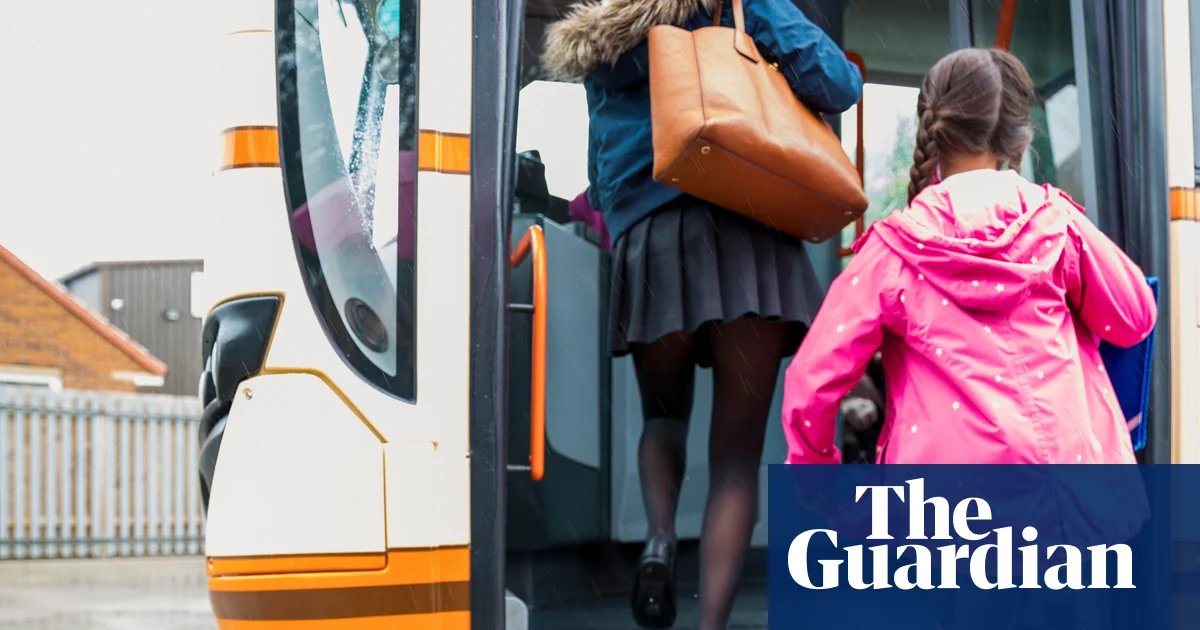
Schoolchildren who do not own smartphones face paying hundreds of pounds extra in annual bus fares as cheaper travel passes are digitised.
Critics argue that by only making discounts available through an app, operators are undermining government guidance to keep mobile phones out of schools.
Adele Kightley’s 11-year-old daughter faces paying an extra £546 a year to get to school because a discount scheme launched by Derbyshire county council is only available via smartphones.
The b_line card caps single fares on trentbarton buses at £1.50 for those aged 18 and under. However, users have to register their card with an app to qualify.
“We made the choice not to give our daughter a smartphone, instead opting for a brick phone when she started secondary school this month,” Kightley said.
“In order to get trentbarton’s young person discount, a child has to connect their student card with the app. However, they can’t get the same discount by showing the same student card to the driver and paying by cash or card.”
Trentbarton said its ticketing machines are not configured to read the council-issued cards. “We are working at speed on developing a new physical card to provide the discounted b_line fare for under-19s,” a spokesperson for the bus company said.
“In the meantime, all young people, whether they have a smartphone or not, will continue to receive a range of discounts off our adult fares however they pay.”
East Midlands combined county authority said it sympathised with parents who did not want their children to have smartphones and would consider how young people accessed discounted fares as it developed the region’s fares and ticketing strategy.
The increasing use of digital-only passes is penalising poorer households as well as undermining efforts to restrict screen time for children, according to Daisy Greenwell, a co-founder of the campaign group Smartphone Free Childhood.
“There is now a huge movement of parents and schools trying to delay smartphones for children but, in many parts of the country, bus companies are making that much harder by charging smartphone-free children up to twice as much for exactly the same journey,” she said.
More than 200,000 parents have signed up to the campaign group’s “parent pact”, which promises to delay getting a child smartphones until at least 14, “yet essential services are still being designed around the assumption that every child has one”, Greenwell said. “For lower-income families in particular, owning a smartphone can effectively become the price of accessing cheaper bus fares.”
Other regional operators, including Stagecoach and Compass, also require children to have a smartphone to access the best discounts.
“My husband and I decided not to give smartphones to our children because of the overwhelming evidence that shows how harmful they are to developing brains,” Kightley said. “When our younger child starts secondary school, it will cost us nearly £1,100 a year more than it would if they had access to the discount through the app.”
A law banning the use of mobile phones in English schools came into force in June. Some schools prohibit pupils from bringing smartphones on site. However, the Department for Education said the legislation did not cover phone use during travel to school and that app-only fare discountswere a matter for individual bus operators.
The government’s stance is sending mixed messages, Greenwell said. “Bus fares shouldn’t be a barrier to schools choosing policies where smartphones aren’t brought on to site. Government and bus companies have a clear opportunity to fix this, so every child can access the same fare whether they carry a smartphone or not.”
Stagecoach and Compass were contacted for a comment.
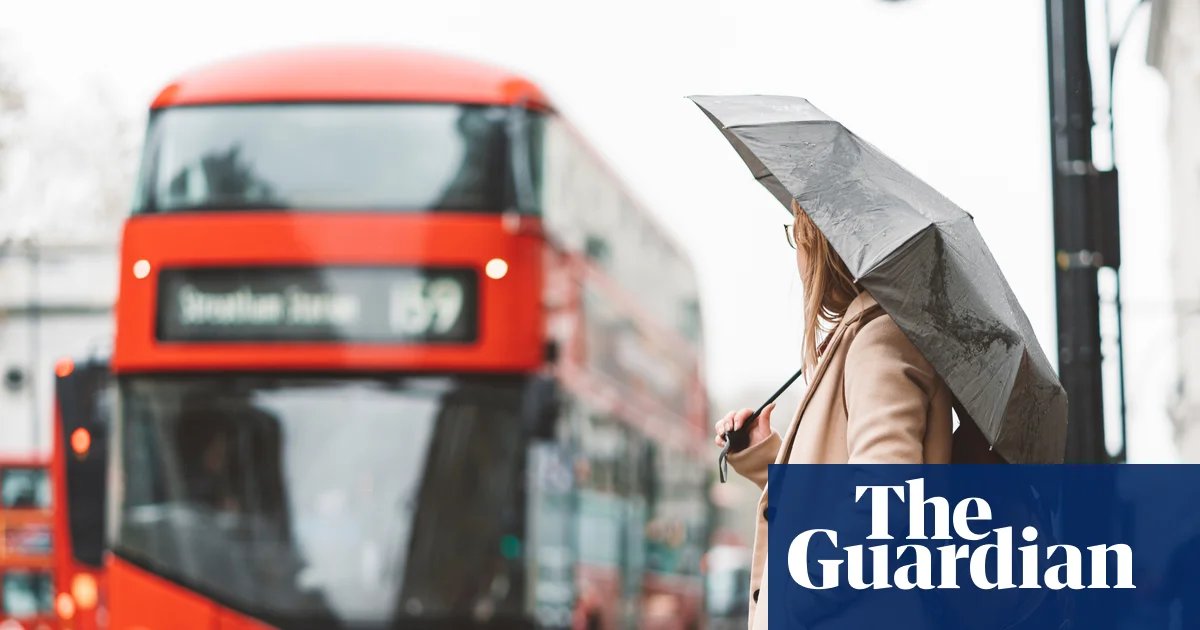
A publicly owned company, Buses for London, will start running services in the capital next year, Transport for London has announced.
TfL said the launch was a “major milestone” in its plans to improve buses for drivers and passengers.
The new public company will take over a handful of London’s bus routes, which number nearly 700 in total, from late 2027, starting with route 6, which runs between Willesden and Victoria station.
A further four routes to be run by the public company from 2028 are to be announced.
TfL said the creation of a publicly owned bus company would give it greater control over how services were run, allowing it to make buses more reliable and safe, and to reinvest profits into improving the transport network.
At present, TfL contracts bus services to eight privately owned operators.
The mayor of London, Sadiq Khan, said: “This is an opportunity to reimagine our bus network so that it provides better value for money, supports our climate goals, makes our roads safer, and overall just works better for passengers and drivers alike.”
London’s buses have been getting gradually slower and passenger numbers have fallen over the past decade, as they battle with congestion and demands on road space in the capital.
Lorna Murphy, TfL’s director of buses, said the public company marked “an exciting new chapter”, with a depot in the Old Oak regeneration area that would be “the first home of a new generation of zero-emission buses … helping us to build on the progress we’ve already made towards a more sustainable transport system”.
Unions welcomed the move but private operators said the taxpayer would foot the bill for investment and take on more risk.
The Unite general secretary, Sharon Graham, said: “Unite has long been calling for London’s bus services to be returned to public ownership. Outsourcing to private companies hasn’t worked well for workers or passengers.
“For too long, bus workers have been subjected to intolerable working conditions and passengers have experienced worsening services, while bus firms and their shareholders rake in huge profits.”
after newsletter promotion
The union’s national officer for passenger transport, Wayne King, said it was “only the beginning”. He said Unite expected Buses for London to “lead the way in workers’ pay, terms and conditions and treatment and will hold TfL and the mayor to account on this”.
The Confederation of Passenger Transport, representing bus firms, said it would not fix London’s buses. Graham Vidler, the chief executive of CPT, said: “Passengers don’t need a new public bus operator. They need faster, more reliable journeys and investment should be made where passengers will actually feel the difference: tackling congestion, giving buses priority and getting London moving.
“Regardless of who operates the service, buses typically travel at just 9 mph in London – slower than the average cyclist.”
He said private operators had made significant investment in London’s bus network, including new vehicles and technology, adding: “The uncertainty created by a new publicly owned operator risks making it harder for private operators to make the case for continued investment in London in the future.”
Labour’s bus overhauls since 2025, which push wider franchising and public control of services, have also made it possible for local authorities nationwide to establish new publicly owned companies. A few municipal companies, such as Reading, Blackpool and Nottingham, survived deregulation and privatisation in the 1980s.
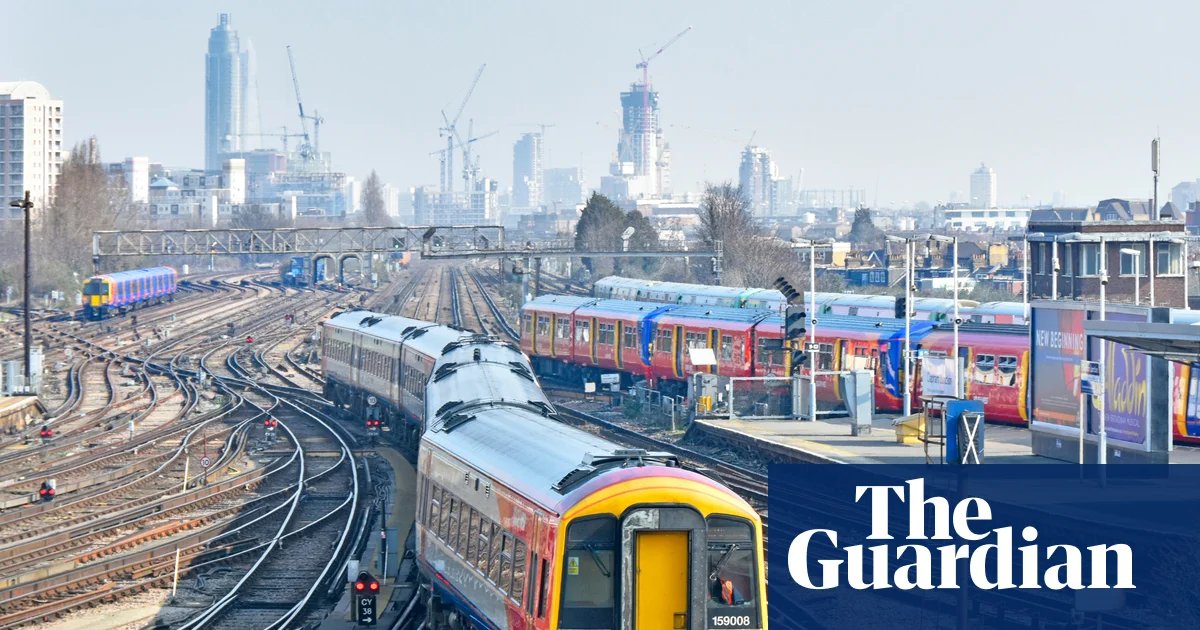
The number of reported assaults on Great Britain’s railways has risen to a record high of almost 25,000 incidents in a year, data published by the Office of Rail and Road (ORR) shows.
There were 13,464 reported assaults against passengers and members of the public on the mainline railway in 2025-26, up 36% on the previous year and the highest number recorded by the ORR since it started tracking the figures in 2004.
Assaults on rail staff were up 12% in a year to 11,289 reported incidents, mainly verbal abuse but including nearly 2,500 physical assaults – an average of about seven every day.
The assaults on members of the public included rises in cases of harassment, up 52% year on year, and common assault, up by 30%.
We would like to speak to passengers and rail workers who have been assaulted on Britain’s railways.
Share your experience
Please share your response in the form below or by messaging us. We will contact you before we publish your submission.
If you’re having trouble using the form click here. Read terms of service here and privacy policy here.


Happy birthday! What deals and discounts does your age unlock? | Consumer affairs

Aaron Ramsey makes bold claim on Oxford United and Wales star

Schoolchildren without smartphones penalised with higher bus fares | Bus fares
-

 Oxford united FC5 days ago
Chris Gunter steps away Wales role to focus on Oxford United
-

 Oxford Events4 weeks ago
What’s on in Oxfordshire this September
-

 Oxford News3 weeks ago
UK private school’s ‘outstanding’ headteacher is to retire
-

 Oxford News4 weeks ago
King Charles applauded as Dragons’ Den star among 26 to lose MBE
-

 Oxford united FC2 weeks ago
Oxford United transfer chief explains EFL embargo and contract dilemma
-
 Oxford Events3 weeks ago
Oxford Open Doors: nine properties to explore without booking
-

 Oxford News3 weeks ago
Salon Privé at Blenheim Palace 2026 – day one revs up
-
 Oxford Events4 weeks ago
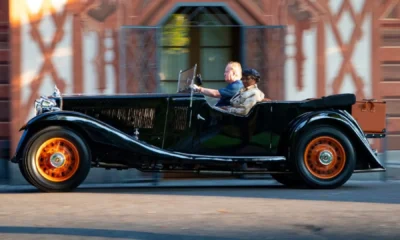
13 remarkable cars to look out for at this year’s Salon Privé Concours