
Traffic & Transport
Schoolchildren without smartphones penalised with higher bus fares | Bus fares

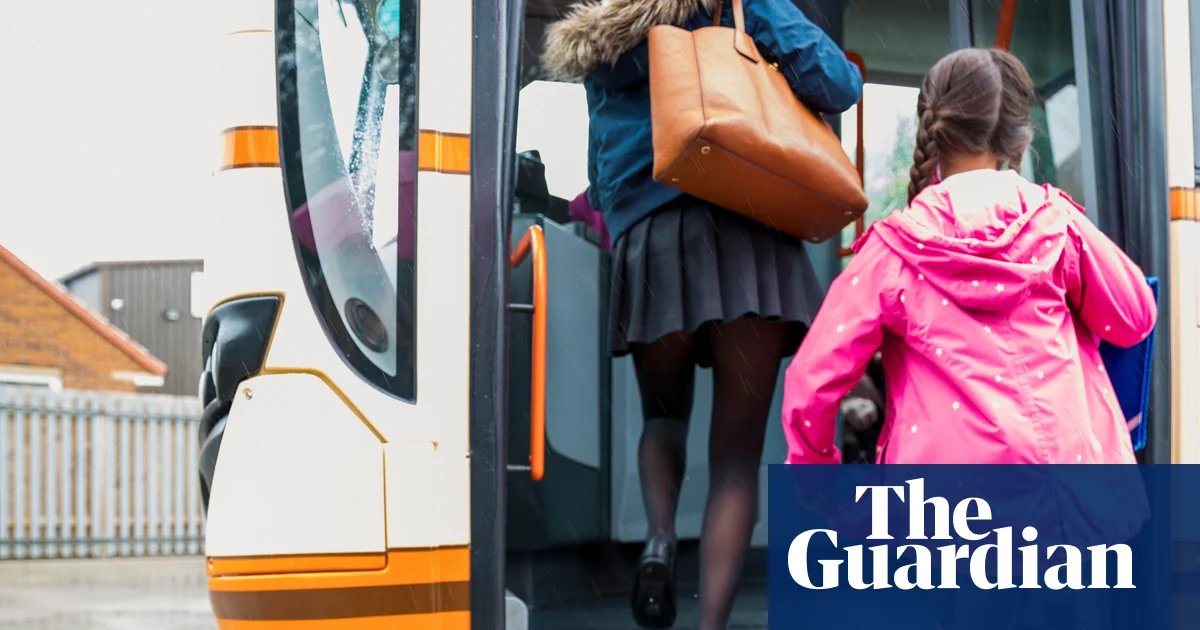
Schoolchildren who do not own smartphones face paying hundreds of pounds extra in annual bus fares as cheaper travel passes are digitised.
Critics argue that by only making discounts available through an app, operators are undermining government guidance to keep mobile phones out of schools.
Adele Kightley’s 11-year-old daughter faces paying an extra £546 a year to get to school because a discount scheme launched by Derbyshire county council is only available via smartphones.
The b_line card caps single fares on trentbarton buses at £1.50 for those aged 18 and under. However, users have to register their card with an app to qualify.
“We made the choice not to give our daughter a smartphone, instead opting for a brick phone when she started secondary school this month,” Kightley said.
“In order to get trentbarton’s young person discount, a child has to connect their student card with the app. However, they can’t get the same discount by showing the same student card to the driver and paying by cash or card.”
Trentbarton said its ticketing machines are not configured to read the council-issued cards. “We are working at speed on developing a new physical card to provide the discounted b_line fare for under-19s,” a spokesperson for the bus company said.
“In the meantime, all young people, whether they have a smartphone or not, will continue to receive a range of discounts off our adult fares however they pay.”
East Midlands combined county authority said it sympathised with parents who did not want their children to have smartphones and would consider how young people accessed discounted fares as it developed the region’s fares and ticketing strategy.
The increasing use of digital-only passes is penalising poorer households as well as undermining efforts to restrict screen time for children, according to Daisy Greenwell, a co-founder of the campaign group Smartphone Free Childhood.
“There is now a huge movement of parents and schools trying to delay smartphones for children but, in many parts of the country, bus companies are making that much harder by charging smartphone-free children up to twice as much for exactly the same journey,” she said.
More than 200,000 parents have signed up to the campaign group’s “parent pact”, which promises to delay getting a child smartphones until at least 14, “yet essential services are still being designed around the assumption that every child has one”, Greenwell said. “For lower-income families in particular, owning a smartphone can effectively become the price of accessing cheaper bus fares.”
Other regional operators, including Stagecoach and Compass, also require children to have a smartphone to access the best discounts.
“My husband and I decided not to give smartphones to our children because of the overwhelming evidence that shows how harmful they are to developing brains,” Kightley said. “When our younger child starts secondary school, it will cost us nearly £1,100 a year more than it would if they had access to the discount through the app.”
A law banning the use of mobile phones in English schools came into force in June. Some schools prohibit pupils from bringing smartphones on site. However, the Department for Education said the legislation did not cover phone use during travel to school and that app-only fare discountswere a matter for individual bus operators.
The government’s stance is sending mixed messages, Greenwell said. “Bus fares shouldn’t be a barrier to schools choosing policies where smartphones aren’t brought on to site. Government and bus companies have a clear opportunity to fix this, so every child can access the same fare whether they carry a smartphone or not.”
Stagecoach and Compass were contacted for a comment.
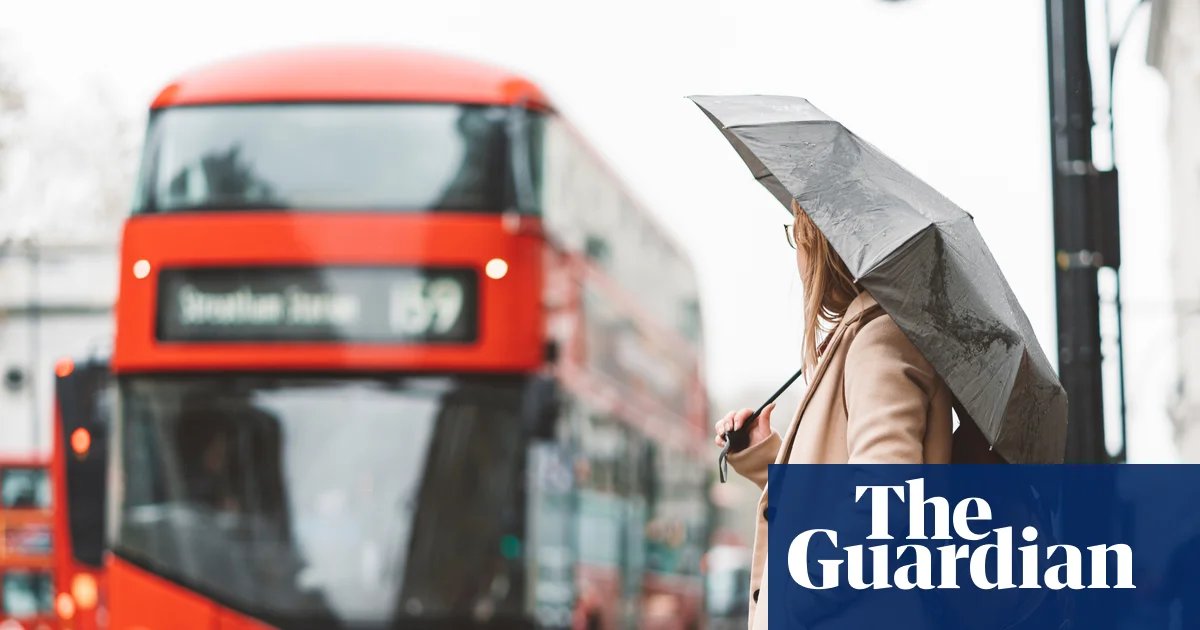
A publicly owned company, Buses for London, will start running services in the capital next year, Transport for London has announced.
TfL said the launch was a “major milestone” in its plans to improve buses for drivers and passengers.
The new public company will take over a handful of London’s bus routes, which number nearly 700 in total, from late 2027, starting with route 6, which runs between Willesden and Victoria station.
A further four routes to be run by the public company from 2028 are to be announced.
TfL said the creation of a publicly owned bus company would give it greater control over how services were run, allowing it to make buses more reliable and safe, and to reinvest profits into improving the transport network.
At present, TfL contracts bus services to eight privately owned operators.
The mayor of London, Sadiq Khan, said: “This is an opportunity to reimagine our bus network so that it provides better value for money, supports our climate goals, makes our roads safer, and overall just works better for passengers and drivers alike.”
London’s buses have been getting gradually slower and passenger numbers have fallen over the past decade, as they battle with congestion and demands on road space in the capital.
Lorna Murphy, TfL’s director of buses, said the public company marked “an exciting new chapter”, with a depot in the Old Oak regeneration area that would be “the first home of a new generation of zero-emission buses … helping us to build on the progress we’ve already made towards a more sustainable transport system”.
Unions welcomed the move but private operators said the taxpayer would foot the bill for investment and take on more risk.
The Unite general secretary, Sharon Graham, said: “Unite has long been calling for London’s bus services to be returned to public ownership. Outsourcing to private companies hasn’t worked well for workers or passengers.
“For too long, bus workers have been subjected to intolerable working conditions and passengers have experienced worsening services, while bus firms and their shareholders rake in huge profits.”
after newsletter promotion
The union’s national officer for passenger transport, Wayne King, said it was “only the beginning”. He said Unite expected Buses for London to “lead the way in workers’ pay, terms and conditions and treatment and will hold TfL and the mayor to account on this”.
The Confederation of Passenger Transport, representing bus firms, said it would not fix London’s buses. Graham Vidler, the chief executive of CPT, said: “Passengers don’t need a new public bus operator. They need faster, more reliable journeys and investment should be made where passengers will actually feel the difference: tackling congestion, giving buses priority and getting London moving.
“Regardless of who operates the service, buses typically travel at just 9 mph in London – slower than the average cyclist.”
He said private operators had made significant investment in London’s bus network, including new vehicles and technology, adding: “The uncertainty created by a new publicly owned operator risks making it harder for private operators to make the case for continued investment in London in the future.”
Labour’s bus overhauls since 2025, which push wider franchising and public control of services, have also made it possible for local authorities nationwide to establish new publicly owned companies. A few municipal companies, such as Reading, Blackpool and Nottingham, survived deregulation and privatisation in the 1980s.
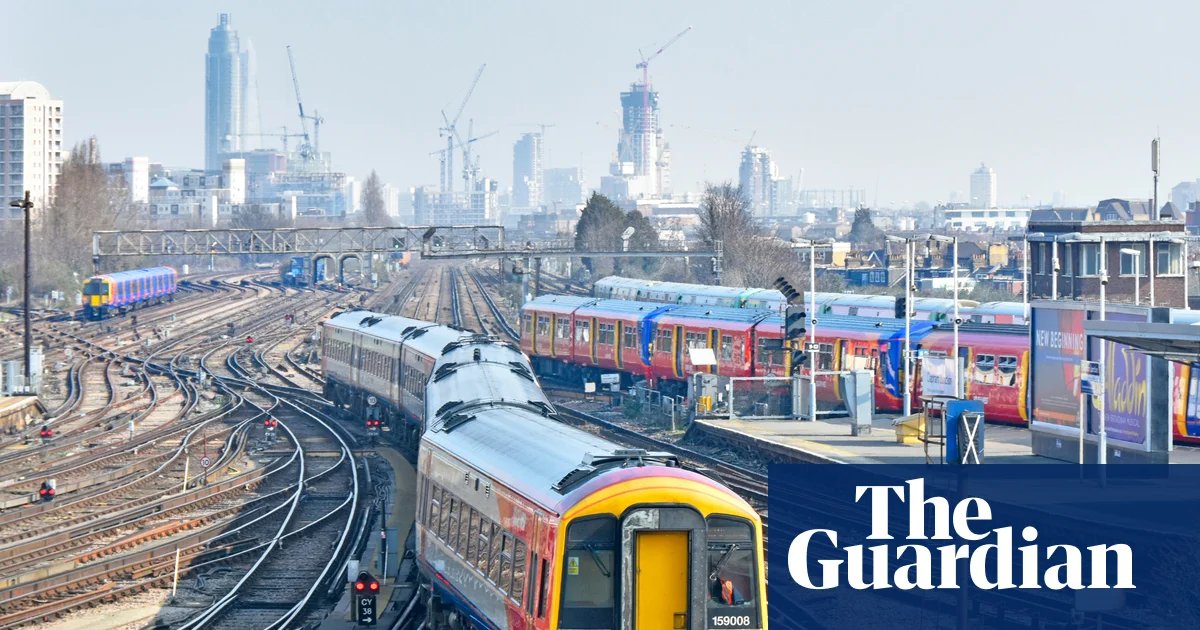
The number of reported assaults on Great Britain’s railways has risen to a record high of almost 25,000 incidents in a year, data published by the Office of Rail and Road (ORR) shows.
There were 13,464 reported assaults against passengers and members of the public on the mainline railway in 2025-26, up 36% on the previous year and the highest number recorded by the ORR since it started tracking the figures in 2004.
Assaults on rail staff were up 12% in a year to 11,289 reported incidents, mainly verbal abuse but including nearly 2,500 physical assaults – an average of about seven every day.
The assaults on members of the public included rises in cases of harassment, up 52% year on year, and common assault, up by 30%.
We would like to speak to passengers and rail workers who have been assaulted on Britain’s railways.
Share your experience
Please share your response in the form below or by messaging us. We will contact you before we publish your submission.
If you’re having trouble using the form click here. Read terms of service here and privacy policy here.
Traffic & Transport
Reported assaults on Britain’s railways rise to nearly 25,000 a year | Rail transport
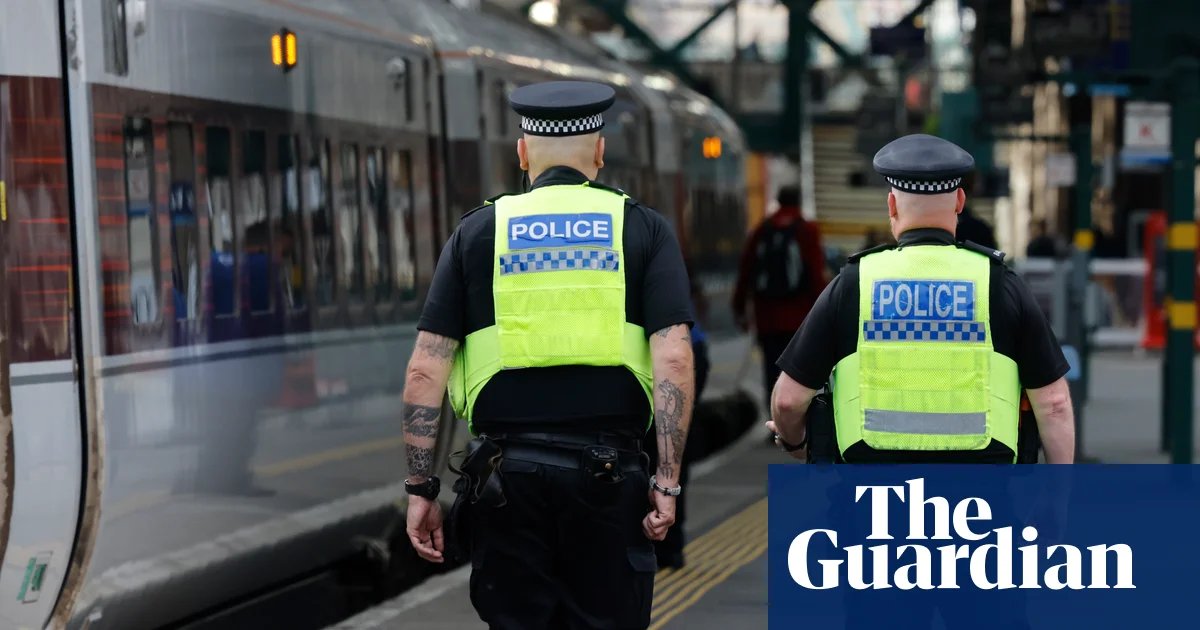
The number of reported assaults on Britain’s railways has risen to a record high of almost 25,000 incidents in a year.
Unions said the “horrendous” figures showed the need for more staff and policing, as the Office of Rail and Road (ORR) revealed a sharp increase in assaults on the travelling public and on railway staff last year.
There were 13,464 reported assaults against passengers and members of the public on the mainline railway in 2025-26, up 36% on the previous year and the highest number recorded by the ORR since it started tracking the figures in 2004.
Assaults on rail staff were up 12% in a year to 11,289 reported incidents, mainly verbal abuse but including nearly 2,500 physical assaults – an average of about seven every day.
The assaults on members of the public included startling rises in cases of harassment, up 52% year on year, and common assault, up by 30%.
The figures partly reflect increased reporting and zero-tolerance campaigns on public transport, but also underline concerns flagged by unions about the ongoing threats to frontline workers as well as passengers, and the availability of transport police.
The RMT general secretary, Eddie Dempsey, said the numbers were horrendous but chimed with the union’s own surveys showing two-thirds of its members had experienced some form of violence at work in the past year.
He said: “We are calling for a significant increase in staffing across public transport, including an end to lone working. We also clearly need stronger legal protections for public transport workers against assaults at work.
“British Transport Police funding cuts have also been disastrous which has undermined a proper policing presence on all public transport.”
The chief inspector of railways, the ORR’s Richard Hines, said: “The increase in reported assaults is concerning. No one on the railway should be subjected to violence, threats or abuse.
“We’re working with industry and our trade union colleagues to address work-related violence and harassment, including through recent guidance which sets out what we expect from rail employers.
“This includes understanding where the risks are, putting effective controls in place, encouraging staff to report incidents and providing appropriate support afterwards. Our inspectors will continue to check how these risks are being managed.”
A spokesperson for Network Rail and train operators said: “Violence, abuse and intimidation directed at passengers or staff are completely unacceptable. The rail industry works closely with British Transport Police to investigate incidents, support victims and bring offenders to justice.”
after newsletter promotion
They said the numbers also reflected greater intelligence sharing, improved reporting processes, and more CCTV and body-worn cameras for frontline staff.
The ORR report noted that the headline numbers of reported assaults can include multiple counts in a single incident, for example for both harassment and common assault, while workforce assaults are now recorded even if no physical injury occurs. On the London Underground, where there is single counting, the number of assaults on the workforce fell slightly last year.
The chief executive of the Rail Safety and Standards Board, Mark Phillips, said the rail industry was taking action to better protect staff, but the figures “underline the need for a change in public behaviour and greater respect for the people who keep the railway running safely every day”.
Reports in recent years have highlighted that women and girls were at particular risk, while the growing number of assaults year on year since the pandemic has coincided with pressure on British Transport Police numbers.
The abuse and intimidation faced by frontline staff on the railways has also been seen in sectors including retail and in the NHS. The British Retail Consortium warned over “endemic” violence towards shop workers earlier this year, while the number of reports of violence against NHS staff by patients surpassed 100,000 in 2025.
The Department for Transport and British Transport Police were approached for comment.


Aaron Ramsey makes bold claim on Oxford United and Wales star

Schoolchildren without smartphones penalised with higher bus fares | Bus fares

‘Major milestone’: TfL to launch new public bus operator in London | TfL
-

 Oxford united FC5 days ago
Chris Gunter steps away Wales role to focus on Oxford United
-

 Oxford Events4 weeks ago
What’s on in Oxfordshire this September
-

 Oxford News3 weeks ago
UK private school’s ‘outstanding’ headteacher is to retire
-

 Oxford News4 weeks ago
King Charles applauded as Dragons’ Den star among 26 to lose MBE
-

 Oxford united FC2 weeks ago
Oxford United transfer chief explains EFL embargo and contract dilemma
-

 Oxford Events3 weeks ago
Oxford Open Doors: nine properties to explore without booking
-

 Oxford News3 weeks ago
Salon Privé at Blenheim Palace 2026 – day one revs up
-

 Oxford Events4 weeks ago
13 remarkable cars to look out for at this year’s Salon Privé Concours