
Business & Technology
Halal butchers closed and for sale a year after opening

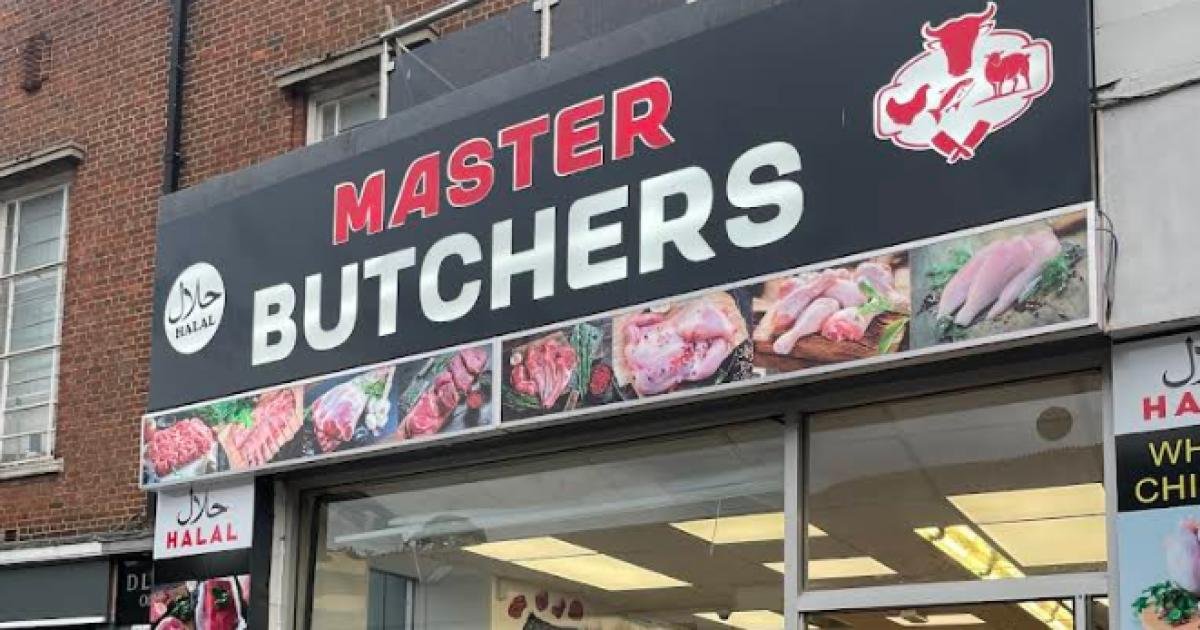
Master Butchers in Holyoake Hall, in London Road in Headington, has been listed for let to a new owner for £25,000 per year.
The premises, which was formerly a fishmongers, opened as a Halal butchers shop last March.
READ MORE: Oxford trains cancelled after dead body found on tracks
It joined three other Halal butchers which already operated in London Road, namely Headington Butchers & Groceries, Medina Foods Market and Oxon Groceries, all of which continue trading.
Less than a year later, the Master Butchers has closed, with no reason publicly given by the owners.
Its predecessor, Bluefin Fishmongers, similarly lasted just a short time in the high street shop, trading for just 11 months from February to December 2024.
A sale listing with agents Benedicts said the unit at Holyoake Hall, 122-136 London Road, “offers a compact and highly versatile retail space, ideal for a range of occupiers”.
READ MORE: Probe into major Oxfordshire development’s ‘unplanned’ road
The 472sqft shop is said to be surrounded by “established occupiers”, positioned next to Domino’s pizza and various other shops, and to have “high levels of passing foot and vehicle traffic”.
The listing said: “Benefitting from a prominent frontage onto London Road, the unit enjoys excellent visibility in a well-established commercial parade, surrounded by a mix of national brands such as Betfred and Dominoes, cafés, and thriving local enterprises.
“The area is popular with students, professionals, and residents alike, ensuring a consistent and diverse customer base throughout the day.”

New research from Flagstone suggests UK SMEs favour high street banks over challenger and online providers for business savings, even though many mid-sized firms hold cash above Financial Services Compensation Scheme protection limits.
The study of 500 UK SMEs found that 73% save mostly or entirely with high street banks. Another 13% use an even split between high street and challenger banks, while 13% save mostly or entirely with online or challenger providers.
That preference persists despite a clear gap in average savings rates. Flagstone compared instant-access and fixed-term products from four large high street banks and four challenger banks, finding that challengers offered higher average rates in every category.
For instant-access accounts, the average rate from a high street bank was 1.15%, compared with 3.87% from a challenger bank. On six-month fixed terms, the average rates were 2.25% and 3.80% respectively, while 12-month fixed terms were 2.60% and 3.95%.
Based on average cash reserve balances, a micro business with £66,232 in instant-access cash could miss out on £1,801.51 a year in interest by saving exclusively with high street banks. For a small business with £224,673 in instant-access reserves, the annual shortfall was estimated at £3,482.43.
Among mid-sized businesses with average instant-access cash reserves of £620,734, the missed interest opportunity rose to £8,379.91 a year. That means some larger SMEs could be earning as much as 237% less than they might secure with challenger providers.
Why it happens
The data points to a mix of caution, familiarity and administrative burden. Nearly two-thirds of SMEs said they prefer high street banks because they see them as safer, a view that was stronger among larger businesses and those holding bigger cash balances.
The research found that 75% of SMEs believe protecting company cash is more important than maximising returns, even if that means accepting lower rates. A further 60% said higher rates alone would not persuade them to switch banks.
Trust in newer providers remains a barrier. Some 61% said they would rather hold company cash with established high street banks even when those banks offer lower interest rates, while 68% said they would consider challenger banks if they had more confidence in their track record.
Convenience also featured strongly. Three in five SMEs said they know they could spread money across several banks to reduce risk and improve returns, but either lack the time or see the process as too complicated to manage. Three-quarters said they prefer to keep company savings with their main day-to-day banking provider.
“When the vast majority of UK businesses continue to favour traditional banks despite rate competition driven by challenger banks, it sends a clear signal: rates alone aren’t enough to encourage businesses to change their savings habits. The deeper we dig into the data, the clearer it becomes that SME finance leaders are looking for a number of benefits from the savings providers they use: trust, return, convenience and flexibility,” Lakhbir Sandhu, Chief Financial Officer at Flagstone, said.
Protection limits
The research also highlighted a gap between concerns about safety and how many businesses actually distribute their cash. Under the FSCS rules cited in the findings, an account holder should not hold more than £120,000 with a single banking group if they want full protection should that bank fail.
Among small SMEs, two in five were estimated to have cash reserves that were not fully protected by the scheme. The average small SME held about £225,000 in two or fewer savings accounts, and 43% said they kept all their cash with a single bank.
The picture was more pronounced among mid-sized businesses. At least 85% were likely to have cash reserves that were not fully protected, with average cash holdings of £621,000 spread across three or fewer banks.
These findings suggest many finance teams are prioritising institutions they view as safe while still concentrating sums above compensation thresholds in only a small number of places. The result is a mismatch between stated caution and actual protection.
“When over 4 in 5 SMEs with over £600,000 in cash save with three or fewer banks, it’s unlikely they are achieving full FSCS protection. However, when risk mitigation ranks so highly among SMEs, finding ways to ensure adequate FSCS protection on their cash should be a priority for finance leaders. While the financial services industry has more guardrails than ever, it’s not a market exempt from risk,” Sandhu said.

UK online sales values rose 11.4% year on year in February, according to Office for National Statistics retail data highlighted by Parcelhero. Overall retail sales volumes increased 2.5% from a year earlier.
The figures point to a stronger month for consumer spending than the same period last year, with growth also visible in the latest three-month ONS measures.
Overall retail sales volumes for the three months to February were 3% higher than in the same period a year earlier. Over the same period, online spending values rose 12.1%, suggesting eCommerce remained a notable source of retail growth.
That annual picture contrasted with a weaker month-on-month reading. Compared with January, overall retail sales volumes fell 0.4% in February, while non-store retailing volumes – a category largely made up of online sales – slipped 0.5%.
Even so, the value of online spending edged higher every month. Online sales values rose 0.6% from January, indicating that although shoppers may have bought fewer goods online, they spent more overall.
The figures underline the mixed state of the consumer economy. Annual comparisons suggest households spent more freely than a year earlier, but the monthly decline in volumes points to weaker momentum after January.
Parcelhero also warned that the wider geopolitical backdrop could weigh on retail sentiment in the next set of figures.
David Jinks, Head of Consumer Research at Parcelhero, said the latest retail sales estimates for February offered “much to cheer”. Overall sales volumes rose 2.5% year on year, and the outlook for eCommerce was even stronger, with the amount Britons spent online up 11.4% compared with February 2025.
“Of course, monthly retail figures are notoriously volatile, which is why the ONS is increasingly concentrating on three-month figures. Here again, overall retail sales volumes were 3% higher for the three months to February 2026 than for the same period last year. Even more strikingly, online spending values rose 12.1% year on year when comparing the three months to February 2026 with the same period to February 2025,” said Jinks.
“However, the picture was more mixed when compared with the previous month. Overall retail sales volumes are estimated to have fallen 0.4% in February from January, with non-store retailing volumes – the category primarily made up of online sales – falling 0.5%. Encouragingly, though the amount of goods bought online in February may have slipped, online sales values – the amount of money spent – rose 0.6% from January, perhaps indicating shoppers were prepared to spend a little more on higher-value items once the January sales had finished,” he continued.
He highlighted that “retail in February 2026 was considerably healthier than in the same month last year”, but warned that broader geopolitical risks could overshadow recent gains. “The elephant in the room,” he said, is President Trump’s attack on Iran. With the US and Israel launching surprise air strikes on 28 February and the conflict widening since, he said the March retail estimates, due on 24 April, will provide an early indication of how consumer confidence has been affected.
“Ultimately, however fickle or strong key retail periods prove to be, stores with both a High Street and online offering are best protected against unexpected events. Parcelhero’s report ‘2030: Death of the High Street’, which has been discussed in Parliament, argues that retailers must develop an omnichannel approach, embracing both online and physical store sales,” said Jinks.
Mixed signals
The divergence between annual and monthly data is likely to draw attention from retailers trying to judge whether demand is strengthening or merely stabilising. Value growth can reflect shoppers buying more expensive items, paying higher prices, or a combination of both, while volume data gives a clearer measure of how much consumers actually purchased.
Non-store retailing remains an important indicator because it captures much of the UK’s online trade. A monthly fall in that category alongside a rise in online spending values suggests basket sizes or average selling prices may have increased even as transaction volumes softened.
Consumer mood
The reference to Iran highlights how quickly external shocks can alter the retail outlook. Rising geopolitical tensions can feed through to energy costs, transport prices and consumer confidence, all of which shape household spending decisions.
For retailers, that creates a difficult backdrop even after a stronger annual showing in February. Businesses with both shop and online operations may be better placed to absorb swings in demand between channels, particularly when consumer behaviour shifts suddenly.
The latest figures add to evidence that digital spending remains resilient even when broader retail performance is uneven. Online spending values outpaced total retail volume growth by a wide margin on both the year-on-year monthly and rolling three-month measures.
Whether that trend continues will depend on the next official readings on consumer activity and on whether households remain willing to spend amid a more uncertain international backdrop. For now, February offered retailers a firmer annual comparison, but it also exposed signs of fragility beneath the headline growth.
The increase, announced last month, comes into force today and has seen a 4p price increase in second-class stamps to 91p, as well as a 10p increase to second-class stamps.
It means the cost of a first-class stamp has now more than doubled – up 137% – in the past six years after eight rises, while the cost of a second-class stamp has been hiked six times.
The latest rises come after Royal Mail revealed in February that it had missed delivery targets once again in the most recent quarter.
Royal Mail said the stamp rises reflected the continued increase in the cost of delivery as letter volumes fell and the number of addresses increased.
Richard Travers, managing director of letters at Royal Mail, said: “We always consider price changes very carefully, balancing affordability with the rising cost of delivering mail.
“On average, UK adults now spend just £6.50 each year on stamps and there are 70% fewer letters sent than 20 years ago.
“In the meantime, the number of addresses we deliver to has increased by four million to 32 million addresses across the UK.”
Royal Mail argued that despite the price rises, UK stamps still cost less than the European average of £1.56 for a second-class stamp and £1.93 for first class.
Anne Pardoe, head of policy at Citizens Advice, said: “More than half-a-decade has gone by since the company met its delivery targets and people still face a gamble, with many uncertain if their important documents or letters like medical appointments will arrive on time.
“Things only risk getting worse when cuts to delivery days and reduced performance targets come into full effect.
“Against this backdrop, Ofcom simply cannot wave through these increases any longer.
“Higher prices must come with higher standards – increases should be tied to Royal Mail’s performance on the doorstep.”
The last time Royal Mail met its annual target for delivering first-class post on time was in 2019-20.
The firm – whose owner International Distribution Services (IDS) was bought last June for £3.6 billion by Czech billionaire Daniel Kretinsky’s EP Group – repeated its call to “urgently move forward” with reforms to the service.


Democrat voices skepticism over Trump’s ceasefire deal with Iran, saying each nation is claiming different terms– live | Trump administration

UK SMEs favour high street banks despite lower rates

Town outrage as sacks of rubbish dumped by Oxfordshire wood
-
 Oxford Events3 weeks ago
Michelin Guide Oxfordshire Restaurants – The Oxford Magazine
-

 Crime & Safety3 weeks ago
Oxford: ‘Next generation’ LimeBikes in city from today
-

 Jobs & Careers3 weeks ago
Why Join Oxford | Oxford University Jobs
-

 Jobs & Careers3 weeks ago
Explore our Careers
-

 Oxford Events3 weeks ago
Oxford News and Events, What’s on in Oxford, Exhibitions
-

 Jobs & Careers3 weeks ago
Internal Job Board for University vacancies
-

 Student Life3 weeks ago
The independent cinema battling Oriel College to stay open
-

 Crime & Safety3 weeks ago
Crash partially blocks A40 and causes severe Oxfordshire traffic