
Property & Housing
Fishers Vale officially opens in Marston, delivering 40 fully affordable homes

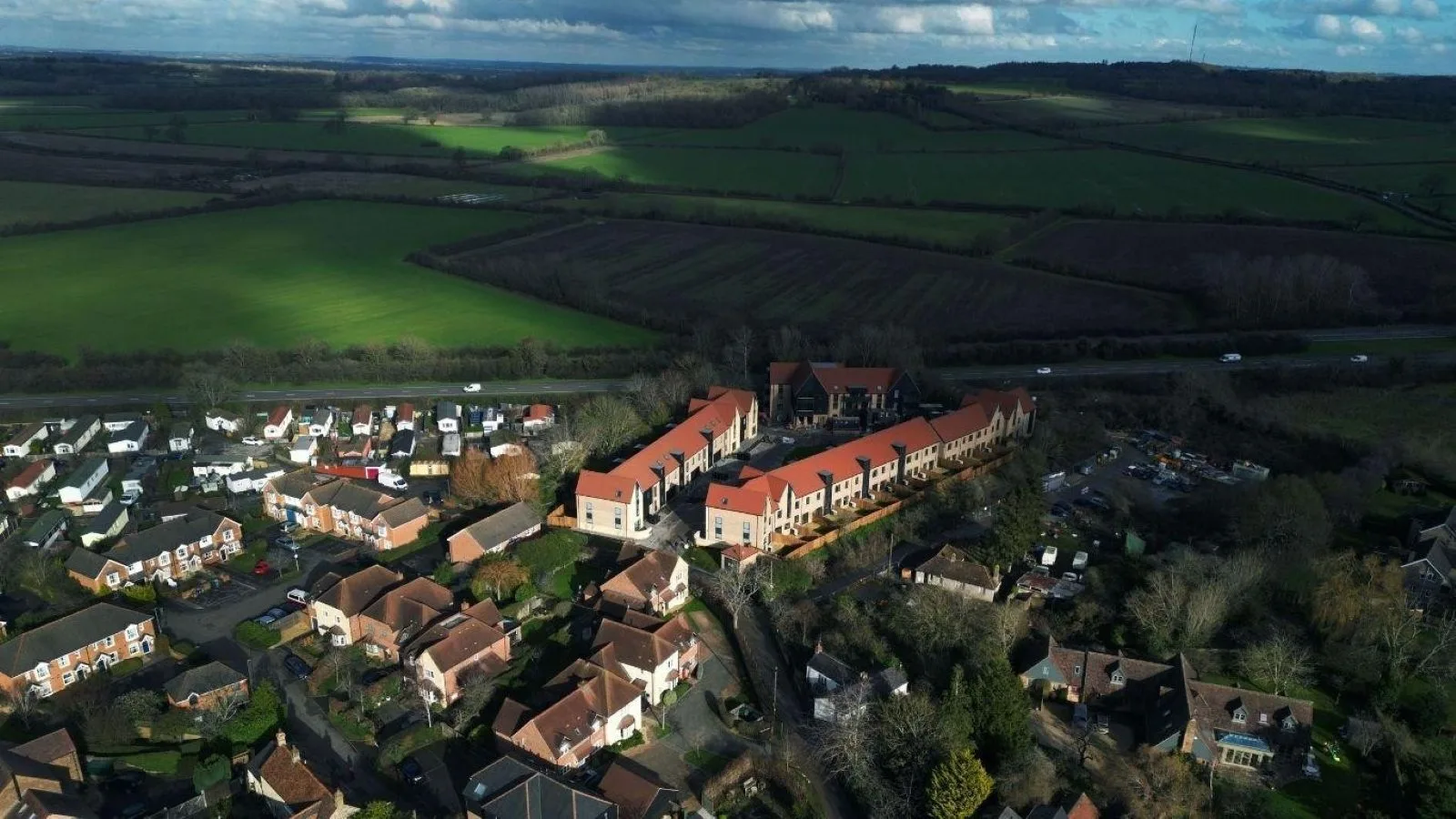
The official opening of Fishers Vale, a new fully affordable housing development in Old Marston, has been marked with a ribbon-cutting ceremony attended by city councillors, including Linda Smith, Executive Member for Housing and Communities at Oxford City Council.
With the first 50% of homes already handed over, the development begins the delivery of 40 homes on what was previously disused paddock land.
Fishers Vale comprises 26 houses and 14 flats arranged around a central green space. The development combines 21 council homes for social rent with 19 shared ownership homes, providing opportunities for local buyers to take their first step onto the housing ladder while easing pressure on Oxford’s housing register.
The homes are designed with sustainability in mind, featuring all-electric systems, enhanced insulation, airtight construction, high-performance windows, and air source heat pumps, reducing carbon emissions by around 56% compared with national targets. Each property benefits from private outdoor space, secure cycle storage, and electric vehicle (EV) charging points, with design details inspired by the natural surroundings.
The scheme was delivered in partnership between OX Place, Oxford City Council’s wholly owned housing company, and Lucy Developments. Social rent levels mean tenants pay roughly 40% of what a private landlord would charge for a comparable home, while shared ownership offers a flexible route onto the housing ladder in one of the UK’s most expensive cities.
Councillor Linda Smith said: “Today we celebrate the opening of Fishers Vale, a development that brings much-needed, genuinely affordable, homes to our city.
“This is a proud moment for a project that shows what’s possible when we transform underused land into sustainable new places for residents to put down roots. Housing need in Oxford has never been greater and delivering new council houses and flats like these to families on our housing register is our top priority. To those new residents moving in soon, welcome home!”
Roger Thompson, Chief Executive of OX Place, added: “OX Place is proud to have worked with Lucy Developments and the Council to deliver a truly special new community in Fishers Vale. This partnership has created a range of low carbon, high quality, new homes that demonstrate what’s possible when we build with people and the planet in mind.”
Greg Hilton, Head of Lucy Developments, said: “Fishers Vale demonstrates what’s possible when partners share a clear vision to deliver high-quality, sustainable homes for local people. We’re proud to have worked with OX Place to create a development that not only meets housing needs but also provides a welcoming environment where residents can build their futures.”
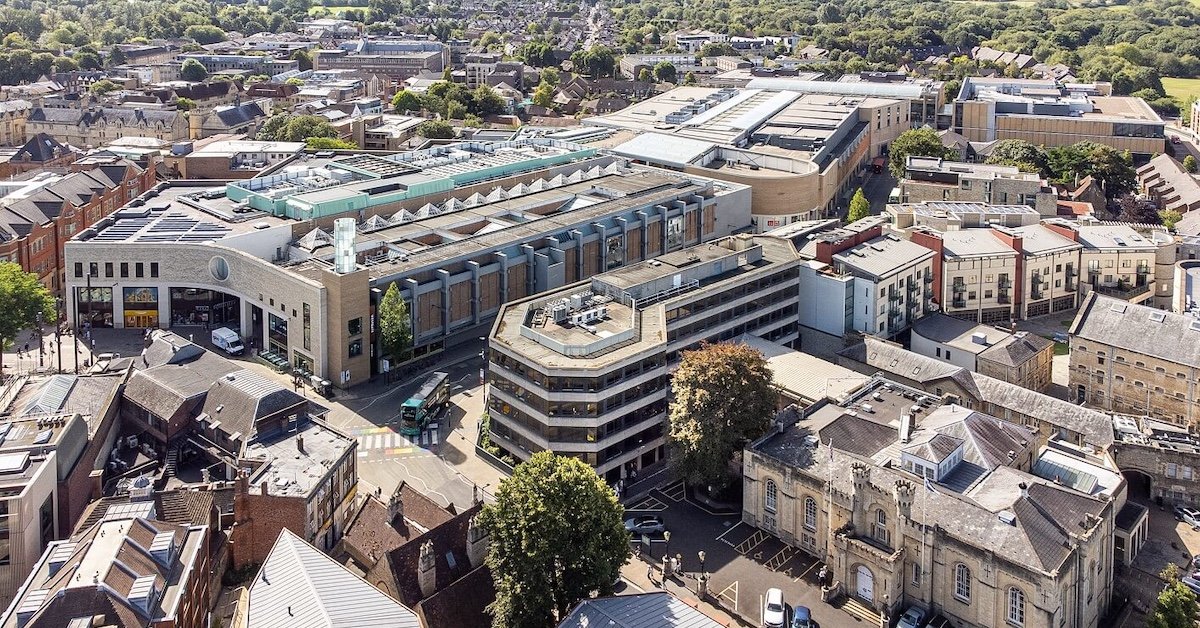
Maxine Reynolds, head of Oxford residential sales at Bidwells, discusses how Oxford can achieve its housing targets whilst maintaining its identity:
The government’s commitment to a development corporation for Oxford, and its decision to create a standalone Greater Oxford Council, underline the seriousness with which national and local politicians are taking the city’s housing crisis.
The development corporation would give Oxford a single body able to purchase land and build new housing at the scale the city needs, and the new Greater Oxford Council gives that body a single planning authority covering the city and its green belt rather than a patchwork of competing interests.
The direction of travel is unlikely to change with a new Prime Minister. Once established through statute, a development corporation does not depend on the government that created it, in the same way the London Docklands and Milton Keynes development corporations continued their work across successive changes of prime minister and party.
Before the Oxford development corporation’s consultation begins, however, it is worth asking what kind of growth our city needs and wants.
The city’s economic weight is easy to underestimate from the top of the Carfax Tower. Two in three of the jobs forecast for Oxford between now and 2035 will sit in knowledge-intensive industries, and the volume of lab and advanced engineering space has doubled in five years. This is a city competing for the same scientists, engineers and postdoctoral researchers as Boston, Zurich and Singapore. It is also a city that is struggling to put a roof over the heads of the people who make that competition possible.
Research carried out for Bidwells found that the average commute among Oxford renters is already the longest of any major UK city, driven by its citizens being pushed further out by the cost of rent, with average rents having risen by a third over the past five years. And Bidwells’ own analysis of the city’s growth trajectory suggests Greater Oxford’s population could grow by 44 per cent over the next fifteen years, from 240,000 to 345,000, requiring roughly 40,000 additional homes by 2040.
Homes designed and built for renters, known as ‘build to rent’, one of the few housing types capable of delivering homes at pace, remains a fraction of what the city needs relative to demand. In this context, a talented doctoral researcher with their choice of positions at a science or tech firm may well choose to move abroad rather than stay in Oxford.
The temptation, in a city as visually protected as Oxford, is to frame this as a binary choice between building more homes and losing the spires, or preserving the city’s character and losing the graduates.
This is simply not true. Jericho and Summertown, now among the most sought-after and carefully conserved parts of the city, were built at densities well above what most modern planning committees would wave through. The Victorians who built them were not profit-chasing developers. They understood something the current debate too often forgets, which is that terraces, mansion blocks and mews housing can deliver significantly more homes per hectare than a scattering of suburban cul-de-sacs, while producing streets that people want to walk down rather than drive through.
Groups such as Create Streets have made this argument at a national level for years. That is considerately designed density allows Britain’s cities to deliver large numbers of homes without losing their identity.
Applied to Oxford, that means directing growth to where it does the least damage and delivers the most benefits. Concentrating new homes around transport nodes such as Bicester North and Bicester Village, where the infrastructure to support them already exists, is a more deliverable route than fighting over greenfield land at the city’s edge. The development corporation should also consider converting underused commercial buildings and infilling backland sites within the ring road before reaching beyond it.
We should also hold new development to the same principles the city’s historic terraces already abide by, that being houses and low-rise flats that sit comfortably next to what is already there, built from materials that match the street.
That is the reasoning behind Bidwells’ new residential agency in Oxford that puts sales, lettings and new homes in the same team as the planners and land specialists who work out what a site can actually deliver. In practice, that means the people advising a landowner or developer on what to build are sitting next to the people who will end up selling or renting it to an Oxford tenant or buyer, rather than the two only meeting once building work has already started.
The consultation for the Greater Oxford Development Corporation, when it arrives, will be a crucial moment for the city’s councils, developers and residents to decide what kind of growth we want.
Oxford does not have to choose between its history and its future. It has already built the proof, street by Victorian street, that it can have both. The task now is to build it again, deliberately, before the city’s own success prices out the very people who sustain it.

CBRE has been appointed on behalf of a client of Federated Hermes, to sell their interest in Milton Park, with a total enterprise value of £800 million.
Milton Park comprises 2.9mn sq ft of innovation space across 87 buildings on 302 freehold acres. It boasts more than 1.2mn sq ft of industrial and logistics space, 638,000 sq ft of lab space and over 500,000 sq ft of traditional office space.
It is also home to more than 280 science, technology and logistics occupiers, ranging from healthtech, fusion energy, quantum, and agritech to distribution and advanced engineering.
Milton Park sits south of Oxford, close to Didcot Parkway station. The park is at the heart of Science Vale, a globally recognised science and innovation ecosystem with expertise in space, energy, life sciences, AI, quantum and deep technologies, backed by world-class research assets and one of the UK’s highest concentrations of R&D employment.
The park offers a ring-fenced 22 MVA power capacity, a Local Development Order that fast-tracks compliant proposals to full planning permission in ten days and Enterprise Zone status, with business rates retained for local reinvestment.
This is the first time Milton Park has been openly marketed since 1984.
There is now an opportunity to gain access to the Oxford innovation ecosystem at scale, together with a 20-year track record of very strong rental and capital growth delivered through development, asset management and placemaking.
It is expected to suit those with clear, long-term ambitions centred around Oxford’s record of science, technology and innovation growth.
Comments
Andrew Hawkins, executive director at CBRE, said: “Science and innovation leasing activity across The Golden Triangle continues to sit above the long-term average, with take-up climbing to 441,200 sq ft in H1 2026, significantly up on the same period last year.
“When split by market, Oxford accounted for almost two-thirds (65%) of take-up in the four quarters to end of Q2 2026, cementing its position at the heart of the sector.”
Joanne Henderson, head of life sciences at CBRE, said: “Oxford has built a globally recognised life sciences cluster, but its real advantage is much broader than that with Oxford University spinouts now raising significant funding.
“Milton Park brings together science, technology and entrepreneurship in a way few locations can match, creating opportunities for companies not only in life sciences, but across AI, quantum, engineering and other frontier technologies too.”
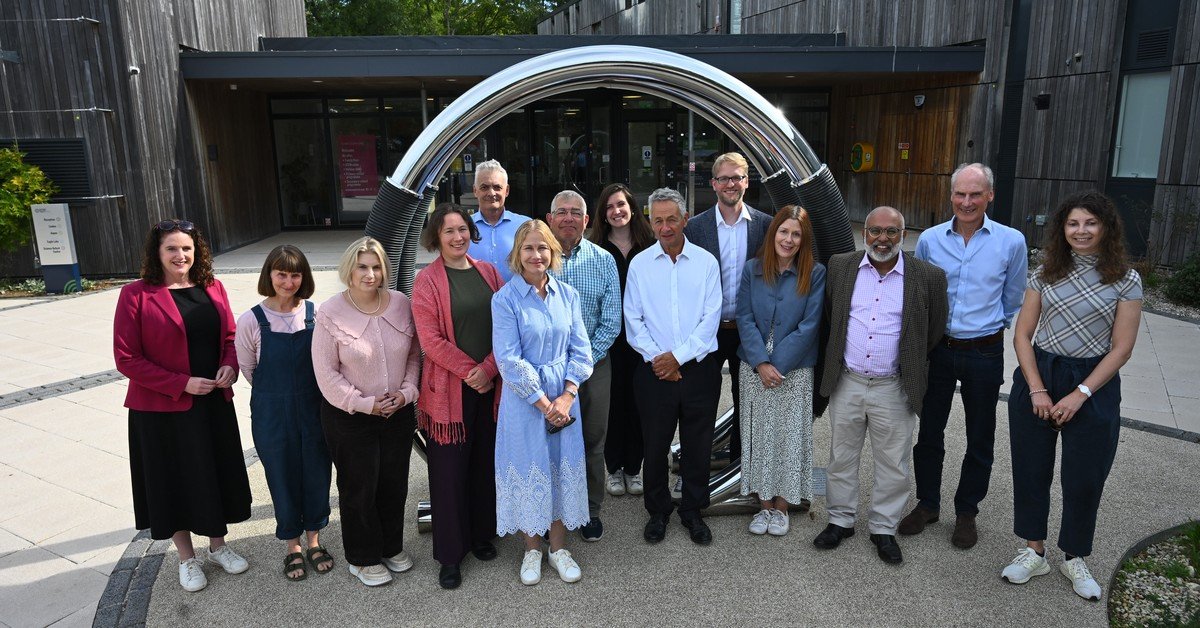
Matt Francis has returned to The Oxford Trust as its new chief executive, succeeding Steve Burgess, who has retired after 13 years leading the charity.
Matt joins from Oxford Innovation Space, where he was head of science and technology. Prior to this, he spent almost a decade with the charity, including five years in senior leadership positions as director of operations and enterprise, and project director.
During his previous time with the Trust, Matt led the delivery of the £13 million Wood Centre for Innovation in Headington, creating a home for both the Trust’s work with start-up science and technology businesses and its Science Oxford Centre, the UK’s first indoor-outdoor hands-on science education centre and hub for its STEM education and engagement programmes.
Matt succeeds Steve Burgess, who led The Oxford Trust for 13 years and oversaw a significant transformation and growth of its work. During his tenure, The Oxford Trust expanded its innovation activities, developed the Wood Centre for Innovation and Science Oxford Centre, and opened the recently completed Aspen Building, expanding the space available for science and innovation in the heart of the Headington Science Cluster.
The recent opening of the Aspen Building at the Wood Centre for Innovation, together with the Oxford Centre for Innovation’s move to new city-centre premises in May 2025, gives the organisation greater capacity to increase its impact across innovation, science education and public engagement.
Comments
John Boyle, chair of trustees at The Oxford Trust, said: “We are delighted to welcome Matt back to The Oxford Trust as our new CEO. He brings a rare combination of leadership experience, a deep knowledge of the organisation and strong understanding of Oxford’s science and innovation community and ecosystem.
“With the Aspen Building now open, we can support even more science and technology startups and growing businesses at the Wood Centre for Innovation, while continuing to extend the reach of the Trust’s education and engagement programmes through Science Oxford, inspiring the next generation of scientists.
“We are confident Matt will help us build on the Trust’s remarkable legacy and strengthen our impact across the region.
“On behalf of the Board of Trustees, I would like to thank Steve once again for his outstanding leadership and dedication over the past 13 years. His vision and commitment have shaped the Trust as it is today, and we wish him every happiness in his retirement.”
Matt Francis, chief executive of The Oxford Trust, said: “It is a tremendous privilege to return to The Oxford Trust as CEO. For more than 40 years, the Trust has connected two vital ambitions: helping entrepreneurs turn new technologies into successful businesses and giving young people the chance to discover and engage with science.
“I know first-hand the passion and expertise of the trustees, team and partners who make the Trust’s work possible, which makes returning particularly meaningful. We have strong foundations on which to build, and I’m looking forward to working with colleagues and partners to define an ambitious and focused next chapter for the Trust.
“Oxford’s science and technology sector continues to thrive, with an impact that reaches far beyond the region, and the Trust has an important role to play in its continued success. I want us to help more science and technology companies develop and succeed, enabling their ideas and innovations to improve people’s lives, while showing more young people inspiring, hands-on experiences of science through Science Oxford.”
Image: Matt Francis with the trustees and directors of The Oxford Trust outside the Wood Centre for Innovation in Headington (credit: Roger Askew)


Oxford United player ratings in bizarre Mansfield Town draw

Number of cloned number plates on UK roads at record high, data shows | Transport

LIVE: Mansfield Town 1-1 Oxford United – Two red cards as U's down to nine men
-

 Oxford united FC4 weeks ago
Chris Gunter steps away Wales role to focus on Oxford United
-

 Oxford University3 weeks ago
New to the Oxford English Dictionary this September
-

 Traffic & Transport2 weeks ago
How poor public transport policy is putting the brake on cities | Road transport
-

 Student Life3 weeks ago
Oxford partnership allows OpenAI to use rare Bodleian texts to train ChatGPT
-

 Oxford united FC1 week ago
LIVE: Exeter City vs Oxford United – Jersey Mike's Trophy group stage
-

 Traffic & Transport2 weeks ago
Why should I have to pay more for buses if I don’t use a smartphone? | Bus fares
-

 Oxford united FC2 weeks ago
Northern Ireland fans laud Oxford United defender Ciaron Brown
-

 Oxford Events3 weeks ago
Four days of equestrian spectacle at 2026 Blenheim Palace International Horse Trials