
Traffic & Transport
‘Baggage reclaim was pandemonium’: passengers hit by airport IT chaos recount their ordeals | Airline industry

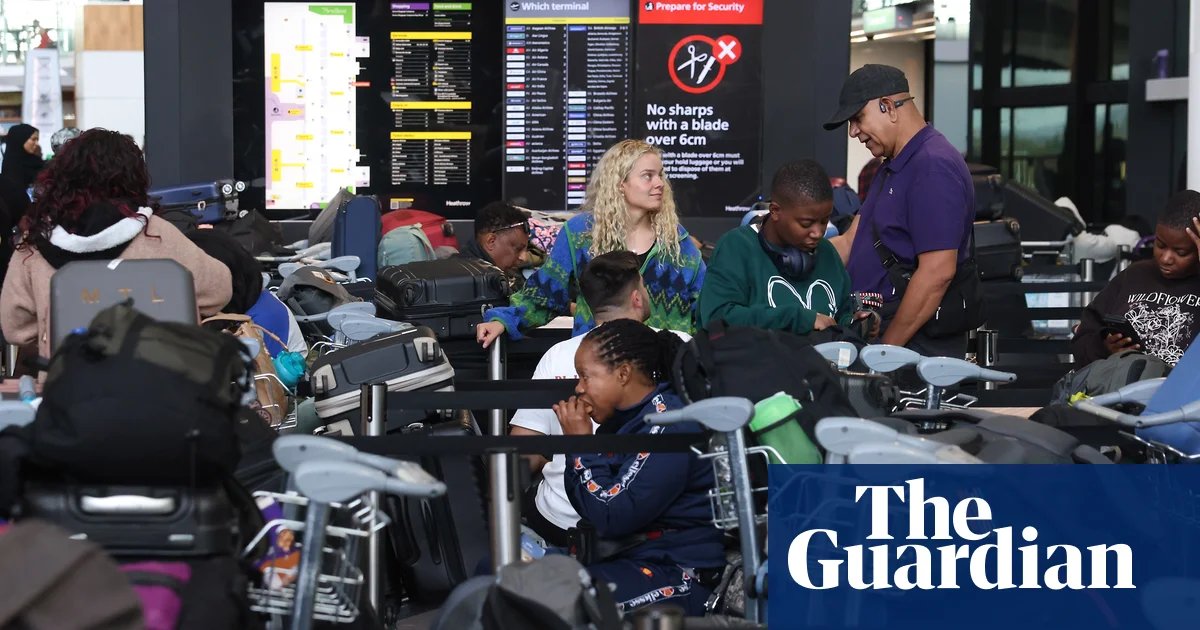
More than 2,000 flights have been cancelled after an air traffic control system failure that has thrown airports across the UK into chaos. Nats, the air traffic control provider, fixed the problem within hours on Tuesday, but hundreds of thousands of passengers were hit by further delays and cancellations on Wednesday.
Martin Rolfe, the chief executive of Nats, has been given a week to report back on the reasons for the technical failure.
People affected by the disruption talked about their frustration during the two days of chaos – from hours spent stuck on planes waiting to take off, to spending the night sleeping on the floor of Heathrow airport. Here are some of their experiences:
‘People were sleeping on every spare inch of flooring’
Daniel Garrick, 32, a software engineer, was scheduled to leave Heathrow on a flight to Austin, Texas, on Tuesday. After waiting for seven hours on the asphalt, “we were released from the plane only to find Heathrow in absolute chaos”, he says.
“My baggage was lost, and British Airways employees were nowhere to be found. People were sleeping on every spare inch of flooring, in arrivals and at security.”
Baggage reclaim was “pandemonium”, he says. “All the screens just said it was closed. You couldn’t tell where your baggage was supposed to be.
“I found some other Texans going back to Austin on our flight. Someone had an air tag in their luggage and we figured out that the bags were still on the plane. Eventually, there was some announcement where we were told they were not going to finish getting all the bags off the planes tonight, so we’re just going to have to leave.” At the time of writing, Garrick still hadn’t retrieved his case with a week’s worth of clothes.
Garrick’s airline, British Airways, sent a mass email apology at about 9pm on Tuesday. “Then in the app, it automatically rebooked me for a flight tomorrow [Thursday] morning, 48 hours after my first flight. Luckily I’m staying with a friend of a friend in Surrey. It was over £100 just for the Uber here.”
‘We were left to our own devices’
Melanie Thompson, 71, an interdisciplinary artist, was on a 14-hour flight returning from her performance at a mixed media festival with her son in Tokyo on Tuesday when she was told the flight would not land in London. “We were exhausted. About 40 minutes before we arrived, the pilot very politely said, ‘because of IT problems and disruptions at Heathrow, we are going to have to divert to Edinburgh’.
“There was a big silence. About 20 minutes later, he said, ‘we were hoping we could refuel and then take you on to Heathrow. But we can’t do that, so we would like you to stay in Edinburgh tonight’. Then we were left to our own devices to find travel and accommodation for the night.”
“We suddenly found ourselves in Edinburgh with nowhere to stay because all the hotels and Airbnbs had been filled up,” she said.
“We finally found a flat for £500, paid for the taxi to get there and stayed the night there last night.”
Thompson spoke to the Guardian on her train journey from Edinburgh to London as there were no flights available on Wednesday.
‘It’s Kafkaesque’
Thomas Reilly, 55, was due to fly with BA from Marrakech to Gatwick on Tuesdayand then on to Marseille, where he lives and works as a freelance geopolitical adviser. It was only when he got to the airport that he was told his flight was cancelled.
“I am currently stuck in Morocco,” says Reilly. “I did not receive any information from BA about the disruption before getting to the airport.”
He says that, once at the airport, BA staff were helpful and courteous but he has been left with no option but to book a hotel to stay an extra two nights in Marrakech – at his own expense (BA staff at the airport did tell him he could ‘pay and reclaim’ for his hotel expenses).
He has been trying to rearrange his journey, attempting to cancel with BA and fly directly to Marrakech through a different airline.
after newsletter promotion
He says: “BA’s customer services operator is not taking calls as ‘the lines are too busy’. There is no email address. And their chatbot cannot help. It is Kafkaesque.”
Reilly says he has worked out “alternative travel arrangements, namely to fly direct from Marrakech to Marseille on Thursday 10 September” but he wanted to get his “refund agreed first before outlaying more money on the replacement flight.”
When Reilly got through to someone at BA, he says the airline told him they “would not refund the Heathrow-Marseille ticket”. “It’s absurd,” Reilly adds.
A spokesperson for British Airways said: “Since yesterday, we’ve rebooked more than 60,000 customers to travel on alternative flights, getting them to their destinations as quickly as we can. Today, we’ve been able to operate almost 80% of our schedule across our whole network.
“We know this has been a very challenging and frustrating time for our customers, and we’re incredibly sorry for the experience they’ve endured because of an issue that has been entirely out of our control.”
‘We have also lost two days of our trip’
Keith Sessions, 74, a computer engineer from Cobham, Surrey, and his wife were due to fly from Heathrow to Tahiti via LA on Tuesday with a five-hour stopover at LAX airport.
For the first leg of their journey, they were to fly Virgin, but once on the plane it was clear there were problems.
He says the pilot informed them there were delays. Five-and-a-half hours later, with the plane still on the asphalt, the pilot announced that the flight had been cancelled.
Sessions says they were not offered a meal in that time, “only water, soft drinks and courtesy snacks”.
The couple decided to return home via taxi and their flights were auto-rebooked. They will now fly out on Thursday with an 11-hour stopover at LAX airport. They will arrive in Tahiti at 5.30am on Friday.
“The 11-hour stopover is not ideal,” says Sessions. “We have also lost two days of our trip and had to spend an extra £340 when you factor in extra cabs to and from the airport and the cost to reserve seating on our flight. Communication from Virgin has been very poor, diabolical.”
A Virgin Atlantic spokesperson said: “We’d like to sincerely apologise to our customers for the widespread disruption … We know how frustrating delays and changes to travel plans can be and appreciate our customers’ patience.”
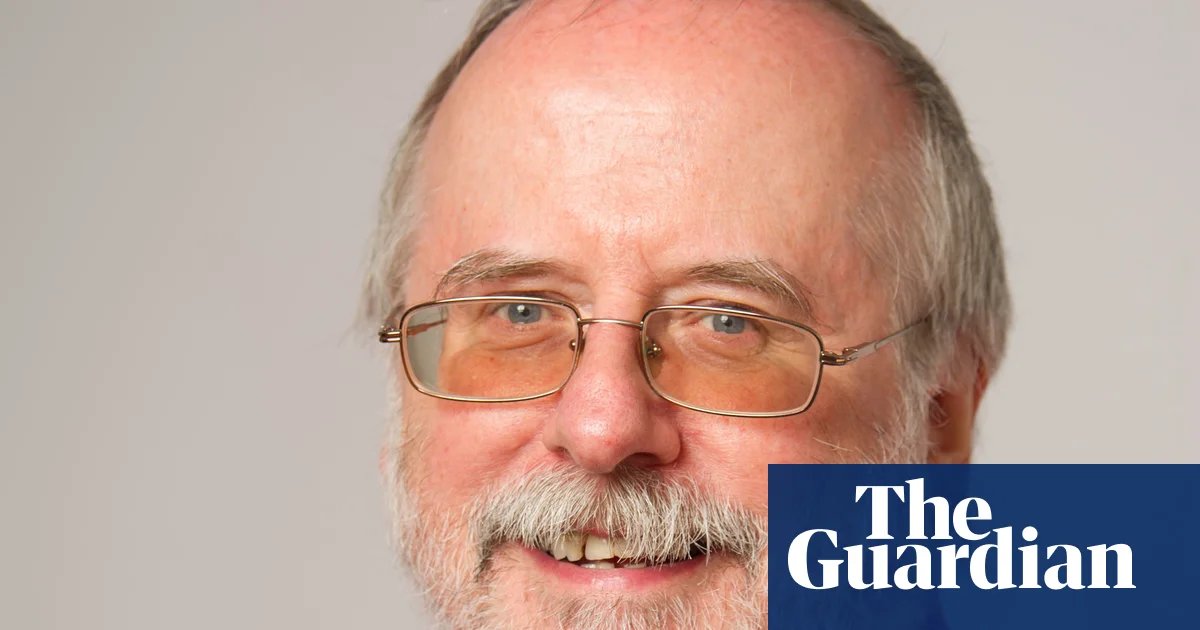
My partner, John Taylor, who has died from cancer aged 74, was a leading figure in the field of community, rural and accessible transport. He made practical improvements in the lives of many people affected by privatisation, poor planning and reduced public funding of transport services.
While volunteering in Manchester in the 1970s John found minimal resources available for those who needed help to access his community buses – makeshift steps and ramps of milk crates and wooden planks were the norm. Plugging this gap became the foundation of his work.
He co-founded Manchester Community Transport (MCT) and in 1984 was founding director of Community Transport Services, later Community Transport Association UK (CTA), the national advisory body for transport-related charities. In the 90s he was instrumental in devising MiDAS (the Minibus Driver Awareness Scheme). In 1994 MiDAS was adopted nationally as a training scheme for volunteer minibus drivers; 30 years later, CTA UK issued its one millionth driver assessment certificate.
Born in Cambridge, John was the youngest of three children of Reginald Taylor, a civil servant, and his wife, Winifred (nee Stamford). The family moved to south London when John was a few weeks old. He was a gifted student at Whitgift school, Croydon, where his love of a challenge and wide open spaces led him to embrace mountaineering and climbing. He subsequently climbed in the UK, the Alps, Pyrenees and Himalayas; his final “big” expedition was an ascent of Ama Dablam, in Nepal, in 2007.
In 1971 he went to New College, Oxford, to study philosophy, politics and economics, followed by a year as an articled clerk in London, with the intention of pursuing a legal career. He then moved to Manchester to do postgraduate study in the sociology of law at Manchester University and stayed in the north for the rest of his life. Voluntary jobs led him into the transport sector, first with MCT and later as a freelance transport consultant, which is when I first met him, working together in Levenshulme.
We moved to Lancaster in 1995, and around this time John became co-director of the TAS (Transport Advisory Service) Partnership. He would often take on far too much and his reports were invariably delivered at the last minute. But once finished, he loved to communicate his ideas; his colourful shirt and tie combos gave him a standout presence during presentations.
Outside work, he enjoyed his vast music collection, which covered classical, jazz, blues and his beloved Grateful Dead. When the children expressed interest in Meccano, he drove to Hampshire to collect a huge quantity bought on eBay.
A loyal fan of Morecambe FC, he was active in the Shrimps Trust supporters’ society, leading the post-match litter-picking team and helping them acquire MiDAS certification for their away travel.
He is survived by me, our sons, Robin and Jonathan, his stepson, Ashley, and his sister, Fran, and brother, Francis.
Traffic & Transport
No 10 defends flight to Caribbean going via Manchester to pick up Burnham | Andy Burnham
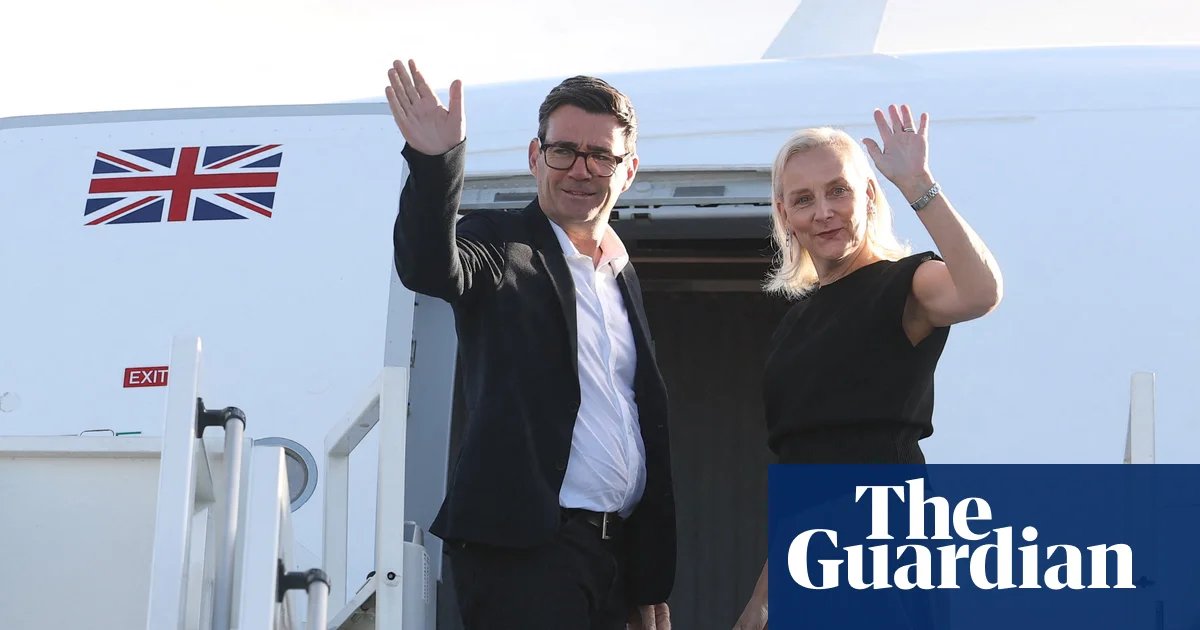
A government-chartered plane taking Andy Burnham to a Commonwealth summit in the Caribbean made a stop-off in Manchester to collect him, Downing Street has said.
The decision, which will have been more financially and environmentally costly than if the prime minister had travelled to London, leaves him open to accusations of hypocrisy after Labour repeatedly criticised Rishi Sunak for his use of private planes and helicopters for domestic travel when he was the prime minister.
The plane, which the government leases for prime ministerial travel, left Stansted airport outside London at about 6am on Monday en route to Antigua and Barbuda, where the Commonwealth heads of government summit begins on Tuesday.
It carried officials and a handful of pool media reporters, but not Burnham. He and his wife were picked up at Manchester about 30 minutes later. The plane stayed on the ground for an hour before setting off via Canada for a refuelling stop.
Asked why the travel logistics had worked this way, and how much it had cost to add an extra leg to the trip, Burnham’s official spokesperson said: “Decisions related to travel are made on security and operational grounds, neither of which we comment on. We are transparent about travel costs. They will be published in the usual way.”
Burnham had been in Scotland on Friday, before going to Manchester to work from No 10 North that evening, the spokesperson said. Burnham, whose family home is in Greater Manchester, routinely works in the city on Fridays and spends the weekend there.
Asked if this represented value for money, the spokesperson said: “I’ve just set out our position, and I’ll just refer you back to that.” Asked if Burnham simply did not want the effort of returning to London, he replied: “I don’t accept that.”
Prime ministerial flights usually leave from Stansted, where there is a section of the airport for private flights that allows for extra security.
As prime minister, Sunak regularly used helicopters to travel to events in places for which rail travel would have been almost as quick, including Southampton, Dover, the West Midlands and Essex.
When Labour took office it cancelled the £40m helicopter contract used for the travel as part of what Keir Starmer’s government said was an effort to undo “14 years of rot” under the Conservatives.
after newsletter promotion
Labour also questioned why Sunak used an RAF jet to fly to Scotland when scheduled flights were available, given the ministerial code says private planes should only be used when there is no alternative.
The shadow Cabinet Office minister, Mike Wood, said on Monday: “Labour promised a crackdown on private jet use. Yet when it comes to Air Miles Andy, it seems to be one rule for him and another for everyone else.”
Traffic & Transport
Sadiq Khan calls for cap on numbers of robotaxis on London streets | Self-driving cars
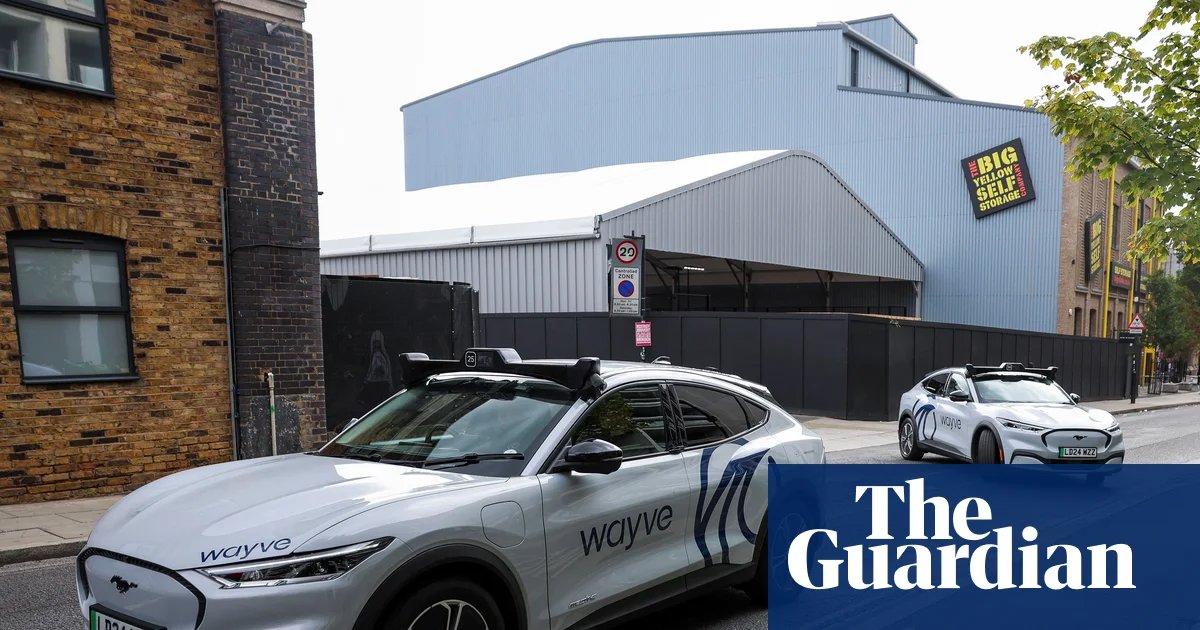
London’s mayor has called for a cap on the numbers of robotaxis on its streets, with the UK government poised to allow fully driverless vehicles to operate in the capital.
Sadiq Khan said politicians had failed to “grasp the pace of change” from the technology, which could threaten jobs and increase congestion in the city, and questioned whether the rules for autonomous cars were fit for purpose.
His comments came after Chinese robotaxis, now being tested in London, were unveiled by Freenow by Lyft, a rival to Uber.
In September Uber started offering limited passenger services in Wayve’s self-driving cars, albeit with a safety driver in the front seat, under licence from Transport for London (TfL).
Freenow by Lyft is hoping to launch fully driverless Baidu robotaxis as early as next year, under a national licensing scheme.
However, the companies, as well as Waymo – which operates robotaxis in San Francisco and other US cities – are primarily focusing on London and Khan said the city needed to be able to limit the rollout.
“What we don’t want is a situation where there’s a big bang without proper regulation in place. We’ve got to make sure the regulation is fit for purpose before we have a mass rollout of things like automated vehicles,” said Khan.
He added: “I think the pace of change when it comes to tech and innovation has not been fully grasped by politicians. There’s got to be incremental movement when it comes to things like robotaxis or automated vehicles.
“We’re lobbying the government for TfL, for London, to have more powers than it currently has on things like automated vehicles.
“There are big questions that haven’t been answered yet: what impact will this have on air quality, on congestion, on those people whose livelihood is being a private hire vehicle driver or a black-taxi driver.”
Drivers’ unions have held protests at the London HQs of Wayve and Waymo in recent weeks, with many Uber drivers fearing for their future.
Khan added: “Is there going to be a cap? At the moment there’s no cap on the number of private hire vehicles or taxis. We’ve lobbied for those powers as well.
“London isn’t San Francisco. We’re a city of almost 10 million, 400 villages, narrow roads, and it’s really important to get this right.”
Under current regulations for fully autonomous vehicles, TfL can only give or refuse consent for their use within London and not manage or license robotaxi services, making the capital’s authorities somewhat less enthusiastic than ministers to accelerate towards the new technology.
However, Freenow by Lyft said the UK’s national framework for driverless cars was an important factor.
Danny O’Gorman, UK and Ireland general manager, said it was “great news for us to really invest in the market. But in terms of how it’s going to be regulated, once the service is up and running, that’s something that still needs to be ironed out.”
O’Gorman said the company was working closely with TfL and “wanted to do things the right way”. About 24 autonomous Baidu Apollo Go vehicles are being tested in the London borough of Brent.
The spacious Chinese cars, which incorporate a massage seat and a built-in touchscreen in the back for passengers, are in fully autonomous service in cities in China and the UAE, and appeared to be handling the streets safely in a test drive in October for the Guardian.
But many test trips still require human intervention, with roadworks proving difficult. For autonomous vehicles (AVs), “an interesting challenge in London is following the rules of the road”, when many drivers ignore them, O’Gorman said: “You get beeped at a lot for following the speed limit.”
Freenow by Lyft is promising a purpose-built AV depot in the UK. O’Gorman said a large proportion of displaced taxi drivers could be employed there in remote operating and servicing jobs.
The company has traditionally worked with black cabs and, he said: “The larger risks to that industry are the driver age profile: two-thirds are over 50 and they’re retiring, and the vehicle’s too expensive.
“AV is not going to be really competing in that space and it’s going to take a long time for us to scale up to vehicle numbers that threaten anything to do with that.”



-

 Oxford united FC4 weeks ago
LIVE: Exeter City vs Oxford United – Jersey Mike's Trophy group stage
-

 Oxford united FC4 weeks ago
Oxford United lose to Exeter City on penalties in Jersey Mike’s Trophy
-

 Student Life4 weeks ago
Rhodes scholarships cut amid financial difficulties
-

 Student Life3 weeks ago
From Oxford to Cambridge: The 204-mile punt for Alzheimer’s
-

 Oxford united FC4 weeks ago
Chris Gunter details Oxford United tactical adjustments
-

 Oxford united FC4 weeks ago
Oxford United youngster opens up on ‘surreal’ Aaron Ramsey influence
-

 Oxford united FC4 weeks ago
Oxford United win 2-1 at Notts County in League One return
-

 Oxford united FC4 weeks ago
LIVE: Exeter City 2-1 Oxford United – Grecians lead after Bradney debut goal