
Traffic & Transport
Back on track: can Burnham fix the north’s woeful rail services? | Rail industry

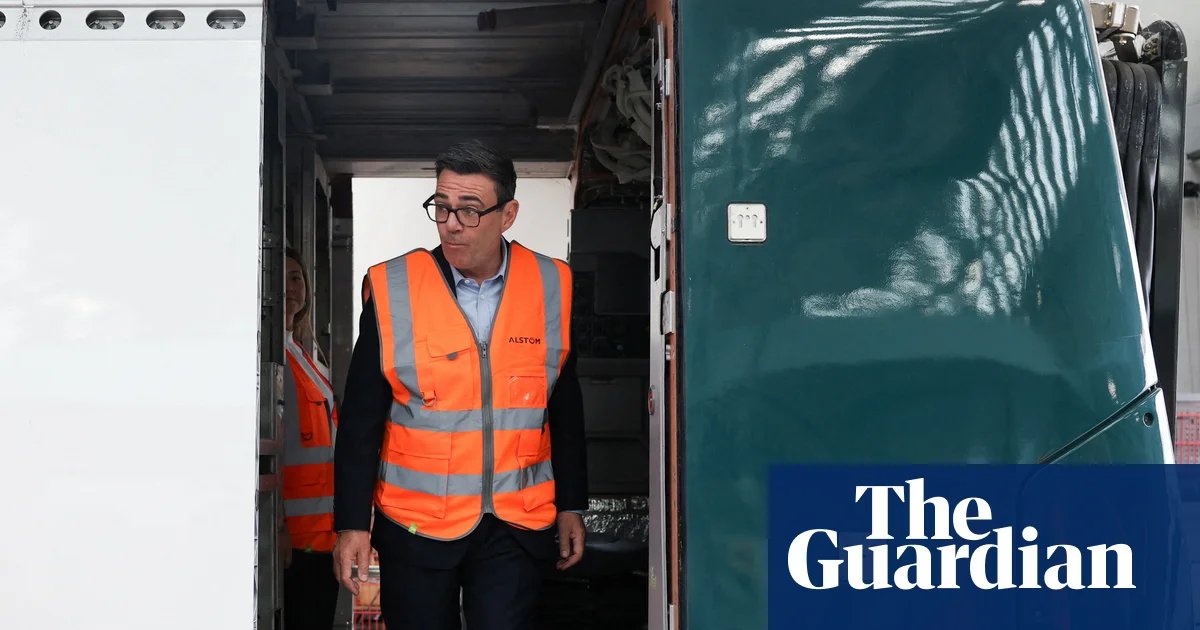
For passenger rail travel, the north of England was the future, once. But since that first train from Darlington to Stockton in 1825, many have felt short-changed. As one angry passenger put it, 200 years later: “What is it about the rail industry which makes them think they can treat passengers in the north as second-class citizens?”
That complaint came from the former mayor of Greater Manchester, who frequently set out a different vision for the train services he would like. Now that Andy Burnham is in No 10, he has the opportunity to win those battles – or perhaps see them a little differently. For now, what unresolved issues could the railway expect to be pursued with greater urgency?
A new fast line from Birmingham to Manchester
“There’s frustration and anger … I don’t see how you can take a plan that goes beyond the life of any individual government and basically tear it up at a party conference.” (Burnham, October 2023)
When Rishi Sunak, then prime minister, axed the northern leg of HS2 at the Conservative conference in Manchester in 2023, Burnham led the cries of betrayal. But he also started investigating alternative schemes, with two consecutive mayors of the West Midlands, for a line connecting their city regions. Building on some of the work already done, and safeguarding land acquired for HS2, the scheme that eventually emerged looked suspiciously like the old line but “quickly and crucially at a significantly lower cost”.
In January, government rail plans set out under Keir Starmer included an “intention to build” a new line connecting Birmingham and Manchester, once other northern aspirations – see below – were fulfilled.
Earlier this month, the transport secretary, Heidi Alexander, said: “When we made that announcement, what I agreed with Andy is that we would also do a study about how you address the capacity constraints on the west coast mainline between Birmingham and Manchester […] I’m fully expecting the new prime minister to tell me to put some rocket boosters under that study, perhaps to do it a bit quicker.”
Better intercity services than Avanti
“Avanti should have been left on probation. People in Greater Manchester deserve a stable, predictable rail service between here and London and it is simply not acceptable. It is one kick in the teeth after another.” (Burnham, 20 October 2023)
The triumphant arrival of Burnham as the newly elected Makerfield MP in London was highly anticipated – but, taking the Avanti West Coast train, unsurprisingly delayed. The intercity operator is significantly improved from its post-Covid nadir, with a fleet overhaul and steady restoration of the timetable, but punctuality and cancellations remain among the worst in Britain, and industrial relations issues are not resolved.
Burnham opposed the renewal of Avanti’s contract, and one way or another, he will soon have the service back in public hands. All train operations are being folded into the new Great British Railways, with Avanti expected to be renationalised in spring 2027. Continued poor results could conceivably bring that forward. A government source said: “We recognise Avanti isn’t performing and all options are on the table to improve that.”
With Burnham’s nascent No 10 North requiring parts of government – indeed, the PM himself – to shuttle swiftly between the cities, the planned change in ownership alone may not be enough.
The local government professor Tony Travers says: “The service delivery is clearly way below acceptable. Having some of the most senior people in government trying to use it will test whether it can be made better.
“It brings into very precise focus the question of whether they can improve the west coast mainline: either it can and it makes people think it should have been done before – or it can’t, and it’s an insoluble policy question.”
NPR – and the underground station at Manchester Piccadilly
“We will never accept anything other than an underground station at Piccadilly. For us, that land is the prime economic development opportunity of the north of England.” (Burnham, December 2025)
The price tag for Northern Powerhouse Rail (NPR), as set by Labour in January, is a maximum £45bn – although detailed plans have yet to be drawn up. Burnham was most associated with what is now phase 2, under the latest iteration: a largely new, faster Liverpool-Manchester line.
But the PM’s longstanding claim was that the city at the heart of NPR needed a new Manchester Piccadilly station to be built underground. Estimates given for such a station when the city was part of HS2’s plans were an extra £5bn.
Burnham maintained it was worth it. Partly, for rail reasons: allowing fast trains to cross Manchester and hence the north across the NPR route. But he also maintained that the city centre would be blighted by a “line on stilts”, as others termed it, and lose its chance for the kind of regeneration London has seen around King’s Cross.
Nonetheless, a recent public accounts committee report warned of “difficult trade-off decisions between local areas … an underground station at Manchester is expected to be more costly and could therefore reduce the budget available for additional development in other localities”.
Rather than pit himself against the claims of other cities, Burnham talked up a Crossrail-style fundraising model, with supplementary business rates paid and cities borrowing against future fares. That worked to fund the Elizabeth line in London, but as Travers points out, from a much bigger population and business base: “It would have to be a substantial payment from business rates in Greater Manchester – I am not sure it would go down well.”
Cities controlling urban rail lines
“By removing freight trains from the city centre, the railways will work better for everyone.” (Burnham, January 2025)
Last year, Burnham unveiled the next phase in his plans for Manchester’s Bee Network, the integrated transport system founded primarily on the buses that he took back under public control. By 2030, 96 national rail stations in the city region are planned to be branded in the yellow Bee livery and “brought up to an exemplar Greater Manchester standard”.
That would allow local rail services to come under the network’s fare cap, and start work “to improve reliability and implement service changes”. While the plan emphasised that Manchester would explore “opportunities to optimise both freight and passenger journeys”, the talk of removing freight trains alarmed their operators, already concerned by safeguards under the planned Great British Railways.
In Downing Street, he has emphasised the desire for more devolution and strengthening mayors’ hands. Great British Railways is also expected to be a largely devolved structure by regions, with track and train integrated.
But it is also supposed to be a “guiding mind” for the railways: balancing the needs of freight, open access, long distance and commuter services, and trying to move away from ministerial and Department for Transport micromanagement.
The power outage at a regional control centre in Manchester last week, with disruption rippling out, underlined how interconnected the whole railway remains. With devolution, GBR may be freeing itself from Whitehall and finding a new layer of political involvement to navigate.
Traffic & Transport
Number of cloned number plates on UK roads at record high, data shows | Transport
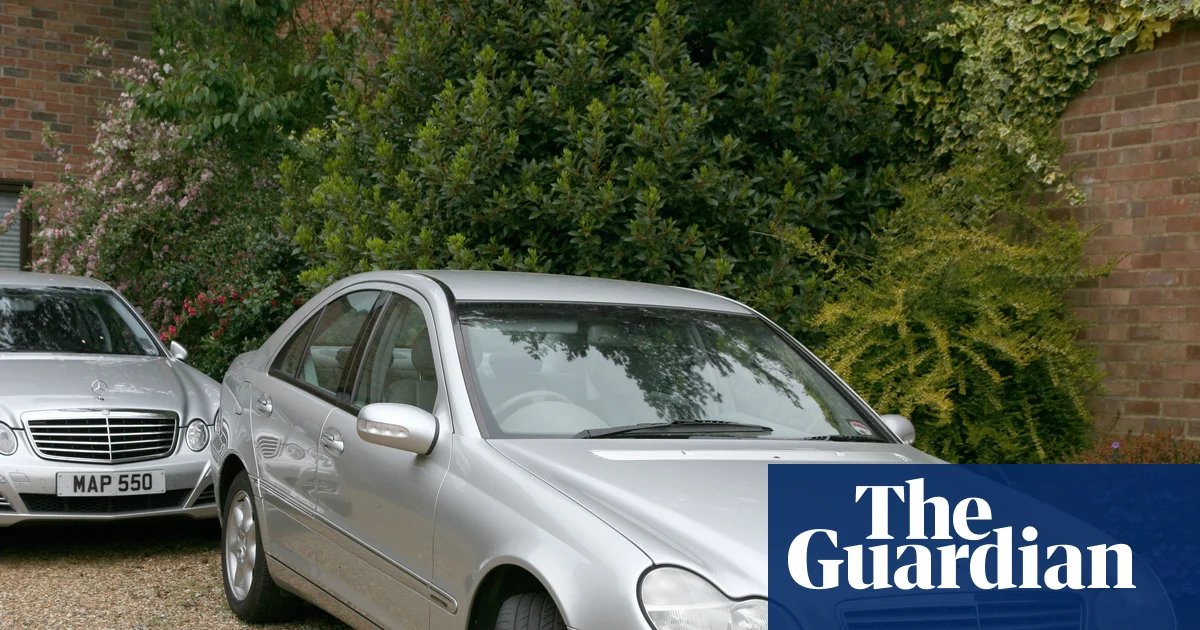
The number of reported “cloned” vehicles involved in offences on UK roads has reached a record high, official data shows.
More than 11,400 drivers contacted the DVLA last year after being issued with fines for offences they said they did not recognise or accept responsibility for – most of which are believed to be down to cloning, where a number plate is copied fraudulently on similar vehicles to avoid enforcement cameras.
The number of complaints about misattribution was 9% higher than in 2024 and almost double the figure recorded in 2018, according to the RAC motoring organisation, which analysed data obtained under freedom of information requests.
The rising figures underscore concerns about the number of illegal number plates in use, allowing criminals to evade detection and dangerous drivers to avoid being caught.
Although drivers should provide number plate suppliers with the V5C vehicle logbook and proof of identity, an investigation last year uncovered more than 130 official suppliers in the UK willing to sell cloned versions, which allow drivers to dodge police and congestion charges.
Cloning vehicles has left many innocent car owners having to struggle to prove they were not responsible when enforcement camera images apparently caught their vehicle committing offences.
A parallel concern is the use of “ghost” plates which are designed to be unreadable by the UK’s 18,000 automatic number plate recognition (ANPR) cameras, which enforce safety measures such as speed limits or lane closures on smart motorways.
The RAC said the UK needed to overhaul an outdated and poorly regulated number plate system. Its head of policy, Simon Williams, said: “If number plate suppliers were carrying out all the checks they’re supposed to, it would be much harder for dodgy drivers to buy cloned plates in the first place. It’s only when a fine arrives at a vehicle keeper’s home address that they realise someone else is driving around using their vehicle’s number plate illegally.”
He said that more also needed to be done to catch drivers with ghost plates, “whether that’s more police officers being equipped with handheld devices that can detect if plates are unreadable, updating ANPR cameras and introducing higher security standards for number plates and for those who produce them”.
The government last month said there would be a new nationwide crackdown on illegal number plates, with funding from the Department for Transport for a new roads policing team. A new National Roads Policing Coordination Centre would share intelligence as well as trialling new technology such as specialised goggles to detect number plates that have been designed to be unreadable by cameras.
after newsletter promotion
Drivers using an incorrectly displayed number plate can be fined up to £1,000.
A Department for Transport spokesperson said: “We’re cracking down on illegal number plates with significant investment in a new roads policing team and innovative tech to stamp out the scourge of cloned numberplates.
“Illegal number plates help facilitate crime, and we are supporting the police to work with the DVLA to make it easier to report these crimes and support victims through a new digital tool.”
Traffic & Transport
‘A big responsibility’: Clifton Suspension Bridge master hails £7.6m renovation | Bristol
The job does not give the holder age-old perks such as the right to drive sheep across the great structure, but the title “bridge master” does have a certain ring to it.
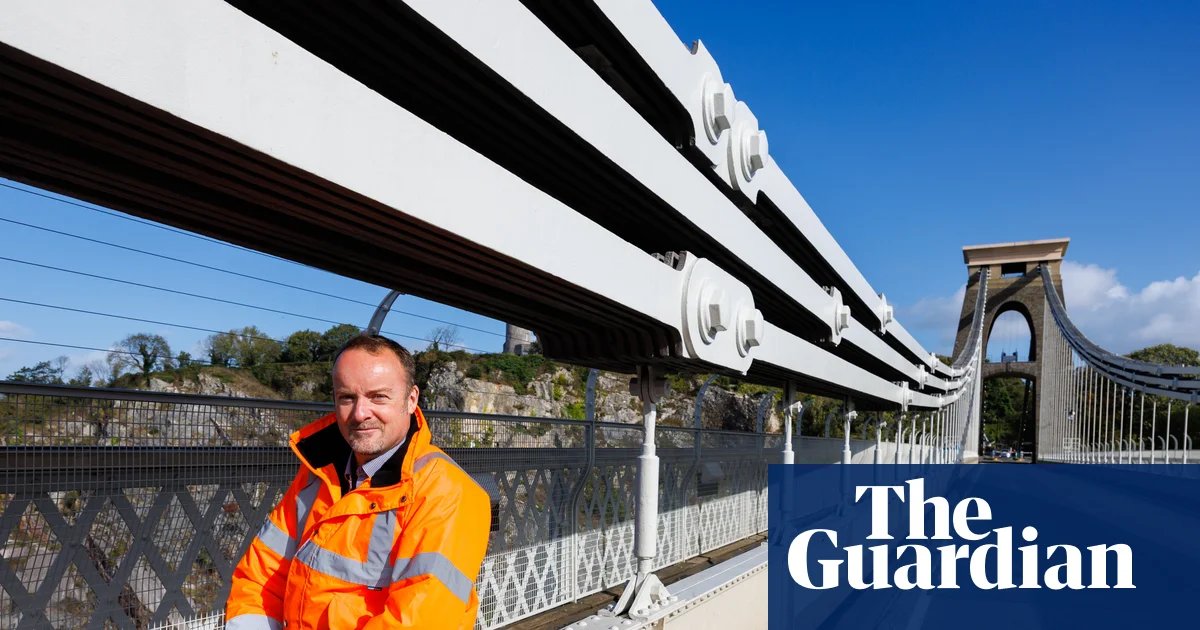
“I don’t tend to say I’m the bridge master when I’m at a party,” said Tristan Ralph, the current holder of the title. “But people do seem to know and bring it up. It’s a job less ordinary, isn’t it? It’s a Victorian sounding title and people are really, really interested.”
There is, however, nothing ceremonial about the title. Ralph is in charge of maintaining and running the Clifton Suspension Bridge, a UK feat of engineering, without any public money.
“It does feel a big responsibility,” said Ralph. “When the chairman of the trustees rang to say we’d like you to do it, you suddenly feel the pressure. It’s so famous and people in Bristol, quite rightly, are proud and almost possessive of it. Bristolians think: ‘It’s our bridge.’”
The bridge master – and the not-for-profit charity the Clifton Suspension Bridge Trust – have the task of maintaining the bridge “in perpetuity”. “I’m a temporary custodian,” Ralph said. “When I’m finished, I have to make sure it is handed on in just [as] good a condition or better than I inherited it.”
Ralph, a bridge engineer by profession, was speaking to mark the conclusion of a large refurbishment project that has taken two and a half years and involved hand-painting more than 4,000 original iron chain links and installing an energy-efficient lighting system. It has cost about £7.5m. “It’s been a big job,” he said. “But it’s come pretty much bang on budget, which is rare these days.”
That is important because, to many visitors’ surprise, the bridge does not receive public funding. “The upkeep of the bridge, the running of it, the salary costs and everything are all paid only by our toll money,” said Ralph. “People think that we might get something from local or central government. But, no, it’s just the toll money.”
Motorised vehicles – including motorcycles – pay £1 to cross the bridge. There is no charge for pedestrians, cyclists or horse riders. As well as being a beautiful structure, it is also a vital part of Bristol and North Somerset’s transport system.
Ralph said: “It draws the tourists in. We get visitors from hundreds of countries every year but primarily, it’s still a vital piece of local infrastructure. If the bridge wasn’t here, the difference it would make to Bristol traffic would be incredible. We average over 8,000 vehicles a day still. Maintaining it as a transport link is utterly vital.”
The end of the refurbishment does not mean Ralph can rest on his laurels and spend more time hobnobbing with members of the Bridge Owners Forum.
“In a few years, we’ll need to paint the underside of the bridge. The under-bridge gantry unit itself will be replaced over the coming years. So there’s always something. We need to keep on top of things. It’s like your house or your car. If you just ignore it, don’t do things for a couple of years, they start breaking down.”
As in most walks of life, the climate emergency is a challenge Ralph and the trust are having to face. “We were monitoring the bridge daily in the summer with the very hot weather. And maybe if the bridge was being designed today, there would be a little bit more robustness around wind.”
The prevailing south-west wind is not usually a problem and the bridge rarely has to close but if it blows directly through the Avon Gorge it can be more difficult. “We need to keep an eye at both the magnitude of any wind events but also their frequency,” Ralph said.
The engineer admires the bridge’s designers, including Isambard Kingdom Brunel. “It’s remarkably advanced for its time.”
And there is no sign that its days are numbered, largely because the Victorians did not skimp. Ralph said: “There are three layers of chains. The original Brunel design only had two, but because it went from a timber design to a cast-iron deck, they upped it to three.
“There’s a little bit of comfort in there. Today there might be pressure to say, well, can you keep it to two, but in Victorian times they did like to add a little bit of meat on the bones.
“It doesn’t have a finite life. There’s no end date in our plans. We all just keep it going in the highest standards as we can. It’s in really good condition as long as we keep doing what we need to do, keep our attention on it and don’t let things drift. Forever is a long time but there’s no reason why we have any need to worry at the moment.”
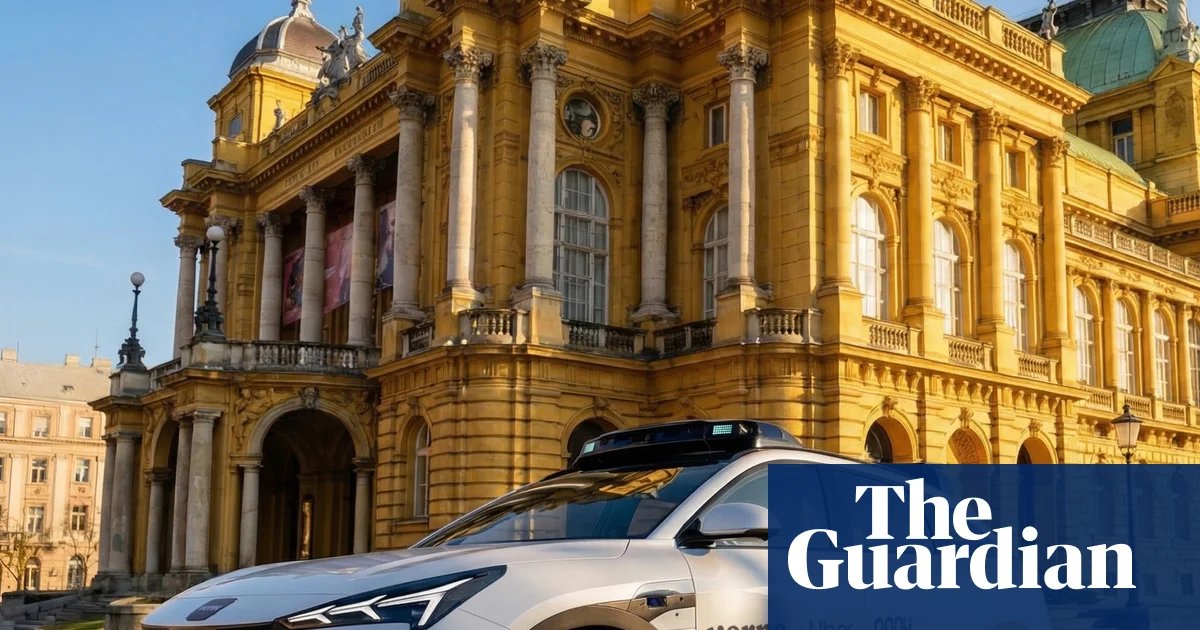
Uber has begun a trial of autonomous vehicles on the streets of Manchester as it looks to bring robotaxis to cities around the UK.
The first self-driving cars are operating, using the technology of its partner firms Pony and Verne, with whom Uber recently launched Europe’s first autonomous taxi service in the Croatian capital, Zagreb.
Uber said it was “excited to take this first step toward making this technology accessible to people across the UK”.
In social media posts, Verne said it had “started our autonomous vehicle testing in Manchester”, while Pony said there were “plans to bring robotaxis to the city” and that testing was under way.
The tests involve the company mapping the streets of the city in north-west England with a safety driver behind the wheel and no passengers.
Limited passenger services started last month in London, but with a safety driver in the front seat of cars supplied by Wayve under Transport for London’s licensing rules for private hire vehicles.
The next steps are unclear. Opposition from Uber drivers, their unions and the capital’s politicians to the rollout of robotaxis is mounting. The GMB and ADCU unions have both said thousands of drivers jobs will be lost and have called for help for those affected.
A critical report from London assembly’s transport committee this week called for the government to devolve authority over autonomous taxi services.
It said there was “considerable uncertainty about many of the claimed benefits of autonomous passenger vehicles”, and fears over the impact on public transport and congestion, as well as safeguarding and accessibility for disabled passengers.
There has been no official application to launch passenger services in Manchester so far, and the vehicles are operating under government licence via the Driver and Vehicle Standards Agency (DVSA) and the Department for Transport.
A spokesperson for Transport for Greater Manchester said it wanted the city’s taxis to be the safest in the country.
after newsletter promotion
“New technologies play an increasingly important role in the growth of our city region,” they said. “But they need to be introduced responsibly, safely and with real thought about what it means for our residents.
“Although no applications have been made to operate driverless taxis in the Greater Manchester, we’re aware of potential interest from companies to do so.
“Safety will always be our top priority, and we will need strong assurances that no vehicles will operate on our roads that pose any risk to residents.”
Uber said it expected to offering robotaxi trips in as many as 15 cities worldwide by the end of 2026, mainly in the US and the Middle East.


Oxford United player ratings in bizarre Mansfield Town draw

Number of cloned number plates on UK roads at record high, data shows | Transport

LIVE: Mansfield Town 1-1 Oxford United – Two red cards as U's down to nine men
-

 Oxford united FC4 weeks ago
Chris Gunter steps away Wales role to focus on Oxford United
-

 Oxford University3 weeks ago
New to the Oxford English Dictionary this September
-
 Traffic & Transport2 weeks ago
How poor public transport policy is putting the brake on cities | Road transport
-
 Student Life3 weeks ago
Oxford partnership allows OpenAI to use rare Bodleian texts to train ChatGPT
-

 Oxford united FC1 week ago
LIVE: Exeter City vs Oxford United – Jersey Mike's Trophy group stage
-
 Traffic & Transport2 weeks ago
Why should I have to pay more for buses if I don’t use a smartphone? | Bus fares
-

 Oxford united FC2 weeks ago
Northern Ireland fans laud Oxford United defender Ciaron Brown
-

 Oxford Events4 weeks ago
Four days of equestrian spectacle at 2026 Blenheim Palace International Horse Trials