
Student Life
A jarring Mann: ‘Fatherland’ (2026) in review


Fatherland, which recounts celebrated Modernist author Thomas Mann’s return to a Germany in wreck and rubble, deals with great personal malaise against a backdrop of great political unease. The year is 1949 and Mann is giving a reading tour through East and West Germany, at least ostensibly hoping to edify and uplift his war-traumatised audience. It is clear, though, that Mann’s grandiloquence will not conjure a better order into being. Some of the brightest shots illuminate gaping expanses of rubble between the town halls and churches where Mann holds forth to packed crowds, and after these addresses, drunken candour and old wartime songs abound. All of this is observed by Mann’s daughter Erika, played by Sandra Hüller, who does a good job of balancing critical winces and bitter-sympathetic smiles as she is dragged between events, silent except in her capacity as an interpreter for Mann’s’ interviews to a cloying international press. She also acts as the family’s moral conscience. Her brother Klaus, played by August Diehl, is profoundly depressed and not in touch with his haughty ‘magician’ father, and when, after a devastating incident Erika also loses contact, the daughter-father drama intensifies until emotional release is forced in the film’s last moments.
I watched Fatherland shortly before the tense mid-September Berlin elections where the far-right Alternativ für Deutschland (AfD) and far-left Die Linke party both gained significant ground, so at least the atmosphere, if not the specifics of the political turbulence depicted in the film, was of a piece with my surroundings. The Kino International venue, huddled near the centre of the dreadful, looming Communist concrete of Alexanderplatz also put me in mind of the East-West tensions strikingly portrayed in the film by the story’s progress eastwards, across checkpoints and into sparser rural space; my interest was primed for a scintillating political piece.
Instead, though, I found the personal drama far more compelling than the film’s political commentary, which often felt simplistic and lacking in the former’s emotional intelligence. The first scene, a study of Klaus in strikingly focused despair over a literary and personal crisis of meaning, shows the 30-something’s lithe, sinewy torso in exposing, crisp black-and-white. There’s a shadowy, blurred one-night-stand in the background above the bed (Klaus was gay but, intriguingly, the long-haired lover is genuinely androgynous), and as they move passively, perhaps indifferently, Klaus writhes about in angst and indecision while on the phone to Erika. It is one of the longest scenes of the film, and the camera’s static, steady character study reminded me of some of Bergman’s best psychological work in Scenes from a Marriage. Klaus’ initiating scene casts an ironising shadow over the ensuing bourgeois soirees on his father’s speaking tour, and his brief screen presence conveys as much character as Zischler manages to in his role as the main Mann.
I always admire when cinema makes political events moving; films as diverse as The Battle of Algiers, Paths of Glory and Steven Spielberg’s Munich have all brought me to tears with visually eloquent set pieces set in war or its aftermath. Fatherland is not so articulate. Pawlikowski relies on easter egg quasi-gags to poke fun at history’s villains, including Gustaf Gründgens, a Nazi-era thespian (though no Leni Riefenstahl; the remarkable Gründgens is a prime case study for the ‘art versus artist’ dilemma) and friend of the Manns who is portrayed as a charmless, bigoted representative of the postwar German intelligentsia in a brief, brusque interaction with Erika. I refer readers to Uncle Max in The Sound of Music for a complex, queasily likeable Nazi sympathiser, and to Mephisto for a nuanced confrontation with Gründgens himself.
Other objects of political criticism are crass, materialist American propagandists in the West and, more interestingly, a slimy, Mephistopheles-quoting Soviet general and his East German underling from the culture ministry. This last official follows the party line with Mann, but his sometimes faltering, conflicted manner concisely betrays all the sorrow, uncertainty and daunting weight of his countrymen’s past and future. Occasionally, the cinematography achieves the same political poignance: in a devastated West German town, the camera lingers on a bleach-white empty church hall, suggesting false innocence and secular angst.
Indeed, black-and-white is deployed to great effect. Many mornings on the road are shot through with searing sunlight turned eerily silver and cold by cinematographer Lukasz Zal, and the sombre aesthetic somehow enhances a closing burst of Bach from the organ of an almost-abandoned East German church, the site of Mann’s much belated emotional unloading – a scene which, albeit, has by my reckoning somehow more bathos than pathos.
I would almost venture to say that Fatherland much more resembles a certain kind of cosy, historical dramedy than a serious political piece. Mann appears too hapless and bumbling to offer us a protagonist apt to deal with the ongoing turmoil within his family and fatherland. Well-paced and clocking in under 90 minutes, it goes down enjoyably, though maybe too comfortably, but its occasional flashes of emotional incisiveness are to be commended.
The post A jarring Mann: ‘Fatherland’ (2026) in review appeared first on Cherwell.
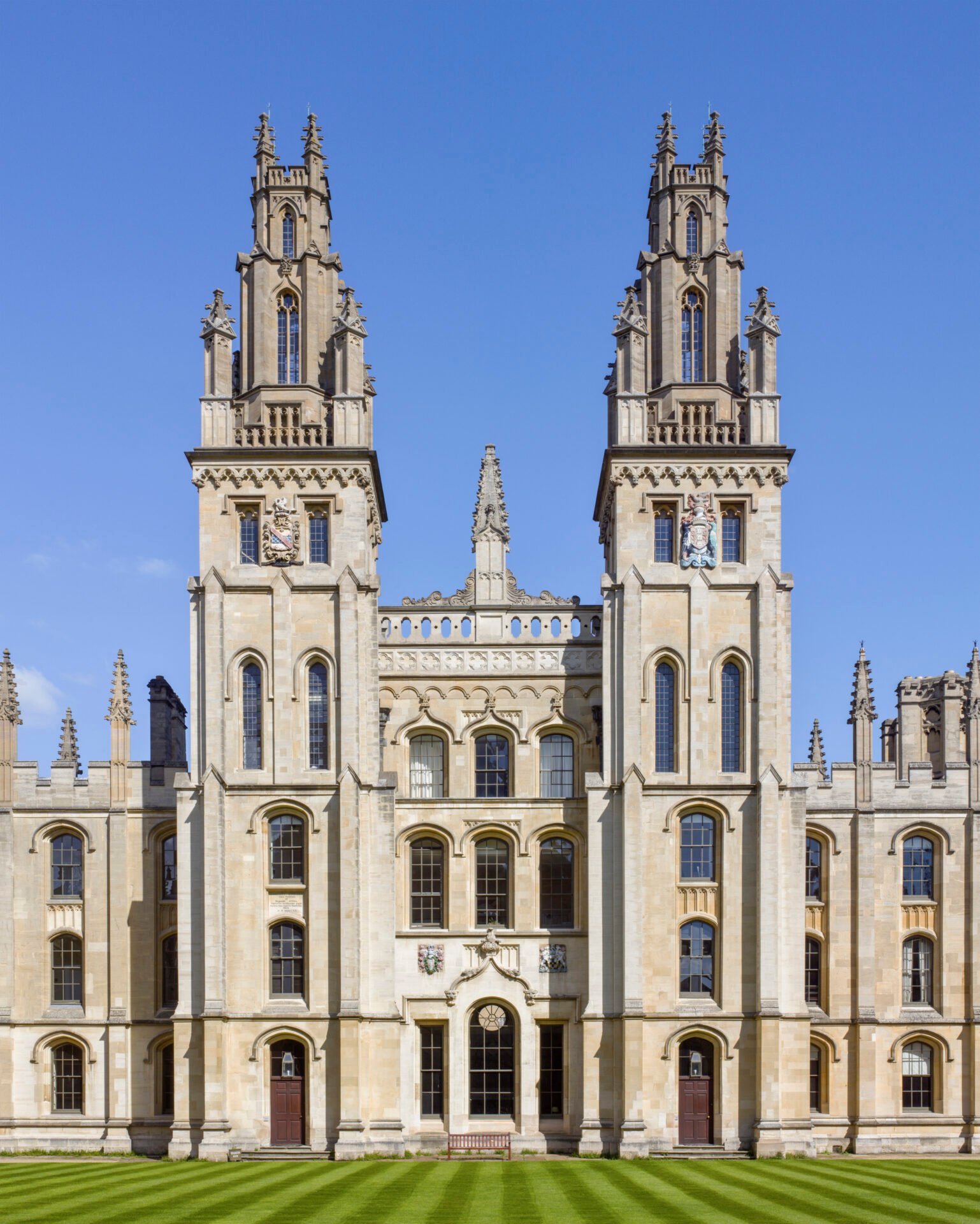
When I came very close to rejecting Oxford for the University of Exeter, a non-British friend of my mother said to me: “I hadn’t heard of Exeter until now, but the name Oxford? I’ve known it since I was a child.” Another person remarked that “you can pick Exeter, but as good as it may be, Oxford’s prestige will never be taken away”.
The Exeter course of my choice, Middle East Studies, had for many years ranked higher than the equivalent course at Oxford. But since Oxford had been consistently ranked first overall for the past decade, I felt it would come across as foolish to reject what is often dubbed ‘the best university in the world’ for an institution that was, while outstanding, not ranked in the top ten globally.
Where I study, or who has studied there before me, has never been of any importance nor a source of pride for me, but it is widely accepted that some of the best writers, poets, scientists and public figures the world has ever seen received an Oxbridge education. Therefore, Oxford and Cambridge being ranked outside the top three universities in the UK was not something I ever expected to read.
And yet, in this year’s The Sunday Times Good University Guide, Oxford was ranked four places below St Andrews, which came first.
Last year, the guide ranked LSE first in the UK, even though Oxford was ranked first globally by both the QS World University Rankings and Times Higher Education for the tenth consecutive year.
The most recent university rankings, published by Times Higher Education (THE) last week, place Oxford as the ‘number one for a record 11th consecutive year’. Oxford holds the longest reign at number one of any university in the history of the ranking.
Chancellor William Hague wrote on LinkedIn on Wednesday that “Rankings are only one measure of a great university, but to sustain this position for 11 consecutive years in an increasingly competitive world is a tremendous achievement.”
While The Sunday Times ranks St Andrews 1st in the UK, the QS World University Rankings place it at 115th, and the Times Higher Education places it at 185th worldwide.
In contrast, The Sunday Times ranked Oxford 5th in the UK, but the QS World University Rankings placed Oxford 4th globally, while Times Higher Education (THE) ranked it 1st.
These numbers may initially seem contradictory and confusing on the surface, but asking which university is the best in the UK, or globally, simply depends on who you ask and which factors they consider.
The Times and The Sunday Times UK ranking is first and foremost designed around the undergraduate student experience and prioritises factors like student satisfaction, teaching quality, graduate prospects, entry standards, research quality, and more.
By contrast, both the Times Higher Education and QS World University Rankings assess global university performance and place greater emphasis on global academic position and research standing. They prioritise academic reputation, employer reputation, research citations, global research networks, international students and staff, and research productivity.
While one ranking is concerned with the undergraduate student experience in Britain, the global rankings, which consistently place Oxford among the top 5 universities globally , place more weight on a university’s global academic influence and profile.
When comparing St Andrews to Oxford, it is important to recognise that St Andrews is a relatively small and undergraduate-focused university. Oxford, by contrast, is a large, internationally oriented institution with considerably greater research output and global influence. I would not necessarily expect Oxford to rank 1st in rankings that focus on the day-to-day undergraduate experience.
In fact, the current Sunday Times ranking explains Oxford’s fall to fifth place partly by pointing to its student feedback performance. THE has no direct student-satisfaction measure; instead, it considers research environment and quality, industry knowledge and transfer, and reputation surveys.
It is therefore not surprising that St Andrews, despite not dominating global research to the same extent as Oxford, has scored highly on the factors that a UK undergraduate league table like The Sunday Times prioritises, such as student satisfaction.
As someone who also initially applied to St Andrews before withdrawing, and later accepted an offer from Oxford, St Andrews now being ranked first in the UK by The Sunday Times does not make me regret my choice because I understand what that ranking was primarily measuring. It does not focus on global academic reputation, research influence, international standing, or fully capture the breadth and scale of research.
Oxford’s reputation is built upon nine centuries of academic history. Its rival, Cambridge, was founded by former Oxford academics. Yet despite St Andrews ranking first as the UK’s best university, I doubt we will see an influx of students rejecting their Oxford offers for St Andrews overnight.
In fact, when I once told a former teacher that “Oxford is just a name”, they replied: “A name that holds power in so many rooms.”
St Andrews attained 1st position according to one particular ranking and its specific set of criteria, but even if, for the sake of argument, THE did not rank Oxford 1st, I would feel no different. No ranking table that can erase Oxford’s institutional reputation and traditional prestige.

Forty-eight business and community leaders slept out in University Parks to raise money for homelessness as part of the annual Oxfordshire CEO sleepout on 8th October.
The charity event has raised over £43,000, with 655 donations at the time of publication. The event attracted figures from local politics and the University of Oxford alike, including Labour MP for Oxford East Anneliese Dodds, City Councillor Mike Rowley, University Church Vicar William Lamb and Director of Accommodation at Jesus College Angela Unsworth. Unsworth has participated every year since it began, and Jesus covered logistics on the night, with its catering team helping prepare for the event.
Unsworth told Cherwell: “Even when the weather has been atrocious, it does us all good to remember that we can go home, have a shower, and breakfast. We don’t have the problem of drying out all our kit, finding dry bedding, and having to do it all again the next night.” Before trying to catch some sleep, participants heard from Jack and Tony, who talked about their journey out of homelessness and experience with it. Unsworth also highlighted talking to Steve every morning, a 70-year-old man sleeping rough in the city centre who cannot afford accommodation. Unsworth told Cherwell: “These are good people who just need a chance.”
CEO Sleepout, an organisation dedicated to uniting the business community against homelessness, held the event. They hold similar sleepouts in cities across the UK, and have raised £4.5 million for various charities to date. The Oxford CEO Sleepout chose to donate to the Oxford Homelessness Movement (OHM), a partnership of various charities tackling homelessness in Oxford. Over the past five years, the sleepout has raised just over £250,000 for OHM and its partner organisations.
Yvonne Pinner, Project Chair of OHM, told Cherwell: “Oxfordshire Homeless Movement (OHM) is lucky enough to have our core costs paid for by a donor, and so all the funds raised will go towards delivery of our project work and partners. This means that all money raised will help someone locally.” Pinner also added that students can get involved in the initiative by “talking about the event to lecturers, college staff, and management and getting them to sign up”.
More than 1,700 people died on the streets of the UK in 2025, including 51 children, both figures being the highest ever recorded. Although the national number of households assessed as threatened with homelessness dropped by 4.5% from January to March 2025 compared with the same figure in 2024, in Oxford the number doubled. Oxford’s average monthly rent reached £1,875 in 2025, an 11.5% annual increase, being the highest average monthly rent outside London. As many as 41 individuals were reported as sleeping rough in November 2024, but this figure likely underreports the population of homeless women in Oxford. This is because women are much more likely to experience ‘hidden homelessness’, staying in hidden or unsafe places to avoid danger on the street.
Homeless Oxfordshire’s CEO Simon Hewett-Avison has called for a greater investment in social housing in the city. He also highlights that addressing rent hikes isn’t the only way to go about the problem, saying that: “The average age of death in the homeless population is early 40s and the incidence of poor physical and mental health within the homeless population far outweighs that of society as a whole”. He has called to “work more closely across sectors”.
Students can join a number of organisations tackling homelessness, including Oxford Student Social Action Coalition, Food Rescuers, and Oxford Mutual Aid.
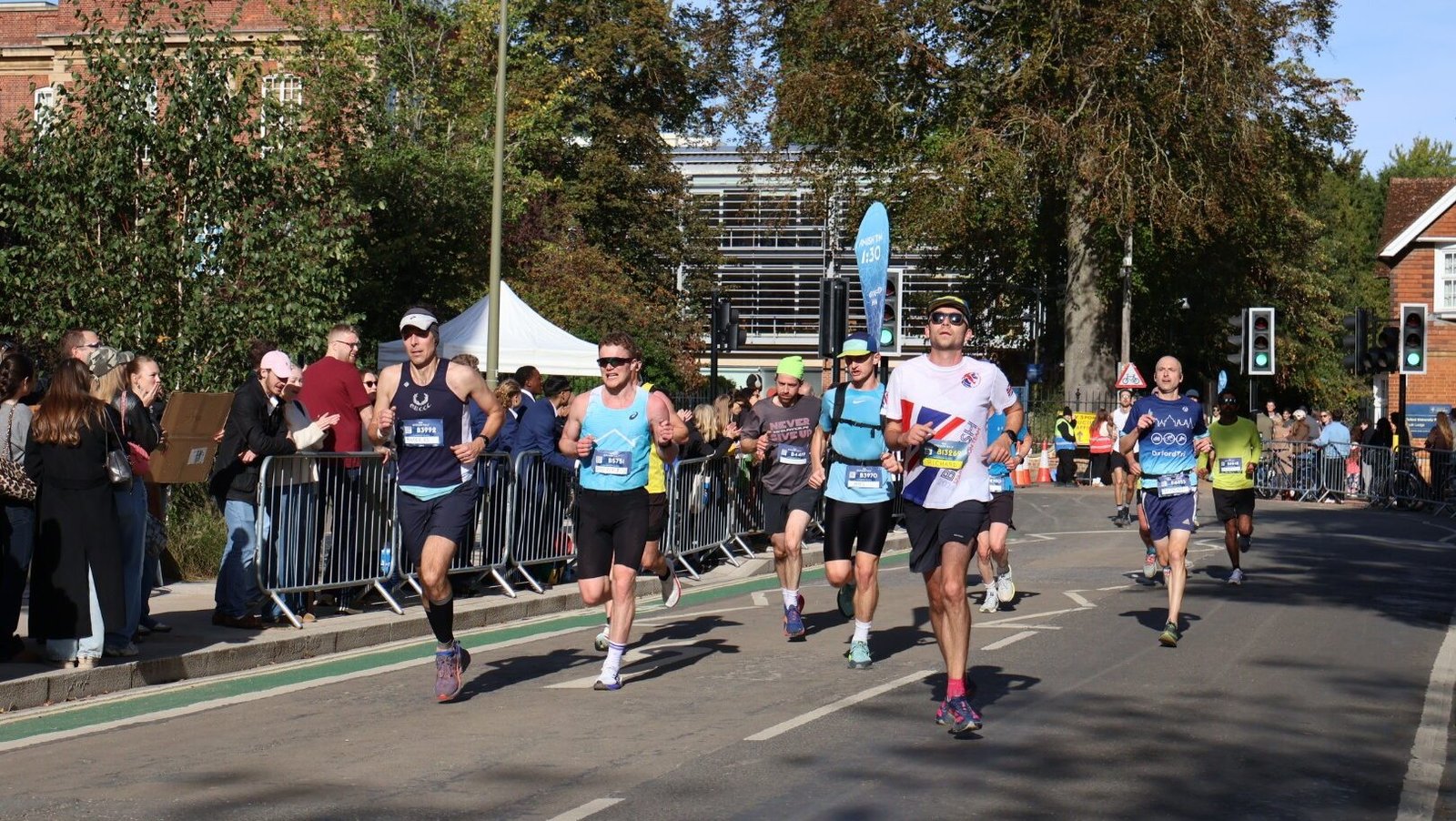
A record 15,000 runners took to the streets of Oxford to complete the annual half marathon on Sunday 11th October. Thousands of supporters lined the course to cheer the runners. Alex Miell-Ingram won the race in 1 hour, 7 minutes, and 21 seconds.
Many ran the half marathon for charity. Helen and Douglas House, the world’s first children’s hospice, was the headline charity partner, with 300 people running in support. The charity supports terminally ill children and their families in Oxfordshire. This year, it aims to raise £200,000, the cost of funding a hospice bed for one year.
Twenty people ran for Asylum Welcome, a charity which provides advice and support for refugees and asylum seekers living in Oxfordshire. Among them was the charity’s Joint CEO Dr Hari Reed. The group hope to raise £10,000.
The Lord Mayor of Oxford, Chewe Munkonge, was among the 15,000 runners on Sunday. He ran the half marathon to raise funds for Sobell House Hospice, one of this year’s charities, which provides specialist palliative care. Munkonge said he would not wear his mayoral regalia on the course, saying: “This Sunday, I’ll be swapping the mayoral chains for running shoes”. “This will be my first half marathon, so there are definitely some nerves,” he added.
Simon Lewthwaite, who has epilepsy, ran his first half marathon in an official NHS patient hospital gown to raise money for Oxford Hospitals Charity. He said that completing it with epilepsy would be “an even greater test of resilience and determination”.
The Oxford Half Marathon began in 1988 and was won by athlete Bill Domoney in 1 hour 11 minutes and 14 seconds. The 51 Rotary clubs in the area organised the race to raise money for the PolioPlus campaign, a programme aiming to eliminate six killer diseases. People came from overseas to run past Oxford’s historic hotspots, and the oldest entrant, veteran Arthur Stone, was aged 70 at the time. Oxford’s Rotary clubs continued to organise the event until 1993.
The half marathon returned in 2011, with 1,800 runners. Just two years later, in 2013, it had 5,500 runners, and the number of runners and spectators has grown steadily year on year. In 2025, more than 13,000 runners signed up and places sold out in January. That year, the event raised over £1.5 million for more than 180 charities.
Cherwell spoke to students who ran the race. Ioanna Bezirtzoglou, a third-year DPhil student at Pembroke, ran as part of Oxford Girls’ Running Club and volunteered at the race last year. She ran dressed as a princess. “I love the fact I have a community as encouraging as Oxford Girls Running,” Ioanna told Cherwell. “Having volunteered last year at the Oxford half, it’s so exciting to be able to run it this year!”
Dina Graham from Pembroke told Cherwell that “the energy from the crowd really carried me through and was a highlight throughout”. “People stood outside their homes with bowls of sweets that you could grab,” she added. Dina ran for Maggie’s, a charity for people with cancer. “It was motivating to raise money to support them. It gave a purpose and a reason why I’m running.”
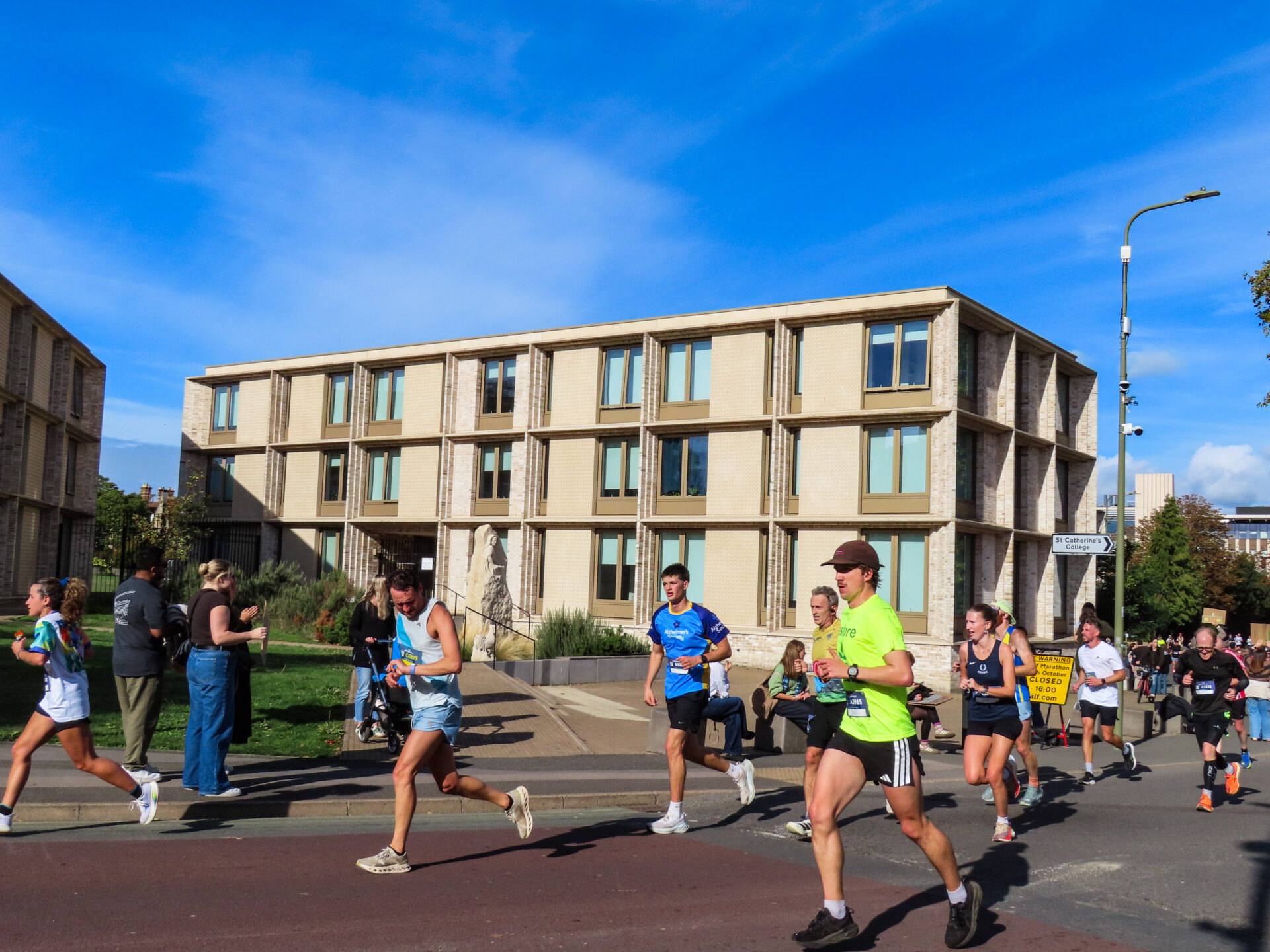
This year, the race sold out general entries in less than three weeks – three months faster than in 2025. This puts it ahead of wider industry averages, even as the half marathon industry is expanding overall. The latest Mass Participation Pulse report shows events are selling out ten days earlier than in 2024, and almost a month earlier than 2023. The Hackney Half Marathon, for instance, has also sold out its tickets faster year on year, having sold out in two days for the 2026 race.
With record popularity and turnout in 2026, the Oxford Half has now cemented its place in Oxford’s sporting calendar. What was once an event with little more than 1,000 runners has now become an unmissable fixture involving 15,000.
Image credits: Maryam Nawaz, with permission



-

 Oxford University4 weeks ago
New to the Oxford English Dictionary this September
-

 Oxford united FC4 weeks ago
Chris Gunter steps away Wales role to focus on Oxford United
-

 Oxford united FC2 weeks ago
LIVE: Exeter City vs Oxford United – Jersey Mike's Trophy group stage
-

 Traffic & Transport3 weeks ago
Why should I have to pay more for buses if I don’t use a smartphone? | Bus fares
-

 Traffic & Transport3 weeks ago
How poor public transport policy is putting the brake on cities | Road transport
-
 Student Life3 weeks ago
Oxford partnership allows OpenAI to use rare Bodleian texts to train ChatGPT
-

 Oxford united FC2 weeks ago
Oxford United lose to Exeter City on penalties in Jersey Mike’s Trophy
-

 Oxford united FC3 weeks ago
Northern Ireland fans laud Oxford United defender Ciaron Brown