
Traffic & Transport
Met Office issues weather warning as UK conditions create ‘perfect recipe’ for fog | UK weather


The Met Office has said weather conditions in the UK are creating a “perfect recipe” for fog as it warned that travel may be disrupted.
A yellow weather warning lasting from 6pm on Sunday until 11am on Monday has been issued by the service, with the affected areas including most of southern England, excluding the south-west, and the entirety of the Midlands.
The warning also includes pockets of northern England and Wales, with fog expected in Liverpool, Sheffield, York, Cardiff and Wrexham.
Niamh Murray, a Met Office operational meteorologist, said: “There is still going to be patchy fog elsewhere, just not quite as dense or as impactful. Parts of the West Country could still see fog, Northern Ireland, really anywhere across much of the UK, even into the central belt of Scotland.
“With autumn and winter and getting fog during this time of year, we get much longer nights, and that allows temperatures to sort of fall away,” she told the Press Association. “We get a longer period of cooling and also the temperatures are much lower, so they’re much closer to the temperature that we need for the air to become saturated and therefore form fog.”
Murray believes recent weather conditions have created the “perfect recipe” for dense fog to roll across large areas of England and Wales.
“Another thing that we need to form fog is quite light winds, not absolutely no winds,” she said. “We just have the perfect recipe at the moment: light winds, clear skies, long nights, to allow that fog to develop. And particularly if we see the negative numbers, it can be quite stubborn to clear the next day.”
The Met Office said the fog may be densest overnight on Monday in rural areas such as parts of the Midlands, Wales and East Anglia, with air frost possible.
It also warned that delays to bus and train services could happen as visibility may reduce to as little as 50 metres or less in parts of the UK. Delays and cancellations for flights in and out of the country are also a possibility due to the heaviness of the fog.
after newsletter promotion
Murray claimed rainfall that follows the fog could benefit areas of the UK such as the south-west, which have suffered droughts in the preceding months.
She added: “Across the south-west, where severe drought has been declared and is still enforced by the Environment Agency, there is a chance that we might see some very slow-moving rain, and you could see potentially accumulations up to 50 to 70mm.”
Traffic & Transport
‘The end of an era’: Scillonian III sets sail on final voyage from Isles of Scilly | Cornwall
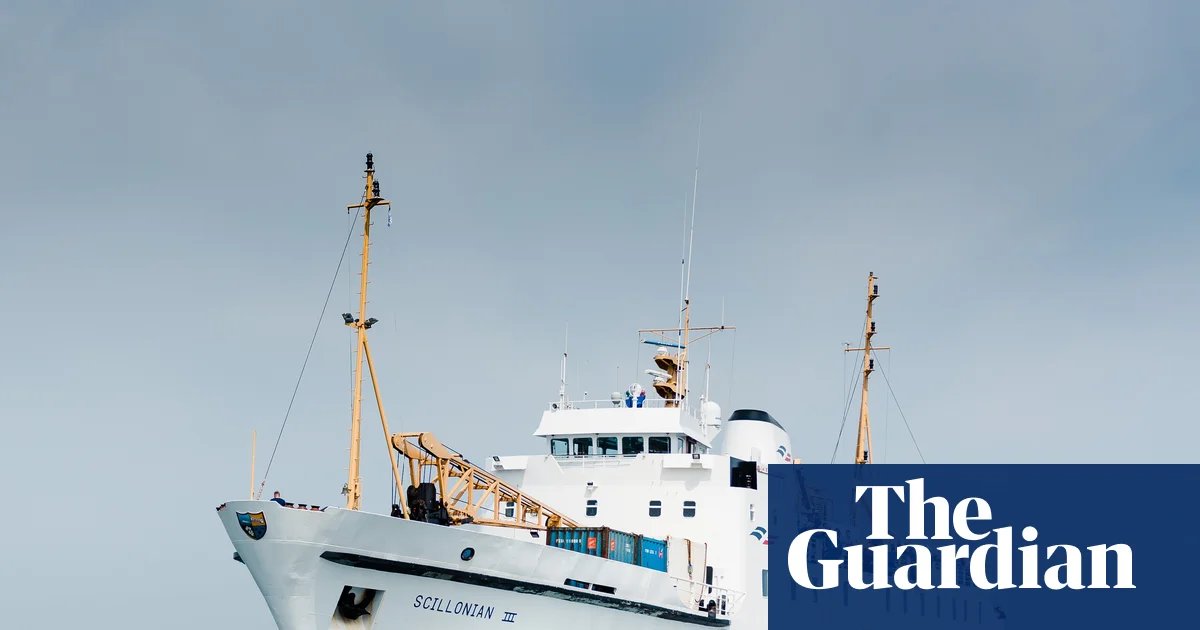
Tears were shed, sea shanties sung and tales of stormy voyages exchanged as one of the UK’s most characterful ships set sail for the final time.
Scillonian III, also known as the “vomit comet” because in stormy weather it tended to rock a little too much for the comfort of those susceptible to sea sickness, has chugged between the British mainland and the Isles of Scilly, for just shy of half a century.
But all good things (or bad, depending on your sea legs) come to an end and on Sunday the grand old ship made one last 37-nautical-mile trip from the island of St Mary’s to Penzance in Cornwall.
“Everybody on the islands have been talking about this last voyage,” said Terry Ward, who was on board Scillonian III’s first journey through the Atlantic swells to Scilly in 1977.
“That trip was beautiful,” said Ward, whose great-grandfather was the founding chair of the Isles of Scilly Steamship Group, which has operated the ship.
“We sailed overnight from north Devon where the boat was built. It was a lovely, glassy sea. When we arrived, the quay was packed with locals wanting to have a first look. A magical trip.”
They could not have known that Scillonian III would last so long. Over 49 years, it has sailed more than 10,000 times, carrying islanders, holidaymakers and ornithologists (Scilly is a fine location for bird-spotting) between spring and autumn.
“I don’t think there’s a better loved ship anywhere,” Ward said. “It’s been part of the fabric of the islands. When it turned up in March every year, it signalled the start of the season. We weren’t marooned any more. When it left at the end of the season, it left a bit of an empty feeling.”
Ward accepted that travelling on it could be tough for those with sensitive stomachs. “I think it’s a beautiful vessel but when it was rough it could turn into a hospital ship.”
People came to favour a particular seat. Those keen to spot dolphins or basking sharks liked the outside areas; others liked the lower deck inside, where you could fall asleep, comforted by the ship’s drone.
Ray Jackman, a Scillonian businessman who was on the ship’s first and last voyages, always sat next to the engine room because the crew would show him the inner workings of the ship. “It’s been an amazing ship. She’s very rarely broken down and has been a big part of people’s lives on the islands. It’s a sad day.”
after newsletter promotion
As its name suggests, Scillonian III was the third passenger ship to serve the islands over the last century.
The first, Scillonian, operated from 1926 to 1956 and during the second world war was fitted with guns and used as a military transport. Scillonian II lasted 25 years before being replaced by Scillonian III, which was launched by the then Prince Charles.
Scillonian IV is on its way to the islands from south-east Asia, where it has been built, via the Cape of Good Hope. It will make its maiden voyage between the islands and the mainland in March and the steamship company says it will carry more passengers, be swifter and feature “roll and pitch reduction systems” to counteract the impact of the swells.
The steamship company had expected a few dozen passengers on the final voyage but tickets sold out. A Scilly shanty group called Mackerel Sky sang her off. The Cape Cornwall Singers waited at the other end to welcome her in. Then it was off to the Dock Inn in Penzance for more music, dancing, beers and tears.
Among those along for the final voyage was Sholto Blackwell, a self-confessed Scillonian superfan and founder of the ship’s Facebook appreciation page, which has almost 5,000 members.
Blackwell, a crane operator and lifting supervisor who lives near Bristol, said he felt very sad for Scillonian III. “It’s the end of an era for me. It carries so many memories.” He has regularly sailed on the ship since he was taken to Scilly on holidays as a boy. “I’ve made maybe 30 or 40 return trips.”
Feeling queasy has sometimes been part of the experience. “I’ve suffered with sea sickness many times,” he said. “But the reward is, you get to Scilly, which is magical. Feeling sick was part of the journey, part of the fun.”
He accepted that the islands and crew needed the new ship – but was not completely convinced the new vessel would mean the loss of the thrills and spills Scillonian III was known for. “They say it’s going to make for faster, calmer journeys. We’ll see.”
Traffic & Transport
Great British Railways: new dawn for a new network but with plenty of old problems to fix | Rail industry
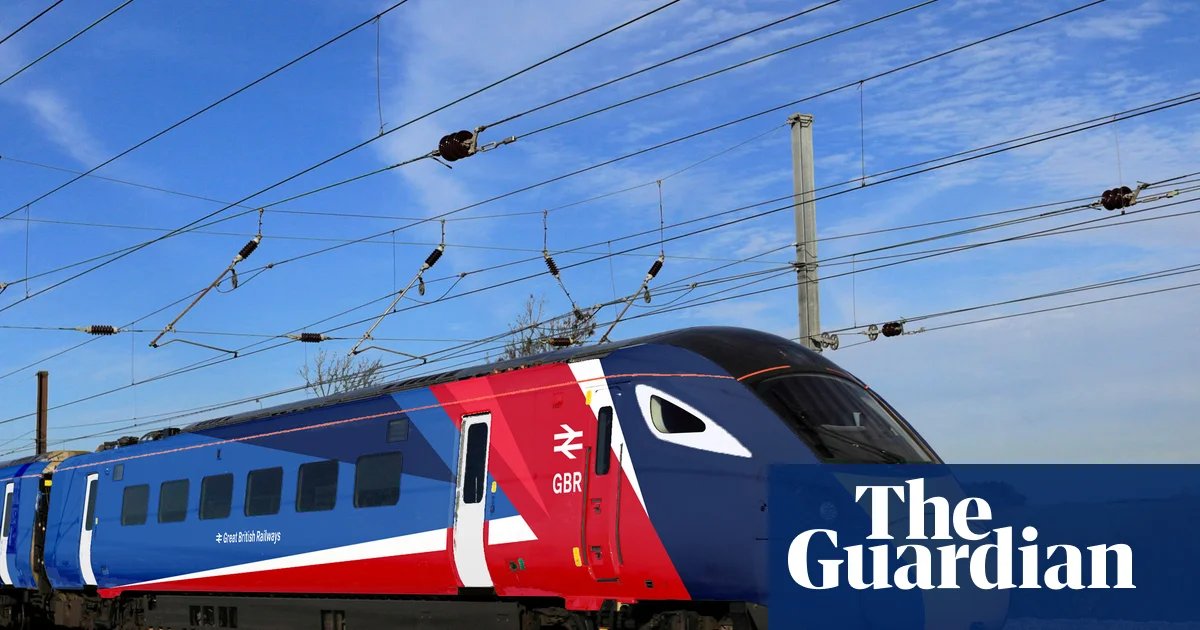
The glad tidings brought by the minister were that the wait was almost over: the establishment of Great British Railways could be wrapped up by Christmas, at least in law. But with a renationalised industry facing fresh storms in 2027, some in the railway world are wondering if they should be careful what they wish for.
The legislation that will rip up how rail has been run, anticipated for the best part of a decade, is being chewed over in its final stages in the House of Lords. It now has, the rail minister, Peter Hendy, told an industry conference in London this week, “a fair chance of getting royal assent” before parliament’s winter break, allowing a new arm’s-length body with overall control of Britain’s railway, spanning the track and train services.
Great Western Railway will come into the government stable in December, with the remaining private train operations, East Midland Railway, Avanti and CrossCountry, due to be nationalised next year.
There will be plenty to fix, as politicians and rail bosses acknowledged. Lord Hendy opened the Railway Industry Association’s conference by describing every train in the north of England as “clapped out”; Jeremy Westlake, the chief executive of infrastructure manager Network Rail, concluded the event by bringing up the two derailments in 24 hours at the peak of a summer of delays.
Some of the solutions may appear easier within an integrated, nationalised industry. The site of the future Great British Railways (GBR) HQ in Derby has now been picked, even if it remains unclear how many of rail’s leaders fancy decamping there, and exactly where the power will lie.
It won’t be, said Hendy, an all-powerful “Kremlin in Derby”, with control instead largely given to regional managing directors, something so far instigated at South Western and Southeastern. For Hendy, the rewards of the new structure will be a single point of accountability, and the end of a “culture of blame” under privatisation where contracts pitted operators against Network Rail, especially in times of disruption or delay.
Personifying for now the GBR ideal of track and train in harmony are Westlake and Alex Hynes, the chief executive of DFTO, the state operator managing the renationalised train services, who discussed their bromance in another joint appearance on stage at the London conference. Hynes said he had told train staff to “go find your new best friend on the trackside … We try to role-model it.”
It remains to be seen if either will be for the chop next year, when the newly appointed chair of GBR, John Kingman, picks one overall integrated boss. The flip side of the road to reform and integration for some, especially non-frontline managerial staff, has been prolonged uncertainty, as roles merge or disappear.
But GBR should mean being able to move resources more easily around the railway, be it people or trains. Hendy cited Great Western’s problems with former Transport for Wales trains, which had deteriorated after being replaced in service: “There’s nothing more stupid than watching some trains halfway through their lives that have been parked in a field … miserably failing on a daily basis because the industry wasn’t coherent enough. You can’t believe how stupid that is.”
Likewise, he said, most train companies “have been desperately short of drivers … That’s crackers. We can fix that – and I think it’s really important to fix those basic things. They will take time.”
Some, though, wonder where the GBR legislation will land rail under future governments. One of the missions was to end the micromanagement of rail by central government: when the 73-year-old Hendy, a railwayman and politician, eventually steps away, the separation – or lack of it – may become clearer.
after newsletter promotion
Hendy said GBR would at last give the railway a long-term strategy; opponents argue it does not bind it clearly enough. Others are worried that the Treasury could step in more than ever, threatening rail’s limited financial independence. Darren Caplan, the chief executive of the Railway Industry Association, said his organisation remained “very concerned that a future secretary of state could reopen five-year funding settlements, making funding even less certain”.
Richard Holden, the Conservative shadow transport secretary, warned that rail could “lose out to the competing demands of that day [and] have to get in the queue. Will a new train win out over a new hospital? I doubt it.”
Olly Glover, the transport spokesperson for the Lib Dems, who are more positive about the bill but also voted against it in its current form, said: “They’ve raised a lot of expectation as a result of so-called nationalisation. But the truth of it is the benefits will take time and are only going to materialise if the Treasury is willing to sanction more spending.”
Money has been tight, even though the railway hopes fare revenues are finally on track to match pre-pandemic income in the coming years. For now, the state of the railway has reflected spending on renewing it: cut from nearly £5bn a year to less than £4bn in the last five years, according to the regulator, the Office of Rail and Road. It was, said the ORR’s interim CEO, Feras Alshaker, “expected that its reliability would decline in the period”.
As record levels of compensation for delayed journeys this summer show, it certainly has. That level was compounded by the extreme temperatures and changing climate; but as several speakers at this week’s conference pointed out, the outlook is for much worse as GBR takes shape, with a “super El Niño” event likely to test the infrastructure as never before.
Traffic & Transport
Commuters and shoppers face disruption from tube driver strikes in run-up to Christmas | London Underground
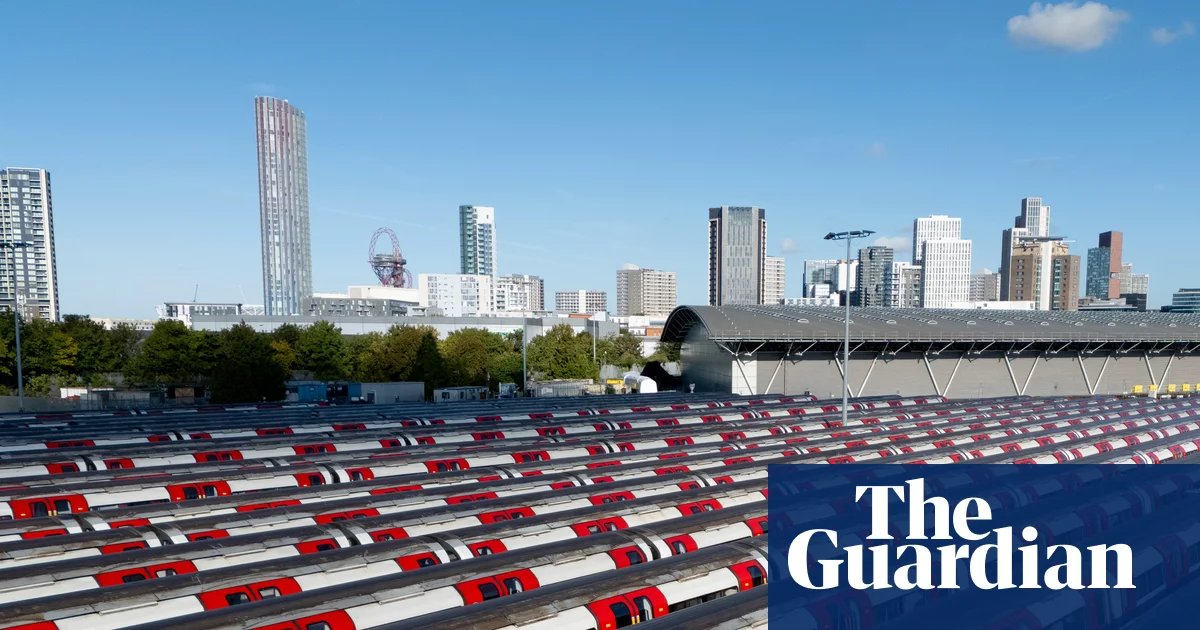
Tube train drivers in the RMT union have called eight 24-hour strikes running over 16 days – including six in the lead-up to Christmas – that threaten to bring transport chaos to the capital.
The drivers will start another series of 24-hour strikes in late November in opposition to plans for a four-day week – a proposal that has been warmly welcomed by the majority of London Underground drivers represented by the Aslef union.
Disruption could mean few tube trains over the last shopping weekend before Christmas, with strikes running from noon on Thursday 17 December and again on Saturday 19 December.
The 24-hour strikes will begin at noon on 26 November, followed by the Christmas walkout, with two more planned in early January and more in February.
The RMT claims the new four-day week, which Transport for London (TfL) has said would be voluntary, would “undermine existing agreements and worsen working conditions”.
Previous strikes earlier this year resulted in widespread disruption to London Underground services, although trains ran on most lines.
The RMT said it has yet to receive guarantees about drivers’ right to remain on existing five-day working arrangements. It believes the proposals would worsen shift times and certainty.
The RMT’s general secretary, Eddie Dempsey, said: “London Underground is attempting to dress up a wholesale attack on drivers’ working conditions as a voluntary four-day week.
“Our members are being asked to spend more time driving trains, accept longer and more unpredictable shifts and surrender agreements that have been negotiated and defended over many years.
after newsletter promotion
“This is not about improving work-life balance. It is about squeezing more work out of fewer drivers while giving management greater flexibility at the expense of our members.”
Similar, highly disruptive strikes took place in London in April and June, despite TfL insisting the proposals were completely voluntary, and the plans having been fully endorsed by the main drivers union, Aslef.


Met Office issues weather warning as UK conditions create ‘perfect recipe’ for fog | UK weather

Shedding selves, one term at a time

‘The end of an era’: Scillonian III sets sail on final voyage from Isles of Scilly | Cornwall
-

 Student Life4 weeks ago
From Oxford to Cambridge: The 204-mile punt for Alzheimer’s
-

 Oxford united FC4 weeks ago
Oxford United win 2-1 at Notts County in League One return
-

 Student Life4 weeks ago
Hidden in plain sight: the bakery behind Oxford’s café counters
-
 Property & Housing4 weeks ago
Plans developed for 12 affordable Blackbird Leys homes
-

 Property & Housing4 weeks ago
Blenheim displays new Oxfordshire scheme with show home
-

 Traffic & Transport4 weeks ago
Uber begins self-driving robotaxi trial in Manchester | Uber
-

 Oxford united FC3 weeks ago
Oxford United beat Wigan Athletic 2-1 in League One victory
-

 Oxford united FC3 weeks ago
Aaron Ramsey blasts Oxford United red card decisions in Mansfield draw