
Student Life
‘We were the poor relations’: Naomi Lightman on life as a woman at Oxford in the 1960s

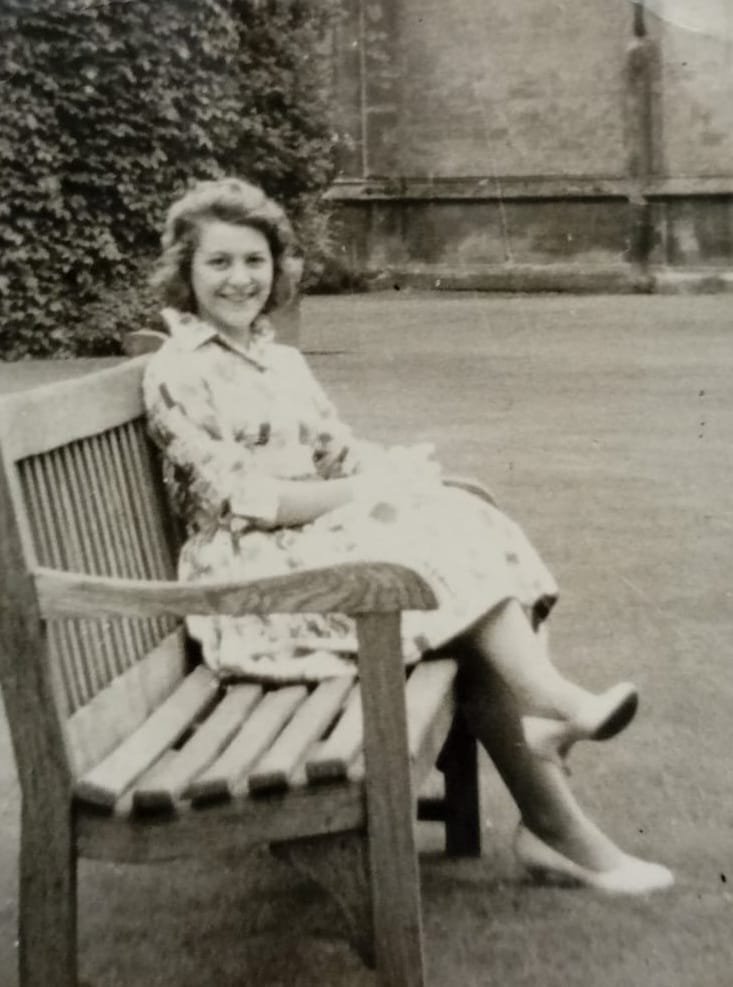
The year Naomi Lightman came to study at Oxford – 1962 – was the first in which women were allowed to become members of the Oxford Union.
Four years earlier, the five women’s colleges had finally been granted equal status with the men’s colleges. Six years before that, the quotas limiting the number of female students at Oxford had been abolished. 43 years previously, women had been allowed to obtain degrees for the first time. 84 years earlier, in 1879, 21 women entered two cloistered halls of residence – the newly-founded colleges of Lady Margaret’s Hall and Somerville – and were the first female students at Oxford. Much remained to be done, but change was already under way.
Naomi Lightman (née Claff), my grandmother, was born in September 1943 in Blitz-ridden London into a Jewish family. In her early days she was put under the kitchen table to keep her safe from the relentless wartime bombings. Soon after, she moved with her mother to Ayr, a small town in Scotland, to escape the Blitz. Her father was a doctor in Scotland in the Navy. “He was very deeply affected by the very high casualty rate”, Lightman tells me. “It had a lifelong psychological effect on him.”
Lightman turned two just days after World War Two ended. The war that had defined her earliest years now existed not in bombs or evacuations but rationing and ruins. Postwar London was a site of rapid reconstruction as thousands of evacuees returned to what had previously been the site of enemy attack.
But school was not trouble-free. Bullied at her previous school, nine-year-old Lightman was sent to a recently opened Jewish girls’ school: Hasmonean High School.The following year, she did the eleven plus exams to apply for a grammar school. Her English paper was one of the best, but “the maths paper was the worst they had ever seen, so that was the end of that.”
With less than a decade having passed since the Holocaust, many of the students at the Hasmonean were the children of survivors. But the Holocaust was never mentioned. “This was the 1950s. People were so traumatised they didn’t want to talk about it or pass on the information to their children”, Lightman tells me. “I had to learn about it myself. I heard girls in the corridor whispering to each other.”
As sixth form approached, Lightman says that she “had every intention of staying on to the sixth form.” The only problem was, there wasn’t a sixth form. In previous years, very few girls stayed on at Hasmonean past the age of sixteen; many left to attend secretarial college and then get married. “As far as they were concerned, they had no desire and no incentive to carry on, and the school didn’t provide any incentive either,” she tells me.
“A friend of mine, Freya, wanted to stay on too, and so the school had to create a sixth form for us,” Lightman recalls. “Because she was doing different A levels from me, I had private lessons for two years, and I was very fortunate that there was one outstanding English teacher.”
During the first year of her A Level studies, the teacher said: “I read English at Oxford. Why don’t you have a go at it?” The teacher suggested she apply to Somerville College in particular, rather than any of the other women’s colleges, as it was seen as more inclusive – accepting of women who had not attended prestigious private schools like Cheltenham Ladies’ College or Roedean. “Of course the Hasmonean would have been totally alien, not only because it was not recognised by the Ministry of Education, but because it was a very new school and it was also a Jewish school”, Lightman notes. She was one of the first Hasmonean students to even apply to Oxford.
She then found out she had been called to interview. “I had never been away from home before,” she tells me. “I hadn’t even been on a train on my own before. I really was inexperienced in every respect.”
Lightman remembers the trepidation she felt as she sat waiting to be called into the interview, surrounded by “very sophisticated young women”. “When I got there, all the girls were sitting there wearing little black suits, high-heeled black shoes, and very smart handbags, and they all had cut glass accents.”
The interviews themselves were no smooth affair. The first interview saw Lightman appear before a panel of people all wearing black gowns. “Very intimidating”, she remembers. “They shot questions at me, and I had never been in a situation like that before.” Her second interview was with the Somerville College Principal, Dame Janet Vaughan, a woman who was both warm and dignified. Lightman describes vividly how, on entering the cavernous interview room, she was unable to spot Vaughan. “You’re supposed to sort of walk into a room and look vaguely confident. But for me, it was the exact opposite. I spent some time trying to see where she was, and then eventually she put her arm up and said, ‘I’m here, dear.’” Lightman felt that Vaughan was “quite interested” in her, as she was “an unusual candidate from an unconventional background”. Years later she discovered that Vaughan, a haematologist, had been sent to the Bergen-Belsen concentration camp after its liberation in 1945 to aid in efforts to feed survivors suffering from extreme starvation.
The result of her Oxford application came by telegram, or rather, “a man on a bicycle.” “To my absolute and everybody else’s astonishment, I got a scholarship.” But Lightman felt she could not accept the offer. “I was an only child, and my mother and I were very attached to each other. She and my father had a very difficult relationship, and I thought it would upset her very much if I lived away from home for three years. So I decided on my own to turn the scholarship down, and I wrote a letter to the Principal.” She still wanted to continue her studies whilst supporting her mother, so she enrolled at University College London to study English. Very quickly she realised she had made a mistake; she had little in common with the academic assigned to support her studies and realised that the tutorial system at Oxford would have been ideal for her.
Lightman wrote a letter to Vaughan, explaining her mistake. Vaughan responded that she could take up her offer the following year, but this time would have to pay her fees. How would she pay the fees to attend Oxford? While it only cost a few hundred pounds, it was money her family – living in their cramped London flat – could not afford.
“I made some inquiries, and I discovered there was a Jewish charity that gave money for education”, Lightman tells me. “I had an interview with them, and it was very stiff and uncomfortable, but eventually they said they would give me part of the money.” The rest was lent by a friend of her mother. Finally, after numerous exams, interviews, letters, and changes of plan, Lightman was to matriculate at Oxford.
The first thing Lightman remembers about Oxford is that she had her own room. “I had never had a room of my own”, she says. Due to her family’s poor financial situation, she had shared a bedroom with her grandmother her entire life and would do so until she got married.
Life at Oxford was markedly different for men and women. The latter were in the minority: in 1959, women made up just 16% of the university’s undergraduate population. Male students only could enter Somerville during set hours, and female students were barred from male colleges in the evenings. Lightman recalls that fellow students used to climb over barbed wire to enter college secretly if they had been out later than curfew.
Male Oxford graduates were expected to use their degrees as launching pads for impressive careers. Women, meanwhile, were still expected to do little more than marry and have children. This was no more clearly demonstrated than when, in Lightman’s second year, a fellow English student at Somerville was told by the careers service that she should aspire to become a tour guide at Blenheim Palace. Lightman also remembers writing arts reviews for Cherwell, though the paper was, in the 1960s, no bastion of female empowerment: there were few, if any, women in senior positions.
“When I went to seminars and social events, there were very few women, and the men seemed very confident in a different sort of way”, Lightman observes. Many of the men carried themselves with the effortless assuredness and sophistication born of their public school education. “It was like a very rich family and we were the poor relations,” Lightman says, describing her experience in these situations.
Lightman had three very close friends throughout her time at Oxford, all of whom remained friends with her long after she left. Their rooms were close together, and they were constantly in and out of one another’s. One, whom Lightman remembers as lively and friendly, acted in a play for which Lightman designed the costumes. Another was at ease in Somerville’s intensely academic environment, as her father was a Cambridge professor. Of the third, Lightman recalls that “we could talk to each other about things that upset and worried us more than with others”.
One aspect of Oxford life that has changed little is the stress of Finals. To cheer her up during the agonising wait for results, Lightman’s mother took her to a play, but halfway through she fainted out of nervousness. Just a few days later, she received the telegram informing her that she had been awarded a First.
After graduating, Somerville offered Lightman a graduate scholarship. She told them she was getting married. She had met her future husband, Gavin, the year before she matriculated at Oxford, through a mutual friend. They started dating in her second year. “Gavin used to come at weekends to visit me, and it was very sweet because the girls used to say, ‘It’s a Gavin weekend, isn’t it?’ and they said they could tell from my face.”
Continuing graduate study at Oxford was impossible, as Gavin worked in London as a barrister. Somerville found a Doctor of Philosophy (DPhil) supervisor in London, where Lightman worked on her thesis. One day, years into the DPhil, her supervisor said: “I’m retiring in three months, and you haven’t finished yet. You’ve got three months to finish it.” This prompted weeks of frenzied writing as Lightman rushed to finish her PHD even whilst pregnant. Soon after, her supervisor “rang me up and said, ‘You’ve done it, Naomi. You’ve got your DPhil”.
Graduating with an Oxford degree – and a doctorate – may have opened doors for men, but it certainly did not for women in the 1960s. Lightman recalls an interview at a London university for a lecturing job. The first question she was asked was: “Does your husband approve of you working?” She was so taken aback she was unable to answer.
Her mother had built careers for herself despite the barriers facing women in the workplace, working variously as an artist, agony aunt and magazine editor. Lightman would do the same, working as an English tutor at Surrey University, Royal Holloway, the Open University and Birkbeck.
Fifty years after graduating, Lightman returned to Somerville for a reunion. The college, she found, looked almost exactly as she remembered it. The entrance hall, the Junior Common Room (JCR), and the gardens, seemed untouched by time. Each room she entered resurrected a memory, a tutorial, a seminar, a friendship. “There were ghosts, the shades of the people as they had been in their youth,” she recalls. “I could see them in my mind”.
But amid the familiarity, there was a marked reminder of how much had changed. Two decades before Lightman arrived at Somerville, Margaret Roberts had studied Chemistry there. Better known by her married name, Margaret Thatcher, she went on to become Britain’s first female prime minister. A woman reaching the highest political office in the country would have been unthinkable when Lightman attended Oxford in the 1960s. She expected, therefore, to find Somerville proud of its most distinguished alumna. But the students and faculty were more concerned with the substance of Thatcher’s policies than the significance of her achievement. “There was a bust of Thatcher in the college, but it was nowhere to be seen”, Lightman recalls. “I asked someone in the college and they said they had to put it in a hiding place as it was being assaulted. People intensely disliked her policies.”
Even as the college grappled with how to pay tribute to Thatcher, the very fact of her success captured something of the changes that had occurred since Lightman’s student days.
When Lightman left Somerville after the reunion, she was leaving a college that had changed little in appearance but profoundly in the possibilities it offered its students.

Pro-Palestine protesters marched from Cowley to the Weston Library on Saturday 31st October, demanding Oxford University’s divestment from Israel.
Around 120 people attended the protest, including groups such as Oxford Students for Palestine (formerly Oxford Schools for Palestine), Oxford Action for Palestine, Oxford City Green Party and Health Workers & Allies for Palestine.
The protest started with a speech about Oxford-educated administrators’ role in the creation of Israel, notably through the Balfour Declaration.
Green councillor Ahalya Bala also commented on the current situation in Palestine: “This is not a war. This is annihilation… The atrocities are still happening. It is just the pace that changes.”
“In the West Bank, forced displacement, seizures, neighbourhoods levelled to the ground, military raids, arbitrary detentions, torture, rape, executions, and land theft for Israeli expansionism and the cruel racial segregation and domination of Palestinians.”
A large banner at the centre of the gathering read: “Israel bombed 36 hospitals in Gaza and murdered more than 1700 healthcare workers. Targeting healthcare is a war crime. Arms embargo & Sanctions now!”
As protesters moved through Oxford, they chanted “blood money on your hands, show us your divestment plans”, “arms embargo right now”, and “Oxford University pick a side, justice or genocide”.
Two march attendees, Lisa and John, have been protesting for Palestine daily outside Carfax Tower. They spoke to Cherwell about the current state of the student movement for Palestine. Lisa, a current graduate student said that: “For students the consciousness is there and the willingness is there but people are afraid.” John added that Oxford’s prestige meant “there is a lot of power and opportunities to speak up concentrated here”.
Outside the Weston Library, protesters heard speeches from Nick Maynard, an Oxford alumnus and surgeon who has worked extensively in Gaza, and Haya Adams, an activist from the SOAS-liberated zone. Maynard, who went to Exeter College, said in his speech: “There are moments in history when silence becomes a form of complicity… More than 22,000 children have been killed in Gaza in the last three years.” He told the audience about individual patients he had seen in hospitals in Gaza, explaining that, on one occasion, his colleagues were stripped of critical supplies of baby formula by the Israeli military upon entering the strip.
Regarding the international treatment of Palestine, Maynard later told Cherwell: “We know it’s been failed by our governments, we know it’s been failed by our media, but it’s also being failed by our academic institutions… They have not given students a sufficient platform to talk about the genocide. Students have been fantastic. The university needs to give a much bigger platform to its students.”
Oxford Students for Palestine, one of the groups organising the protest, told Cherwell: “We wish to remind the University and others that Oxford city is extremely pro-Palestine, that we call for the end of the genocide and apartheid, and we call for every Palestinian to be liberated and have the right to return. We are twinned with Ramallah for a reason.”
The group added that “we’re calling on Oxford University and its colleges to disclose and fully divest from any Israeli investments, products, or banks like Barclays”. They also criticised the Oxford University Endowment Fund (OUEM) as “fundamentally resistant to disclosure and divestment”.
Adams, from the SOAS-liberated zone, told Cherwell: “The most basic and bare minimum thing that Oxford University can do is cut ties with genocide through their investments, through their partnerships. There really are ethical alternatives… Oxford University can also protect the right to free speech by allowing students to speak up for Palestine with no disciplinary action. They need to be held accountable for the arrests that happened during the time of the encampments.”
In response to a right of reply, Oxford University said: “Oxford is steadfast in its commitment to freedom of expression and to the right to peaceful protest within the law. At the same time, we have a legal and moral duty to uphold the rights, dignity and safety of every member of our community. When behaviour, including protest, causes serious disruption, harassment or safeguarding concerns, we will act in accordance with the law and our own established procedures.”
OUEM did not respond to our request for comment.
As the march ended, Oxford Students for Palestine reflected on how it fit with the global student movement. They told Cherwell: “The last thing we will say is that the students united will never be defeated, as we’ve seen across the world.”
Additional reporting by Stanley Arlidge and Freya Robson.
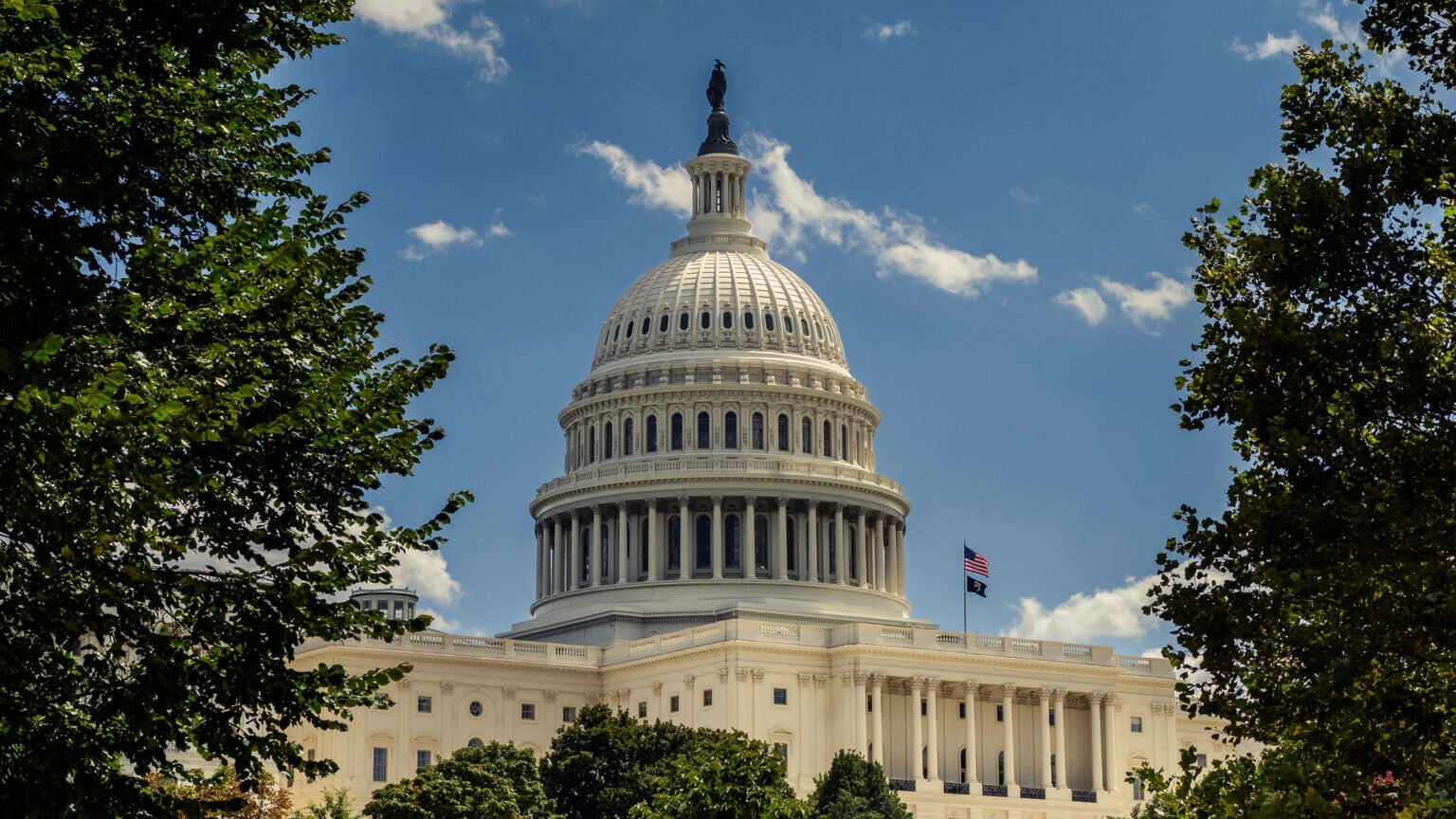
How could the outcome of the US midterm elections ever affect an Oxford student? Well, the elections might affect the cost of your next Tesco or Sainsbury’s visit. This month, diesel prices surpassed £2 per litre. British grocery inflation also just ticked up to 2.5% from 2.3%. The two are not unrelated. Many attribute Britain’s inflation to the ongoing conflict between Iran and the United States in the Middle East. On top of this, the Trump administration has threatened a 100% tariff on UK goods if the country does not abandon its digital services tax.
For better or worse, US government policy can affect the world, and with President Trump’s party holding slim majorities in both legislative chambers, current US policy may be challenged or forced to change. While, strictly speaking, the midterm elections only involve voting for representatives and senators, many view them as a vote of confidence in the president. Historically, the election has generally reflected a lack of confidence in the president, at least within the House of Representatives. Since 1946, regardless of party, the incumbent president’s party has gained seats in just two midterm elections: 1998 and 2002. These elections stand out because 1998 was the year President Clinton was impeached and 2002 was the election following 9/11.
Making sense of the midterms
Let’s say you agree with the notion that the outcome of the midterms may affect your grocery spend or your travel spend between or after term time; how on Earth do you make sense of the US election? Why do some politicians appear up for election and others do not? How do you know if power has shifted and a debate will occur on issues that affect an Oxford student?
In the US, Congress consists of two elected legislative bodies: the House and the Senate. Every two years, the entire House and one-third of the Senate stand for election.
A representative serves a two-year term in the House. This means the entire House stands for election on a two-year cycle, which includes the presidential election and the midterms in between. Currently, the Republican Party holds a slim majority in the House, and the Democratic Party would need a net gain of 3 seats to take control.
A senator, on the other hand, serves a six-year term, and there are 100 Senators. Further, the Senate is divided into three classes, with about 33 Senators per class. Senate elections are staggered so that one-third of the Senate stands for election every two years. Like in the House, the Republicans hold a majority in the Senate, and the Democrats would need a net gain of 4 seats to take control.
What Congress can do
Now that we understand how the election works, how would a change of power in Congress affect an Oxford student’s daily life?
Congress was designed as a restraint on the presidency. Congress possesses extensive power in budgeting, defence, foreign policy, trade, and other matters which can be used to counter the president. If the opposition party, the Democrats, wins control of either or both chambers, then expect attempts to foil President Trump. This matters to students from the UK and abroad. As mentioned before, US global policy might increase our food bill, but even more, as petrol prices rise, so will prices for all travel and, in particular, air travel back home for international students.
The Iran war
So, what can Congress do? Congress has a variety of options to influence the Iran war, one of which is the War Powers Resolution. Under this law, Congress could force an end to hostilities by voting to instruct the president to begin withdrawing the US military from hostilities within 60 days. However, this would require a supermajority of Congress because the president would likely veto a War Powers Resolution on the Iran war.
Alternatively, Congress can take other steps to impede the war. This includes restricting the military’s budget, rejecting or not voting on nominees, holding hearings, forcing Department of Defense officials to testify, and more. If the Senate doesn’t confirm a nominee, the president is limited in whom he may select, and the ‘acting’ official tends to hold little political power. All of this pressure would go a distance in bringing an end to a conflict that has increased petrol in the UK by 16-30% on average and increased airline jet fuel globally by 20%.
Tariffs and the power of the purse
On tariffs, Congress could pass legislation to terminate specific tariffs or rescind the president’s authority more broadly. Much of the same congressional options that applied to the Iran war also apply to tariffs. The key difference is that if both chambers of Congress switch to the Democrats, there is a good chance legislation curtailing the President’s tariffs could override a presidential veto.
The congressional power of the purse should also not be underestimated. In 2019, former Speaker of the House Nancy Pelosi refused to allow appropriations legislation to pass over a dispute to fund a border wall on the US-Mexico border, leading to a government shutdown. This can hurt the American public, as the lack of funding ceases or slows essential operations and functions like airports, issuance of small business loans, court proceedings, and heavily used public venues like national parks. Traditionally, this stalemate places great pressure on the party that appears unwilling to compromise and in 2019, President Trump found himself in that position. All of this puts the President’s 10% tariff on UK goods in jeopardy and diminishes the risks of new tariff threats.
The bottom line
So, today, take note of these facts if you attend a University of Oxford watch party. The election taking place 3,000 miles away may affect you more than you imagine, as it may affect the cost of what you eat, the cost of travel around Oxford, the cost of a flight home following term time, or even more; it may affect the global economy every Oxford student wishes to work in. Don’t stay up too late, but hopefully, if you watch the election, you will appreciate its significance, and it will also provide some entertainment.
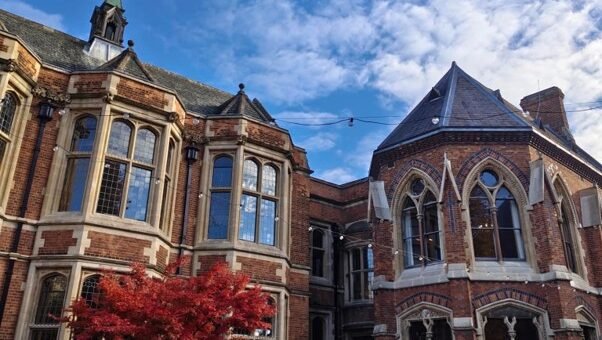
Two forms of identification will be required to vote at the Oxford Union following consecutive instances of electoral fraud involving impersonation. Voters will now need to provide their membership card and one additional form of identification, after the Standing Committee accepted a rule change earlier this week.
Union President Gareth Lim told Cherwell that the change aims to protect the accuracy and integrity of the electoral process, especially to avoid the impact of counterfeit and illicitly obtained membership cards. The proposal to the Standing Committee described the previous system as “open to abuse” and added that the new rules are written under the principle that “the election system should be fully defensible against attempted fraud”.
Impersonation and false membership cards disrupted the two most recent Union elections.
In Trinity Term 2026, the election count was suspended after a Returning Officer identified evidence of substantial interference before boxes were opened. CCTV showed individuals attempting to cast votes using membership cards which were not their own.
Similar electoral fraud occurred during elections in Hilary, as President-Elect Catherine Xu was removed after a separate Tribunal found she had distributed membership cards belonging to other people for voting.
After both elections, membership cards were seized, and those found guilty have been suspended from the Union.
Lim proposed the new double-identification system over the summer. The Standing Committee recommended the changes, and they were affirmed by the Union’s ‘house’ on Thursday.
When asked why these measures have only come under consideration after the second instance of attempted fraud, the President told Cherwell the rules follow suspected large-scale counterfeit voting in June, whereas the Hilary election was suspected to be the scheme of one individual at the time.
Guidance on what will be accepted as secondary identification has not yet been confirmed. Cherwell understands that student identification, including Bodleian cards, will be sufficient.
In addition to the changes to voter identification, the Union is also changing the process through which candidates are selected for standing committee. Starting from the elections in Hilary term 2027, candidates for Secretary’s Committee will require three unique nominators who are not candidates themselves to stand. The change is being introduced to “help reduce the unfair and unnecessary burden placed on electoral officials by the frivolous nomination of candidates with no interest or support in winning”.
A mock election to trial the new system will be conducted by the Returning Officers during the Union’s US Midterm Election event this evening. Attendees have been directed to bring both their government ID and Union card. The new rules will take effect for the next election on 27th November.



-

 Oxford united FC4 weeks ago
LIVE: Exeter City vs Oxford United – Jersey Mike's Trophy group stage
-

 Oxford united FC4 weeks ago
Oxford United lose to Exeter City on penalties in Jersey Mike’s Trophy
-
 Student Life4 weeks ago
Rhodes scholarships cut amid financial difficulties
-

 Student Life3 weeks ago
From Oxford to Cambridge: The 204-mile punt for Alzheimer’s
-

 Oxford united FC4 weeks ago
Chris Gunter details Oxford United tactical adjustments
-

 Oxford united FC4 weeks ago
Oxford United youngster opens up on ‘surreal’ Aaron Ramsey influence
-

 Oxford united FC4 weeks ago
Oxford United win 2-1 at Notts County in League One return
-

 Oxford united FC4 weeks ago
LIVE: Exeter City 2-1 Oxford United – Grecians lead after Bradney debut goal