
Student Life
Why are we so afraid of being bored?

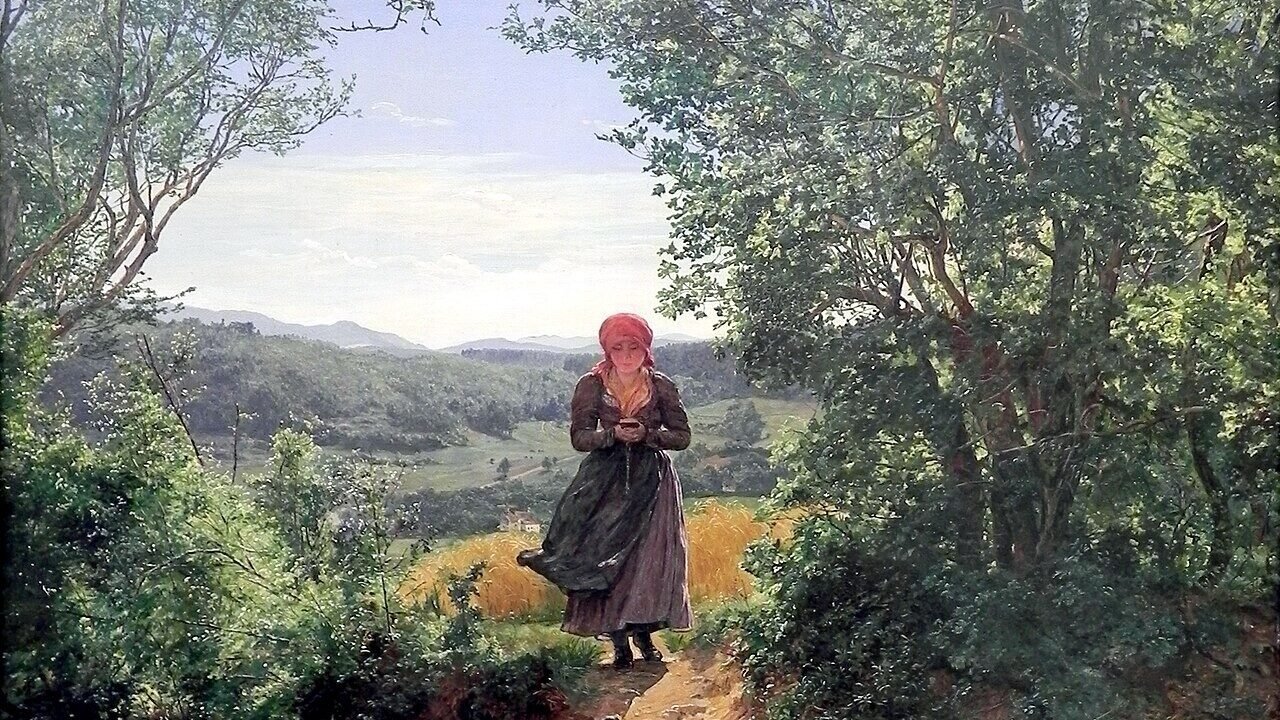
We wake up, and our phone is immediately in our hand – we scroll, we text, we check the weather, the news, our emails. Then it’s breakfast, which we eat while scrolling, tapping, and liking. We brush our teeth with a YouTube video on, walk to lectures while on the phone, eat lunch while watching TV. And then, when it’s time to sleep, our phones are the last thing we look at. Every day is the same.
When this reality is spelt out, it does sound slightly dystopian. With hundreds of thousands of hours of content and entertainment at our disposal – all accessible whenever and wherever – there is little reason to ever feel bored. When there’s a lull in the conversation, a queue to wait in, a moment of silence, we can pull out our phones and be instantly entertained. To us, boredom has become a gap to be filled, an empty space to be occupied with distraction. But perhaps, in our eagerness to fill these spaces, we have underestimated what they were doing for us.
Short-form content is everywhere on social media. A mere swipe-up on your phone can send you down the rabbit holes of TikTok, Instagram Reels, or YouTube Shorts. And sometimes, even the short-form content isn’t short enough. Our attention spans have become so fried that we won’t even watch the entirety of these 30-second videos, deftly scrolling after we’ve read the caption and seen the first 10 seconds. This quantity-over-quality style of media consumption, one which delays not only our having to feel bored but also our need to think critically, is having knock-on effects on all forms of media; even Netflix, famously designed for streaming long-form content, has a designated ‘Clips’ section now. Algorithms and media corporations have recognised that we are, in fact, becoming increasingly restless with engagement that requires patience or critical thinking.
Our unwillingness to accept boredom has not only changed how long we are willing to watch content, but how we watch it. I’ve noticed a tendency in modern films to use dialogue to over-explain – think exaggerated exposition scenes, where we are explicitly told how a character feels, rather than being clued in by context. Even the unnecessary inclusion of ostentatious, fast-moving action scenes is designed to draw our attention away from our phones. Films that present ambiguity or require interpretation can feel unusually demanding by comparison, and are thus often misconstrued. Engaging properly with films requires patience and active thought, but, faced constantly with media that immediately rewards us, we are becoming unfamiliar and thus uncomfortable with this. And it is not only that we are unwilling to actively engage with other media – a decline in media literacy has eroded our ability to do so.
As children, boredom was typically remedied with activities that required patience and creativity: drawing, writing, inventing. Now we have a whole generation of iPad kids who have never felt bored and likely will never have to. We, too, are now made so uneasy by boredom and the gaps that it creates in our lives that we avoid it completely. With this, though, we are losing access to the mental space that allows us to create our best ideas. We make our best decisions, have our best thoughts, and best understand the world around us when we allow ourselves the time to actually think, without a phone in hand or music in our ears. And nowhere is this discomfort with unstimulated thought more evident than when we have to actually concentrate on something.
When we try to study, we are forced to confront something that our phones have been shielding us from – the fact that not every moment will provide stimulation, entertainment, or immediate gratification. We have become so used to unthinkingly filling every idle moment that it can be a real struggle when it becomes time to switch our brains back on, especially after a long vacation spent without any academic stimulation. At Oxford, despite a barrage of deadlines and collections and essays constantly looming over us, the ever-present option of unlocking our phones and not having to think is increasingly tantalising. And then a five-minute break becomes a one-hour scroll. I’ll admit that I’m often the first to pull out my phone when struggling to come up with ideas, idly waiting in a queue or walking somewhere, but it is undeniable that sometimes we do just need to pause, to wait, and do nothing. It is precisely when we resist this urge, when we allow ourselves to feel and to sit in our boredom, that our brain begins to make important connections and create original ideas.
We’ve come to think of boredom as an inevitable but unpleasant gap between activities, or as space to fill, but we’ve stopped seeing that space as worthwhile in itself. Those ‘lightbulb’ moments where a crucial point suddenly comes to mind often occur in moments of inactivity, like when you’re in the shower and a thought pops into your head, or when you’re staring into space, struggling to write an essay, and an idea suddenly comes to you. It’s when we allow ourselves to exist with this feeling that we do our best work.
The discomfort that boredom brings is arguably necessary, not only in academia, but for life in general. Giving our brains space to actually think allows them to work, whether that be to problem-solve or to spark our creativity. So whenever you next find yourself waiting in a queue, or walking to a lecture, it might be worth not immediately trying to fill those gaps. Instead, try to see this time as something that needs to be embraced, rather than something to be filled. Maybe then what feels like empty space might not be so empty after all.
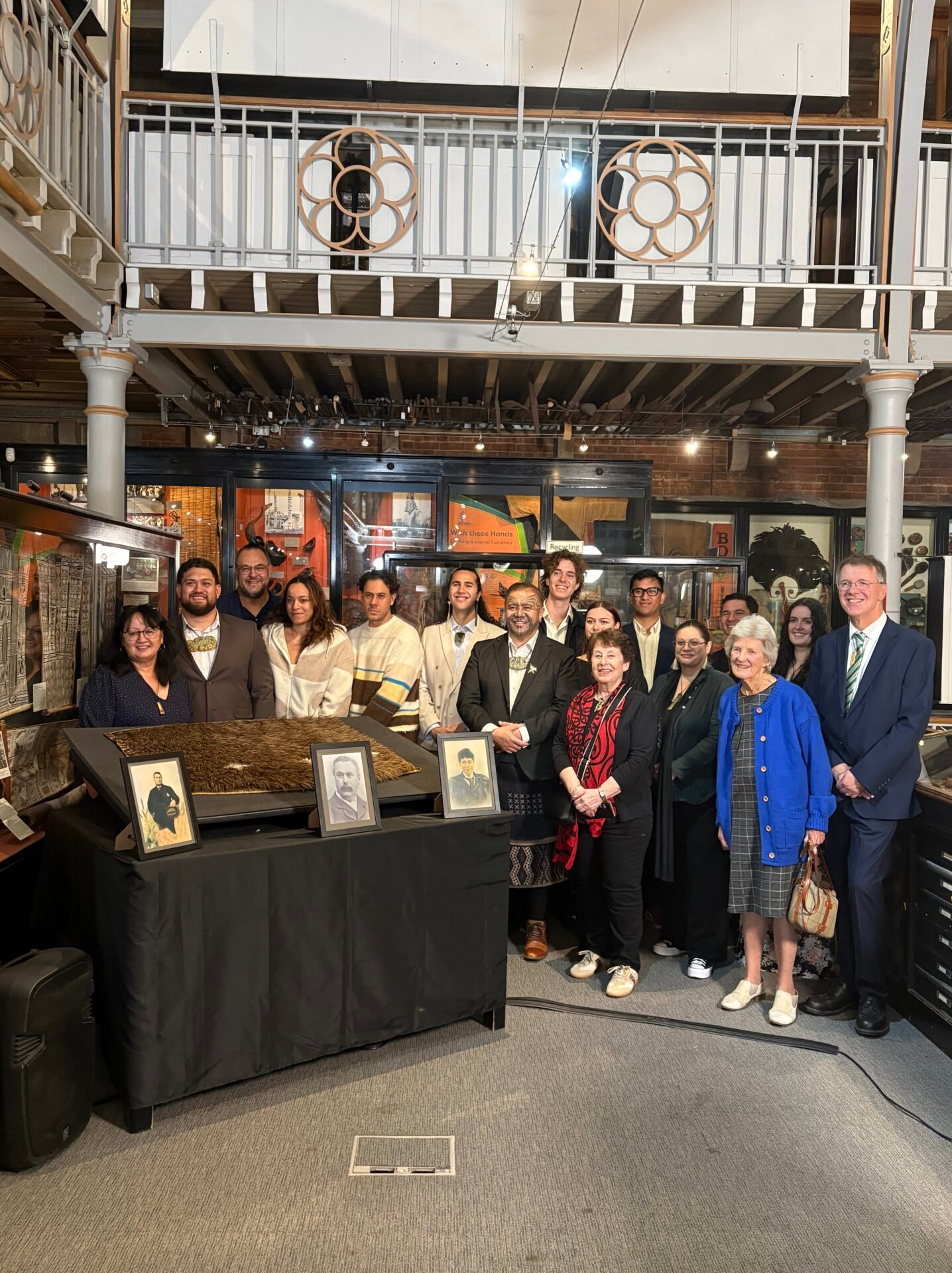
The Pitt Rivers Museum, with assistance from The Homebound Project, has returned a kahu kiwi to its Māori community in Aotearoa New Zealand after more than 100 years on loan to the museum.
A kahu kiwi is a traditional Māori cloak covered in the feathers of a kiwi bird. It is one of the most prestigious garments within the Māori community. On 10th October, a ceremony was held at the Pitt Rivers Museum to mark its departure.
The particular kahu kiwi was loaned to the Pitt Rivers Museum in 1913 by the widow of George Cleghorn, a 19th-century physician. Cleghorn was originally gifted the cloak by the local Māori population when working in the Wairau Pā region of the South Island. His initiatives to improve public health in the community included establishing a fever ward in the grounds of the local hospital.
The transportation of the kahu kiwi to Aotearoa was funded by The Homebound Project, a charity that works to repatriate items of cultural significance to indigenous communities worldwide. On its website, the Homebound Project highlights that the UK, unlike many other countries, has no law that requires repatriation of items belonging to other cultures. This means the cost of repatriation often falls on the indigenous community involved.
Dr Berklee Baum, founder of the Homebound Project, told Cherwell: “Across the United Kingdom, hundreds of thousands of Indigenous ancestors and cultural belongings remain in museum and university collections. Securing their return can involve long and complex negotiations. Even when a return is agreed, many UK institutions will not cover the costs and Indigenous communities are left to bear the financial burden themselves…
“The University of Oxford has refused to pay for the physical return of these belongings and ancestors. I think this is a very important fact to point out, so that we are not too quick to praise the University for their generosity. I created The Homebound Project to fill the financial gap left by UK institutions like the University of Oxford, relieving Indigenous communities of carrying the burden alone.”
Baum’s Homebound Project was founded on a one-off donation of $2,000,000.00, which was then invested. The interest generated from this investment funds projects like the return of the kahu kiwi to Aotearoa. It has also funded the repatriation of Naga ancestral remains from the Pitt Rivers Museum, with a return expected later this year.
When asked about the decision not to fund the kahu kiwi’s journey home, the Pitt Rivers Museum told Cherwell: “Where a claim for return is approved, the claimant will be responsible for the costs of returning the object(s), including the costs of any conservation processing that may be required for safe transport, packaging, transport and travel. An exception to this may be made in cases of financial hardship, where the University may consider a contribution towards the costs on a case-by-case basis.”
In a press release, Professor Laura Van Broekhoven, Director of Pitt Rivers Museum, said: “We are very pleased that the day has come for the kahu kiwi to return home… It has been our privilege to have cared for it on loan here in Oxford, and we know how deeply it will be cherished at Wairau Pā.”
Lorraine Eade, Chair of Ngāti Rārua o Te Wairau Society, a society representing the Māori community from which the kahu kiwi came, said that the return of the kahu kiwi was “beyond measure”, adding that it marked an “opportunity to extend [their] knowledge in terms of traditional weaving techniques”.
Before returning to the community in Wairau Pā, the cloak will be temporarily housed in the Museum of New Zealand Te Papa Tongarewa until construction of a new Wharenui (Meeting House) is completed at Hahunga Marae (a meeting ground in the Wairau region of New Zealand).
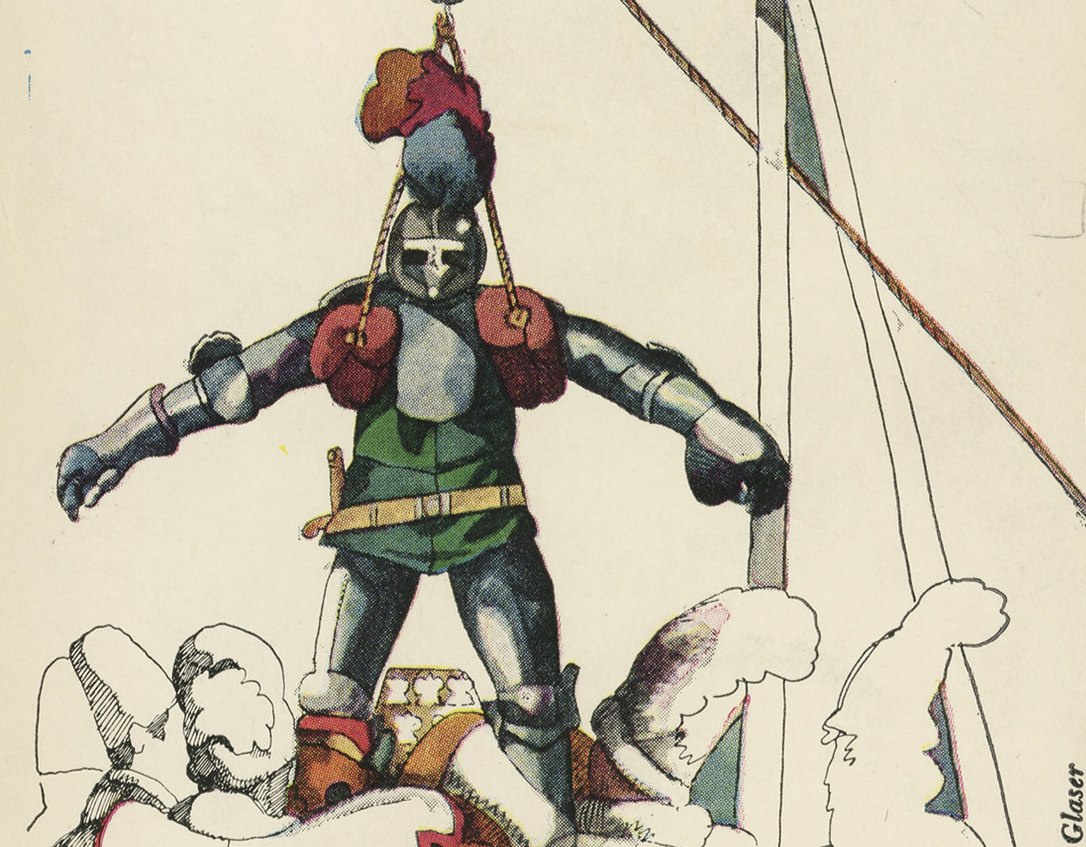
Picture this. It’s 1599 in London. You’re at the new Globe Theatre. Or perhaps at the Curtain Theatre. Historians can’t decide. Let’s say you’re a groundling – it’s more fun that way. You’ve got a bag of peanuts in hand, or the early modern equivalent. It probably smells. Then, the chorus shuffle onto the stage. They’re met with expectant hushes. Out of silence, they emerge into steady verse. The lofty iambs you hear invoke “a Muse of fire”, yet they also ask a crucial question: “Can this cockpit hold the vasty fields of France?” Absorbed, the chap next to you whispers ‘Yes, yes it can’. But you can’t help but think, well no. Not really.
I am aware this is the wrong answer. Shakespeare’s false modesty (“this unworthy scaffold” – come off it!) demands that you think, oh, of course it can. This wooden “O” can in fact cram the very casques that did affright the air at Agincourt. Yes, I will make imaginary puissance so that when you talk of horses, I’ll see their proud hoofs. And generations of lit crit sycophants have given their nodding assent.
But let’s be honest for a moment. Even the most ardent enjoyers of the stage must acknowledge that theatre is, to an extent, always a little dire.
I’m reminded of this in the opening of The Tempest. I always smile to myself as I wonder how theatre-makers will construct a storm onstage. How an actor has to stumble across stage, yell ‘Boatswaaiiiin!’ and stumble back off to the wings, only to hold his head in his hands knowing all too well that this in no way resembles a storm. I love those little arm-flailing dances and staggering sidesteps meant to show the rising and falling of the deck. There’s something of the primary school nativity play. It’s pathetic and tragic, and neither in the literary sense.
Of course I’m being facetious here. Some theatre is remarkably skilful, and some lopsided limb-lurching is more impressive than others. Splendid set pieces and cutting-edge special effects of sound, rain, and wind can create real spectacle. Yet it often remains woefully unconvincing. We can only imagine the Emperor’s new clothes for so long before the public indecency gets a little off-putting. So at times we may wonder: it’s the 21st century. Film can faithfully represent the stories we wish to tell. What need have we for theatre?
If the thought often attributed to Ovid is correct, that art est celare artem (true art is to conceal art), then theatre is pretty poor art. You ain’t fooling me into thinking that’s a storm. A friend of mine makes this point, although strangely never to our director when he’s casting the plays. Yet I have to remind myself that this is a silly question. I have to imagine that a century ago I’ve come out of a particularly awful exhibition at a gallery. What, I ask myself, is the point of painting when we’ve a camera that’s a far more faithful representation?
Perhaps cinema is to theatre what photography was to painting. Whilst more photorealistic forms may tend to conceal their own art – as Ovid would praise – this surely doesn’t entail their superiority. Faithfulness cannot be the metric of good art. A high-definition photograph of flowers is not by definition greater than a Van Gogh. Likewise, a believable cinematic storm is not automatically better than some wacky wobbling and foot-floundering onstage.
There’s a paradox in that the artifice of art is all the more compelling if we have a glimpse of it. This is part of the tantalising appeal of behind-the-scenes footage, and why it’s always so thrilling to glimpse actors’ true personalities and relationships as they take their bows. Think how we’re so captivated by the possibility of Paul Mescal and Daisy Edgar-Jones or Emma Stone and Andrew Garfield.
Two film representations of the prologue to Henry V are particularly delightful in this respect: they tease us with the illusion of theatre. Laurence Olivier’s Technicolour 1944 version begins with an aerial shot of Elizabethan London, which pans across from the Tower to the Globe Theatre, and into a deliciously evocative scene of crammed-in groundlings and the atmospheric accoutrements of a lady selling apples, before trumpets sound and our play begins within the theatre. At the opening of Act II, we shift our scene to Southampton, as the illustrated ocean vista on the theatre’s curtain dissolves into the real thing. The play ends with a zoom in from the opulent palace onto the newlywed royals taking their thrones, and a zoom out onto the Globe itself. Cue riotous applause. Kenneth Branagh’s 1989 take is wonderfully meta too, as Derek Jacobi speaks the prologue whilst wandering through a film set, and the epilogue straight down the lens. Both embrace their medium’s very artifice
We never return to painting and theatre for their nonchalance. The joy is the artifice. In painting, each brushstroke tangibly intimates the brush, the hand that held it, the mind that led it, and the heart behind it. In theatre, it’s to look into a man’s eyes and try to discern where man ends, and Hamlet begins. It’s to see those horse’s proud hoofs when that actor’s feet are firmly planted onstage. It’s to watch the curtain’s waves melt into that furrowed sea itself.
So theatre must draw attention to its own artifice. Hence the perverse appeal of Bertolt Brecht’s desire that the actor “must not go so far as to be wholly transformed” into a character; we’ve got to resist the full ‘method’. This is essential for an art form that’s ironically real, immediate in the physical distance between actor and audience, and immediate in its emotions. The messiness, the unpredictable, the implausible – all happening this very moment – are why we return to the stage. In the age of digital smoothness, we return to the awkward artifice of live performance.
It must be said that embracing grittiness is not unique to theatre. Of course, the Henry V productions above are themselves films, and Richard Ayoade delightfully talks of doubling down on the unreality of cinema, using a handheld camera to draw our attention more to the cameraman. But theatre can’t hide its seams as cinema can. The theatre is unrepeatable and live: we can’t ignore its bizarre unreality. Wood must transmorph into fields, actor into king, and wobbled arm-jerks into a ship in storm.
This is why I ultimately can forgive Shakespeare for the prologue to Henry V (I’m sure he’s relieved by my approval). It’s annoyingly brilliant. It walks a fine line between downplaying and exaggerating the power of theatre. It veers neither into self-indulgence nor disillusionment. I know the stage isn’t much, he seems to say, but join me.
So fine, William. I’ll happily indulge you. If you my humble patience pray, I shall gently hear, kindly judge, your play. Although if you’re doing a storm onstage, tell me now. I might need to grab some mead at the interval.
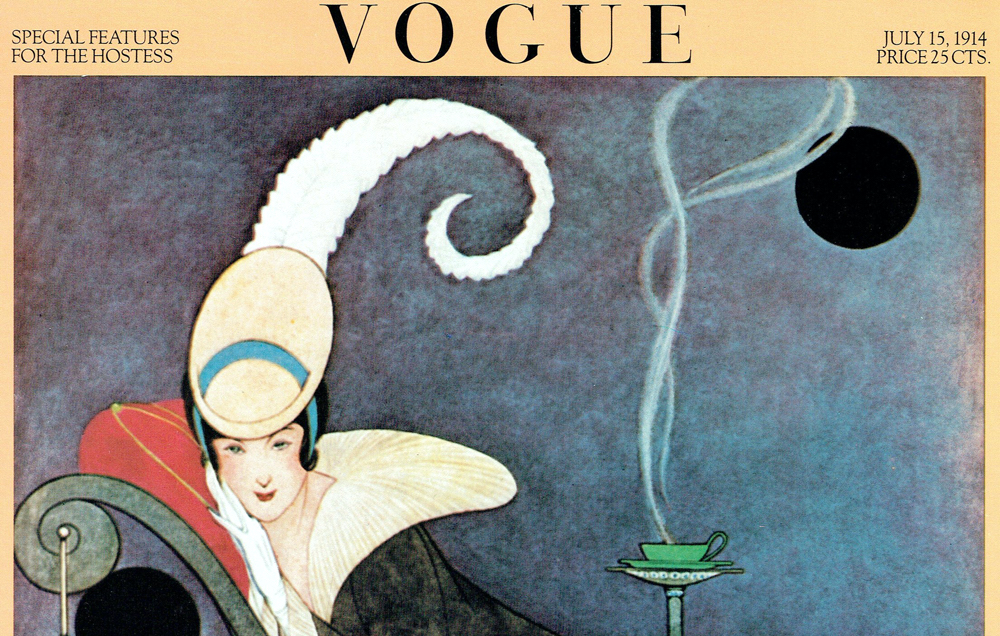
Did society collectively decide to stop wearing 18th-century ball gowns, or 1920s flapper dresses? I doubt it. We love to dress up for Halloween and enjoy how we look and act in outfits that are no longer deemed socially acceptable. Yet fashion trends and societal norms keep us from wearing ‘costumes’ on other occasions. These outfits, such as a ballgown, a flapper dress, or medieval armour, represent a bygone era. By acting as costumes, there are fashion trends that we imitate without fully acknowledging how essential these were in their respective times. The question, therefore, remains: are these only trends that we imitate on specific occasions – Halloween or bops – instead of an everyday outfit? I find it quite hard to believe that there was a categorical shift in ‘personal style’ throughout the ages. Instead, our fashion choices emphasise how our individual styles are limited by the available market, and what fashion magazines and brands declare as ‘in style’.
Clothes declared ‘trendy’ are pushed on society, particularly on women. Although it may not have always been described in these terms, this expectation to wear these ‘trendy’ clothes is certainly something that has always existed, and undoubtedly continues to thrive today. Living in an age in which (Western) women have more choice on a social, political, and economic level, it is clear that this does not equate to total freedom in any regard. Despite being overshadowed by the range of women’s clothing in the modern market, this is also true for fashion. Is it really possible to create your own personal style?
If you have ever seen The Devil Wears Prada, you’ll know the scene where antagonist Miranda Priestly explains to protagonist Andy Sachs the process of how her ‘throwing on an old sweater’ went through so many branches within the fashion industry. This is because everything we wear, even casually, goes through an extensive process before it is available to the public. In the film, she describes the trickle-down effect within the clothing industry, in which a runway design influences brands, which then produce similarly styled garments. She then details how these styles travel from high-end brands into department stores and local shops, where they are picked up by us. This perfectly demonstrates the illusion of choice, as what we choose to wear passes through a long line of executive decisions that are not our own. In buying a new pair of jeans, for example, you make many choices: the choice of shop or brand, then the choice of the jeans themselves, among many more. However, these are likely the shops close to you, or that deliver to your area (and within a certain price range). These jeans have gone through this process in the industry, and their style is pushed in magazines and social media as ‘cool’ or ‘trendy’. They are designed to succeed in the market, not to be bought by an individual as a single expression of personal style.
The reliance on trends has only been enhanced by the growth of social media, particularly TikTok and Instagram. I have seen dozens of people expressing their ‘likes’ and ‘dislikes’ in regard to clothing items, and, on the whole, they are largely the same. That said, there are many different algorithms and aesthetics, and yet, even within these, there is a standard type of dress. The ‘clean girl’ aesthetic, grunge, and indie styles all contain their own distinctions, but we can still understand which is which based on appearance. Fashion trends often fit within a style category, often one that exists on some side of social media, from which people derive inspiration. Nevertheless, on these different ‘sides’ of social media, the manner of dress somewhat resembles each other.
I find that this was particularly true in certain periods of time – most obviously seen since 2020. There are many specific items of clothing that I still see people wear today, and they transport me back to the pandemic. The oversized green-blue knitted sweater, white tennis skirts, turtlenecks, and other aspects of the 2020 ‘indie’ style retain their cultural and social link to this period. The pandemic exemplified a dependence on social media in the world of fashion, since this was the only way in which we could gauge fashion trends, as streetwear became virtually non-existent.
Since then, we have returned to microtrends, vintage clothing, and thrifting. In this way, we feel we can express personal styles – with fashion trends that may have only 500 likes on TikTok, instead of 500,000, or things that are from the 90s, and judged to be a ‘rare find’. But, like I say, the general principle still applies: even where vintage or thrifted, these clothes travelled through a long process and are far from rare. Nonetheless, we believe that we have a choice.
Something I appreciate about the fashion trends of the 2020s is the rise of crafts, such as DIY, crocheting, and sewing, as an individual take on what we see online. While social media emphasises trends, myriad videos show people making their own clothes. This is exemplary of choice and personal style. And yet, this is still not necessarily an individual’s creativity. This is something of a trend – sewing, adjusting, or adding to clothes to make them your own. Most notably, the trend becomes clear when you ask, ‘Where does the inspiration for this come from?’ It often comes from social media – primarily, Pinterest. So, the idea of ‘being unique’ stems from both the internet and availability.
Consistently dressing in a completely original way is impossible. Making time to create unique ideas for, and sew or knit all new clothes in 2026 is an absurd concept. The time, effort, and money for this would be immense. As a result, total innovation and imagination are very difficult to achieve. There is simply not enough time.
However, this only relates to creativity in its fullest form. This is by no means an argument that there is no imagination in fashion. We can, indeed, still have some choice. While many of the fashion trends that we see online can only be defined as an illusion of choice, we each look distinct in the clothes that we wear. A dozen people could wear the same plain dress, but in a dozen different ways. Consequently, while choices may be dependent on the existing clothing market, autonomy does, in fact, remain within the fashion industry of today; we are not yet totally lost in the illusion.



-

 Oxford united FC3 weeks ago
Chris Gunter steps away Wales role to focus on Oxford United
-

 Oxford University3 weeks ago
New to the Oxford English Dictionary this September
-

 Oxford united FC4 weeks ago
Oxford United transfer chief explains EFL embargo and contract dilemma
-

 Student Life2 weeks ago
Oxford partnership allows OpenAI to use rare Bodleian texts to train ChatGPT
-
 Student Life4 weeks ago
Oxford falls to lowest ever spot in The Times UK University Guide 2027
-

 Oxford Events3 weeks ago
Four days of equestrian spectacle at 2026 Blenheim Palace International Horse Trials
-

 Traffic & Transport2 weeks ago
How poor public transport policy is putting the brake on cities | Road transport
-

 Oxford united FC2 weeks ago
Northern Ireland fans laud Oxford United defender Ciaron Brown