
Traffic & Transport
New direct train services from London to Wrexham and Rochdale rejected | Rail industry

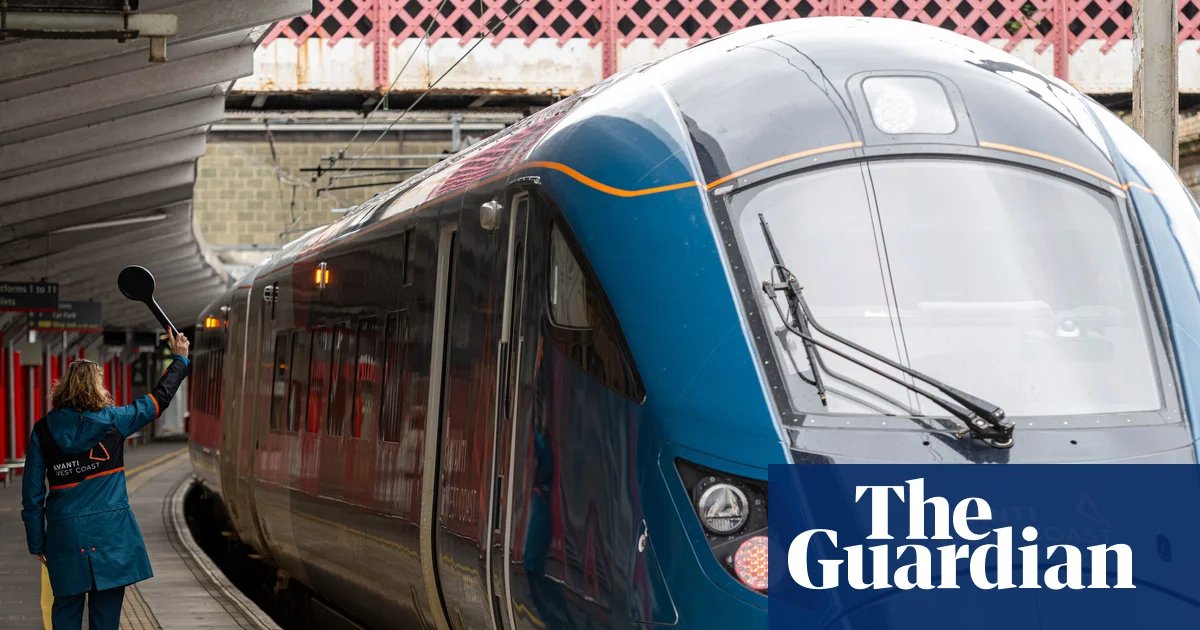
Plans to run direct train services to Wrexham and Rochdale from London have been rejected by the rail regulator because of “significant pressure” on the line.
The Office of Rail and Road said that there was insufficient space on the crowded west coast mainline to introduce the two new separate train services.
It also vetoed plans for additional London-Blackpool train services wanted by Avanti.
The ORR had last year knocked back plans for a new independent open access service linking Wrexham and the capital put forward by the Wrexham, Shropshire & Midlands Railway Company (WSMR). WSMR had submitted plans for a slightly less frequent service but the ORR said the new routes would still put the reliability of the wider railway at risk.
The new service could have allowed Wrexham to capitalise further on the town’s Hollywood-meets-football mini-boom, fuelled by the Wrexham AFC co-owners Ryan Reynolds and Rob McElhenney.
Proposals for a new Lumo service between London and Rochdale, again slimmed down after being rejected in 2025, were once more rebuffed.
The ORR also said Avanti could not add more Blackpool services from London. However, it did approve one extra London-Chester evening service from Avanti, which would otherwise have run as a “ghost train”, with crew and the rolling stock returning north to the depot overnight. The decision follows the outcry over the ORR’s initial ruling on a Manchester-London service which was barred from taking passengers last year.
The regulator said its assessment, backed by external reviews, was that the “capacity and performance of the southern section of the west coast mainline has not materially changed since similar applications were rejected in 2025”.
It said gaps in the current timetable were needed to provide important space for trains to recover when things went wrong, rather than escalating chaos.
Stephanie Tobyn, ORR’s director of strategy, policy and reform, said: “New services, destinations and greater choice can bring real benefits for passengers and communities. But the west coast mainline is already under significant pressure, with performance reflecting limited resilience on a heavily used part of the rail network.
after newsletter promotion
“Our detailed analysis has shown that adding more trains to the current timetable would reduce the ability to recover when disruption occurs, increasing the risk of delays spreading and making reliability of the network worse for all passengers.”
Private operators such as First Group, owners of Lumo, have been looking to increase open-access routes – such as Hull Trains and Grand Central – as Labour has renationalised major rail contracts in the transition to Great British Railways.
London-Wrexham direct trains briefly ran from London Marylebone from 2008 to 2011 as an open-access service but stopped owing to financial losses.
Traffic & Transport
London to Chicago BA flight declares emergency after dropping 28,000 feet | British Airways
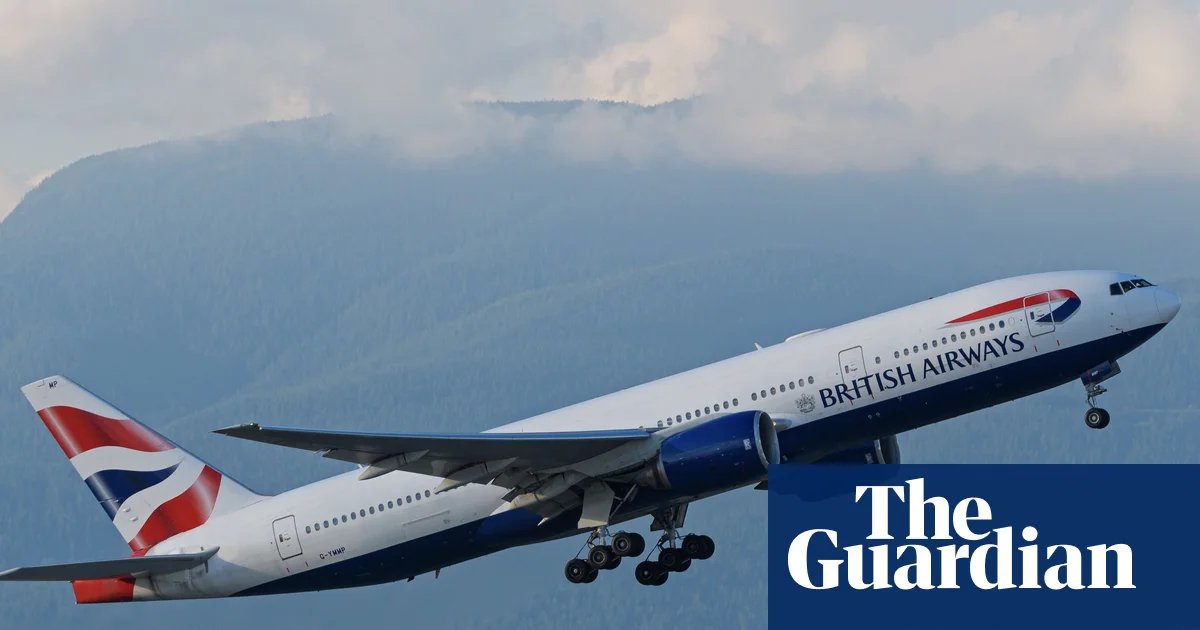
A flight from London to Chicago declared an emergency after a sudden and steep descent of 28,000 feet over Ireland and was forced to turn back to Britain.
British Airways flight BA295 was bound for Chicago’s O’Hare airport but after a “technical issue” during which oxygen masks were deployed from the ceiling, the plane landed safely back at London Heathrow.
The aircraft, a Boeing 777-200ER, had departed Heathrow at 12.14pm on Monday for its scheduled transatlantic flight, and an hour into the journey had ascended to its cruising altitude of 37,000 feet.
According to passengers, the plane then encountered turbulence moments before the masks dropped, prompting “uncertainty” among those on board.
Pilots descended to below 10,000 feet and issued a 7700 emergency squawk to air traffic control – the international general emergency code – and made a U-turn to head back towards England.
Flight-tracking services showed the aircraft flying in a looping holding pattern over the Bristol Channel between Pembrokeshire and North Devon as the plane burnt off fuel in order to lower its weight, allowing the pilots to make a normal landing just after 5pm.
Passenger Tom Nicholls said there was a “sudden bit of turbulence” before the emergency was declared and that the quick descent to 9,000ft hadn’t been too uncomfortable.
He said: “The plane adjusted but it didn’t feel like it was descending rapidly. I’d say the pilots did a very good job.
“The oxygen masks popped out soon after and there was a bit of uncertainty onboard. The couple in front couldn’t get to theirs but by the time they’d found a spare seat with a mask, the captain announced we were below 10,000ft so they were not needed.”
A spokesperson for BA said: “The safety of our customers and crew is always our top priority, and the aircraft landed safely after our highly trained pilots returned to Heathrow following a technical issue.
“Customers disembarked the aircraft normally and our teams are working to get their travel plans back on track as quickly as possible.”
Photographs taken by passengers and shared on social media showed oxygen masks dangling from the ceiling as the plane made the return journey.
A rapid descent to below 10,000 feet and a 7700 emergency squawk are routinely associated with aircraft experiencing cabin depressurisation but the official cause of the emergency has yet to be confirmed by BA.
The Boeing 777-200ER is one of BA’s oldest planes in service, having been delivered to the carrier almost 30 years ago – in July 1997. Live streams showed the aircraft making its descent and safe landing back at Heathrow.
Many passengers have been booked on to new flights departing on Tuesday.
Traffic & Transport
Coach services could be cut due to record diesel prices, UK operators warn | Transport
Coach operators have said record diesel prices could force cuts to services including school transport, as hauliers warn rising fuel costs are pushing hundreds of firms out of business.
The average price of diesel on UK forecourts hit a fresh record of more than £2 a litre last week, as the war in the Middle East continues to disrupt global fuel supplies.
Alison Edwards, the director of policy at the Confederation of Passenger Transport (CPT), said the cost of fuel had “surged this year to unsustainable levels, pushing coach operators’ already tight margins to breaking point”.
“It is time for urgent action,” she said. “Without intervention, soaring prices will mean difficult decisions on the availability of services, including home-to-school transport, and the viability of businesses.”
Edwards said 85% of independent coach operators are family businesses, and called on the government to provide temporary support with the cost of diesel, adding that the industry “needs help”.
Local bus operators in England have already received help with fuel costs via subsidies to help cover running costs. Coach companies, which say they carry out a similar role, have received no equivalent support.
Richard Smith, the managing director of the Road Haulage Association (RHA), said the haulage sector was under similar strain. “Businesses in our sector operate on slim profit margins, typically about 2%, so the continuing high fuel costs are a huge challenge for us,” he said.
He said hauliers were now paying an extra £350 a week for each truck compared with before the Iran war. “It’s just unsustainable,” he said. “If haulage, coach and van operators can’t pass these costs on, they struggle, and we’ve seen hundreds of transport businesses going bust already this year.”
Hauliers are calling for a pause on planned fuel duty rises, and a rebate to help offset the cost of diesel. The RAC motoring organisation has called for the government to expand its 5p cut in fuel duty, which has already been extended until the end of the year.
Rhys Hackling, the managing director of Direct Connect Logistics, said the impact on his own business had been “absolutely enormous”.
The company runs 22 lorries out of Oxfordshire, Northamptonshire and Warrington, transporting goods ranging from supermarket products to live events equipment. “We are spending over £300 a week more than we were last year on fuel,” he said. “We normally spend about £50,000 a month on fuel … it’s now knocking on £65,000.”
Many hauliers work on fixed contracts with customers, Hackling said, meaning rising fuel costs squeeze or wipe out their margins entirely. “If these events continue, then it’s going to put a lot of haulage firms out of business,” he said.
after newsletter promotion
“There’s less confidence in the market, so there are fewer jobs, and that means the work dries up very, very quickly. Somebody somewhere is having to pay for this, whether it’s the haulage firm or whether it’s the consumer.”
In a move offering some hope that fuel prices might ease, leaders of G7 nations said on Friday that they would release up to 100m barrels of their emergency diesel and crude oil stockpiles.
The announcement was partly in response to Donald Trump suggesting he might introduce a ban on diesel exports after the rise in sales to overseas buyers pushed US prices to record highs.
It appears to have averted the threat, which could have pushed diesel prices even higher in the UK, since Britain relies on the US for about a third of its diesel imports and does not refine enough to meet demand on its own.
The benchmark Brent crude oil price declined by nearly 1% on Monday to just over $101 a barrel.
The transport minister, Keir Mather, has said the UK’s fuel supply is “inherently resilient” and that people “shouldn’t be concerned about shortages”.
Traffic & Transport
‘The violence is off the scale’: staff and passengers at risk as assaults on UK trains soar to record high | Public transport
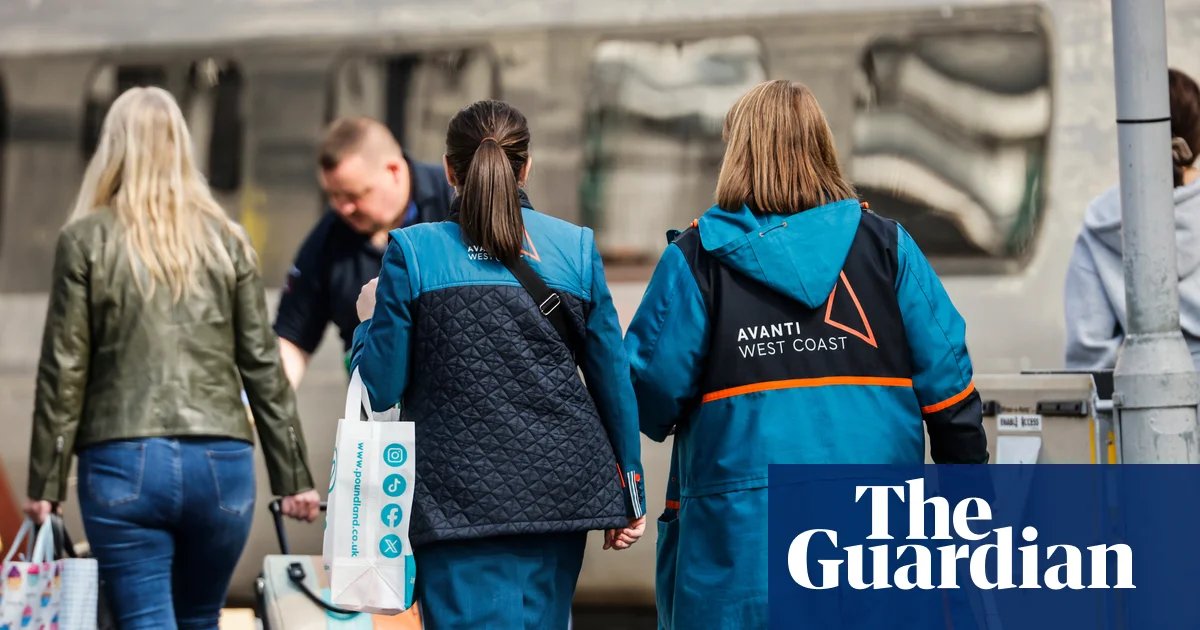
When a train was halted outside Exeter St Davids station on Monday, rail staff leapt to one conclusion: there had been a violent incident on board.
“Someone will have kicked off,” one staff member said. “It happens all the time. My boss got head-butted recently.”
On this occasion, they were wrong – but their assumption told a tale. Figures released late last month showed the number of reported assaults on Great Britain’s railways had risen by a fifth, to a record high of almost 25,000 incidents in a year.
Staff in particular have felt increasingly under threat. While the total numbers reported by the Office of Rail and Road in 2025-26 covered threats, verbal abuse, and contact that might not have resulted in any injury, they included nearly 2,500 physical assaults on workers – an average of about seven every day.
Their unions said the numbers were horrendous, but unsurprising: the RMT and TSSA unions have campaigned for more staffed stations and policing, after the number of British Transport Police (BTP) officers fell by more than 10% between 2024 and 2026.
Many rail staff wear body cams to record and log incidents of violence. “I think it’s so sad that we have those,” said Dave*, a rail worker in south-west England. However, after 20 years in the job, he said: “The threats, the abuse, the violence we see is off the scale.”
Drink and drugs play a part, he added. “We’re also seeing a lot more people with mental health issues. If you’re out on the street you can steer clear, but if you’re on a train or a platform you can’t. Our workplaces are becoming more and more dangerous.”
‘Now it’s mostly bad days’
Steve, a guard based in the north of England, was punched in the head by a passenger: “It was my last train of the night. I’ve had to look away to see the door controls and the next thing I know, I’m waking up on the platform.”
Every guard gets verbally abused on a daily basis, he said, with behaviour worsening since the pandemic: “Now it’s mostly bad days, and you’re searching for good days, where nothing’s said, or nothing happens. The amount of times we’re getting threatened now with physical attacks, even when you walk through the train and say, ‘Tickets, please.’”
Even those working on the infrastructure can be on the receiving end. One rail contractor, Liam, based in Somerset, said: “We’re there working on the tracks and we sometimes get sworn at and even spat at. It’s just a minority, but somehow they think we’re responsible for slow journey times, cancelled trains. We’re in bright orange so we’re easy targets.”
The railway is by no means unique: bus drivers have faced repeated abuse and threats, as the Unite union has highlighted. Transport for London staff working on roads are issued with “spit kits”, or forensic saliva collection tubes, so common is that form of assault.
Violence against women and girls is of particular concern; at the Labour conference this week, the minister for buses and local transport, Simon Lightwood, described it as a “national emergency”.
Speaking alongside him, the mayor for the north-east, Kim McGuinness, said that as well as measures such as more staffing, lighting and CCTV, a crucial point for women was “knowing that if you raise an alarm something is going to be done. It’s a choice to use public transport or not … if you’re accepting 50% of the population don’t feel safe, that’s not good.”
The rail industry and police say some of the sharp rise in recorded assaults on passengers – up 36% last year – is due to greater reporting, including using discreet text messaging to the BTP.
But while many more incidents are now reported, plenty are not.
‘Tearful, angry and scared’
Emily, 24, was travelling home on a late-night train between Glasgow and Edinburgh last year when a stranger made a beeline for her. “He immediately tried to start a conversation and wouldn’t give up even when I showed no interest. He was asking what I’d been up to, whether I had a boyfriend, complimenting my outfit, and then it escalated really quickly.”
The man began rubbing Emily’s upper thigh and asking her intrusive questions about her sex life. “I froze and didn’t know what to do. I looked around but everyone else was oblivious. I tried to move but I was on the inside seat and he just grabbed my leg harder and leaned in towards me,” she said.
She managed to manoeuvre out of the seat and away from the man, who “shouted aggressively and called [her] a bitch”. Other passengers looked round but did not intervene. She moved to another carriage and arrived home shaken but decided not to report the incident.
“I wanted to just move on,” Emily said. “But I never used to think twice about getting on a train by myself at night and now I’m much more nervous.”
after newsletter promotion
Edward, a trans man, was travelling home to Staffordshire with his partner, a trans woman, after a weekend in Wales. On a packed train from Aberystwyth, a man began loudly making homophobic comments and became confrontational.
“Normally in that situation I just walk on, but I physically couldn’t, we were so crammed,” Edward said. He finally yelled back, repeating: “You’re shouting homophobic abuse in front of your children.”
A railway worker eventually intervened and told the assailant and his family to move to another carriage. Edward chose not to report the incident to police, dissatisfied with the response to previous incidents. He now tries to avoid public transport: “I felt tearful, angry and scared afterwards.”
‘It’s put me off trains’
A fraction of passenger reports end up with arrest or prosecution. Last year, Sam was travelling north from London on a train packed with football supporters. As she tried to reach her reserved seat, a drunken man confronted her and pushed her backward.
She instinctively pushed him back. “Then I thought, what have you done?” she said. Other men began throwing beer cans while one held her by her rucksack. “I was being pushed and shoved … they were throwing punches as well.”
Amid the assault, one man deliberately grabbed her breasts. “I realised: ‘Oh no, I’m trapped on here with them for the next two hours’,” she said. “There’s nowhere to go. There’s nowhere to get off.”
Two BTP officers on the train got through to take a statement from Sam. The investigation was later dropped after police were unable to identify her assailant.
The experience had a big impact, leaving her “not doing a lot of things I used to do. It’s put me off trains massively. I think if faced with a train like that, I would just not board it.”
The BTP assistant chief constable Ian Drummond-Smith said: “We will never tolerate violence or abuse directed at passengers or staff on the railway, and anyone committing these crimes can expect a robust response from us.”
He noted that when staff had body-worn recording, police brought offenders to justice in about 85% of incidents. “Anyone who witnesses violence or abuse on the railway should report it to us by texting 61016, or call 999 in an emergency,” he said.
The Department for Transport said the rise in assaults was “deeply concerning and unacceptable”. It has awarded a £63m increase in BTP funding by 2028-29, allowing more than 200 additional officers to be recruited, and investments in better CCTV and body-worn video. Dozens of new BTP officers will be specialised in tackling violence and intimidation against women and girls.
* Names have been changed



-

 Oxford united FC2 weeks ago
Chris Gunter steps away Wales role to focus on Oxford United
-

 Oxford united FC4 weeks ago
Former Oxford United boss Matt Bloomfield drops Wycombe manager hint
-

 Oxford united FC3 weeks ago
Oxford United transfer chief explains EFL embargo and contract dilemma
-

 Student Life3 weeks ago
Oxford falls to lowest ever spot in The Times UK University Guide 2027
-

 Oxford University2 weeks ago
New to the Oxford English Dictionary this September
-

 Oxford united FC3 weeks ago
Aaron Ramsey gives Luka Lynch update after Oxford United absence
-

 Student Life3 weeks ago
Protest held outside Town Hall over sale of Council-owned building to St Peter’s
-

 Oxford Events3 weeks ago
Stage Watch: Pinocchio, Peppa Pig, Affluenza, Dirty Dancing, & Ballet Shoes