
Traffic & Transport
‘The violence is off the scale’: staff and passengers at risk as assaults on UK trains soar to record high | Public transport

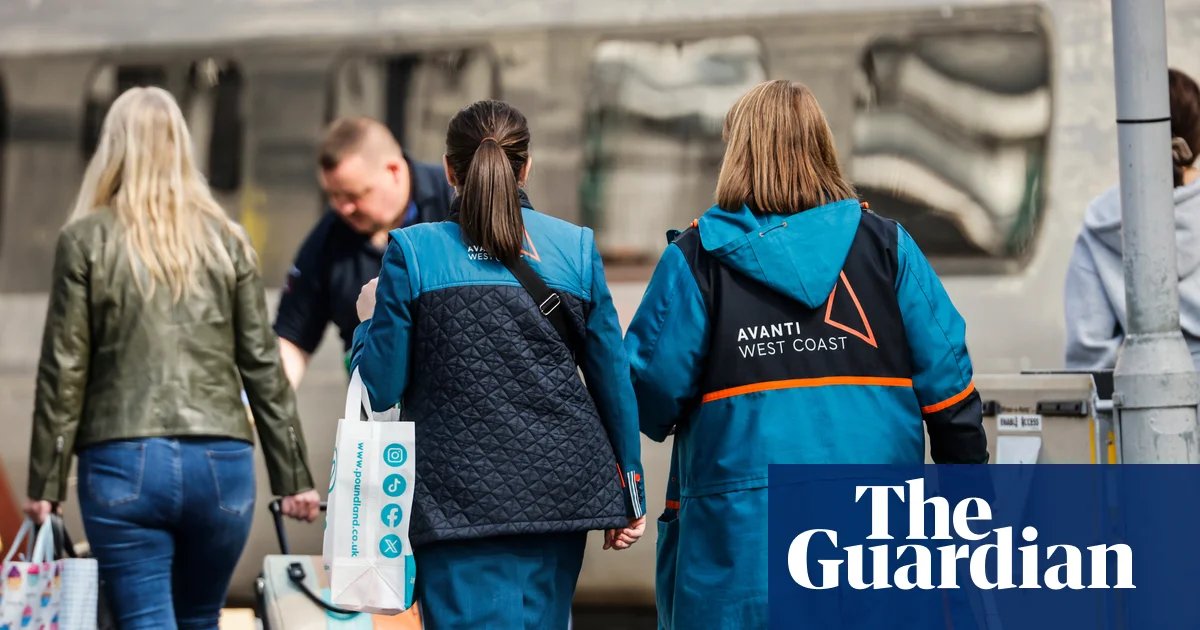
When a train was halted outside Exeter St Davids station on Monday, rail staff leapt to one conclusion: there had been a violent incident on board.
“Someone will have kicked off,” one staff member said. “It happens all the time. My boss got head-butted recently.”
On this occasion, they were wrong – but their assumption told a tale. Figures released late last month showed the number of reported assaults on Great Britain’s railways had risen by a fifth, to a record high of almost 25,000 incidents in a year.
Staff in particular have felt increasingly under threat. While the total numbers reported by the Office of Rail and Road in 2025-26 covered threats, verbal abuse, and contact that might not have resulted in any injury, they included nearly 2,500 physical assaults on workers – an average of about seven every day.
Their unions said the numbers were horrendous, but unsurprising: the RMT and TSSA unions have campaigned for more staffed stations and policing, after the number of British Transport Police (BTP) officers fell by more than 10% between 2024 and 2026.
Many rail staff wear body cams to record and log incidents of violence. “I think it’s so sad that we have those,” said Dave*, a rail worker in south-west England. However, after 20 years in the job, he said: “The threats, the abuse, the violence we see is off the scale.”
Drink and drugs play a part, he added. “We’re also seeing a lot more people with mental health issues. If you’re out on the street you can steer clear, but if you’re on a train or a platform you can’t. Our workplaces are becoming more and more dangerous.”
‘Now it’s mostly bad days’
Steve, a guard based in the north of England, was punched in the head by a passenger: “It was my last train of the night. I’ve had to look away to see the door controls and the next thing I know, I’m waking up on the platform.”
Every guard gets verbally abused on a daily basis, he said, with behaviour worsening since the pandemic: “Now it’s mostly bad days, and you’re searching for good days, where nothing’s said, or nothing happens. The amount of times we’re getting threatened now with physical attacks, even when you walk through the train and say, ‘Tickets, please.’”
Even those working on the infrastructure can be on the receiving end. One rail contractor, Liam, based in Somerset, said: “We’re there working on the tracks and we sometimes get sworn at and even spat at. It’s just a minority, but somehow they think we’re responsible for slow journey times, cancelled trains. We’re in bright orange so we’re easy targets.”
The railway is by no means unique: bus drivers have faced repeated abuse and threats, as the Unite union has highlighted. Transport for London staff working on roads are issued with “spit kits”, or forensic saliva collection tubes, so common is that form of assault.
Violence against women and girls is of particular concern; at the Labour conference this week, the minister for buses and local transport, Simon Lightwood, described it as a “national emergency”.
Speaking alongside him, the mayor for the north-east, Kim McGuinness, said that as well as measures such as more staffing, lighting and CCTV, a crucial point for women was “knowing that if you raise an alarm something is going to be done. It’s a choice to use public transport or not … if you’re accepting 50% of the population don’t feel safe, that’s not good.”
The rail industry and police say some of the sharp rise in recorded assaults on passengers – up 36% last year – is due to greater reporting, including using discreet text messaging to the BTP.
But while many more incidents are now reported, plenty are not.
‘Tearful, angry and scared’
Emily, 24, was travelling home on a late-night train between Glasgow and Edinburgh last year when a stranger made a beeline for her. “He immediately tried to start a conversation and wouldn’t give up even when I showed no interest. He was asking what I’d been up to, whether I had a boyfriend, complimenting my outfit, and then it escalated really quickly.”
The man began rubbing Emily’s upper thigh and asking her intrusive questions about her sex life. “I froze and didn’t know what to do. I looked around but everyone else was oblivious. I tried to move but I was on the inside seat and he just grabbed my leg harder and leaned in towards me,” she said.
She managed to manoeuvre out of the seat and away from the man, who “shouted aggressively and called [her] a bitch”. Other passengers looked round but did not intervene. She moved to another carriage and arrived home shaken but decided not to report the incident.
“I wanted to just move on,” Emily said. “But I never used to think twice about getting on a train by myself at night and now I’m much more nervous.”
after newsletter promotion
Edward, a trans man, was travelling home to Staffordshire with his partner, a trans woman, after a weekend in Wales. On a packed train from Aberystwyth, a man began loudly making homophobic comments and became confrontational.
“Normally in that situation I just walk on, but I physically couldn’t, we were so crammed,” Edward said. He finally yelled back, repeating: “You’re shouting homophobic abuse in front of your children.”
A railway worker eventually intervened and told the assailant and his family to move to another carriage. Edward chose not to report the incident to police, dissatisfied with the response to previous incidents. He now tries to avoid public transport: “I felt tearful, angry and scared afterwards.”
‘It’s put me off trains’
A fraction of passenger reports end up with arrest or prosecution. Last year, Sam was travelling north from London on a train packed with football supporters. As she tried to reach her reserved seat, a drunken man confronted her and pushed her backward.
She instinctively pushed him back. “Then I thought, what have you done?” she said. Other men began throwing beer cans while one held her by her rucksack. “I was being pushed and shoved … they were throwing punches as well.”
Amid the assault, one man deliberately grabbed her breasts. “I realised: ‘Oh no, I’m trapped on here with them for the next two hours’,” she said. “There’s nowhere to go. There’s nowhere to get off.”
Two BTP officers on the train got through to take a statement from Sam. The investigation was later dropped after police were unable to identify her assailant.
The experience had a big impact, leaving her “not doing a lot of things I used to do. It’s put me off trains massively. I think if faced with a train like that, I would just not board it.”
The BTP assistant chief constable Ian Drummond-Smith said: “We will never tolerate violence or abuse directed at passengers or staff on the railway, and anyone committing these crimes can expect a robust response from us.”
He noted that when staff had body-worn recording, police brought offenders to justice in about 85% of incidents. “Anyone who witnesses violence or abuse on the railway should report it to us by texting 61016, or call 999 in an emergency,” he said.
The Department for Transport said the rise in assaults was “deeply concerning and unacceptable”. It has awarded a £63m increase in BTP funding by 2028-29, allowing more than 200 additional officers to be recruited, and investments in better CCTV and body-worn video. Dozens of new BTP officers will be specialised in tackling violence and intimidation against women and girls.
* Names have been changed
Traffic & Transport
The expansion of Heathrow would be an expensive disaster for Britain and the world. Burnham needs to block it | George Monbiot
If a third runway is built at Heathrow, what will be the impact on the wealth of the nation? It will cost us somewhere between £23.4bn and £62.5bn. These are not my figures; they weren’t calculated by environmental groups, but by the Department for Transport.
For decades, government ministers have told us that airport expansion is essential for “growth”. As chancellor, Rachel Reeves claimed that a third runway at Heathrow would add 0.43% to GDP, figures we later discovered came from a report commissioned by the airport. The transport department’s own analysis concluded that the real addition to GDP would be between 0.03% and 0.05%: eight to 14 times less. Against this, it weighed the social and environmental costs of the project, to reveal a massive net loss. It found that a third runway would cause major harm to the health and wellbeing of up to 3 million local people.
But even these figures don’t capture it. The climate breakdown caused by the runway affects the entire planet, yet the costs to other countries aren’t counted. So again we must ask, why does the government support it?
Or does it? Though Heathrow expansion remains official policy, when asked at the weekend, Andy Burnham said the runway was “contested” and “principally it’s a matter for London and London MPs”. That sounds hopeful.
We also learned that the project has been delayed yet again. Though Heathrow announced last year that its plans were “shovel-ready”, it now admits the runway would take four years longer to build than it claimed: the estimated completion date is now 2039.
By then, or so we must hope, a government might have decided to take the climate impact seriously. If so, the new runway would need to be shuttered the moment it opened. Otherwise, according to the government’s Climate Change Committee, “almost all CO2 emissions in 2050 will be from aviation”. Heathrow’s expansion alone, the committee says, would cause more carbon emissions by 2054 than “any other sector of the economy”.
And even this is not the end of it. The committee considers only the carbon dioxide planes produce, but the other impacts are even greater. A paper in the journal Atmospheric Environment suggests that, over 100 years, the nitrogen oxides, carbon monoxide, soot, volatile organic products, water vapour and other compounds released or formed in the upper troposphere and lower stratosphere by planes raise the heating caused by flying by 115%. Over 20 years, they raise it by an astonishing 517%.
Given that crucial Earth systems may be approaching their tipping points, and heating today triggers further greenhouse gas releases from forests, wetlands and permafrost, the 20-year horizon is crucial. But these other compounds are considered in neither international treaties nor the UK’s Climate Change Act. The impact of flying is officially and massively underestimated.
While the heating effects of almost all other sectors can be greatly reduced by technology, there are simply no good solutions for aviation. Successive governments have justified airport expansion plans with the promise of “sustainable aviation fuel”. Mostly they mean turning biomass into kerosene, which is even worse than using fossil fuels. If this substitute is to reach any kind of scale, it will either swallow up existing cropland, driving starvation, or it will cause the expansion of cropland into forests, wetlands and other habitats, accelerating the environmental crisis. An analysis by the Royal Society found that meeting existing UK aviation demand (never mind future growth) with energy crops “would require around half of UK agricultural land”. That’s the opposite of sustainable.
“Sustainable aviation fuel” can also mean synthetic fuels made from captured CO2 and green hydrogen. But the Royal Society found that for existing aviation, we’d need to use between five and eight times the UK’s entire renewable electricity capacity. And still, aeroplanes would release a lethal chemical cocktail – not just CO2 but those other compounds – into the high atmosphere, so only a fraction of the problem would be solved. Worldwide, a paper in the journal One Earth found that even with a wildly unrealistic programme of technological change, in which fossil jet fuels were phased out completely by 2040, the global heating caused by aviation would more than double by 2070, thanks to rising demand.
As for hydrogen-, ammonia- or battery-powered commercial aircraft, they all fail on technical or safety grounds, even before we ask where the power comes from. The “prototypes” endlessly showcased by the airlines, which never get beyond the artist’s impression, are nothing but “perceptionware”, designed to solve political problems, not technical ones.
If Heathrow expansion goes ahead, passenger numbers in the UK are forecast to rise from 299 million in 2025 to 491 million in 2050. As other sectors decarbonise, the proportion of climate breakdown caused by flying climbs and climbs, until planes account for almost all of it.
after newsletter promotion
The only effective strategy is to reduce demand. There’s a progressive means of doing so: the frequent flyer levy. Wealth and flights are strongly linked. In 2024, 48% of England’s population did not fly at all. But 5% of the population took five or more flights abroad, and these account for 33% of all journeys. Increasing demand has been almost entirely driven by frequent flyers, who are highly concentrated in the highest income quintile. The levy would not be charged on the first flight someone took in any year, but it would escalate with every additional flight.
This is just, proportionate and – unlike all the techno-bollocks – immediately dispatchable. Otherwise, we continue to subsidise a wealthy, selfish minority with our money, our health, our wellbeing and the degradation of the living planet. How is that fair?
What government support for airport expansion shows is that “growth” is simply an excuse for giving powerful lobby groups what they want. When asked whether growth was more important than net zero, Reeves replied: “Well, if it’s the No 1 mission, it’s obviously the most important thing.” That’s another way of saying money is more important than human life. But, as the figures show, it was never about growth at all. It was always about meeting the demands of the airport lobby and wealthy passengers.
Now we wait on Burnham. Will the flight of reason continue? Or will human and planetary welfare at last outweigh the lobbyists?
Traffic & Transport
Bosses of three firms that supply trains to UK railways made £3.5m last year | Rail industry
The chief executives of three firms that rent out trains to Britain’s railways were paid a combined £3.5m last year as they passed on almost £400m to shareholders in dividends.
Rail unions accused the rolling stock companies (Roscos) of raking in profits at passengers’ expense.
The figures emerged in accounts published this week after ministers announced a new rolling stock strategy for Britain’s railways.
The government is considering direct ownership of trains through the public body Great British Railways rather than leasing them from the private sector.
The latest figures show Porterbrook Holdings paid £80m in dividends and increased the pay of its chief executive, Mary Grant, by more than 10% to £1.44m.
Eversholt Rail paid out £200m in 2025 shortly before it was sold by CK Hutchison to Beacon Rail, with its departing CEO, Mary Kenny, paid £1.33m.
Angel Trains paid £111m in dividends and a relatively modest £700,000 to its boss, Malcolm Brown.
Their pay far outstrips the highest salaries elsewhere on the railway, including the bosses of Network Rail and HS2.
The RMT union called for a levy on Roscos after highlighting the dividend payments and salaries. It said the three biggest Roscos had paid out £2.4bn over the last 10 years in dividends.
The general secretary of the RMT, Eddie Dempsey, said: “The government’s commitment to explore publicly owned rolling stock for the new trains in the future is welcome but in a cost of living crisis we need action now.
“We are calling on the government to use this month’s budget to introduce a ‘cost of travel’ levy on profits to fund a 3.4% fare cut, rather than watching the cash being salted away.”
The transport secretary, Heidi Alexander, told the Labour conference on Monday that if Great British Railways owning trains would best serve taxpayers and passengers, then we should do it”.
after newsletter promotion
According to the rail regulator, operators last year spent more than £4bn leasing trains from the Roscos, whose net profit margin was 18.5%.
A spokesperson for Porterbrook said it had “deployed over £1bn of capital in new trains, fleet upgrades, traction innovation and rail infrastructure since 2020, and we are actively looking to invest a further £1bn in the years ahead”.
They said the group’s companies were UK tax resident, and had paid £82m in the past three years, adding: “It is because of the funding that our shareholders provide that we can make substantial investments in the railway.”
Angel Trains is incorporated in Jersey and within the realm of UK taxes. A spokesperson said: “We believe decisions on future fleets should be focused on securing the best outcomes for passengers, while maintaining the conditions and opportunities needed to attract future investment into the railway. We look forward to continuing to work constructively with government and Great British Railways.”
Eversholt and its new owner, Beacon Rail, were approached for comment.
Traffic & Transport
Why should I have to pay more for buses if I don’t use a smartphone? | Bus fares
I applaud Anna Tims for her article (Schoolchildren without smartphones penalised with higher bus fares, 26 September), raising the need for a unified approach on this issue to properly tackle the ill effects of such technology on children in the classroom and beyond.
I live in Scotland, where this issue is addressed by making bus travel free for children and young people under the age of 22 with a physical national entitlement card. I am, however, affected by the more general problem of cheaper bus pass options being hidden behind smartphone apps.
I use a non-standard operating system on my phone owing to the always-online models of Android and iOS, which I prefer to avoid.
When comparing the prices of First’s weekly bus pass in my area, which is available to purchase on the bus, and its monthly pass, which is exclusive to its app, I am spending £264 extra over the course of a year simply for not using a phone that this specific app is designed for.
This is unacceptable even without the issues I raised about the main two mobile operating systems, even more so in the context of the present cost of living generally. Accessible public transport should not depend on which computer software is used by the passenger.
First is far from the only offender in this regard – for instance, many supermarkets’ loyalty schemes are now only available as apps as well.
Owen Fraser
Aberdeen


‘The violence is off the scale’: staff and passengers at risk as assaults on UK trains soar to record high | Public transport

Oxford Half 2026: everything you need to know ahead of this year’s race

Oxford United star Ciaron Brown bags Northern Ireland brace
-

 Oxford united FC2 weeks ago
Chris Gunter steps away Wales role to focus on Oxford United
-

 Oxford united FC3 weeks ago
Oxford United transfer chief explains EFL embargo and contract dilemma
-

 Oxford united FC3 weeks ago
Former Oxford United boss Matt Bloomfield drops Wycombe manager hint
-
 Oxford Events4 weeks ago
Oxford Open Doors: nine properties to explore without booking
-

 Student Life2 weeks ago
Oxford falls to lowest ever spot in The Times UK University Guide 2027
-

 Oxford united FC4 weeks ago
Leicester City confirm ‘serious’ injury before Oxford United clash
-

 Oxford united FC3 weeks ago
Aaron Ramsey gives Luka Lynch update after Oxford United absence
-

 Student Life3 weeks ago
Protest held outside Town Hall over sale of Council-owned building to St Peter’s