
Student Life
A midsummer nightmare: Our warming world


It feels like only days ago that I was walking through the University Parks, ringed by waves of the greenest grass, the shiniest puddles, and the healthiest plants. Despite the occasional shower or muddy shoe, everything in the world seemed in order. That oh-so-familiar smell of dampened greenery was always a comfort to a countryside girl like me. The knowledge that all growing things could thrive was something that, only now, in hindsight, I feel unbelievably nostalgic for. The early spring sun marked a warm greeting to what I thought would be another hot but usual year in the UK.
Oh, how wrong I was.
The summer of 2026 was set to be, according to the Met Office, the hottest since records began, primed to beat the already record-breaking heat of 2025. That statement feels like gospel truth. Sticky, sweaty, endless nights of useless fans, gaping windows, and ice-cold flannels are just a small testament to the intense annoyance of what is likely to become an everyday occurrence in summers to come.
There has always been a national obsession with the weather for us Brits, as it does make a fantastic icebreaker for small talk. But like the Old Man in Aesop’s Fables, in our constant wishes for a hotter and less rainy climate, we’ve been lumped with the very extreme of our desires. Air-con-less buildings, hosepipe bans, and unprepared UK infrastructure have proven, this year much more than others, that we are currently unequipped to handle this rapidly changing climate.
Those daily walks through the parks, meticulously cared for by the University’s groundskeepers, became, over July and August, a stark warning of a bleak and barren world, dulled by crusted, broken ground. I keep being reminded of the 2008 Pixar film WALL-E, which so brilliantly depicts a future devoid of the very things we are losing in this daily heat. It has never been clearer that the climate crisis is a very real and very present threat to the structure and upkeep of our lives.
But not all is doom and gloom. Just like WALL-E, there is a silver lining to be found within the lack of clouds. No year has been more powerful in showing individuals how a changing climate affects us daily. Our farming industry has taken a huge beating, visible in the rising prices of supermarket essentials such as meat, grains, and produce. Our transport industry has been thrown into disarray, with the growing heat torching rail tracks and softening road surfaces. Even our retail industry has been hit, as higher temperatures deter the ‘mooch’ culture we, as Brits, so love. As these changes become non-negotiable and so clear to the pedestrian eye, a new wave of discussion and fresh ideas for change are inevitable. A drive from individuals and local councils that filters all the way up to government and global schemes is a clear necessity now in our fight for a safe and sustainable climate.
Bicycle rides down Broad Street, afternoons in the Radcliffe Camera, and punting trips down the Cherwell have never felt quite so anxiety-inducing. At the student level, these changes are already altering daily life. I have never experienced heat like this. While trying to get my hard-earned beauty sleep, I found myself constantly between my bed and the sofa in the living area. Although the rest of my house felt very much the same, the sauna upstairs proved to be beyond taxing. It was the most surreal and clammy game of musical chairs I’ve ever played. Top-floor rooms in student accommodation or houses bake like ovens long past midnight; our moods begin to drop, our energy drains and our bills rise. It shapes how we study, how we sleep, and how we move through the term. Eco-stress is far less a twee turn of phrase than an imminent reality. Fearmongering is not my game, but when your senses are this attuned to the problem, you feel compelled to act.
At Oxford University, we are surrounded by the smartest minds from across the globe. There is no better place to experience and take part in the momentum of grassroots campaigns and student-run organisations. The Oxford Climate Society, led by students sitting next to you in lectures or halls, is the central hub for making real and lasting change at personal and systemic scales. One of my oldest friends is a key committee member, focusing her time on the education section. It was through her passion for the society and her captivating debates that I knew I wanted to get involved. Through campaigns, events, workshops, and courses, the society offers an inclusive and student-led space ready to challenge, educate, and inspire. Not only that, but they are also warm, kind friends to make whilst at Oxford, who, unlike our current climate, are always steady.
Small, seemingly trivial choices can absolutely build into lasting differences. We can demand smarter and more environmentally conscious food options in college dining halls. We can push for green initiatives, better energy investments, and stronger funding opportunities in JCR and MCR meetings. We can build our moods back up, recharge our energy supplies, and get those bills back to a level of mutual comfort. Despite feeling like a needle in a haystack, a student amongst many, we truly do have the power to create enduring effects. And we can hold institutions accountable and make a real difference within our university walls.
WALL-E was ultimately a love story, not just between two robots, but between humanity and the earth. The course of true love never did run smooth. But with education, understanding, and active engagement with our changing environment, there is always hope. We don’t have to settle for enduring the summer heat; together, we can build a future where we don’t just survive, but we live.
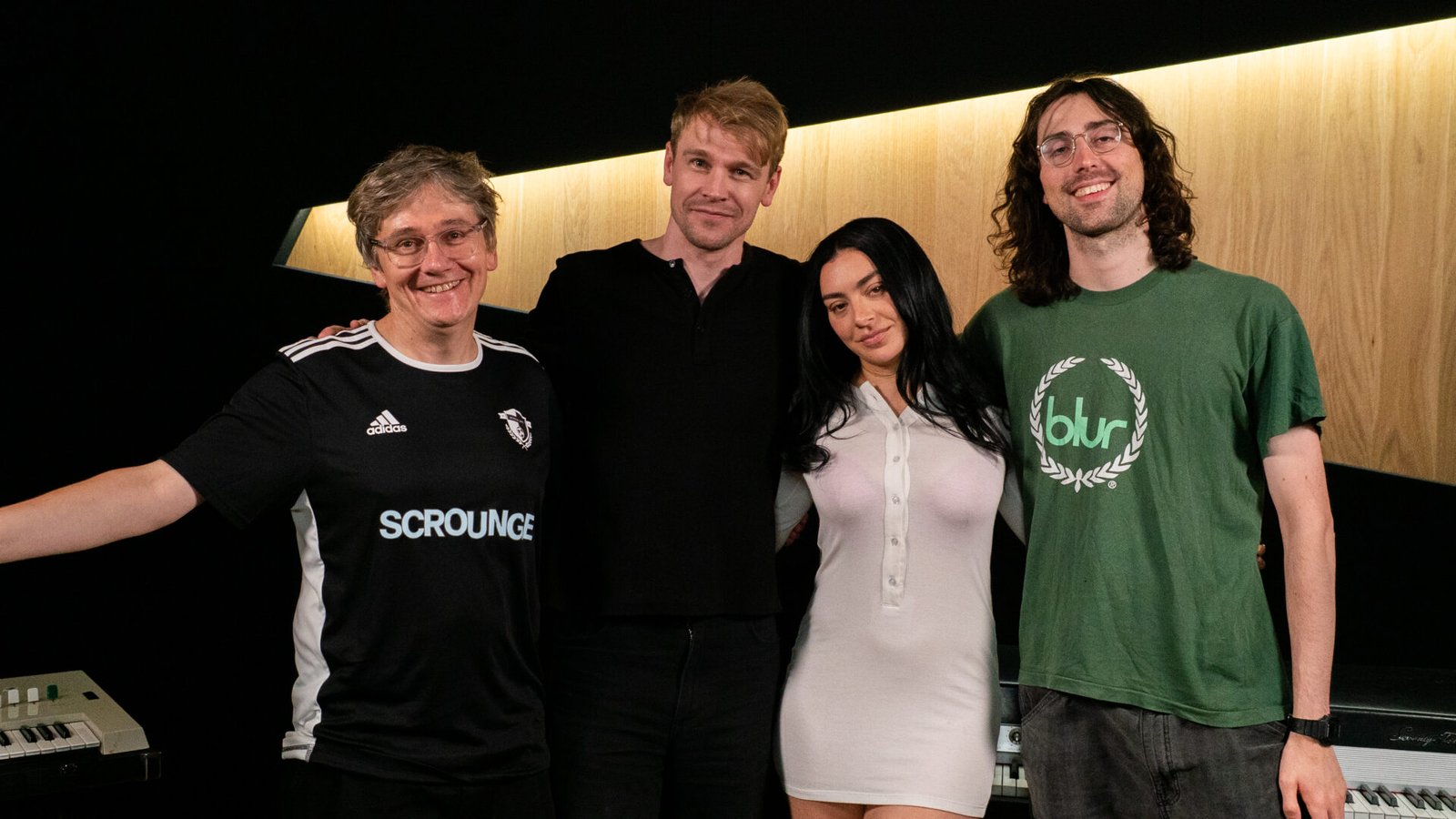
John Kennedy, like any great radio presenter, is endlessly curious. Joining me for a chat online, we discover that we’re sat just a mile apart, a coincidence only unearthed by John’s curiosity. This fascination with the world, its people, and fundamentally, its music, has guided John through his long career as a radio DJ. As “one of the most trusted voices in music” and now the host of the popular Tape Notes podcast, John has a wealth of hard-earned knowledge to be shared with us students.
John’s first foray into DJing occurred while studying at the University of East Anglia. Like many of us, he was no stranger to a student club night, even going so far as to start his own in Norwich. His experience is reminiscent of the recent resurgence in Oxford’s own student DJ scene, pioneered by Nightschool in 2024. Whether it’s the 1980s or the 2020s, students ultimately want to have fun, even if it means taking matters into their own hands.
But club nights never satisfied John’s curiosity. “They attract people who want to dance to what they heard the last time,” he tells me. “There’s no problem with that, but I wanted to vary my taste and discover new artists as much as I could.” This feeling, combined with sporadic contributions to his university magazine’s music section, drew him to the firm conclusion that he would, one day, work in radio. “It’s different each week. That’s why it’s so great.”
However, the start to John’s career as a radio DJ came by chance. “I applied to a course at Radio Thamesmead and a job at Tower Records. The interviews were scheduled for the exact same time! I ultimately tried my luck at Radio Thamesmead, and I managed to get in.” From there, John persevered to make radio a long-term job, rather than simply a story of his time at university. “You have to put yourself out there, and most importantly, dare to dream – I would give this advice to anyone trying to work in the media.”
After moving between several jobs, including a stint at the BBC Gramophone Library, John landed a full-time show at a new station, XFM (now known as Radio X). With the station geared towards rock music, and particularly indie rock, John gained notoriety for his deep, expansive interview style. On his show, X-Posure, John sits down with artists to break down an album, track by track, a methodical and attentive approach that will crop up again in his work on Tape Notes. X-Posure is the longest running show on Radio X, and John remains the only original presenter on the station.
Through X-Posure, John has been credited with discovering the likes of Adele, The xx, and Mumford & Sons – supporting new talent is one of John’s greatest joys. For several years, he hosted the In the Woods Festival in Kent, a curated lineup of up-and-coming artists, many of whom were yet to release their first record before performing.
Perhaps the greatest outcome of the In the Woods Festival, however, was Tape Notes. “A band at the festival was recording some sessions, and they came up with the idea of a music podcast, inspired somewhat by The Beatles Anthology.” John, with his years of radio experience, ended up with the most important role of all: host.
Much like X-Posure, Tape Notes is, first and foremost, about the intricacies of music production. Every fortnight, John sits down with a different artist to delve into their creative process – including visual demonstrations. Each artist represents something different, from the electronic flair of Fred Again… and Charli xcx to rock titans like Damon Albarn and Foo Fighters. Underpinning each episode is John’s natural curiosity for music, a curiosity shared by his guests. “Music is often a collaborative process. I think that artists are sometimes more comfortable talking about their work in a podcast format precisely because of this. It’s a real honour and privilege to be able to learn from them.”
Learn from them, we do. Tape Notes offers its viewers some of the most in-depth introductions to music production that money can buy, and John tells me that Tape Notes hopes to reach more students through its discounted student offer. “Creativity is born through exploration,” he says. “A subscription means access to gear lists, the full archive of episodes, and the opportunity to ask questions to the artists – a musical education in a time when such learning isn’t accessible to everyone. Young people are the next generation of music makers, and we want to foster that as much as possible.”
John still believes in the power of radio, as well. “Naturally, a spike is created by anything new,” he tells me, acknowledging that podcasts are becoming increasingly popular. So popular, in fact, that 27% of adults now listen to a podcast weekly. “The medium has changed the broadcasting landscape, particularly the standard of recording. While radio may sometimes be seen as overproduced, podcasts can be as simple as two people and a microphone.” But he stands firm in his conviction that radio is too often taken for granted.
His advice for young musicians extends to those looking to become radio presenters. “Commercial radio is always looking for more talent, and broadcasting is much more democratic now than it was in the past.” In many ways, he is right – with better technology at our fingertips, it is easier than ever to create our own opportunities, even if it means simply posting videos online. University radio stations are also a great way for students to become familiar with the ins and outs of broadcasting. Oxford’s own Oxide Radio is a free, beginner-friendly way to get involved with student radio, and who could forget about Cherwell Spoken?
Speaking about some of his favourite guests, John is once again endlessly curious. “Charli xcx is just a force of nature. Jack Antonoff, as well, his episode was really a masterclass in songwriting.” As Tape Notes continues to grow in 2026, John is just as huge of a fan of music as he was in the 80s, DJing in Norwich for his fellow students. “Radio, live gigs, buying records – that’s how I became a music fan.” In a media landscape often dominated by gossip, rumours, and sometimes pure hate, it’s undeniably refreshing to listen to John, a man who never lost sight of what really matters.
“Then they came for the Jews
And I did not speak out
Because I was not a Jew
Then they came for me
And there was no one left
To speak out for me”
-Excerpt from ‘First They Came’ by Pastor Martin Niemöller
I was too mentally exhausted to write this article, but I grew up watching my mother respond to every verbal harassment we faced on the street. When I once told her she could ignore it, she told me that they are relying on stereotypes surrounding Muslim women: they rely on us to be what they want us to be, silent and meek. It is our silence that emboldens them.
My heart dropped when I saw Cherwell’s headline: “Oxford Reform Society registers for Michaelmas”. This comes after Regius Professor Emeritus of Moral and Pastoral Theology at the University of Oxford, Nigel Biggar, defended the use of the N-word, and a few months after the Oxford Union hosted a debate on the motion “This House believes the West is right to be suspicious of Islam”. In the term prior, the former Oxford Union Librarian, Brayden Lee, was recorded making a string of comments targeting ethnic minorities, particularly those from Muslim-majority nations.
It’s clear that anti-Muslim hostility has not only passed the dinner table test, but has further infiltrated our student societies. But even at a time when a mosque in the UK is attacked every five days, I still refuse to make this article about my feelings or the British Muslim community’s fears about Reform UK. I am reminded of Muslim poet Suhaiymah Manzoor-Khan’s poem ‘This is not a humanising poem’, and I too refuse to defend my humanity or plead for empathy before my fellow Oxford students. To see us in this undignified position has been the cause of entertainment for many Oxford students, and has motivated many recent debates about our faith and background at the Oxford Union.
I do argue, however, that the Oxford Reform UK society will invite a breeding ground for anti-Muslim and anti-BME rhetoric on University grounds. Its existence only makes students like myself feel more at risk in our own University. Reform’s record of targeting Muslims and minorities speaks for itself.
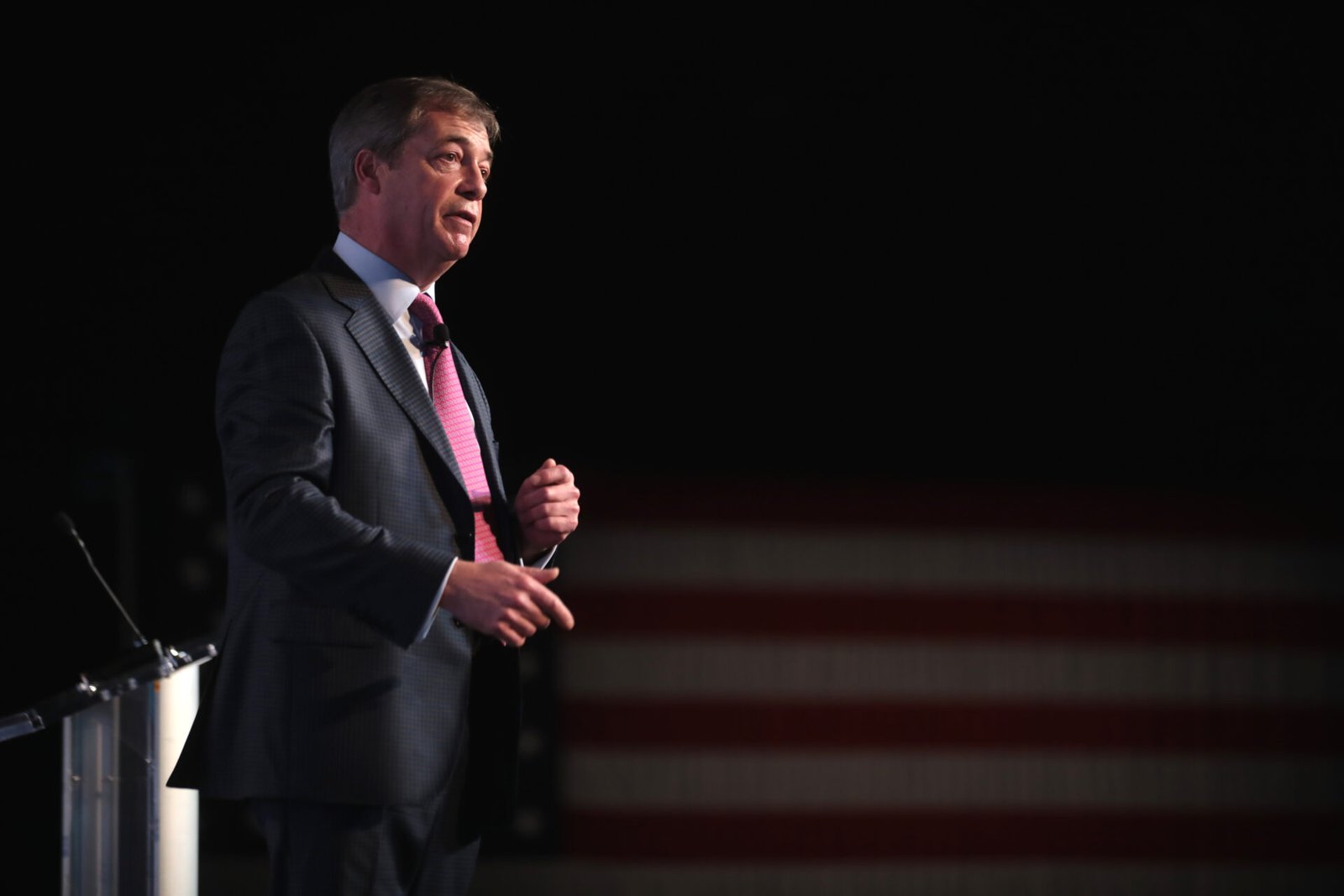
In May 2024, Reform leader Nigel Farage said that “a growing number” of British Muslims “do not share British values”. In March 2025, the then-Reform Business and Agriculture Spokesman, Rupert Lowe (who has since been suspended after allegations of bullying and now leads the Restore Party), asked the government whether it would prohibit slaughter without stunning in order to ban halal meat, despite such a prohibition also applying to Kosher slaughter, which he did not call for banning. In January 2026, Sarah Pochin questioned the UK government’s definition of anti-Muslim hostility.
Reform also embraced Lee Anderson in March 2024, who was suspended by the Conservative Party for saying: “I don’t actually believe that the Islamists have got control of our country, but what I do believe is they’ve got control of [Sadiq] Khan and they’ve got control of London.”
Another Reform candidate, Paul Harrison, backed mass deportations and retweeted an AI-generated caricature of Muslim men with Pakistani flags. A post on candidate Howard Raymond Din’s social media called for the mass shooting of Muslims, and candidate Leo Fruhman adopted the slogan “Every Muslim Out of Europe” under his tweets, which include “don’t f**king bring your barbarism tho or we’ll kick you to where you came from”, and “yes I do have a problem with Muslims”.
Many articles in the national press argue that Reform is racist, misogynistic, and Islamophobic. I need not write to convince you of this. I simply argue that a political party with a record of anti-Muslim hostility should not be active, promoted, and legitimised, least of all at institutions where many Muslims like myself live and study.
Every student has the right to feel safe and welcomed in their university, especially when university grounds are where they call home. It is not unreasonable for a student from any vulnerable group to feel unsafe around other students who openly support a political party that repeatedly targets them. It is also not unreasonable for them to feel unsafe on college grounds that may be hosting a politician for a society event who holds such views.
While unregistered, the Oxon Universities’ Reform Society hosted a Restore/Reform debate as well as inviting David Starkey to give a talk – the very same David Starkey who said “so many damn blacks survived during slavery”.
Reform has had to address extremist views spiralling out of control in its own party. During the 2024 general elections, it was made to remove more than a dozen candidates over their racist comments. This included campaigner Andrew Parker, who described Islam, rather than organised religion in general, as ‘a cult’. He suggested that the army should “F**king just shoot them”, referring to asylum seekers, and said of Rishi Sunak: “I’ve always been a Tory voter, but what annoys me is that f**king [P-word] we’ve got in.”
A 2026 investigation found many more Reform candidates making Islamophobic and racist comments, only some of whom were suspended. Former candidate Caspar Thomas tweeted that we should “kick Muslims out of our country”. He has written that “Black peoples have such a cringe victim complex”, and that “Indians are nasty”. While some of these individuals have been removed by Reform, it begs the question: what is it about Reform’s policies that keeps, time and time again, attracting these circles to begin with?
If one truly studies Reform beyond the few examples mentioned in this article, they will quickly realise that the party is not truly concerned about immigration, integration, or British values, but only cloaks its moral panics and hostilities against Muslims and ethnic minorities behind these talking points. I do not expect students from different backgrounds to fully understand our experience of life. Non-British Muslims will also never understand the fears that dominate our lives. But it is further isolating to know that nobody will speak up or stand up for us, even outside the Reform event rooms.
Students at the University of York protested their Restore student society. But I don’t feel confident that Oxford students would react the same way to the newly formed Reform society. It is not only the society that worries me, but also other students’ indifference towards it. I grew up in Britain where an anti-Muslim rally is described as a “an amazing day out with the family” and men who spew hatred against Muslims are called “activists”. Unsurprisingly, I have not always felt safe walking down the road as someone who is visibly Muslim.
But now, with the new Oxford Reform society, I cannot say that I will always feel safe walking on college grounds, outside my dorm, in the JCR kitchen, or in any other shared space. Muslim and ethnic minority students should not have to navigate these spaces worried that the people close to us feel the same sentiments towards us that the student political society they belong to does.
Oxon Universites’ Reform Society was contacted for comment and told Cherwell that they share “concerns for the safety of all in Oxford”, with reference to a BBC News article from 2020 about grooming gangs in Oxford.

Hollywood has had a tough year so far. That the ‘In Memoriam’ section of the 2026 Academy Awards is going to be a serious tear-jerker was solidified by the passing of Dolly Parton and Tim Curry over two consecutive days. Both legends in their own right, one can scarcely imagine Parton and Curry in the same room, the former a peroxide-blonde, rhinestone-clad country singer and the latter the ultimate black-comedy villain typecast – but their successive deaths have brought to light the many ways in which the two stars embodied the same, distinctive strangeness in the celebrity scene.
The current cultural landscape requires that every celebrity also be an influencer. Since the start of the millennium, stardom has been undergoing a perhaps uncalled-for yet inevitable co-mingling with the rise of social media. It is no longer possible to be celebrated simply for, say, your acting skills – you must also cultivate a persona with which to engage with your fans. This means that ultimately what celebrities profit off most is normalcy. To appeal to the largest group of people, they must appear quirky whilst actually being anything but. The ‘niches’ they sign their names to are of no use if they are not easily applicable to anybody who has an Instagram account. Hence the mass hysteria surrounding what I term ‘nothing aesthetics’: clean girl. Quiet luxury. No-makeup makeup look. The most sought-after manicure? Funny bunny (milky white), or if that is sold out, bubble bath (pinkish white). Pantone’s colour of the year? Cloud dancer (cloudy…white?). Disturbing political implications aside – we are still living in the aftermath of Sydney Sweeney’s American Eagle ad, after all – we are somehow witnessing the death of both individuality and community formed around unique and marginal traits at the hands of inoffensiveness.
One of the biggest perpetrators of the monochrome and monotone-ification of everything is Kylie Jenner. In an effort to keep up her quirky appearances, she has momentarily set the nude lip-kits aside to start a trend of putting gem stickers on everything – including the lip-kits. She’s so crazy, love her! Since Jenner launched the bedazzled editions of her makeup line, every social media platform has been flooded with images of people covering their journals, bedsheets, and pickle jars with gem stickers, no doubt to be removed as soon as the photo has been taken. It’s both devastating and embarrassing, then, to hear Dolly Parton’s nephew Bryan Seaver announce that before her death Parton told him that she wanted “to rest in a beautiful bed of plush cotton because after a life wearing heavy rhinestones, she finally deserves to be comfortable and have some rest”. Not even the most committed “whimsy-maxxer” will ever get to make such a bittersweet statement.
Largely acknowledged as the most universally beloved public figure, dead or alive, Dolly Parton spent much of the first few decades of her 70-year career facing ridicule for the way she presented herself. Infamously modeling her look after the ‘town tramp’, Parton sported blonde wigs piled up to the high heavens, blood-red acrylic nails, and tight, rhinestone-studded clothes that accented her figure all the way until her final public appearance. “I’ve often made the statement that I would never stoop so low as to be fashionable”, she said in a 1977 interview with Barbara Walters, where she also acknowledged that many people’s initial reaction to “the ridiculous way I look” was either shock or mockery. However, she knew that the real joke was always on those who made fun of her: “I know exactly what I’m doing, and I can change it at any time.” Hers was a costume that was designed to be abnormal, and she chose to put it on every day. She reveled in the caricature that she made of herself, and by never once folding under the pressures of those who thought her ‘trashy’, she eventually brought everybody over to her side.
Though even Donald Trump joined in on the national mourning period, Parton lived as a decided non-conformist until the end. She never had children; she never made public appearances with her husband, and often talked about how their relationship thrived because she was often away from home and free to do whatever she wanted; she supported LGBTQ+ causes, and even went on record many times to say that if she were born a man, she would have been a drag queen. Indeed, many of her queer fans think of her as the first cisgender woman to do drag on the global stage on account of her campy, ultra-feminine persona, performance skills, and witty, self-effacing humour. Beyond her branding, her philanthropy was also consistently aimed at enabling social and cultural progress. She supported new artists, both financially and morally; she started one of the biggest and most successful literacy programmes in history with her Imagination Library; she funded COVID-19 vaccine research, and offered herself up for their trial. She used the glitz and glamour which once made her strange, different, and alienated her from her people to foster happiness, mobility, and freedom in communities like her own.
Unlike Parton, Tim Curry revealed little to nothing about his personal life throughout his lengthy career on both screen and stage. He also didn’t have a consistent persona like Parton’s, rather walking through a revolving door of increasingly freakish and subversive characters. Similar to Parton, though, his embrace of the caricature was a force that created community, even in the absence of any discernible shared traits. Best known for his performance as Dr. Frank-N-Furter in The Rocky Horror Picture Show (1975) – described by Peter Bradshaw as a “sonorous and feline… vampirically queer alien sex god” – Curry’s lasting influence in the role is showcased by the millions who attend showings of the film in full costume every year. A self-proclaimed “sweet transvestite”, Dr. Frank is a figure of unintelligible sexuality and gender who violates both scientific and ethical codes to satisfy his desires. He is also not altogether human, hailing from the planet “Transsexual” in the galaxy of “Transylvania”. By playing into these stereotypes about queer people, Curry’s performance emphasises their ridiculousness and forces the audience to reckon with the rigidity with which they treat those unlike them, and how their bigotry ultimately reflects on how they govern themselves. For 50 years, Curry’s Frank-N-Furter has brought people together and allowed them to leave the binaries that rule their lives at home. That is the power of kitsch: it invites you to laugh with, not at, the strange and unfamiliar.
We are living through a watershed period of conservatism and regression. What conservatism does, as well as actively infringe on our rights and livelihoods, is inspire fear and shame surrounding behaviours that might provoke those in charge to infringe on our rights and livelihoods. It also turns us against people who are in truth no different from us, but we see them as stepping over some arbitrary line we have drawn, fearing that it might endanger us too. The weekly ‘cancellation’ of Chappell Roan, who is more like both Parton and Curry than not, proves it. The definition of ‘normal’ is becoming narrower by the day, and even if you currently believe yourself safe, come tomorrow you too might be strange and dangerous in the eyes of the law. Though their deaths have dimmed the sun in my world as well as many others, I rest easy knowing that Parton and Curry never once compromised the things that made them happy in fear of being perceived as strange, and the art that they have left behind means that they will be remembered forever. Few of us will get to be so lucky.



-

 Business & Technology4 weeks ago
Love Island unknowns outshine influencers in growth
-

 Oxford News3 weeks ago
Richard Hammond takes control of classic car company
-

 Business & Technology4 weeks ago
Apprentices say AI is reshaping tech skills demand
-

 Oxford News4 weeks ago
Royal Mail customer notice to anyone writing addresses by hand
-
 Oxford Events3 weeks ago
Stage Watch: Now You See Me, Comedy About Spies, Standard Of Living, Every Woman & Silence of Lambs
-

 Business & Technology4 weeks ago
UK flight school collapsed into liquidation
-
 Oxford Events2 weeks ago
What’s on in Oxfordshire this September
-

 Oxford united FC4 weeks ago
LIVE: Oxford United 2-2 MK Dons – Late chaos as Brown bags dramatic equaliser