
Student Life
The hypocrisy of Oxford academics invoking ‘academic freedom’ for Nathan Cofnas


Nathan Cofnas, who was suspended from Ghent University following a “preliminary investigation” launched after Professor Jason Arday’s death, has now been permitted to resume his research.
This follows close to a thousand academics signing an open letter in defence of Cofnas, arguing that he must not be “punished” and has a right to ‘academic freedom’. Among signatories were 18 Oxford University academics.
Such concerns of ‘academic freedom’ for a self-described “race-realist”, however, are meaningless considering that for the past three years, we have not heard the slightest about ‘academic freedom’ when it comes to academics who have been fired, bullied, and suppressed for supporting the Palestinian struggle.
It was not long ago that Palestine encampments across universities in the UK, including those set up by Oxford students, were dismantled and 17 student protesters from Oxford Action for Palestine (OA4P) were arrested for a sit-in that took place at the University Offices in Wellington Square.
In June 2025, 13 of those arrested students underwent disciplinary proceedings. And while the University has not condemned the decades of Israeli occupation of Palestinian land, it was quick to call a sit-in protest a “temporary occupation”. And while the University has not condemned the daily violence imposed on Palestinians by the IDF, Israeli state, and settlers, it was also quick to call this sit-in a “violent action”. Protesters were accused of “overpowering the receptionist” despite CCTV footage contradicting that claim.
The suppression of those who support the Palestinian cause in academic spaces is not unique. Indiana University suspended a professor for assisting a Palestinian rights student group; Muhlenberg College fired a Jewish Professor for pro-Palestine Instagram posts; and students like Usama Ghanem of King’s College were indefinitely suspended from their studies. The list can go on.
For those who say that academics should only advocate for these causes through their research: How are they to do this if universities receive complaints for simply using historical terms like ‘ancient Palestine’?
Neither can academics assign case studies for Art Therapy that mention the violence against Palestinians, as just two months ago, a professor from the School of the Art Institute of Chicago was suspended for it. Speaking about the suppression of academic freedom, she said: “We call it the P-word.”
In fact, Palestinian mental health is perhaps the most censored area of research. A recent case that comes to mind is Springer Nature, the world’s largest academic book publisher, retracting an entire peer-reviewed chapter on Palestinian collective trauma and mental health, following an anonymous complaint.
In 2024, amid Oxford Action for Palestine’s (OA4P) protests, the Jewish Faculty signed an open letter critiquing the University’s lack of engagement with members of the Jewish community who supported the Palestine encampments and protests. Prominent Oxford academics signed the letter, which noted that Jewish academics “reached out to you [the University] recently to propose a conversation” but were “ignored”.
It is the example of these Oxford academics that embodies the true essence of standing up for academic freedom, the right to call out academic institutions, and the right to protest in academic spaces.
It is therefore a shame to see that two years on, other Oxford academics who did not stand by their colleges in this matter in 2024 are now signing a different letter in defence of Nathan Cofnas.
Cofnas was dismissed from Cambridge University following controversy over his racist statements, and his writings, according to Counsellor Pierre Thiriar of the Antwerp Court of Appeals, are punishable under Belgian criminal law. Last year, Cambridge dismissed 58 students’ formal complaints about Cofnas, and when Belgium’s Ghent University first employed Cofnas earlier this year, they received 300 complaints from their student body and staff.
They, of course, outnumber the 18 Oxford academics who have recently signed a letter in defence of Nathan Cofnas. These are Michael Biggs, Michael Sharpe, Jane Lightfoot, Paul Elbourne, Jacek Karwowski, Jonathan A Jones, Edward Howell, Shivaji Sondhi, Ruth Dixon, Nigel Biggar, David Deutsch, Amir Goharshady, David Owens, Ace North, Thomas Noe, C Hennessy, Graeme Creffield, and Richard Dawkins.
The letter says: “We are also concerned that the University appears to be treating threats to academic freedom… as grounds for disciplining the very individual targeted by those threats.”
I’d like to ask each of these academics whether ‘academic freedom’ is only reserved for those who believe in eugenics? Or who believe Black people to be biologically and intellectually inferior to white people? Is ‘academic freedom’ only reserved for discussing race on podcasts with other former Cambridge academics like David Starkey, who said that “so many damn blacks survived” during slavery?
For the past three years, academics have repeatedly witnessed their fellow academics dismissed from their jobs, and their peer-reviewed writings on mental health retracted from psychiatry journals. I have been left stunned as to why the majority of academics did not unite to defend the academic freedom of academics who oppose the killing of Palestinians.
The majority of Oxford academics did not seem to care in the slightest about ‘academic freedom’ then. In comparison, only a dozen Oxford academics had signed the Jewish Faculty’s letter in support of student protesters.
Now, it cannot be clearer: ‘Academic freedom’ is only ever collectively invoked for those like Cofnas. Or for those like Oxford academic Nigel Biggar, so he can defend certain aspects of colonialism, and more recently defend the use of racial slurs against Black people.
‘Academic freedom’ is never cared for, considered, or invoked when truly required; not even when merely acknowledging Palestinian trauma, let alone critiquing Israel, has put academics’ careers at risk.
Academics and students are navigating a minefield, having to weigh every word and action to simply condemn one of the most pressing humanitarian catastrophes that continues to this day.
If any one of these Oxford academics cared about ‘academic freedom’, surely they would not be selective nor reserve this only for Cofnas? Surely they would have instead started where and when it mattered the most?

Over 17 academics affiliated with the University of Oxford have signed an open letter opposing the suspension of Nathan Cofnas for “whistleblowing”.
Cofnas, a postdoctoral researcher at Ghent University, Belgium, and self-described “race realist”, was responsible for publicising allegations that the late Cambridge professor Jason Arday had plagiarised his doctoral thesis. The accusations began weeks of intense media scrutiny into Arday, resulting in the professor’s resignation. Cofnas’ suspension was announced days after Arday was found dead in his London home on 14th August.
An open letter opposing Cofnas’ suspension has since been signed by 17 Oxford academics. Among others, the Oxford signatories include Regius Professor Emeritus and Member of the House of Lords Nigel Biggar, Professor Emeritus Michael Sharpe, and renowned evolutionary biologist Richard Dawkins.
The letter, addressed to the rector of Ghent University, urges the university to “protect Dr Cofnas from being punished for exercising his academic freedom”. It claims that the university’s disciplinary proceedings against Cofnas “appear to constitute retaliation, at least in part, for publicising academic misconduct that occurred in British universities”.
During the suspension, Ghent University officials will conduct a “preliminary investigation” into his behaviour. The investigation includes whether his work on “race realism” and the “hereditarian revolution” is “fundamentally inconsistent with the contractual scope of [his] employment”. It also aims to determine whether he discriminated against Arday and created a hostile environment for students and staff.
Professor Shivaji Sondhi, Oxford’s Wykeham Professor of Physics, told Cherwell that he signed the letter in response to a “detailed analysis” conducted by the Committee of Academic Freedom (CAF). CAF’s analysis claims that “a substantial part of the reasoning supporting Cofnas’s suspension rests not on his own conduct, but on the reaction of third parties to his appointment and public activity”. The CAF’s letter acknowledges that academic freedom does not remove him from legitimate disciplinary scrutiny.
Cofnas’ views have previously caused controversy for students. In 2024, Cofnas was fired from Emmanuel College, Cambridge, after student reaction to a blog post. The post included the claim that, in a meritocracy, “Blacks would disappear from almost all high-profile positions outside of sports and entertainment”. He also faced student backlash upon his arrival at Ghent University this year, with 2,000 students signing a petition opposing his appointment.
Since the “preliminary investigation” after Arday’s death, Ghent University has issued Cofnas a three month teaching ban but permitted him to continue his research position remotely.

Oxford University LGBTQ+ Society (OULGBTQ) has urged the University of Oxford’s Vice Chancellor and the wider Oxford community “not to passively accept transphobia,” in an open letter signed by over 500 students and staff.
The letter comes after the University updated its “Toilets and changing facilities” information to include guidance that “where toilets and changing facilities and single-sex these must be provided on the basis of ‘biological sex’”. These changes, which came into force on the 5th August, are a response to the updated Equality and Human Right Commission’s (EHRC) Code of Practice. The code followed last year’s Supreme Court ruling that the terms “sex”, “woman”, and “man” in the Equality Act 2010 refer to “biological sex”, meaning “sex registered at birth”.
The open letter asks the University to resist the “immense pressure to adopt the EHRC’s transphobic interpretation of the law”. It describes the EHRC’s code of practice as “unfit for purpose” and claims that it is an “affront to the safety and dignity of trans+ people, both in their exclusionary policies and their notoriously unclear enforceability”. The President of OULGBTQ told Cherwell: “This letter is only the beginning of a broader campaign against the EHRC Code and its implementation in Oxford.”
The letter claims that the University has sufficient “power, prestige and money” to resist national pressures to adopt the EHRC code. The President of OULGBTQ told Cherwell: “The open letter lists some actions the University could take without breaking compliance, but Oxford University also sits on billions of pounds in endowment. Fully rejecting the Code as an institution would incur both cost and risk, and we are aware that this is a highly ambitious goal, but they do have the level of power to resist it.” Actions proposed include publicly challenging the EHRC’s interpretation of the law, reaffirming support for the University’s trans+ community, and a commitment to not policing people’s use of toilets and changing rooms.
Additionally, the letter calls on the Oxford University community to make the code of practice “unenforceable” including by “refusing to take part in policing other people’s gender/sex”. While the vast majority of the signatories are students, the letter has also been signed by University administrators and officials including the chair of the University’s LGBT+ staff network Jonny Tridgell.
In a statement to Cherwell, a University spokesperson said: “The University has updated its guidance on toilets and changing facilities in line with its legal requirements. Oxford is committed to ensuring that there is suitable provision of facilities for all staff, students and visitors.” This follows from their initial statement, in May, when the University initially reviewed policies following EHRC transgender guidance, where a spokesperson told Cherwell that “Oxford remains committed to being an inclusive university where everyone belongs and is supported to succeed. We will continue to work and to maintain an environment in which the rights, dignity, and wellbeing of all members of our community are respected, including all members of our LGBTQ+ community.” No colleges have yet issued independent statements.
The President of OULGBTQ told Cherwell: “The positive response to the letter demonstrates that the student and staff body are committed to resisting the implementation of this code in their everyday lives.”
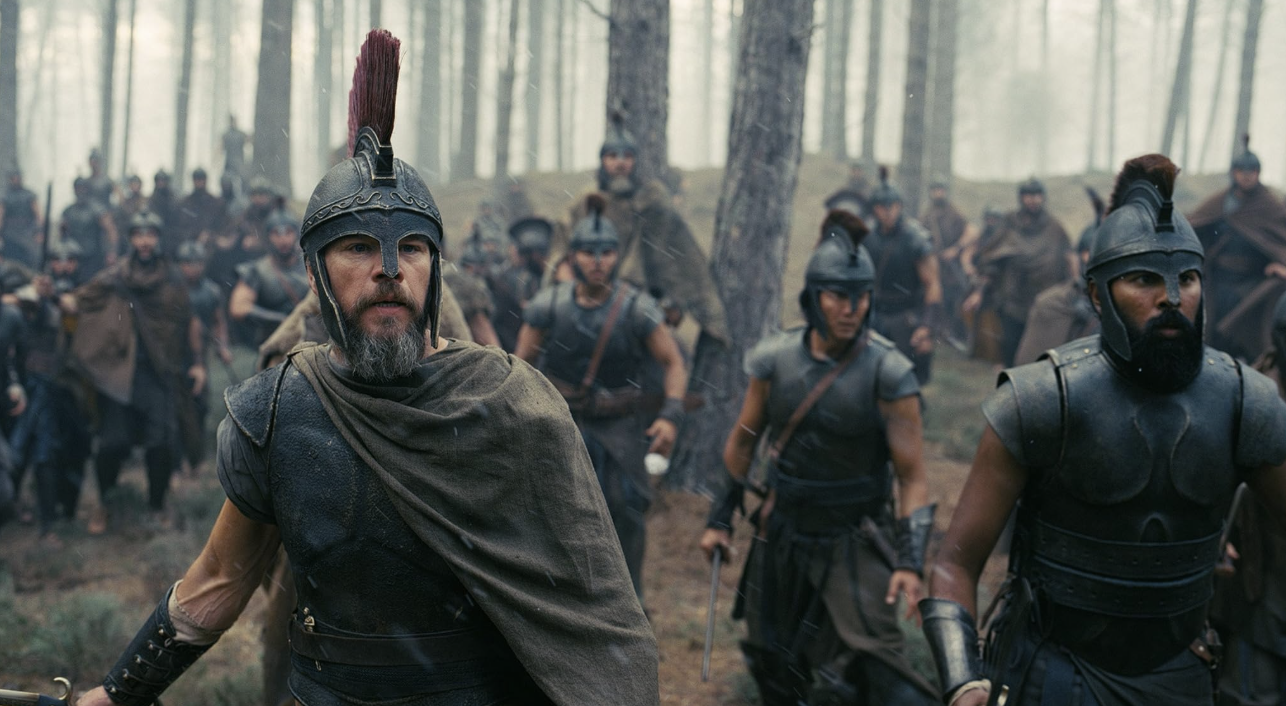
Anyone who has been within earshot of me whenever the terms ‘Odyssey’ and ‘Christopher Nolan’ have been mentioned during the past few months would know my strong opinions about the costuming, colour grading, casting and language choices dominant in the trailer. In the run-up to the film, classicists I have spoken to at Oxford seem to be divided into two camps: those who are like me, cynical and decrying the modern depreciation of the classics. Then there are those who call us purists and snobs, and say that Nolan is merely participating in the long-standing oral tradition that has always interpreted and adapted forms of storytelling, as Homer intended. So what’s the verdict?
Despite the trailers, I was surprised at the full extent to which Nolan leaned into the set design. Stark and devoid of colour, Troy has white pillars, statues, and temples. All of this looks like it was built in a lab – the set looks like a set. It is incongruent with the ancient Greece that has long been established by researchers, where people wore vibrant, patterned peploi, and the statues were painted in bright colours. Instead, Nolan’s Greek cities and kingdoms resemble the inaccurate remnants seen under the sterile lens of a curated museum collection. This feels thematically deliberate, and therefore brilliant. Moments of magic are downplayed – ironic, since the film’s opening card sets it ‘in a time of apparent magic’. Lacking the ‘glimmer’ of magic, the transformation of Odysseus’ men into pigs becomes one of the most grotesque and viscerally disturbing sequences in the film.
This also makes pops of colour, what we regard as ‘signs of life’, perversely memorable – Agamemnon’s stark black helmet plume with its mechanical golden vertebrae becomes recognisable from a distance, and terrifying against the bright white of the city he is about to destroy. The opening shot of the Trojan horse half-buried in sand, cutting a bronze diagonal across the too-white beach and the too-dim sea is emblematic of Nolan’s choice of set and costume design, almost backrooms-like in its struggle to reconstruct memory. The visual language of the film translates itself to something on the verge of collapse, which ties in neatly with the overarching theme.
And memory is important here. The film’s episodic structure reflects how Odysseus’ memories gradually come back to him on Calypso’s island, having long repressed them due to trauma. This is, in my opinion, one of the bigger points of reinvention that I actually don’t mind. Through the bard figure, hilariously performed by Travis Scott, Nolan shows an awareness of the weight this story carries within a long-standing oral tradition. The original text is itself already highly meta: a story that focuses on storytelling as an active act of remembrance, and attempts to translate the story as ‘live performance’ of stories within stories.
The film’s treatment of gods also relates to memory, specifically through Athena, the only ‘goddess’ who appears in physical form and stays constantly by Odysseus’ side. The reveal that she takes the face of the priestess beheaded at the Temple of Athena during the sack of Troy is haunting, while simultaneously making me insane with joy, because Nolan has managed to visualise the very human way the mortals relate to the divine. Athena shows up as the only god Odysseus can put a face to because her face is a manifestation of his guilt and grief. Despite the multiple invocations of the other gods in turning points of life and death by Odysseus’ men, most prominently Poseidon and Zeus, they remain silent. Is this representative of the perversion of the divine-human relationship, broken forever due to the Trojan War?
However, the film’s semi-atheistic outlook translates to something confusing and inconsistent. It cannot decide how much moral responsibility its characters actually have. The film’s tagline is ‘defy the gods’, and through the film this is framed as a condemnation – the defiance of the laws between men is a defiance of the gods. Yet a line from Athena at the start of the film, when Odysseus is still on Calypso’s island, throws a spanner into this moral, where Athena disparages Odysseus for taking full responsibility for what is already fated and inevitable. The implication here is that she condemns him for being almost hubristic in his urge to constantly assume full responsibility for the loss of other lives, when the gods have already decreed that they were bound to die. Such a bold statement never really gets resolved, and the scene in the Underworld, where Teiresias once again emphasises that there is nothing Odysseus can do to prevent his entire crew dying because he ‘cannot save them from themselves ’, deepens this problem.
In Homeric epic, the gods, Fate, and free will toe a very fine line. The gods do intervene, but human motivation and human choice always come first in narrative terms. There are many moments where mortals blame the gods within the poem, and none of these positions are justified in Homeric theology. So when Odysseus laments that Zeus made him fall asleep while his men ate Helios’ cattle, the audience is not meant to sympathise with his argument that this therefore makes him blameless – it can be an expression of frustration that the god has not helped him, or the confusing incomprehensibility of the gods (which Nolan also emphasises), but it does not mean Odysseus is free of the responsibility of his choice. Characters’ freedom to make choices is integral to driving the plot and characterisation forward, and yet Nolan fails to make clear the explicit chain of human cause and effect between the plunder and massacre Odysseus and his men conducted at Troy and the disastrous journey home. This leads to interpretations that the whole action of the film is simply the gods’ decree, and Nolan risks diluting his moral message.
This confusion ultimately boils down to where the film suffers the most – the overt sanitisation of Odysseus’ character. Throughout the film, Odysseus’ eyes are those we look through to judge the events of the Trojan War, the journey, and most of the narrative – the audience is inclined to sympathise with him, and having suffered the repercussions of his actions in the Trojan War, he becomes the plausible mouthpiece for Nolan’s message, the righteous avenger against the suitors who violated Zeus’ law first. But as the film repeats the shot of Odysseus staring out as he leans against the marble staircase at Troy, watching the priestess’ head get cut off, I cannot help but wonder – why is Odysseus so special? What makes Odysseus so much better that he is singled out by the gods to return home, and the rest of his men do not, when their actions have been so similar? If that moment where he watches the destruction of Athena’s temple is meant to be his epiphany, why does he carry on to burn down the first island he sees? Nolan has simplified Odysseus so much throughout the film that any straying away from virtue lands oddly instead of adding nuance. Emily Wilson is right: Nolan has written a very uncomplicated man indeed.
Homer, however, never hides how Odysseus is, in many ways, an incompetent leader, and most of the disastrous journey can be attributed to Odysseus’ bad judgement or arrogance. One famous example is the Cyclops episode, where after he and his remaining men successfully leave, Odysseus shouts back into the cave his name, his father’s name, and the destination he is heading to, entirely unnecessary apart from establishing glory for himself. Essentially, Homer establishes clear cause and effect (how Odysseus’ poor choices lead to the downfall of his men), and this elevates narrative significance when he does make the correct choices. Odysseus is not a character who can become a noble, simple character while retaining the same story beats. He is polutropos, a man of many ways – the complexity of his journey home reflects the complexity of the man. Dropping his incriminating story beats makes Odysseus more likeable, but the result is inconsistent characterisation, as well as a lack of character depth. Nolan’s version of Odysseus is unrecognisable when compared to Homer’s, who is cunning, flawed, and subtle.
The other issue with Nolan’s insistence on Odysseus’ nobility: it comes at a cost to the depth of other characters too, especially the women around him, and this is most evident in Penelope. Homer’s Penelope is Odysseus’ narrative parallel, and Book 23 is, in epic terms, Penelope’s aristea, her big ‘heroic’ moment, where she tests the reality of Odysseus’ identity by asking her handmaiden to move her bed, and waits for Odysseus to refute it because only her husband should know that it is immovable. Only then does she relent and greet Odysseus. There is much scholarly debate that Penelope had recognised him much earlier than Book 23, adding to the complexity that she may have been planning the exact type of contest that would benefit Odysseus ever since she saw him in disguise. The bed scene is left out entirely in Nolan’s film, and there is also no nuance as to when Penelope finally does recognise Odysseus.
Nolan also makes the mistake of telling rather than showing when Penelope screams at Telemachus that she has been ruling Ithaca for years and that it is about to be taken away from her male heir. Yet from an audience’s perspective, she isn’t doing much ruling, as all we see of her in the film is her crying and pining away for Odysseus. Even the scene where it is revealed that she has been taking apart the shroud every evening, her overarching line of characterisation throughout the story, is overshadowed by the strange scene where she almost caves to Antinous’ advances – stranger still, because at no point in Homer’s story does Penelope even remotely entertain him. Her complexity becomes less of a point of attention because her parallel character, Odysseus, is also not stepping up to the narrative depth game. In the poem, Odysseus and Penelope work since although they occupy very different spheres of movement and gender roles, they still mirror each other. Nolan’s Penelope falling flat is especially fatal because she has no ‘action’ to rectify or distract from it, unlike Odysseus.
In general, I think I liked the film a lot when I was watching the credits roll. It is a spectacle, and despite knowing the exact story beats of the plot, the escape from Polyphemus and the harrowing flashes of the storm still had me on the edge of my seat. Odysseus’ final stringing of his bow still almost brought tears to my eyes. And much of it for me is that there is clear love shown in the stunning visual and musical language to deliver those emotional beats, and in a very meta way, I love that this much is devoted to a subject that I have spent many years loving and studying, and seeing a work from so long ago come alive on the modern screen.
I also mourn the fact that this may be the only version of The Odyssey that a modern audience will see in their lifetime. To me, Homeric epic has withstood the test of time not only because of a flashy plotline, but because it is, at its core, a story that contains the scattering multitude of human experience and complexity – to return home as a complicated, flawed individual to a complicated, flawed community, and finding love anyway. For that to hold, the characters cannot all feel universal, and that is unfortunately what Nolan tried to narrow down with his characterisation and theology. I just wish that I could point to a moment throughout the film where I leapt for joy that Nolan understood the character, their motivations, and why some things are important for the story to keep. I wish I was actually watching the Odysseus I love to hate, and the Penelope that mirrored him in all the strangest ways.
Nolan had all the tools for greatness. Instead, to my eternal frustration, his Odyssey will always only be just alright.



-

 Oxford News3 weeks ago
Train cancellation alert amid ‘fault’ near London Paddington
-
 Oxford News3 weeks ago
Museum evacuated and Oxford University closed amid incident
-

 Business & Technology3 weeks ago
Currys rolls out NiCE software to unify customer service
-

 Oxford University4 weeks ago
OUP hosts AI in Education at Oxford University summer school
-

 Business & Technology4 weeks ago
Staff at two major UK banks brace for further redundancies
-

 Business & Technology2 weeks ago
Apprentices say AI is reshaping tech skills demand
-

 Oxford Events3 weeks ago
Wilderness Festival 2026: four days of music, food, art and wild escapism
-

 Business & Technology3 weeks ago
UK flight school collapsed into liquidation