
Traffic & Transport
‘A guy did a runner in a Jaguar’: the petrol theft scandal – and the garage owners struggling to stop it | Crime

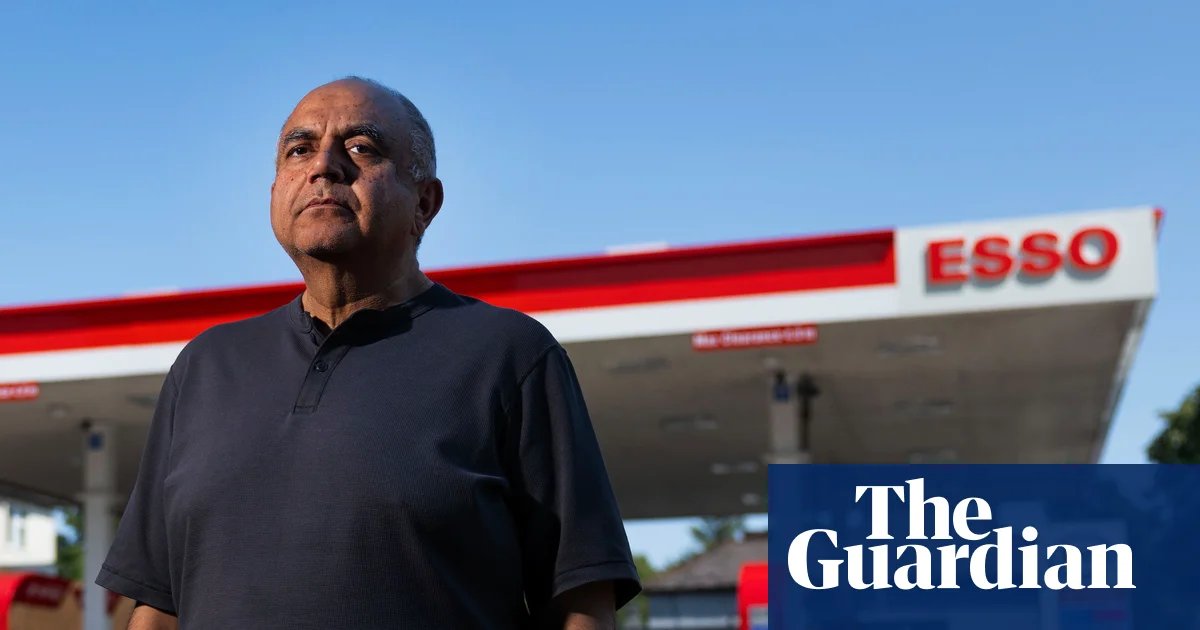
A petrol station tucked away in the suburbs of Birmingham seems an unlikely place for a crime spree. But this garage has become a prime target for thieves. Some fuel runners are easy to spot, approaching the petrol pumps in face masks, but after a recent spate of fill-and-dashes by less conspicuous drivers, no motorist is beyond suspicion. “It could be anyone,” says Shailesh Parekh, who is on high alert, as always.
The 62-year-old owns six forecourts across Birmingham, and today I’m visiting his station in Erdington, a residential area about five miles from the city centre. Parekh remembers a time when a motorist speeding off with an unpaid-for tank was rare. So much so, it would be the talk of the station for months. Those days are long gone. Now, it’s a weekly and sometimes daily occurrence. “In the last three years, it’s been very bad,” Parekh tells me from the back office, where a monitor beams CCTV images from every inch of the forecourt.
Thefts have grown worse since the start of the war in Iran in February. In the first week of July, the station saw three fuel runners, and in June, 12 people drove off without paying. Across his six garages, says Parekh, fuel theft cost him more than £40,000 last year, and predicting who will drive off is becoming impossible.
In his experience, fuel theft used to be carried out by organised thieves or criminals on the lam, who might have stolen a car. Not now. “I had a guy all suited and booted do a runner in a Jaguar,” he says. Sometimes, thieves will wear hi-vis jackets to impersonate workmen. The day before my visit, at another of his forecourts, a man who “looked like a farmer” filled up his tank with £140 worth of petrol and “buggered off”. Parekh says thieves are becoming casually audacious. “They come right in front of you, because they have no fear.”
The issue isn’t confined to Parekh’s garages. Petrol stations have seen a 23% rise in fuel theft since the start of the Iran war, with incidents soaring from 9,089 in January and February to 11,170 in March and April, according to Forecourt Eye, a company that collects payments on behalf of about 1,000 garages around the UK. The Times estimates that more than £1.2m of fuel is being stolen from forecourts each week. Gordon Balmer, executive director of the Petrol Retailers Association, a trade body representing forecourts, says “first-time offenders” are becoming more common, with many “trying it on” due to a “combination of rising household costs and a bit of opportunism”.
The soaring levels of theft come amid rising fuel prices, which have shot up after the successive crises of Covid-19, Russia’s invasion of Ukraine and the Iran war. According to the RAC, prices reached a high of 199.09p for a litre of diesel in 2022, before subsiding again. From mid-February to June 2026, the cost of petrol rose from 131p to 155p per litre, while the cost of diesel rose from 141p to 176p per litre. This means that filling a 60L tank with petrol went from £79 to £93, while filling it with diesel rose from £85 to £106.
Parekh’s forecourts are fitted with “more CCTV cameras than Birmingham airport,” he jokes, but pursuing a fuel thief is usually pointless. “Half of the runners, we don’t even report them. It’s such a mission,” he says.
With CCTV footage and a licence plate number, catching the thieves should be easy, but in reality failing to pay for fuel ends up in a legal grey zone. While intentionally driving off without paying for fuel is a criminal offence, convictions are rare, especially for one-off offenders. If a motorist drives off by mistake or discovers after filling up that they cannot pay, the unpaid amount is generally treated as a civil debt rather than a criminal offence. Unless it’s pretty blatant, it’s difficult to prove that a motorist didn’t drive off in error. And if a driver has filled up and then can’t make the payment, it’s up to the forecourt owner to do what they can to recover the amount. Still, bilkers who are caught and prosecuted face up to two years in prison and a fine. One prolific fuel thief in Kent was jailed for 16 months after pleading guilty to stealing fuel from nine forecourts in 2024.
Not all the thieves Parekh encounters dash off after filling their tanks. Some use the pump, then come in and declare themselves penniless, leaving him with few options, because “we can’t retrieve our fuel from their tank”. Balmer says a lot of first-time offenders are doing this, because many “see it like a payday loan”. Regardless of how unpaid fuel is taken from his forecourt, Parekh says when he has reported incidents to the police, they often tell him “it’s a civil thing”. This is something Balmer has encountered too. Another station he is in contact with reported an intentional drive-off to police, who incorrectly told them it was a civil offence and there was nothing they could do.
In November 2024, Supt Fran Harrod, a senior Lincolnshire police officer, told the BBC that somebody who has driven off without paying for fuel might not be “having a great day” and the incidents don’t always constitute a crime. She recommended that forecourt owners try to recover money through a civil route instead of “using huge amounts of officer hours to go round and ask people to pay up, because the police’s time isn’t free either”. Parekh says this approach adds insult to injury: “You can’t go into Asda and say, ‘I’m leaving with this trolley full of items but I’ve got no money to pay for it.’”
In March this year, the Times reported freedom of information data first revealed by the Forecourt Trader website. It found that in 2024, five police forces across the UK closed a fuel theft investigation without identifying a suspect in nine out of 10 cases.
West Midlands police, the force Parekh deals with, did not respond to the Times, but a 2022 freedom of information request revealed that, of the 1,150 reports of “people driving off without paying for fuel” between January and March 2022, 1,126 (98%) had a recorded outcome indicating that no further action was taken. Of these, 1,106 involved no identified suspect and 20 involved an identified suspect; the outcomes of the remaining 24 reports were left “blank”. Parekh says officers “take the view that this is a totally preventable crime”, telling him he should install prepaid pumps to stop thefts. This, he says, is a non-starter because “the whole trade has to move to that system, otherwise people will get annoyed and go elsewhere”.
West Midlands police say it investigates reports of “bilking, and people need to be clear that driving off without paying for fuel is theft and the consequences are very serious”, adding it would “encourage businesses to take steps to minimise the likelihood of them becoming a victim – such as operating a prepay policy and installing good-quality CCTV”.
Balmer says he has also faced police indifference. He recalls one incident in which “two guys broke into a forecourt, filled up with fuel and filmed it all for TikTok”. Despite this incident being raised with the relevant police force, the culprits weren’t brought to court because police “didn’t think it was something that they should criminalise them for”, says Balmer. “Even though they had committed a crime.”
Parekh has faced similar challenges with getting police to take this crime seriously, including an instance on his forecourt that turned violent. One of his cashiers approached a van driver who he suspected of stealing fuel and stood in front of the vehicle to stop it driving off. The van began advancing towards the cashier, and a tyre went over his foot; luckily he managed to escape with only bruises. A customer helped track down the perpetrator, and the incident was reported to the police. There was also CCTV footage of the vehicular assault. “I pursued the police for 14 months,” says Parekh. “They didn’t go and arrest that man – they didn’t do anything. In the end, I left it.” The West Midlands force says it “won’t tolerate any type of theft” and will “always seek to identify, detain and pursue prosecution against anybody involved in theft offences”.
Parekh recalls one time when police did act. Officers were grabbing a coffee from the garage shop and telling Parekh about a notorious fuel thief they were after. On the forecourt, a van parked next to a pump caught their attention. Officers went to inspect it. Inside the van, they found a man surrounded by containers, in the process of filling them with Parekh’s fuel. After being caught in the act, the thief was arrested.
Can-fillers such as this, who sell containers filled with stolen fuel, are becoming more common. Christmas and Easter used to be the worst seasons for fuel theft, but recently it has become a year-round phenomenon, especially since fuel has “become a more sellable item,” says Parekh.
The losses to Parekh are having an even greater impact given rising national insurance contributions and business rates, the latter of which, he says, rose from £16,000 to £43,000 last year. And it isn’t just fuel theft he is contending with: he says his forecourt shop is often ransacked by thieves. It’s so bad that at one point there were 20 pictures of shoplifters in the window. He blames this, in part, on people with addiction issues and prison leavers being placed in houses in multiple occupation (HMOs) in the area.
Parekh says this has led to a number of violent encounters at the station. Garry Backhouse was manning the till when a regular customer “snapped” and “flashed a massive blade” at him, before being apprehended by a police officer who was in the shop at the same time. On another occasion, the 51-year-old cashier was attacked on the forecourt, while off duty, when trying to stop a shoplifter. Backhouse, who started working at the forecourt 11 years ago, quit after the first incident, but returned after a stint in a tile shop. Now, as a protective measure, none of Parekh’s staff work alone, which further adds to costs, and the door to the shop is kept locked after 8pm.
Another tool for the garage is VARS Technology, an automatic number plate recognition system and debt recovery service, used at one in eight petrol stations around the UK. It flags up “blacklisted vehicles” that have previously driven off without paying for fuel at a member forecourt. “If the registration flashes up, we don’t start the pump,” says Backhouse. But this technology, and other similar products, have been accused of issuing “false” fuel debts. In one case, this meant that a family who had been accused of driving out of a petrol station in Manchester without paying for £20 of fuel was effectively banned from more than 1,300 forecourts. Any visit they made set off an alarm.
Some fuel thieves steal or clone licence plates to hide their tracks, which can pose further difficulties for those falsely accused of fuel theft. Balmer says he has heard of cases where “perpetrators get a stolen vehicle, go online and look up a similar car in make, model and colour” and print out plates before stealing fuel, leaving the innocent original owners to receive letters falsely accusing them of stealing petrol. For forecourts, this means no chance of recovering their money. “They’ll just have to write it off,” he says.
While a petrol station forecourt might not be the first place that comes to mind as a community asset, Parekh says they are important. “Petrol stations are no longer just purveyors of fuel. We have everything,” he says. They are one of the few businesses that remain open into the early hours. “You can come at midnight and put £10 on the gas – we keep things going for people.”
But after decades in the trade, Parekh is doubtful about the future. “I’m 62 years old,” he says. “I’m beginning to think: why am I doing this?”
Traffic & Transport
Air traffic control issue causes flight delays and disruption across UK | Airline industry
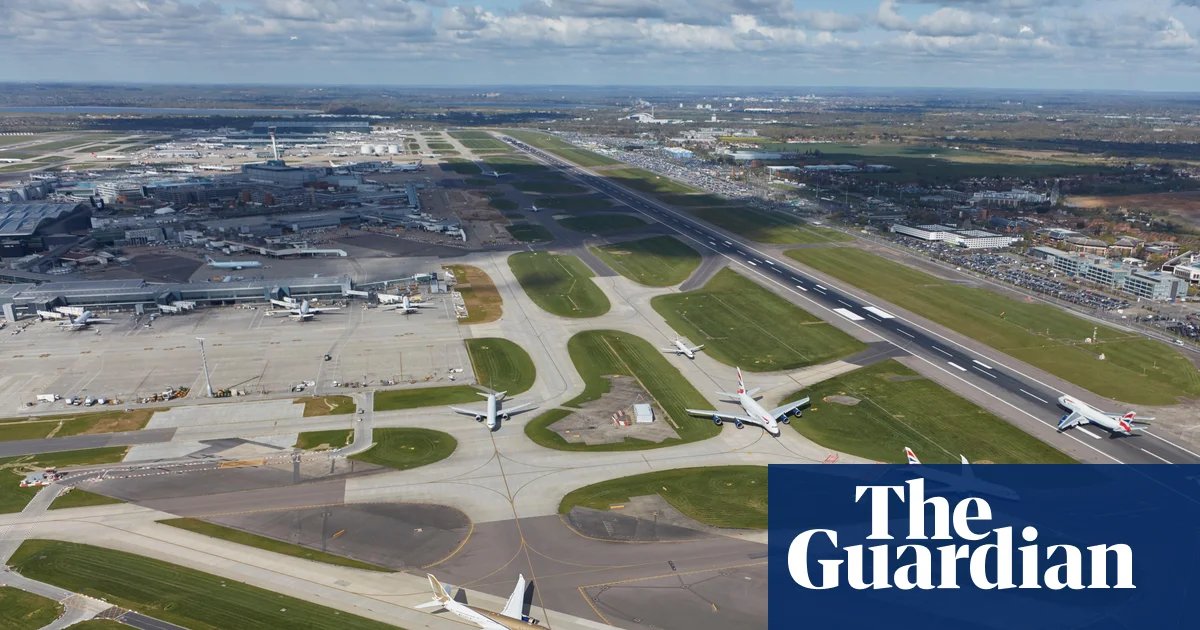
Flights around the UK are facing delays and disruption due to an air traffic control issue which has affected a string of airports including Heathrow and Gatwick and is expected to take “some time” to resolve.
Departures from London airports are most severely affected, with few take-offs since a fault was reported early on Tuesday afternoon.
Most flights due to depart Heathrow, Gatwick, Stansted and London City airports since 2pm appeared to have been delayed or are yet to take off. Flights from other airports around the UK, including Manchester, Edinburgh, Birmingham and Belfast airports, have also been affected.”
The air traffic control service Nats said at 1.46pm that it was “investigating a technical issue which is causing some disruption to flight departures”.
Nats later added that it had identified the problem, which was in its flight processing system. It said: “Our engineers are on site and working urgently to resume normal operations as quickly as possible. We recognise the ongoing disruption to travel, for which we sincerely apologise.
It continued: “Flights are still departing and airspace is open, but recovery will take some time. We will provide further updates as soon as possible.”
The UK’s biggest airport, Heathrow, said planes were continuing to arrive, although Eurocontrol said some inbound flights were being held at airports abroad, with disruption likely to continue until the evening.
In a statement, Heathrow added: “We are supporting our local Nats team in their efforts to resolve the issue as quickly as possible. We will provide updated information when we have it.
“We apologise to those disrupted and advise passengers to check with their airline for latest flight information.”
Heathrow’s website showed several flights due to depart this afternoon have been cancelled. British Airways said it was experiencing some disruption and was in touch with its customers.
Belfast City airport warned of “some disruption” to flights after the technical issue affecting Nats.
“Due to the technical issue referenced below, there may be some disruption to flights due to arrive in and depart from Belfast City airport,” they said in a statement.”
A Birmingham airport spokesperson apologised to customers and advised them to “arrive at Birmingham airport (BHX) in line with their airline’s check-in requirements and to contact their airline directly for the latest flight information and updates.”
Edinburgh airport said it was aware of the issue which “may impact operations”.
Traffic & Transport
Here in Liverpool, buses are back under public control – and that’s great for the only people who really matter | Steve Rotheram
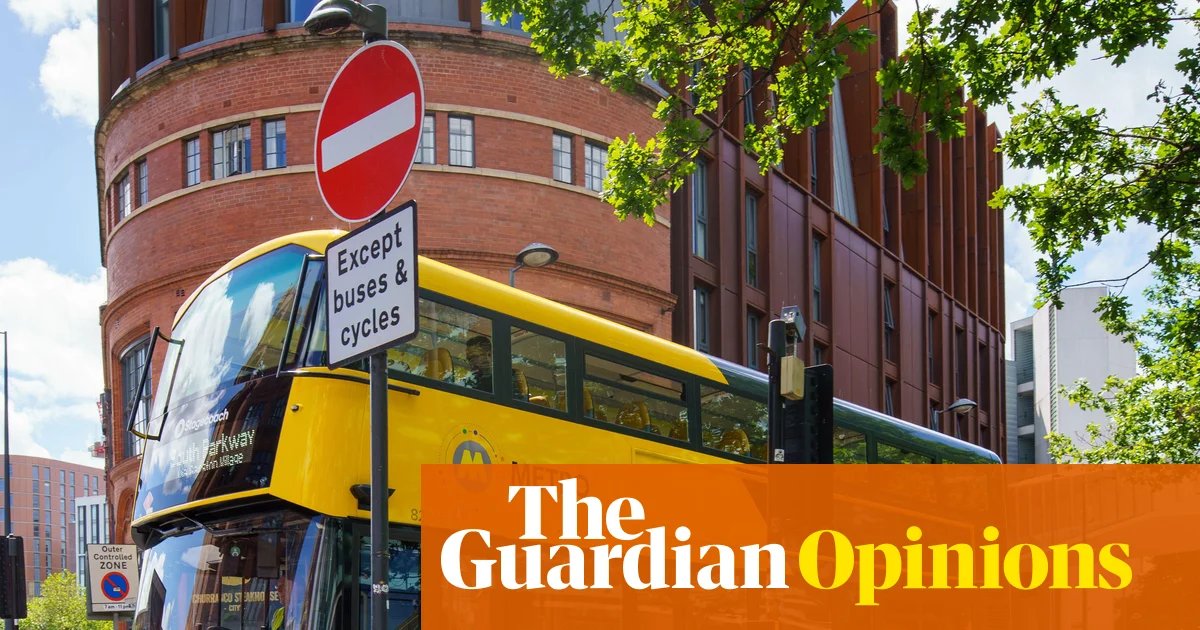
One of the best-known scenes from the TV series The Inbetweeners is the four angst-ridden teenage characters shouting abuse at people queueing at a bus stop. Only losers take the bus, is the point – except they use a much ruder word. There’s also a statement, misattributed to Margaret Thatcher, that any man over the age of 26 using a bus was a loser. This idea is deeply ingrained.
But when I was an MP it became obvious that there wasn’t the same stigma attached to jumping on the bus in London as there often was in other big cities. It often wound me up that the rest of the country was expected to accept a suboptimal public transport system – so much so that it could be joked that only losers would use it – while London retained its excellent bus service, which it ran under public control.
And I remember thinking: why can’t we have something like this at home in Liverpool? Well, last weekend Liverpool city region combined authority began to roll back the Thatcherite belief that private was all good, while public was all bad. For the first time in four decades, buses in the Liverpool city region have begun to be brought back under public control, starting in St Helens in Merseyside before spreading across the rest of the region.
What does this mean? Instead of private operators deciding where and when buses run, we will set the routes, fares and standards. Our franchised buses will still be operated by third parties. But we will set the rules, decide what kind of network our communities need and hold operators accountable for delivering it. It is the biggest change to public transport in our region for generations. Nobody standing at a bus stop at six in the morning cares about the finer points of franchising legislation. But they do care whether the bus turns up; whether they can get to work on time, get their kids to school or college, or make it to a hospital appointment.
Public control means we can start putting passengers first, with more frequent services, more evening and weekend buses, better connections to hospitals and railway stations and simpler fares. And we have kept single bus fares capped at £2, the price they have been for the past four years.
Change will be immediate. A new express service now connects St Helens directly with Liverpool John Lennon airport. For a family heading on holiday, that may mean avoiding airport parking charges. For somebody looking to work at the airport, it could open up a job. These changes will make a massive difference to people’s lives.
And, for me, that gets to the heart of the argument for public control. A bus route that helps somebody take a job, gets a student to college or allows an older person to remain independent has a value that won’t always show up on an operator’s balance sheet. Markets have their place. But public control allows us to ask not simply, “does this route make money?” but “do our people need it?”
That principle doesn’t stop with buses. We have bought a £500m fleet of new trains and are working towards bringing Merseyrail services into public ownership in 2028. In the coming weeks, the Royal Daffodil – our first new ferry ’cross the Mersey in 60 years, built by a loyal local workforce – will make its maiden voyage.
For decades we were told that privatisation and deregulation would inevitably deliver better services and that the government’s job was to get out of the way. The experience of millions of passengers tells a different story.
When he was mayor of Greater Manchester, Andy Burnham and I spent years working together to make that case and show what can be achieved when local leaders have the power to shape the services their communities rely on. Now we have a Labour government bringing our railways back into public ownership and giving local leaders more power over the essentials that ordinary people depend on.
after newsletter promotion
After decades in which the state steadily retreated from people’s lives, we have an opportunity to prove that active government can be a force for good again. That is what started in St Helens last weekend.
I want the Liverpool city region to have the best public transport system in the country. I want people to come here, get on one of our buses, trains or ferries, see what we have built and go home asking the same question I used to ask in London: why can’t we have this at home?
Traffic & Transport
London Paddington fire causes rail chaos as Heathrow trains cancelled | Public transport
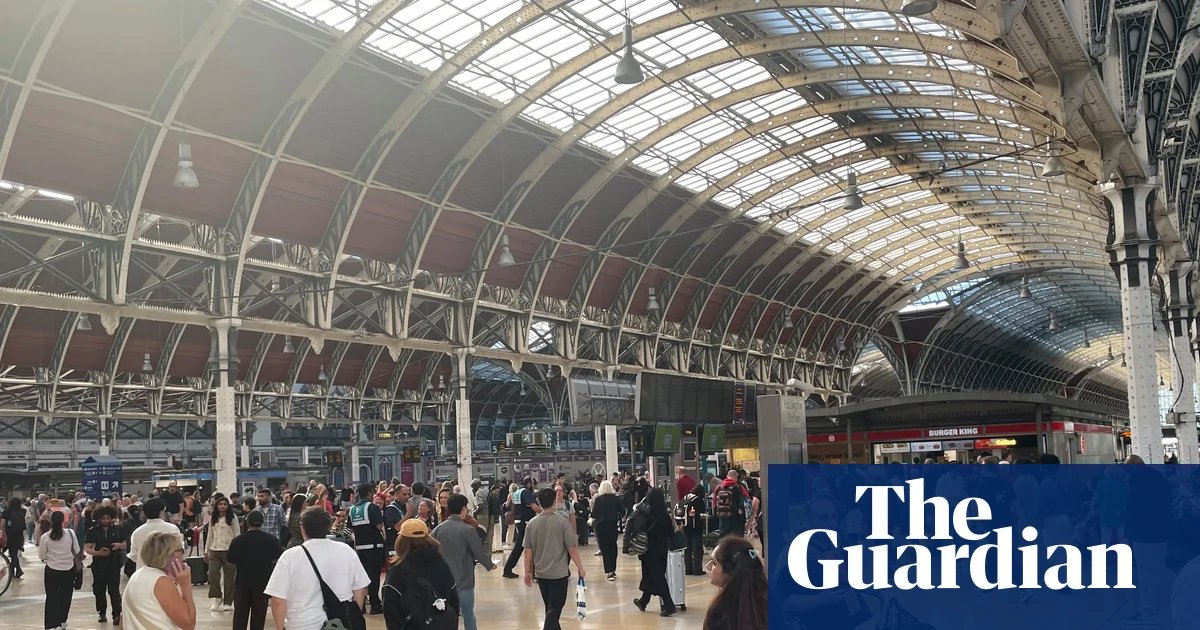
A fire near a train track in the London Paddington area has caused major disruption, with services to Heathrow airport cancelled.
The fire caused an electricity supply failure which has left all lines between Paddington and the airport blocked, National Rail said.
Cancellations and delays to services are expected until 7.15pm, it added.
Photos on social media show large plumes of smoke rising from the Paddington area.
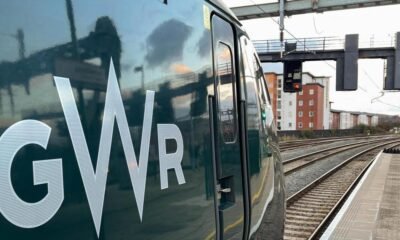
Great Western Railway (GWR) services to Reading have been cancelled, while the Elizabeth line is part-suspended.
No trains are running in either direction between Paddington and Heathrow, the Heathrow Express said.
The airport advised passengers to leave extra time for their journeys, adding that the Piccadilly line, which runs services to the airport, is also experiencing delays.
Transport for London (TfL) said the Elizabeth line is suspended between Paddington and Heathrow terminals four and five, and between Paddington and Reading, while the line to Abbey Wood is experiencing severe delays.
There are severe delays across the entire Piccadilly line due to an earlier trespasser at Hammersmith, according to the TfL website.
GWR said trains may be cancelled, delayed or terminated at and started back from Reading, with disruption expected until 7pm.
The London fire brigade has been contacted for comment.


Mark Harris amongst Oxford United goals in League One revival

Jamie Cumming injury update issued after Oxford United thrash Foxes

Air traffic control issue causes flight delays and disruption across UK | Airline industry
-
 Oxford News4 weeks ago
Train cancellation alert amid ‘fault’ near London Paddington
-

 Oxford News4 weeks ago
Museum evacuated and Oxford University closed amid incident
-

 Business & Technology4 weeks ago
Currys rolls out NiCE software to unify customer service
-

 Business & Technology3 weeks ago
Apprentices say AI is reshaping tech skills demand
-

 Oxford Events4 weeks ago
Wilderness Festival 2026: four days of music, food, art and wild escapism
-

 Business & Technology4 weeks ago
Love Island unknowns outshine influencers in growth
-

 Oxford News2 weeks ago
Richard Hammond takes control of classic car company
-

 Oxford News4 weeks ago
Oxford’s iconic shark in roof celebrates 40th anniversary