
Student Life
‘Physics is a zero-bullshit zone’: Jessica James on Commerzbank, Christ Church, and the joy of shifting from STEM to finance

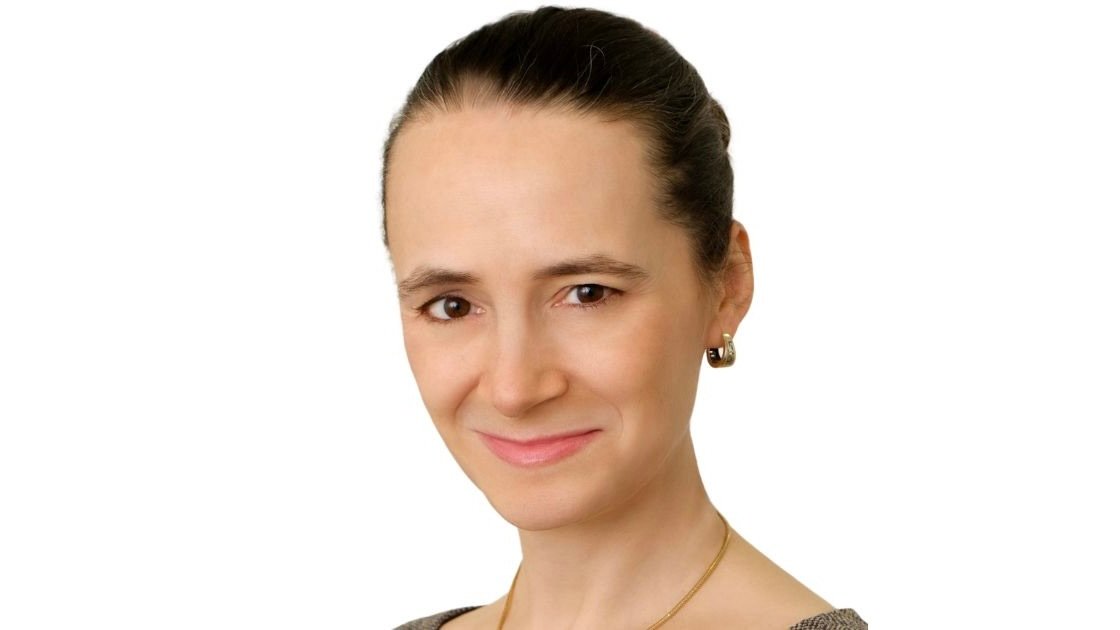
Sporting knee-length hair tied into a bun with a colourful scarf and married to a flame juggler, Jessica James isn’t your typical quant trader. A Christ Church PhD Physics alum and now Managing Director at Commerzbank, James speaks with levity and self-assuredness, a rare duality in the finance sector.
While many from my cohort are making the jump from physics to finance, it was more than unconventional for James in ‘94: “It was absolutely weird of me to do so. I was trying to write up my thesis and thinking I was unemployable, and my supervisor, Patrick Sanders, came into the office.” He had received this “funny letter”, anticipating James’ potential interest. It was from the First National Bank of Chicago, who were moving into the area of financial derivatives and looking for PhD Maths or Physics students. She was called onto the trading floor to explain her research to various traders and salespeople, before being flown to Chicago for another interview. “Business class!”, she whispers in mock awe.
Physics and finance may share certain mathematical foundations, but there are clear differences between the two worlds. “Physics is about studying the foundations of the universe. Finance is about studying a man-made system that doesn’t always behave how you think it will. I’ve always enjoyed it. It’s fun. It’s fast-moving.”
Ambiguity in jargon is another key difference. When somebody in science uses the term force, its meaning is generally agreed upon. When someone talks about yield or convexity in finance, they could be defined in very different ways, depending on the context and the speaker. “The big change is the lack of precision of the vocabulary. It’s easy to think you understand something in finance, but when terms are ill-defined, you might not. Physics is mostly a zero-bullshit zone”, she says.
“Finance tends to focus on the future and the now, and data is, fundamentally, historical. Yet it’s a gold mine – especially today, when sophisticated analysis is increasingly used to uncover trends and behaviours – however, it’s often deleted, forgotten, or ignored.” It’s always a red flag when someone says “but this time it’s different”, be it an ex-partner or a teetotal friend, James explains that this is particularly true in finance. “It’s like the climate”, she tells me. “The climate can fluctuate in unexpected ways, and so can the market, right? Just because there hasn’t been an ice age recently doesn’t mean they won’t return in their time.”
While at school, James was the only one doing Physics and Chemistry: “15 years in a convent school put me off God forever. But I understand why science and religion are often so conflated”, she says, explaining that she views both as trying to better understand the rules of the universe. As the sole woman in many rooms, including a weekend away as the Managing Director at Citibank, James has never minded being the odd one out: “I don’t care if they think I’m different. I was smarter than most of them.” I fully believe her. “It is tricky being a woman in finance. How many technical disciplines are there where you could say that women are equal? And, you shouldn’t have to be tough and immune to remarks that shouldn’t be made. But, it never really bothered me.”
While traditional routes into banking are competitive, James stresses the importance of getting into the right place and avoiding a mundane job. Her advice? Get in early via the internship-turned-graduate-scheme pathway. “Oxford and Physics give you the ability to think critically and believe in your own opinion and your own knowledge”, she says. “This helped me to thoughtfully reflect on challenges and gave me the courage to recognise that if something felt off, it probably was – and it didn’t mean I lacked ability.” This mindset has been the cornerstone of James’ career.
“But, the one thing that is the hardest, but the most important, is to understand where you fit into the organisation.” She tells me that when fixing code, processing data, or completing spreadsheets, we should be asking: why? Where is your organisation making money, and why does your job exist? It’s important to not be stuck in a bubble, James stresses, not just in finance but in any job. This understanding will push you to find originality in the way that you work, and perhaps do it better than other organisations: “Knowledge is power, and often the knowledge that is the most powerful in an organisation is who does what and why.” She believes in keeping a foot in more than one world, and, thereby, tapping into more opportunities.
“I had never seen five o’clock from the front before, only from behind.” The crazy hours in finance aren’t a recent development, although James prioritised her hours off work just as much as those she spent on the trading floor. Her secret was to not break stride and make no eye contact with anybody as she got off work. She quickly realised that “you’ve got to set boundaries, you’ve got to set limits”.
James has been a pioneer in finding probability-weighted foreign exchange market trading strategies. She has launched products based on trading signals, which she explained as buying the trading rules that came from looking at historical data. Amidst the global turmoil of the 2008 financial crisis, these instruments performed better than many others.
She also coined the term rollercoaster bonds: long-term bonds that become highly sensitive to changes in interest rates, similar to the way rollercoasters must consider forces other than velocity and acceleration. Here, rising interest rates can significantly impact the value of century (100-year) bonds, like some sold by Oxford University. While century bonds sound reliable and safe, she showed they would lose much of their value if interest rates rose out of the near-zero range of the pre-COVID world – and they did.
Penning several financial maths texts is yet another achievement of James’ career. She is quick to warn, however, against getting her confused with an author of the same name who writes, apparently, racy novels as opposed to those about the stock market.
Talking to James, it is clear that she enjoys devoting her time to finance and academia. After all, she is a pension trustee at Citibank and Commerzbank, on the Institute of Physics council and a Visiting Professor at Oxford and University College London. However, reflecting on her time as an Oxford undergraduate, she reminisces on her fun side. She recalls her first encounter with Professor Kurti: a pioneer in the art of gastronomy. He was about to give a lecture at Manchester University titled The Joy of Cooking, but was startled to realise as he entered the lecture theatre that someone had amended the title on the chalk board to The Joy of Sex. James bumped into him years later in the Clarendon laboratory and confessed, luckily being met with laughter.
She notes the same Brasenose dinner between exams and results as one of her favourite memories of Oxford, where “everything was possible. Nobody’s wave function had collapsed”. Her message to students? Love every minute of Oxford for how fantastic it is. But also: “Take pride in yourself. Take pride in your accomplishments. You got here, you stuck it [out]. Not many people can do that.”

St Edmund Hall has opened new, sustainability-focused accommodation in Norham Gardens, one of Oxford’s most affluent neighbourhoods.
The College describes the buildings, which took three years to construct, as an “exemplar” of sustainability. Designed by architects Wright & Wright LLP, they are certified with a Passivhaus standard, widely regarded as the industry benchmark for energy efficiency, and were built using “sustainably sourced and low-embodied carbon materials”. According to a press release on the Teddy Hall website, the buildings will use 70% less energy than the typical modern building.
It contains 127 en-suite study rooms, split across three new buildings: Willis House, Ashton House, and Elliott House, on the nearly 50-year-old Norham St Edmund site. The buildings, which back onto University Parks, are powered at least in part by solar panels and are heated by air-source heat pumps.
The rooms include heated towel racks, big double beds, and dimmable lights. Despite the luxury, the College kept the nightly rate in line with the rest of its Norham housing. The College told Cherwell that it “recognises the need to keep rents as low as possible” and that its accommodation costs are “below the median of all Oxford colleges”. By that standard, tenants are expected to pay around £30 a night.
Rooms on the site will be reserved for Teddy Hall returning undergraduates. They will not be available to postgraduates and, by extension, not be offered through the Oxford University Collegiate Accommodation System, now in its second year of opening college rooms to students from other colleges. The accommodation will allow Teddy Hall to accommodate all undergraduates for their whole degree.
The development’s outdoor spaces are boasted as climate-resilient and biodiverse, with landscaped gardens and lawns. For budding geographers and biologists, the most intriguing feature may be an ecology pond.
Chancellor William Hague said in a press release: “Norham St Edmund is a world-leading blueprint for future student accommodation projects and sustainable building design, both in Oxford and beyond. I look forward to seeing it serve a thriving college community for generations to come.
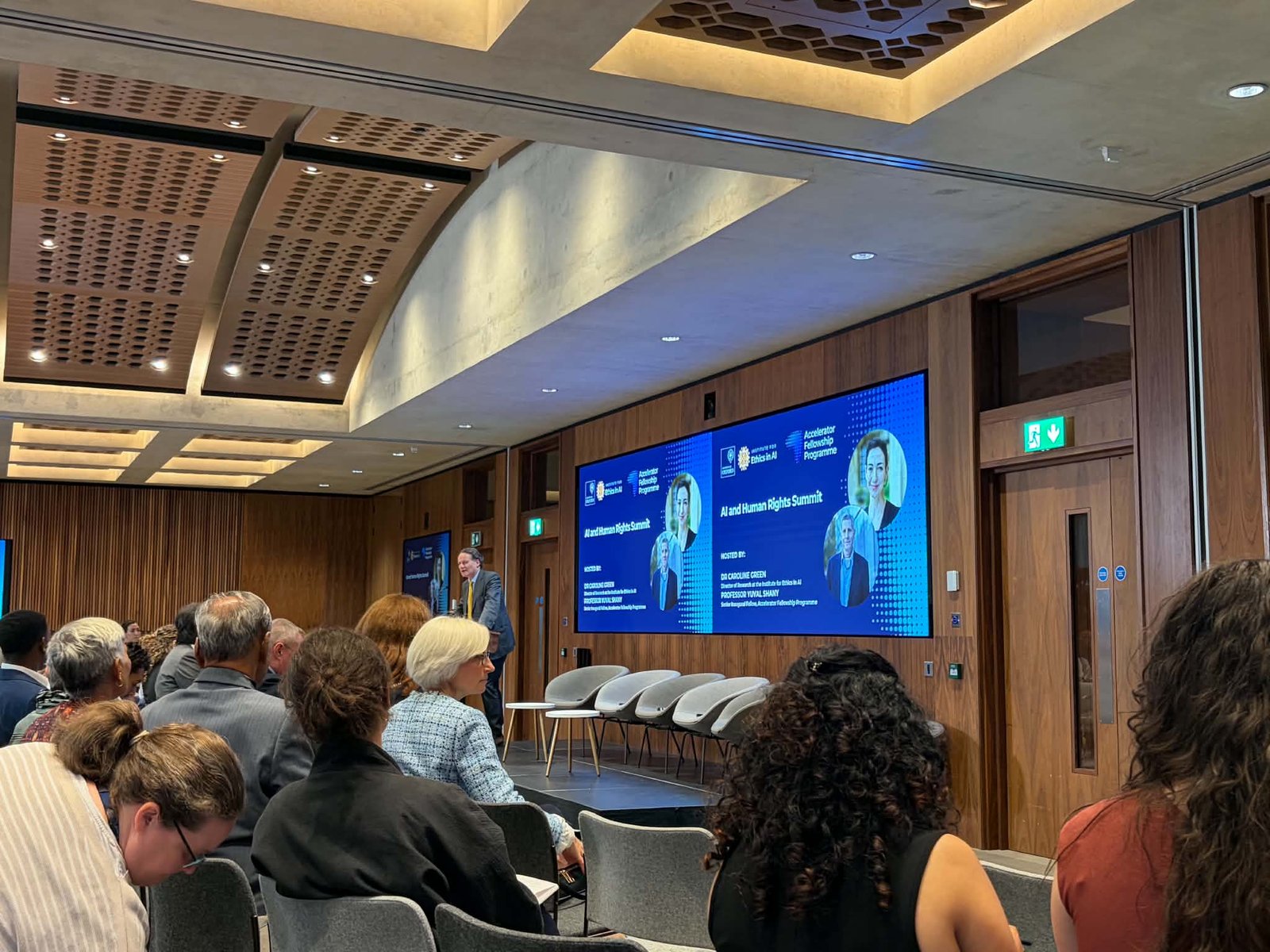
Human rights experts called for stronger legal protections against the risks posed by artificial intelligence (AI) at an Oxford AI and Human Rights Summit, with speakers arguing that human rights standards must be embedded into AI governance and technology.
The summit was hosted at the newly redeveloped Rhodes House in Oxford and organised by the Institute for Ethics in AI. It built upon Professor Yuval Shany’s consultation on a white paper, published in 2025, on the need for and feasibility of an international AI Bill of Human Rights, which proposes ways to adapt existing human rights standards so as to better address some of the unique challenges posed by AI systems and their uses.
An opening video address from the United Nations High Commissioner for Human Rights Volker Türk outlined how AI policy can keep pace with a fast-developing technology. He said that “great power demands responsibility on the same scale, and when the two don’t match, we have a problem”. Corporate control, he explained, means that AI policy stretches beyond existing national borders. He continued to praise this summit for bringing together leaders and representatives at the forefront of the discussion.
Speakers called on the UK government to establish legislation, recalling Labour’s manifesto commitment to an AI Bill of Human Rights. The panellists broadly agreed on the importance of human rights, but appeared less aligned on what enforcement should look like in practice.
In an exclusive interview, Michael O’Flaherty, the Council of Europe’s Commissioner for Human Rights, told Cherwell that political short-termism Continued on pg. 2 risks undermining efforts to address the long-term consequences of AI. “We are infected across our societies with shorttermist responses to the great issue of our societies and politics,” he said, adding that electoral cycles make it difficult for politicians “to think beyond the next election”.
O’Flaherty also noted that younger generations no longer take the international human rights system for granted. “There is no longer an assumption that the human rights system is safe, that it will survive,” he told Cherwell. He argued that political leaders increasingly treat human rights selectively, saying: “Increasingly, leaders are treating human rights, if they are respected at all, as an a la carte buffet. We take those rights because they serve our goal. We’ll ignore others because they get in the way.
The summit also heard concerns about the effects of AI-generated misinformation on communities that may have limited access to, or awareness of, the technology itself. An audience question asked human rights experts to consider the impacts of AI on populations, such as those in India, who might be unaware of its existence. The focus on the impact of AI on populations in developing countries more vulnerable to the power of big tech was a key theme of the summit.
Eileen Carter from the South African Human Rights Commission warned that underrepresentation of African languages in large language models could exacerbate existing inequalities. She also raised concerns about the effects of misinformation and deepfakes on elections, referring to more than 360 deaths associated with unrest and the amplification of narratives.
The third panel, which offered a civil society perspective on promoting human rights in AI systems, offered some hope. Across all speakers, the potential for AI to transform the beliefs that underpin human rights, including the rights to water, education, and an interpreter, was debated. When asked about AI’s potential to unravel and alter the definition of human rights, such as what is included in the ‘right to education’ O’Flaherty told Cherwell: “The damage that can be done by AI has hit more dramatically and more visibly than perhaps any other sector within education through the phenomenon of cognitive loss, of cognitive transfer. We’re only beginning to realise the extent to which we have allowed education to be fundamentally undermined for an entire generation.
“It’s time to seize that now and engage it. I’m not sure that the classic understanding of the human right to education is particularly well-framed for this extraordinary development.”
In a discussion on different countries’ regulatory approach to AI, Suresh Venkatasubramanian, professor at Brown University and former AI advisor to US President Joe Biden, argued that AI systems should not be treated as inevitable developments beyond human control. “We continue, I think, to talk about AI as a thing that emerged out of nowhere that we just have to deal with,” he said. “We forget that these aren’t coming from an alien planet and they were built by entities that choose to build them in a certain way.” He called for pressure on technology companies to make different choices about how AI systems are developed.
Questions of accountability also emerged during discussions about AI’s potential to improve access to justice. Research presented by Philippa Webb said that only 10% of people who have access to a lawyer can get one while there are thousands of bookings for an interpreter in a court covering 150 languages. However, this progress is not cemented as “general-purpose chatbots hallucinate 58% of the time on a legal task”. The use of AI in moderating legal proceedings raised fundamental questions about humanity and authority. Thompson Chengeta from Liverpool John Moores University said that “human rights is the last line of defence so when we say we want a human rights based governance… human rights is not an idea, it is an obligation. There is a gap that can only be recovered by a legally binding instrument”.
The event culminated in a panel offering an industry perspective. Co-host Dr Caroline Emmer De Albuquerque Green questioned representatives from Meta, Google, Microsoft, and OpenAI. Michael Karimian, who works in digital diplomacy at Microsoft, discussed the role of private sectors in engaging with AI, defining corporate responsibility as something which “provides transparency and identified risks”.
All companies supported having formal programmes to ensure that they have an AI policy in place. Within their own companies, they suggested protective measures such as specialised training to ensure that policies, such as whistleblowing, are understood. Alexandria Walden from Google described how consultations with stakeholders could be used to identify when the product breached users’ boundaries. These assessments, according to OpenAI’s spokesperson, “feedback into tangible technical input” and “benchmark it”.
Fundamentally, understanding the rationale behind human rights is imperative, though lacking. Alexandria Walden from Google said: “Whether or not they understand human rights, they care enough to infuse it in their company… we might not always get it right, but it is something we care about.”
Where former panels discussed controls to ensure human rights are considered in the development and implementation of AI products, this panel focused on mitigation. A spokesperson from Google pointed out that technology is inevitably going to move faster, so multiple tools are needed. Companies, OpenAI’s representative noted, still encounter issues such as discrimination and free speech. Consequently, they regard this as an additional policy which companies have a structured model to deal with, but newer companies, and newer industries, haven’t learnt it yet.
In her concluding remarks, Green called for policy makers to “make the abstract actionable” at both governmental and corporate levels. She argued that, by framing the issues posed by AI as human rights issues, we gain a “foundation” for recognising AI’s many societal impacts.

Ugandan participants in a clinical safety study received an Oxford developed Ebola vaccine this week.
Researchers vaccinated the first participants on 6th October in Masaka, Uganda. The phase follows the launch of a first-in-human Phase I trial in the UK evaluating the same vaccine candidate.
They received the vaccine as part of an evaluation of the safety and efficacy of a ChAdOx-based Bundibugyo Ebola vaccine candidate developed by the Oxford Vaccine Group (OVG) and the Pandemic Sciences Institute at the University of Oxford.
Development for this vaccine began in May this year in response to the ongoing Ebola outbreak in the Democratic Republic of the Congo (DRC). The research, led by OVG’s Professor Teresa Lambe and Professor Simon Drysdale, is funded by the Coalition for Epidemic Preparedness Innovations (CEPI). No licenced vaccine for the Bundibugyo strain of Ebola virus currently exists.
In a statement to Cherwell, OVG said its involvement includes collaborating with the Ugandan research team to support “the study’s scientific design, clinical trial coordination, safety oversight, and evaluation of vaccine safety and immunogenicity”. The Phase I clinical trial addresses a rare strain of Ebola virus affecting communities in the DRC since May. The phase is a collaboration between the Medical Research Council/ Uganda Virus Research Institute and the London School of Hygiene and Tropical Medicine (LSHTM).
Dr Nicole Lurie, CEPI’s Executive Director for Emergency Preparedness and Response, told Cherwell: “It [the Bundibugyo outbreak] remains the fastest-growing and second-largest Ebola outbreak ever recorded – and we currently remain without a licensed vaccine or treatment.” The Bundibugyo Ebola epidemic in the DRC has surpassed 8,600 cases, with almost half of infections proving fatal.
The outbreak was declared a Public Health Emergency of International Concern (PHEIC) by the World Health Organisation (WHO) in May.
OVG told Cherwell: “For more than a decade, the University of Oxford has performed many clinical trials of candidate viral-vectored vaccines. Some of the most promising vaccines used a modified chimpanzee adenovirus, a harmless version of a common cold virus. The Oxford-AstraZeneca (ChAdOx1) COVID-19 vaccine was approved for emergency use in the UK in December 2020 and was estimated to have saved six million lives during 2021 alone, and over 3 billion doses were used worldwide.” The adenovirus vector vaccine technology trialled in this study was successfully used worldwide as part of the Oxford-AstraZeneca COVID-19 vaccine.
More funding is necessary to ensure the development and approval of the Ebola vaccine. Lurie told Cherwell: “Without sufficient additional funding, we are at risk of not being able to develop these promising vaccine candidates… CEPI urgently needs US$128M now to keep our Bundibugyo emergency R&D response moving. Without it, we are putting the DRC, and the world, at tremendous risk.”



-

 Oxford united FC4 weeks ago
Chris Gunter steps away Wales role to focus on Oxford United
-

 Oxford University3 weeks ago
New to the Oxford English Dictionary this September
-

 Oxford united FC1 week ago
LIVE: Exeter City vs Oxford United – Jersey Mike's Trophy group stage
-

 Traffic & Transport2 weeks ago
How poor public transport policy is putting the brake on cities | Road transport
-

 Student Life3 weeks ago
Oxford partnership allows OpenAI to use rare Bodleian texts to train ChatGPT
-

 Traffic & Transport2 weeks ago
Why should I have to pay more for buses if I don’t use a smartphone? | Bus fares
-

 Oxford united FC2 weeks ago
Northern Ireland fans laud Oxford United defender Ciaron Brown
-

 Oxford Events4 weeks ago
Four days of equestrian spectacle at 2026 Blenheim Palace International Horse Trials