Connect with us

Business & Technology

Centrica names Chameleon as smart meter display partner

Published

on


Centrica has selected Chameleon Technology as a strategic technology partner for in-home display devices in its smart meter programme, adding supply capacity for the next phase of the UK rollout.

Chameleon will supply in-home display devices to support Centrica’s smart meter deployment commitments and strengthen resilience in its supply chain. The appointment follows a tender process and comes as energy suppliers continue work on the government-backed installation programme across Great Britain.

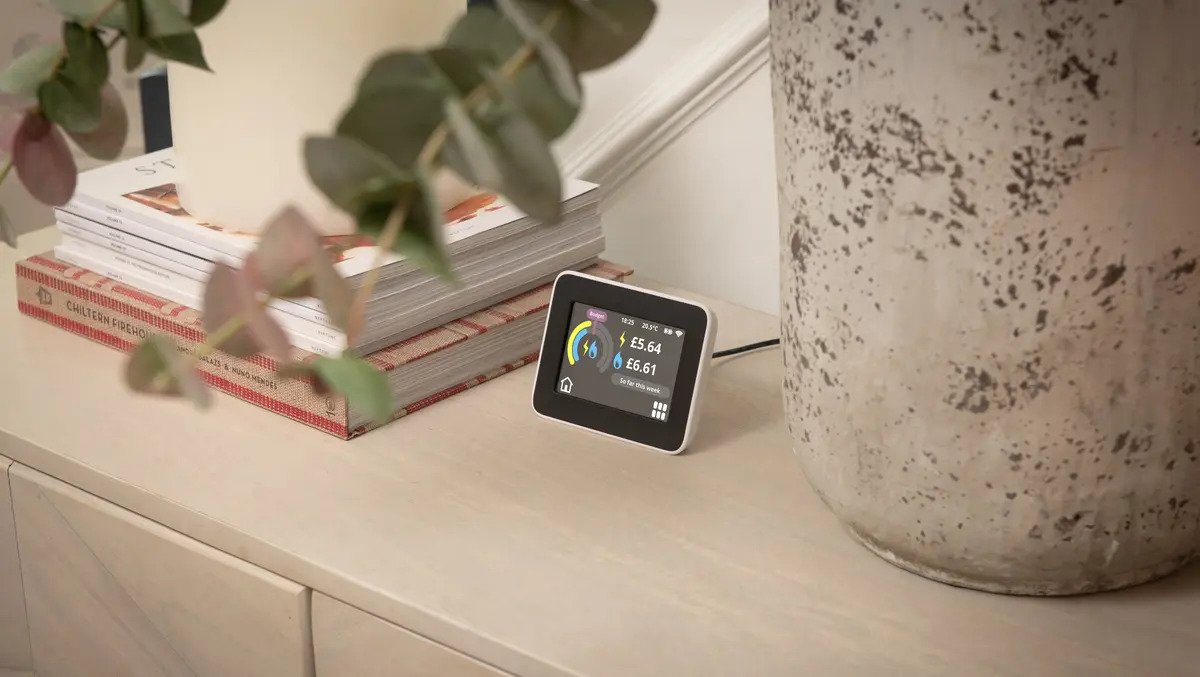
Used alongside smart meters, in-home displays show households real-time information about energy consumption. Suppliers and meter providers have increasingly positioned these devices as a way to improve customer engagement with energy use and spending, particularly as the rollout shifts from initial installation targets to wider use of consumption data.

According to Chameleon, more than 20 million people in Great Britain currently have access to one of its in-home displays. That represents more than a third of households and gives the company a sizeable presence in the domestic smart energy market.

The partnership gives Centrica another supplier as it broadens its procurement base for smart metering equipment. Large utility groups have faced pressure to maintain installation volumes while avoiding disruption in a market shaped by technical standards, logistics demands and customer service expectations.

Gareth Openshaw, Asset Finance and Metering Director at Centrica Business, outlined the rationale for the deal.

“At Centrica, we continually seek opportunities to diversify our supply chain. Working with Chameleon Technology provides us with additional support for large-scale smart meter deployment, delivering tools that help customers better understand and manage their energy use,” said Openshaw.

For Chameleon, the agreement extends a business built around household energy data and smart devices. The Harrogate-based company has operated in the sector since 2010, supplying products designed to make smart meter data easier for consumers to understand.

Its in-home displays show live usage and cost information directly from installed smart meters, allowing households to track changes in consumption throughout the day. The company also offers related data services and a consumer app, reflecting a broader market shift towards combining physical devices with digital energy management tools.

Rollout focus

The UK smart meter programme has been running for years, with suppliers tasked with replacing traditional gas and electricity meters with connected devices that send readings automatically. The latest stage of the rollout has placed greater emphasis on customer engagement and helping households make practical use of the data those meters produce.

That has kept in-home displays relevant even as suppliers expand mobile apps and online account tools. While digital channels can present richer information, display devices remain an accessible option for many consumers because they provide immediate visibility of usage in the home without requiring a smartphone or computer.

Centrica, whose energy activities span households, businesses and public sector customers, is one of the largest participants in the UK market. Adding another technology partner for in-home displays may help it manage delivery volumes as suppliers continue installations and replacements under evolving programme targets.

Broader ties

Chameleon indicated that the relationship could extend beyond device supply over time, although the announcement focused on support for current rollout needs. It expects to explore opportunities to help Centrica customers better understand energy use and identify ways to improve efficiency.

Carmen Carey, Executive Chair at Chameleon Technology, described the agreement as a sign of the company’s standing with energy retailers.

“Our partnership with Centrica reflects both the scale of our deployment capability and the trust placed in us by energy retailers across the UK market. We look forward to working closely with Centrica as the partnership develops and new opportunities emerge to deliver additional value through smart energy data,” said Carey.

Chameleon’s operations are based primarily in Harrogate, North Yorkshire, with additional operations in France and Hong Kong. More than 20 million people in Great Britain currently have access to a Chameleon in-home display, according to the company.



Source link

Continue Reading
Click to comment

Leave a Reply

Your email address will not be published. Required fields are marked *

Business & Technology

Nettlebed Creamery ‘proud’ of winning artisan cheese awards

Published

on


Nettlebed Creamery won the top prizes in two categories at the 10th annual Artisan Cheese Awards 2026, a series which supports cheesemakers in the UK and Ireland and celebrates their achievements.

This year, the awards saw 644 entries from more than 100 micro- and medium-sized artisan cheese producers, and a judging panel of 80 representatives from some of the top food retailers and supermarkets.

READ MORE: Forum to address Oxfordshire developments ‘gridlock’ fears

Across 20 classes, from hard to soft cheese, raw milk to blue, smoked and flavoured, Nettlebed Creamery came away with two ‘gold’ awards.

Nettlebed Creamery cheesesNettlebed Creamery Cheese: Bix and Witheridge in Hay won gold awards at the Artisan Cheese Awards 2026 (Image: Nettlebed Creamery)

The creamery’s Witheridge in Hay six-month aged cheese was awarded class winner in the organic cheese class, while it’s Bix cheese won ‘highly commended’ in the soft cheese class.

Nettlebed Creamery’s executive cheesemaker Sabrina Langley said: “It’s always really lovely to get recognition for our cheese, we work really hard to make the cheese we do.

Nettlebed Creamery cheesesThe executive cheesemaker at Nettlebed Creamery said they’re ‘proud’ of what they do (Image: Nettlebed Creamery)

“We’ve got a great team at the moment who work together really well, and it can be hard work, it’s hot and tiring and quite a physical job, so when you get awards coming through it makes it all worth it.

READ MORE: Wallingford music event cancelled due to ‘poor weather’

“It’s also really nice for a small business to be recognised in this way, we’re very proud of what we do”.

She added that the care put into every aspect of their cheese production – from using organic milk from local herds which ‘shines through’ in the project to the time it takes to perfect a new cheese is a key part of their approach.

Along with its cheeses, Nettlebed Creamery is beloved for The Cheese Shed cafe, a delightfully rustic barn which specialises in cheese toasties.


Source link

Continue Reading

Business & Technology

Thames Water plea amid Oxford Port Meadow poo pollution row

Published

on


The UK’s largest water company has said it cannot make waterways thrive alone, adding that farming, industry and other factors also play a part in river health.

The much-criticised company’s statement comes after Linda Smith, Sheriff of Oxford, wrote to Chris Weston CEO of Thames Water, earlier this week.

The Labour party politician, who is also the cabinet member for housing and communities, raised the issue of water quality in the River Thames and Wolvercote Mill Stream, which run next to Port Meadow.

READ MORE: UK de-aging company with Oxford University links in £2.7m collapse

She said the waterway was given designated bathing water status in 2022, but since then it has consistently been rated as ‘poor’ due to elevated levels of faecal bacteria more commonly known as excrement or poo.

Ms Smith explained: “I understand that Thames Water are still reviewing data and investigating possible causes of these totally unacceptable levels of pollution, including assessing the impact of your assets on water quality.”

Linda Smith (Image: Andrew Walmsley)

However, she added that she was confused as to why no conclusions have yet been drawn considering that research has been happening for four years.

As such, the sheriff called on the company to share its plans for improving water quality at Wolvercote, and for how it is going to decrease the bacteria load going into the river from Cassington, Stanton Harcourt and Church Hanborough sewage treatment works, which are upstream from Port Meadow.

She said: “The people of Oxford take great interest in this matter and we should all be able to enjoy the river without fear of becoming ill.

“The ongoing pollution is also a threat to wildlife and the biodiversity of one of our most treasured open spaces.”

Drone shot of Cassington Sewage Treatment Works. Picture Witney Against Sewage Pollution (WASP)

Responding to this, Thames Water acknowledged that there is some evidence showing the potential for an impact on the bathing water from Cassington Sewage Treatment Works and UV treatment is being installed to tackle this.

However, the company also said that there are multiple other causes for river pollution including industry, animal faeces from livestock and wildlife, along with run off from farms and roads.

A Thames Water spokesperson said: “We have been carrying out investigations this bathing season to better understand our impact on the condition of the water and inform any actions we might need to take to improve our treatment processes.  

“This year, there have been no storm overflows from Thames Water sites within 5km of Wolvercote Mill Stream during the bathing season.  

READ MORE: Thames Water update amid pressure warning and Oxfordshire school closure

“We are always committed to seeing waterways thrive, but we can’t do it alone.

“Farming, industry, road runoff, and increasingly extreme weather also play a role in river health. 

“We will continue to work closely with the Environment Agency and local partners to understand where improvements to our assets might be required in future, so that communities can continue to enjoy the bathing water.”  


Source link

Continue Reading

Business & Technology

UK firms see quantum computing as a practical tool

Published

on


SOFIAH NICHOLE SALIVIO

News Editor

D-Wave has published research showing that 41% of large UK enterprises expect quantum computing to unlock more than £100 million in value within a year.

The survey found that 65% of UK businesses are already adopting or piloting the technology.

The findings suggest a shift in how large companies view quantum computing, from early exploration to practical use cases. Of those surveyed, 26% said their organisation is actively adopting quantum computing, while 39% are testing it through pilot projects or proof-of-concept work.

Board-level interest is also rising. One in five business leaders said quantum computing is already a strategic priority for their organisation, while 34% described it as an emerging business tool.

Censuswide conducted the research among 1,003 senior business decision-makers across the UK. The results suggest that businesses with direct experience of quantum computing place a higher commercial value on it than those taking a wait-and-see approach.

Organisations already engaging with quantum estimated nearly twice the commercial value of those waiting for the technology to mature. They were also more likely to say it is already delivering value today, with 37% of active users holding that view, compared with 16% of business leaders overall.

Operational focus

The strongest near-term interest centred on optimisation tasks. Respondents identified workforce scheduling, resource allocation, supply chain management and manufacturing processes as areas where better optimisation could deliver benefits.

Ninety per cent cited workforce scheduling, 89% resource allocation, 88% supply chain optimisation and 82% manufacturing processes. These areas often involve large numbers of variables, time pressure and cost constraints, making them suitable targets for alternative computing methods.

D-Wave linked that interest to annealing quantum computing, which it said is well suited to solving optimisation problems. The company has long focused on that part of the market as it positions quantum systems for business applications rather than purely academic work.

AI pressure

The survey also linked interest in quantum computing to dissatisfaction with current AI returns and concern about the infrastructure needed to support further growth in compute-heavy workloads. More than a third of business leaders said AI had delivered some return on investment but had not met expectations.

Nearly two-thirds said they were concerned that existing energy infrastructure may not support continued growth in AI and other compute-intensive technologies. Against that backdrop, 87% said quantum computing could help optimise AI-related processes and other complex computational challenges.

This suggests some businesses now view quantum not as a distant replacement for existing systems, but as a tool for specific bottlenecks that conventional computing and AI struggle to address efficiently.

Barriers remain

Despite the strong interest, respondents also pointed to obstacles to wider use. Cost was the most frequently cited barrier, mentioned by 46%, followed by a lack of internal expertise at 33% and limited awareness at 30%.

These figures indicate that, even as uptake increases, many businesses still lack the skills and internal understanding needed to assess where the technology could be useful. The findings also suggest quantum computing remains at an uneven stage of adoption, with some companies building familiarity while others are still defining the business case.

D-Wave said broader quantum literacy will need to extend beyond technical teams if businesses are to use the technology more widely in planning, optimisation and decision-making. For many large organisations, that would require senior leaders in operations, finance and strategy to understand where quantum tools fit alongside existing software and infrastructure.

The company, one of the earliest commercial suppliers of quantum computers, has argued that practical business use is emerging now rather than remaining years away. Its latest UK survey reflects a market in which expectations are rising, but commercial adoption still depends on clearer use cases, internal expertise and proof of returns.

“The era of enterprise quantum computing adoption has arrived. Companies are no longer asking if they should explore quantum, but how quickly they can implement it,” said Murray Thom, Vice President of Quantum Technology Evangelism at D-Wave.

“This study shows that UK organisations increasingly see quantum computing as a practical tool for tackling real business challenges, from supply chain optimisation to manufacturing to AI. As a result, we are beginning to see the Quantum Effect take shape across the UK market,” Thom said.


Source link

Continue Reading

Trending