Connect with us

Business & Technology

Centrica names Chameleon as smart meter display partner

Published

on


Centrica has selected Chameleon Technology as a strategic technology partner for in-home display devices in its smart meter programme, adding supply capacity for the next phase of the UK rollout.

Chameleon will supply in-home display devices to support Centrica’s smart meter deployment commitments and strengthen resilience in its supply chain. The appointment follows a tender process and comes as energy suppliers continue work on the government-backed installation programme across Great Britain.

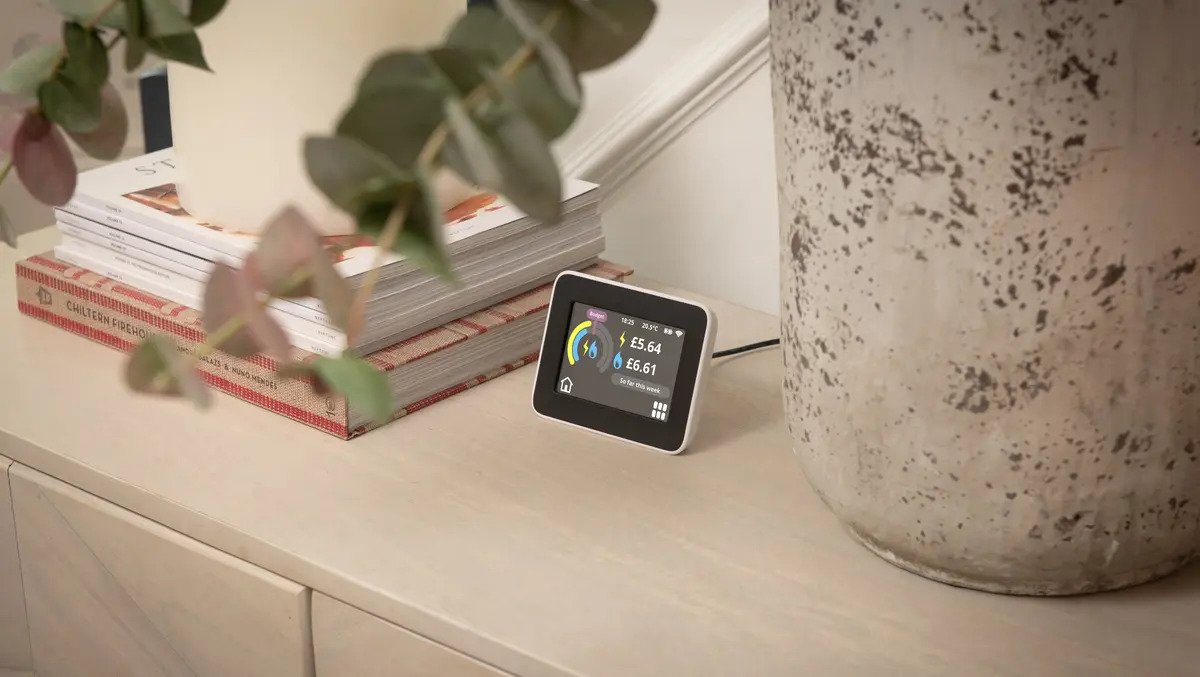
Used alongside smart meters, in-home displays show households real-time information about energy consumption. Suppliers and meter providers have increasingly positioned these devices as a way to improve customer engagement with energy use and spending, particularly as the rollout shifts from initial installation targets to wider use of consumption data.

According to Chameleon, more than 20 million people in Great Britain currently have access to one of its in-home displays. That represents more than a third of households and gives the company a sizeable presence in the domestic smart energy market.

The partnership gives Centrica another supplier as it broadens its procurement base for smart metering equipment. Large utility groups have faced pressure to maintain installation volumes while avoiding disruption in a market shaped by technical standards, logistics demands and customer service expectations.

Gareth Openshaw, Asset Finance and Metering Director at Centrica Business, outlined the rationale for the deal.

“At Centrica, we continually seek opportunities to diversify our supply chain. Working with Chameleon Technology provides us with additional support for large-scale smart meter deployment, delivering tools that help customers better understand and manage their energy use,” said Openshaw.

For Chameleon, the agreement extends a business built around household energy data and smart devices. The Harrogate-based company has operated in the sector since 2010, supplying products designed to make smart meter data easier for consumers to understand.

Its in-home displays show live usage and cost information directly from installed smart meters, allowing households to track changes in consumption throughout the day. The company also offers related data services and a consumer app, reflecting a broader market shift towards combining physical devices with digital energy management tools.

Rollout focus

The UK smart meter programme has been running for years, with suppliers tasked with replacing traditional gas and electricity meters with connected devices that send readings automatically. The latest stage of the rollout has placed greater emphasis on customer engagement and helping households make practical use of the data those meters produce.

That has kept in-home displays relevant even as suppliers expand mobile apps and online account tools. While digital channels can present richer information, display devices remain an accessible option for many consumers because they provide immediate visibility of usage in the home without requiring a smartphone or computer.

Centrica, whose energy activities span households, businesses and public sector customers, is one of the largest participants in the UK market. Adding another technology partner for in-home displays may help it manage delivery volumes as suppliers continue installations and replacements under evolving programme targets.

Broader ties

Chameleon indicated that the relationship could extend beyond device supply over time, although the announcement focused on support for current rollout needs. It expects to explore opportunities to help Centrica customers better understand energy use and identify ways to improve efficiency.

Carmen Carey, Executive Chair at Chameleon Technology, described the agreement as a sign of the company’s standing with energy retailers.

“Our partnership with Centrica reflects both the scale of our deployment capability and the trust placed in us by energy retailers across the UK market. We look forward to working closely with Centrica as the partnership develops and new opportunities emerge to deliver additional value through smart energy data,” said Carey.

Chameleon’s operations are based primarily in Harrogate, North Yorkshire, with additional operations in France and Hong Kong. More than 20 million people in Great Britain currently have access to a Chameleon in-home display, according to the company.



Source link

Continue Reading
Click to comment

Leave a Reply

Your email address will not be published. Required fields are marked *

Business & Technology

Professor says tokenised deposits won’t transform banking

Published

on


A Loughborough University study has challenged claims that tokenised bank deposits will transform banking, arguing that many of the supposed benefits can already be delivered through existing systems.

The paper examines tokenised deposits, which represent money held in a bank account as a digital token, and questions whether they amount to a significant innovation for mainstream banking. Supporters say the model could improve the speed and automation of payments. The study argues that these outcomes do not depend on tokenisation.

Professor Alistair Milne of Loughborough Business School wrote the policy note for SUERF, a group that brings together central bankers, regulators, academics and finance professionals. He argues that banks already use computer systems and databases that can be programmed to handle many of the same tasks now being presented as new.

Debate over digital money has gathered pace as banks, policymakers and financial technology groups explore alternatives to traditional account-based systems. Tokenised deposits have emerged as one of several concepts under discussion, alongside stablecoins and central bank digital currencies. Advocates say they could help create faster payments, available at all hours and easier to link to automated instructions.

Milne’s paper takes a narrower view of what is actually new. It argues that blockchain, the record-keeping technology often associated with cryptocurrencies such as Bitcoin, is not necessary for most of the practical gains linked to tokenised deposits. In his assessment, conventional bank infrastructure can already support much of the same functionality without converting deposits into tokens.

“Much of the current discussion suggests tokenised deposits will transform banking. My research indicates that the technology itself is not the key issue. Most of the promised advantages can already be achieved using conventional banking systems. In many cases, tokenised deposits are better understood as a new way of packaging existing capabilities rather than a fundamentally new form of money,” said Professor Alistair Milne, Loughborough Business School, Loughborough University.

The study does not dismiss tokenised deposits entirely. Instead, it identifies a limited set of circumstances in which they may offer a clearer advantage, particularly within the operations of large international banks serving corporate clients across several markets.

Cross-border use

One of the stronger use cases, the paper argues, arises when a global company moves money between countries and currencies within the same banking group. In that situation, payments can be automated more easily because the transfer remains within one bank’s internal systems rather than moving through several institutions.

That distinction matters because payments between different banks still require interbank settlement. This brings a series of established constraints, including regulation, security checks and the management of financial risk between institutions.

The paper argues that tokenising a deposit does not remove those underlying frictions. Even if the customer-facing representation of money changes, banks must still complete the same core settlement and compliance steps when funds move across institutional boundaries.

Wider debate

The findings add to a broader policy discussion over whether new forms of digital money represent genuine structural change or simply a redesign of existing financial processes. Banks and regulators have been assessing how far distributed ledger systems can improve payments, settlement and record-keeping, especially in wholesale and cross-border markets.

Milne’s intervention is likely to resonate with those who question whether the financial sector is overstating the novelty of token-based systems. The paper suggests the real barriers to better payments are not always technological, but often lie in the legal, regulatory and risk frameworks that govern transactions between separate institutions.

The paper also highlights a divide in the digital money debate. Some proposed systems promise gains by changing the form of money itself, while others seek improvements through better integration of existing infrastructure. Milne’s argument places tokenised deposits closer to the second category.

For banks, that could shape investment decisions. If the same results can be achieved through upgrades to current databases and payment systems, the commercial case for shifting to tokenised deposits may be weaker than some advocates suggest, especially in domestic banking where established systems are already deeply embedded.

At the same time, the paper leaves room for more targeted adoption where specific operational benefits can be shown. Large multinational banks handling internal cross-border flows may still find token-based structures useful in defined cases, even if the model falls short of a broader banking revolution.

The study’s central conclusion is that the hardest parts of modern payments do not disappear simply because deposits are represented differently in software. As Milne argues, the most important constraints often emerge when money must move between institutions rather than within them.

Those frictions remain central to banking, regardless of whether a deposit is recorded in a conventional account ledger or represented as a token. The paper argues that turning deposits into digital tokens does little to remove these underlying challenges.


Source link

Continue Reading

Business & Technology

UK restaurant chain bids final farewell in emotional goodbye

Published

on


The closures, including branches in Oxfordshire, are part of the parent company Whitbread’s major restructuring plan, and will see all 106 sites shut permanently.

It was announced in April that the company would shut its remaining Beefeater and Brewers Fayre sites as part of a strategy overhaul, placing around 3,800 jobs at risk.

READ MORE: More than 100 restaurants to shut across the UK

There are Beefeaters in Cowley and Kidlington.

Now the chain has reached out to its loyal customers.

Dishes are served at Beefeater (Image: Jamie Lau)

In an email being distributed to previous diners and members of its loyalty schemes, Beefeater shared a message of gratitude, with two prominent words: ‘thank you’.

It said: “A message from your local Beefeater: We want to say a huge thank you for your custom at our Beefeater restaurants.”

It added: “As you may have seen, we have recently announced changes to our business, which is resulting in the closure of our Branded Restaurants.

“This means that on Thursday, September 10, 2026, your local Beefeater and all other UK Beefeaters will close.”

Inside Beefeater (Image: Christie Owen & Davies)

In the letter, the company also said it would close the loyalty scheme on August 31.

The restructure is part of Whitbread’s new five-year strategy, which aims to reduce costs by £250m.

The chain first launched in 1974.

The former Ock Mill Beefeater restaurant in Abingdon (Image: Andy Ffrench)

Several customers said they were “sad” to see the chain shutting sites, although they also felt the brand had gone downhill in more recent years.

One person wrote: “Until I went to university the only restaurant I’d ever been to was a Beefeater. We’d go for various family birthdays. I absolutely loved it.

“A steak or a mixed grill, which I never got at home, followed by a Knickerbocker Glory. Fantastic times. I went back a couple of years ago.

“The place looked run down. I feel sad about this, but I guess the fact I hadn’t been to one for 30 years is part of the problem.”

The Ock Mill Beefeater restaurant, linked to the former Premier Inn in Marcham Road, Abingdon, closed in 2023, and the site was bought by the Unicorn School, which is currently renovating the building for classrooms.

Dominic Paul, Whitbread’s chief executive, said earlier: “We always challenge ourselves to improve and, in light of significant cost increases in the form of business rates and national insurance, as well as the implied market discount to our inherent value, we’ve looked hard at the options open to us to maximise value creation over the medium and long-term.

“This has been a rigorous process, and we’ve approached all options with an open mind.

“Our new five-year plan builds on our strengths and drives a significant acceleration of our strategy.”


Source link

Continue Reading

Business & Technology

Sapia.ai launches Tia to tap hiring data for teams

Published

on


JOSEPH GABRIEL LAGONSIN

News Editor

Sapia.ai has launched Tia, an AI assistant for hiring teams. It is aimed at organisations that want to use existing candidate interview data to inform recruitment decisions.

Tia allows recruiters and hiring managers to ask questions in everyday language and receive answers based on previous AI interviews conducted through the Sapia.ai platform. The responses draw on structured interview evidence rather than CVs and include the reasoning behind each recommendation, while the final hiring decision remains with a person.

The launch comes as hiring activity in the UK remains subdued. Data cited by Sapia.ai from Reuters and Indeed showed job postings had fallen 11% since the start of the year and were 32% below their pre-pandemic level, even as demand for AI skills continued to rise.

Against that backdrop, recruitment technology suppliers are placing greater emphasis on tools designed to help employers do more with the information they already collect. Sapia.ai is positioning Tia as a way to reuse interview data that often goes untouched once a vacancy has been filled.

Businesses spend heavily on attracting, interviewing and assessing candidates, but much of the knowledge generated during that process is then left in separate systems or archived reports, according to Sapia.ai. Tia is designed to surface those records so hiring teams can revisit previous applicants, compare shortlisted candidates or prepare interview guides without manually searching through documents.

Examples include identifying candidates already in a talent pool, assessing which previous applicants showed leadership potential, comparing two finalists and creating onboarding plans based on information already captured. The assistant works only with an organisation’s own hiring data held within the Sapia.ai platform.

That approach reflects a wider debate over the use of AI in recruitment. Employers and software providers are under pressure to show that automated recommendations can be understood and challenged, particularly when they affect employment outcomes. Sapia.ai said each answer provided by Tia is based on structured interview evidence and accompanied by transparent reasoning.

Barb Hyman, Chief Executive Officer and Founder of Sapia.ai, said the product is intended to help businesses make better use of information they already have.

“Tia is about helping businesses make better use of information they already have,” Hyman said.

“Companies spend millions every year attracting and assessing talent, but once a role is filled, much of that knowledge sits unused. We wanted to change that.”

Hyman said the system is designed to make historical hiring data more accessible when a new vacancy opens.

“Tia turns years of hiring data into something organisations can actually use. Instead of starting from scratch every time a new role opens, recruiters can instantly rediscover great candidates they’ve already met, compare applicants using real evidence and make decisions with greater confidence.

“We believe AI shouldn’t replace human judgement but actually make it better. Tia gives hiring teams the information they need, when they need it, while keeping people firmly in control of the final decision.”

Beyond recruitment

Sapia.ai said Tia could also be used for internal workforce analysis. In addition to helping fill jobs, the assistant is intended to help employers identify internal talent, highlight leadership potential and spot skills gaps using behavioural data gathered during recruitment.

This suggests the company sees the product extending beyond candidate selection into broader workforce planning. For employers facing lower hiring volumes and pressure on recruitment budgets, the ability to draw more value from existing candidate and employee data may prove attractive, particularly if it reduces duplicated search and assessment work.

At the same time, the claims are likely to be tested against ongoing scrutiny of AI tools used in human resources. Questions around bias, explainability and accountability remain central in the market, and vendors are increasingly expected to show that automated systems support rather than replace human decision-making.

Sapia.ai has made that distinction central to Tia’s launch, arguing that the assistant should be used to organise and interpret evidence already held by employers rather than make decisions on their behalf. The tool is now available as part of its platform.


Source link

Continue Reading

Trending