
Business & Technology
Why the next phase of AI in business will be about workflow control, not just generation


NATHAN PRINCE
Founder
All Timed Out
For the past two years, much of the public conversation around artificial intelligence in business has focused on generation. Can a model write an email, summarise a meeting, draft a proposal, or produce content quickly enough to save time? Those questions were natural at the start of the cycle. Generation is visible. It is easy to demonstrate, easy to market, and easy to understand. But for businesses trying to apply AI inside real commercial operations, generation is no longer the most important issue.
The more consequential question is now one of workflow control. Once AI becomes part of everyday business activity, organisations have to decide how that activity is managed, reviewed, governed and connected to the rest of the process. A useful draft generated in seconds is only one small part of the picture. The wider challenge is making sure that the right people see it, that it fits the right context, that it moves through the right approvals, and that it sits inside a process that remains coherent rather than chaotic.
This is especially true in customer-facing work. Sales, marketing and business development teams often operate under pressure, with limited time and rising expectations. AI can clearly help with speed, but speed on its own does not solve fragmentation. In many organisations, lead handling, message drafting, campaign planning, inbox activity and reporting still happen across multiple disconnected tools. Adding another AI interface into that mix may improve output in one moment, while making the overall workflow harder to supervise.
That is why the next phase of AI adoption in business will be less about isolated prompts and more about structured operational environments. The businesses that gain the most from AI will not necessarily be the ones using the most tools. They will be the ones that create better discipline around how AI is embedded into day-to-day work. In practice, that means stronger review points, clearer ownership, better visibility over activity, and less dependency on manual workarounds between systems.
There is also a trust issue at stake. Senior decision-makers are becoming more comfortable with AI as a productivity aid, but many remain wary of using it in outward-facing activity without safeguards. That caution is understandable. If AI is being used to support prospecting, communication or relationship management, then businesses need confidence that quality is being maintained and that outputs are being handled in context. Governance, in this sense, is not bureaucracy. It is what makes AI usable at scale.
Smaller businesses may feel this shift most sharply. They often face the greatest pressure to work efficiently, but they do not always have the luxury of adding headcount or investing in large enterprise systems. For them, the attraction of AI is practical rather than experimental: reduce repetitive manual work, improve consistency, and give commercial teams more time to focus on judgement and decision-making. Yet these businesses also have the least room for disorder. If AI introduces more fragmentation rather than less, the value quickly erodes.
This is why software in the coming period is likely to be judged less by how impressively it generates and more by how well it helps businesses run a process. The novelty stage is passing. What matters now is whether AI can sit inside operational infrastructure in a way that is structured, accountable and commercially realistic. Businesses do not need endless point solutions that produce text in isolation. They need systems that help them manage activity more cleanly from one step to the next.
In that sense, the market is beginning to mature. The conversation is moving away from whether AI can assist with work, and towards what kind of working environment it creates. For technology providers, that raises the bar. For buyers, it provides a more useful test. The question is no longer simply, what can this tool generate? It is, what kind of workflow does this enable, and how much better control does it give the business over the work that matters?
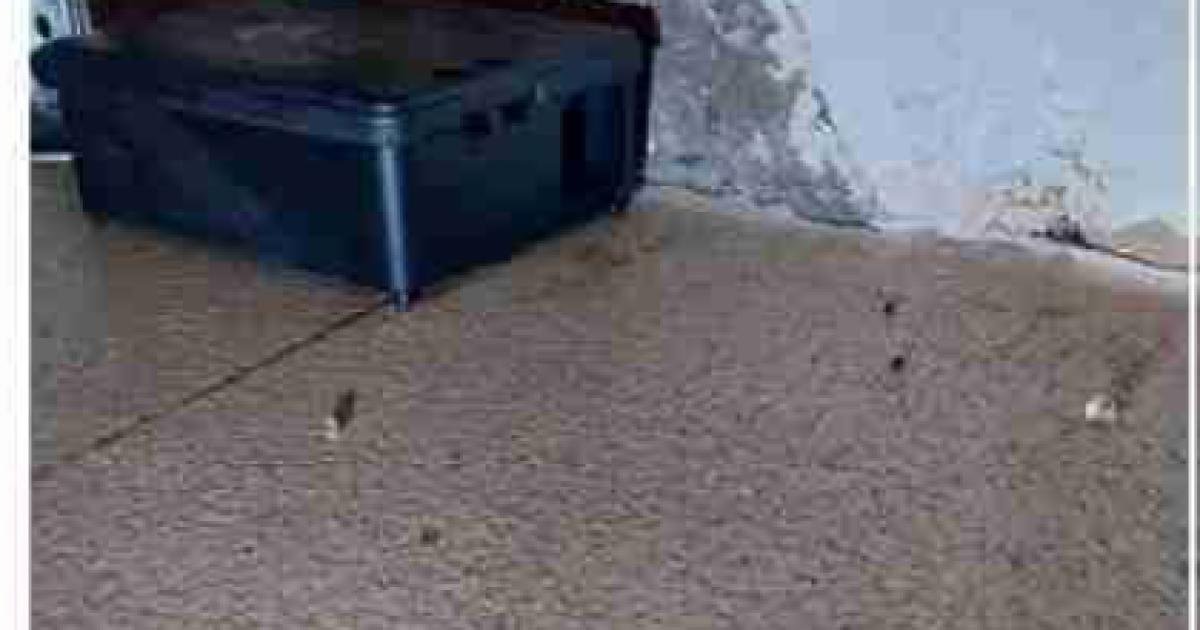
Ten Seconds Yunnan Rice Noodle in New Inn Hall Street was inspected by Oxford City Council on May 26.
Inspectors subsequently handed the Chinese restaurant a rating of two out of five, meaning “improvement necessary”.
According to the report, received by the Oxford Mail after a Freedom of Information request submission, officers identified a series of concerns, including evidence of mouse activity.
The report states that mouse droppings were found throughout the business in two food storage rooms and the bar area.
In one of the storage areas, mouse activity was present where noodles were kept in plastic carrier bags and potatoes and onion were left in the open.

Inspectors said pest-proofing measures were “not great” and identified a hole beneath a sink in the bar area which could potentially allow pests to enter the premises.
In the report, the inspector said: “At the time of the inspection, I observed a number of historic mouse dropping in both the food storage areas.
“The most recent pest control report mentions no mouse activity in any of the food storage areas.
“All areas where food is prepared and stored must be kept clean and capable of being kept clean. This is so that pests are not attracted into your premises and the risk of food being contaminated by dirt is minimised.”
They advised the owner to remove all historic mouse droppings within the food business and continue to identify any issues of pest proofing within a month.

The business was instructed to remove the droppings and improve pest-proofing measures where previous temporary work had failed.
Food storage issues were also highlighted during the inspection.
In an “overfilled” fridge, officers found raw chicken stored above ready-to-eat foods, including uncovered beans and spring onions, which could cause cross-contamination leading to food poisoning.
That same fridge, which stored items such as cooked rice, chicken ballotine and prawns, was above the required eight degrees, raising concern about food poisoning.
A large number of food containers were also unlabelled, despite the food looking fresh.
The officer insisted a “robust system for ensuring adequate stock rotation” was implemented and recommended all food be kept in sealed, pest-proof containers.

No food-safe sanitiser or disinfectant were available on site, only a kitchen cleaner which they said did not provide adequate disinfection.
Despite the concerns, the report noted there had been a “huge improvement” in cleaning standards since the restaurant’s previous inspection.
The business also had a food safety management system in place and a pest control contract with Pure Pest Solutions.
The council has required a range of improvements, with compliance timescales ranging from one week to one month with a revisit inspection planned.

Oxford-based Peripear has secured an Innovate UK Women in Innovation Award and a £74,974 grant for its development of a wearable device designed to prevent perineal trauma during labour.
The funding will support continued product development ahead of the company’s planned first-in-human study.
Nina van Schaick, co-founder and COO of Peripear as well as a midwife who trained at Oxford Brookes, said: “I’m sure I wasn’t the only one to see this gap.
“I was incredibly lucky to meet my co-founder, Eviatar Natan, right as my frustration about the lack of translation of evidence into practice had peaked.
“There was a proven mechanism that could reduce injuries occurring in up to 90 per cent of vaginal births, and it was being left out of clinical pathways simply because no standardised tool existed to deliver it.”
Peripear is developing what it describes as the world’s first automated perineal thermotherapy wearable, designed to prevent perineal trauma during childbirth.
A perineal thermotherapy wearable is an emerging medical device.
It is a hands‑free warm compress device used on the perineum during the second stage of labour to reduce severe tearing and episiotomies while improving maternal comfort.
Ms van Schaick added: “I’m a farmer’s granddaughter, and when I started practising over 14 years ago, I asked: where is the tool I need to implement this evidence? I looked around and realised we were still asking clinicians to improvise.
“Peripear is what happens when the person who has lived the problem, both personally and professionally, meets the person who can help her build the solution.”

The company behind bikemaker Raleigh, which was founded 139 years ago and has supplied bikes to the UK’s cycling city of Oxford over the years, has filed to appoint administrators.
Accell UK and Ireland, part of Netherlands-based Accell Group, filed a notice of intention to appoint administrators as the wider group kickstarted insolvency proceedings.
This follows a difficult spell for Nottinghamshire-based Raleigh, which confirmed job cuts in 2024 before reporting a £30m loss in financial accounts published the following year.
READ MORE: UK supermarket giant issues customer notice on Jeremy Clarkson beer
The boss of Accell said it was a “deeply sad and frustrating situation” and that it had “tirelessly explored” every option for the future of the cycling business.
The company bought Raleigh in 2012 for around 100 million US dollars (£74 million), adding to its roster of bike brands throughout Europe including Haibike, Winora and Ghost.
Raleigh was founded in Nottingham in 1887 and was well-known for its Chopper model, which featured extended handlebars and is now part of its “retro” range.
It no longer manufactures bikes from Nottingham, and its head office has moved to Eastwood, Nottinghamshire, while the company has shifted to selling electric bikes under Accell’s ownership.
READ MORE: TV icon daughter’s £3.95m swimming pool mansion in Oxfordshire unsold
Accell went through a restructuring in February, securing additional funding from shareholders and lenders and reducing debts.
The group said it had since “explored every possible avenue” for its future, including discussions with potential buyers, but that it had not been possible to find a solution which means the business can continue operating.
It has therefore initiated insolvency proceedings in the Netherlands.
Accell’s chief executive Jonas Nilsson said: “This is a deeply sad and frustrating situation given all the hard work and everything we have achieved, with the support of shareholders and lenders, to restructure Accell’s operations and finances.
“It is an especially difficult moment for our employees, creditors, customers, suppliers, and partners.
READ MORE: EastEnders cast ‘furious’ as Shane Richie due to appear in court
“Every realistic option for the future of the business has been tirelessly explored, and none have resulted in a solution to continue the Group in its current form.
“Our immediate focus is to support an orderly process, provide clarity wherever possible, and work with the relevant court-appointed administrators to preserve viable activities and employment where circumstances allow.”
At its 1970s height, Raleigh employed more than 13,000 people across the UK, with around 8,000 working at its various Triumph Road sites in Nottingham.
The former factory land later became the University of Nottingham’s Jubilee Campus.
Raleigh subsequently moved its headquarters to Church Street in Eastwood, before leaving that site and relocating to Durban House in 2024.



-

 Business & Technology3 weeks ago
HSBC UK & Visa test AI shopping with live payments
-

 Business & Technology3 weeks ago
Valarian lands USD $50 million backing for sovereign AI
-

 Oxford Events4 weeks ago
Henley Festival 2026 highlights: Five nights of unforgettable performances and festival moments
-

 Oxford united FC3 weeks ago
Oxford United three players who be kept after transfer ban
-

 Business & Technology2 weeks ago
Slice golf bar swings to new heights after successful launch
-

 Oxford News3 weeks ago
Man jailed for ‘sickening’ sexual assault of three girls in Cotswolds
-

 Business & Technology3 weeks ago
UK AI firms raise record GBP £4.56bn in Q2 funding
-

 Oxford Events4 weeks ago
Crazy Bear Stadhampton: a new era with refreshed spaces, theatrical dining and Afternoon Tea Feast