
UK News
Why do some killer motorists get short prison sentences? UK road safety laws are letting them off the hook | Sally Kyd

In 2024, 1,602 people were killed on British roads. Only a small proportion of these resulted in a surviving driver being prosecuted. When we hear about the sentencing in such cases, the public reaction is often a mix of sorrow, anger and, increasingly, confusion. Why do some drivers who kill receive only short prison terms? Why are some charged with the lesser offence of “careless” rather than “dangerous” driving? After more than two decades researching this area of law, I believe our legal framework for prosecuting drivers needs to change.
Most of us rarely do anything that could easily kill another person – except when we drive. For many of us, passing our driving test is a rite of passage. It represents independence and adulthood in a car-centric society. When we first learn to drive, we are hyper-aware of the need to concentrate. But once we have passed, most of us never look at the Highway Code again, and the careful habits drilled into us by instructors fade away.
However, the law still assumes that we all understand – and consistently meet – the standard of a “competent and careful driver”. The reality is different.
Two cases heard in court on Friday 13 March highlighted the problem. At Birmingham crown court, Javonnie Tavener was sentenced for causing the death of four-year-old Mayar Yahia. Reports say he was on his phone, speeding in a 20mph zone, with cannabis in his system, and attempted to overtake near a junction. Dashcam footage showed him clipping another car, losing control, mounting the pavement and hitting Mayar’s family as they walked home. It is clear that his driving was appalling. Yet, inexplicably, the Crown Prosecution Service (CPS) categorised it as “careless”, and a jury was never given the opportunity to decide if it was in fact “dangerous”.
On the same day, I was at Lincoln crown court observing another sentencing hearing. Eighteen-year-old Madeleine Lonsdale had pleaded guilty to causing the deaths by careless driving of two peers in a crash last June, on the last day of their A-levels. She had been driving at 76mph in a 60mph limit and failed to brake before a bend. Her car left the road and hit a tree. Her passengers who died were students at my son’s school. Their mothers read their victim impact statements with extraordinary dignity.
When I described the court hearing to my son – who is learning to drive – he immediately asked why Lonsdale had not been charged with dangerous, rather than careless, driving. To him, choosing to drive at such a speed is obviously behaviour that falls “far below” the standard of a competent and careful driver. And that is precisely the legal definition of dangerous driving. Careless driving means falling below the standard; dangerous driving means falling far below it, and doing something that any competent driver would recognise as creating a risk of harm.
At the Lincoln hearing, no one suggested that dangerous driving might have been the right charge. But in Birmingham, after watching the dashcam footage, the judge, Peter Cooke, questioned why Tavener had not been charged with causing death by dangerous driving. It is unusual for a judge to say something like that in court. It casts doubt on the CPS’s claim that the evidence did not meet the test for a dangerous driving charge.
In both cases, the judges placed the offending in the highest category under the sentencing guidelines. Both defendants received a reduced sentence because they pleaded guilty, which is standard practice. Tavener received three years and 10 months in prison and a six-year driving ban. Lonsdale received 14 months in prison and a three-and-a-half-year ban. Judges always make clear that the prison term is not intended to reflect the value of the life lost. In the Birmingham case, though, the judge complained that his hands were tied because the charge limited his sentencing powers.
The problem goes deeper than individual decisions. Our entire legal framework for driving offences rests on a concept – the “competent and careful driver” – that does not have a shared meaning. Prosecutors, magistrates, jurors and police officers all interpret it differently. Even the Automated Vehicles Act 2024 uses the same standard to judge whether a self-driving car is safe enough for the roads. If humans cannot agree on what the standard means, how can we expect machines to meet it?
Meanwhile, driving standards appear to be falling. It was reported last month that more driving offences were committed in 2024 in England and Wales than ever before. Speeding is widespread. Handheld mobile phone use is endemic. Both of these are separate offences, yet also provide evidence of dangerous driving, according to CPS legal guidance. They are behaviours that have been criminalised because of the risk they pose to others. Creating separate offences does not, though, help with the messaging about what constitutes (un)acceptable driver behaviour. It is surely beyond question that reading WhatsApp messages on a mobile phone mounted to a dashboard while driving is unacceptable. Yet some assume that if it isn’t expressly banned, it must be fine.
Built-in screens to control GPS and music are now widespread and complicate things further. They can be distracting, and any lapse in attention could amount to careless driving, yet the temptation to allow our eyes to wander from the road is difficult to resist thanks to the marketing of car manufacturers. Even when drivers commit blatant breaches of the law, enforcement is patchy and inconsistent, thanks to roads policing having been cut to the bone. And every attempt to tighten the rules is met with cries of a “war on motorists”. This narrative must end.
In order to ensure that our criminal justice system can respond appropriately to road violence, we need to do three things. First, driving offences must be redefined. The distinction between careless and dangerous driving is poorly understood and too subjective. It leads to inconsistent charging decisions and undermines public confidence. We need a clearer framework – one that focuses on concrete behaviours, not abstract notions. It is disappointing that the government missed the opportunity to review these offences and resolve this ambiguity as part of its road safety strategy.
Second, the government must also reinvest in roads policing. Its new road safety strategy sets ambitious targets for reducing deaths and serious injuries – but without proper enforcement, these targets are unlikely to be met. Between 2012/13 and 2019/20, roads policing in England and Wales was cut in real terms by more than a third. Officers cannot deter dangerous behaviour and prevent deaths if they are not present on the roads.
Finally, there is work to do as a society to reframe how we think about driving. Many drivers see speed limits, cameras and enforcement as personal inconveniences. We must communicate the concept that driving is a responsibility, not an entitlement. This means better driver education and a public conversation that centres victims, rather than complaints about 20mph zones. Let’s ensure that the criminal justice system is used to reinforce the message that adherence to the Highway Code is not optional.
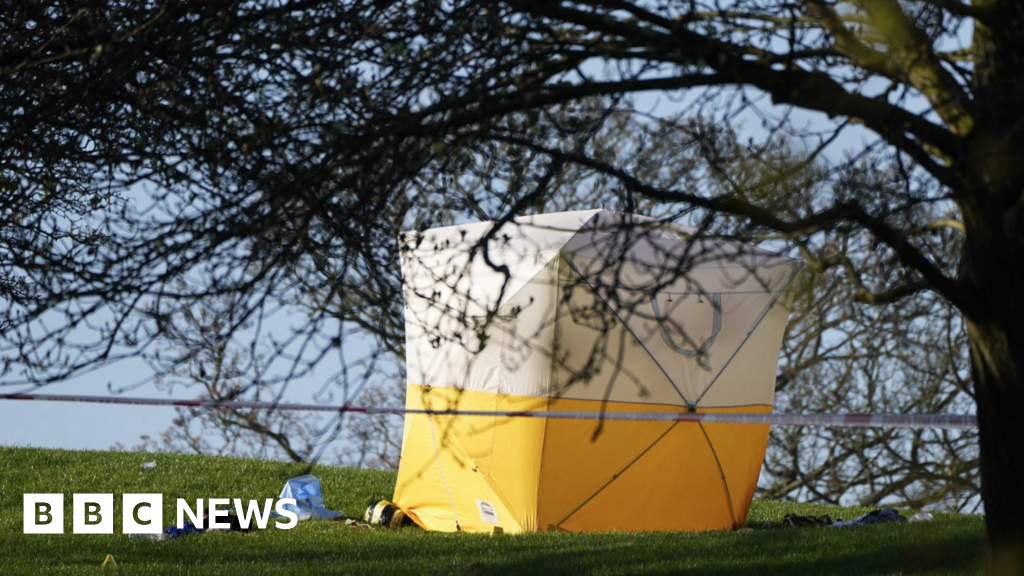
Metropolitan Police detectives are appealing for information as part of a murder investigation.
Source link
UK News
US and Iran agree to provisional ceasefire as Tehran says it will reopen strait of Hormuz | US-Israel war on Iran
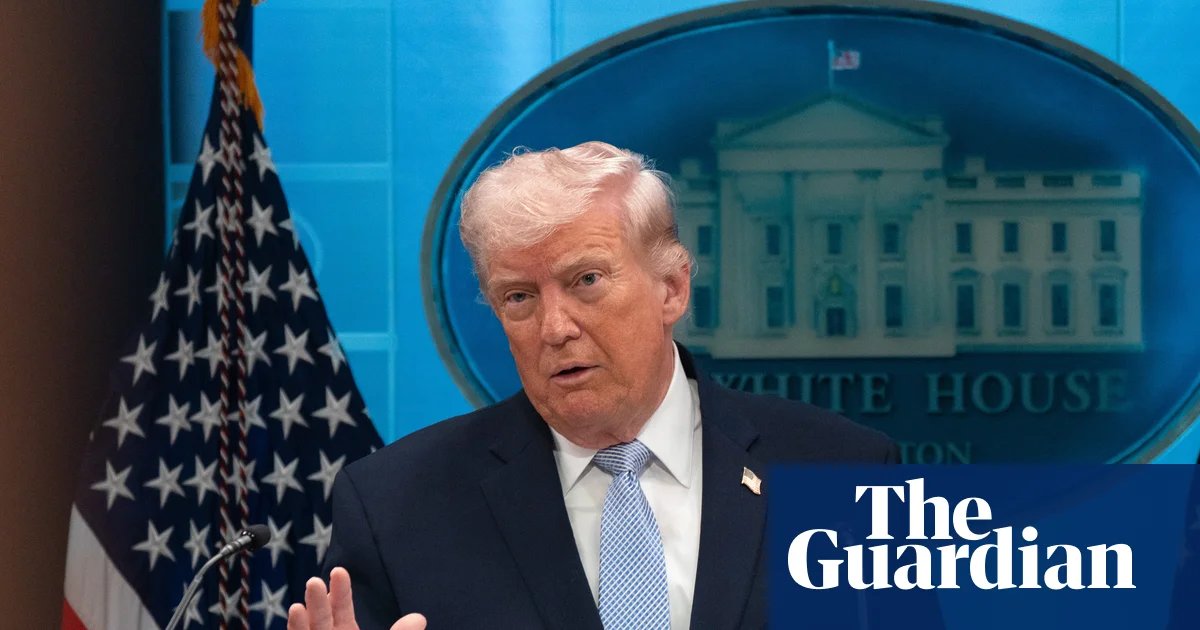
The US and Iran agreed to a two-week conditional ceasefire on Tuesday evening, which included a temporary reopening of the strait of Hormuz, after a last-minute diplomatic intervention led by Pakistan, canceling an ultimatum from Donald Trump for Iran to surrender or face widespread destruction.
Trump’s announcement of the ceasefire agreement came less than two hours before the US president’s self-imposed 8pm Eastern time deadline to bomb Iran’s power plants and bridges in a move that legal scholars, as well as officials from numerous countries and the pope, had warned could constitute war crimes.
Just hours earlier, Trump had written on Truth Social: “A whole civilization will die tonight, never to be brought back again. I don’t want that to happen, but it probably will.” American B-52 bombers were reported to be en route to Iran before the ceasefire agreement was announced.
But by Tuesday evening, Trump announced that a ceasefire agreement had been mediated through Pakistan, whose prime minister, Shehbaz Sharif, had requested the two-week peace in order to “allow diplomacy to run its course”.
Trump wrote in a post that “subject to the Islamic Republic of Iran agreeing to the COMPLETE, IMMEDIATE, and SAFE OPENING of the Strait of Hormuz, I agree to suspend the bombing and attack of Iran for a period of two weeks”.
In a separate post later, the US president called Tuesday “a big day for world peace” on a social media post, claiming that Iran had “had enough”. He said the US would be “helping with the traffic buildup” in the strait of Hormuz and that “big money will be made” as Iran begins reconstruction.
For several hours afterwards, Israel’s position or agreement with the deal was unclear. But just before midnight ET, the prime minister, Benjamin Netanyahu, said Israel backed the US ceasefire with Iran but that the deal did not cover fighting against Hezbollah in Lebanon. His office said Israel also supported US efforts to ensure Iran no longer posed a nuclear or missile threat.
Pakistan’s prime minister had previously said that the agreed ceasefire covered “everywhere including Lebanon”.
The ceasefire process was clouded in uncertainty after Iran released two different versions of the 10-point plan intended to be the basis for negotiations, and which Trump said was a “workable basis on which to negotiate”.
In the version released in Farsi, Iran included the phrase “acceptance of enrichment” for its nuclear program. But for reasons that remain unclear, that phrase was missing in English versions shared by Iranian diplomats to journalists.
Pakistan has invited the US and Iran to talks in Islamabad on Friday. Tehran said it would attend, but Washington has yet to publicly accept the invitation.
In a telephone call with Agence France-Presse, Trump said he believed China had persuaded Iran to negotiate, and said Tehran’s enriched uranium would be “perfectly taken care of”, without providing more detail.
In the two-week ceasefire, Trump said, he believed the US and Iran could negotiate over the 10-point proposal that would allow an armistice to be “finalized and consummated”.
“This will be a double sided CEASEFIRE!” he continued. “The reason for doing so is that we have already met and exceeded all Military objectives, and are very far along with a definitive Agreement concerning Longterm PEACE with Iran, and PEACE in the Middle East.”
Iran’s foreign minister, Abbas Araghchi, issued a statement shortly after Trump’s announcement saying Iran had agreed to the ceasefire. “For a period of two weeks, safe passage through the Strait of Hormuz will be possible via coordinating with Iran’s Armed Forces,” he wrote.
Oil prices dived, stocks surged and the dollar was knocked back on Wednesday as a two-week Middle East ceasefire sparked a relief rally, fuelled by hopes that oil and gas flows through the strait of Hormuz could resume.
Despite the provisional ceasefire, attacks continued across the region in the hours after Trump’s announcement. Before the deadline, airstrikes hit two bridges and a train station in Iran, and the US hit military infrastructure on Kharg Island, a key hub for Iranian oil production.
The sudden about-face will allow Trump to step back as the US war in Iran has dragged on for five weeks with little sign that Tehran is ready to surrender or release its hold on the strait, a conduit for a fifth of the global energy supply, where traffic has slowed to a trickle.
Trump had earlier rejected the 10-point plan as “not good enough” but the president has set deadlines before and allowed them to pass over the five weeks of the conflict. Yet he insisted on Tuesday the ensuing hours would be “one of the most important moments in the long and complex history of the World” unless “something revolutionarily wonderful” happened, with “less radicalized minds” in Iran’s leadership.
News of the provisional ceasefire deal was welcomed but with a note of caution elsewhere.
Iraq’s foreign ministry called for “serious and sustainable dialogue” between the US and Iran “to address the root causes of the disputes”, while the German foreign minister, Johann Wadephul, said the deal “must be the crucial first step towards lasting peace, for the consequences of the war continuing would be incalculable”.
In Australia, the government warned that the latest developments would not necessarily mean the fuel crisis is over. Oil prices fell as traders bet that the reopening of the strait of Hormuz would help fuel supply resume, but the energy minister, Chris Bowen, told reporters Australians should “not get ahead of ourselves”.
He said: “People shouldn’t take today’s progress and expect prices to fall. We welcome progress, but I don’t think we can say the [strait of Hormuz is] now open.”
A spokesperson for New Zealand’s foreign minister, Winston Peters, welcomed the “encouraging news” but noted “there remains significant important work to be done to secure a lasting ceasefire”.
Japan said it expected the move to result in a “final agreement” after Washington and Tehran begin talks on Friday. Describing the ceasefire as a “positive move”, the chief cabinet secretary, Minoru Kihara, said Tokyo wanted to see a de-escalation on the ground in the region, adding that the prime minister, Sanae Takaichi, was seeking talks with the Iranian president, Masoud Pezeshkian.
A temporary end to hostilities will come as a relief to Japan, which depends on the Middle East for about 90% of its crude oil imports, most of which is transported through the strait of Hormuz.
South Korea’s ministry of foreign affairs said it hoped “negotiations between the two sides will be successfully concluded and that peace and stability in the Middle East will be restored at an early date”, as well as wishes for “free and safe navigation of all vessels through the strait of Hormuz”.
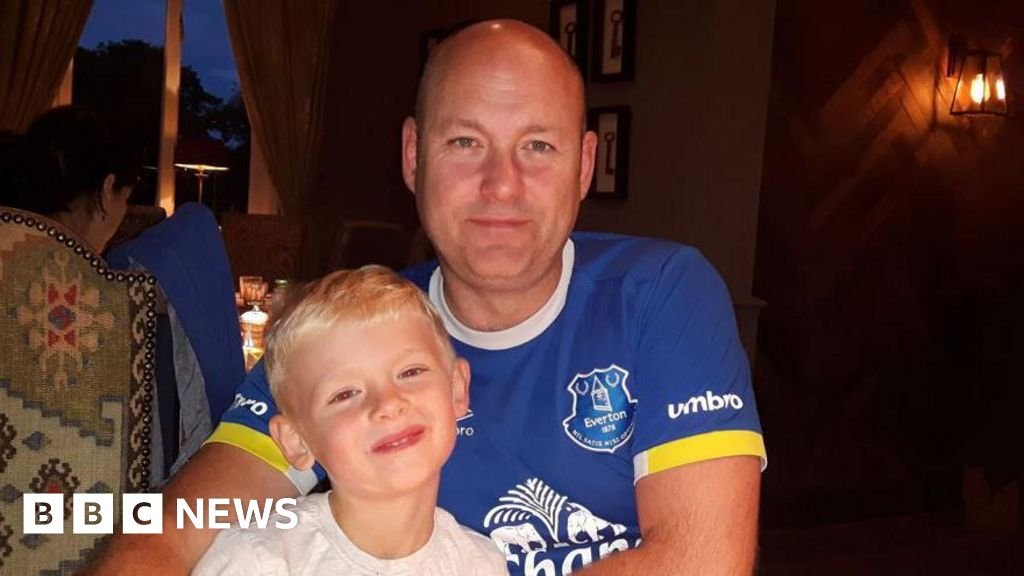
Craig Lewis-Williams needs specialist care for the rest of his life following the November 2021 attack.
Source link



-

 Oxford Events3 weeks ago
Michelin Guide Oxfordshire Restaurants – The Oxford Magazine
-

 Crime & Safety3 weeks ago
Oxford: ‘Next generation’ LimeBikes in city from today
-

 Jobs & Careers3 weeks ago
Explore our Careers
-

 Jobs & Careers3 weeks ago
Why Join Oxford | Oxford University Jobs
-

 Oxford Events3 weeks ago
Oxford News and Events, What’s on in Oxford, Exhibitions
-

 Jobs & Careers3 weeks ago
Internal Job Board for University vacancies
-

 Student Life3 weeks ago
The independent cinema battling Oriel College to stay open
-

 Oxford Events3 weeks ago
Pancake day recipes – Pancake day 2024