Connect with us

Business & Technology

UK businesses face £83,000 risk from AI search shift

Published

on


Fasthosts has warned that UK businesses could put up to £83,000 in annual revenue at risk if they fail to adapt to AI-driven search. The estimate is based on a model of an average business facing lower click-through rates from search.

The web hosting and domain provider said the shift towards AI-generated answers is reducing the number of users clicking through from search results to company websites. The change is most significant for businesses that rely heavily on organic search to generate leads and sales.

Fasthosts said more than 80% of Google searches now end without a click to a website. AI-generated answers, chatbots and large language models are changing how people find information, products and services, with users increasingly getting responses directly on search and chat platforms instead of visiting a business website.

The trend is also affecting performance in conventional search rankings. Fasthosts cited research showing that Google AI Overviews reduce organic click-through rates by an average of 15.49%, with some studies indicating declines of as much as 34.5% depending on the sector and query type. Visibility for the highest-ranked links can also drop by up to 58% when AI summaries appear above them.

On AI-native platforms such as ChatGPT, Claude and Perplexity, as many as 93% of queries may end without a click because users receive answers within the interface, according to the company. The result is a search market in which appearing on a ranked webpage no longer guarantees traffic.

Search shifts

For years, digital marketing strategies have focused on bringing users from search results to a company website. That approach is now under pressure as businesses are forced to consider how they appear in AI-generated summaries as well as traditional listings.

Interest in the area is rising sharply, Fasthosts said, pointing to Google Trends data showing searches for “AI Optimisation” up 200% year on year, while “AI SEO” and “Generative Engine Optimisation (GEO)” rose by 161% and 196% respectively.

The company argued that websites are not becoming obsolete despite the decline in direct traffic. Instead, domains and websites are increasingly serving as source material for AI systems, which scrape and extract content to build summaries, answers and recommendations.

That means a business website still plays a central role in online visibility, even when the customer does not arrive there immediately. In effect, websites are becoming both a destination for high-intent users and a reference point for AI systems that surface brands elsewhere.

Revenue model

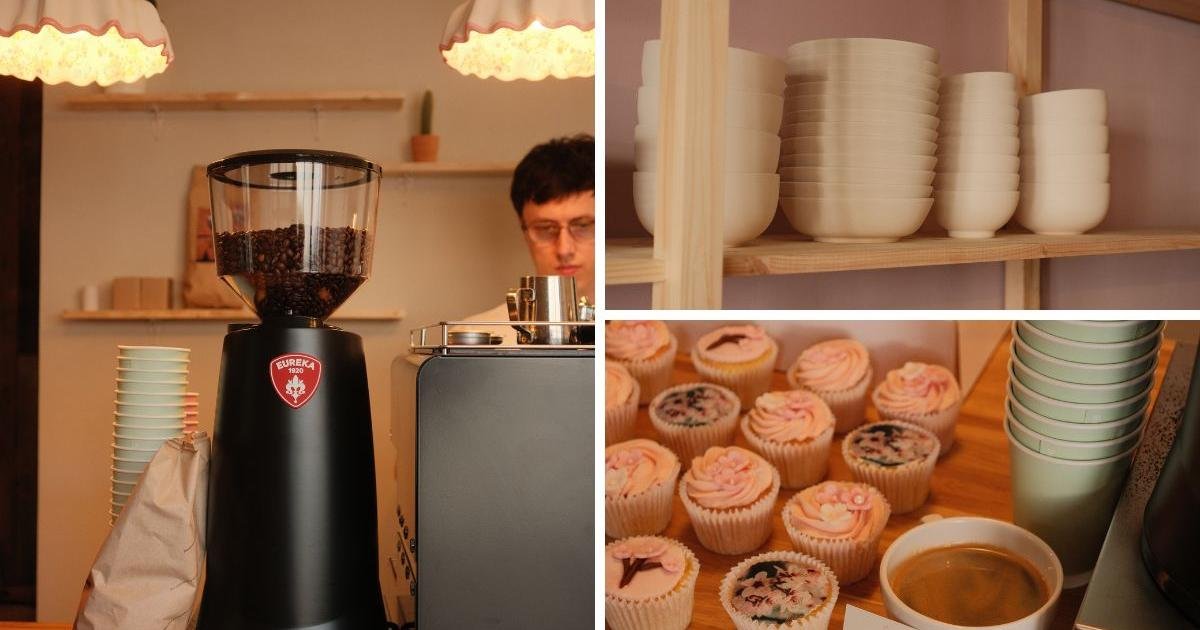
To illustrate the commercial impact, Fasthosts modelled a hypothetical UK small or medium-sized eCommerce coffee retailer generating £20,000 a month in revenue from organic search. In its scenario, a 34.5% fall in click-through rates from AI search features would put about £6,900 a month at risk.

Over a full year, that would amount to £82,800 in exposed revenue. Fasthosts said the figure would vary by sector and company size, but argued that even modest declines in search traffic can have a cumulative effect on sales over time.

The company also pointed to signs that AI-referred visitors may behave differently from traditional search users. It cited research from Recomaze suggesting these visitors can convert at rates up to 23 times higher than conventional organic visitors and have bounce rates 27% lower than those arriving through standard search.

That suggests a smaller volume of visits does not always mean weaker commercial outcomes, particularly if users arrive after completing more of their research through an AI tool. A visitor who clicks through after using a chatbot or AI answer service may already be closer to making a purchase than a casual browser using a search engine in the usual way.

Adapting strategy

For businesses, the change creates pressure to broaden search strategy beyond rankings and backlinks alone. Content may need to be structured so AI systems can interpret it clearly, while still serving users who arrive directly on a site.

It also changes how companies think about visibility. The goal is no longer only to secure a place near the top of search results, but to ensure products, services and information are represented accurately in AI-generated responses that users may treat as the final answer.

Fasthosts warned that businesses ignoring the shift risk losing search-driven revenue faster than many expect, with websites remaining the core source of information that supports visibility across both traditional and AI-led search.


Source link

Continue Reading
Click to comment

Leave a Reply

Your email address will not be published. Required fields are marked *

Business & Technology

US fast food chain set to open its first UK restaurant

Published

on


Louisiana-born chicken brand Raising Cane’s is setting up shop on Coventry Street in the heart of London, between Piccadilly Circus and Leicester Square.

Although no official opening date has been announced, branded hoardings have now appeared at the site, signalling that the long-awaited launch is edging closer.

The chain, loved by celebrities including Snoop Dogg, Post Malone and Halle Berry, opened its first store in 1996, and as it approaches 30 years in business, is coming to the UK for the first time.

US fast food chain Raising Cane’s set to open its first UK restaurant

The chain has already developed a UK-focused menu featuring both take-out and dine-in meal options, as well as customisable chicken finger combos.

Unlike many competitors, Raising Cane’s keeps its menu simple, offering chicken fingers, crinkle-cut fries, coleslaw, Texas toast, and its signature Cane’s Sauce.

The sauce, described by fans as “next level,” is a particular point of excitement among British diners, who have shared their enthusiasm online.

One food lover wrote: “Omg I absolutely love Raising Cane’s.”

Another said: “Had this in Vegas.

“It was so good.

“Definitely on a par with Slim Chickens imo.”

A third added: “The sauce is next level.

“I will travel just for that.”

The company is reportedly exploring additional central London locations, including Oxford Circus, Paddington, South Bank, and The Strand, as well as potential drive-thru sites across Greater London.

The London restaurant will be the starting point for the brand’s wider European rollout.

US fast food chain rivalling McDonald’s coming back to UK after 17 years

Raising Cane’s is the latest in a wave of US fast-food brands expanding into the UK market.

Recent arrivals include Popeyes, while Dave’s Hot Chicken and Chick-fil-A have also announced UK expansion plans.

Chili’s Grill & Bar is also looking to come back to the UK after more than 15 years, with hopes of eventually opening more than 100 restaurants across the country.

The chain originally arrived in Britain during the 1990s and operated restaurants in places including Cambridge, Reading and London’s Canary Wharf, but by 2009, every UK branch had closed.

Now, the company is making a fresh attempt at cracking the UK market, aiming to open a flagship restaurant within the next 12 to 18 months before it aims to roll out more sites, reports Need To Know.

Industry insiders say they believe the chain could open between 85 and 100 restaurants if successful, with potential locations including London, Manchester, Birmingham, Leeds, Glasgow, and Liverpool.

The Tex-Mex chain is well-known in the US for its burgers, ribs, fajitas, and margaritas.

What US restaurant or fast food chain would you most like to see come to the UK?


Source link

Continue Reading

Business & Technology

UK firms struggle to map supply chain cyber threats

Published

on


More than eight in 10 UK cyber security and third-party risk professionals say their organisation experienced at least one supply chain cyber incident in the past year, highlighting continued gaps in supplier oversight and incident response.

Risk Ledger‘s research Every Link Matters: The State of Supply Chain Security 2026 – UK Edition found 82.4% of respondents recorded at least one supply chain incident in the previous 12 months. Almost half, at 47.2%, reported two or more. The findings suggest supply chain cyber risk remains a persistent issue for organisations across sectors, despite stronger regulatory scrutiny of operational resilience and supplier dependencies.

Risk levels

The survey of 500 UK cyber security and third-party risk management professionals found 86% ranked supply chain cyber incidents among their top three concerns for 2026.

The data also shows a gap between concern and readiness. Only 6% of respondents said they could accurately map exposure across their supplier ecosystem in under four hours after a major supply chain cyber incident. Another 45% said it would take between four and 24 hours.

More than a quarter said it would take one to three business days. A further 23% said it would take more than a week and require manual outreach to suppliers.

Those delays can limit an organisation’s ability to respond when a supplier is compromised. Teams need to know which business services, systems and processes may be exposed. They also need to understand whether risk extends deeper into the supply chain.

Slow checks

Supplier due diligence remains slow. Only 38% of respondents said their organisation could complete security due diligence for a new supplier within two weeks.

Another 34.6% said the process took three weeks or more. Within that group, 12% said it took more than one month.

Risk Ledger’s analysis points to a structural weakness in many third-party risk management processes. They often remain manual and focused on bilateral assessment between one customer and one supplier. Many still rely on bespoke questionnaires and periodic reviews.

That approach can create duplicated work for suppliers. It can also leave customers relying on information that may not reflect current security controls.

Visibility gap

Visibility beyond direct suppliers remains uneven.

Some 30% of respondents said they had full visibility into the entire chain of subcontractors contributing to important business functions. Just over half, at 50.2%, said they had high visibility into all direct subcontractors of critical third parties.

A further 16% reported only partial visibility into some fourth parties of their critical suppliers. Only 3% said they had no visibility beyond direct critical third parties.

The findings come as regulators in the UK and EU put greater emphasis on operational resilience, concentration risk and the mapping of digital dependencies. This includes closer scrutiny of subcontractors and deeper-tier relationships that support critical or important services.

“Identifying systemic risks is really important. However in most cases, only industry-level associations have enough combined resources and adequate information sharing guardrails in place to efficiently identify actual systemic risks, agree actions and, with the help of regulators, influence large players in the supply chain,” said Yohann Le Grand, Senior Security & Resilience GRC Manager, Lloyds Wealth.

Network mapping

Risk Ledger sets out a model it calls Active Supply Chain Security. It is based on standardised assessments, continuous monitoring, network visibility, collective defence and faster incident response.

The survey suggests organisations are open to more collaborative approaches. Some 42% of respondents said their organisation would be very supportive of an industry-wide model in which supplier intelligence and assurance data are shared with peers. A further 50.2% said they would be somewhat supportive.

Risk Ledger also examined three groups using its platform: 26 government organisations, 25 local authorities and 30 financial institutions.

Across the government group, the platform identified 3,240 direct third parties and 5,886 additional dependencies across shared nth parties. It also identified 1,264 potential concentration risks, including 820 at third-party level.

Of those third-party concentration risks, 224 were rated critical. Risk Ledger said this means an incident at one supplier would be likely to disrupt essential services at multiple public sector organisations.

“Risk Ledger’s Network Visualisation Tool has enabled us to efficiently identify critical risks across our supply chain, helping us address potential concentration risks before they escalate,” said Chris Phillips, Third-Party Compliance and Assurance Lead, Home Office Cyber Security (HOCS) | Governance, Risk and Compliance (GRC).

Sector exposure

The local authority group had 1,004 direct third parties and 7,659 additional dependencies across shared nth parties. Risk Ledger identified 1,240 potential concentration risks, including 364 at third-party level. Of those, 99 were rated critical.

The financial services group had 2,780 direct third parties and 6,529 additional dependencies. The platform identified 1,322 potential concentration risks, including 727 at third-party level. Of those, 288 were rated critical.

The analysis also found control weaknesses among some critical concentration risks. In the financial services group, 120 suppliers classified as critical third-party concentration risks did not have Cyber Essentials certification. Two were not using Multi-Factor Authentication to secure remote access to their network or cloud environments. Ten did not regularly test or rehearse Business Continuity and Disaster Recovery plans.

“A big challenge with third-party risk management comes down to how corporations and other organisations tackle peer-to-peer communication from within their respective siloes. We (as customers of common suppliers) need to get better at working with each other and trusting what our peers are doing. Using feedback as a form of intelligence about shared interests would allow companies to focus more time on fixing the things we really care about,” said Jay Vinda, Global CISO and Cyber Risk Engineering Lead, Mosaic Insurance.

Read full report here.


Source link

Continue Reading

Business & Technology

Ardmore Group files for administration after 52 years

Published

on


Ardmore Group’s businesses, including its construction and major projects arms, have filed a notice of intention to appoint administrators.

This has left nine active projects in London in limbo, including a £500m scheme with laboratories and housing in King’s Cross, known as Tribeca.

It had also been working on high-end hotels in Mayfair and Kensington, flats at Earl’s Court and Hackney Wick, and offices at Chancery Lane, The Telegraph reports.

What is the Ardmore Group?

The Ardmore Group was founded in Catford in 1974 by Irish brothers Cormac and Patrick Byrne.

It was well-known for its building projects in London, such as the Raffles hotel and The Ned.

Alongside that, it was a partner for major housebuilders such as Barratt Redrow, Berkeley and Crest Nicholson.

Ardmore’s LinkedIn page shares that the firm specialises in “large-scale complex projects through our direct delivery capability, technical and engineering expertise, and pro-active approach to managing risk.”

It adds: “We’ve designed and built some of the UK’s most significant projects, establishing an unrivalled reputation as one of the country’s leading residential and hotel builders.

“Our traditional, hands-on approach to construction puts us at the heart of the action.”

Why did the Ardmore Group file for administration?

Scrutiny of apartment blocks that were built before the Grenfell disaster uncovered fire safety deficiencies at multiple buildings that Ardmore had built decades earlier.

Last year, Ardmore’s construction arm was put into administration in an attempt to protect the wider business group from being hit by client claims.

Despite this, Crest Nicholson won a landmark High Court challenge against the group over remediation costs at its Admiralty Quarter development in Portsmouth.

It was awarded close to £15m, and this paved the way for other builders to pursue claims against Ardmore.

Discussing the outcome of this High Court challenge, Ardmore shared: “The administration follows the profound impact of the recent Building Liability Order (BLO) judgment relating to the Admiralty Quarter project, which completed in 2009.

“The judgment has affected client confidence, payment terms and certified values across a number of live projects, materially affecting the construction group’s ability to continue trading in the normal way.”

On Thursday (June 11), Ardmore Group applied for a company moratorium, which is designed to give it temporary protection from creditor action while rescue options are explored.

This is also intended to give the group time to continue preparing its appeal against the BLO judgment.

An Ardmore spokesperson added: “This is a deeply disappointing outcome for the construction group, its employees and its stakeholders.

“Our focus is now on preserving value in the wider Group, protecting the continuing businesses where possible, and pursuing the appeal against a judgment which we believe raises important questions for the wider industry.”

Other UK companies that have closed or entered administration/liquidation in 2026

It has been a tough year for the UK high street, with several retailers entering administration and others announcing widespread store closures.

Major high street retailers LK Bennett and Claire’s both closed all their stores in April, having previously fallen into administration.

Quiz also revealed that it will be closing its 37 remaining stores by the end of June, after falling into administration in February (for the second time in 12 months).

Other retailers have been forced to close stores this year, including:

  • River Island
  • Primark
  • Poundland
  • Revolution
  • BrewDog
  • Franco Manca

Iguanas Holdings Limited, which runs 47 Las Iguanas restaurants across the UK, and Poundstretcher are also in danger of collapsing into administration if restructuring plans aren’t agreed, having “fallen into financial difficulties”.

Four UK travel companies have closed in 2026:

  • Regen Central Ltd
  • Gold Crest Holidays
  • Asiara UK Ltd
  • Simply Florida Travel Ltd

Luxury UK holiday company Salamander Voyages also shut down recently after entering administration.

Meanwhile, three UK airlines have fallen into administration or liquidation:

  • Ascend Airways (liquidation)
  • EcoJet Airlines (liquidation)
  • Zenith Aviation Limited (administration)

UK delivery company Yodel is set to be phased out over the coming months after being acquired by InPost.

It’s also been reported that Morrisons is looking to sell some of its in-store pharmacies as it continues to cut costs.

It’s not been all bad news for the UK high street, with several major brands announcing new store openings for 2026, including Aldi, M&S, and Superdrug.

Plus-size clothing brand Evans has also returned to the UK high street in 2026 after closing all its stores and concessions in December 2020.

Have you noticed an increased number of businesses closing or going into administration in your area this year? Let us know in the comments.


Source link

Continue Reading

Trending