
UK News
TV tonight: inside Labour’s crisis – from massive majority to Mandelson mayhem | Television


Dispatches: Keir Starmer – Where Did It All Go Wrong?
8pm, Channel 4
It’s hard to believe that less than two years ago, the Labour party under Keir Starmer won one of the largest electoral majorities in UK history. The party and the prime minister have been on the back foot ever since. Lewis Goodall explores Labour’s air of rolling crisis and finds causes ranging from the self-inflicted (the appointment of Peter Mandelson as the UK’s ambassador to the US) to the unfortunate (the re-election of Donald Trump). Is there any way back? Phil Harrison
7.30pm, BBC One
A return for the series in which the host meets everyday heroes and has them immortalised by sculptors and painters. In this opener, he encounters Darryn Frost, who in 2019 helped fend off a terrorist on London Bridge. He is paired with sculptor Nick Elphick, who aims to capture his heroism and compassion. Ali Catterall
Death in Paradise
9pm, BBC One
The murder mystery drama reaches a new level of ludicrous in its series finale – and is all the more fun for it. When a visitor to Saint Marie is found dead in the sea with marks on his body, locals suspect it was the work of a legendary monster, Lusca. Merv is the only sceptic but can he prove them all wrong? Hollie Richardson
Big Cats 24/7
9pm, BBC Two
A particularly stressful prowl alongside the Xudum pride, as lioness Tsebe’s cubs are starving and her youngest is injured and lost. Elsewhere, in Botswana’s Okavango delta, another mum – leopard Lediba – needs to keep her cub safe from the flood. HR
The Claudia Winkleman Show
10.40pm, BBC One
Chatshows can take years to find their dynamic, so it’s no surprise that Winkleman’s seated discussions haven’t clicked in her show’s opening weeks. Will the vibes be smoother with Jimmy Carr, Lisa Kudrow and One Battle After Another star Chase Infiniti? Jack Seale
Mobo Awards 2026: Access All Areas
11.25pm, BBC One
The awards themselves were streamed on Twitch yesterday. But the BBC has plenty of backstage bonus goodies, including exclusive performances and interviews with the likes of Lauryn Hill, Olivia Dean, Myles Smith, Tiwa Savage and the mighty Slick Rick. Radio 1 Xtra’s DJ Target is your guide. PH
Film choice
Femme (Sam H Freeman, Ng Choon Ping, 2023), 11pm, BBC Two
Provocative, sexy and featuring bold, vivid performances from its two leads, Sam H Freeman and Ng Choon Ping’s thriller immerses us in a night-time world of transgression and community. Nathan Stewart-Jarrett is drag performer Jules, who is the victim of a homophobic assault by the thuggish Preston (George MacKay). However, months later, Jules spies Preston in a gay sauna so plots to seduce him and post the footage online. A tale of revenge that morphs into a fascinating emotional and sexual powerplay between the two men. Simon Wardell
UK News
Goal-shy Leicester rooted to bottom of WSL but manager and fans not giving up | Leicester Women

The sight of two unwaveringly optimistic young girls waving their “Foxes never quit” flags proudly in the air – despite the swirling rain at the King Power Stadium – summed up the never-say-die attitude required for a relegation battle that Leicester are going to need now more than ever, after their chances of staying up decreased significantly with this defeat on Sunday.
Even before losing against Brighton, Leicester’s hopes had sustained a big blow with the sight of Oona Siren hitting a superb, looping volley into the net to secure a valuable point for 11th‑placed West Ham in the lunchtime kick-off. The 1-1 draw at home against London City Lionesses edged West Ham further away from the bottom side Leicester, who went on to be deservedly beaten 1-0 by Brighton and find themselves four points adrift with four games remaining.
There is, at least, a potential lifeline this season: the one-leg playoff fixture, scheduled for 23 May, against whoever finishes third in the second tier is now beginning to loom large for Leicester.
The only Women’s Super League side affiliated to an EFL club, Leicester’s current predicament can be attributed largely to their operating on what is believed to be the lowest budget in the top tier, and to having lost important players such as Ruby Mace and the Japan duo Saori Takarada and Yuka Momiki last summer. Pre‑season concluded with Amandine Miquel leaving her role as manager 11 days before the opening matches.
They are on a seven-match losing run in the league and that has coincided with a significant upturn in results for Liverpool, who now look all but safe, after their impressive January transfer activity.
The latest of those seven successive WSL defeats came on a soggy afternoon when Brighton showed their class on the ball, especially in the first hour, with Fran Kirby’s movement and creativity causing plenty of problems. After the hosts resisted their first-half pressure, Kiko Seike broke the deadlock by tucking home Rosa Kafaji’s unselfish pass, after Kirby had threaded open the backline with a sublime through ball.
The travelling fans, including one wearing a seagull outfit, celebrated as their team flew up to sixth in the table. A satisfied Brighton head coach, Dario Vidosic, said: “I was very happy with the first half [and then] we managed the game out well and it was a very deserved three points.”
There were a few moments to perhaps give Leicester’s supporters some cause for hope, not least a heroic block from Julie Thibaud, whose last-ditch defending helped to keep Leicester in the contest, but the standout statistic of the game was that the home side did not have any shots on target. They are really lacking quality in the final third.
“You can see the players are in the trenches together, there’s never a lack of effort,” the Leicester manager, Rick Passmoor, said. “We know that we’ve got a run-in where we’ve got to produce and stay together.”
It will be nearly a month until Leicester play again, on 26 April, owing to the extra length of the international window, which follows the Women’s FA Cup quarter-finals next weekend. When they eventually return to action, Leicester’s remaining fixtures are away against London City Lionesses and Arsenal, before a home fixture against Chelsea on the penultimate weekend. They conclude their regular season with a trip to Everton.
If Passmoor’s team do end up contesting the dreaded playoff, the identity of their opponents from the second tier still remains difficult to predict. Pivotal wins for Crystal Palace and Birmingham on Sunday kept the automatic promotion race on a knife-edge with the leaders, Charlton, missing the chance to clinch a top-two spot. Newcastle and Bristol City are still in contention but their hopes are fading.
The top two will be promoted automatically while the third-placed team will host whoever finishes bottom of the WSL and that looks increasingly likely to be Leicester.
It comes at an uncertain and worrying time for the football club more widely, with the Leicester men’s team in the Championship relegation zone, a point from safety after being deducted six points for overspending. It could yet be a campaign to forget for the men’s and women’s sides.
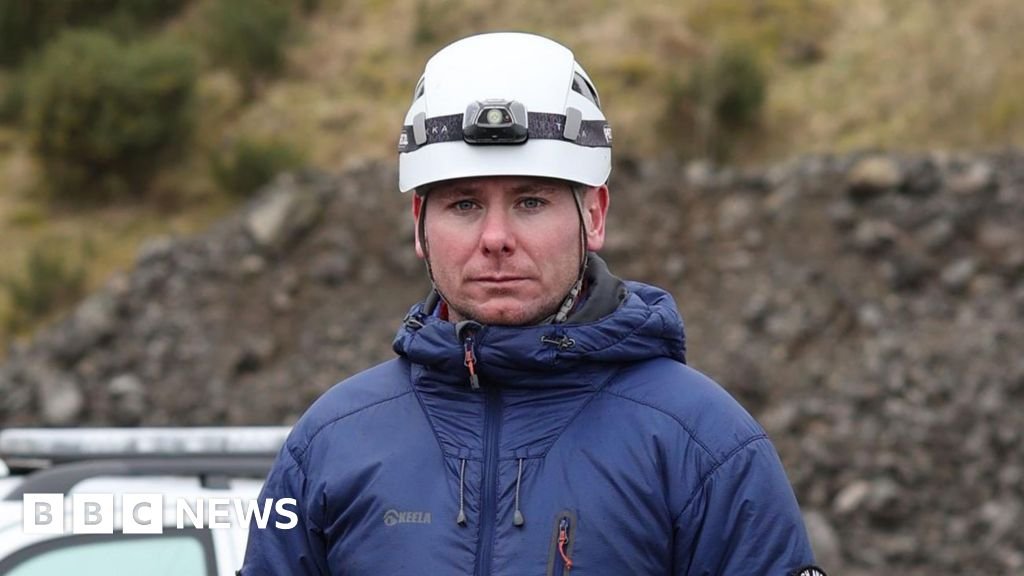
Three boys, one aged 13 and two aged 15, and a girl aged 16, have been charged with various offences including assault.
Source link
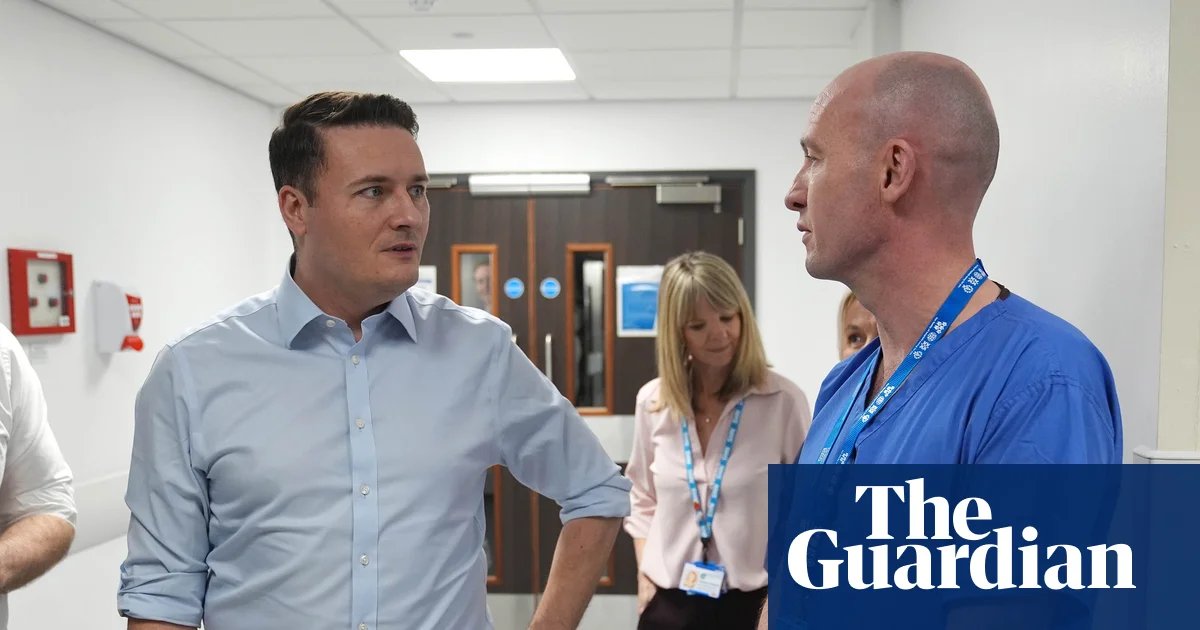
The NHS is set to miss key targets to shorten waiting times for help at A&E, cancer care and planned hospital treatment, leaving millions of patients facing persistently long delays.
The health service in England will not deliver a series of milestone improvements in its performance that ministers demanded it achieve by the time the fiscal year ends on Tuesday, a Guardian analysis of the NHS’s most recent data has found.
The lack of progress raises questions about pledges made last week by Wes Streeting, the health secretary, to get key waiting times back on track by the end of the parliament in 2029.
The findings will concern Keir Starmer, the prime minister, given Labour’s commitment to “get the NHS back on its feet” and the public’s strong desire to see an end to the routinely long waits for care that crept in from 2015.
The gloomy picture on waiting times also comes despite the NHS handing hospitals an extra £120m in recent weeks to fund a pre-deadline “elective sprint” – of extra appointments and more operations – intended to bolster its chances of delivering the necessary improvements by 31 March.
Streeting has repeatedly promised to ensure that 92% of people waiting for non-urgent hospital care such as appointments and operations get it within 18 weeks by 2029. However, the NHS only saw 61.5% of patents within 18 weeks in January. That was up on its 58.9% performance in January 2025 but still too low to hit the 65% year-end target for 2025-26.
Only 52 of the service’s 150 trusts – one in three – managed to deliver 65% performance in January.
In addition, 112 trusts – 70% of the total – had not delivered an additional requirement to improve their performance by at least 5% compared with the year before. The position at 44 trusts on the 18-week standard had worsened, amid unrelenting demand for care and a major NHS budget squeeze.
The service is also off-track to meet its year-end target for increasing the proportion of A&E patients treated within four hours. It was told to deliver 78% performance by 31 March. However, in February it managed to do so with just 74.1% of A&E arrivals – still short of the 78% target.
“These missed targets have very real human consequence. Patients will now be forced to face long delays for care they desperately need due to an NHS that isn’t up to scratch,” said Helen Morgan, the Liberal Democrats’ health spokesperson.
“Labour promised the world but have delivered little on our NHS. Patients still languish on corridors, can’t see a GP and wait too long for treatment. This is the biggest of all Starmer’s broken promises.”
The Guardian analysis also found that the NHS was due to miss the deadline to improve “category two” ambulance response times after a 999 call – which includes callouts for strokes and heart attacks – to an average of 30 minutes.
In January, response times had improved but were still at 30 minutes and 25 seconds. Six of England’s 11 ambulance trusts hit the target but five did not. The 30-minute target by the end of 2025-26 is meant to be a step in a series of annual improvements to help the NHS once again deliver its official target of 18 minutes.
More positively, the NHS is boosting patients’ satisfaction with getting GP appointments – another key target for this year – which is the public’s joint NHS priority, alongside speedy A&E care.
“Recent progress is encouraging, but meeting the government’s pledges to reduce waiting times will require a herculean effort,” said Tim Gardner, the assistant director of policy at the Health Foundation.
“It’s touch and go whether the current ‘sprint’ will be enough to meet this month’s interim target, with substantial variation across the country and some trusts struggling to even get close,” he added.
Projections by the thinktank suggest Labour will not be able to deliver its pledge to ensure that the NHS is again giving 92% of patients elective hospital care by 2029, he said.
Speaking last week to the Guardian’s Politics Weekly podcast, Streeting insisted that the government would not just hit that target but also get back to four-hour A&E care, cancer patients receiving their first treatment within 31 or 62 days and ambulances arriving within eight or 18 minutes of an emergency call, depending on the severity of the illness or injury.
He did so hours after a speech in which he stressed that “for the first time in 15 years waiting lists are falling, down by 374,000 since this government came to power”. That, and the first rise in public satisfaction with the NHS – albeit only to 26% – showed Labour’s medicine of £26bn extra funding and its 10-year health plan was helping to revive the NHS.
Labour inherited a waiting list in which 6.3 million people were waiting for 7.62m treatments. But by January that had fallen to 6.13 million patients waiting for 7.25m episodes of care.
“Overall there has been some progress [on waiting times since Labour took office in July 2024]. But it was from an incredibly low base and was already trending upwards,” said Stuart Hoddinott, an associate director of the Institute for Government thinktank.
“Crucially, additional funding and staffing are not translating into rapid improvements in performance,” he added.
Meanwhile, a separate analysis shows that the number of people in England waiting for a diagnostic test has hit 1.8 million – the highest since the Covid pandemic – and that delays in getting an X-ray or scan are limiting the NHS’s ability to crack its still-huge backlog of care.
Research by Magentus, a firm that works with NHS diagnostics services, also found:
-
The number of people forced to wait more than 13 weeks for a test – well over the six-week supposed maximum – has risen to 139,652, the highest number since January 2024.
Marlen Suller, Magentus’s managing director for clinical diagnostics, said: “Diagnostic waiting lists are still growing, which can mean worrying waits for many patients. A test or scan is the starting point for many people’s journey through the healthcare system, and delays at this stage can hold everything else up. It can mean a longer wait for treatment to begin, and people who don’t need further care can’t be discharged and safely moved off the waiting list.”
An NHS spokesperson said: “Analysing old data misses the fact that the NHS is currently working flat out to achieve its ambitions and has improved dramatically since the end of January. NHS weekly management information shows that this effort has got us within a hare’s whisker of the 18-week target, with two weeks to go. We’ve delivered record numbers of appointments, tests and scans in 2025 and reduced the waiting list to its lowest level in three years, and year-long waits to their lowest level in almost six years, alongside seeing and treating record numbers of patients for cancer.”



-

 Crime & Safety2 weeks ago
Oxford: ‘Next generation’ LimeBikes in city from today
-

 Jobs & Careers2 weeks ago
Why Join Oxford | Oxford University Jobs
-

 Jobs & Careers2 weeks ago
Explore our Careers
-

 Student Life2 weeks ago
The independent cinema battling Oriel College to stay open
-

 Oxford Events2 weeks ago
Michelin Guide Oxfordshire Restaurants – The Oxford Magazine
-

 Oxford Events2 weeks ago
Oxford News and Events, What’s on in Oxford, Exhibitions
-

 Jobs & Careers2 weeks ago
Internal Job Board for University vacancies
-

 Crime & Safety2 weeks ago
Crash partially blocks A40 and causes severe Oxfordshire traffic