
Traffic & Transport
The Voorhees law of traffic: when overtaken slow cars seem to always catch up at a red light | Motoring

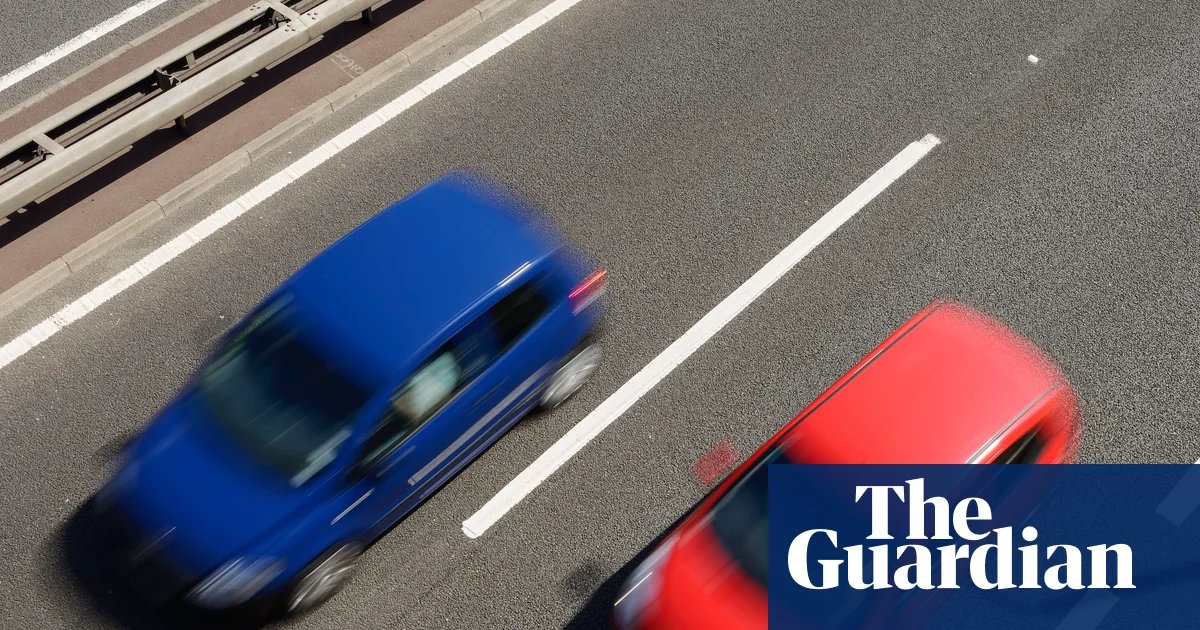
It is a situation experienced by many motorists: one driver overtakes another only to find the slower car is right behind them when they reach a red light. Now a researcher has used mathematics to reveal why the situation feels inevitable.
Dr Conor Boland from Dublin City University has called his work “The Voorhees law of traffic”.
The name is a nod to the character Jason Voorhees from the American horror film franchise Friday the 13th.
“I always thought of him because he seems to just walk everywhere … His victims are running away, they’re sprinting, but he just catches them,” Boland said.
However, in the case of cars it is traffic lights rather than stones or tree branches that prevent the “escape” of the faster individual.
Writing in the journal Royal Society Open Science, Boland explains that as two cars travelling at different speeds encounter a traffic light, the spacing between them can either increase, stay the same, partly decrease or be completely lost, depending on the colour of the traffic light, its duration, the time advantage of the faster car and the overall time it takes for the traffic lights to complete a cycle.
Assuming that the traffic light changes colour based on a set time cycle rather than a sensor, and that the cars are travelling on a single-lane road, the results reveal that, taking into account the probabilities of each of the four scenarios, on average the possible gains and losses in spacing between the cars balance exactly.
That means, on average, the lead of one car over the other remains the same after the light as before.
The results suggest the idea the slower car will inevitably catch up at the lights is something of an illusion.
“Recurrent encounters are known to be disproportionately salient in human perception, particularly when they follow an attempted separation or avoidance,” Boland writes.
Put simply, it is probably just more memorable for a driver when the car they overtook catches up with them again.
However, when drivers encounter a succession of independent traffic lights – as might occur in towns and cities – the situation is different.
As Boland explains, here the eventual catchup of the slower car at at least one of the lights becomes statistically near-certain. That’s because the probability that the slower car never catches up relies on multiplying the probability of no catchup for each traffic light – meaning the more lights, the less overall chance no catchup will occur.
Boland said the results have implications for road safety, suggesting speeding past others does not necessarily give an advantage.
Kit Yates, professor of mathematical biology and public engagement at the University of Bath who was not involved in the work, welcomed the study.
“It’s something I, as a slower driver, often think about. Was it really worth it for that car that sped to overtake me? When I catch them up at the lights I smugly think, ‘No, it wasn’t.’ So it’s good that someone has sat down and modelled how and when this happens,” he said.
However, Yates added that in his experience, catching up to a faster car does not seem to happen constantly, or to be surprising when it does occur.
He also noted that the study made a number of assumptions, among them that cars travel at constant speed between lights with no acceleration when a light changes to green or deceleration when it changes to red.
“But as the old adage goes, ‘all models are wrong, but some are useful’ and I think this one is definitely useful to explain why slower cars can often catch up with quicker ones,” Yates said.
Traffic & Transport
UK aviation regulator rejects Heathrow’s plans to significantly raise landing fees | Heathrow airport
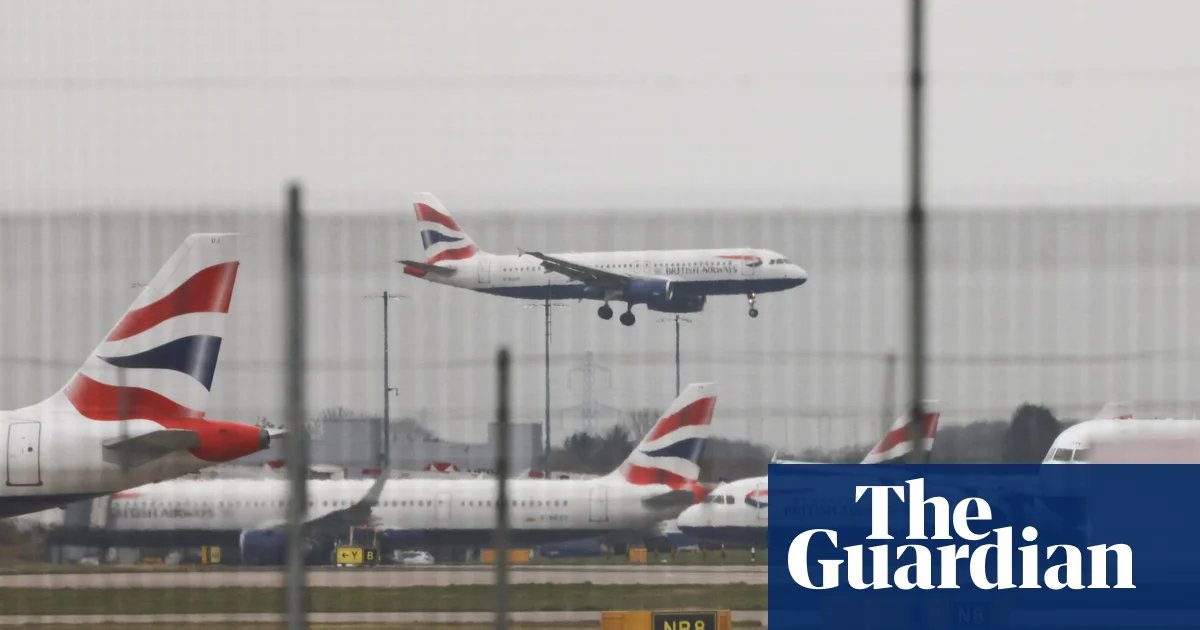
The UK aviation regulator has partially rejected plans by Heathrow to significantly raise its landing fees to fund a multibillion-pound upgrade, arguing the airport can still invest without steep rises to ticket prices.
The Civil Aviation Authority said the average charge for each passenger should rise from £28.40 to £28.80 between 2027 and 2031.
Last year, Heathrow proposed a 17% increase to £33.26, which resulted in criticism from airlines who said it would lead to higher ticket prices for passengers.
The CAA said its average passenger charge would instead rise by 1%. That increase is £5.40, or 16%, lower than the changes proposed by Heathrow but significantly higher – £5.80 or 25% – than the changes wanted by the airlines.
Selina Chadha, group director of consumer markets at the CAA, said: “Our primary duty is to protect consumers and at the heart of today’s proposals is doing the right thing for passengers using Heathrow airport, while supporting sustainable growth, investment, and efficiency.
“Our proposals for the airport charges levied by Heathrow on airlines strike the right balance between keeping passenger prices fair, while enabling the airport to make the investment needed to improve services for the future.”
In its initial plans published on Tuesday, the CAA proposed Heathrow spend between £5.4bn and £6.1bn on projects including upgrading the airport’s electrical system. Last year, Heathrow was forced to close after a fire at a nearby electricity substation caused a power cut, resulting in the cancellation of more than 1,300 flights.
Europe’s busiest airport had been seeking approval to spend up to £10bn to handle an extra 10 million passengers a year by 2031, with upgrades including a plan to modernise Terminal 5.
Thomas Woldbye, the chief executive of Heathrow airport, said: “We will now review the CAA’s initial proposal in detail to fully understand the implications for delivering the innovation, progress and improvements customers expect.
“On the face of it, the CAA’s proposal may force choices that create trade-offs for service and delay delivery.”
The CAA will publish its final proposals in November, which do not include its plans for a third runway, with a final decision expected in April 2027.
In 2023, Heathrow was forced to cut passenger charges by almost a fifth after losing an appeal to the UK competition watchdog against the CAA.
Traffic & Transport
Easter bank holiday expected to be UK’s busiest on roads in four years | Transport
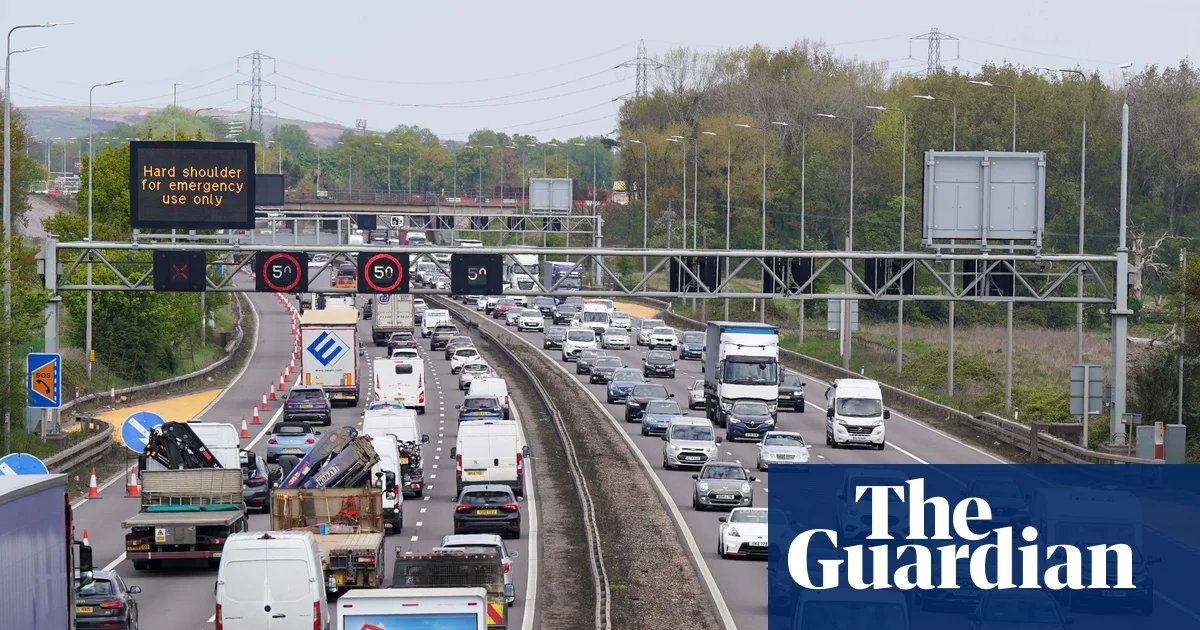
The four-day bank holiday weekend is expected to be the busiest Easter on the roads in four years, despite a surge in fuel prices caused by the conflict in the Middle East.
Drivers are planning nearly 21m leisure journeys between Thursday and Easter Monday, according to a study by the RAC and the traffic analytics specialists Inrix.
With more than 1m additional trips planned compared with last year, this Easter is set to be the busiest on the roads since 2022, which was the first full getaway after the Covid lockdowns ended. And signs that the weather could warm up in time for the weekend mean the number of ad hoc journeys could rise, the RAC said.
The AA predicted that traffic during the Easter period would peak on Thursday, when many schools break up. Just over half of people expect to travel short distances of under 50 miles. About one in five plan to visit friends and family, one in 10 want to head outdoors for walking or cycling, and 5% expect to visit DIY stores or garden centres.
Lee Morley, an AA expert patrol, said: “After what feels like a very long, wet winter, lots of families are looking forward to the Easter break.”
With better weather forecast, routes to the coast are likely to be especially busy, as well as roads around town and city centres and retail parks.
Network Rail has alerted travellers to “lots of planned essential engineering works and upgrades” over the bank holiday weekend, which is likely to increase road traffic. Engineers will work on more than 270 upgrade projects across Britain over Easter.
The Association of British Travel Agents said most of those whose trips had been affected by the war had switched to alternative destinations including the western Mediterranean, Caribbean, and direct-flight long-haul trips to Thailand and South Africa.
The RAC said nearly a third of drivers (31%) were increasingly worried about higher fuel costs since the US-Israeli war on Iran began on 28 February.
With the price of crude oil soaring above $100 a barrel, the average price of petrol in the UK has risen above 150p a litre for the first time since May 2024, according to the RAC.
Filling up a 55-litre family car with diesel this Easter will cost at least £19 more than it did on Good Friday last year, while a tank of petrol will be almost £8 more, with further increases likely.
Even so, most people are not changing their travel plans: only 6% expect to drive shorter distances and another 6% say they will not drive at all because of the higher prices, according to the RAC.
The RAC’s Sean Kimberlin said: “Despite fuel prices rising dramatically due to the conflict in the Middle East, our research suggests Easter remains incredibly important to people as it’s often the first chance to get away since Christmas or to meet up with friends and family.”
The port of Dover estimates 37,000 cars will travel through the port during the Easter holidays between this Thursday and Sunday 19 April.
The port’s chief executive, Doug Bannister, said: “The port is preparing for a busy Easter getaway period, with an early increase in traffic expected from [last] Friday, followed by the predicted getaway volumes through to mid-April.”
Traffic & Transport
Arctic blast to bring snow, hail and icy conditions across UK this weekend | UK weather
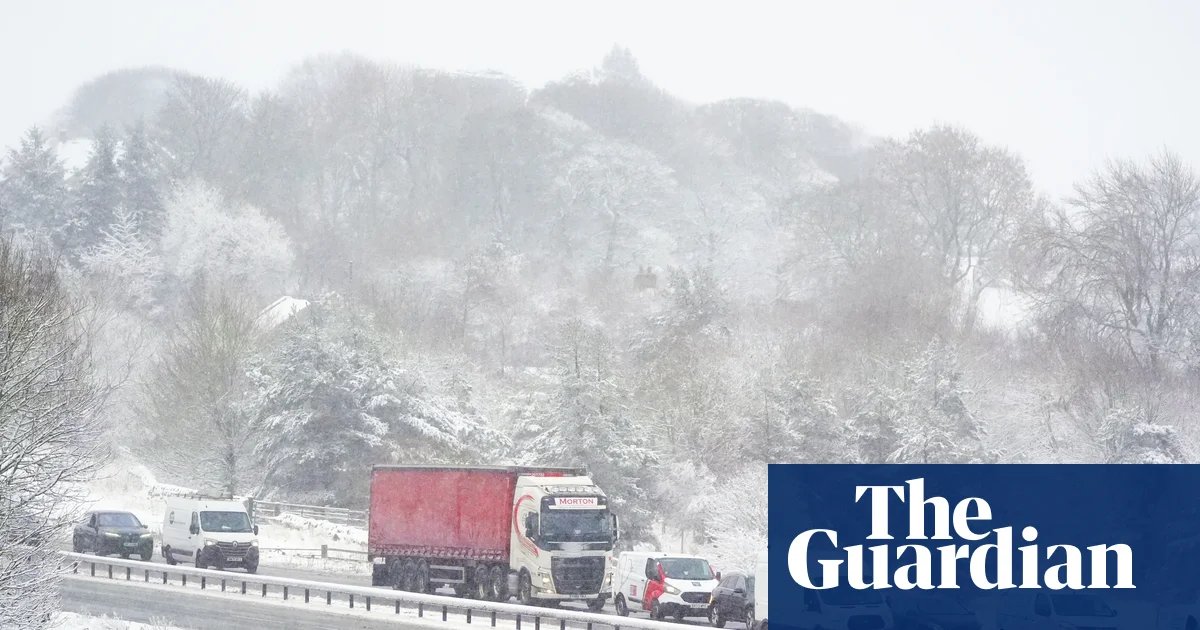
An Arctic blast of very cold air will this weekend bring snow, sleet, hail, freezing rain and icy conditions across most of the UK, forecasters have said.
The Met Office issued new yellow warnings for wintry conditions and potential travel disruption lasting until Sunday morning. Previous snow and ice warnings for Scotland and northern England expired at noon on Friday. Freezing temperatures have also led to a four-day health alert for cold weather.
In northern Scotland and coastal areas of north-east England and Yorkshire from 4pm until 10am Saturday there are warnings of snow, sleet and hail showers. Across Wales, south-west England, northern England, the Midlands, the east of England down to London the warning is for ice between 5pm and 10am on Saturday.
A yellow warning for ice has been issued for Northern Ireland, which will be in place from 8pm on Friday until 10am on Saturday.
A further snow and ice yellow warning comes into place between 9pm on Saturday and 10am on Sunday. It covers Scotland and northern England, with forecasters predicting potentially heavy snow and freezing rain.
The wintry conditions would mean hazardous ice on untreated roads and pavements, forecasters said. The Met Office said the wintry weather was the result of an Arctic maritime air mass bringing colder conditions from the north of Scotland southwards.
On Friday morning, National Highways said the A66, a major route across the Pennines, was closed between the A67 near Bowes in County Durham and the A685 near Brough in Cumbria because of “concentrated snowfall”.
It said: “National Highways area team crews are on scene with winter treatment vehicles working to clear and treat the carriageway, however forecasts predict that snowfall will continue in the area throughout the morning. Units from Cumbria police are also on scene assisting to clear the traffic. Road users travelling across the Pennines are advised to plan ahead and consider alternate routes.”
The UK Health Security Agency issued yellow alerts for cold weather across northern England and the Midlands from 6am on Friday until 8am on Monday. The alerts warn of a greater risk to life for vulnerable people and increased use of healthcare services by vulnerable people.
The wintry weather comes after a strikingly wet start to 2026 for large parts of the UK. People in parts of Devon, Cornwall and Worcestershire had rain for 40 days, the Met Office said this week. On Friday in England there were 76 flood warnings and 154 flood alerts in place. In Wales there were four flood alerts.
For others it was the absence of sun, with Aberdeen going through 21 days of sunless weather until, finally, it came out for about 30 minutes on Thursday afternoon.



-

 Crime & Safety2 weeks ago
Oxford: ‘Next generation’ LimeBikes in city from today
-

 Jobs & Careers2 weeks ago
Why Join Oxford | Oxford University Jobs
-
 Oxford Events2 weeks ago
Oxford News and Events, What’s on in Oxford, Exhibitions
-
 Jobs & Careers2 weeks ago
Explore our Careers
-

 Student Life2 weeks ago
The independent cinema battling Oriel College to stay open
-

 Oxford Events2 weeks ago
Michelin Guide Oxfordshire Restaurants – The Oxford Magazine
-

 Jobs & Careers2 weeks ago
Internal Job Board for University vacancies
-
 Crime & Safety2 weeks ago
Crash partially blocks A40 and causes severe Oxfordshire traffic