
UK News
The incredible life of the ‘bird man’ refugee who brought tweets, chirps and trills to British radio | Documentary films

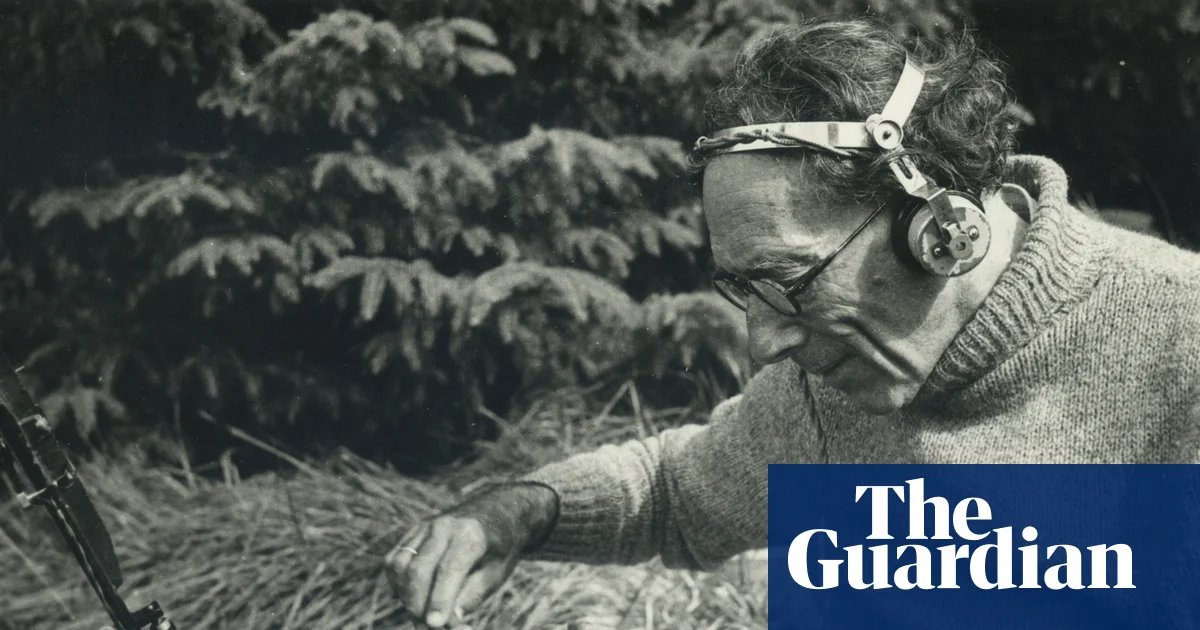
In his lifetime, pioneering German sound recordist Ludwig Koch’s heavily accented voice was as familiar to British audiences as David Attenborough’s is today. His tireless passion for capturing birdsong and bringing it first into German and, after his exile from Nazi Germany, British homes via sound books and BBC radio, made him a household name from the late 1930s onwards.
He was celebrated beyond his life, parodied by Peter Sellers (playing Koch observing life at a Glasgow traffic junction) and immortalised in Penelope Fitzgerald’s 1980 novel Human Voices, about the wartime BBC, which depicts Koch’s assiduous approach to capturing natural sounds and indirectly highlights how the organisation benefited from new voices like his.
Yet to his film-maker granddaughter Anthea Kennedy, Koch was a somewhat aloof presence. “I don’t remember ever having a conversation with him,” Kennedy says. Instead, he preferred singing to her, vividly daydreaming of the brief career as a tenor opera singer he had had to give up in Germany because of the first world war. “He’d squeeze my hand tightly, which I hated, and sing classical opera, then ask me what he’d been singing. It didn’t seem to matter to him that I didn’t have a clue.”
Given their relationship, it’s all the more surprising that Kennedy, with fellow film-maker and partner, Ian Wiblin, has created a loving tribute to Koch. Their film, Alarm Notes, interlaces images and sounds from modern Berlin and other places he visited as a naturalist with many of Koch’s own recordings, from the warm whistle of the golden oriole in Spandau, to sneezing seals on Skomer island, and his personal performances of Schubert lieder in old age. It’s a haunting and jarring intertwining of past and present, and acts like the dialogue between the granddaughter and grandfather that didn’t happen in life.
“I wanted to explore what had really happened to him in Berlin,” Kennedy says. “Neither he nor my grandmother ever talked to a soul about anything in their past.”
Before the Nazi takeover, Koch had enjoyed a thriving career as head of the culture department at one of Germany’s leading record companies (Carl Lindström), making bestselling sound books of birds and the natural world, as well as of urban landscapes. As part of this, he turned the idea of going on location – sometimes trailing cables for miles through undergrowth in the dead of night to obtain closeup sounds – into a professional craft. His 1889 recording of his pet shama bird, made in his animal-filled childhood home in Frankfurt when he was just eight years old, is believed to be the very first recording of a bird.
Kennedy recounts how Koch and his wife, Nelly, came to be entangled in the Gestapo investigation into the Reichstag fire of 1933, which the Nazis used as a pretext to turn Germany into a dictatorship.
The Kochs had – unwittingly – rented a room in their Berlin house to one of the accused arson attack plotters. Known to them as Dr Steiner, he was in fact Georgi Dimitrov, the communist revolutionary who went on to become Bulgaria’s first communist leader.
After Dimitrov’s arrest, they were also taken for interrogation by the secret police. Suspecting a further arrest, they wrote suicide notes, took barbiturates and turned on the gas taps in their kitchen, before being discovered by their maid and resuscitated. Their attempt to take their own lives was mentioned at Dimitrov’s trial at Germany’s highest court in Leipzig, prompting the Bulgarian to apologise.
Kennedy pieced together the story from archive documents and Dimitrov’s diaries. As far as she knows, her grandparents never mentioned their attempt at suicide, and spoke very little of their time under the Nazi cudgel.
While his “non-Aryan” identity had excluded Koch from the Reich Association for the Protection of Birds, the Nazis initially chose to ignore his Jewish heritage because they valued his skills as a sound recordist. In August 1933, he even suggested making a sound book of the armed forces for propaganda purposes. Entitled Im Gleichen Schritt und Tritt (Stepping and Striding Together), it is a frightening but impressive audio collection of everything from machine gun rounds to the flickering campfire of a soldiers’ night-time gathering.
Yet on a work trip to Switzerland in January 1936, after the assassination of the Nazi who had accompanied Koch to monitor him, he was warned by a Swiss government official his life was in danger. “The air in Switzerland is better than in Germany,” he was told.
Fleeing to Britain, he found a refuge among fellow naturalists and bio-acoustic enthusiasts and became a darling of radio listeners, in particular as a regular on the BBC’s Children’s Hour.
Koch, who died aged 92 in 1974, did not take Kennedy with him on any of his recording odysseys. The only brush she can recall with her grandpa in his guise as the “bird man”, was a “quite creepy” trip to London zoo when she was seven years old. Behind the scenes they were shown myna birds, which can imitate human speech and were banned from public display because of their inclination to pick up swear words. She recoils as she describes being made to go into a bird cage on her own, with other children looking on, as a toucan “rolled a grape down its beak into my mouth, then took it out again, rolling it back up its beak, my grandpa looking on”.
Yet making Alarm Notes has changed her view of her grandfather. Reading his letters held in the broadcaster’s archives, she recognised his lengthy struggles to be taken seriously by his British colleagues and to make a living. “I can’t help but think they made a caricature out of him, but that he decided, OK, I’ll fit into that, if that’s what it takes,” she says.
“It’s made me understand his suffering, and how incredibly difficult his life was. I admire his patience and desire, and it’s made me finally like listening to birds.”
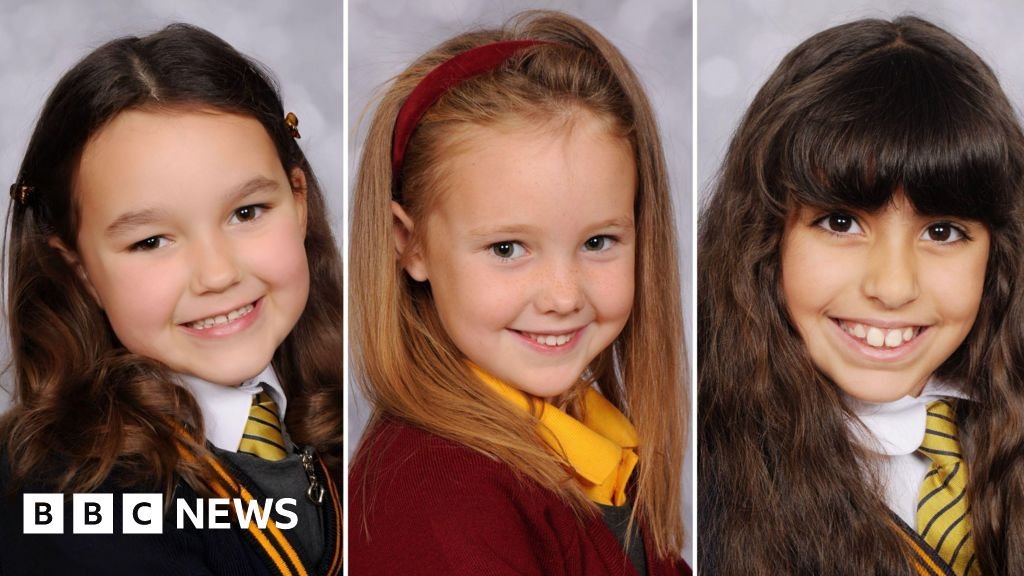
The public inquiry was set up following a knife attack which led to the deaths of three young girls.
Source link
Rose looked like a man on a mission on the front nine, but faltering on the par-four 11th – pushing his second shot right and then three-putting – stalled his momentum.
A duffed chip from the sticky fringe at the back of the green on the iconic par-three 12th was followed by another three-putt from an eagle opportunity on the scoreable par-five 13th.
Unable to recover, a frustrated Rose finished on 10 under and was denied the fourth Masters runners-up finish of his career.
“It is another little stinger,” said 2016 Olympic champion Rose, whose sole major win came at the 2013 US Open.
“I was by no means free and clear, and nowhere close to having the job done, but I was right in position.”
Instead it was two-time champion Scheffler who finished as McIlroy’s nearest challenger after carving his own piece of history.
The 29-year-old American, who won in 2022 and 2024, became the first player since 1942 to card a bogey-free weekend on his way to a fourth successive top-10 finish.
Ultimately he paid the price for making a slow start, which has been a common theme for him in recent months.
“I knew I was going to have to do something special if I wanted to catch [McIlroy] or [Young]. I was close but it was just a few shots here or there,” said Scheffler.
Rose was joined in joint third by England’s Tyrrell Hatton, plus American pair Russell Henley and Cameron Young.
Hatton’s final-day 66 concluded a weekend where he seems to have made peace with the Masters.
The 34-year-old’s relationship with Augusta National had been a volatile one, having regularly squabbled with the course’s unrelenting undulations and even going as far as labelling it “unfair” in 2022.
“This is my 10th Masters, so I’ve been fortunate to be here a lot and my results the last three years have definitely improved,” Hatton said.
UK News
Middle East crisis live: Iran warns US blockade of strait of Hormuz would violate ceasefire | US-Israel war on Iran
Key events
Trump: ‘I don’t care’ if Iran doesn’t return to negotiations
Donald Trump has said he doesn’t care if Iran comes back to negotiations with the US after the weekend talks in Pakistan ended without a deal.
“I don’t care if they come back or not,” Trump was quoted as telling reporters on Sunday at Joint Base Andrews military base in Maryland on his return from Florida.
If they don’t come back, I’m fine.”
More here on Donald Trump tearing into Pope Leo XIV, branding him “weak on crime and terrible for foreign policy” and claiming he is hurting the Catholic church.
The US president also posted on his Truth Social platform that it was only because he was president that the US-born Leo became pope.
I like his brother Louis much better than I like him, because Louis is all MAGA. He gets it, and Leo doesn’t!
Trump also said in his post:
Unfortunately, Leo’s Weak on Crime, Weak on Nuclear Weapons, does not sit well with me…
Leo should get his act together as Pope, use Common Sense, stop catering to the Radical Left, and focus on being a Great Pope, not a Politician. It’s hurting him very badly and, more importantly, it’s hurting the Catholic Church!
Trump’s attack came after the pontiff denounced the “delusion of omnipotence” as fuelling the US-Israel war in Iran and demanded political leaders stop and negotiate peace.
Leo also presided over an evening prayer service in St Peter’s Basilica on Saturday as the US-Iran talks began in Pakistan amid the fragile ceasefire, the Associated Press reports
The pope didn’t mention the US or Trump by name in his prayer but the pontiff’s tone and message appeared directed at Trump and US officials, who have boasted of US military superiority and justified the war in religious terms.
Trump spoke to reporters in Maryland soon after his social media post and said: “I don’t think he’s doing a very good job,” adding that “I’m not a fan of Pope Leo”.
Opening summary
Welcome to the Guardian’s continuing coverage of the US-Israel war on Iran and its consequences for the wider region, the world and the global economy.
Here are the main developments:
-
Trump said the US Navy would start blockading the Hormuz strait and would also interdict every vessel in international waters that had paid a toll to Iran. In a lengthy post on his Truth Social platform, the president said the US was going to start “BLOCKADING any and all Ships trying to enter, or leave, the Strait of Hormuz”.
-
In another post Trump also claimed Iran had “knowingly failed” to make good on its promise to open the strait, causing “anxiety” and “pain” for many countries around the world.
-
US Central Command (Centcom) announced it would begin its blockade of the strait beginning Monday morning. “Centcom forces will begin implementing a blockade of all maritime traffic entering and exiting Iranian ports on April 13 at 10am ET [1400 GMT], in accordance with the president’s proclamation.”
-
Iran’s Revolutionary Guard warned that “approaching military vessels to the strait of Hormuz is considered a violation of the ceasefire”.
-
Oil prices rose in early market trading after Trump’s blockade announcement. The price of US crude oil rose 8% to $104.24 a barrel and Brent crude oil – the international standard – rose 7% to $102.29. Australia’s share market dropped sharply on Monday morning.
-
Donald Trump and his advisers are looking at resuming limited military strikes in Iran in addition to the US blockade of the strait of Hormuz, the Wall Street Journal is reporting, citing officials and people familiar with the situation.
-
Trump launched a scathing attack on Pope Leo XIV, saying he was “weak on crime and terrible for foreign policy” and was hurting the Catholic church. “Leo should get his act together as Pope,” the president said on Truth Social. The attack came after Leo denounced the “delusion of omnipotence” as fuelling the US-Israel war in Iran and demanded political leaders stop and negotiate peace.
-
Australian prime minister Anthony Albanese said his government had not been asked to participate in any US blockade of the strait of Hormuz and that he wanted to see negotiations between the US and Iran continue.
-
Trump reiterated his threat to destroy Iran’s power plants and other civilian energy infrastructure if no deal was reached to end the war, which he started with Israel in what is widely seen as an illegal and unprovoked attack. “I could take out Iran in one day,” he told Fox News on Sunday.
-
Trump also said the US didn’t need the strait. “We don’t get our oil from there. We have so much oil,” he told Fox. “We have boats pouring up to the United States … We don’t need the strait.”
-
Iranian parliamentary speaker Mohammad Bagher Ghalibaf, who led the Tehran side in the US talks, said Trump’s new threats would have no effect on the Iranian nation. “If you fight, we will fight, and if you come forward with logic, we will deal with logic. We will not bow to any threats.” He later taunted Trump on X, posting: “Enjoy the current pump figures. With the so-called ‘blockade’, Soon you’ll be nostalgic for $4–$5 gas.”



-
 Crime & Safety4 weeks ago
Police race to crash on Oxfordshire A34 with severe traffic building
-

 Oxford News4 weeks ago
Schwarzman Centre to open doors to public with major celebration
-
 Oxford News4 weeks ago
Gary Lineker’s nephew-in-law death inquest to be next week
-

 Business & Technology3 days ago
Aqilla launches AI invoice tool to speed accounts payable
-

 Crime & Safety1 week ago
American Akita and a French Bulldog seized after dog killed
-
 Crime & Safety4 weeks ago
Wiltshire 12-year-old girl with Oxfordshire links missing
-
 Oxford Events4 weeks ago
Michelin Guide Oxfordshire Restaurants – The Oxford Magazine
-

 Oxford News4 weeks ago
Statins do not cause the majority of side effects listed in package leaflets