
Business & Technology
The 4 non-negotiables for cloud communications

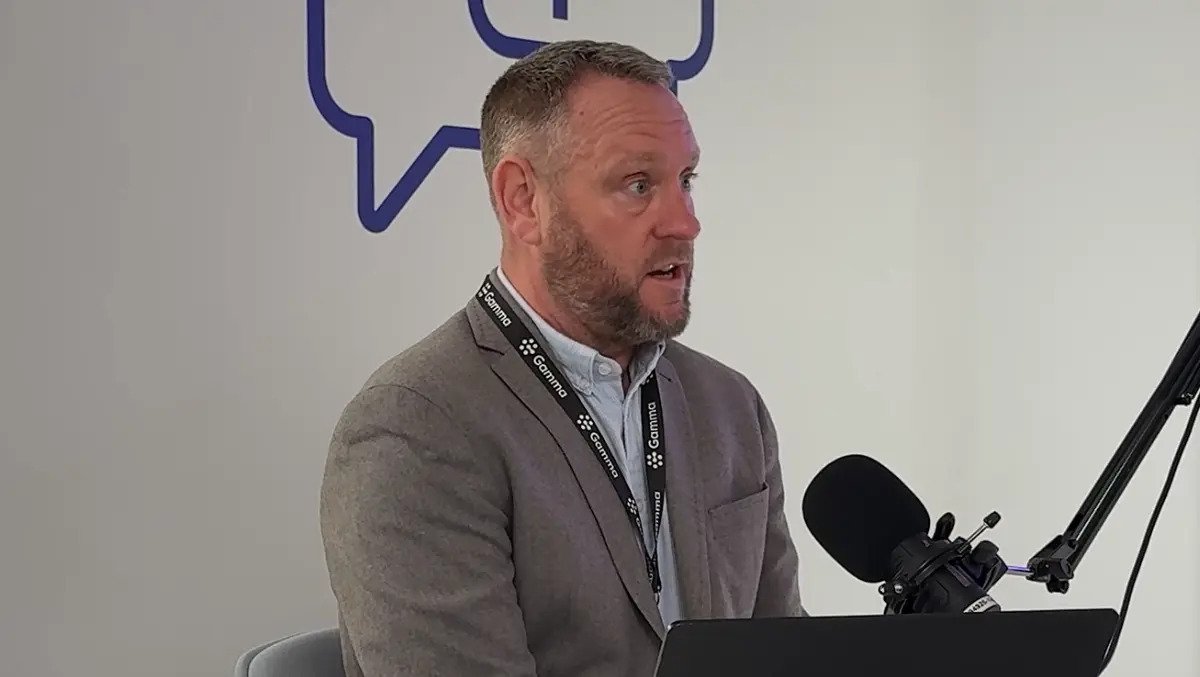
Cloud communications promise a lot, including flexibility, agility and control. But when it comes time to review, businesses suddenly find that they’re more tied to a vendor than expected. They’ve fallen into the trap of ‘vendor lock in’.
Rather than flexibility, many organisations instead found dependency. Changing provider, platform or operating model became harder than it needed to be. The promise of control turned out to be just a promise.
It comes down to architectural dependency, rather than cloud technology itself. If numbering, routing and call control are combined into a single platform, every future change becomes a transformation programme. Changes should never become an operational decision.
Organisations should be in firm control of their own communications estate. By following these four non-negotiables, these organisations will be the ones leading their communications strategy.
Agility: Change without interruption
Modernisation doesn’t necessarily mean replacement. If change turns out to mean rebuild, then agility wasn’t designed in to begin with.
It’s rare for organisations to change one system at a time. Collaboration platforms, networks and operating models all evolve at different speeds. If voice depends on a single platform decision, then every change introduces service risk.
Long-term hybrid estates must be supported as standard. Vendors should be looking to implement interoperability across cloud platforms, legacy PBX and on‑premises systems. When it does come time to introduce new collaboration tools, voice shouldn’t end up being totally redesigned.
The expectation should be that the communications estate can evolve incrementally without service interruption. In turn, platform choice remains a business decision, as opposed to a technical constraint.
When speaking to vendors, businesses should think about how vendors can support hybrid estates beyond migration. If these organisations change platforms in the future, then what could potentially have to be rebuilt?
Control: Governance, visibility and compliance built in
Cloud communications should reduce operational overhead, not obscure it.
In many estates, ownership is fragmented and dependencies are undocumented. During incidents or supplier changes, these issues tend to surface and increase both risk and delay. When there’s a loss in visibility, a loss of control follows.
IT teams should be the ones retaining governance and operational authority, regardless of platform complexity or supplier changes.
Vendors need to offer platforms that centralise the management for numbers, routing and configuration. There must be clear visibility through analytics, reporting and monitoring, with additional support for recording, retention and compliance as standard.
Consider where else vendors have seen operational friction in communications estates. Can their architecture reduce tool sprawl and remove that friction?
Value: Business impact, not just connectivity
Voice and unified communications are often treated as utilities. In practice, they can directly impact productivity, service quality and reputation.
Invoices rarely contain the cost of dependency. Instead, this cost appears in the form of workarounds, duplicated tooling, delayed change or operational friction. Organisations end up adapting to the platform, but it should be the other way round.
Communications should enhance operational efficiency. If change is limited or hidden costs are being created, then something’s wrong.
The experience must be consistent across all channels. A communications ecosystem should support both customer and employee workflows. But above all, the potential for operational friction and duplicated tools must be reduced.
Vendors should have an answer ready when asked about how to decouple numbering and rooting from collaboration tools. Where does the real operational value come from?
Future‑proofing: Designed to adapt
A well-designed communications estate is one that absorbs change. These estates shouldn’t end up creating the need for transformation programmes.
Voice platforms tend to be rebuilt infrequently, mainly because change is high‑risk and knowledge is lost over time. All this does is create dependency on ageing systems and specialist skills, while increasing reliance on vendor roadmaps.
Platforms should support future change. Large-scale replacement or provider-dictated transformation aren’t viable options.
Future-proof estates are the ones that are scalable across regions, carriers and regulatory environments. They need to be able to integrate with existing PBX and specialist systems, and new capabilities can be added seamlessly
When change in the future does finally come, will it be customer-controlled or roadmap-dependent? How do vendors ensure that, when adding new capabilities, service disruption is avoided?
Making the four non‑negotiables your baseline
These four non-negotiables are operational requirements, not premium capabilities. If a proposal can’t demonstrate them clearly, all it does is introduce service risk, regardless of feature set.
When done properly, a cloud communications platform lowers transformation risk instead of centralising it. If leaving a platform requires transformation, rather than migration, then control sits outside of the organisation.
For any organisation reviewing their UC strategy or preparing an RFP, these non‑negotiables are the baseline criteria. Vendors like Gamma are there to help businesses assess their current estate against them, while identifying where dependency risk exists before committing to any changes.
Communications don’t sit in isolation. Any decisions impacting communications now intersect with the likes of network architecture, security posture, and customer experience.
The greatest long-term value lies in a provider who understands how voice, connectivity and security operate together. An ideal provider supports transformation across the wider estate. Transformation shouldn’t be concentrated to just a single platform layer.
If you’re looking to review your current communications environment, reach out to Gamma Communications for insights around control and dependency.

Blossom Pottery Cafe opened on Friday, August 14 at 18 South Bar, bringing a new artistic opportunity to coffee, tea and cake lovers in the town.
Opening the cafe was a long-standing dream of owner Wendy, who began pottery as a personal hobby and gradually developed the idea of creating a space where people of all ages can enjoy the peaceful pass time.

With every table full on opening weekend and dozens of beautiful pieces newly painted by guests, the owner said her ‘heart is so full’ to see the dream realised.
“So grateful to see so many of you coming to support us on our opening day,” she shared. “Thank you so much.”

Wendy earlier said: “We’re incredibly excited to be opening Blossom Pottery Studio & Café and bringing something new to Banbury.
“We hope it becomes a place where people can take a break from their busy lives, enjoy being creative, and make lasting memories with family and friends.

“The support we’ve received from the local community has been amazing, and we can’t wait to welcome everyone through our doors.”
As part of the grand opening, all customers who visited during the opening weekend or made a pottery painting booking within the next three months received a free cupcake from the cafe.
Blossom Pottery Cafe hosts family-friendly pottery painting sessions from 10am each day, with normal cafe opening hours 8am to 5pm.

Atos highlighted the views of three apprentices entering the technology industry, focusing on apprenticeships as a route into tech as artificial intelligence reshapes workplace skills.
All three work as First Line Service Desk Apprentices and described a jobs market in which technical knowledge alone is not enough. Alongside coding and troubleshooting, they said communication, customer service, problem-solving and adaptability have become central to early careers in IT.
Kyle Brady said he moved into an apprenticeship after studying physics, maths and computer science at A level, then spending time in temporary work, including as a forklift driver, while building his technical skills independently. The apprenticeship, he said, offered a way to gain workplace experience while continuing to learn.
His account points to a common hurdle for new entrants: gaining practical experience before securing a first role. Brady said that challenge shaped his view of what employers value in technology jobs.
“After completing my A levels in physics, maths and computer science, I knew I wanted a career in technology. I’ve always enjoyed solving problems and understanding how things work, but I found it difficult to get my foot in the door. I spent some time in temporary jobs, including as a forklift driver, while building my technical skills in my own time. When the opportunity to start an apprenticeship came along, it felt like the perfect way to gain real workplace experience while continuing to learn.
“One of the biggest things my apprenticeship has taught me is that a career in tech is about much more than technical knowledge. Working on the helpdesk has shown me how important communication, customer service and problem-solving are. Being the first point of contact for users has completely changed how I see the industry and helped me develop skills I never realised I’d need. The experience has also shown me how quickly technology is evolving, especially with AI becoming part of more workplaces. That means the ability to keep learning and adapting is becoming just as important as technical skills. My apprenticeship has helped me build that mindset while giving me hands-on experience with the realities of working in IT.
“It’s also opened up opportunities I wouldn’t have had otherwise. Learning about career paths in cybersecurity and data engineering has shown me the range of opportunities available and given me confidence about where my career could go next. I’d encourage anyone thinking about a career in technology to keep an open mind and not feel like university is the only route. Apprenticeships give you the chance to earn while you learn, develop practical skills from day one and build the confidence to adapt as technology continues to change. In an industry being transformed by AI, that real-world experience is invaluable,” Brady said.
Ryan Cresswell said he studied IT at college and games design at university before working in sales to strengthen his people skills. He later returned to technology, but said employers often wanted practical IT experience as well as qualifications.
His experience reflects a wider issue for people seeking entry-level technology roles. Employers often ask for evidence of workplace readiness even for junior positions, making apprenticeships one way to bridge the gap between education and employment.
“After studying IT at college and games design at university, I began working in sales to hone my people skills before returning to technology. One of the biggest challenges I faced while applying for jobs in tech was that employers liked my qualifications but wanted candidates with hands-on IT experience. That made it difficult to get my foot in the door.
“My apprenticeship has given me the opportunity to earn, learn and gain practical experience at the same time. It’s allowed me to develop my technical troubleshooting skills, but I’ve also learned a lot about communication, problem-solving and handling different types of people. My advice to anyone considering a career in tech is to explore the different paths available. In the past it felt like university was the only choice, but that’s no longer the case. Also, speak to people already working in the industry and stay curious. Apprenticeships are a great way to build skills, confidence and hands-on experience, whether working individually or in a team, while discovering what’s right for you. The most important thing is to keep learning and not be afraid to take a different path if the first one doesn’t work out,” Cresswell said.
Skills shift
Zainab Hussain said she chose an apprenticeship because it offered immediate workplace experience and a path into more senior roles without student debt. She said the role had helped her develop both technical and interpersonal skills, including troubleshooting problems and explaining complex concepts clearly.
Her comments underscore how apprenticeships are being framed by employers and trainees as an alternative to university for some digital roles. In this case, the appeal lies in earning while learning, building professional networks and gaining direct exposure to the daily demands of IT support.
“I’m naturally drawn to tech and have always been IT literate, so I knew it was the right path for me. It’s an industry that’s constantly evolving, and I wanted to be part of that. I chose an apprenticeship because it felt like the best way to gain real experience from day one, and it sets you up to move into higher roles faster than if you go to university. I also wanted to build a career in the industry without taking on student debt.
“My time at Atos so far has helped me develop both my soft and technical skills, such as how to troubleshoot problems and communicate complex concepts clearly. I’ve also had the chance to earn, learn and build my experience, all of which are helping prepare me for the next stage of my career. The apprenticeship path has given me valuable opportunities to network with co-workers from different career backgrounds and skill sets, which you wouldn’t get at uni. The workplace experience has been incredibly valuable, so if you’re interested in tech, I’d encourage you to go for an apprenticeship, explore every opportunity available and keep an open mind,” Hussain said.
Taken together, the three accounts point to a shift in the skills mix associated with junior technology roles. As AI tools become more common in workplaces, the apprentices said the ability to keep learning, work with users and adapt to changing systems is becoming as important as formal technical training.
All three also described apprenticeships as a practical answer to the experience barrier that can prevent candidates entering the sector. They framed the route as a way to gain income, training and exposure to real workplace problems at the same time, while opening paths into areas such as cybersecurity, data engineering and wider IT support.

Liquidators have been instructed to wind down Go Fly Oxford, which provided lessons for commercial and private pilots licences.
Colin Wilson and Emma Mifsud, of Opus Restructuring & Insolvency, have been appointed as joint liquidators for Go Fly Oxford Ltd back in May 2025.
But new records filed by the liquidators have revealed an HMRC secondary preferential claim of £118,132.
Ten unsecured claims have been received by the liquidators totalling £60,314.
Further unsecured creditor claims estimated in the statement of affairs total £88,955, the published documents say.

Over the past year, liquidators say they investigated whether any recoveries could be made from directors or other parties, but concluded there were no further viable assets or claims.
Aircraft shown in the 2024 accounts at a book value of £238,181 had been sold before liquidation. The liquidators found the sales appeared to be at fair value and saw no basis for a claim over the transactions.
The aircraft sales happened about seven months before liquidation, outside the relevant period for a preference claim.
The aircraft were reportedly transferred to creditors and leased back so the company could continue trading.
A purchaser of a PA34-200 aircraft was said to owe £6,000. The liquidators received £4,980; the remaining £1,020 was treated as settled because the purchaser had paid a company liability instead.
Two employees were made redundant on 31 March 2025 and were given information to submit claims to the Redundancy Payments Service.
READ MORE: MOT centre and car shop collapses into administration
The flying school was based at Oxford Airport when it collapsed.
Its website, which has since been shut down, described the business: “At Go Fly Oxford we pride ourselves on offering a personal and tailored approach to pilot training.
“We know that people learn at different paces and in different ways, this makes catering for individual needs our main target.”
Oxford Airport’s main trade is pilot training. Flight schools at Oxford train pilots who go on to fly for more than 100 airlines in the UK and globally, including for British Airways.
Historically, the airport has been Europe’s foremost centre for professional pilot training with well over 40,000 students having started their careers there.
At one point, the airport’s runway was the busiest in the world with more than 235,000 movements a year (a take-off or landing) and up to 1,100 flights in a single day, its website says.
The business’ report says: “Over the course of 2025, the company will be complementing its Diamond DA40 fleet with a new fleet of Elixir aircraft, a safer and more efficient type of aircraft, which will provide a much reduced cost per flight hour.
“This, along with growth in enrolments and full utilisation of the European base will ensure the profitability of the business in the coming years.”



-

 Oxford united FC4 weeks ago
Chris Gunter steps away Wales role to focus on Oxford United
-

 Oxford University3 weeks ago
New to the Oxford English Dictionary this September
-

 Oxford united FC2 weeks ago
LIVE: Exeter City vs Oxford United – Jersey Mike's Trophy group stage
-

 Traffic & Transport2 weeks ago
Why should I have to pay more for buses if I don’t use a smartphone? | Bus fares
-

 Traffic & Transport2 weeks ago
How poor public transport policy is putting the brake on cities | Road transport
-

 Student Life3 weeks ago
Oxford partnership allows OpenAI to use rare Bodleian texts to train ChatGPT
-

 Oxford united FC3 weeks ago
Northern Ireland fans laud Oxford United defender Ciaron Brown
-

 Oxford united FC2 weeks ago
Oxford United lose to Exeter City on penalties in Jersey Mike’s Trophy