
Business & Technology
Summertown shops demolition for student rooms ‘resentment’

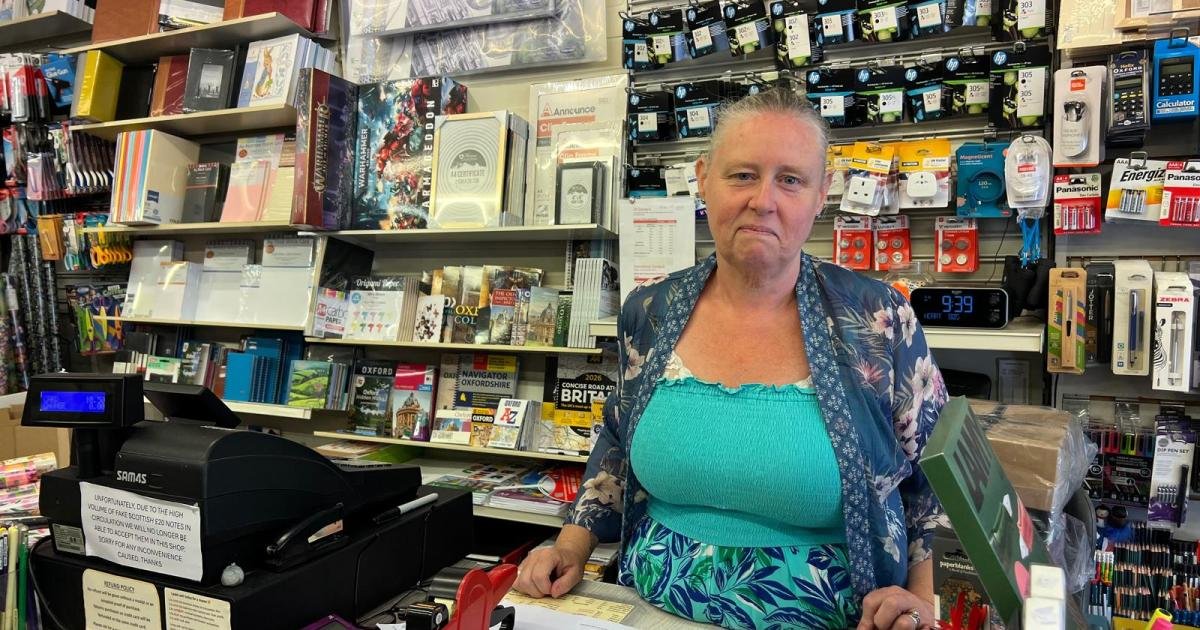
Major plans to knock down Suffolk House in Summertown and replace it with a student block have been submitted to the city council amid warnings of an Oxford housing “crisis”.
It follows recent approvals to increase student room numbers in city centre accommodation and at a new 250-room Headington graduate college.
The Banbury Road site is the location of several independent businesses, and representatives have warned the “major local concern is that this will be lost”.
The 1930s building, originally a garage and converted into shops in the 1970s, currently houses Kopitiam restaurant, Pen to Paper stationery store, Idlewild hair salon, Burnout BBQ, Yoga Venue, Mathasium tutoring, as well as Tesco and Sainsbury’s stores, with the area’s only ATMs.


Proposals said: “The new mixed-use building will make a positive contribution to the surrounding streetscape, creating a more attractive and welcoming environment.
“Flexible ground-floor retail units will provide modern shop spaces with active frontages that support the vitality of Summertown district centre, while new residents above will increase footfall throughout the day and evening.”


New plans would retain four retail spaces, a reduction from the current seven and the six originally suggested to residents in a developer consultation ahead of its planning application.
In its proposal, TSH architects, on behalf of developers Brydell Partners, state that the current shops are constrained by the quality of the building, making the spaces ‘dated and enclosed’ with low ceilings.
It claims the new premises would be designed flexibly to meet the needs of “existing retailers, independent businesses and national brands”.
This is disputed by business owners and workers who say they are facing the possibility of an “expensive” relocation and years of closure if the redevelopment is approved.
Andy Morse, owner of Pen To Paper, a stationery store which has been at Suffolk House for 35 years, said: “If the planning application goes through then, sometime before works will commence, we will be out of our unit.”


He explained the potential for relocation would be dependent on the availability of a different local site, adding that “moving, fitting and opening a new shop is a very expensive operation”.
Andy described a “decades-long friendship” with customers, who he says have been “brilliantly supportive” amid the potential for the shops’ demolition.
He said some of the customers knew about the plans before they did, and the store had received “no advance warning” from its landlords.
The shop owner acknowledged that the old building needs “regeneration”, and it has been on the cards for around five years.
He does not believe student housing is the right use of the space with that “regeneration”.
He said: “Nothing against students, but I think the council should be providing more housing opportunities for local people.
“Particularly young people and new families who want to live in their local community.”
Plans state: “The objective of the proposed redevelopment is to provide new purpose-built student accommodation, above commercial retail spaces, in the district centre at the corner of Banbury Road and South Parade.”
Shop manager Debbie has been working for Pen to Paper for 23 years, previously at its Headington store, which closed in 2022 – has been in Summertown for four.
She believes the loss of the store is “not good for the community”, adding they will be “losing a lot”.
Debbie said: “All the feedback we have had is very negative and against it going through.”
Employees at other units shared concerns, including at Mathnasium, which would also have to relocate.
Robyn Hardyman lives at a neighbouring property and believes the new building would be “just to big for the site” and warned of “severe repercussions” for locals with the loss of the supermarkets.
Opposing the plans, she said: “If there is no supermarket here there will be very severe repercussions: residents will be massively adversely impacted, plus footfall in Summertown will fall dramatically and all local businesses will suffer.
“At the consultation meeting the developer told us they were doubtful about having supermarkets here.
“This must be guaranteed in some way before the project goes any further.”
Robyn added: “This is the most significant development in Summertown in a generation. It is so important to get it right, for local residents, for local businesses, and for the wider community.
“This massive overdevelopment imposes too heavily on local infrastructure, while offering nothing for our community, and is not the solution.”
Katherine Miles, Lib Dem city council leader and ward representative, said the local businesses “play a vital part to the local economy and add to the cherished character of Summertown”.

She said: “Support is needed for these businesses during the upgrade of the retail space to ensure they can survive this disruption and be assured of retail space when the development is complete.”
Employees reported being told the block could take two to three years to be built.
Ms Miles called the plans a “wasted opportunity”, explaining she would want to see “more housing for older people wanting to downsize from family homes and remain walking distance from the shops, library and GP surgery”, adding Summertown is “crying out for housing for young professionals such as teachers and healthcare workers”.
Labour Summertown county councillor Dr James Fry said: “The Suffolk House site in its prominent corner site on Banbury Road is clearly ripe for redevelopment.
“The major local concern is that this will be lost to student housing, with a large number of small units, rather than being used to provide very badly needed housing to meet our housing shortage for people in the city.”
He said use as a 100 per cent student block is “compounding the resentment” as the developers would not be required to offer affordable housing.
He noted the loss of ATM machines, would be “reinforcing Summertown’s unenviable reputation as an ATM, bank and post office desert” and could “greatly magnify the problem”.
Dr Fry is calling for a joint bank-post office hub in the area.
A spokesperson for Brydell Partners said the developers have already undertaken a “comprehensive programme of engagement” on plans “including discussions with existing tenants, local community groups, elected representatives and other stakeholders”.
They said the discussions are ongoing about the future for businesses in Suffolk House and proposals would “transform a dated and underutilised building” incorporating feedback.
The spokesperson added: “It is our intention is to retain supermarket provision within any future scheme, subject to the future priorities of supermarket operators.”

Blossom Pottery Cafe opened on Friday, August 14 at 18 South Bar, bringing a new artistic opportunity to coffee, tea and cake lovers in the town.
Opening the cafe was a long-standing dream of owner Wendy, who began pottery as a personal hobby and gradually developed the idea of creating a space where people of all ages can enjoy the peaceful pass time.

With every table full on opening weekend and dozens of beautiful pieces newly painted by guests, the owner said her ‘heart is so full’ to see the dream realised.
“So grateful to see so many of you coming to support us on our opening day,” she shared. “Thank you so much.”

Wendy earlier said: “We’re incredibly excited to be opening Blossom Pottery Studio & Café and bringing something new to Banbury.
“We hope it becomes a place where people can take a break from their busy lives, enjoy being creative, and make lasting memories with family and friends.

“The support we’ve received from the local community has been amazing, and we can’t wait to welcome everyone through our doors.”
As part of the grand opening, all customers who visited during the opening weekend or made a pottery painting booking within the next three months received a free cupcake from the cafe.
Blossom Pottery Cafe hosts family-friendly pottery painting sessions from 10am each day, with normal cafe opening hours 8am to 5pm.

Atos highlighted the views of three apprentices entering the technology industry, focusing on apprenticeships as a route into tech as artificial intelligence reshapes workplace skills.
All three work as First Line Service Desk Apprentices and described a jobs market in which technical knowledge alone is not enough. Alongside coding and troubleshooting, they said communication, customer service, problem-solving and adaptability have become central to early careers in IT.
Kyle Brady said he moved into an apprenticeship after studying physics, maths and computer science at A level, then spending time in temporary work, including as a forklift driver, while building his technical skills independently. The apprenticeship, he said, offered a way to gain workplace experience while continuing to learn.
His account points to a common hurdle for new entrants: gaining practical experience before securing a first role. Brady said that challenge shaped his view of what employers value in technology jobs.
“After completing my A levels in physics, maths and computer science, I knew I wanted a career in technology. I’ve always enjoyed solving problems and understanding how things work, but I found it difficult to get my foot in the door. I spent some time in temporary jobs, including as a forklift driver, while building my technical skills in my own time. When the opportunity to start an apprenticeship came along, it felt like the perfect way to gain real workplace experience while continuing to learn.
“One of the biggest things my apprenticeship has taught me is that a career in tech is about much more than technical knowledge. Working on the helpdesk has shown me how important communication, customer service and problem-solving are. Being the first point of contact for users has completely changed how I see the industry and helped me develop skills I never realised I’d need. The experience has also shown me how quickly technology is evolving, especially with AI becoming part of more workplaces. That means the ability to keep learning and adapting is becoming just as important as technical skills. My apprenticeship has helped me build that mindset while giving me hands-on experience with the realities of working in IT.
“It’s also opened up opportunities I wouldn’t have had otherwise. Learning about career paths in cybersecurity and data engineering has shown me the range of opportunities available and given me confidence about where my career could go next. I’d encourage anyone thinking about a career in technology to keep an open mind and not feel like university is the only route. Apprenticeships give you the chance to earn while you learn, develop practical skills from day one and build the confidence to adapt as technology continues to change. In an industry being transformed by AI, that real-world experience is invaluable,” Brady said.
Ryan Cresswell said he studied IT at college and games design at university before working in sales to strengthen his people skills. He later returned to technology, but said employers often wanted practical IT experience as well as qualifications.
His experience reflects a wider issue for people seeking entry-level technology roles. Employers often ask for evidence of workplace readiness even for junior positions, making apprenticeships one way to bridge the gap between education and employment.
“After studying IT at college and games design at university, I began working in sales to hone my people skills before returning to technology. One of the biggest challenges I faced while applying for jobs in tech was that employers liked my qualifications but wanted candidates with hands-on IT experience. That made it difficult to get my foot in the door.
“My apprenticeship has given me the opportunity to earn, learn and gain practical experience at the same time. It’s allowed me to develop my technical troubleshooting skills, but I’ve also learned a lot about communication, problem-solving and handling different types of people. My advice to anyone considering a career in tech is to explore the different paths available. In the past it felt like university was the only choice, but that’s no longer the case. Also, speak to people already working in the industry and stay curious. Apprenticeships are a great way to build skills, confidence and hands-on experience, whether working individually or in a team, while discovering what’s right for you. The most important thing is to keep learning and not be afraid to take a different path if the first one doesn’t work out,” Cresswell said.
Skills shift
Zainab Hussain said she chose an apprenticeship because it offered immediate workplace experience and a path into more senior roles without student debt. She said the role had helped her develop both technical and interpersonal skills, including troubleshooting problems and explaining complex concepts clearly.
Her comments underscore how apprenticeships are being framed by employers and trainees as an alternative to university for some digital roles. In this case, the appeal lies in earning while learning, building professional networks and gaining direct exposure to the daily demands of IT support.
“I’m naturally drawn to tech and have always been IT literate, so I knew it was the right path for me. It’s an industry that’s constantly evolving, and I wanted to be part of that. I chose an apprenticeship because it felt like the best way to gain real experience from day one, and it sets you up to move into higher roles faster than if you go to university. I also wanted to build a career in the industry without taking on student debt.
“My time at Atos so far has helped me develop both my soft and technical skills, such as how to troubleshoot problems and communicate complex concepts clearly. I’ve also had the chance to earn, learn and build my experience, all of which are helping prepare me for the next stage of my career. The apprenticeship path has given me valuable opportunities to network with co-workers from different career backgrounds and skill sets, which you wouldn’t get at uni. The workplace experience has been incredibly valuable, so if you’re interested in tech, I’d encourage you to go for an apprenticeship, explore every opportunity available and keep an open mind,” Hussain said.
Taken together, the three accounts point to a shift in the skills mix associated with junior technology roles. As AI tools become more common in workplaces, the apprentices said the ability to keep learning, work with users and adapt to changing systems is becoming as important as formal technical training.
All three also described apprenticeships as a practical answer to the experience barrier that can prevent candidates entering the sector. They framed the route as a way to gain income, training and exposure to real workplace problems at the same time, while opening paths into areas such as cybersecurity, data engineering and wider IT support.

Liquidators have been instructed to wind down Go Fly Oxford, which provided lessons for commercial and private pilots licences.
Colin Wilson and Emma Mifsud, of Opus Restructuring & Insolvency, have been appointed as joint liquidators for Go Fly Oxford Ltd back in May 2025.
But new records filed by the liquidators have revealed an HMRC secondary preferential claim of £118,132.
Ten unsecured claims have been received by the liquidators totalling £60,314.
Further unsecured creditor claims estimated in the statement of affairs total £88,955, the published documents say.

Over the past year, liquidators say they investigated whether any recoveries could be made from directors or other parties, but concluded there were no further viable assets or claims.
Aircraft shown in the 2024 accounts at a book value of £238,181 had been sold before liquidation. The liquidators found the sales appeared to be at fair value and saw no basis for a claim over the transactions.
The aircraft sales happened about seven months before liquidation, outside the relevant period for a preference claim.
The aircraft were reportedly transferred to creditors and leased back so the company could continue trading.
A purchaser of a PA34-200 aircraft was said to owe £6,000. The liquidators received £4,980; the remaining £1,020 was treated as settled because the purchaser had paid a company liability instead.
Two employees were made redundant on 31 March 2025 and were given information to submit claims to the Redundancy Payments Service.
READ MORE: MOT centre and car shop collapses into administration
The flying school was based at Oxford Airport when it collapsed.
Its website, which has since been shut down, described the business: “At Go Fly Oxford we pride ourselves on offering a personal and tailored approach to pilot training.
“We know that people learn at different paces and in different ways, this makes catering for individual needs our main target.”
Oxford Airport’s main trade is pilot training. Flight schools at Oxford train pilots who go on to fly for more than 100 airlines in the UK and globally, including for British Airways.
Historically, the airport has been Europe’s foremost centre for professional pilot training with well over 40,000 students having started their careers there.
At one point, the airport’s runway was the busiest in the world with more than 235,000 movements a year (a take-off or landing) and up to 1,100 flights in a single day, its website says.
The business’ report says: “Over the course of 2025, the company will be complementing its Diamond DA40 fleet with a new fleet of Elixir aircraft, a safer and more efficient type of aircraft, which will provide a much reduced cost per flight hour.
“This, along with growth in enrolments and full utilisation of the European base will ensure the profitability of the business in the coming years.”



-

 Oxford united FC4 weeks ago
Chris Gunter steps away Wales role to focus on Oxford United
-

 Oxford University3 weeks ago
New to the Oxford English Dictionary this September
-

 Oxford united FC2 weeks ago
LIVE: Exeter City vs Oxford United – Jersey Mike's Trophy group stage
-

 Traffic & Transport2 weeks ago
Why should I have to pay more for buses if I don’t use a smartphone? | Bus fares
-

 Traffic & Transport2 weeks ago
How poor public transport policy is putting the brake on cities | Road transport
-

 Student Life3 weeks ago
Oxford partnership allows OpenAI to use rare Bodleian texts to train ChatGPT
-

 Oxford united FC3 weeks ago
Northern Ireland fans laud Oxford United defender Ciaron Brown
-

 Oxford united FC2 weeks ago
Oxford United lose to Exeter City on penalties in Jersey Mike’s Trophy