
Business & Technology
Students design Oxford shops in ‘Dragon’s Den’ competition


The ‘Made in Oxfordshire’ challenge invited teams to reimagine the future of retail by creating immersive, community-focused destinations.
Pupils are tasked with developing original concepts for community spaces before pitching them to a panel.
This year’s winning team came from John Mason School, who impressed judges with ‘Brainwave’ – a concept for a charity café and arcade aimed at supporting young people and reducing social isolation.
Clare Martin, acting centre director at Westgate Oxford, said: “The Made in Oxfordshire project offers young students the chance to explore their creativity and come up with fresh and exciting ideas within the retail sector.
“The future generation present new perspectives and valuable insights into retail experiences that reflect their needs and resonate with their audience.”
Year 10 students from Greyfriars Catholic School, Oxford Spires Academy and John Mason School took part in workshops at Westgate Oxford.
These sessions covered creative placemaking, community and customer insights and environmental sustainability, helping pupils translate their ideas into practical, community-focused concepts.
The final round took place at Curzon Cinema in Westgate Oxford, where students pitched their ideas in a professional setting complete with mood boards and customer research.
Ms Martin added: “We’re proud to continue our strong relationship with Ahead Partnership, having now empowered over 10,000 young people through our collaborative projects.
“The Oxford competition gives students a space to produce an original concept, develop it into a design and then pitch it to professionals, enhancing their confidence and providing them with skills and knowledge to help boost them in their future endeavours.”
The competition is delivered by Westgate Oxford in partnership with Landsec and Ahead Partnership, and is funded by the £20 million Landsec Futures Fund, which aims to create positive social impact in the communities it serves.
Andy Clarke, head of partnerships at Ahead Partnership, said: “Nothing brings careers and skills education to life quite like stepping in to real workplaces and meeting role models face to face.
“The Made in Oxfordshire Challenge demonstrates the power of immersive, interactive experiences to ignite curiosity, broaden horizons and inspire young people to explore career paths they may never have considered.
“Our long-standing partnership with Westgate Oxford and its parent company, Landsec, has enabled us to connect thousands of young people with role models across retail, the built environment, and beyond.”
John Mason School will now go on to compete in a national final.

Omniscient has raised USD $4.1 million in pre-seed funding led by Seedcamp, and says Renault is already using its platform.
The Paris-based startup sells an AI system for boards and senior executives, initially focused on corporate reputation and risk monitoring. Other investors in the round included Drysdale, Plug and Play, MS&AD, Raise, Anamcara and xdeck, while Bpifrance also supported the fundraising.
Founders Arnaud d’Estienne and Mehdi Benseghir previously worked at McKinsey, where they saw large companies struggle to turn fragmented information into timely decisions. Omniscient argues that many big organisations still rely on monitoring systems built around analyst workflows, manual setup and disconnected data sources.
The startup’s pitch is that reputation now directly affects shareholder value, while the tools used to track threats and opportunities have failed to keep pace with the volume of information available to senior management. It cites an estimate that corporate reputation accounts for an average of 30% of market capitalisation among the world’s largest listed companies.
Its system draws on more than 100,000 sources across press, social media, web, video, audio and internal data feeds. It is built around specialist AI agents assigned to areas such as regulation, supply chain, competition and stories, with the output brought together in what Omniscient describes as a management cockpit for executives.
The software is designed to work in natural language and does not require manual configuration. Omniscient says the platform also adapts over time to an organisation’s priorities.
Board focus
Omniscient is entering a market that includes media monitoring, corporate intelligence and risk analysis providers, but it aims to distinguish itself by targeting the boardroom rather than communications teams or research analysts. The product is meant to give senior leaders a short executive recap of emerging issues, while allowing operating teams to track developments across a company’s wider network of suppliers, customers, competitors and partners.
That reflects a broader shift in how companies treat reputational issues. Once handled mainly as a communications matter, they are increasingly framed as a strategic issue for directors and senior management, particularly when supply chain allegations, regulatory changes or online campaigns can spread across markets within hours.
Omniscient argues that legacy approaches leave companies reacting only after a problem becomes visible, rather than spotting weak signals earlier. It also says large organisations often use more than 150 separate platforms across functions and geographies, making it harder to build a single view of risk.
Use of funds
The new capital will be used for engineering hires, product development and commercial expansion. Omniscient also plans to work with additional partners as it broadens adoption of the platform.
The funding gives Seedcamp another bet on AI software for business users, as European investors continue to seek specialist tools built around large language models and autonomous agents. Omniscient’s syndicate stretches across France, Japan and the United States, reflecting the increasingly international nature of early-stage fundraising for AI startups.
d’Estienne set out the company’s case for the product in remarks accompanying the announcement. “Across dozens of engagements at McKinsey, the same pattern kept emerging,” said Arnaud d’Estienne, Chief Executive Officer and Co-Founder of Omniscient. “Organisations were sitting on vast amounts of data, but with no reliable way to turn it into decisions at the speed the market demands. The cost of that gap – in missed signals, missed opportunities, damaged reputations and reactive crisis management – is enormous. Omniscient exists to close it. It gives executive teams the intelligence they need, and frees the operational teams around them to focus on what actually moves the needle, rather than manually chasing information. The C-suite deserves better than yesterday’s news.”
Seedcamp said the startup had identified a common problem inside large companies, where decision-makers face too much information but have limited ability to separate urgent developments from background noise.
“Omniscient is tackling a problem that every large organisation faces but few have solved well – the ability to cut through the noise and surface what actually matters, in real time. Arnaud and Mehdi have built something technically differentiated and commercially validated from day one, and the calibre of their early design partners speaks for itself. We’re excited to back them as they bring the platform to market,” said Sia Houchangnia.
Retail is going through a significant shift. The way stores operate, how infrastructure is designed and how IT teams are structured are all evolving. Pressure from rising customer expectations, alongside increasing costs and new digital capabilities, is changing the way retail leaders operate.
For many organisations, the biggest challenge isn’t a lack of ambition. Instead, it’s the network foundation everything relies on.
This creates a practical issue for IT teams. Network decisions directly influence operational cost, from how many suppliers need to be managed, to how quickly issues can be resolved and how much manual effort is required to keep stores running. Centralisation is often used to control cost, but when applied poorly, it can push complexity back into stores.
When done well, it removes duplication and reduces inefficiencies. All while lowering the overall cost of network operations.
Across Europe and beyond, retailers are recognising that fragmented, country-by-country systems are no longer sustainable. Different delivery models, inconsistent standards and isolated technology decisions make it harder to scale effectively.
In response, many are moving toward more consistent architectures that simplify operations and give central teams better visibility and control. The aim isn’t uniformity for its own sake, but rather a platform that supports reliable, secure innovation.
Standardisation might not be easy to achieve, but it’s becoming essential for retailers who are planning long-term transformation.
Many large retail groups are now adopting a similar governance approach. Centralisation is applied selectively, focusing on areas where scale delivers clear benefit. Procurement, core platforms and shared standards are often managed centrally to improve efficiency and consistency.
At the same time, decisions that depend on local knowledge remain with regional teams. Areas such as assortment, pricing and store execution need flexibility to reflect local markets. Instead of enforcing rigid control, retailers are building shared frameworks that support local decision-making while maintaining overall alignment.
This centre-and-local model allows organisations to gain the benefits of scale without losing effectiveness. It reinforces that consistency doesn’t mean uniformity, and that local autonomy can work alongside strong central governance when the right infrastructure is in place.
Why is standardisation becoming a priority?
Most large retailers have grown through years of local optimisation. Each country develops its own supplier base, delivery model and technology landscape. Over time, this creates complexity. Networks vary by market, processes differ and visibility becomes fragmented.
That complexity becomes a problem in a real-time retail environment. Store operations now depend on continuous data flow, connected systems and shared intelligence. Technologies, such as electronic shelf labels, real-time inventory, loss prevention systems and digital displays, all rely on stable, secure connectivity.
When infrastructure behaves differently in each market, it creates friction. Central IT teams face challenges in planning, support and assurance. A more consistent approach, supported by technologies such as SD-WAN and SASE, allows retailers to design a common architecture while still adapting to local requirements.
It creates the conditions for innovation to scale across the estate, rather than remain isolated.
How does SD-WAN and SASE enable consistency?
The move toward SD-WAN and SASE represents more than just a technology refresh. It reflects a shift toward consistent design, policy and security across the estate. These approaches allow retailers to manage configuration centrally, apply rules consistently and monitor performance across all locations.
However, technology alone isn’t enough. It enables consistency but doesn’t guarantee it. Achieving this requires alignment in processes, clear operating models and an understanding of how delivery works in each market. In regions where execution depends on local partners, this becomes even more important.
Retailers that succeed focus as much on how teams operate as on the technology itself. They define how decisions are made, how exceptions are handled and how information flows across the organisation.
The network becomes more than infrastructure. It becomes a platform that supports control, visibility and confidence.
Designing for what comes next
Retailers also need to design networks that support future demands, not just current ones. The store of the future will generate and rely on far more data than today.
Connected store environments already include sensors, handheld devices, digital labels, CCTV and point-of-sale systems. As these systems interact in real-time, they place greater demand on connectivity.
AI is also beginning to reshape operations. Forecasting, pricing and loss prevention are becoming more automated and more data-driven. This requires secure, low-latency connections across cloud, edge and store environments.
At the same time, leadership teams expect real-time insight into performance. This depends on continuous data flow from stores into central systems.
Customer experience is evolving too. Digital displays and interactive in-store experiences are becoming more common, and they rely on consistent connectivity to function properly.
All this places new demands on the network. It must be resilient, scalable and secure. Most importantly, it must be designed with future requirements in mind, not just current needs.
Balancing global consistency with local reality
Centralisation doesn’t mean ignoring local complexity. Each country operates differently, with its own regulations, suppliers and delivery constraints. These factors can affect timelines, costs and risk if they aren’t properly understood.
Successful retailers build models that account for these differences. They create frameworks that can adapt to local conditions, while maintaining overall consistency.
They work with partners who understand regional delivery and can coordinate effectively with local stakeholders. Standardisation supports this by giving central teams clear visibility and reducing unnecessary variation.
At the same time, it allows local teams to operate effectively within a shared structure.
The role of culture
Standardisation is both a technical and cultural challenge. Retail organisations that succeed in this area value clarity, consistency and reliability. They favour straightforward communication and partners who deliver without unnecessary complexity.
This matters because standardisation changes how teams work together. It affects how decisions are made and how responsibilities are shared. When teams and partners operate with similar values, the transition becomes easier and more effective.
Trust is built over time through consistent delivery, rather than bold claims.
A foundation for future growth
Standardised infrastructure, however, isn’t the end goal. It’s the foundation that allows retailers to move faster, operate more efficiently, and introduce new capabilities with confidence.
With consistent network architectures in place, retailers can scale innovation more easily across regions. Central teams gain better control and visibility, while local teams benefit from a more stable, predictable platform.
The store of the future will require infrastructure that’s unified, flexible and built for modern retail demands. Standardisation is the starting point; those who invest in it now will be better positioned for what comes next.
Retail transformation starts with the right foundations.
To learn more about how network design supports modern retail operations, visit Gamma.
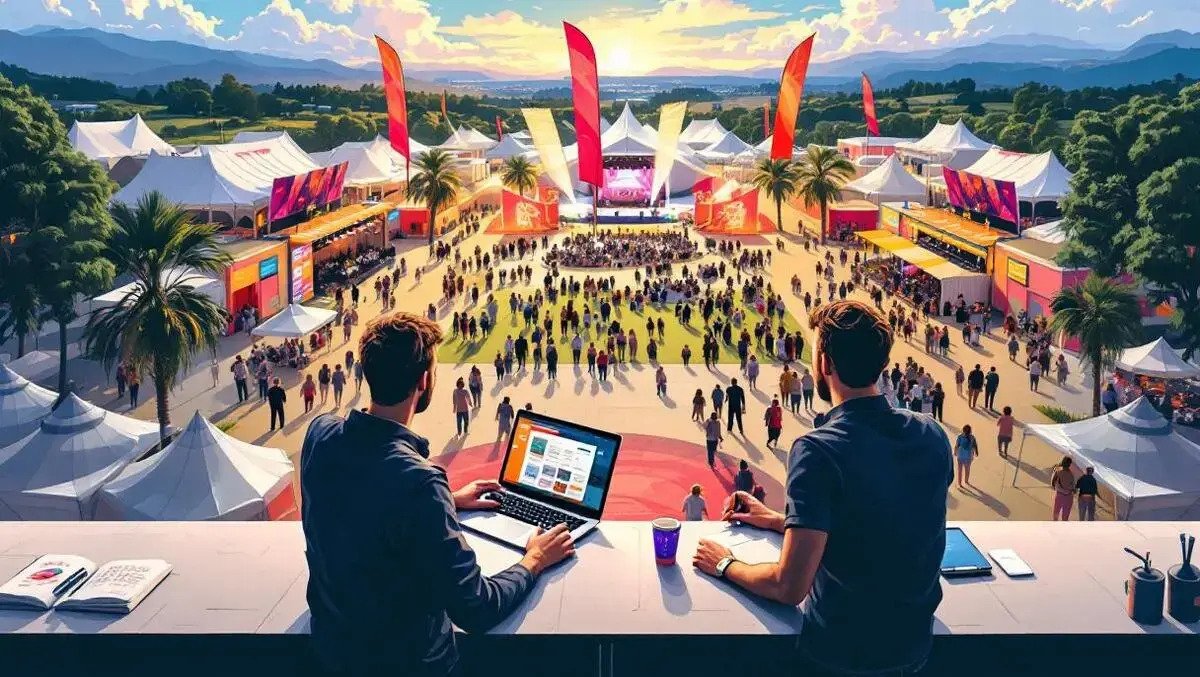
BlueProof has been named an East of England finalist in the UK StartUp Awards, with the Cambridge company shortlisted in the Hospitality, Tourism & Events StartUp of the Year category.
More than 900 businesses were shortlisted across ten nations and regions from over 2,000 entries. All finalists were founded within the past three years and, according to the awards programme, have created nearly 5,000 jobs and generate annual sales of more than £150 million.
BlueProof was founded in 2023 by Cambridge alumni Max Turner and Rafi Levy. The business grew out of a 3D app they created for the Jesus College May Ball in 2022, which they later developed into a commercial product for the live events market.
It develops interactive 3D platforms for live events. The software is used by organisers, venues and hospitality operators to present venues online and manage parts of event operations, with a focus on digital audience interaction.
The shortlisting places BlueProof among the East of England finalists in a national awards scheme for recently established companies.
International work
Despite having a team of two, BlueProof has already worked outside the UK. A recent project at the Twominds Festival in New Zealand was an early test of how its platform performs at a live event of scale.
The two-day festival hosted 4,500 attendees, according to BlueProof. During the event, its platform attracted 2,500 unique users and recorded more than 21,000 opens, including 15,000 on the first day.
Those figures provide an early snapshot of the company’s traction as it builds a business around spatial technology for live events. The market is attracting interest from venues and organisers looking for new ways to present information and engage visitors before and during events.
Turner said the shortlisting reflected the company’s origins as a student project in Cambridge.
“We’re incredibly proud to be shortlisted for the UK StartUp Awards. BlueProof started as a student project for a Cambridge May Ball, so to now be recognised at a national level, especially in the Hospitality, Tourism & Events category, is a huge milestone. We believe live experiences are evolving rapidly, and we’re excited to be building the technology that powers that shift,” said Max Turner, co-founder and CEO of BlueProof.
Awards context
The UK StartUp Awards was established to recognise new businesses across the country. Organisers said business creation remained strong in 2025, with around 832,000 new businesses registered in the UK.
Now in its fifth year, the programme describes itself as the UK’s largest independent startup awards scheme. It was founded by Frankie James and Professor Dylan Jones-Evans as part of Ideas Community.
Professor Dylan Jones-Evans OBE, co-founder of the awards, said the finalists reflected the strength of the UK startup market.
“New businesses are the driving force behind any thriving economy, generating employment, pioneering innovation, and contributing to prosperity right across the UK. This year’s finalists represent the very best of British entrepreneurial talent, spotting opportunities and, through dedication, skill, and resilience, building ventures that are making a real difference in their industries and communities. The standard of entries in 2026 has been exceptional, and every finalist should be enormously proud of what they have achieved. Regional winners will go on to represent their region at the national final at Ideas Fest in September, and that is a stage worthy of everything they have built,” said Jones-Evans.
For BlueProof, the shortlisting brings recognition in a crowded startup field as it seeks more work with festivals, venues and corporate event operators. Its early projects show how a niche idea developed for a Cambridge college event has become a business with overseas customers and measurable user activity at live shows.


Vance praises Orbán and accuses EU of ‘foreign interference’ in upcoming Hungarian election – Europe live | Hungary

Omniscient raises USD $4.1 million for boardroom AI

Kennedy Institute of Rheumatology secures five-year major funding from the Kennedy Trust for Rheumatology Research
-

 Oxford Events3 weeks ago
Michelin Guide Oxfordshire Restaurants – The Oxford Magazine
-

 Crime & Safety3 weeks ago
Oxford: ‘Next generation’ LimeBikes in city from today
-

 Jobs & Careers3 weeks ago
Explore our Careers
-

 Jobs & Careers3 weeks ago
Why Join Oxford | Oxford University Jobs
-

 Oxford Events3 weeks ago
Oxford News and Events, What’s on in Oxford, Exhibitions
-

 Jobs & Careers3 weeks ago
Internal Job Board for University vacancies
-

 Student Life3 weeks ago
The independent cinema battling Oriel College to stay open
-

 Crime & Safety3 weeks ago
Crash partially blocks A40 and causes severe Oxfordshire traffic