
UK News
Starmer confirms UK will not support US blockade of strait of Hormuz – UK politics live | Politics

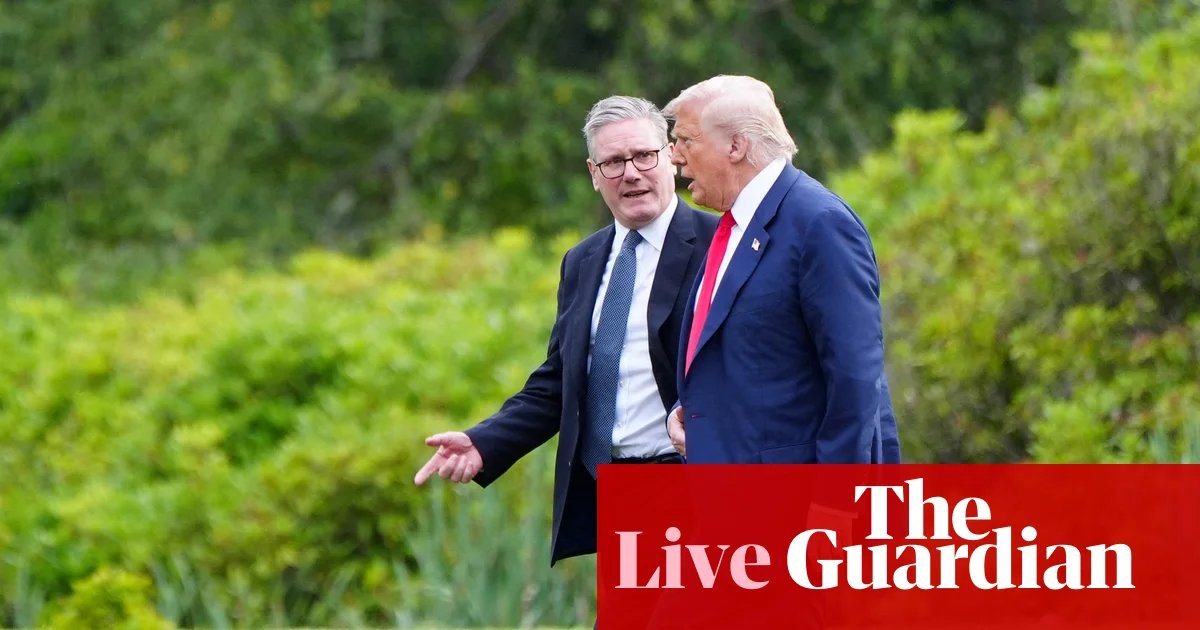
Key events
Badenoch says aligning with single market rules, but staying out of EU, ‘worst of both worlds’
Given how unpopular Brexit has turned out to be, you might think there would be limited appeal for the ‘Brexit betrayal’ counterattack as a response to the story about the government’s plans to align much more with single market rules. (See 9.39am.)
But Reform UK are happy with their old war cry. This is how Richard Tice, the party’s deputy leader, responded to the Guardian’s story.
Outrageous
Labour plots to deny MPs vote on new EU sell-out
Reform will reverse such a betrayal
Kemi Badenoch has been giving interviews this morning. Asked about the story on Sky News, she said aligning with the EU’s single market rules, while not being a member, would be “the worst of both worlds”. She went on:
It won’t help growth. Why should we be out of the EU, able to make our own choices and not take those decisions?
Remember we are a competitive, competing economy. Taking EU rules without having a vote on them is completely wrong.
If you want to be in the EU, come out and say ‘We want to go back into the EU’. That’s what they’re not brave enough to do.
So they’re picking this weird hybrid, which is the worst of both worlds. It’s not in the EU, it’s not out. It’s just doing whatever the EU is doing.
Government shift on intelligence evidence could revive delayed Hillsborough law
The delayed Hillsborough law could come into force after a shift by the government on forcing intelligence services to give evidence to public inquiries, Peter Walker reports.
Fried nuggets and steamed sponges off menu in school food overhaul in England
Keir Starmer is at a school in Angela Rayner’s constituency this morning (see 9.45am) to promote this government announcement about school food. Raphael Boyd has the story here.
Keir Starmer has joined his former deputy prime minister Angela Rayner and Greater Manchester mayor Andy Burnham on a school visit, the Press Assocation reports. PA says:
The trio joined up on Monday in the Greater Manchester area and put on a united front, despite Rayner previously appearing to challenge Keir Starmer’s leadership and Burnham being blocked from standing in the Gorton and Denton byelection.
They all shared a joke as they sat amongst schoolchildren, asking the youngsters about their favourite breakfast foods and favourite sports.
The visit comes after the government announced deep-fried food will be banned from school menus, with sugary treats limited.
Starmer defends proposed law letting Britain align with EU regulations easily, saying ‘closer relationship with Europe’ vital
In his Radio 5 Live interview, Keir Starmer was also asked about this Guardian story by Alexandra Topping and Peter Walker saying “ministers are planning to fundamentally reshape Britain’s relationship with the European Union, with new legislation that could result in the UK signing up to EU single market rules without a normal parliamentary vote”.
Starmer defended the proposed legislation, saying a closer relationship with the EU was in the national interest. He said:
We’re in a world where there’s massive conflict, great uncertainty, and I strongly believe the UK’s best interests are in a stronger, closer relationship with Europe, whether that’s defence and security, of course, energy … and also our economy …
I think there’s also a sense, 10 years on from the Brexit referendum, that we’ve got to look forward now, not backwards.
Let’s not just have all the old arguments over the last decade. Let’s go forward and recognise that a stronger, closer relationship with Europe is in the UK’s best interest, particularly in a world that is as volatile as it is at the moment and I know that worries a lot of people.
In response to the suggestion that allowing the UK to align with EU regulation using secondary legislation amounted to integration by stealth, Starmer said this would only happen under a bill “voted on in parliament”.
Starmer confirms UK will not support US blockade of strait of Hormuz
Good morning. The parliamentary recess is over, the Iran war disaster isn’t, campaigning is ramping up because the May elections are less than four weeks to go, and there will be plenty for MPs to discuss as they meet in the Commons this afternoon. The full timetable, as usual, is down below.
Keir Starmer is in Greater Manchester this morning, on a visit linked to the English local elections. But he is expected to be in the Commons later giving an update on the UK response to the Iran war, and in an interview on Radio 5 Live a few minutes ago he confirmed that Britain will not join the US in enforcing the new blockade of the stait of Hormuz proposed by Donald Trump.
Asked if the UK would support the US with its blockade, Starmer replied:
We’re not supporting blockade.
Starmer confirmed that the UK does have “minesweeping capability”. He said he would not go into “operational matters”, but he confirmed that Britain has been talking with allies, in a reference to discussions on what could be done to keep the strait open after the conflict between Iran and the US is over.
Having the strait open was a priority, he said.
The strait is shut or not free for navigation in the way it should be. That means that oil and gas is not getting to market. That means the price is going up. That means everybody listening to this is facing higher energy bills. And I don’t want that to happen.
I want their energy bills to be stabilised and lower. And so it is, in my view, vital that we get the strait open and fully open.
I will post more from the interview shortly.
Here is the agenda for the day.
Morning: Keir Starmer is on a visit in Greater Manchester, and is doing an interview with Radio 5 Live.
Morning: Kemi Badenoch is on a campaign visit in Clapham, south London.
10.30am: Anas Sarwar launches Scottish Labour’s manifesto for the Holyrood election.
10.30am: Wes Streeting, the health secretary, gives a speech on NHS funding to the IPPR thinktank.
11am: Nigel Farage, the Reform UK leader, and Zia Yusuf, the Reform chair, hold a press conference.
11.30am: Downing Street holds a lobby briefing.
Noon: The Southport inquiry publishes its phase one report.
2.30pm: Steve Reed, the housing secretary, takes questions in the Commons.
After 3.30pm: Starmer is expected to make a statement to MPs about the Iran war and his tour of the Gulf last week.
If you want to contact me, please post a message below the line when comments are open (between 10am and 3pm), or message me on social media. I can’t read all the messages BTL, but if you put “Andrew” in a message aimed at me, I am more likely to see it because I search for posts containing that word.
If you want to flag something up urgently, it is best to use social media. You can reach me on Bluesky at @andrewsparrowgdn.bsky.social. The Guardian has given up posting from its official accounts on X, but individual Guardian journalists are there, I still have my account, and if you message me there at @AndrewSparrow, I will see it and respond if necessary.
I find it very helpful when readers point out mistakes, even minor typos. No error is too small to correct. And I find your questions very interesting too. I can’t promise to reply to them all, but I will try to reply to as many as I can, either BTL or sometimes in the blog.
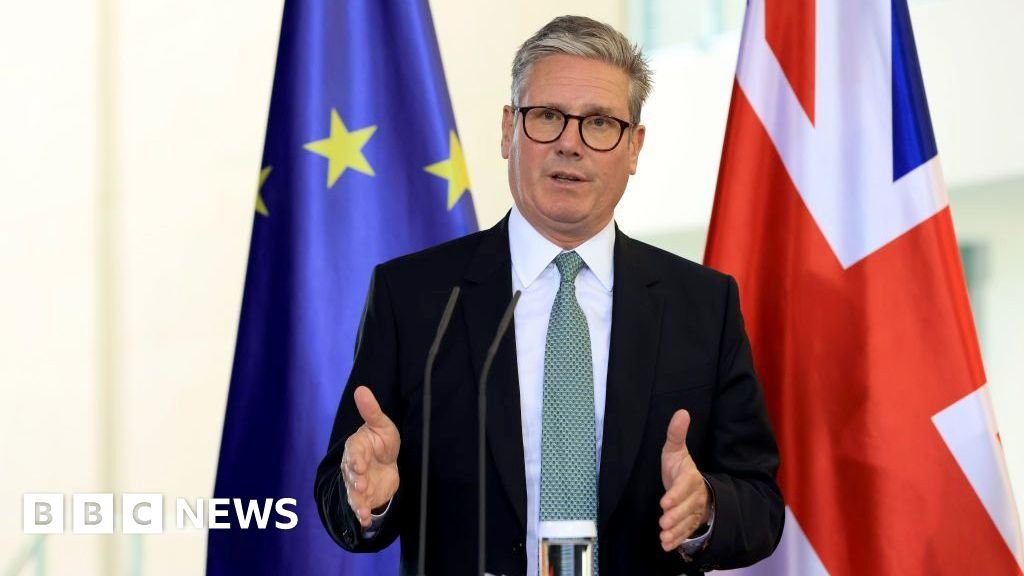
The move has raised questions over parliamentary scrutiny of future rules to deliver planned EU deals.
Source link
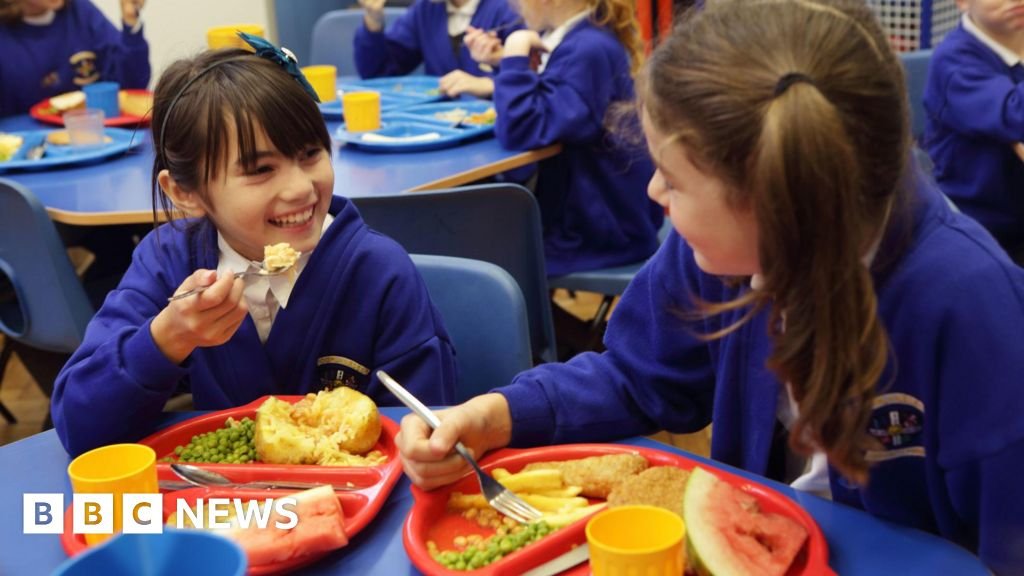
“From talking to parents, head teachers and school governors in my constituency, I know that many are worried about the rising cost of food, and in many cases the current funding just isn’t enough, forcing schools to provide smaller portion sizes and poorer quality food,” she said.
UK News
Oil price tops $100 a barrel again after Trump announces strait of Hormuz blockade – business live | Business
Key events
FTSE 100 drops
London’s stock market has opened with a bump, as traders react to the lack of progress in the US-Iran peace talks.
The FTSE 100 index of blue-chip shares has lost 0.6% at the start of trading, falling by 67 points to 10,533 points.
AB Foods (the grocery, sugar, agriculture, ingredients and retail group) are the top faller, down 2.7%, with airlines, miners, banks and housebuilders all lower.
Energy companies are rallying, though; BP and Shell are both up more than 1%.
Energy shock to wipe out growth in UK living standards
The surge in energy costs from the Iran war will cost a typical UK household almost £500, new research from the Resolution Foundation shows.
The Resolution Foundation have esimated that rising energy prices are likely to tip living standards growth into negative territory this year.
That’s because the increased cost of energy bills and petrol at the pump will almost certainly be passed onto households.
The typical household is now set to see its income fall by 0.6% – a difference of £480 – over the course of the current financial year, they say, Before the conflict, they were on track for 0.9% growth.
Average income growth for the poorest fifth this year is now set to be just 1.2%, down from 2.8% before the conflict.
James Smith, chief economist at the Resolution Foundation, says:
“Despite hopes for a sustained peace, the path of this conflict remains uncertain and energy prices remain well above pre-war levels, meaning many households face a decline in their purchasing power this year.
“This squeeze will run right through the income distribution. Lower-income households will still see some income growth thanks to a long-awaited rise in real benefit levels, but inflation will likely knock more than a percentage point off what they stood to gain. For those in the middle and towards the top of the income distribution, even the thin growth they had been expecting has tipped into negative territory.
“Deescalation is certainly welcome, but damage to household finances this year is to a large degree already done. The Government should act now to prepare a social tariff that reaches households falling through the cracks this winter.”
Heathrow Airport has warned that the outlook for the next few months is uncertain, due to the ongoing conflict in the Middle East.
In its latest traffic commentary, Heathrow says it is supporting airlines and passengers as they adapt to airspace closures, adding:
The knock-on impacts to global supply chains, including fuel, have not affected airport operations. Heathrow will monitor the situation and liaise with Government and airlines to protect passengers’ journeys.
The US dollar is rallying as a sharp risk-off move ripples across markets.
The dollar index, which tracks the greenback against a basket of other currencies, has gained 0.35% this morning.
The pound is down half a cent, to just above $1.34.
UK gas price jumps
The price of wholesale gas has also risen this morning.
The month-ahead US gas contract is up 9% to 119.50 a therm, its highest level since last Tuesday (before Donald Trump announced the two-week ceasefire with Iran).
Before the conflict began at the end of February, gas was trading below 80p a therm, before hitting 180p/therm in mid-March.
Analyst: oil remains vulnerable to geopolitical triggers.
Every barrel of risk added to oil markets carries an inflation price tag for the global economy, warns Priyanka Sachdeva, analyst at brokerage Phillip Nova:
Oil markets have decisively re-entered geopolitical mode, with prices vaulting back above the psychological $100 per barrel threshold as the United States moved to impose a naval blockade targeting Iranian shipping through the strait of Hormuz.
Both benchmarks, WTI and Brent, opened gap-up and currently hover with almost 8% gains. The market reaction underscores a simple but powerful reality: Hormuz risk is not theoretical; it is structural, and it is real.
The latest catalyst came after talks mediated by Pakistan failed to produce a durable agreement, prompting the U.S. to announce enforcement of maritime restrictions on vessels moving to and from Iranian ports. The mere threat of enforcement alone has been sufficient to re-price risk, demonstrating how vulnerable oil remains to geopolitical triggers.
Only mild losses in Asia-Pacific markets after peace talks break down
The breakdown of US-Iran peace talks last weekend has only led to modest losses in Asia-Pacific markets.
Japan’s Nikkei index is down 0.75%, while Hong Kong’s Hang Seng index and the South Korean KOSPI have both dropped by 1.15%.
Michael Brown, senior research strategist at brokerage Pepperstone, says:
While crude has advanced, and stocks slipped a touch, the overall market reaction to the weekend news of a US Navy blockade of the strait of Hormuz has been relatively contained, as participants view the move largely as a negotiating gambit from President Trump.
While it’s clearly a risk-averse start to the trading week, amid President Trump’s announcement of a Navy blockade in the strait of Hormuz, the general market reaction can be summed up as ‘could be worse’.
The US blockade of the strait of Hormuz is a blow to the 20,000 seafarers who have been trapped in the Gulf for the last six weeks.
One told us last week:
“I gave my notice exactly one month ago. I’ve informed the master, I’m not willing to sail through the strait. It’s about safety, it’s all about safety.”
Introduction: US blockage threat puts oil back over $100
Good morning, and welcome to our rolling coverage of business, the financial markets and the world economy.
We start a new week, again, with an escalating conflict in the Middle East, after the collapse of US-Iran peace talks last weekend.
Donald Trump’s threat to impose a blockade on the strait of Hormuz has driven the oil price back over $100 a barrel again this morning, as hopes of an end to the conflict soon take another knock.
Brent crude, the international benchmark, has jumped by 7% to $101.88 a barrel, while US crude is up over 8% to $104.69 a barrel – back towards the highs of almost $120 set early in the conflict.
The US president also said he had asked the US Navy to “interdict” any ship that had paid a toll to Iran for passage through the strait, in an attempt to choke off the flow of Iranian oil.
Tony Sycamore, market analyst at IG, says:
By doing so, the US aims to force Tehran’s allies and customers to put pressure on Iran to reopen the vital chokepoint, potentially resolving the impasse without committing ground forces to another protracted conflict.
This approach will undoubtedly strain Iran’s relationship with its largest customer, China. Having already lost Venezuelan supply earlier this year, Beijing now faces the potential loss of another roughly 2m barrels a day.
The war has already driven confidence across Britain’s biggest companies down to a six-year low.
Deloitte’s quarterly survey of chief financial officers has found that concerns around energy prices, inflation and interest rates surging after the Middle East conflict, to its lowest level since early in the Covid-19 pandemic in 2020.
The agenda



-

 Crime & Safety4 weeks ago
Police race to crash on Oxfordshire A34 with severe traffic building
-

 Oxford News4 weeks ago
Gary Lineker’s nephew-in-law death inquest to be next week
-

 Oxford News4 weeks ago
Schwarzman Centre to open doors to public with major celebration
-

 Business & Technology3 days ago
Aqilla launches AI invoice tool to speed accounts payable
-

 Crime & Safety4 weeks ago
Wiltshire 12-year-old girl with Oxfordshire links missing
-

 Crime & Safety1 week ago
American Akita and a French Bulldog seized after dog killed
-
 Oxford Events4 weeks ago
Michelin Guide Oxfordshire Restaurants – The Oxford Magazine
-
 Oxford News4 weeks ago
Statins do not cause the majority of side effects listed in package leaflets