
Oxford Events
Stage Watch: 2:22 A Ghost Story, Beetlejuice, The Lives of Others, War Horse & Waitress

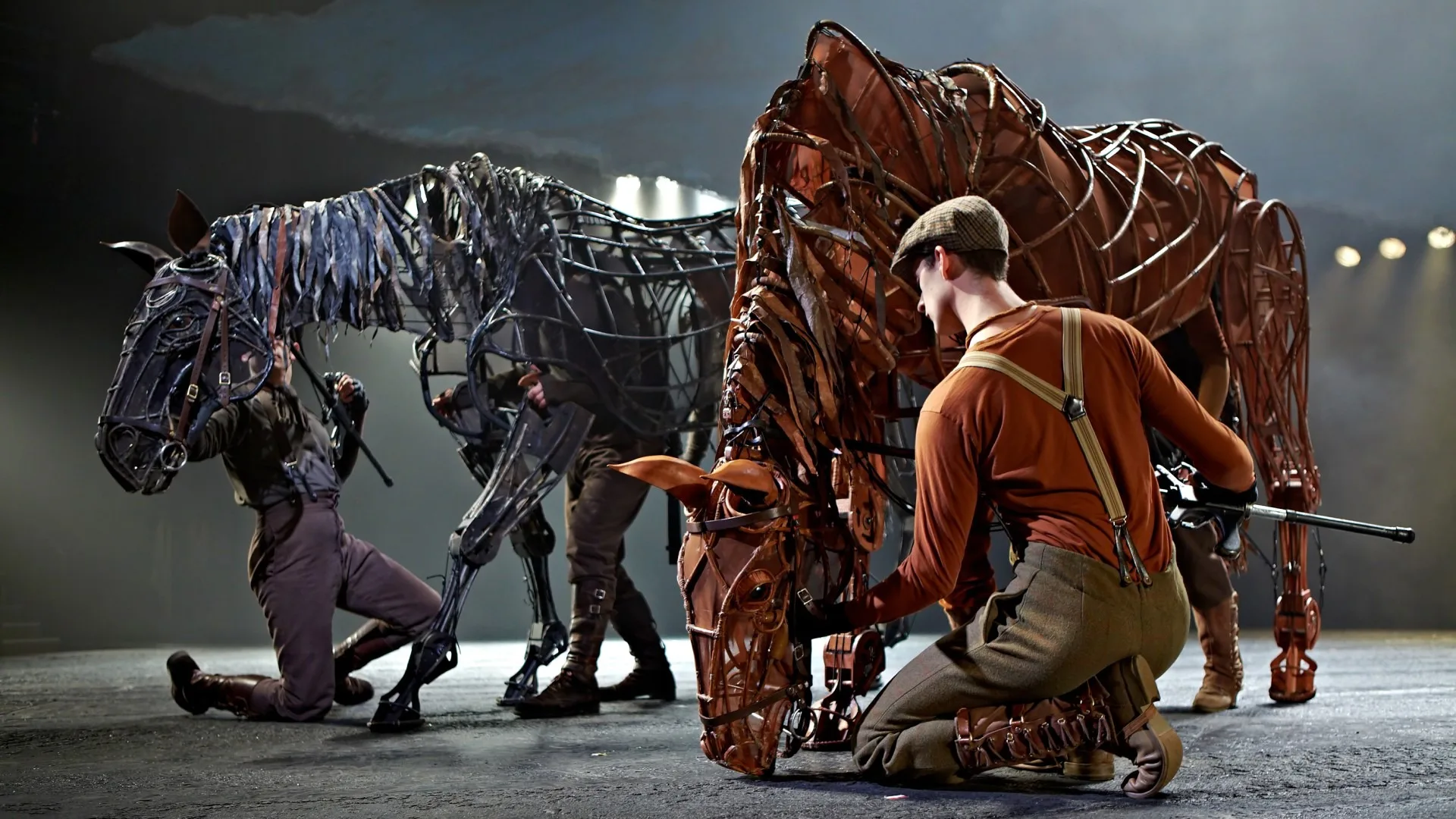
Welcome to your round-up of unmissable productions across Oxford, London and the wider region.
This edition of Stage Watch brings together five standout productions across Oxford, Aylesbury and London, spanning supernatural thrillers, cult musical theatre, powerful drama and a landmark National Theatre revival. From intimate tension to large-scale spectacle, these shows offer something for every kind of theatre-goer within easy reach of Oxford.
2:22 A Ghost Story
Aylesbury Waterside Theatre. 08 to 13 June 2026.
The record-breaking supernatural thriller 2:22 A Ghost Story arrives in Aylesbury following multiple West End runs and an international touring success. Written by Danny Robins, creator of Uncanny and The Battersea Poltergeist, the play has become one of the most recognisable modern British stage phenomena.
Jenny and her husband Sam have just moved into a new home. When Jenny becomes convinced the house is haunted, scepticism quickly gives way to tension as their dinner guests are drawn into the argument. As the night unfolds, the group agrees to stay awake until 2:22am — the time when something unseen may finally reveal itself.
Blending humour, psychological tension and jump-scare suspense, the play asks a simple question: what do you believe when logic runs out?
Best for: Fans of thrillers, ghost stories and interactive “edge of your seat” drama.
Tips: Go in cold — the less you know, the more effective the tension becomes.
Read our review of 2:22 A Ghost Story to find out why the supernatural thriller continues to captivate audiences on tour.

Beetlejuice
Prince Edward Theatre, London. Opening May 2026 (limited run).
Say his name three times… The mischievous spirit with the most arrives in the West End as Beetlejuice brings its riotous energy to the Prince Edward Theatre. Based on Tim Burton’s cult film, the musical follows Lydia Deetz, a teenager drawn into a chaotic afterlife when she moves into a house already occupied by two very confused ghosts — and one dangerously unhelpful demon.
What follows is a fast-paced blend of gothic comedy, theatrical spectacle and unexpectedly heartfelt storytelling. With a Tony-nominated creative team and a sharply irreverent score, this production thrives on controlled chaos, big visuals and relentless energy.
Best for: Fans of dark comedy, cult adaptations and high-energy musicals.
Tips: It’s dense, fast and visually packed — you’ll catch new details on a second viewing.

The Lives of Others
Adelphi Theatre, London. Booking open. 29 Oct 2026 to 09 Jan 2027.
The acclaimed German film The Lives of Others makes its West End stage premiere in a major new adaptation starring Keira Knightley, Stephen Dillane and Luke Thompson. Set in East Germany in 1984, it follows a Stasi officer tasked with surveilling a writer and actor whose private lives begin to challenge his own beliefs.
As observation turns into emotional entanglement, the production explores surveillance, morality and the quiet human cost of authoritarian control. Directed by Robert Icke, the piece continues his reputation for bold, psychologically precise reinterpretations of existing texts.
Originally an Academy Award-winning film, this stage version leans into intimacy and tension, drawing the audience into a world where every gesture may be watched.
Best for: Fans of intense drama, political storytelling and performance-led theatre.
Tips: Expect a slow-burn structure — attention to detail is everything here.
War Horse
Olivier Theatre, National Theatre, London. 16 May to 30 July 2026.
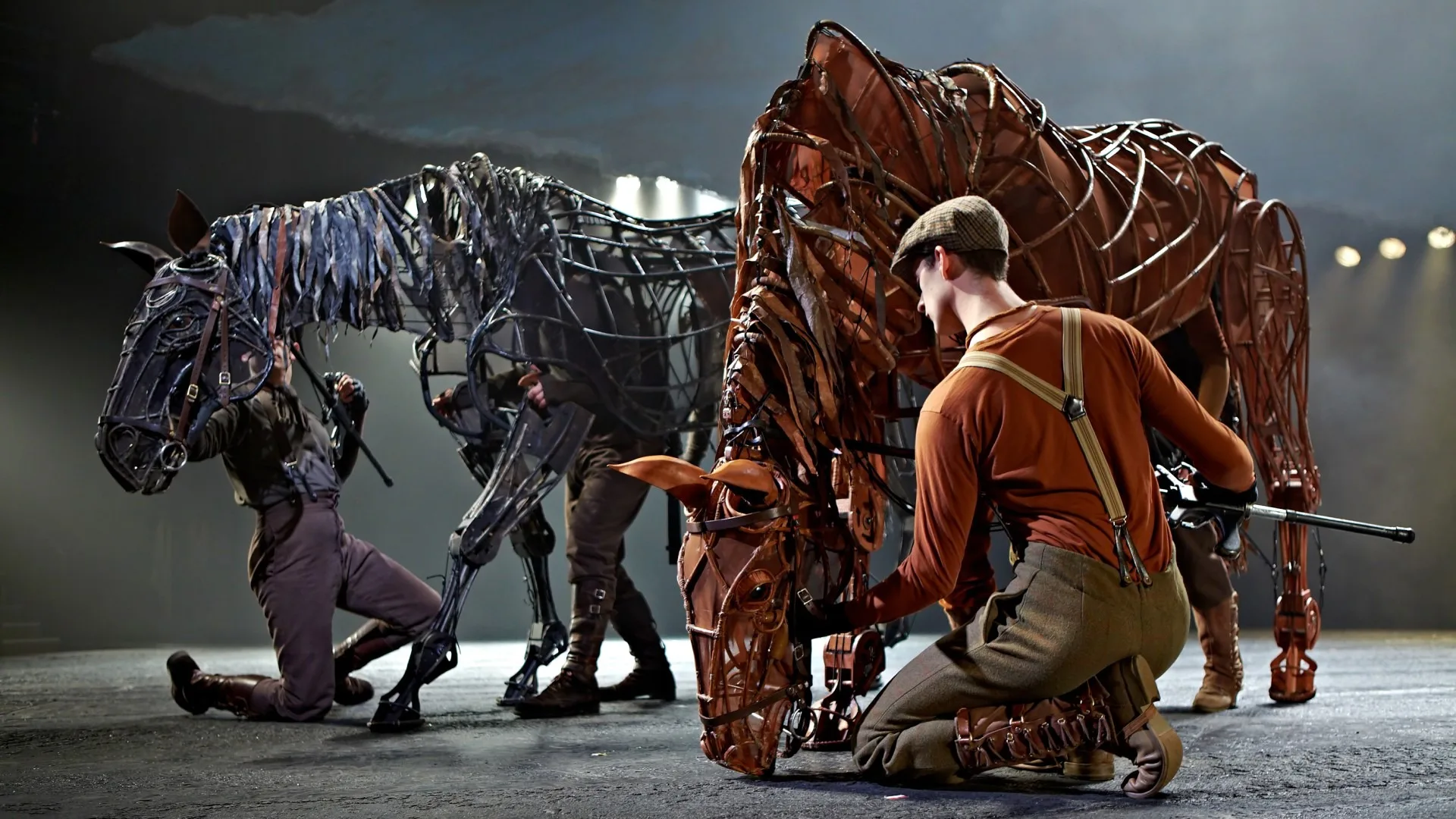
The National Theatre revival of War Horse returns to where it all began, bringing Michael Morpurgo’s beloved novel back to the Olivier stage. At the outbreak of the First World War, young Albert’s horse, Joey, is sold to the cavalry and sent to France, setting off a journey that spans continents and conflict.
Renowned for its extraordinary puppetry by Handspring Puppet Company, the production transforms Joey and the other horses into astonishingly lifelike stage creations, supported by a sweeping, emotionally charged score.
This is a story of loyalty, endurance and the bond between human and animal, set against the vast devastation of war.
Best for: Families, first-time theatre-goers and fans of epic storytelling.
Tips: The puppetry is central to the experience — allow yourself to fully suspend disbelief.
Read our review of War Horse as the National Theatre’s acclaimed production returns to the Olivier stage.

Waitress
New Theatre Oxford. 29 June to 04 July 2026.
The hit musical Waitress returns to Oxford on tour, serving up a heartfelt story of resilience, friendship and self-discovery. Jenna, a gifted pie-maker stuck in a difficult marriage, finds her life shifting when an unexpected pregnancy forces her to reconsider everything she wants.
Set to Sara Bareilles’ acclaimed score, the musical balances humour with emotional honesty, following Jenna and her friends as they navigate love, loyalty and the possibility of change.
With a female-led creative team and a proven track record on Broadway and in the West End, Waitress remains a warm, contemporary musical that continues to resonate with audiences.
Best for: Fans of uplifting musicals and character-driven storytelling.
Tips: Expect big emotion, catchy songs, and yes — plenty of pie references.
Oxford Events
Stage Watch: John Partridge and Mollie Gallagher on bringing The Silence of the Lambs to Oxford

John Partridge has spent almost four decades inhabiting some of theatre’s most recognisable characters. Now, as The Silence of the Lambs comes to New Theatre Oxford, he is taking on one of the most indelible figures in modern popular culture — Hannibal Lecter — alongside Mollie Gallagher, making her professional stage debut as Clarice Starling.
We spent time with John and Mollie to explore the process of bringing these iconic characters to the stage, the complex relationship between them, the strange intimacy of performing behind glass and what happens when a cinematic classic is reimagined for the theatre.
There are roles for which an actor can draw upon a character’s established history, and there are those in which the history of the performance itself becomes part of the challenge. Hannibal Lecter belongs firmly in the latter category.
Since Anthony Hopkins’s Oscar-winning performance in the 1991 film adaptation of Thomas Harris’s The Silence of the Lambs, Lecter has become one of the most recognisable villains in popular culture: cultivated, articulate and unnervingly composed, his menace deriving as much from restraint as violence.
For John Partridge, who now takes the role in a major new stage adaptation, the problem was therefore not simply how to play Lecter, but how to make him his own.
“When I first heard about it being put on, I thought, ‘Ooh, that would be fantastic!’” he recalls. Ahead of his audition, Partridge was sent the script and asked to prepare two scenes. He enlisted his friend Tamzin Outhwaite to read with him; when she discovered what the material was, her reaction was immediate. “Oh my god!”
Partridge’s own reaction has proved rather more considered. He was a teenager when The Silence of the Lambs appeared in cinemas, part of the generation for whom Hopkins’s Lecter quickly became inseparable from the character itself. “I’m a child of the 70s, so when the film came out in 1991, I was one of those core Silence viewers,” he says. “It lives in our zeitgeist.”
That familiarity could easily become a constraint. Instead, Partridge found a way of using it as a starting point. He was intrigued to learn that Hopkins had drawn on such unexpected influences as Truman Capote, Katharine Hepburn and HAL from 2001: A Space Odyssey when constructing his Lecter. The revelation gave Partridge permission to undertake a similar act of imaginative disassembly.
“My three are Cary Grant, Elizabeth Taylor, and John Malkovich,” he says. “Lecter is intelligent, mocking and acerbic, but also serious and malevolent. Now, I try to forget any other version of Lecter and just put myself firmly in that cell.”
That cell is one of the defining features of the stage production. For much of the play, Lecter is physically confined behind glass, a visual image familiar from the story but transformed by the theatre’s particular relationship between actor and audience. Cinema can place the viewer wherever the director chooses; theatre leaves the audience in the room, sharing the same space and the same passage of time as the performers.
Partridge initially wondered how he could overcome the obvious theatrical limitation of placing his character inside a box. The answer, he says, was to stop thinking about projecting beyond it and instead draw the audience towards him.
“When I was first placed in the box, I thought, ‘Oh my goodness, how do I push my performance beyond it?’ Then I realised that rather than trying to push, I have to pull the audience into the box.”
It is an approach that also reveals something about Partridge’s interpretation of Lecter. The character is not merely a monster imprisoned for the protection of others; he is a man who considers himself intellectually and aesthetically superior to the people who have confined him. He loves music and art, possesses considerable social grace and remains capable of exquisite courtesy even while discussing acts of extraordinary brutality. His physical confinement therefore becomes part of the psychological contest.
The stillness required of him is also a significant departure for an actor whose career has frequently involved expansive physical and vocal performances. Partridge trained in ballet at the Royal Ballet School before studying musical theatre, and at 16 joined the original UK tour of Andrew Lloyd Webber’s Cats. His subsequent stage career has encompassed A Chorus Line, Grease, Starlight Express, Tommy, Cabaret and Everybody’s Talking About Jamie, alongside television work that includes his long-running role as Christian Clarke in EastEnders.
“Lots of the roles I’m known for are quite gregarious,” he says. “I’ve played a lot of larger-than-life characters. Lecter is larger-than-life, but it’s very, very different.”
At 55, Partridge sees the role as an opportunity to draw together experiences accumulated over a long career rather than discard them in favour of something entirely new. “If you’re lucky enough to be in this business for a long time — I’m 55 now, I went into Cats when I was 16 — parts like this come along where you can roll up everything you’ve done, and colour with all the crayons in your colouring box.”
His dance training has consequently become part of the performance in a more restrained form. Lecter’s movements are economical, but they are not without precision; the physical discipline of ballet can be repurposed as control. “I can use my dance background, my physicality, in a new way to inhabit Lecter,” Partridge says, while drawing on “the actor I am now, with all my experience” to bring him to life.
If Lecter is defined by his control, Clarice Starling enters the story having to learn how to establish her own authority. Mollie Gallagher, best known for playing Nina Lucas in Coronation Street, makes her professional theatre debut as the FBI trainee whose investigation brings her into Lecter’s orbit.
For Gallagher, the role carries its own cultural weight. She has always loved the film, and the character of Clarice was familiar long before she was asked to play her. “She’s such an iconic heroine,” she says. “You can’t get much cooler than Clarice. She’s a badass.”
Yet Gallagher has deliberately avoided simply reproducing Jodie Foster’s performance. Her preparation has involved changing the way she holds herself and speaks. Clarice’s voice sits lower, her physicality is more grounded, and her movements are more deliberate.
“I’m quite airy, whereas Clarice is the complete opposite,” Gallagher says. “She’s grounded at all times.”
The transformation has extended beyond technique. Gallagher describes Clarice as highly intelligent, articulate and psychologically disciplined, qualities that require her to move beyond the instincts she associates with herself. “Weirdly, she makes me feel stronger and more confident. Now, in any situation in life, I can just think, ‘What would Clarice do?’”
There is, however, a personal point of connection. Clarice is an outsider within the FBI, a woman from West Virginia who has not inherited the wealth, status or institutional authority surrounding her. Gallagher identifies with the character’s working-class origins and with the experience of having to establish credibility in environments where she feels she is being judged before she has spoken.
“I feel like I have to prove myself every day — coming from my background and also being northern,” she says. “When I’m speaking to someone, I feel I have to articulate more to make them listen to me — basically speak a bit more ‘proper’.”
That understanding gives the central relationship a particular texture. Clarice is not simply the investigator seeking information from an imprisoned killer. She is also someone who has spent much of her life learning how to be taken seriously, now confronting a man who seems almost unnervingly capable of seeing through the carefully constructed version of herself she presents to the world.
Gallagher describes her conversations with Lecter as the point at which Clarice becomes most vulnerable. Her history, particularly the death of her father, is something she rarely discusses, yet Lecter draws it out of her. “No matter how powerful, smart and strong you are, that is really scary,” she says.
The relationship therefore develops into something more complicated than the conventional opposition between detective and criminal. Gallagher describes an unusual friendship emerging between the two, with Lecter becoming something like a confidant and therapist for Clarice even as she remains determined to extract information from him. By the end, she suggests, there is a sense of loss when that relationship disappears.
For Partridge, the theatrical potential of that exchange is almost musical. “It’s inherently theatrical. It’s like a dance: I invite her to dance with me.” He describes the scenes between Lecter and Clarice as “a tight tennis match”, with each character attempting to anticipate the other’s next move.
The chemistry between the two actors appears to have developed quickly. Gallagher says that from the first read-through they could look at one another and immediately find the connection. Partridge describes her as an instinctive actor, noting that she, like him, did not follow the conventional route into drama training. Gallagher’s first professional theatre role is therefore opposite an actor with decades of stage experience, yet she says Partridge has made the process unusually easy.
“He’s amazing — I couldn’t ask for anyone better to do this with,” she says. “He is the loveliest man, and then he summons this darkness. Sometimes we’ll be chatting, and he’ll do this look, and I’ll be like, ‘Oh no, Hannibal’s here!’”
The production’s adaptation by Gina Gionfriddo is equally important to that dynamic. Rather than attempting to reproduce the film scene by scene, the playwright has created a version for the stage that combines Harris’s material with new writing. Partridge believes the two elements have been integrated almost invisibly. “She’s managed to weave her words in with Thomas Harris so seamlessly — it’s as if Buffalo Bill has stitched it together himself.”
That theatrical reinvention extends to some of the story’s more problematic elements. The production has changed Buffalo Bill’s treatment of gender identity from the original novel and film, removing the implication that a transgender identity itself is connected to the character’s violence. Partridge says the decision was important to the production’s contemporary perspective.
“We do not need to be villainising our trans brothers and sisters in that way,” he says. “Our story is much stronger for the changes we’ve made.”
The production also retains the story’s interest in behavioural science and criminal profiling, which occupies an intriguing position within its 1980s setting. The detectives who believe that violent offenders can be understood through their psychology are treated with scepticism, while Lecter dismisses profiling as a form of “junk science”. Yet the investigation depends upon precisely the kind of psychological understanding that the established authorities are reluctant to embrace.
For Partridge, the emergence of behavioural science is one of the story’s most interesting elements. “That science changed the world,” he says. “Profiling, understanding the mind of a killer, was a game-changer.”
The broader social context is also something Partridge has considered closely. He points to the production’s depiction of attitudes towards women, policing and gender during the 1980s, and draws connections to contemporary debates around misogyny, gender equality and the rights of LGBT people. These are his interpretations of the themes rather than a claim that the historical and contemporary contexts are identical, but they illustrate why the production is not being approached simply as a nostalgic recreation of a celebrated film.
For Gallagher, the enduring appeal is more direct. She is a committed fan of horror and thrillers, and says that when she was younger, “horror, horror, horror” was always her answer when asked what she wanted to perform. The opportunity to originate Clarice on stage therefore combines a character she has admired with the genre she already loves.
It also arrives at a moment when theatre audiences have shown an appetite for adapting familiar cinematic thrillers for live performance. Partridge sees The Silence of the Lambs as occupying a distinctive place within that trend.
“It’s the godfather of them all — the holy grail of psychological thrillers,” he says.
Whether that reputation can survive the transition from screen to stage is ultimately something the audience has to decide. The production’s task is not to compete with the film on its own terms, but to exploit what theatre can do differently: the proximity, the shared silence, the absence of an edit and the knowledge that the actors are performing the encounter in front of you, night after night.
That becomes particularly significant when the central figure is a character whose power has always depended on the sensation that he is studying the person watching him.
When The Silence of the Lambs arrives at New Theatre Oxford, John Partridge will once again enter Lecter’s glass cell. Mollie Gallagher will sit opposite him as Clarice Starling, bringing a character she has admired from the screen into an entirely different medium.
For Partridge, the attraction of the role may ultimately be its contradiction. Lecter has been seen before by millions, yet the theatre offers the possibility of seeing him anew — not through the camera’s eye, but at close range, in real time, with the audience sharing the same room.
The question is no longer simply what Lecter will do next. It is what happens when the audience is close enough to watch him think.
The Silence of the Lambs comes to New Theatre Oxford from 19 to 24 October 2026.
Oxford Events
Booker Prize 2026 shortlist explores the secrets, divisions and uncertainties of human life

From a post-apocalyptic coastline to a remote Hebridean island, the six shortlisted novels examine the limits of understanding, the pressures of belonging and the private lives concealed beneath public appearances.
The six novels shortlisted for the 2026 Booker Prize range from a surreal vision of a world after catastrophe to an intimate portrait of family life in the Outer Hebrides. Their settings and styles differ sharply, but together they return to a common preoccupation: how little people can know of one another, even when their lives are bound together by family, friendship, desire or fear.
The shortlist, announced by the Booker Prize Foundation, includes previous winners Marlon James and Douglas Stuart, alongside Elizabeth Strout, a three-time nominee for the award. M. John Harrison, Luke Kennard and Rebecca Perry complete a selection that moves between speculative fiction, campus satire, historical storytelling and contemporary realism.
Chosen from a longlist of 13 books drawn from 163 submissions, the final six were selected by a judging panel chaired by classicist, author and broadcaster Mary Beard. The winner will be announced at a ceremony at Old Billingsgate in London on 9 November, receiving £50,000. Each shortlisted author will receive £2,500.
What distinguishes the selection is not a single literary movement or subject, but the range of ways in which its authors approach uncertainty: through social violence, family conflict, concealed identities, historical imagination and the increasingly fragile boundaries between private experience and the world beyond it.
Six books, six examinations of belonging
In The End of Everything, M. John Harrison turns the familiar conventions of post-apocalyptic fiction into something more disquieting. Phillip Tennent makes a precarious living collecting objects washed ashore by the Channel, years after a crisis whose precise nature remains obscure. Government has largely ceased to function, unfamiliar creatures inhabit the seas and Europe itself appears to have been lost.
The discovery of a shape-shifting creature forces Phillip away from the coastline and into an uncertain interior world. Harrison uses the premise not simply to imagine the aftermath of catastrophe, but to question the assumptions through which people make sense of reality. The result, according to the book’s publisher, is a satirical and unsettling adventure in which the familiar distinction between the known and the unknowable begins to break down.
Where Harrison approaches uncertainty through speculative fiction, Marlon James locates it in the consequences of hatred and exclusion. The Disappearers returns to the Jamaica of his Booker Prize-winning A Brief History of Seven Killings, setting its central events in Kingston in 1988.
Eight gay men respond to a casting call for an openly queer play, taking a considerable risk simply by assembling. When a mob attacks a rehearsal, one man dies, everyone present is injured and two subsequently disappear. The survivors must decide how to live with the violence: whether to suppress its memory, answer it with anger or withdraw from a society that refuses to accept them.
James’s novel follows the consequences of that night through a story concerned with both collective persecution and individual survival. Its central question is not only what violence does to its victims, but what happens when a society makes certain people unsafe in their own lives. The search for those who have disappeared becomes inseparable from the wider struggle to confront the perpetrators and the prejudice that enabled them.
Luke Kennard’s Black Bag approaches contemporary anxieties about identity and masculinity through absurdity. Its protagonist, a penniless actor, accepts work with a university professor conducting a psychological experiment. His task is to sit at the back of lecture theatres inside an oversized black bag, concealed from the students around him.
The arrangement soon develops beyond the experiment’s original purpose. A professor of post-humanism begins asking her own questions, including whether it is possible to love someone whose identity is hidden inside a bag. Meanwhile, the actor’s childhood friend sees commercial possibilities in the unusual situation.
Kennard uses the conceit to unsettle assumptions about visibility, intimacy and the performance of identity. The campus novel becomes a comic investigation into how men understand themselves and relate to others, with friendship and tenderness emerging beneath the deliberately outlandish premise. Its humour also offers a counterpoint to the shortlist’s darker examinations of isolation and social hostility.
In May We Feed the King, Rebecca Perry shifts attention to the relationship between the present and the past. Her protagonist is a curator who dresses the rooms of historic buildings, bringing their former occupants and surroundings back to life. While working in a medieval palace, she becomes absorbed in the reign of a largely forgotten king, to the point where her fascination begins to blur the boundaries of her own existence.
The king, meanwhile, has assumed the throne reluctantly after the deaths of his older brothers. With little appetite for power, he faces mounting doubts about his fitness to rule and the possibility that another figure might take his place.
Perry moves between the two lives, using the historical setting to explore how reputations are constructed and how stories shape our understanding of people who are no longer able to tell their own. The novel’s interest in what makes a ruler great is matched by a more intimate question: whether retreating into the past can help someone recover a sense of meaning in the present.
Elizabeth Strout’s The Things We Never Say brings the shortlist back to the apparent ordinariness of contemporary life. Artie Dam is a high-school history teacher in coastal Massachusetts, a husband of three decades and a familiar presence in his neighbourhood. He spends his days educating pupils, offering kindness where he can and maintaining the routines of a comfortable life.
Yet beneath this outward stability lies a persistent sense of isolation. Artie wonders how people can remain so unfamiliar to one another, including those with whom they share their lives. When he discovers a secret that threatens to overturn his understanding of his own circumstances, he must reconsider the relationships he has taken for granted.
Strout’s subject is the distance between a person’s public life and private experience, and the way an undisclosed truth can alter the meaning of years of apparently settled existence. Grief, friendship and the possibility of beginning again emerge from a story that treats ordinary relationships as sites of profound uncertainty.
The final novel, Douglas Stuart’s John of John, explores the same tensions through a family rooted in the traditions of the Outer Hebrides. John-Calum Macleod returns to the island of Harris after his art-school education has failed to provide him with a clear future. At home, he finds a life shaped by the competing influences of his father, John, a sheep farmer, weaver and pillar of the local Presbyterian church, and his grandmother Ella, who has spent decades maintaining a fragile peace within the family.
Cal’s return exposes the distance between his aspirations and the expectations of the community he has left behind. His father is troubled by his son’s long hair and apparent reluctance to embrace religious salvation, while Cal finds himself wondering whether there might be other lonely men in the surrounding landscape.
As the seasons pass, the family’s tensions become entangled with the future of the wider community. Stuart, whose Shuggie Bain won the Booker Prize in 2020, returns to questions of masculinity, religion, sexuality and class, examining how affection can coexist with disapproval and how the bonds of home can sustain as well as constrain.
The limits of knowing another person
Read together, the novels suggest that isolation takes many forms. In Harrison’s imagined aftermath, the world itself becomes difficult to interpret. In James’s Jamaica, social prejudice determines who can live openly and who must disappear. Kennard’s actor is physically concealed even as his presence provokes questions about intimacy; Perry’s curator becomes absorbed in a historical life while negotiating her own. Strout’s teacher discovers that familiarity offers no guarantee of understanding, while Stuart’s returning son finds that homecoming cannot erase the divisions that shaped him.
The connections are thematic rather than uniform. The shortlist places comedy alongside violence, speculative invention beside domestic realism, and historical distance beside the immediacy of family conflict. Its characters do not all seek the same kind of resolution, nor do their circumstances offer comparable degrees of freedom. What unites them is the difficulty of reconciling the stories people tell about themselves with the lives they actually lead.
Beard said the judges had not begun their deliberations with a checklist of genres, subjects or types of author they wanted to include. Instead, the final selection emerged from discussion of the 13 longlisted books, many of which the judges had read more than once.
She described a group of novels ranging from the hilarious to the discomfiting, and from the frighteningly strange to the unexpectedly domestic. The shortlist, she said, offered both enjoyment and writing capable of changing how readers see the world.
Gaby Wood, chief executive of the Booker Prize Foundation, also identified isolation as a connecting concern, pointing to relationships that break down or are withheld, characters who harbour secrets or pain, and people attempting to reach beyond their solitude.
The result is a shortlist that places established literary reputations alongside writers reaching this stage of the prize for the first time. James and Stuart return as previous winners, while Strout brings further experience of the competition. For Harrison, Kennard and Perry, the selection offers a different kind of recognition, bringing their work into the same conversation.
When will the Booker Prize 2026 winner be announced?
The winner will be announced on Monday, 9 November 2026, at Old Billingsgate in London. The winning author will receive £50,000, with the other five shortlisted writers each receiving £2,500.
The Booker Prize has recognised fiction written in English and published in the UK or Ireland since 1969. Its annual selection draws attention not only to individual books but also to the changing range of subjects, forms and voices represented in contemporary fiction.
This year’s six novels offer no single answer to the question of what it means to understand another person. Instead, they approach it from different directions, examining the pressures of history, family, identity and society on lives that are never quite as straightforward as they appear.
Oxford Events
Stage Watch: Sinatra, The Truth, Jaja’s African Hair Braiding, Million Dollar Quartet, & Silence of the Lambs

The five-show line-up brings together West End musicals, sharp-edged comedy, contemporary drama and a landmark psychological thriller. From the birth of rock ’n’ roll and the enduring appeal of Frank Sinatra to the secrets that shape relationships and the women whose lives intersect in a Harlem hair salon, these productions explore the stories people tell, the identities they inhabit and the moments that change them.
With a world stage premiere arriving in Oxford and limited London engagements featuring familiar names from stage and screen, this selection offers a mix of musical nostalgia, theatrical reinvention and gripping storytelling for the months ahead.
Sinatra the Musical
Aldwych Theatre, London.
Booking from 03 June 2026 to 10 April 2027. Running time of 2 hours 45 minutes.
Save up to 48% on booking in week commencing 12 October
The voice behind some of popular music’s most enduring standards takes centre stage in this new musical tracing Frank Sinatra’s rise, fall and remarkable return to prominence. Beginning on New Year’s Eve in 1942, the story follows the young Italian-American singer as a career-defining performance propels him towards national fame, while his private life becomes increasingly complicated by his marriage to Nancy Sinatra and his relationship with Hollywood star Ava Gardner.
Written by two-time Tony Award winner Joe DiPietro and directed and choreographed by Kathleen Marshall, the production combines biography with a catalogue of more than 20 songs, including That’s Life, One for My Baby, The Best Is Yet to Come, and I’ve Got the World on a String. Joel Harper-Jackson plays Sinatra, with Ana Villafañe as Ava Gardner and Phoebe Panaretos as Nancy Sinatra.
Rather than simply revisiting a familiar musical legacy, the show explores the tensions between public image, personal ambition and the private costs of fame.
Best for: Sinatra devotees, fans of classic American songbooks and audiences drawn to biographical musicals.
Good to know: The production runs for nearly three hours. Age guidance is 13+. Content includes swearing, mild violence, smoking, nudity, haze and potentially strobe-like lighting effects.
The Truth
Theatre Royal Haymarket, London.
A 12-week West End engagement from July 2027. Running time of 90 minutes, without interval.
How much honesty can a relationship withstand? Florian Zeller’s Olivier-nominated comedy returns to the West End with a sharply constructed examination of infidelity, friendship and the stories people tell to protect themselves.
At its centre is a man caught in a complicated affair, where loyalties shift, and suspicion spreads beyond the couple directly involved. As secrets emerge, the boundaries between truth and deception become increasingly difficult to distinguish. The play’s tension lies not simply in discovering who has lied, but in questioning whether complete honesty is always as straightforward or desirable as it appears.
The returning cast brings together Stephen Mangan, Ardal O’Hanlon, Sarah Hadland and Janie Dee. Mangan’s screen and stage experience, O’Hanlon’s comic timing and Hadland’s familiarity to television audiences provide a strong ensemble for Zeller’s intricate writing, in which apparently ordinary conversations can carry a second, more revealing meaning.
Best for: Admirers of sophisticated comedy, relationship dramas and plays that leave audiences debating what they would do in the characters’ place.
Good to know: The 90-minute running time makes this a compact evening at the theatre. Age guidance is 12+, with mild adult themes.
Jaja’s African Hair Braiding
Lyric Hammersmith, London.
Limited run to 29 January. Running time: 90 minutes, without interval.
A Harlem hair-braiding salon becomes the lively setting for Jocelyn Bioh’s comedy-drama about work, friendship, identity and the ambitions of women building lives far from the countries they once called home.
Over one sweltering summer’s day, Jaja’s draws a steady stream of customers seeking elaborate hairstyles, while its West African immigrant braiders navigate demanding clients, personal secrets, romantic complications and the pressures of making a living. The salon is both workplace and meeting point: a space where humour and gossip sit alongside vulnerability, and where individual dreams collide with the realities of life in New York.
Bioh’s writing brings the rhythms of everyday conversation to the foreground, allowing the characters’ personalities and relationships to emerge through the bustle of the shop. The result is a portrait of a community that is neither idealised nor reduced to its struggles, with its warmth and exuberance inseparable from the challenges its women face.
Director Monique Touko reunites with Bioh following their work on School Girls; Or, The African Mean Girls Play. Together, they bring a distinctive perspective to stories about African identity, female friendship and the experience of finding one’s place in a changing city.
Best for: Audiences interested in contemporary writing, character-led comedy and stories exploring migration, community and women’s lives.
Good to know: The production is recommended for ages 14+. Tickets were listed as unavailable in the supplied booking information, so check the theatre’s current listings for availability and the confirmed final performance date.

Million Dollar Quartet
The Arts at Marble Arch, London.
Booking from 04 September to 06 December 2026. Running time 2 hours 5 minutes.
One recording session, four emerging legends and a collection of songs that helped define modern popular music provide the foundation for Million Dollar Quartet, the Tony Award-nominated musical returning to London for a limited season.
The story takes audiences to Memphis on 4 December 1956, when Elvis Presley, Johnny Cash, Jerry Lee Lewis and Carl Perkins unexpectedly came together at Sun Records. Their impromptu jam session became one of rock ’n’ roll’s most celebrated encounters, bringing together musicians whose careers would follow very different paths.
The production recreates the energy of that meeting through live performance and a soundtrack featuring Blue Suede Shoes, Fever, Walk the Line, Hound Dog and Great Balls of Fire. Darren Day stars as Sam Phillips, the record producer whose instinct for emerging talent helped shape the sound of a generation.
The appeal extends beyond nostalgia. The musical explores the rivalries, friendships and commercial pressures surrounding the birth of a new musical movement, when country, gospel, blues and early rock ’n’ roll converged in a recording studio.
Best for: Live-music enthusiasts, fans of 1950s rock ’n’ roll and audiences who prefer their musicals driven by a live band and familiar songs.
Good to know: Age guidance is eight and above. The engagement is scheduled to end on 6 December 2026, so this is the most time-sensitive booking in the line-up.

The Silence of the Lambs
New Theatre Oxford.
19 to 24 October 2026. Running time 2 hours 15 minutes, including interval.
Thomas Harris’s landmark psychological thriller arrives on stage for its world premiere, bringing the unsettling relationship between FBI trainee Clarice Starling and imprisoned psychiatrist Hannibal Lecter to a live audience in Oxford.
Sent to interview Lecter in the hope that his formidable intelligence will help the FBI catch another killer, Starling finds herself drawn into a dangerous exchange. As the search for Buffalo Bill intensifies and another victim remains in danger, Lecter offers information at a price: he wants access to Starling’s own memories and vulnerabilities. The investigation becomes a psychological contest in which the pursuit of a murderer is inseparable from the risk of being manipulated by one.
John Partridge plays Lecter, with Mollie Gallagher as Starling, Oliver Farnworth as Agent Jack Crawford and Sam Jackson as Buffalo Bill. The adaptation is written by award-winning playwright Gina Gionfriddo and directed by Nikolai Foster, whose production brings the novel’s disturbing characters and claustrophobic tension into a theatrical setting.
Translating such a familiar work to the stage presents a particular challenge: the suspense must be sustained without the cinematic techniques audiences associate with the story. The production’s live setting offers a different kind of proximity to its characters, placing their exchanges and shifting power dynamics at the heart of the experience.
Best for: Psychological-thriller enthusiasts, crime-fiction readers and audiences drawn to dark, tension-filled drama.
Good to know: Recommended for ages 15 and above; under-16s must attend with an adult. Content warnings include threats, murder, disturbing material, depictions of human remains, sexual references and harassment, very strong language including historically contextual homophobic language, flashing lights, haze, loud noises and gunshots. Audio description and captioning are provided.


Oxford United player ratings in bizarre Mansfield Town draw

Number of cloned number plates on UK roads at record high, data shows | Transport

LIVE: Mansfield Town 1-1 Oxford United – Two red cards as U's down to nine men
-

 Oxford united FC4 weeks ago
Chris Gunter steps away Wales role to focus on Oxford United
-

 Oxford University3 weeks ago
New to the Oxford English Dictionary this September
-

 Oxford united FC1 week ago
LIVE: Exeter City vs Oxford United – Jersey Mike's Trophy group stage
-

 Traffic & Transport2 weeks ago
How poor public transport policy is putting the brake on cities | Road transport
-
 Student Life3 weeks ago
Oxford partnership allows OpenAI to use rare Bodleian texts to train ChatGPT
-

 Traffic & Transport2 weeks ago
Why should I have to pay more for buses if I don’t use a smartphone? | Bus fares
-

 Oxford united FC2 weeks ago
Northern Ireland fans laud Oxford United defender Ciaron Brown
-

 Oxford Events4 weeks ago
Four days of equestrian spectacle at 2026 Blenheim Palace International Horse Trials