
UK News
Russell Crowe says Gladiator II failed because ‘it didn’t have a moral core’ | Film

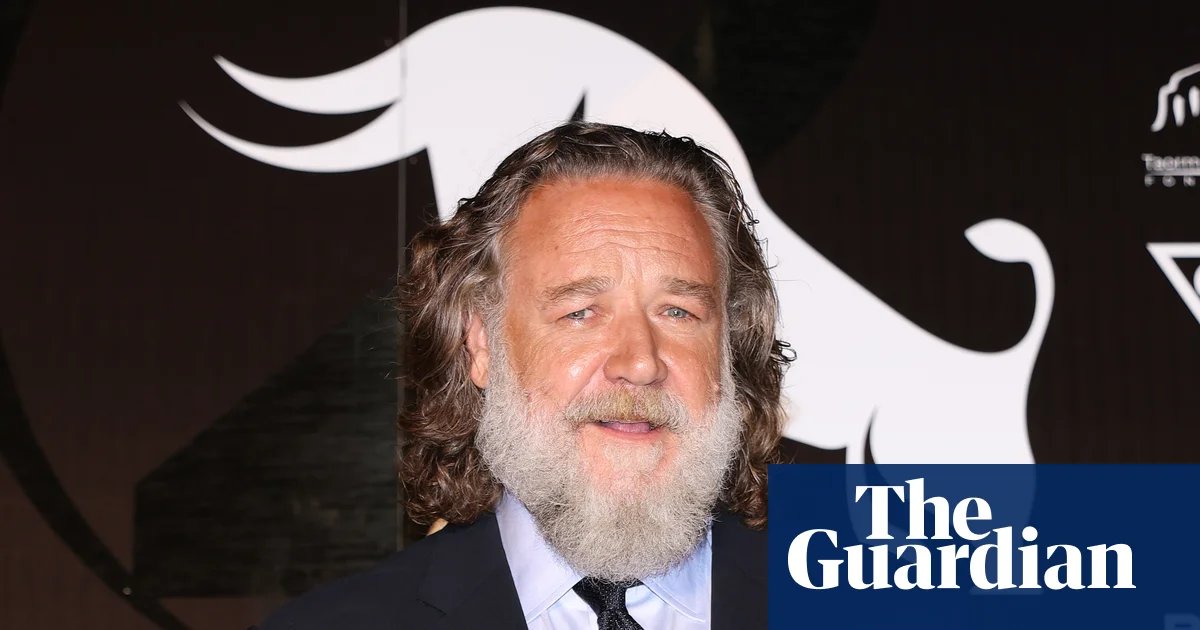
Russell Crowe has said that the Gladiator sequel was a failure because it lacked a “moral core” and that studio behind it “didn’t understand why [the original movie] was successful”.
Crowe was speaking at the Taormina film festival, and in remarks reported by Variety he outlined why the thought the first Gladiator, released to considerable acclaim and box office success in 2000, was a success, and where its sequel, released in 2024, struggled.
Crowe said that his refusal to shoot a sex scene with Connie Nielsen, who played his former lover Lucilla, gave the first Gladiator its “emotional core”. “When we were shooting that film, there was a lot of pressure. The studio, the producers [thought] there should be sex between Maximus and the female characters. I kept pushing back. This is the story of a man avenging the death of his wife and his child. There cannot be a moment in that journey where he stops and has sex with somebody. It doesn’t make any sense because that destroys the journey.”
Crowe added that Ridley Scott, who directed both films, gave way. “Luckily for me, Ridley, even though he’d love a sex scene between me and Connie Nielsen, agreed with me back then that that was the emotional core of the film.”
Gladiator II, in Crowe’s view, failed to heed the lessons of the first film’s success, saying that women appreciated the original Gladiator and were a key element of its audience. “[The studio] failed because they didn’t understand why [the original movie] was successful – it had a moral core.
“That’s the thing a lot of people don’t realise: from the second week of release globally, there were always more women in the theatres than men. You think that on the surface Gladiator is a movie for men, but if it was a movie for men, it would be about revenge, but it’s not about revenge. It is a movie for women because it is about vengeance.”
UK News
UK defence spending plan ‘well short of what’s required’ and harder choices needed, says John Healey – UK politics live | Politics
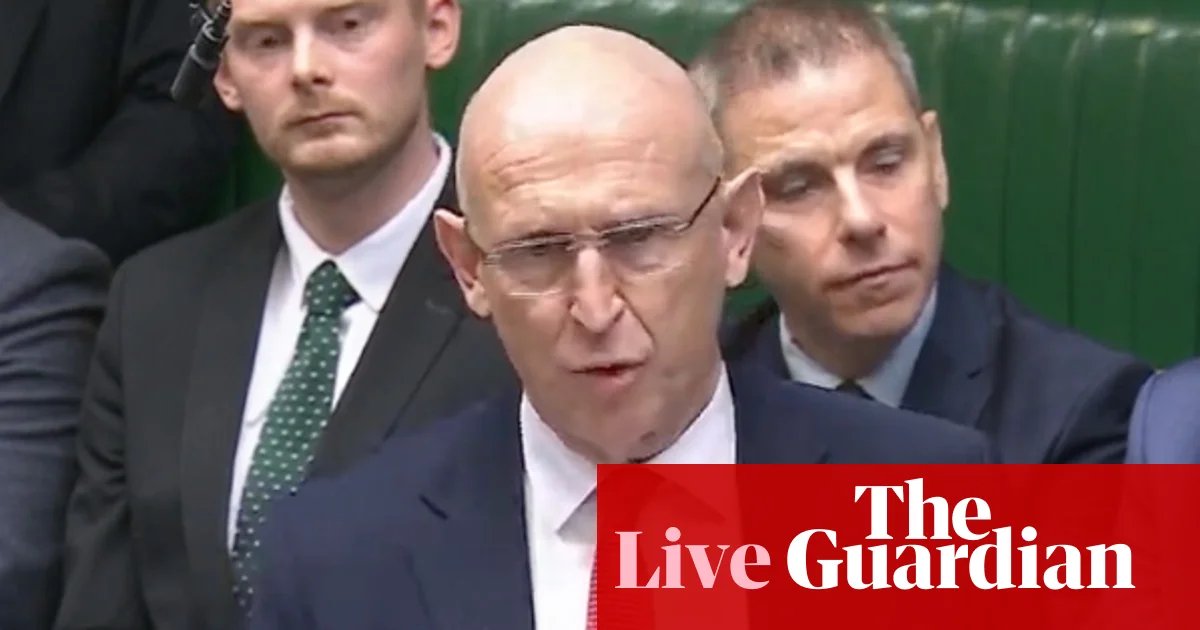
Healey says defence needs more than ‘incremental change’
Healey says the government has been working 12 months on the defence investment plan.
Since the SDR [strategic defence review] we’ve seen the world changing still faster, with threats increasing and demands on defence, rising conflict in the Middle East, new Nato missions in the High North, the US moving forces away from Europe, intensifying attacks in Ukraine and increasing Russian aggression towards the UK.
Nato has now said we must prepare for war with Russia within the next five years.
This is the age of hard power and rising threat. This is not the moment for calibration or incremental change.
This means bigger politics, bolder priorities, harder choices.
Key events
-
Healey says UK needs ‘bigger view of national security’
-
Healey says DIP ‘well short of what’s required’, and UK’s enemies ‘don’t follow timetable set by Treasury’
-
Healey says defence needs more than ‘incremental change’
-
Healey says he thinks his resignation will ‘in time’ help ensure defence gets more funding
-
John Healey delivers statement on his resignation to MPs
-
710 migrants arrived in small boats on Monday, figures show – but overall arrivals down 40% on same point in 2025
-
UK will have to ‘dial back’ military plans without more funding, says chief of defence staff
-
Having Burnham, not Starmer, as leader would give Labour 4-point boost against Reform UK, poll suggests
-
Greens condemn Streeting’s call for Rosebank and Jackdaw drilling as ‘environmentally reckless’
-
Burnham’s approval ratings down since he launched byelection campaign, but still far better than his rivals’, polls show
-
Starmer should set out timetable for his departure if Burnham wins byelection, Streeting says
-
Starmer says Dan Jarvis, new defence secretary, being consulted on DIP ahead of final version being published
-
Starmer says arson attacks on property linked to him should be seen in ‘broader context’ of Russian threat
-
Streeting warns against ‘expensive’ pledges in leadership contest, and defends bond markets, in dig at Burnham
-
Streeting says UK capitalism ‘suffers from lack of competition’ as he makes case for ‘progressive capitalism’
-
Thames Water nationalisation moves closer as government ‘objects to rescue deal’
-
Elon Musk claims social media ban for under-16s shows UK ‘police state’
-
UK ministers lobby Trump to avert backlash against social media ban
-
Starmer vows new sanctions on Russia and nuclear energy support for Ukraine
-
Anti-Burnham fake news on Makerfield Facebook accounts has surged, report finds
Healey says UK needs ‘bigger view of national security’
Healey said he was grateful to cabinet colleagues who agreed to cuts to fund higher defence spending.
He went on:
There are credible ways of meeting the mid-term funding challenges, working multinationally and as other nations in Europe are doing.
They could allow us to protect the ability to deliver our Labour missions across government.
Healey also calls for a different approach to defence.
We need a bigger view of national security. It’s not just the job for defence or the agencies. Every department has a part to play in national security and national resilience.
From energy to transport to health, security must run through the government like letters through a stick of rock.
And security must be felt in the communities right across Britain, reversing long term decline and bringing new jobs and new hope.
At the start of his speech Healey said that, now he was no longer defence secretary, he was glad he did not have to sleep with three phones by his bed. He ended with a joke about his personal love for HP sauce.
For now, Jackie [Healey’s wife] is just grateful I no longer carry three phones in my bag, although I do still have my bottle of HP sauce.
Healey says DIP ‘well short of what’s required’, and UK’s enemies ‘don’t follow timetable set by Treasury’
Healey said Keir Starmer knows what is needed.
The prime minister knows what the country needs for defence. He spelled out the threat this month when he said it is our intelligence assessment and the assessment of other countries in NATO that there could be an attack by Russia on Nato as soon as 2030.
So Britain must set the head mark of spending 3% on defence in 2030, and a clear path to 3.5% in 2035.
The commitment all Nato nations have made to each other and to their people … commands wide cross-party support.
Our predecessors in this house experienced what happens when deterrence fails. Our predecessors in this House entrusted us with institutions like Nato that they created to keep us safe.
We don’t choose the circumstances in which we serve or the responsibilities that fall upon us, either in this house or in government.
And it’s the duty of our political generation now to ready Britain for the uncertainties of the years to come. The decisions that we make in the months ahead will be judged by those who follow us.
At this dangerous time. I see the current defence investment plans falling well short of what is required, a rise of 0.08% from next year to 2030.
No date for reaching 3%, no path to 3.5% by 2030.
Well over half of Nato members will be spending 3% or more. And when allies are looking for British leadership, we must not fall behind.
When NATO needs European nations to step up, we must not fall short.
Our adversaries don’t follow timetable set by the Treasury.
Healey says defence needs more than ‘incremental change’
Healey says the government has been working 12 months on the defence investment plan.
Since the SDR [strategic defence review] we’ve seen the world changing still faster, with threats increasing and demands on defence, rising conflict in the Middle East, new Nato missions in the High North, the US moving forces away from Europe, intensifying attacks in Ukraine and increasing Russian aggression towards the UK.
Nato has now said we must prepare for war with Russia within the next five years.
This is the age of hard power and rising threat. This is not the moment for calibration or incremental change.
This means bigger politics, bolder priorities, harder choices.
Healey says he it was a privilege to serve as defence secretary.
And he stresses his commitment to Labour.
I’ve been a Labour MP for nearly 30 years, a Labour team member for 45 years, a trade unionist for longer still.
It is my family, literally. Jackie, my wife worked for Labour HQ. We met at a union conference. Two weeks later we were engaged.
He says he only wanted a successful Labour government.
He says he is proud of the party’s record on defence.
I’m proud of what we’ve done in less than two years as a Labour government.
We stepped up into national leadership for Ukraine. We’ve raised defence investment three years earlier than anyone expected, won record defence export deals, given the armed forces their biggest pay rise for 20 years, brought 36,000 forces family homes back into public ownership, and we’ve signed major defence agreements with Germany, Norway, France and the European Union delivering for defence, delivering for Britain.
Healey says he thinks his resignation will ‘in time’ help ensure defence gets more funding
Healey says he thinks his resignation will help get the MoD more funding.
I took the decision to resign with the very greatest regret and reluctance. I continue to be certain about this decision.
In time I believe it will be seen as necessary in securing the future of our armed forces and of our alliances.
John Healey delivers statement on his resignation to MPs
John Healey is delivering a personal statement to MPs on his resignation last week as defence secretary.
He starts:
Many in the media have pressed me to say more since Thursday, but I’m a proud parliamentarian.
I wanted first to speak in this house as I take my seat, as I take my seat on the backbenches for the first time for more than 10 years.
710 migrants arrived in small boats on Monday, figures show – but overall arrivals down 40% on same point in 2025
Some 710 migrants arrived in the UK on Monday after crossing the Channel, the highest number on a single day so far this year, the Press Association reports. PA says:
It follows a spell without crossings, with no migrants having made the journey between 1 June and 14 June.
The cumulative number of arrivals by small boats in 2026 now stands at 9,852, according to provisional figures from the Home Office.
This is down 40% on the equivalent point last year, when the total stood at 16,317.
It is also 14% below this point in 2024, when the total was 11,431.
There were 11 boats that arrived on Monday, which suggests an average of around 65 people per boat.
UK will have to ‘dial back’ military plans without more funding, says chief of defence staff
Britain will have to “dial back” on military operations and exercises in the next few years if the Ministry of Defence (MoD) does not receive extra funding from Downing Street and the Treasury, Rich Knighton, the chief of the defence staff, has told peers. Dan Sabbagh has the story.
Having Burnham, not Starmer, as leader would give Labour 4-point boost against Reform UK, poll suggests
The new polling from Ipsos released today also shows how people say they would vote given a choice between a Reform UK party led by Nigel Farage and a Labour party led by either Keir Starmer or Andy Burnham.
While Burnham is considerably more popular with voters than Starmer, these figures suggest that, were Burnham to become leader, there would be a significant, but not huge, rise in the number of people inclined to vote Labour.
The figures show a Starmer-led Labour party 9 points ahead of Reform, and a Burnham-led Labour party 13-points ahead.
Polling like this is particularly speculative, and ultimately it is very had to know how voters would react to a Burnham-led government because we don’t know what it would do. We don’t even know who the chancellor would be. But these figures imply that, while having Burnham as leader would help Labour electorally, his impact might be more incremental than transformative.
Greens condemn Streeting’s call for Rosebank and Jackdaw drilling as ‘environmentally reckless’
The Green party has criticised Wes Streeting for his call for new drilling to be allowed from the Rosebank and Jackdaw oil and gas fields in the North Sea. (See 10.44am.) Commenting on Streeting’s speech, Rachel Millward, the Greens’ co-deputy leader, said:
Wes Streeting has ceased to be relevant, but his so-called ‘progressive capitalism’ shows the degree to which fossil fuel corporations have their grubby hands all over Labour policy.
His call to open up new drilling in the North Sea is environmentally reckless and economically illiterate.
Rosebank alone contains enough fossil fuel to produce over 200 million tonnes of CO2 if burned – more than the combined annual emissions of 28 low-income countries.
Opening up these oilfields will do nothing to improve energy security or bring down bills either, because any oil and gas extracted will be sold at global prices on the world market.
Greenpeace UK also condemned the speech. Angharad Hopkinson, a Greenpeace campaigner, said:
Flogging more oil and gas from the North Sea to pay for cleaner energy sounds like a business scheme worthy of Del Boy. Any windfall from tax receipts would only be temporary because this basin is in terminal decline, not to mention the escalating costs in lives and money from more extreme weather. Streeting is backing the wrong horse several decades after it has bolted.
Burnham’s approval ratings down since he launched byelection campaign, but still far better than his rivals’, polls show
Andy Burnham has become less popular with British voters as a whole following his decision to stand as Labour’s candidate in the Markerfield byelection, according to two separate polls published today.
Burnham is still more popular than other Labour politicians. But the polling suggests some voters have become more negative about him as a result of his decision to put himself forward as a byelection candidate in the clear hope off being able to replace Keir Starmer.
Here are the figures from YouGov.
YouGov says:
In earlier polls in this series, Andy Burnham achieved a positive net favourability rating (+9 at its peak). However, his popularity declined starting from the middle of May – the period that encompassed the Labour party revolt against Keir Starmer that included Wes Streeting’s resignation and Josh Simons stepping down in Makerfield, triggering the by-election that Andy Burnham is likely to win.
As a result, Burnham now takes a net favourability rating of -11 in our latest poll: 30% of Britons like the would-be PM, versus 41% who dislike him.
The YouGov report also says Wes Streeting’s unfavourability ratings have risen since he resigned as health secretary with the intention of challenging Starmer for his job, and Ipsos in its report says it has picked up on the same trend.
According to Ipsos, Burnham’s ratings have fallen in particular with people over the age of 55, people who voted Conservative in 2024, people who think Labour is doing a bad job in government and people from Scotland.
However, the Ipsos report also shows that, of the 17 leading politicians it polled, Burnham has the highest – or least negative – favourability rating.
Starmer should set out timetable for his departure if Burnham wins byelection, Streeting says

Peter Walker
Peter Walker is a Guardian senior political correspondent.
Keir Starmer should set a timetable for his departure if Andy Burnham wins the Makerfield byelection on Thursday rather than battle to stay in Downing Street, Wes Streeting has said.
Answering questions after his speech on the economy (see 10.44am and 11.32am), Streeting reaffirmed that he would fight in any leadership battle, and insisted he has the necessary support among Labour MPs, but refused to say whether he would trigger a contest.
He said:
I would hope that after Thursday’s byelection, when the results are in, and I very much hope Andy Burnham wins … I hope the prime minister will at that stage reflect on his own position and set out a timetable. I think that would be a better way forward for everyone and would enable that better culture that we aspire to.
When he resigned as health secretary last month, Streeting had been expected to trigger a leadership contest himself, and the fact he did not prompted opponents to assume he did not have the backing of the 80 other Labour MPs needed to trigger the process.
Asked if he did now, Streeting replied: “Yes, I have the support I need to be on the ballot.”
However, he refused to say whether he might seek to trigger it next week. He said:
I think I’ve been extremely clear about this. I think there should be a contest. I have every intention of standing in that contest, and I’ve not triggered a contest, because we’ve got a byelection under way where one of the inevitable candidates is on the ballot paper.
To have sought a contest before Burnham was potentially back in parliament would be to “pull a fast one”, Streeting argued.
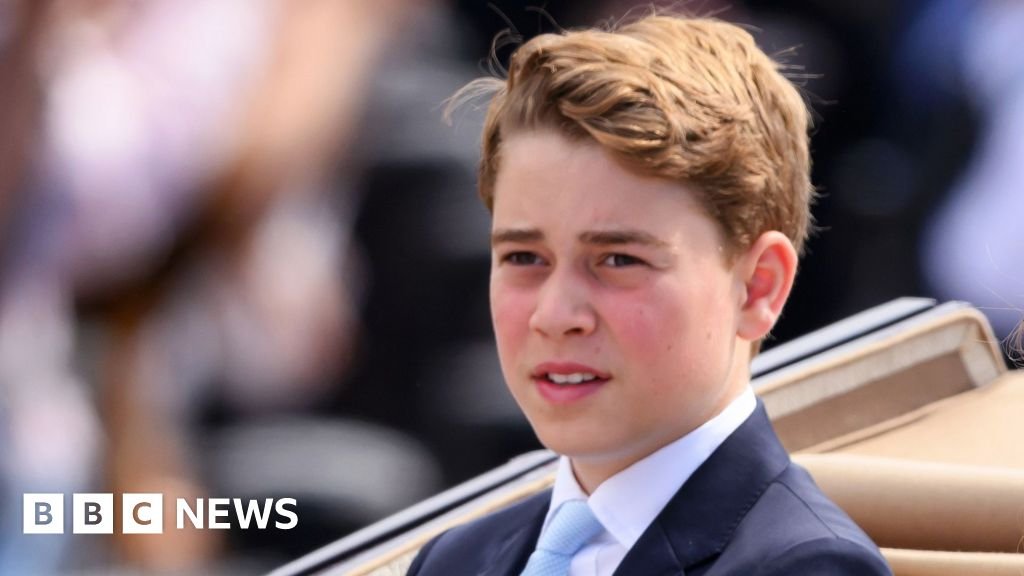
He will follow in the footsteps of his father, the Prince of Wales, who also attended the private school.
Source link
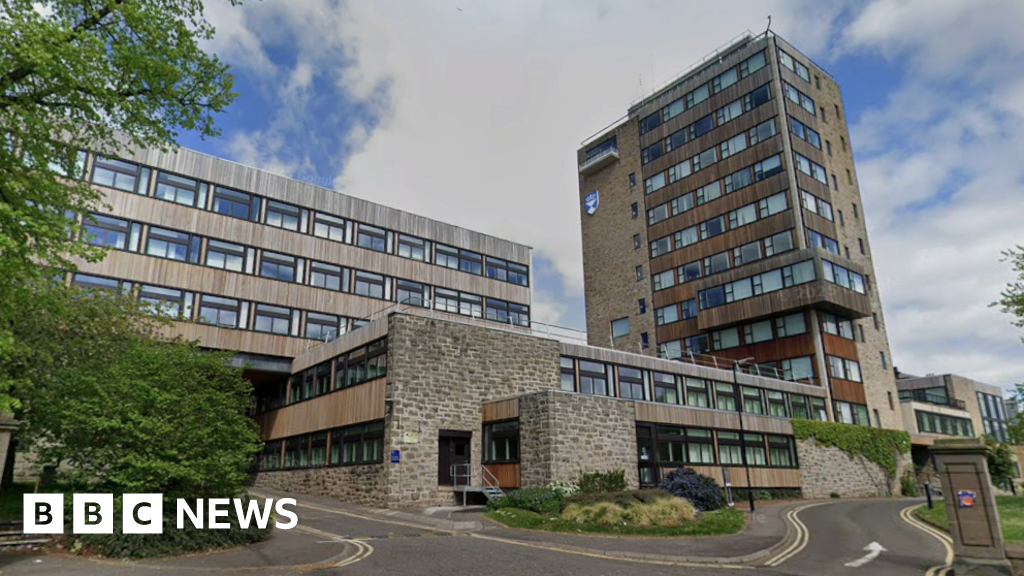
The university has already cut 675 jobs through voluntary redundancies since it announced a large deficit in late 2024.
Source link


International investors back Oxford-based AI work

Ex-Oxford United man released by Championship Bristol City

UK defence spending plan ‘well short of what’s required’ and harder choices needed, says John Healey – UK politics live | Politics
-

 Crime & Safety4 weeks ago
What happens to Halifax customers if Lloyds makes changes?
-

 Oxford News4 weeks ago
Actor steps down from major role in new Harry Potter series
-

 Crime & Safety4 weeks ago
Oxfordshire bridge closure comes as management ‘weaknesses’ found
-
 UK News4 weeks ago
Burnham seeks to calm markets by committing to fiscal rules
-

 UK News4 weeks ago
Glass deposit scheme 'risks major problems' for retail industry
-
 UK News4 weeks ago
Ex-minister Shapps quits aerospace firm over rule concerns
-
 Crime & Safety4 weeks ago
Ryan Bridge speaks of London arrest after Oxford incident
-

 Crime & Safety4 weeks ago
Oxfordshire man accused of sexual offences 40 years ago