
UK News
Rationale for Iran war questioned after Trump says ‘I don’t care’ about regime’s uranium stockpiles | US-Israel war on Iran


Donald Trump has said he does not care about Iran’s stock of highly enriched uranium (HEU), arguing it was deep underground and could be monitored by satellite, raising questions about one of the key US justifications for the war.
Experts said that if the US-Israeli offensive against Iran concluded with the Tehran government still in control of its 440kg HEU stockpile, it would be significantly closer to the capability of making nuclear warheads than if the US had pursued a potential negotiated settlement that was on the table at the time the US and Israel launched the war on 28 February.
Asked about the stockpile by Reuters news agency on Wednesday, Trump said: “That’s so far underground, I don’t care about that.”
“We’ll always be watching it by satellite,” he added.
In his address to the nation from the White House on Wednesday night, Trump elaborated: “If we see them make a move, even a move for it, we will hit them with missiles very hard again.”
Unless they were intended as a ruse to put Tehran off its guard, the president’s remarks appeared to rule out a risky military mission to retrieve the HEU stockpile, which Iran is believed to have hidden down deep underground shafts.
The apparent decision to leave the HEU, which is roughly enough for about a dozen warheads, in Iran appeared to conflict with Trump’s assertions that one of the principal war aims was to ensure it could never make a nuclear bomb.
He has repeatedly claimed, since starting the war, that Iran had been two to four weeks from making a nuclear weapon and firing it at the US and Israel, a claim rejected as absurd by most experts.
Nuclear proliferation experts say that if the HEU stock remains under Iranian control at the end of hostilities, it would leave Tehran significantly closer to the capability of making nuclear bombs than the proposed settlement being negotiated in Geneva on 26 February, two days before the war began.
In those US-Iran talks, Iranian officials have said they had proposed diluting the HEU stockpile to low-enriched uranium, and reportedly agreed to keep only a much smaller stock of enriched uranium on its territory.
The Iranian proposal would have also included a multiyear pause in any uranium enrichment and paved the way for a restoration of a comprehensive monitoring regime by the UN nuclear watchdog, the International Atomic Energy Agency (IAEA).
The Omani mediators at the Geneva negotiations thought that significant progress had been made, as did the UK’s national security adviser, Jonathan Powell, who was in Geneva at the time with British nuclear experts.
Another, more technical, round of talks was due to take place the following Monday in Vienna but it never happened, because the US and Israel launched their attack.
“We are actually less secure now from the nuclear threat than we were before he started the war, because they still have the material and we still have no greater insight into the material and what they might do with it,” said Emma Belcher, a nuclear expert and president of Ploughshares, a foundation promoting non-proliferation efforts.
She added: “We’ve also likely increased [Tehran’s] calculus that they will seek nuclear weapons to prevent the very kind of attack we’ve just witnessed.”
According to the IAEA, about 200kg of the HEU, enriched to 60% purity, is being kept down deep shafts under a mountain near the city of Isfahan. On the weekend Le Monde published a satellite photograph from June last year of a large truck at a tunnel entrance at the Isfahan site carrying blue containers, which the Bulletin of the Atomic Scientists assessed most likely contained HEU.
Trump was briefed over the past week on a Pentagon proposal he had requested to secure and extract the HEU stockpile, according to the Washington Post.
The operation would have involved taking control of an area in Iran’s mountainous interior, flying in excavation equipment and building a runway for cargo planes to fly the HEU out of the country, the report said. It would have taken hundreds if not thousands of troops several weeks, exposing them to high risks. Trump’s remarks on Wednesday suggested he had judged the risks to be too high.
The HEU stockpile itself is the consequence of Trump’s decision, in 2018 during his first term, to withdraw from a multilateral nuclear deal agreed three years earlier. That agreement limited the Iranian uranium stockpile to less than 4% enriched. Iran only began making 60% HEU after the agreement fell apart.
“The comment that you can just not worry about the material because you can see it from satellites really fundamentally misunderstands how to manage nuclear risk,” Belcher said. “The issue isn’t just whether we can see the material, it’s whether we can verify, secure and constrain it. And in order to do that, you need diplomacy, inspections and sustained international cooperation.”
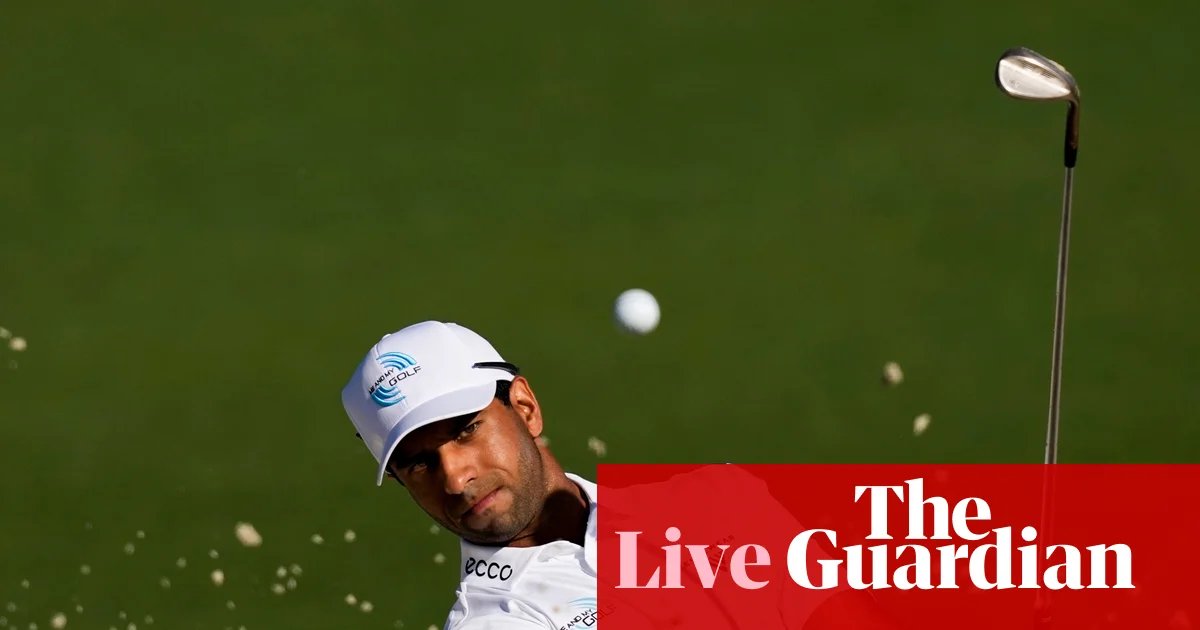
Key events
Scheffler and Woodland take turns to throw darts at the pin on 1. MacIntyre, perhaps mindful that he needs a super-low number today if he’s to somehow survive, also goes for the flag but pulls his approach, and he’ll be shortsided in the bunker.
The world number one Scottie Scheffler is out and about. He doesn’t quite catch his opening drive, and peers after it quizzically, but while it’s shorter than usual, it’s straight. Robert MacIntyre and Gary Woodland follow him down. MacIntyre gets a good reception from the gallery, despite yesterday’s toddler-style tanty, flashing a middle finger at the pond on 15 which had just snaffled two of his balls, and burying the hosel of his club into the ground at 17. No news yet as to whether or not the Augusta National suits have given him a clip round the lug. Perhaps they think a round of 80 was punishment enough.
A disappointing three-putt par for Wyndham Clark at the par-five 8th. Having found the heart of the bowl-shaped green in two, he races his 50-foot eagle putt 11 feet past, and gets a bit over-excited with the one coming back, too, knocking that a couple of feet past. He tidies up to stay at -3, but that’s a big chance spurned.
Justin Rose’s ball has found the tree line all right. His backswing is hampered by an awkward loblolly. So he does exceptionally well to punch a low shot under the branches, through the green, and just off the back. But he leaves his putt from the fringe eight feet short, and can’t make the par saver. That’s three bogeys in a row, if we’re counting the denouement to last night’s round, which we surely must. Bogey for Brooks Koepka, too, as he’s unable to read a putt with a 20-foot right-to-left break correctly. But it’s a birdie for Jordan Spieth, who walks in a straight-ish 15-footer after finding the heart of the green. Koepka drops to +1; Spieth and Rose are both -1, but one is much happier about it than the other.
Justin Rose was running “a little hot” after bogeying 17 and 18 last night. He’s not 100 percent happy with his opening drive today, either, sending it dangerously close to the tree line down the right. His playing partners Jordan Spieth and Brooks Koepka are also out of position. Not the most auspicious start for the marquee group of the morning. Rose starts the day at -2; Spieth and Koepka at level par.
Birdie for Aaron Rai at 2! The 31-year-old from Wolverhampton, now based in Florida, gets up and down from sand at the front to move to -2. The winner of the Par 3 Contest has to double up with a Green Jacket at some point, it’s surely in the post, we’re overdue statistically, 66 years and counting. So why not this year?
-5: Burns, McIlroy
-3: Clark (6), Kitayama, Day, Reed
-2: Rai (2), Rose, Scheffler, Lowry, Schauffele
Wyndham Clark’s birdie putt at 6 looks good. A straight roll. But it drifts a little to the right just before reaching the cup, enough to kink out. That really did look like it was going in. So he remains at -3 for both his round and the Tournament overall. He’s no longer the only player out there in red for his round today: Im Sungjae, who finished second on debut in the November Masters of 2020, birdies 7 and 8 to move into credit today – he’s +3 overall – while the old trooper Freddie Couples birdies 2 to get back to +5. Such a shame about that hideous run at 15, 16 and 17 yesterday – quadruple bogey, double bogey, double bogey – but you can forgive a 66-year-old for running out of gas under the heat of the late-afternoon sun.
The Par 3 Contest winner Aaron Rai starts his second round calmly and confidently. Tea Olive found in regulation, and a long birdie putt that shaves the hole. He remains at -1 after yesterday’s 71, a round that promised more after going out in 33. Meanwhile Wyndham Clark’s run of consecutive birdies comes to an end at 5. Just a par, though he’s now landed his tee shot at 6 into the heart of the green, using the slope to bring his ball towards the flag tucked away front left. He’ll have a good look at birdie from 18 feet, a putt not exactly flat and straight, but as flat and straight as they come around here.
At the risk of belabouring the point, here’s a bit more on how difficult Augusta National is playing this week. As mentioned earlier, yesterday’s scoring average was 74.65, just over two-and-a-half shots over par. That’s the highest first-day average since 2017 (74.98) although we did get more sub-70 rounds yesterday than we did on Thursday nine years ago: five to two. Though how much attention our defending champion and co-leader Rory McIlroy will pay to all this is moot: he shot 72 in the first round in 2017, but 67 yesterday. Golf is almost as difficult to analyse as it is to play.
Clark is the only player out this morning under par for his round so far. A small sample size, but one that nevertheless suggests low scores will come at a premium today. To illustrate: Tom McKibbin, whose Masters debut isn’t going to plan. The 23-year-old from Belfast shot 75 yesterday, and he’s opened this morning with three bogeys and a double in his first five holes. He’s clattered down the standings to +8, and isn’t the only player from the LIV tour to be struggling this week: none of the tour’s ten representatives broke par yesterday, with their big guns Bryson DeChambeau and Jon Rahm shooting 76 and 78 respectively, two of the pre-Tournament favourites as good as out of the running already.
It’s three birdies in a row for 2023 US Open champion Wyndham Clark! On a roll, he cracks his tee shot at the long par-three 4th pin high, to eight feet, and walks in the putt. The late-blooming 32-year-old from Denver tied for fourth at last year’s Open, so he’s trending in the majors, albeit with a nine-month hiatus, but he’s not got a good record at Augusta National: one missed cut and a tie for 46th. Looks like he’s in the mood to right that particular wrong.
-5: Burns, McIlroy
-3: Clark (4), Kitayama, Day, Reed
-2: Rose, Scheffler, Lowry, Schauffele
It promises to be a glorious day at Augusta National. Sunny and dry, with temperatures set to reach 80 degrees by the afternoon. Not too much in the way of wind. It’ll be more of the same during the weekend, so expect conditions to get tougher and tougher as the course gets harder and faster. Given that yesterday’s scoring average was 74.65, already up nearly two strokes from last year’s average of 72.81, we could be in for plenty of high jinks on Sunday afternoon. Cannot wait.
The first adjustment towards the top of today’s Leader Board comes courtesy of the 2023 US Open champion Wyndham Clark. He birdies 2, wedging over the bunker guarding the right of the green to a couple of feet and tidying up. He follows that up by finding the dancefloor of the elevated green at 3 in regulation, then steering in the right-to-left 12-footer that remains. A birdie-birdie blast, and Clark moves confidently into red figures.
-5: Burns, McIlroy
-3: Kitayama, Day, Reed
-2: Clark (3), Rose, Scheffler, Lowry, Schauffele
-1: Rai, Bridgeman, Woodland, Li, Taylor, Fleetwood
… also, before we head out onto the course, it’s probably best if we grab ourselves a snack. How about one of these new dark-milk chocolate bars with caramel and rice crispies? CANDY BAR: the only Soviet-branded candy with a hazelnut crunch! Horseshoe theory enthusiasts will be delighted to see the late-stage capitalism of the USA swinging all the way around towards a socialist idyll. Just $2.25. Sounds delicious, get me two.
While we wait for the meaningful action to begin, let’s whack on a tune. Now then, “CBS” + “music” = Miles Davis, Bob Dylan, Johnny Cash, Bruce Springsteen. It also equals this. All together now (for it has lyrics) …
Well it’s springtime in the valley on Magnolia Lane
It’s the Augusta National and the master of the game
Who’ll wear that green coat on Sunday afternoon?
Who’ll walk the 18th fairway singing this tune?
Augusta, your dogwoods and pines
They play on my mind like a song
Augusta, it’s you that I love
And it’s you that I’ll miss when I’m gone.
It’s Watson, Byron Nelson, Demaret, Player and Snead
It’s Amen Corner and it’s Hogan’s perfect swing
It’s Sarazen’s double eagle at the 15 in ‘35
And the spirit of Clifford Roberts that keeps it alive
Augusta, your dogwoods and pines
They play on my mind like a song
Augusta, it’s you that I love
And it’s you that I miss when I’m gone
It’s the legions of Arnie’s Army and the Golden Bear’s throngs
And the wooden-shafted legend of Bobby Jones.
Preamble
“What are we all going to talk about next year?” Yes, well, Rory’s keeping his riff alive, isn’t he? It’s a good while today until the defending champ turns up for work, mind you, so in the meantime, here’s how the top of the leaderboard looked after 18 holes …
-5: Burns, McIlroy
-3: Kitayama, Day, Reed
-2: Lowry, Schauffele, Rose, Scheffler
-1: Li, Taylor, Fleetwood, Campbell, Rai, Bridgeman, Woodland
… and here’s the Friday running order. Some pre-Tournament favourites in Ludvig Åberg (+2), Bryson DeChambeau (+4) and Jon Rahm (+6) need to get their gamefaces on and quick.
Today’s tee times (USA unless stated, all times BST)
1240 Sung-Jae Im (Kor), Sam Stevens
1250 Brian Campbell, Tom McKibbin (NIrl), Andrew Novak
1302 Wyndham Clark, (a) Mateo Pulcini (Arg), Mike Weir (Can)
1314 Nicolai Hoejgaard (Den), Zach Johnson, Michael Kim
1326 (a) Ethan Fang, Davis Riley, Danny Willett (Eng)
1338 Daniel Berger, Brian Harman, Adam Scott (Aus)
1350 Fred Couples, (a) Pongsapak Laopakdee (Tha), Min-Woo Lee (Aus)
1402 Jacob Bridgeman, Sergio Garcia (Spa), Aaron Rai (Eng)
1419 Michael Brennan, Corey Conners (Can), Harry Hall (Eng)
1431 Tyrrell Hatton (Eng), Maverick McNealy, JJ Spaun
1443 Ludvig Aberg (Swe), Chris Gotterup, Jon Rahm (Spa)
1455 Brooks Koepka, Justin Rose (Eng), Jordan Spieth
1507 Ben Griffin, Sepp Straka (Aut), Justin Thomas
1519 Robert MacIntyre (Sco), Scottie Scheffler, Gary Woodland
1531 Harris English, Si-Woo Kim (Kor), Marco Penge (Eng)
1551 Johnny Keefer, Haotong Li (Chn)
1603 Max Homa, Naoyuki Kataoka (Jpn), Carlos Ortiz (Mex)
1615 Rasmus Neergaard-Petersen (Den), Jose Maria Olazabal (Spa), Aldrich Potgieter (Rsa)
1627 Angel Cabrera (Arg), (a) Jackson Herrington, Sami Valimaki (Fin)
1639 Ryan Fox (Nzl), Max Greyserman, Charl Schwartzel (Rsa)
1651 Rasmus Hoejgaard (Den), Matt McCarty, Vijay Singh (Fij)
1703 Casey Jarvis (Rsa), Kurt Kitayama, Kristoffer Reitan (Nor)
1715 Nicolas Echavarria (Col), (a) Brandon Holtz, Bubba Watson
1732 Sam Burns, Jake Knapp, Cameron Smith (Aus)
1744 Keegan Bradley, Ryan Gerard, Nick Taylor (Can)
1756 Jason Day (Aus), Dustin Johnson, Shane Lowry (Irl)
1808 Akshay Bhatia, Tommy Fleetwood (Eng), Patrick Reed
1820 Bryson DeChambeau, Matthew Fitzpatrick (Eng), Xander Schauffele
1832 Russell Henley, Hideki Matsuyama (Jpn), Collin Morikawa
1844 (a) Mason Howell, Rory McIlroy (NIrl), Cameron Young
1856 Patrick Cantlay, Viktor Hovland (Nor), Alexander Noren (Swe)
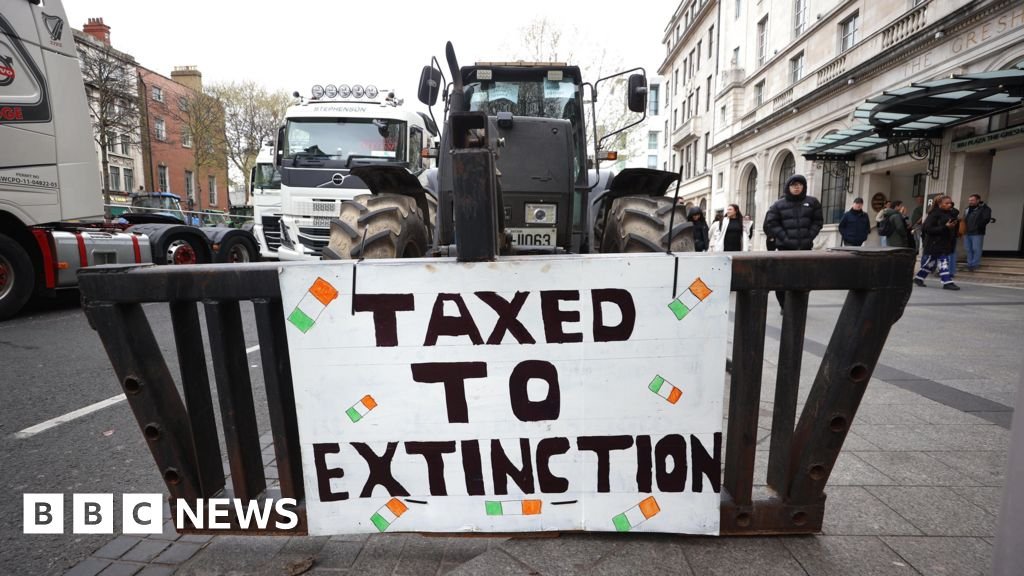
Travel across parts of the Republic of Ireland has been affected for the fourth day in a row on Friday as vehicles, including tractors, block roads.
Source link
UK News
‘Grumpy’ Guardiola unclear about Bernardo Silva’s Manchester City future: football news – live | Football
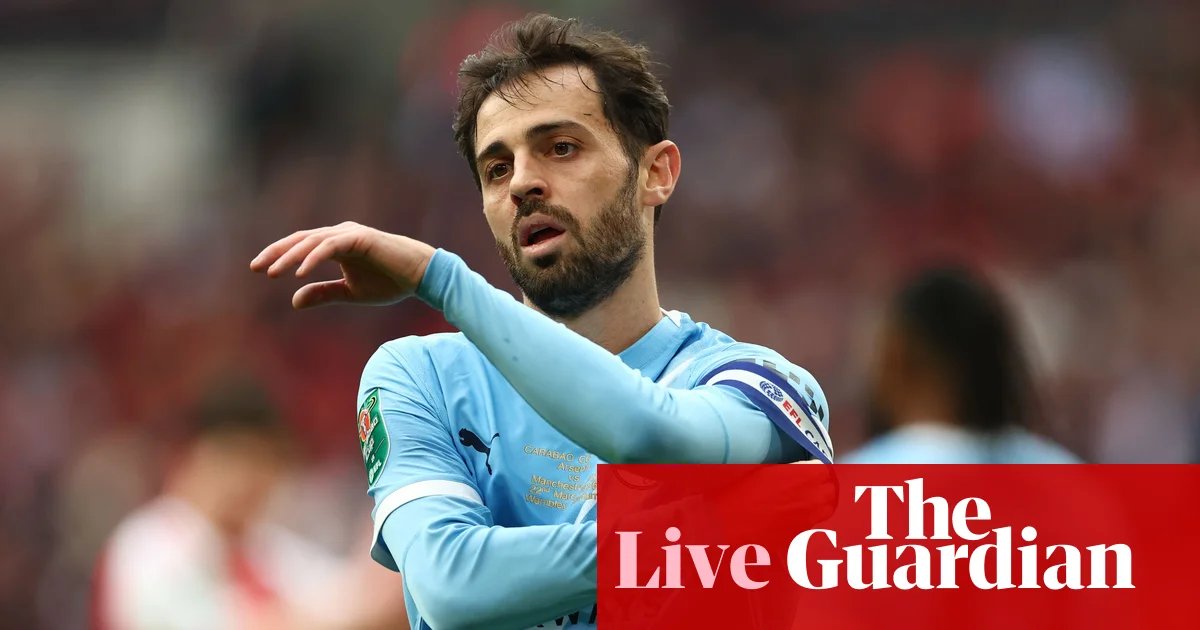
Key events
Leeds midfielder Ao Tanaka played a key role in last week’s epic FA Cup semi-final win at West Ham, scoring the opening goal, and could be in line for a rare start in place of the injured Anton Stach in Monday night’s Premier League game at Manchester United.
Daniel Farke praised Tanaka’s “really good performances” of late and said: “I’m very happy with his development because Ao is not the youngest anymore and for him it’s his first season in a top flight.”
Tanaka is a fan favourite at Leeds fans, but has been self-critical of his own performances since helping the club win promotion last season. He hasn’t started in the league since 14 December.
“He has said publicly he’s not yet good enough for this level, but we’ve always believed in Ao,” Farke added. “He produced a really good performance [at West Ham] and proved against a Premier League side that he can play at the top level.
“For Ao there is no limit because he’s a top player. He’s done this in recent weeks and for that there will be more chances for him in the coming weeks to shine. If he produces performances like he did at West Ham then we are all happy.”
The lads and lasses on The Overlap have been asking who is the best centre-back partnership in Premier League history …
Lots of love for Rio Ferdinand and Nemanja Vidic, which would be my answer, closely followed by John Terry and Ricardo Carvalho. Jamie Carragher said Alan Hansen and Mark Lawrenson, perhaps forgetting that A) both retired before the Premier League began and B) their contrasting punditry careers.
Drop me an email with your favourite PL CB duo.
What a day of sport we have. The return of the Premier League tonight, county cricket back in full swing and the Masters day two. Lovely.
I’ve received an email from Krishnamoorthy:
“Having successfully completed the exits from Carabao and FA [Cups], and that the Champions league pursuit will probably be over by next week, what wizardry will Arsenal deploy this weekend to surrender the league?”
Despite those cup exits, I feel like Arsenal aren’t quite as weakened as their detractors may think/be hoping. Bournemouth at home this weekend ought to yield three points.
Want some more from Pep on Bernardo? He’s really waxed lyrical about the former Monaco man, despite having the grump with him …
All managers would say how much they love him because he is incredibly competitive, has a fire inside him always. In the toughest moments and on the biggest stages, he is always there.
He has been an incredible signing for us, incredible. I love this club and I would love if he could stay and finish his career here but I do not know. He will decide what he will decide.
He has been an incredible signing with the numbers, minutes, titles. I judge players when everything is difficult and he always steps up
‘Grumpy’ Guardiola asks Bernardo Silva to confirm City future
Pep Guardiola admitted he doesn’t know whether Bernardo Silva will be at Manchester City next season, after his assistant Pep Lijnders appeared to suggest the midfielder was leaving.
Guardiola was asked to clarify Bernardo’s future at today’s press conference, but said: “I don’t know.
“I am so grumpy with Bernardo. A month ago I said I had to be the first [he would tell] and he didn’t say anything to me yet. I do not know if he has already decided. I said jokingly to him to tell me, I deserve it, but he didn’t tell me. I do not know what is going on.
“He is really good in all departments. He plays a lot of games. Nine years we have been together and no injuries. He can play in different positions, he is so smart and reads every moment that the action and game requires. When you play a lot of games, it gives us a lot of trust and confidence how he is going to perform.”
Here’s Pep Guardiola on Manchester City’s hopes of chasing down Arsenal in the final weeks of the season:
Hopefully we can get a lot of points. The situation we are in in the Premier League, we need to get all of them otherwise it will not give us a chance to try until the end.
We need to get a lot of points. We have not been consistent enough in the season. We have dropped points that we should have taken which is why we are now in the position where we cannot do it differently.
We have to win every single game.
Bournemouth midfielder Tyler Adams is set to return from injury to feature against Arsenal in the Premier League tomorrow (Saturday).
The 27-year-old has missed Bournemouth’s last two matches as well as two USA international friendlies over the recent break with a quadriceps problem.
“I am feeling strong and ready to go,” Adam has told club media. Staying in Bournemouth over the international break to rehab “gave me a period of time to get stronger, get more fit and focus on the objectives with the boys here.” He added: “I’m feeling consistent, I’m feeling strong now and I think it’s just important to finish the season strong.”
Thanks Barry. As a follower of Manchester United, these three weeks without Premier League action have felt VERY long. Thank goodness it’s back.
It’s easy to forget Manchester City are still nine points off Arsenal, for all the talk of the Gunners wobbling. Guardiola’s men do have a game in hand, but they also have to travel to Chelsea on Sunday.
Pep Guardiola is due to speak to the press any minute now and Dominic Booth is here to tell you what the Manchester City head coach has to say for himself.
Bayern Munich: Lennart Karl has been ruled out of the return leg of his team’s Champions League quarter-final against Real Madrid with a hamstring injury. The 18-year-old rising star was an unused substitute in the first leg but will now be sidelined indefinitely.
Scottish Premiership: With six games of the season remaining, Hearts remain a point clear of Rangers at the top of the table but the gap is closing with each passing week. At a time when every match is important, Hearts face another tough assignment when they host Motherwell tomorrow, ahead of an Edinburgh derby at Hibernian followed by a home match against Rangers.
Derek McInnes says Motherwell have been a “breath of fresh air” in the Scottish Premiership this season, echoing the sentiments of many who have praised Jens Berthel Askou’s side. Going into the final pre-split game of the season at Tynecastle on Saturday, they sit in fourth place, 10 points behind Celtic, albeit without a win in their last four matches.
Motherwell are the only side Hearts have failed to beat this season following a thrilling 3-3 draw at Tynecastle in August and a goalless stalemate at Fir Park in November. “I think they’ve been a breath of fresh air and the manager’s done a brilliant job,” said Mcinnes. “The players are responding brilliantly to him. Motherwell are playing with a lot of confidence and you see that in their game, and they’ve had a brilliant season.
“I know they’ve hit a wee sticky spell at the minute, but it’s not going to take away from a lot of the good work that they’ve done. I did say ahead of the game last week that certain teams are probably punching above their weight and kind of getting a bit more than maybe what was expected, and Motherwell is one of them. Very few people have not commented on how good they’ve been this season and you can understand why.” [PA Sport]
EFL Trophy final: Jack Wilshere’s promotion-chasing Luton Town take on Stockport in Sunday’s Vertu Trophy final with renewed momentum, writes Simon Burnton.
Brighton: Scott Parker’s side are 10 points from safety with seven games to remaining and while few people give them much chance of avoiding the drop, Fabian Hurzeler has said Brighton will not be taking them lightly.
“Burnley is a team fighting relegation but they proved in the last weeks that they can win against every team in the league,” he said. “They have individual qualities. They show really good togetherness. That they showed, especially in the last games, really good performances so you can’t underestimate any team in this league. It is a game where we have to reach our limits, our standards, our highest levels if you want to beat them.”
It sounds to me like Hurzeler might be confusing tomorrow’s opponents with some other club because since the end of October, the only Premier League team Burnley have proved they can beat is Crystal Palace.

Tom Garry
Women’s football: Sue Day, the FA’s director of women’s football, has said their proposed changes to the structure of the women’s leagues are “vital to securing the long-term success of women’s football”, as she defends the plan which would include adding four WSL academy teams to the third tier.
“The purpose of these proposals is to futureproof the women’s game,” Day said. “We are approaching a crucial turning point. Too many talented young players are not getting the opportunities they need to develop, and without action, that risks holding back the future of the sport.
“No decisions have been made at this stage, and consultation is ongoing. We would not be putting these proposals forward unless we believed they are vital to securing the long-term success of women’s football.”
The Guardian exclusively revealed the plans on Tuesday and there has been a mixed reaction, including some heavy criticism from third-tier coaching staff.
Tottenham Hotspur: Ahead of Roberto De Zerbi’s first press conference as head coach scheduled for 1.30pm (GMT), Chris Pauros writes that the Italian’s apology for past comments about his former player, Mason Greenwood, was important but insufficient and adds that if we want things to change in football, we need some accountability. Read on …
Brighton: Fabian Hurzeler’s side return to action against Burnley at Turf Moor tomorrow, having won four (and lost one) of their last five Premier League games before the international break. Brighton currently sit 10th in the table, six points off the final Champions League spot. Following the corresponding international break last season, Hurzeler’s team took just one point from their next four games before winning four and drawing one of their final four.
“I think after a very successful period before the international break and during the international break,” the German told reporters this morning. “Our players were quite successful and that is a very positive thing so they kept the positivity, they kept the confidence and belief.
“Now it is about when they return from their national teams. They come together as a group again, re-emphasising what made us strong, what we need to get back to the standards we reached before the international break. Re-emphasise what it means to play for the badge.”
Hurzeler will be forced to sit out Brighton’s match against Burnley on the Naughty Step, where he will be accompanied by his captain, Lewis Dunk. “We have a other leaders who can solve it on the pitch and beside the pitch,” he told reporters. “Regarding me, we already had a situation against Brentford where my team and my staff did an incredible job.
“Regarding Lewis, of course he played unbelievably well in the last weeks but we have shown we have a lot of options to replace him. Not just options, really good options to replace him. Therefore, we are quite confident that the team are strong enough to handle these things.”
Dunk will miss Brighton’s next two games after picking up his tenth booking of the season, while Jack Hinshelwood is available for selection after recovering from a knee problem that prevented him from joining up with England U-21s.
Newcastle United: Having missed Newcastle’s last 11 matches with a hamstring injury, Bruno Guimaraes is likely to sit out their next two through illness. The Brazilian returned from international duty with mumps and Eddie Howe says he is defintiiely next weekend’s game against Bournemouth too. Fabian Schar remains sidelined having had minor surgery on an infection in his foot, while Lewis Miley is back in training after recovering from an injury that has kept him out since January.
Newcastle United: During an Eddie Howe press conference covering all manner of topics, the subject of Kieran Trippier’s imminent departure from Newcastle was addressed by the head coach who signed him four-and-a-half years ago.
“I think Kieran has handled himself superbly during this period,” said Howe. “He came to see me, we had a discussion. He had a clear vision of what he saw his future looking like and we respected that and wanted him to get the best reception and reaction for his time here.
“For me he goes down as one of the best players that’s played for me, without a doubt. In my time here he has been a model of consistency. He has had that will to win and will to help us prepare the best we can. I think he has been outstanding on the pitch. He has been a really good leader and he deserves to go with all the plaudits. We just hope he can finish the season off on a real high.”
West Ham: Victory over Wolves tonight will lift West Ham out of the bottom three for a couple of days at least and ahead of this crucial fixture, Jarrod Bowen has said it pains him to see his club in trouble. Helping them extricate themselves from their current predicament would “mean the world” to him.
“This club means so much to me,” he said in an interview with Sky Sports. “In the situation that we’re in, it hurts me probably more than anyone else. What I’m trying to do is bring my A-game every single week and also get the team ready to bring their A-game. We know what we have to do in terms of steering away from relegation. We have a massive opportunity to do that.
“We have to keep doing that. Of course you want to score, you want to get assists, you want to be the difference. But also your team-mates as well, they’re so important. They need to keep stepping up like they have been. We all need to keep stepping up and keep changing our destiny and changing our fortunes and win the games that we have. Then we can almost take control of the situation that we’re in. We know what we need to do, so that’s the most important thing.”
Bayern Munich: Vincent Kompany turns 40 today but the Bayern head coach gave extremely short shrift to talk of birthday celebrations during his press conference this morning. Bayern Munich took a 2-1 lead over Real Madrid in their Champions League quarter-final first leg this week and travel to Hamburg to play struggling St Pauli tomorrow with a nine-point lead at the top of the Bundesliga table. They are also in the semi-finals of the German Cup.
“We can only wish for the three points [against St Pauli],” he told reporters who asked if he’d be swinging from the chandeliers tonight. “I always celebrated birthdays at the stage of semi-finals and quarter-finals so it’s a bonus if you get the wins at these moments.
“I am trying to run away from all the birthday stuff. We are in priority mode. At this moment there are enough emotions in the coming days. Maybe some red wine tonight but first prepare for the match.” [Reuters]
Newcastle United: The first signing Newcastle made under their new Saudi owners, Kieran Trippier has confirmed he will be leaving the club this summer when his contract expires. Rumours also abound that Bruno Guimaraes, Sandro Tonali and Anthony Gordon could be sold come season’s end. While Howe refused to discuss the future of individual players, he did speak out on the importance of Newcastle managing their fans’ expectations.
“If that’s the reality – and I’m not saying it is – then that’s the reality,” he told reporters. “I’ve no issue working with the conditions the club set and finances dictate. I’ve never had an issue with that all through my career.
“As long as that is made clear to everybody on the outside and the expectations are aligned within that. Because I don’t think you can have expectations that warp reality. Everything has got to be aligned for the players to enter the pitch and play in their best place, where they’re relaxed and not under undue pressure. That’s fundamentally important.”
Howe rejects speculation of Newcastle fall-out
Newcastle United: Newcastle travel to Crystal Palace on Sunday to play their first match since losing the Tyne-Wear derby at home to Sunderland just before the international break. With no shortage of speculation surrounding his own future at the club and the potential summer exit of several key players, Eddie Howe wasn’t short of things to talk about this morning.
“Certainly there’s been no fallings out,” he said, when asked about his relationship with Newcastle sporting director Ross Wilson and the club CEO David Hopkinson. “I’ve got a really good relationship with Ross and David. We’re plotting to try and take the club forward in the smartest way possible. I’ve had really good support from both of them, who are the key figures I work with day-to-day at the football club. We’re all totally aligned on what we need to do.
“The long-term prospects for the football club are really strong but certainly these seasons we’ve experienced previously. Not all the forces are with us and we’re going to have to act really smart and try to outperform the budget to try to hit the levels everyone wants.
“What do I need? I just need support. Good working relationships with people around me and a feeling of being able to express myself in the best way possible so you see the best version of myself. And I think if I feel that and the club feels that then they’re getting the best manager they can from me.
“Obviously if that’s not working for whatever reason on both sides then it’s best for the football club. The most important thing in all of this is Newcastle United, not me, not anybody else. I’ll always reflect that in my decision making: I’ll put the club before anybody.”
Liverpool: Arne Slot has told reporters that Alisson is still sidelined but Liverpool fans are unlikely to be too concerned given how well Giorgi Marmadashvili has played in the Brazilian’s absence. Slot also said that some players who started against PSG will be rotated out of the side to face Fulham tommorrow because they cannot currently handle the intensity of playing two big games in four days. “The players I’m worried about for tomorrow will be Jeremie Frimpong and Joe Gomez,” he said.
Aston Villa: Despite the looming World Cup and this season still being very much up in the air for both sides, Bayern Munich have just announced they will be playing Aston Villa in a pre-season friendly in Hong Kong on 7 August.
For their part, Villa say they “hope to announce further fixtures in the far east in due course”. Whatever the outcome on the pitch in Hong Kong, you have to say the Bayern Munich club secretary has stolen a march on his or her Villa counterpart early doors. That’s clichéd German efficiency at its finest.
Arne Slot on Andy Robertson: “First of all, he’s had many great seasons here not only as a player but as a great person as well,” he says of the Scotsman, whose departure from Liverpool at the end of the season was announced yesterday. “I got to know him as a great person. Every team-mate of his will tell you how funny he is, how great he is and I think that’s been shown on social media as well.
“But what I remember most about him is the intensity he plays with and we’ve seen and learned something about intensity two days ago but, I can also remember Robbo making a press from the left-back position to the right wing a few years ago and I showed it to my players I was working with back then.
“He’s won everything at this club, served his club and really loves this club. It’s been a great nine years for him. This season he didn’t play as much as he was used to and as a result of that he’s leaving.”
A tip of the hat to Slot for highlighting the fact that Robertson is a terrific character and all round good guy as well as a consumate professional. He seems to be universally liked and one imagines his is a presence that would be sorely missed from any dressing-room. He’s been an outstanding servant for Liverpool over the best part of a decade, even if quite a few people were sceptical about his credentials when he was signed from Hull City. Jurgen knew!
Arne Slot: ‘I feel the support from the fans’
Liverpool: The postponement of their Ligue1 match against Lens means Paris Saint-Germain have been given the weekend off ahead of their Champions League quarter-final second leg at Anfield on Tuesday, but Liverpool have a crucial match against Fulham to play at Anfield tomorrow evening.
Arne Slot’s side go into it on the back of two chastening defeats and are fifth in the Premier League table. Should either Everton or Brentford win their Champions League qualification six-pointer at the Gtech Community Stadium tomorrow afternoon, they will go level on points with Liverpool.
“I’m repeating myself a lot but I feel a lot of support,” said Arne Slot this morning, upon being asked if he feels he has the backing of the Liverpool club hierarchy. “Not only from the owners but from Richard [Hughes] and Michael [Edwards], a lot of support from them as well. As weird as it might sound I also feel the support from the fans.
“We were going out in Paris when the players went out for the warm-up and after the 4-0 loss [against Manchester City] the fans immediately started singing ‘we love Liverpool’. I think it’s fair to say we were outplayed for 90 minutes and they were still singing and clapping for us. I’ve said many times, the club knows the period of time we’re in and in the mean time I feel complete support.”]
Column: While his “big team who win things” (well, the odd thing) are hovering above the Premier League relegation zone, his small team who never win anything have just dropped out of the League Two automatic promotion places. It’s small wonder the Guardian’s Football Weekly presenter Max Rushden is a bag of nerves …
Tottenham Hotspur: While he has already been interviewed by the club media team, Roberto De Zerbi’s maiden press conference as Spurs head coach is likely to be today’s hottest ticket in town. The Italian is scheduled to speak to the media at 1.30pm (GMT), ahead of his side’s match against Sunderland on Sunday afternoon. If West Ham beat the Premier League’s bottom side, Wolves, at the London Stadium tonight, Spurs will be in the relegation zone when their game kicks off at the Stadium of Light.
Andy Robertson to leave Liverpool after nine years
Liverpool: The Scottish left-back is to bring his illustrious career with the club to a close when his contract expires at the end of the season, with no shortage of big name European heavyweights believed to be interested in securing the 32-year-old’s services. Andy Hunter reports …
Crystal Palace 3-0 Fiorentina
Europa Conference League quarter-final first leg: A sensational performance blew away Fiorentina as Jean-Philippe Mateta scored on his first start since the end of January. Ed Aarons reports from Selhurst Park …
Bologna 1-3 Aston Villa
Europea League quarter-final first leg: Aston Villa were second best for large parts of the game in Bologna but a brace from Ollie Watkins put them in the box-seat. Paul MacInnes reports from Stadio Renata Dall’Ara …
FC Porto 1-1 Nottingham Forest
Europa League quarter-final first leg: A freakish own goal by the Porto defender Martim Fernandes earned Nottingham Forest a draw and fostered optimism of advancing to the Europa League semi-finals. Ben Fisher reports from Estádio do Dragão …
Friday football blog …
Following a hiatus so long some Tottenham fans may have forgotten their team is in grave danger of relegation, the Premier League is back. In the build-up to a weekend schedule that kicks off when West Ham host fellow basement-dwellers Wolves at the London Stadium tonight, we’ll bring you all the news that’s fit to print from today’s round of managerial press conferences. In the time honoured tradition, we’ll also be keeping a beady eye on any tidbits of note from the EFL, Scotland and beyond. You know the drill …



-
 Oxford Events4 weeks ago
Michelin Guide Oxfordshire Restaurants – The Oxford Magazine
-

 Oxford News4 weeks ago
Schwarzman Centre to open doors to public with major celebration
-

 Crime & Safety3 weeks ago
Police race to crash on Oxfordshire A34 with severe traffic building
-

 Oxford News3 weeks ago
Gary Lineker’s nephew-in-law death inquest to be next week
-
 Jobs & Careers3 weeks ago
Explore our Careers
-

 Crime & Safety3 weeks ago
Wiltshire 12-year-old girl with Oxfordshire links missing
-

 Crime & Safety3 weeks ago
Oxford: ‘Next generation’ LimeBikes in city from today
-
 Student Life3 weeks ago
The Art of Personalised Jewellery: Why Engraved Bracelets Are the Ultimate Keepsake