
Oxford News
Oxfordshire woman with stage four cancer to run the marathon

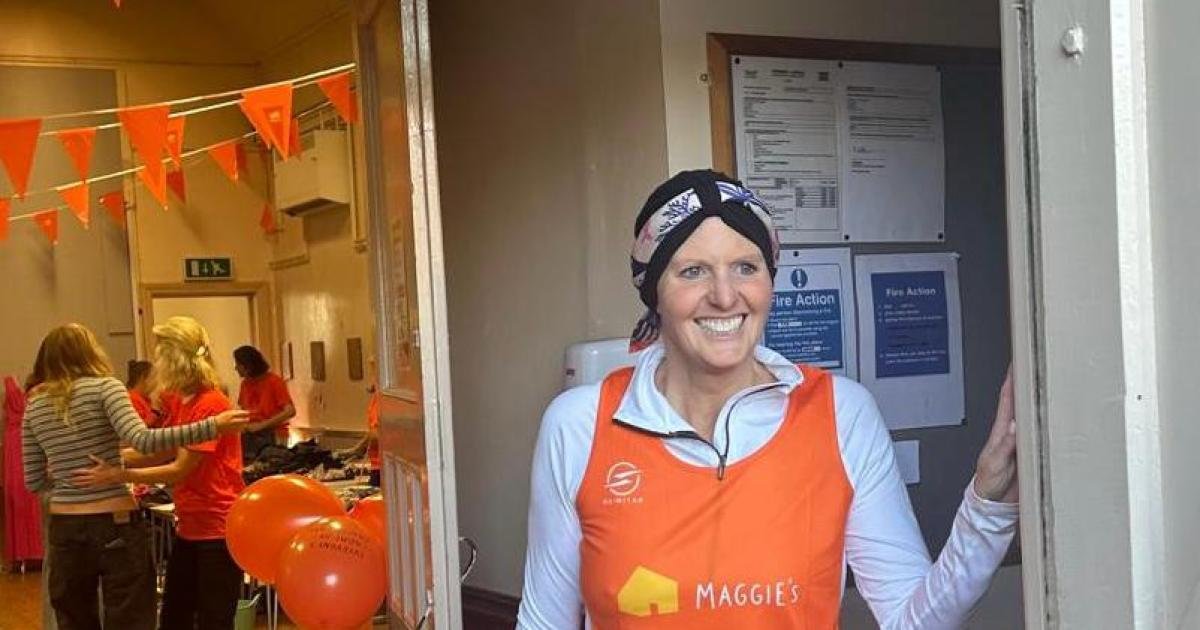
Runner, mother and Oxfordshire resident Sarah Demirtges has raised £14,000 for Maggie’s, the national cancer support charity, while living with adrenal cancer.
The diagnosis came in 2020 during the height of the pandemic.
Mrs Demirtges said: “It took me two years before I went to Maggie’s because I had to work up the courage to go in but when I did, I found care, compassion and community.
“Maggie’s is a sanctuary and it’s made a huge difference.
“I have met amazing fellow patients and carers, had brilliant advice, attended workshops and more.
“They have even supported me with how to speak with my children and just to always be honest.”
Despite her diagnosis, she is determined to complete the marathon, calling it a ‘wild goal’ she felt she had to pursue.
Her husband Rob and sons James, 17, and Ed, 15, have supported her throughout.
She said: “I’ve always been quite a determined person and last year, when I told my husband Rob that I’d applied to do the London Marathon in 2026 he just rolled his eyes and said ‘of course you have’.
“Rob and the boys are used to me making my mind up about something and doing it – even if I am on active cancer treatment.”
Although she once completed a Tough Mudder and a couple of 10K races more than 20 years ago, she hadn’t run regularly in years.
She eased back into training with 5Ks and progressed to running 11 miles by November.
In December, she learned her tumours were growing again and that she would be taken off mitotane, the treatment she’d been on for five years.
She also tore a calf muscle around the same time, forcing her to pause training, but she said she is slowly returning to running.
Her cancer has since spread to her lungs.
She completed five rounds of chemotherapy last year, though the treatment was not successful.
She will hopefully be offered a new immunotherapy treatment alongside a different chemotherapy treatment called temozolomide.
Despite her health challenges, she focuses on living life fully.
She enjoys dinners with friends, watching her sons play sport and walking the family’s dogs.
On difficult days, she says, running feels less like a chore and more like a gift.
Ms Demirtges said: “I want people to know that even if you have cancer, you can still do things, you can set ‘wild goals’ and you shouldn’t let anything stop you.
“I’m doing this for me and Rob and my boys and for Maggie’s.”
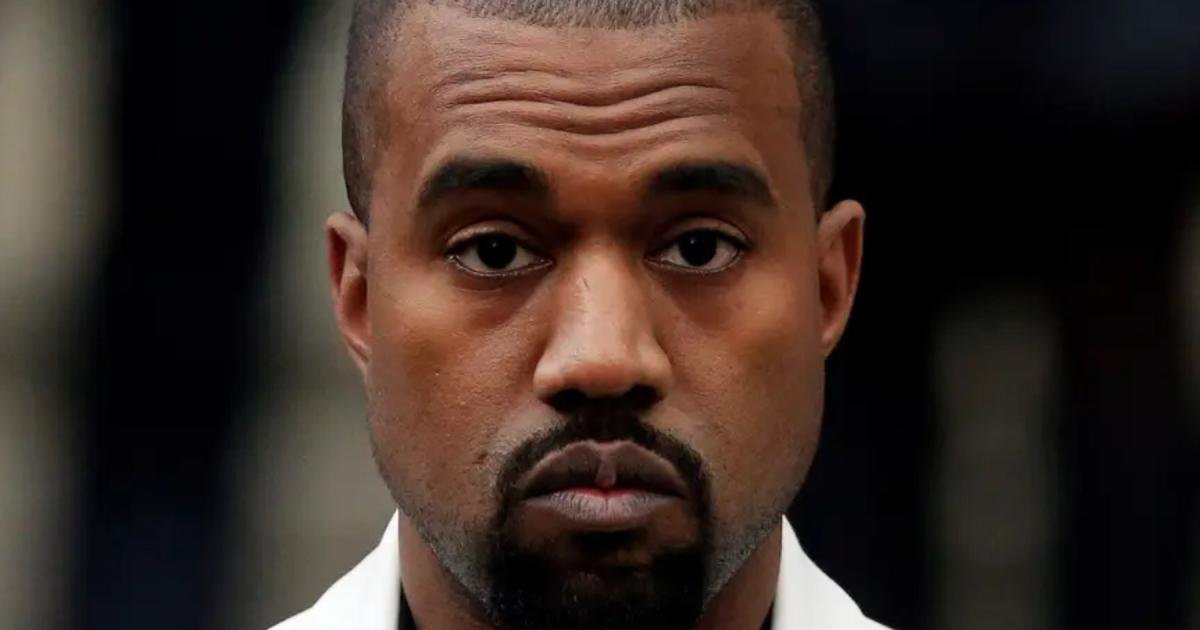
The American rapper, 48, had been announced to headline at the London music festival in July.
However, this had caused controversy due to a string of antisemitic, racist and pro-Nazi comments he had made over the past few years.
Today (Tuesday, April 7), the Home Office shared with BBC News that West made an application to travel to the UK yesterday via an Electronic Travel Authorisation (ETA).
It said the decision to refuse permission was made on the grounds that his presence would not be conducive to the public good.
Labour MPs and senior political figures had called on Prime Minister Sir Keir Starmer to block the rapper’s visa and ban him from the UK prior to this announcement.
Brands Pepsi and Diageo also withdrew their sponsorship of Wireless Festival.
The soft drinks company was the main sponsor of the festival, promoting the event under the branding “Pepsi presents Wireless.”
Why is Kanye West controversial?
West, also known as Ye, has drawn widespread criticism in recent years after he began voicing admiration for Adolf Hitler and has made a series of antisemitic remarks.
Last year, he released a song called Heil Hitler, a few months after advertising a swastika T-shirt for sale on his website.
Back in January, he took out a full-page advertisement in the Wall Street Journal to apologise for his actions and behaviour.
He said the comments were caused by bipolar-1 disorder, itself caused by brain injuries incurred from a serious car accident.
West said earlier on Tuesday he “would be grateful” to meet members of the Jewish community in the UK after controversy over his booking at Wireless.
In a statement, he shared: “I know words aren’t enough.
“I’ll have to show change through my actions.
“If you’re open, I’m here.”
In a statement, the Board of Deputies of British Jews said it was “willing” to meet the rapper, on the condition that he pulls out of his planned performances at Wireless.
“The Jewish community will want to see a genuine remorse and change before believing that the appropriate place to test this sincerity is on the main stage at the Wireless Festival,” said the Board’s president, Phil Rosenberg.
That decision has now been taken out of West’s hands, and those of Festival Republic, the company behind Wireless.
Its managing director, Melvin Benn, had hinted that West’s appearance may be in jeopardy when speaking to BBC Radio 4 on Tuesday morning.
“It may be that the Home Secretary does rescind his visa… if she does, the issue is over.”
Recommended reading:
Benn, who is a major UK music industry figure and event promoter, agreed that West’s past behaviour was “abhorrent” and “disgusting”.
But the promoter highlighted the role that the star’s mental health may have played, and asked for understanding.
“Mental health is not something that disappears overnight,” Benn said.
“People suffer psychotic behaviour, suffer bipolar behaviour, for many, many years… And I think people are forgetting that.”
Do you think the right decision was made to ban Kanye West from travelling to the UK? Let us know in the comments.
Oxford News
Kennedy Institute of Rheumatology secures five-year major funding from the Kennedy Trust for Rheumatology Research

This substantial investment will enable the Institute to continue its world-leading research into the fundamental causes of inflammatory and musculoskeletal diseases, while accelerating the development of new and improved therapies.
The funding will underpin KIR’s distinctive discovery-to-translation pipeline, an approach that integrates fundamental scientific discovery with clinical application. This unique model enables researchers to translate insights from basic biology into innovative treatments for conditions including arthritis, fibrosis and inflammatory bowel disease.
Over the next five years, the funding will support KIR’s core research programmes, early-career researchers and students, as well as its research culture initiatives, industry partnerships, and academic events.
The Kennedy Trust for Rheumatology Research is a charitable organisation dedicated to advancing basic and translational research into musculoskeletal and related inflammatory diseases. Since 2011, it has provided more than £100 million in continuous core funding to the KIR, enabling sustained scientific progress and long-term innovation.
Professor Dame Fiona Powrie, Director of the Kennedy Institute of Rheumatology, said: ‘We are immensely grateful to the Kennedy Trust for their continued flexible support. This investment enables us to pursue ambitious, curiosity-driven science while maintaining a clear focus on patient impact. It strengthens our ability to attract exceptional talent, harness cutting-edge technologies, and foster a collaborative research culture. The successes of the KIR over recent years, and indeed decades, could not have been achieved without our strategic partnership with the KTRR.’
The long-term ambition of the KTRR is to drive meaningful progress towards cures and preventative treatments for these conditions. In addition to its support for the KIR, the Trust funds leading researchers across the UK, including in Manchester, Birmingham, Edinburgh and Glasgow.
Professor Michael Patton, Chair of the Board of Trustees at the KTRR, emphasised the importance of the relationship, saying that: ‘It is over a decade since the Institute moved from London to Oxford and the Kennedy Trustees are proud to support the world-class science and dedicated teams that have thrived in this new environment. The Trust’s latest award comes at an important stage in the Institute’s journey, as it builds on excellence in discovery research and sets the next phase in the translation of its research for the benefit of those suffering from rheumatic and related disorders.’
Professor Gavin Screaton, Head of the Medical Sciences Division at the University of Oxford, added: ‘This continued commitment from the Kennedy Trust is a powerful endorsement of the Kennedy Institute’s outstanding scientific leadership and ambition. At a time when inflammatory and musculoskeletal diseases affect millions worldwide, this partnership ensures that Oxford remains at the forefront of translating fundamental discoveries into the next generation of therapies.’
The Kennedy Institute of Rheumatology and the University of Oxford are deeply grateful to the Kennedy Trust for Rheumatology Research for its continued and transformative support.

New research from Go.Compare Car Insurance revealed most motorists are unaware that many everyday driving habits could get you in trouble with the law.
A staggering 90% of drivers surveyed did not realise that hanging an air freshener from the rear-view mirror could be an offence in certain circumstances.
This is because anything that obstructs your view of the road, such as items hanging from a rear window, can be seen as an offence.
Factors that affect car insurance cost
Under the UK Highway Code it states all windows, including the rear windscreen, must be kept free from obstruction to ensure clear visibility.
Obstructions include dirt, ice, snow, stickers or excessive luggage and failing to clear them can result in penalty points, fines and can also cause you to fail your MOT.
This offence can carry between three and nine points and a fine and it could cause your own-damage car insurance claim to be refused if it results in an accident.
Tom Banks, expert at Go.Compare Car Insurance said if a driver is unfortunately in an accident while performing one of these ‘minor’ actions, it could void your insurance damage claim.
Tom said: “The driving laws we have in place are designed to keep everyone safe on the roads, so it is worrying that so many people do not know what is and isn’t allowed.
“What many drivers don’t realise is that if you are involved in an accident while performing one of these ‘minor’ actions, your insurer could argue you weren’t in full control of the vehicle.
“If you’re found to be driving without due care and attention, you could face points and a fine – and your claim for damage to your own car may be refused.
“It’s important to stay clued-in on the Highway Code. If you’re unsure about a rule, take five minutes to check before you drive.
“To stay safe and avoid insurance issues: keep your phone in a cradle or put it away, ensure the windscreen and number plate are clear, and avoid anything that distracts you from driving.”



-

 Oxford Events3 weeks ago
Michelin Guide Oxfordshire Restaurants – The Oxford Magazine
-

 Crime & Safety3 weeks ago
Oxford: ‘Next generation’ LimeBikes in city from today
-

 Jobs & Careers3 weeks ago
Explore our Careers
-

 Jobs & Careers3 weeks ago
Why Join Oxford | Oxford University Jobs
-

 Oxford Events3 weeks ago
Oxford News and Events, What’s on in Oxford, Exhibitions
-

 Jobs & Careers3 weeks ago
Internal Job Board for University vacancies
-

 Student Life3 weeks ago
The independent cinema battling Oriel College to stay open
-

 Crime & Safety3 weeks ago
Crash partially blocks A40 and causes severe Oxfordshire traffic