
Oxford News
New research reveals how development and sex shape the brain


Researchers from the University of Oxford have created the first high-resolution molecular atlas of the adult Drosophila melanogaster (common fruit fly) brain, uncovering how the neurons that drive behaviour in adults retain a record of their developmental origins. A companion study, released in parallel, shows how these same developmental programs are selectively reused and modified by sex to generate male and female behavioural diversity.
Together, these papers provide a new framework for understanding how the brain’s architecture arises and evolves, from its developmental blueprint to its functional specialisation.
The work, led by Professor Stephen Goodwin’s group in Oxford’s Department of Physiology, Anatomy and Genetics (DPAG), offers an unprecedented view of neuronal diversity. By integrating multiple single-cell RNA sequencing datasets, the researchers achieved tenfold coverage of the Drosophila central brain, capturing transcriptional information for nearly every individual neuron.
Surprisingly, the team found that the genetic diversity of neurons is far greater than previously thought, with many cell types represented by only a single neuron per hemisphere. Their analyses suggest that transcriptomic and anatomical identities represent complementary and equally informative axes for defining neuronal types. This insight provides a crucial link between molecular diversity and the physical wiring of the brain, bridging developmental and systems-level perspectives.
‘Our results show that the adult brain carries a molecular record of how it was built,’ said Professor Goodwin. ‘We can now see that the diversity of neurons, and therefore of behaviours, emerges from a simple developmental logic based on lineage, timing, and selective differentiation.’
The companion paper extends these principles to sexual dimorphism, revealing that male and female brains use the same developmental templates in different ways. Rather than separate male and female circuits, the team found that sex differences arise through selective neuronal survival within shared lineages. Female-biased neurons tend to be born early, while male-biased neurons emerge later, indicating that sex leverages distinct developmental windows to shape behaviour.
‘This shows how evolution can create new behavioural capabilities without rebuilding the brain from scratch,’ said lead author Dr. Erin Allen. ‘Sex doesn’t reinvent the wiring; it tweaks when and which neurons persist.’
These findings not only redefine the developmental logic of the fly brain but also provide essential parameters for computational and systems neuroscience. By revealing how molecular and anatomical classifications intersect, the atlas offers a foundation for modelling brain organisation and function.
The Goodwin group has also created a user-friendly website featuring interactive visualisations of the atlases referenced in these studies, allowing researchers to explore the data directly. This work was supported by the Wellcome Trust and the Biotechnology and Biological Sciences Research Council.
Both papers, ‘A High-Resolution Atlas of the Brain Predicts Lineage and Birth Order Underlie Neuronal Identity‘ and ‘Differential Neuronal Survival Defines a Novel Axis of Sexual Dimorphism in the Drosophila Brain‘, are published in Cell Genomics.

We’ve made a gallery of pictures showing all the Oxfordshire spots which have been used for TV and film sets over the years.
Some of the biggest productions filmed here in Oxfordshire include Spectre in the James Bond franchise, which transformed Blenheim Palace in Woodstock into the Palazzo Cardenza in Rome.

READ MORE: Abandoned Oxfordshire home used as drugs den shut down
Many period dramas were also created in the county, like the BBC adaptation of Hilary Mantel’s Wolf Hall, which was partly filmed at Chastleton House in the Cotswolds.
Cotswolds villages have been repeatedly transformed and used as filming locations for their historical appeal, like the villages of Brill, Broadwell and Castle Combe.
Find all the pictures in this archive gallery of historic Oxfordshire filming locations here.

Three Year 10 pupils from Aureus School in Didcot travelled to London for the Royal Navy International Women’s Day event, held on HMS President during Careers Week and designed to showcase opportunities within the Royal Navy and beyond.
Students Antonia Pop, Ellie Swan and Tilly Mulvey are all taking part in the Duke of Edinburgh’s Award Scheme.
Ellie Swan said: “It was fantastic to see the possible career paths within the Navy.”
Rob Hayden, Duke of Edinburgh’s Award manager at Aureus School, accompanied the students to the event.
He said: “During the day, students had talks from individuals within the Navy and from guest speakers, including Hannah Botterman, who last year won both the Rugby World Cup and the Six Nations with England.”
He said: “Students also had the chance to network with the speakers and other attendees.
“The event showed the students a wide range of inspirational females within the Navy and other careers.”
Aureus School, part of the GLF Schools multi-academy trust, says its vision is focused on ‘cultivating ambition’ and ‘high standards for all’.
Headteacher Kirsty Rogers says the Didcot-based co-educational comprehensive has undergone a ‘transformative journey’, creating a community where students feel a strong sense of belonging. She emphasises inclusivity, high expectations, and a broad curriculum that encourages ambition, resilience and respect, supported by dedicated staff and diverse extra-curricular opportunities.
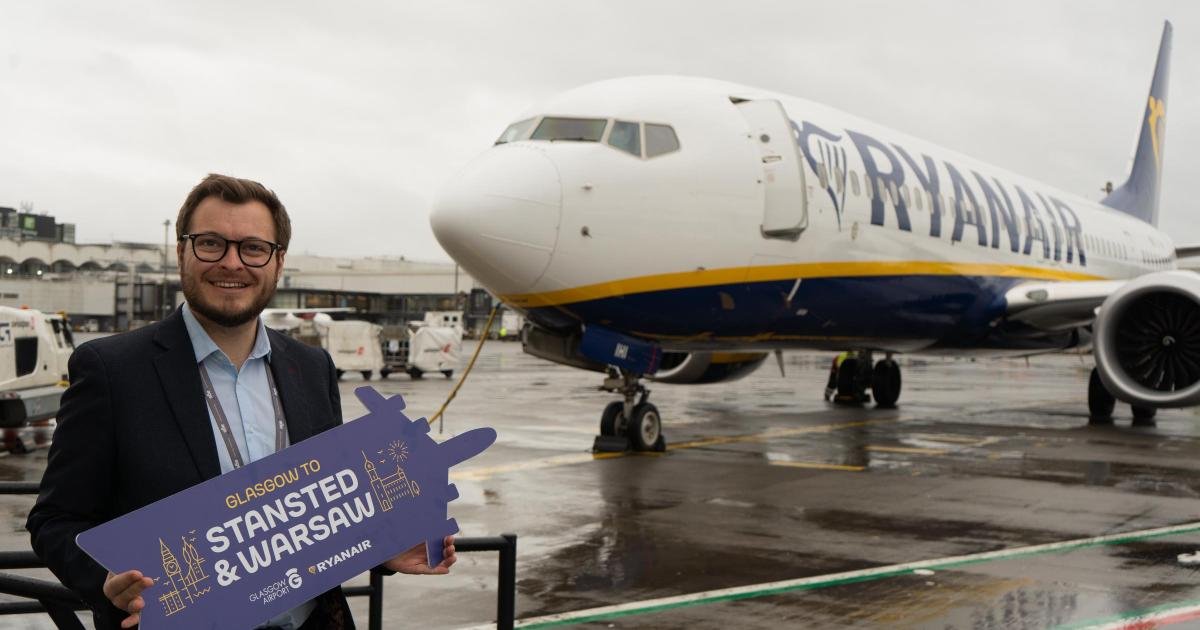
The flights mark a major boost to the airport’s connectivity ahead of the budget airline’s record Summer 2026 schedule.
The new routes form part of Ryanair’s expanded Glasgow programme for Summer 2026, which will see the airline operate over 100 weekly flights across eight routes.
The new double-daily London Stansted service further strengthens Glasgow’s access to the English capital, while the launch of the Warsaw service enhances Glasgow’s international offering.
Jonathan Ford, portfolio manager at AGS Airports, said: “It’s fantastic to see Ryanair’s new services to London Stansted and Warsaw take off today.
“The double-daily Stansted route offers even more flexibility for business and leisure travellers heading to and from England’s innovation corridor, while Warsaw provides a valuable new link that expands the international connectivity available to our passengers.
“These launches mark the start of what will be a record summer for Ryanair at Glasgow, and we look forward to welcoming even more travellers through our doors.”
Last month, Ryanair launched its 2026 plan for Glasgow with 10 routes, including holiday hotspots like Lanzarote, Palma de Mallorca, and Tenerife, as well as city break destinations like Barcelona and Pisa.
The budget airline will also operate extra frequencies on its Alicante, Faro, Pisa, Malaga and Murcia routes.
The new schedule is underpinned by Ryanair’s two Glasgow Prestwick-based aircraft.



-

 Crime & Safety2 weeks ago
Oxford: ‘Next generation’ LimeBikes in city from today
-

 Jobs & Careers2 weeks ago
Why Join Oxford | Oxford University Jobs
-
 Jobs & Careers2 weeks ago
Explore our Careers
-

 Student Life2 weeks ago
The independent cinema battling Oriel College to stay open
-

 Oxford Events2 weeks ago
Michelin Guide Oxfordshire Restaurants – The Oxford Magazine
-

 Oxford Events2 weeks ago
Oxford News and Events, What’s on in Oxford, Exhibitions
-

 Jobs & Careers2 weeks ago
Internal Job Board for University vacancies
-

 Crime & Safety2 weeks ago
Crash partially blocks A40 and causes severe Oxfordshire traffic