
Business & Technology
Millions risk missing this HMRC tax deadline for April 2026


Financial experts say this is one of the most important moments in the money calendar, as key tax-free limits are wiped clean and start again – and anything unused is gone for good.
Brian Byrnes, Director of Personal Finance at Moneybox, said: “The tax clock has reset, and now is the time to take action. All tax allowances are being refreshed, so it’s a key moment to think about how best to use them to achieve your goals.”
1. Use your £20,000 ISA allowance before it disappears
The annual ISA allowance stands at £20,000, but it operates on a strict use-it-or-lose-it basis.
Byrnes warned: “Any portion you don’t use in the next 12 months is gone for good, so it’s important to make the most of it where you can.”
Cash ISAs can be useful for short-term savings goals, while Stocks & Shares ISAs are typically better suited to longer-term investing. Lifetime ISAs can also help first-time buyers or retirement savers thanks to a government bonus.
2. Don’t miss out on pension tax relief
Pensions remain one of the most tax-efficient ways to save.
You can contribute up to £60,000 per year (or 100% of your salary, whichever is lower), and benefit from government tax relief.
Byrnes explained: “A pension comes with the benefit of free money. For a basic rate taxpayer, every £80 you contribute becomes £100 thanks to tax relief.”
He added that higher earners can benefit even more, with relief of up to 40% or 45%, depending on their tax band.
3. Mix savings and investing for better returns
Experts say you don’t have to choose between saving and investing.
Splitting your ISA allowance between cash and investments can offer both stability and growth potential.
Byrnes said: “You can split your contributions between cash for security and stocks and shares for growth, getting the best of both worlds.”
While cash savings are lower risk, they may struggle to keep up with inflation. Investing, on the other hand, has historically delivered stronger returns over the long term.
4. Take advantage of the Lifetime ISA bonus
A Lifetime ISA offers a 25% government bonus on contributions.
That means saving £4,000 per year could earn you an extra £1,000 annually.
Byrnes said: “If you’re planning to buy your first home or boost your retirement savings, a Lifetime ISA can be a powerful way to grow your money.”
5. Use allowances for your children too
It’s not just your own tax-free limits that reset.
Junior ISAs allow parents to save up to £9,000 per year per child, completely separate from the adult ISA allowance.
Byrnes noted: “With regular contributions, this can build into a meaningful financial boost for your children’s future.”
Recommended reading:
6. Watch out for common tax mistakes
Experts also warn many investors are caught out by avoidable errors, especially around capital gains tax.
Michele Tieghi, founder of PsyFi Money, said: “One of the biggest misconceptions is that tax only applies when money hits your bank account.
“In reality, selling investments can create a tax bill even if you reinvest straight away.”
He added: “Missed reporting, poor record keeping or simple errors can quickly lead to penalties, interest and unexpectedly large tax bills.”
Tieghi also stressed the importance of using allowances before they reset: “Once the tax year ends, those allowances are gone for good – and that can mean paying tax unnecessarily.”

The Bradford-based grocer is to shut the Budgens store in Abingdon, on Sunday, April 12 for a makeover.
Morrisons is to turn the shop at Peachcroft Shopping Centre in Peachcroft Road into its new Daily brand of convenience stores.
READ MORE: The Range shopper does poo on shelf before leaving
Peachcroft’s shop will be the first Morrisons in Abingdon. Other Daily convenience stores have recently opened in Botley, Blackbird Leys, Bicester, Wallingford and Thame.
Signs outside the shop confirm the new Morrisons Daily in Abingdon will open a week and a half after Budgens closes on Thursday, April 23.
Morrisons has full-size supermarkets in Banbury and Carterton.

New research from Flagstone suggests UK SMEs favour high street banks over challenger and online providers for business savings, even though many mid-sized firms hold cash above Financial Services Compensation Scheme protection limits.
The study of 500 UK SMEs found that 73% save mostly or entirely with high street banks. Another 13% use an even split between high street and challenger banks, while 13% save mostly or entirely with online or challenger providers.
That preference persists despite a clear gap in average savings rates. Flagstone compared instant-access and fixed-term products from four large high street banks and four challenger banks, finding that challengers offered higher average rates in every category.
For instant-access accounts, the average rate from a high street bank was 1.15%, compared with 3.87% from a challenger bank. On six-month fixed terms, the average rates were 2.25% and 3.80% respectively, while 12-month fixed terms were 2.60% and 3.95%.
Based on average cash reserve balances, a micro business with £66,232 in instant-access cash could miss out on £1,801.51 a year in interest by saving exclusively with high street banks. For a small business with £224,673 in instant-access reserves, the annual shortfall was estimated at £3,482.43.
Among mid-sized businesses with average instant-access cash reserves of £620,734, the missed interest opportunity rose to £8,379.91 a year. That means some larger SMEs could be earning as much as 237% less than they might secure with challenger providers.
Why it happens
The data points to a mix of caution, familiarity and administrative burden. Nearly two-thirds of SMEs said they prefer high street banks because they see them as safer, a view that was stronger among larger businesses and those holding bigger cash balances.
The research found that 75% of SMEs believe protecting company cash is more important than maximising returns, even if that means accepting lower rates. A further 60% said higher rates alone would not persuade them to switch banks.
Trust in newer providers remains a barrier. Some 61% said they would rather hold company cash with established high street banks even when those banks offer lower interest rates, while 68% said they would consider challenger banks if they had more confidence in their track record.
Convenience also featured strongly. Three in five SMEs said they know they could spread money across several banks to reduce risk and improve returns, but either lack the time or see the process as too complicated to manage. Three-quarters said they prefer to keep company savings with their main day-to-day banking provider.
“When the vast majority of UK businesses continue to favour traditional banks despite rate competition driven by challenger banks, it sends a clear signal: rates alone aren’t enough to encourage businesses to change their savings habits. The deeper we dig into the data, the clearer it becomes that SME finance leaders are looking for a number of benefits from the savings providers they use: trust, return, convenience and flexibility,” Lakhbir Sandhu, Chief Financial Officer at Flagstone, said.
Protection limits
The research also highlighted a gap between concerns about safety and how many businesses actually distribute their cash. Under the FSCS rules cited in the findings, an account holder should not hold more than £120,000 with a single banking group if they want full protection should that bank fail.
Among small SMEs, two in five were estimated to have cash reserves that were not fully protected by the scheme. The average small SME held about £225,000 in two or fewer savings accounts, and 43% said they kept all their cash with a single bank.
The picture was more pronounced among mid-sized businesses. At least 85% were likely to have cash reserves that were not fully protected, with average cash holdings of £621,000 spread across three or fewer banks.
These findings suggest many finance teams are prioritising institutions they view as safe while still concentrating sums above compensation thresholds in only a small number of places. The result is a mismatch between stated caution and actual protection.
“When over 4 in 5 SMEs with over £600,000 in cash save with three or fewer banks, it’s unlikely they are achieving full FSCS protection. However, when risk mitigation ranks so highly among SMEs, finding ways to ensure adequate FSCS protection on their cash should be a priority for finance leaders. While the financial services industry has more guardrails than ever, it’s not a market exempt from risk,” Sandhu said.
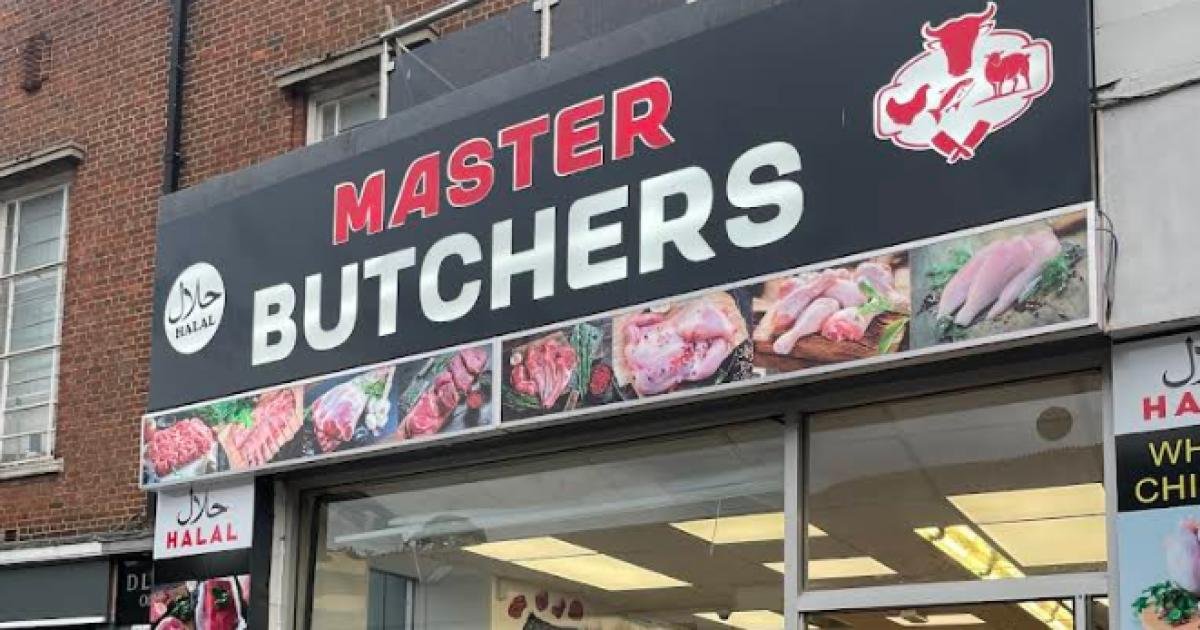
Master Butchers in Holyoake Hall, in London Road in Headington, has been listed for let to a new owner for £25,000 per year.
The premises, which was formerly a fishmongers, opened as a Halal butchers shop last March.
READ MORE: Oxford trains cancelled after dead body found on tracks
It joined three other Halal butchers which already operated in London Road, namely Headington Butchers & Groceries, Medina Foods Market and Oxon Groceries, all of which continue trading.
Less than a year later, the Master Butchers has closed, with no reason publicly given by the owners.
Its predecessor, Bluefin Fishmongers, similarly lasted just a short time in the high street shop, trading for just 11 months from February to December 2024.
A sale listing with agents Benedicts said the unit at Holyoake Hall, 122-136 London Road, “offers a compact and highly versatile retail space, ideal for a range of occupiers”.
READ MORE: Probe into major Oxfordshire development’s ‘unplanned’ road
The 472sqft shop is said to be surrounded by “established occupiers”, positioned next to Domino’s pizza and various other shops, and to have “high levels of passing foot and vehicle traffic”.
The listing said: “Benefitting from a prominent frontage onto London Road, the unit enjoys excellent visibility in a well-established commercial parade, surrounded by a mix of national brands such as Betfred and Dominoes, cafés, and thriving local enterprises.
“The area is popular with students, professionals, and residents alike, ensuring a consistent and diverse customer base throughout the day.”



-
 Oxford Events3 weeks ago
Michelin Guide Oxfordshire Restaurants – The Oxford Magazine
-

 Crime & Safety3 weeks ago
Oxford: ‘Next generation’ LimeBikes in city from today
-

 Jobs & Careers3 weeks ago
Explore our Careers
-

 Jobs & Careers3 weeks ago
Why Join Oxford | Oxford University Jobs
-

 Oxford Events3 weeks ago
Oxford News and Events, What’s on in Oxford, Exhibitions
-

 Jobs & Careers3 weeks ago
Internal Job Board for University vacancies
-

 Student Life3 weeks ago
The independent cinema battling Oriel College to stay open
-

 Oxford Events3 weeks ago
Pancake day recipes – Pancake day 2024