
UK News
Middle East crisis live: Trump repeats Nato criticism and claims Iran has asked for a ceasefire | US-Israel war on Iran

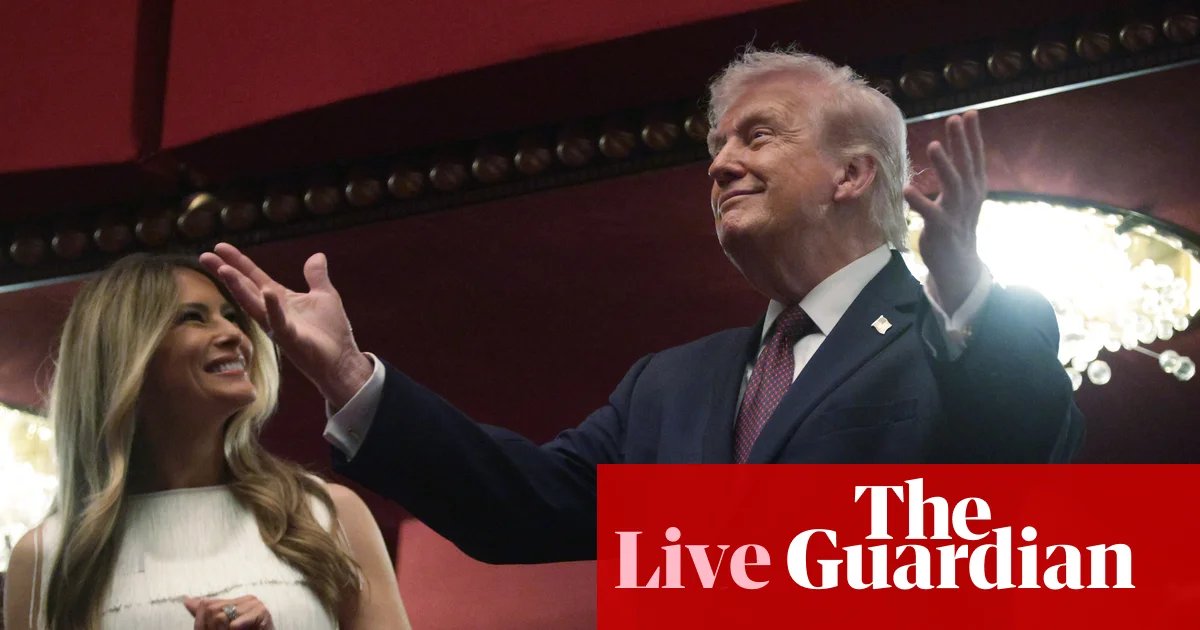
What should we infer from Trump’s claim Iran has asked for ceasefire?

Peter Beaumont
President Trump’s Truth Social post claiming that Iran’s new president had asked for a ceasefire is problematic in a number of key details.
While Iran might have a new Supreme Leader in Mojtaba Khamenei, who succeeded his father Ali who was assassinated in the opening salvoes of the war, it does not have a “new president” who remains exactly the same person as before the start of the war – Masoud Pezeshkian.
If, at a pinch one could argue that, Trump is talking sloppily about the president of a “new regime” that still remains sharply at odds with most expert analysis which suggests that far from being “less radicalized” the regime has taken a more hardline and unpredictable turn since Ali Khamenei’s killing as the Islamic Revolutionary Guards Corps has moved to further consolidate its power.
Even in the event that Pezeshkian is behind an undisclosed ceasefire initiative of some kind – which Iran has not commented on – it is not clear what the status that might means in terms of Tehran’s internal power dynamics where the role of Supreme Leader is viewed historically as being more powerful than the office of president.
In a phone call this week with Antonio Costa, president of the European Council, Pezeshkian suggested that Iran could end of the conflict but with the important proviso of guarantees against a repeat attack – which is one of Tehran’s key demands and which Trump may be misrepresenting.
“We possess the necessary will to end this conflict, provided that essential conditions are met, especially the guarantees required to prevent repetition of the aggression,” Pezeshkian’s office said in a statement.
When Iran has commented on contacts through the mediation of Pakistan it has been to suggest that Trump’s remarks on progress have been highly exaggerated, a familiar Trump trait both in his interventions in Middle East diplomacy and over the war in Ukraine where repeated claims of imminent breakthroughs have tended not to survive contact with reality.
Amid widespread reporting that Trump is looking for an exit strategy for a deeply unpopular war that he has already become bored with, what seems more likely is that he is trying to shape a narrative that would allow him to say the war has been won.
Key events
Trump repeats claims of Iran ‘regime change’
Reuters has published further remarks from Donald Trump in its phone interview with the US president.
When asked if he was thinking about pulling the US out of Nato, he said: “Oh, absolutely without question. Wouldn’t you do that if you were me?”
He added: “They haven’t been friends when we needed them. We’ve never asked them for much … it’s a one-way street.”
He also expressed his hope for a deal with the new leaders in Iran after airstrikes killed supreme leader Ali Khamenei.
He again claimed that there has been a “full regime change” in Iran, adding: “I’m dealing with a very good chance that we’ll make a deal because they don’t want to be blasted anymore.
“I didn’t need regime change, but we got it because of the casualties of war. We got it. So we have regime change and the big thing we have is they’re not going to have a nuclear weapon. Nor do they want one.”
As for the enriched uranium still possessed by Iran, Trump said: “That’s so far underground, I don’t care about that.
“We’ll always be watching it by satellite.”
Iran’s Islamic Revolutionary Guard Corps (IRGC) has acknowledged the attack on an oil tanker in Qatari waters, alleging that it had ties to Israel.
As reported earlier, the Qatari defence ministry said the Aqua 1 fuel oil tanker leased to the state-owned QatarEnergy was hit by an Iranian cruise missile. There were no reports of injuries and the 21 crew members escaped unharmed.
In a statement carried by Iranian state media, the IRGC said an oil tanker belonging to the “Zionist regime with the trade name ’Aqua 1’” in the the Persian Gulf “was precisely targeted”.
It was not immediately clear what links the oil tanker have to Israel.
In further news alerts, Reuters reported Trump as saying Iran will not have a nuclear weapon “nor do they want one”.
Iran has long maintained that its nuclear programme is for peaceful purposes, with leaders citing a religious decree (known as a fatwa) against weapons of mass destruction. The US and Israel have always disputed this claim.
Trump says US will be ‘out of Iran pretty quickly’ – Reuters
In an interview with Reuters news agency, Donald Trump said the US will be “out of Iran pretty quickly” but could return for “spot hits”.
Ahead of his scheduled national address this evening, the US president said he would express his disgust with Nato over what he described as its lack of support for his war objectives against Iran. He added that he was “absolutely” considering an attempt to withdraw the US from the alliance, according to Reuters.
He did not give a timeline of when the US could end the war, saying: “I can’t tell you exactly… we’re going to be out pretty quickly.”
He added: “They [Iran] won’t have a nuclear weapon because they are incapable of that now, and then I’ll leave, and I’ll take everybody with me, and if we have to we’ll come back to do spot hits.”

Dan Sabbagh
British counter drone crews in northern Iraq downed over 10 Iranian drones overnight, the UK Ministry of Defence said.
Attacks have continued seemingly undimmed over the past month, with some or more aimed at western bases, previously for troops engaged in counter Islamic State operations before the US and Israel attacked Iran.
It was not clear what Donald Trump meant by “Iran’s new regime president”, as there has been no recent change in that role. Masoud Pezeshkian remains the Iranian president, a role he has served since 2024.
Trump claims Iran’s president has asked US for a ceasefire
The US would only consider a ceasefire with Iran if the Hormuz strait opens, Donald Trump has declared on social media.
He said Iran had asked for a ceasefire, writing:
Iran’s New Regime President, much less Radicalized and far more intelligent than his predecessors, has just asked the United States of America for a CEASEFIRE! We will consider when Hormuz Strait is open, free, and clear. Until then, we are blasting Iran into oblivion or, as they say, back to the Stone Ages!!! President DJT
Explosions were heard in the Syrian capital Damascus and its surrounding areas, state TV al Ekhbariyah reported on Wednesday.
The network said that that the blasts were likely caused by Israeli air defences intercepting Iranian missiles.
Iranian authorities warned Nato member Bulgaria last month not to let the US use its airports for planes participating in military operations in Iran, the foreign ministry said on Wednesday.
Earlier on Wednesday, Stanislav Balabanov, a deputy with the ‘There is Such People’ party, showed a note from 18 March in which the Iranian government protested against US military refuelling planes parked at Bulgaria’s Vasil Levski airport.
In the note, Iran said it “reserves the right to take all necessary measures to protect its sovereignty, security and national interests in accordance with international law.” Later on Wednesday, in a statement to reporters, deputy foreign minister Marin Raikov confirmed the note and said: “Bulgaria is not at war.“
“No combat aircraft are being loaded over Bulgaria to participate in military operations,” he told reporters. “We maintain intact diplomatic relations with the Iranian side.“
The new supreme leader of Iran, Mojtaba Khamenei, has issued a message of gratitude to Hezbollah’s secretary general, Naim Qassem.
In a statement carried by Iranian media, he praised Hezbollah for its “perseverance, steadfastness and patience” against “the most ruthless enemies of the Islamic world”, as he vowed Iran will continue to support groups fighting US and Israeli forces across the Middle East.
Khamenei has not been seen since the war began on 28 February and has only issued written statements since becoming Iran’s new supreme leader. US and Israeli officials believe he was wounded in the attack that killed six of his family members, including his father, Ayatollah Ali Khamenei, and remains in hiding.
Here are some of the latest images from across the Middle East:
The Israeli military claimed to have killed a Hezbollah commander who was responsible for the group’s military activity in southern Lebanon.
In a statement on social media, the Israel Defense Forces (IDF) said Yusuf Ismail Hashem was killed in a strike in Beirut yesterday. It described Hashem as a “senior commander with 40+ years of experience” and that he was “a central figure in Hezbollah”.
There was no immediate comment from Hezbollah on the reported killing.
The IDF has escalated its attacks in southern Lebanon as Hezbollah continues to fight an Israeli ground invasion. Israel said it will occupy swathes of southern Lebanon and destroy the homes along the border to prevent the return of about 600,000 people, prompting concerns of long-term forced displacement.
The Israeli defence minister, Israel Katz, said that when fighting with Hezbollah ended, Israel would occupy the area under the Litani River, about 19 miles from the Israel-Lebanon border, as part of its so-called buffer zone inside southern Lebanon.
Ebrahim Azizi, the chair of the Iranian parliament’s national security commission, has mocked Donald Trump for declaring “regime change” in Iran, saying the only change the US has achieved in the war is losing access to the strait of Hormuz.
In a post on X, he said:
Trump has finally achieved his dream of ‘regime change’—but in the region’s maritime regime!
The strait of Hormuz will certainly reopen, but not for you; it will be open for those who comply with the new laws of Iran.

Taz Ali
Donald Trump said he will wrap up his military campaign against Iran in two to three weeks and that a deal is not necessary to end the conflict.
“We will be leaving very soon,” he told reporters in the Oval Office last night.
The White House said the US president will provide “an important update” during a national address this evening at 9pm Washington time (2am BST). While it is unclear what updates he will provide on the war, questions remain over whether the US has achieved its shifting objectives since launching a joint attack with Israel against Iran more than four weeks ago.
Trump said on Monday that he has already achieved regime change by killing Iran’s supreme leader Ayatollah Ali Khamenei, even though he has been replaced by his son, Mojtaba. Other key Iranian officials have been killed since the outbreak of the war, but critics say a change in Iran’s leadership does not constitute a regime change.
“What we are seeing in Iran is not a regime change — but a transformation within the regime itself, one that has made it more extreme,” Danny Citrinowicz, the Israeli military’s former top Iran researcher, posted on X.
Starmer says summit with EU later this year will lead to ‘more ambitious’ plans for cooperation

Andrew Sparrow
Keir Starmer said he will push for a closer relationship with the EU at a summit coming up later this year.
“We want to be more ambitious, closer economic cooperation, closer security cooperation, a partnership that recognises our shared values, our shared interest and our shared future,” he said in a press conference in Downing Street.
When asked by a reporter whether a closer relationship with the EU is an acknowledgment that the relationship with the US is changing, Starmer responded:
Firstly, Nato is the single most effective military alliance the world has ever seen. And it has kept us safe for many decades. And we are fully committed to Nato.
Secondly, that, whatever the pressure on me and others, whatever the noise, I’m going to act in the British national interest in all the decisions that I make.
And that’s why I’ve been absolutely clear that this is not our war, and we’re not going to get dragged into it.
But I’m equally clear that, when it comes to defence and security and our economic future, we have to have closer ties with Europe.
His remarks followed a Telegraph interview with Donald Trump, in which the US president said he was considering pulling the US out of Nato, and suggested the UK does not have a proper navy.
Trump’s frustration with Nato over its refusal to back his Iran war is clear – snap analysis

Jakub Krupa
Trump’s latest comments come as he increasingly hardens his language against European allies, blaming them for difficulties in his Iran operation.
In last days, he specifically targeted European allies, calling them “cowards” and telling them to “build up some delayed courage” and take control over the strait of Hormuz.
He and his senior officials also criticised a number of specific countries, particularly Spain, which has been most vocally critical of the US-Israeli war against Iran, and France.
The US secretary of state, Marco Rubio, warned last night about the sharply escalating frustration with Nato, as he told Fox News: “We are going to have to reexamine whether or not this alliance that has served this country well for a while is still serving that purpose or has now become a one-way street, where America is simply in a position to help Europe but when we need the help of our allies, they deny us basing rights and overflight.”
Italy is the latest country to risk the US administration’s anger, after it has denied the use of an airbase in Sicily to US military planes carrying weapons for the war in Iran after the US did not follow the required authorisation procedure.
For more on the impact of the war in Europe, follow our Europe live blog here:
Keir Starmer is giving an update on the Iran war at a press conference in Downing Street, where he sought to reassure the British public that the government is working on a plan to help with the cost of living.
“We will continue to stand up for the British national interest, and we continue to do what we must to guide our country calmly through this storm,” he said.
You can follow the live updates on our UK politics blog here:
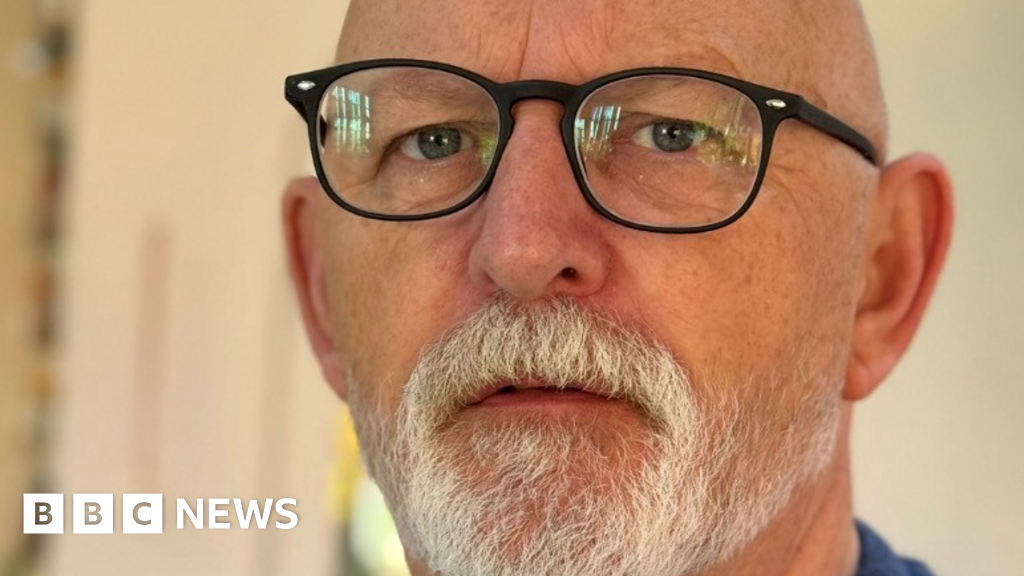
The family of Shaun Burton, say they are “devastated” by the loss.
Source link
Key events
In the opening half an hour against Cape Verde, Mikel Oyarzabal, the centre-forward, did not get a single touch.
Kyle Green gets in touch: “Your highlighting of Lalas and his absurdity is something that has prevented me from wanting to watch the coverage on Fox. While every channel has its pros and cons I just can’t.
“I’m 45 and probably the youngest of anyone who remembers him as a player instead of an opinionated insert insult here. As for the match this could be more competitive than it looks on paper Spain need a win the pressure is on them. Saudi Arabia could hold out for a draw and see what happens in their last match. “
News from the England camp, and it seems to be good news on Declan Rice.
“I’m ready and fit, raring to go. I was feeling a little bit of neural pain in my hamstring, which I was managing from after Christmas with Arsenal for a very long time. Obviously, not a lot of people would have known that. It was all behind-the-scenes stuff but it was a smart decision.
“In the end, that last 20 minutes is probably where you pick up the most, and it’s where you play a 70-minute match. But that last 20 is where you really feel your body going for it. And I think it was a smart decision because the last few days I felt really, really good.”
Alex Reid has penned today’s weekend special Football Daily.
Portugal v Uzbekistan on Tuesday enticingly pits the incredibly nice, incredibly 41-year-old-superstar-tolerant Roberto Martínez against Fabio Cannavaro, who’s won a Ballon d’Or as a player and the Chinese Super League as a coach. While the fixture following that game really does see the dream of Thomas Tuchel – in his first international job with England – taking on Queiroz, who is in charge of his ninth national side with Ghana.
The expected formations are 4-2-3-1 for Spain, and 5-3-2 for the Saudi Arabians.
The Saudi team features two Donis changes: Ali Lajami, a defender, and Nasser Al Dawsari, a midfielder, are preferred to Mohammed Abu Al Shamat and Mohamed Kanno. You may recall Salem Al Dawsari, the Saudi captain, as the man who scored the winner against Argentina.
An entertaining read, even for those of us who have just seen the clips.
In a conversation where his co-panelist is casually reminiscing about his days playing alongside Messi or exchanging shirts with Ronaldo Nazário at the World Cup, what exactly is Lalas going to talk about – coming on as a second-half substitute for Earnie Stewart in a friendly against Scotland in 1998? Helping the Kansas City Wizards finish last in the 1999 MLS Western Conference? Did Lalas enjoy an elite playing career? No. But does he do the background reading that could compensate for his relative lack of standing in a conversation with titans like Henry and Zlatan? Also no. But is he charming or funny or charismatic or otherwise magnetic on screen? Eh, no.
For the record, I once interviewed Alexi Lalas on the challenge of playing against Romario in the 1994 World Cup. He had this to say:
“He could kill you in so many different ways. If you remember from that World Cup, he scored so many types of goals. That ranged from solo adventures to an outside-of-the-right-foot half-volley off a corner kick. Romario was both the most difficult to play against and the best that I have faced.
“Roberto Baggio was doing his thing, but in terms of consistency and living up to the hype, he [Romario] was the best. As with all stars, there was a moment when the fans sit up in their seats, and that was a feeling I got with Romario. When it got close to him and the potential for his involvement in a play was there, everybody sat up in their seat. They knew that something spectacular would be happening.”
Saturday’s match reports here.
The Saudi Arabia coach, and Blackburn legend, Georgios Donis, spoke about the challenges facing his team: “Spain is not the same team when Yamal or Williams are on the bench.
“While they still have plenty of possession, they lack the individual one-on-one penetration when these two are missing. I’m not saying it’s a problem for Spain, but when those players are missing, they play in a different way. We saw this very clearly against Cape Verde.
“We are playing against one of the best teams in the world, and it’s very important that when you play against these kinds of teams, you should enjoy the experience and respect the opponent, but not too much.
“It is very hard for any team playing against Spain to have any time in possession. So what we must do is to be more in control of our movement and compact, and when the ball goes through the lines, be able to defend dynamically.
“It’s nice to see miracles in football, and we’ve seen favourites losing against underdogs. Of course, it’s great for Saudi football to have a great memory of the result against Argentina, but we aren’t drawing anything from that.
“I think we’ll feel more pressure in that [Cape Verde] game than we will against Spain.”
The Spain coach, Luis De La Fuente had this to say in his Saturday press conference: “This generation of footballers is highly competitive and really fired up… It’s going to be a completely different story,” he said at his pre-match press conference on Saturday. There is no drama or crisis. The bottom line is simply that we need to win tomorrow.”
Four changes for Spain: Lamine Yamal, Pedro Porro, Dani Olmo and Alex Baena also come into the side with Marcos Llorente, Fabian Ruiz, Ferran Torres and Gavi dropping out.
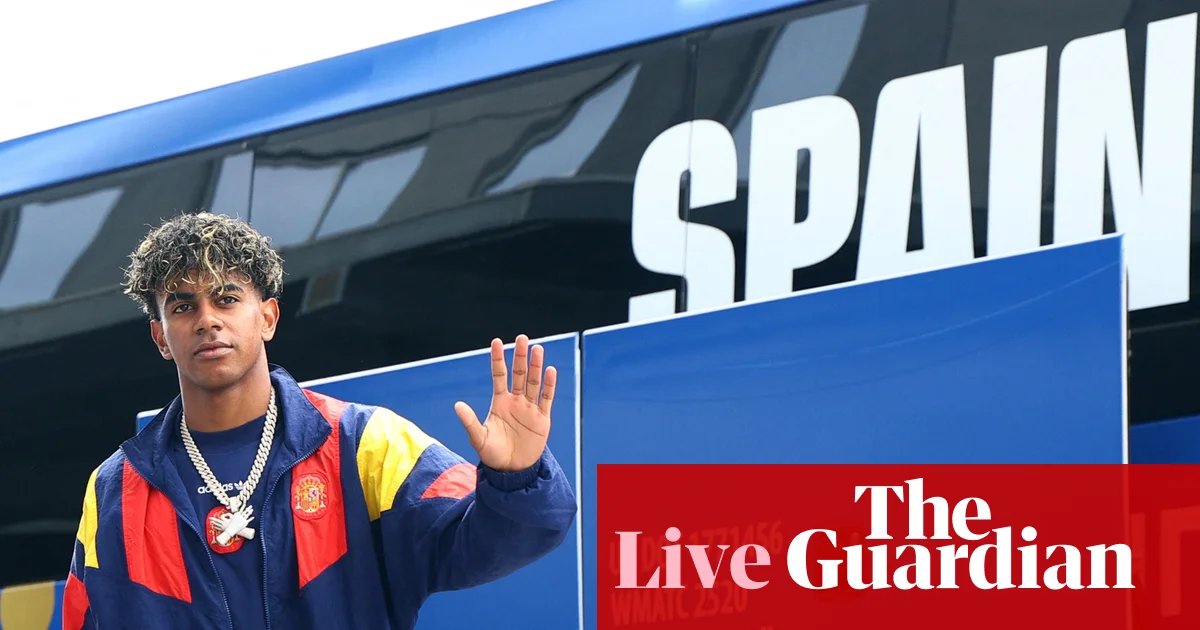
The teams – Lamine Yamal starts
Spain: Simon, Porro, Cubarsi, Laporte, Cucurella, Gonzalez, Rodri, Yamal, Olmo, Baena, Oyarzabal. Subs: Raya, Joan Garcia, Pubill, Grimaldo, Eric Garcia, Llorente, Merino, Torres, Fabian, Gavi, Pino, Williams, Zubimendi, Munoz, Iglesias.
Saudi Arabia: Al Owais, Abdulhamid, Tambakti, Lajami, Al Amri, Al Harbi, Nasser Al Dawsari, Al Khaibari, Al Juwayr, Al Buraikan, Salem Al Dawsari. Subs: Al Aqidi, Al Kassar, Majrashi, Yahya, Al Shehri, Al Boushal, Kadesh, Al Johani, Al Ghannam, Al Hajji, Al Hamdan, Mandash, Kanno, Thakri, Abu Al Shamat.
Referee: Raphael Claus (Brazil)
Perhaps one of the Saudi -players can write themselves into this high-grade selection?
Perhaps it can be their goalkeeper.
Madrid screening of Spain v Saudi Arabia cancelled due to heat
The public screening of Spain’s World Cup match against Saudi Arabia in Madrid on Sunday has been cancelled because of extreme heat forecast for the Spanish capital, officials said.
The match, due to kick off at 6pm local time on Sunday, had been scheduled to be shown on a giant screen installed by the Spanish football federation (RFEF) at a fan zone in Plaza de Colón in central Madrid.
Madrid city council and the federation decided to cancel the screening after national weather agency AEMET issued an orange heat warning – the second-highest level – for the Madrid region, with temperatures forecast to reach 40C.
“The decision has been taken with the aim of protecting the health of attendees, event staff and support services involved in the event,” Madrid city hall said in a statement, apologising for any inconvenience.
Officials urged supporters to watch the match indoors in air-conditioned spaces and avoid prolonged exposure to the heat.
Large parts of Spain are experiencing unusually high temperatures for June as a mass of hot air from North Africa moves across the Iberian Peninsula.
A total of 13 of Spain’s 17 regions are on orange alert for heat on Sunday, while the northern Basque Country bordering France is on red alert, the highest level.
Authorities advised residents and visitors to take precautions during the heatwave, including drinking water regularly, staying in cool environments, limiting outdoor physical activity during the hottest hours of the day and taking extra care of vulnerable people. AFP
Can Saudi Arabia repeat the magic of 2022?
Argentina arrived in Qatar on a 36-game unbeaten run. When Lionel Messi opened the scoring from the penalty spot after 10 minutes, a comfortable afternoon seemed in the offing. Saleh al-Shehri and Salem al-Dawsari had other ideas, Argentina had three goals disallowed for offside in the space of 13 minutes and the greatest comeback in Saudi Arabia football history was made. Argentina went on to lift the trophy, while defeats to Poland and Mexico meant the Saudis did not reach the knock-out stage.
Unai Simon over David Raya is a controversial choice for De la Fuentes. The Arsenal keeper could lay claim to being Europe’s best this season.
“Those at the Champions League final had a few more days, so I got there on the Wednesday night,” Raya says. “I arrived a bit before Fabián [Ruiz]. I was saying hello to some of the others in reception when he arrived. I went to say congratulations; that was almost the first thing I did. I couldn’t really talk [to him] after the final; I just didn’t have it in me. The next day we talked about the game properly. Just two mates chatting … I was happy for him that he could lift the trophy for a second time.”
A high pressure game for the European champions, as Sid Lowe reports.
“If we had scored one, the game would have changed,” Martín Zubimendi said. Immediately after the game, De la Fuente had offered a simple analysis: when the ball doesn’t want to go in it doesn’t want to go in, he insisted. Spain had racked up 27 shots, after all. Ferran Torres had hit the bar and seen another clear opportunity saved. Vozinha, the 40-year-old goalkeeper who stopped that, saved six more and was named the man of the match. “There’s nothing to reproach the team for,” Rodri said. “We generated chances but couldn’t put it away; the good thing is they created almost nothing.”
We wait to see what role Lamine Yamal will play today. His coach would surely like to be able to use him.
The worst mistake we could make would be to compare him to anyone. He is the midst of a process. He has exceptional footballing maturity and lives it all with total naturalness. He has great serenity and strength. We have to let him follow his path but those players who have something different are ready for that. They’re geniuses, like Dalí [who] can paint a picture, or Michelangelo. They’re different. What is exceptional to us, isn’t to them. In those extremes, they feel comfortable. Why? Because they are different. What we think is exceptional, they consider normal.
Preamble
Spain’s campaign did not get off to a flying start, and Luis de la Fuentes may wake up in the night to visions of Cape Verde’s Vozinha. He will have Georgia on his mind ever since Monday. Saudi Arabia are no pushovers and gave Uruguay a scare in their opening match. Memories of downing Argentina four years ago still abound, and so Spain might beware. They can ill afford to go into the final game with Uruguay at a disadvantage. All eyes on Lamine Yamal, whose fitness situation remains opaque, though Spain need their other forwards to come to the party.
Kick-off 5pm UK, 1pm ET, 2am AEST. Join me.

A topless man can be seen driving erratically in Edinburgh before abandoning his car and attacking a black man and a delivery rider.
Source link



-

 Oxford University4 weeks ago
New to the Oxford English Dictionary this September
-
 Oxford united FC4 weeks ago
Chris Gunter steps away Wales role to focus on Oxford United
-

 Oxford united FC2 weeks ago
LIVE: Exeter City vs Oxford United – Jersey Mike's Trophy group stage
-
 Student Life3 weeks ago
Oxford partnership allows OpenAI to use rare Bodleian texts to train ChatGPT
-

 Traffic & Transport2 weeks ago
Why should I have to pay more for buses if I don’t use a smartphone? | Bus fares
-

 Traffic & Transport2 weeks ago
How poor public transport policy is putting the brake on cities | Road transport
-

 Oxford united FC3 weeks ago
Northern Ireland fans laud Oxford United defender Ciaron Brown
-

 Oxford united FC2 weeks ago
Oxford United lose to Exeter City on penalties in Jersey Mike’s Trophy