
UK News
Middle East crisis live: Iran says it has closed the strait of Hormuz again due to US blockade | US-Israel war on Iran

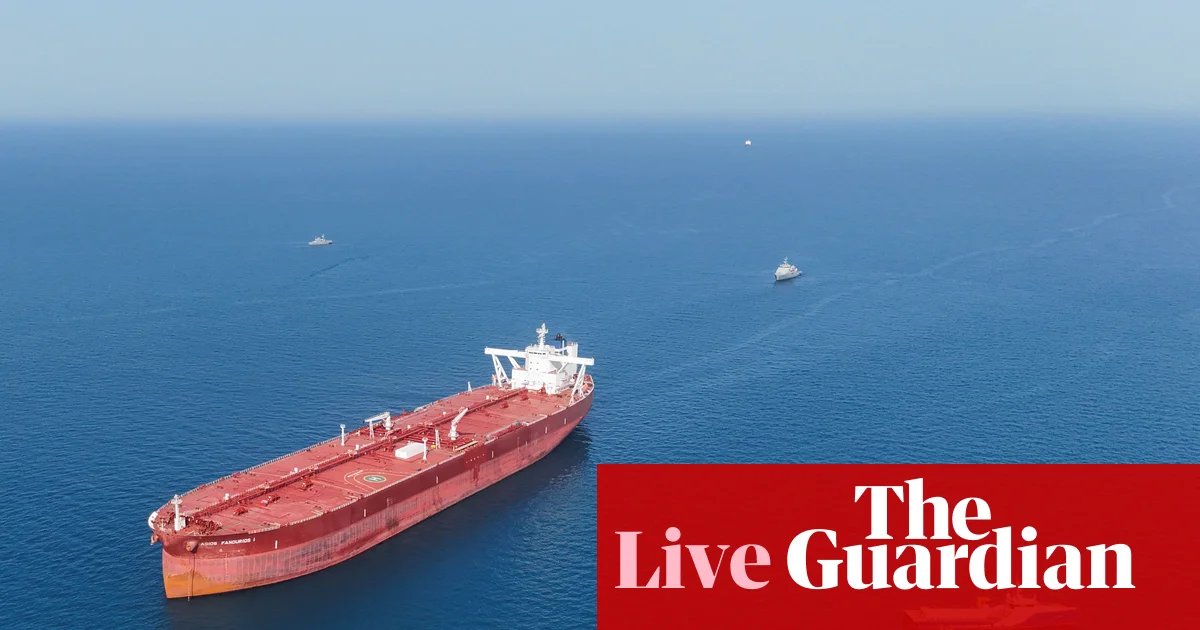
Iran says control of strait of Hormuz returns to ‘previous state’ due to US blockade
Iran announced control of the strait of Hormuz has “reverted to its previous state” over the continuing row with the US over its naval blockade of Iranian ports.
In a statement carried by Iranian media, the Iranian military’s operational command, Khatam Al-Anbiya, described the ongoing US blockade as “piracy”, saying: “For this reason, control of the strait of Hormuz has reverted to its previous state, and this strategic waterway is under the strict management and control of the armed forces.
“Until the US restores the complete freedom of navigation for vessels from an Iranian origin to a destination, and from a destination back to Iran, the situation in the strait of Hormuz will remain strictly controlled and in its previous state.”
This adds to the confusion over the status of the key waterway that carried a fifth of global oil supplies before the war. Yesterday Iran and Donald Trump announced the strait had reopened to shipping, but the US president said the US blockade “will remain in full force” until Tehran reaches a deal with Washington, including over its nuclear programme.
Key events
The Egyptian foreign minister, Badr Abdelatty, said Egypt and Pakistan were working “very hard” to bring about “a final agreement between the US and Iran”, AFP reported.
Abdelatty, who attended the Antalya Diplomacy Forum in Turkey today, said: “We hope to do so (reach an agreement) in the coming days.”
He added: “We are pushing very hard in order to move forward.”
Egypt and Turkey, as well as Pakistan and Saudi Arabia, have been closely involved in diplomatic efforts to end the war in the Middle East, with their foreign ministers meeting regularly since the war began on 28 February.
Six airports have reopened in Iran, including in the capital Tehran, according to Iranian media.
An official from the Iranian airlines association told Iran’s semi-official Tasnim news agency that airlines were preparing to operate domestic and international flights.
Two airports in Tehran have reopened, as well as airports in the cities of Mashhad, Birjand, Gorgan and Zahedan, the official said.
Iran’s civil aviation authority announced earlier today that the country’s airspace has partially reopened for international flights transiting through Iran.
The airspace had been closed since the start of the war on 28 February when the US and Israel launched attacks against Tehran.
In the US, top Senate Democrats have criticised the Trump administration for easing sanctions on Russian oil, after it issued a new waiver allowing the legal purchase of Russian oil already at sea.
The move yesterday came two days after US treasury secretary, Scott Bessent, said the Trump administration would not extend the earlier waiver that expired on 11 April.
In a joint statement, leading Senate Democrats, including Chuck Schumer of New York, Elizabeth Warren of Massachusetts, and Jeanne Shaheen of New Hampshire, condemned the “180-degree reversal” and described it as “shameful”.
They said:
This week, Putin launched the largest aerial attack of the year so far on Ukraine, killing 18 and the Administration’s response is to relax sanctions on the Kremlin yet again. What kind of message does this move send?
“Make no mistake, Putin has been one of the biggest beneficiaries of President Trump’s war against Iran, as Russia saw oil revenues nearly double in March. Enough is enough. President Trump needs to stop letting Putin play him for a fool and impose additional sanctions on Putin, who is clearly not feeling sufficient pressure from this President.
Meanwhile, a temporary ceasefire in Lebanon has continued to hold, with thousands more displaced families returning to their homes under the supervision of UN peacemakers. Here are some of latest images coming out of the country:
Iran says control of strait of Hormuz returns to ‘previous state’ due to US blockade
Iran announced control of the strait of Hormuz has “reverted to its previous state” over the continuing row with the US over its naval blockade of Iranian ports.
In a statement carried by Iranian media, the Iranian military’s operational command, Khatam Al-Anbiya, described the ongoing US blockade as “piracy”, saying: “For this reason, control of the strait of Hormuz has reverted to its previous state, and this strategic waterway is under the strict management and control of the armed forces.
“Until the US restores the complete freedom of navigation for vessels from an Iranian origin to a destination, and from a destination back to Iran, the situation in the strait of Hormuz will remain strictly controlled and in its previous state.”
This adds to the confusion over the status of the key waterway that carried a fifth of global oil supplies before the war. Yesterday Iran and Donald Trump announced the strait had reopened to shipping, but the US president said the US blockade “will remain in full force” until Tehran reaches a deal with Washington, including over its nuclear programme.
Turkey’s foreign minister, Hakan Fidan, has told the Antalya Diplomacy Forum that Israel was using security as a pretext to acquire “more land”.
“Israel is not after its own security, Israel is after more land,” he said at the annual conference on international diplomacy in the Turkish resort city of Antalya, AFP reported.
“Security is being used by the Netanyahu government as an excuse to occupy more land,” he added, referring to Israeli prime minister Benjamin Netanyahu.
“Israel has to know that the only way to live peacefully in the region … is to let the other countries enjoy their own security, and territorial integrity, and freedom, not to use power on those countries.”
Turkey, a Nato member bordering Iran, has positioned itself as a potential key mediator in the Middle East conflict, but its sometimes intense rhetoric against Israel has raised questions over its ability to remain neutral.
The Trump administration issued a waiver yesterday permitting countries to buy sanctioned Russian oil and petroleum products at sea for about a month.
The move was an extension of an earlier sanctions waiver that expired on 11 April.
Following turmoil in energy markets triggered by the Middle East conflict, the Trump administration has attempted to reduce global oil prices by allowing countries to purchase vast quantities of crude oil that had earlier been prohibited under US restrictions.
In a Telegram post this morning, the Russian presidential special envoy, Kirill Dmitriev, said the waiver “will affect over 100m barrels of oil currently in transit”. That brings the total volume affected by both waivers to 200m barrels, Reuters reported.
Separate to the Pakistani army chief’s trip to Iran (see post at 07:53), the Pakistani prime minister, Shehbaz Sharif, and foreign minister Ishaq Dar also concluded a trip to the Middle East after visiting Saudi Arabia, Qatar and Turkey for talks.
“We have just concluded the last leg of our engagements following productive and fruitful visits … where we held meaningful bilateral discussions aimed at strengthening cooperation across key areas,” Dar said on X.
Iran partially reopens airspace, aviation agency says
Iran reopened its airspace on Saturday to international flights crossing the eastern part of its territory, the country’s Civil Aviation Authority said.
“Air routes in the eastern section of the country’s airspace are open for international flights transiting through Iran,” it said, quoted by Agence France-Presse.
The aviation authority added that some airports had also reopened at 7am (0330 GMT).
More than three hours later, however, flight tracker websites still showed no international flights crossing Iran, and several avoiding its airspace by making long detours.
We have more now on the Pakistani military saying its army chief finished up a three-day visit to Iran on Saturday as part of efforts to end the Middle East war.
Field Marshal Asim Munir met Iran’s president, foreign minister, parliament speaker and the head of Iran’s military central command centre during the trip, the military statement said.
The visit showed Pakistan’s “unwavering resolve to facilitate a negotiated settlement … and to promote peace, stability and prosperity”, the military said ahead of expected US-Iran talks in Islamabad in coming days, Agence France-Presse reports.
As mentioned earlier, Munir led the Pakistani delegation to Tehran on Wednesday while working to arrange a second round of US-Iranian ceasefire talks after last weekend’s negotiations in Islamabad ended without a deal, prompting the US to impose a naval blockade of Iranian ports.
Tankers crossing strait of Hormuz – report
A convoy of tankers was seen departing the Gulf and transiting the strait of Hormuz on Saturday, vessel-tracking data showed.
The group comprised four liquefied petroleum gas carriers and several oil product and chemical tankers, with more tankers following from the Gulf, according to MarineTraffic data cited by Reuters.
Iran’s aviation agency reportedly says it has partially reopened the country’s air space.
Donald Trump also said there had been some positive news regarding Iran but declined to elaborate.
“We had some pretty good news 20 minutes ago, but it seems to be going very well in the Middle East with Iran,” he was quoted as telling reporters aboard Air Force One on Friday evening US time.
When asked what the good news was, the US president replied:
You’ll hear about. I just think it’s something that should happen. It’s something that only makes sense to happen. And I think it will. We’ll see what happens, but I think it will.”
Trump says US may ‘start dropping bombs again’ if Iran deal isn’t reached
Donald Trump said earlier in the day that he might end the ceasefire with Iran if a long-term deal to end the war wasn’t agreed by Wednesday.
Reuters quoted the US president as telling reporters aboard Air Force One:
Maybe I won’t extend it, but the blockade [on Iranian ports] is going to remain. So you have a blockade, and unfortunately we have to start dropping bombs again.”
The two-week US-Iran ceasefire expires on Wednesday and the two countries have been in indirect talks aimed at extending the truce.
The White House said midweek that the administration felt “good about the prospects of a deal”, just days after negotiations in Islamabad failed to reach a deal.
Pakistan army chief finishes Iranian visit – military
Pakistan’s army chief has concluded a three-day trip to Iran, a Pakistani military statement is being quoted as saying.
Asim Munir led a Pakistani delegation to Tehran on Wednesday while working to arrange a second round of US-Iranian ceasefire negotiations after last weekend’s in Islamabad failed to reach a deal.
Donald Trump’s “favourite field marshal” has been a key figure in mediation efforts and much rides for Munir on the success of talks, Hannah Ellis-Petersen writes here:
UK to make ‘wide-ranging’ contribution to Hormuz mission, says envoy
Britain will make “a wide-ranging military contribution” to an international mission to protect shipping in the strait of Hormuz trade waterway, the UK ambassador to the US has said.
Christian Turner’s commitment comes amid long-running concerns over the state of Britain’s armed forces and warnings of under-funding.
The multinational mission, led by the UK and France, aimed to provide reassurance to vessels using the critical waterway once the Iran conflict was over, Turner told an event in Washington.
PA Media also reports that the initiative was announced at talks in Paris involving nearly 50 countries, which Turner said signalled global resolve to prevent tolls or restrictions being imposed on the shipping route, normally used to move one fifth of the world’s oil and gas supplies.
So far about 12 nations have committed to take part in the mission.
The move has been derided by Donald Trump, who used it as a fresh opportunity to criticise Nato as “useless” after it refused to support his offensive against Iran.
Opening summary
Welcome to our live coverage of events in the Middle East.
Iran temporarily reopened the strait of Hormuz on Friday after a truce agreement between Israel and Lebanon, raising hopes for a broader peace, but Tehran warned that it would close the waterway again if the US naval blockade of Iranian ports continued.
Foreign minister Abbas Araqchi announced the global energy chokepoint was open for all commercial vessels for the remainder of the 10-day, US-brokered truce agreed on Thursday and Donald Trump said Iran’s move marked “a great and brilliant day for the world”.
But subsequent statements and clarifications from both sides left uncertainty over how quickly shipping might return to normal, and some vessels could be observed making unsuccessful attempts cross the strait on Friday before turning back.
Trump said a US blockade of ships sailing to Iranian ports would remain until “our transaction with Iran is 100% complete”.
Iran parliamentary speaker Mohammad Bagher Ghalibaf retorted by saying the Hormuz strait “will not remain open” if the US blockade continued and that Trump had made multiple false claims on Friday.
Trump later said he might end the ceasefire with Iran and “start dropping bombs again” if a long-term deal to end the war was not agreed by Wednesday, when their truce expires.
In other developments:
-
World leaders welcomed Iran’s announcement on reopening the waterway, with UN chief António Guterres calling the move “a step in the right direction” and urging “the full restoration of international navigational rights and freedoms in the Strait of Hormuz, respected by everyone.” British prime minister Keir Starmer and French president Emmanuel Macron – who on Friday co-chaired a virtual summit of about 50 countries on the issue – said the reopening must become permanent. Trump said Chinese leader Xi Jinping was “very happy” the Hormuz strait “is open and/or rapidly opening”.
-
Oil prices tumbled after Iran’s Hormuz announcement amid hopes that energy supplies could resume after nearly two months of disruption. Brent crude – the benchmark for oil traded globally – plunged below $90 a barrel, a 10% fall.
-
Trump said the US “prohibited” Israel from bombing Lebanon and that “Israel will not be bombing Lebanon any longer”. Minutes before Trump’s post on social media, Israeli prime minister Benjamin Netanyahu uploaded a video address declaring that Israel was not done yet with Hezbollah.
-
The Lebanese army claimed “a number of violations” by Israel of the ceasefire on Friday morning, as thousands of displaced families began making their way home to southern Lebanon. The fighting since 2 March has killed more than 2,100 people in Lebanon and displaced more than 1 million.
-
Trump said Iran’s enriched uranium would be brought to the US, also claiming the US and Tehran would work together to recover the uranium but denying reports that the US was considering a $20bn cash for uranium deal. “No money is changing hands,” he told Reuters.
-
A cruise ship successfully transited the strait of Hormuz on Friday, making it the first passenger vessel to make it through since the war began, according to ship tracking service MarineTraffic.
-
The Trump administration issued a waiver permitting countries to buy sanctioned Russian oil and petroleum products at sea for about a month, seeking to control soaring global energy prices.
-
The UN children’s agency said it was “outraged” after two truck drivers it contracted to deliver clean water to families in Gaza were killed by Israeli fire.
-
The world’s largest aircraft carrier, the USS Gerald R Ford, has again entered the waters of the Middle East, US defence officials said.
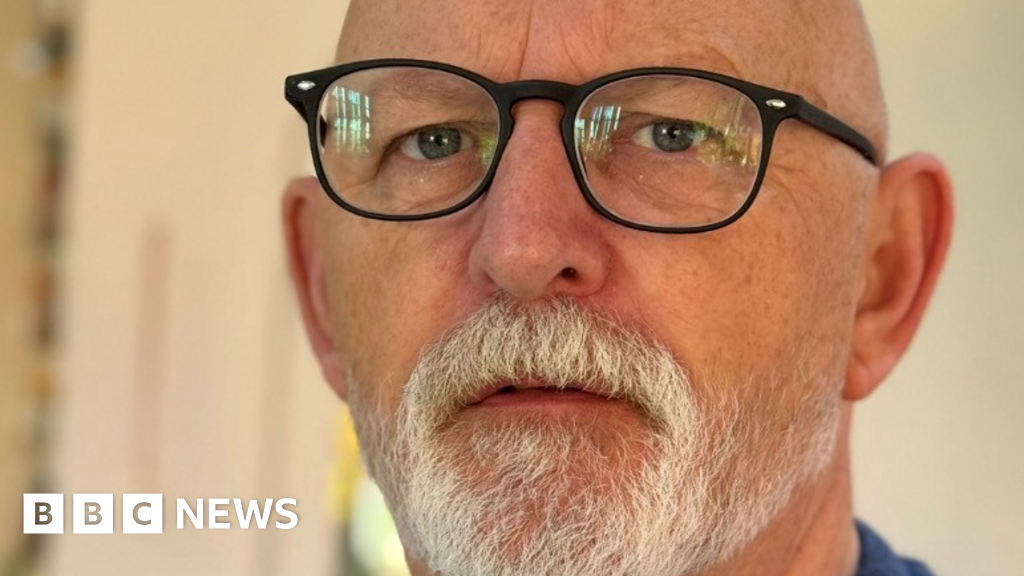
The family of Shaun Burton, say they are “devastated” by the loss.
Source link

Key events
In the opening half an hour against Cape Verde, Mikel Oyarzabal, the centre-forward, did not get a single touch.
Kyle Green gets in touch: “Your highlighting of Lalas and his absurdity is something that has prevented me from wanting to watch the coverage on Fox. While every channel has its pros and cons I just can’t.
“I’m 45 and probably the youngest of anyone who remembers him as a player instead of an opinionated insert insult here. As for the match this could be more competitive than it looks on paper Spain need a win the pressure is on them. Saudi Arabia could hold out for a draw and see what happens in their last match. “
News from the England camp, and it seems to be good news on Declan Rice.
“I’m ready and fit, raring to go. I was feeling a little bit of neural pain in my hamstring, which I was managing from after Christmas with Arsenal for a very long time. Obviously, not a lot of people would have known that. It was all behind-the-scenes stuff but it was a smart decision.
“In the end, that last 20 minutes is probably where you pick up the most, and it’s where you play a 70-minute match. But that last 20 is where you really feel your body going for it. And I think it was a smart decision because the last few days I felt really, really good.”
Alex Reid has penned today’s weekend special Football Daily.
Portugal v Uzbekistan on Tuesday enticingly pits the incredibly nice, incredibly 41-year-old-superstar-tolerant Roberto Martínez against Fabio Cannavaro, who’s won a Ballon d’Or as a player and the Chinese Super League as a coach. While the fixture following that game really does see the dream of Thomas Tuchel – in his first international job with England – taking on Queiroz, who is in charge of his ninth national side with Ghana.
The expected formations are 4-2-3-1 for Spain, and 5-3-2 for the Saudi Arabians.
The Saudi team features two Donis changes: Ali Lajami, a defender, and Nasser Al Dawsari, a midfielder, are preferred to Mohammed Abu Al Shamat and Mohamed Kanno. You may recall Salem Al Dawsari, the Saudi captain, as the man who scored the winner against Argentina.
An entertaining read, even for those of us who have just seen the clips.
In a conversation where his co-panelist is casually reminiscing about his days playing alongside Messi or exchanging shirts with Ronaldo Nazário at the World Cup, what exactly is Lalas going to talk about – coming on as a second-half substitute for Earnie Stewart in a friendly against Scotland in 1998? Helping the Kansas City Wizards finish last in the 1999 MLS Western Conference? Did Lalas enjoy an elite playing career? No. But does he do the background reading that could compensate for his relative lack of standing in a conversation with titans like Henry and Zlatan? Also no. But is he charming or funny or charismatic or otherwise magnetic on screen? Eh, no.
For the record, I once interviewed Alexi Lalas on the challenge of playing against Romario in the 1994 World Cup. He had this to say:
“He could kill you in so many different ways. If you remember from that World Cup, he scored so many types of goals. That ranged from solo adventures to an outside-of-the-right-foot half-volley off a corner kick. Romario was both the most difficult to play against and the best that I have faced.
“Roberto Baggio was doing his thing, but in terms of consistency and living up to the hype, he [Romario] was the best. As with all stars, there was a moment when the fans sit up in their seats, and that was a feeling I got with Romario. When it got close to him and the potential for his involvement in a play was there, everybody sat up in their seat. They knew that something spectacular would be happening.”
Saturday’s match reports here.
The Saudi Arabia coach, and Blackburn legend, Georgios Donis, spoke about the challenges facing his team: “Spain is not the same team when Yamal or Williams are on the bench.
“While they still have plenty of possession, they lack the individual one-on-one penetration when these two are missing. I’m not saying it’s a problem for Spain, but when those players are missing, they play in a different way. We saw this very clearly against Cape Verde.
“We are playing against one of the best teams in the world, and it’s very important that when you play against these kinds of teams, you should enjoy the experience and respect the opponent, but not too much.
“It is very hard for any team playing against Spain to have any time in possession. So what we must do is to be more in control of our movement and compact, and when the ball goes through the lines, be able to defend dynamically.
“It’s nice to see miracles in football, and we’ve seen favourites losing against underdogs. Of course, it’s great for Saudi football to have a great memory of the result against Argentina, but we aren’t drawing anything from that.
“I think we’ll feel more pressure in that [Cape Verde] game than we will against Spain.”
The Spain coach, Luis De La Fuente had this to say in his Saturday press conference: “This generation of footballers is highly competitive and really fired up… It’s going to be a completely different story,” he said at his pre-match press conference on Saturday. There is no drama or crisis. The bottom line is simply that we need to win tomorrow.”
Four changes for Spain: Lamine Yamal, Pedro Porro, Dani Olmo and Alex Baena also come into the side with Marcos Llorente, Fabian Ruiz, Ferran Torres and Gavi dropping out.
The teams – Lamine Yamal starts
Spain: Simon, Porro, Cubarsi, Laporte, Cucurella, Gonzalez, Rodri, Yamal, Olmo, Baena, Oyarzabal. Subs: Raya, Joan Garcia, Pubill, Grimaldo, Eric Garcia, Llorente, Merino, Torres, Fabian, Gavi, Pino, Williams, Zubimendi, Munoz, Iglesias.
Saudi Arabia: Al Owais, Abdulhamid, Tambakti, Lajami, Al Amri, Al Harbi, Nasser Al Dawsari, Al Khaibari, Al Juwayr, Al Buraikan, Salem Al Dawsari. Subs: Al Aqidi, Al Kassar, Majrashi, Yahya, Al Shehri, Al Boushal, Kadesh, Al Johani, Al Ghannam, Al Hajji, Al Hamdan, Mandash, Kanno, Thakri, Abu Al Shamat.
Referee: Raphael Claus (Brazil)
Perhaps one of the Saudi -players can write themselves into this high-grade selection?
Perhaps it can be their goalkeeper.
Madrid screening of Spain v Saudi Arabia cancelled due to heat
The public screening of Spain’s World Cup match against Saudi Arabia in Madrid on Sunday has been cancelled because of extreme heat forecast for the Spanish capital, officials said.
The match, due to kick off at 6pm local time on Sunday, had been scheduled to be shown on a giant screen installed by the Spanish football federation (RFEF) at a fan zone in Plaza de Colón in central Madrid.
Madrid city council and the federation decided to cancel the screening after national weather agency AEMET issued an orange heat warning – the second-highest level – for the Madrid region, with temperatures forecast to reach 40C.
“The decision has been taken with the aim of protecting the health of attendees, event staff and support services involved in the event,” Madrid city hall said in a statement, apologising for any inconvenience.
Officials urged supporters to watch the match indoors in air-conditioned spaces and avoid prolonged exposure to the heat.
Large parts of Spain are experiencing unusually high temperatures for June as a mass of hot air from North Africa moves across the Iberian Peninsula.
A total of 13 of Spain’s 17 regions are on orange alert for heat on Sunday, while the northern Basque Country bordering France is on red alert, the highest level.
Authorities advised residents and visitors to take precautions during the heatwave, including drinking water regularly, staying in cool environments, limiting outdoor physical activity during the hottest hours of the day and taking extra care of vulnerable people. AFP
Can Saudi Arabia repeat the magic of 2022?
Argentina arrived in Qatar on a 36-game unbeaten run. When Lionel Messi opened the scoring from the penalty spot after 10 minutes, a comfortable afternoon seemed in the offing. Saleh al-Shehri and Salem al-Dawsari had other ideas, Argentina had three goals disallowed for offside in the space of 13 minutes and the greatest comeback in Saudi Arabia football history was made. Argentina went on to lift the trophy, while defeats to Poland and Mexico meant the Saudis did not reach the knock-out stage.
Unai Simon over David Raya is a controversial choice for De la Fuentes. The Arsenal keeper could lay claim to being Europe’s best this season.
“Those at the Champions League final had a few more days, so I got there on the Wednesday night,” Raya says. “I arrived a bit before Fabián [Ruiz]. I was saying hello to some of the others in reception when he arrived. I went to say congratulations; that was almost the first thing I did. I couldn’t really talk [to him] after the final; I just didn’t have it in me. The next day we talked about the game properly. Just two mates chatting … I was happy for him that he could lift the trophy for a second time.”
A high pressure game for the European champions, as Sid Lowe reports.
“If we had scored one, the game would have changed,” Martín Zubimendi said. Immediately after the game, De la Fuente had offered a simple analysis: when the ball doesn’t want to go in it doesn’t want to go in, he insisted. Spain had racked up 27 shots, after all. Ferran Torres had hit the bar and seen another clear opportunity saved. Vozinha, the 40-year-old goalkeeper who stopped that, saved six more and was named the man of the match. “There’s nothing to reproach the team for,” Rodri said. “We generated chances but couldn’t put it away; the good thing is they created almost nothing.”
We wait to see what role Lamine Yamal will play today. His coach would surely like to be able to use him.
The worst mistake we could make would be to compare him to anyone. He is the midst of a process. He has exceptional footballing maturity and lives it all with total naturalness. He has great serenity and strength. We have to let him follow his path but those players who have something different are ready for that. They’re geniuses, like Dalí [who] can paint a picture, or Michelangelo. They’re different. What is exceptional to us, isn’t to them. In those extremes, they feel comfortable. Why? Because they are different. What we think is exceptional, they consider normal.
Preamble
Spain’s campaign did not get off to a flying start, and Luis de la Fuentes may wake up in the night to visions of Cape Verde’s Vozinha. He will have Georgia on his mind ever since Monday. Saudi Arabia are no pushovers and gave Uruguay a scare in their opening match. Memories of downing Argentina four years ago still abound, and so Spain might beware. They can ill afford to go into the final game with Uruguay at a disadvantage. All eyes on Lamine Yamal, whose fitness situation remains opaque, though Spain need their other forwards to come to the party.
Kick-off 5pm UK, 1pm ET, 2am AEST. Join me.

A topless man can be seen driving erratically in Edinburgh before abandoning his car and attacking a black man and a delivery rider.
Source link



-

 Business & Technology3 weeks ago
HSBC UK & Visa test AI shopping with live payments
-

 Business & Technology4 weeks ago
Mouser warns against viral hacks to cool overheating phones
-

 Business & Technology3 weeks ago
Valarian lands USD $50 million backing for sovereign AI
-

 Business & Technology4 weeks ago
Kane tops England influencer rankings after Mexico win
-
 Business & Technology4 weeks ago
SNP & Palantir launch AI tools for SAP transformations
-
 Oxford News4 weeks ago
DWP now checking bank accounts for Universal Credit and Pension Credit
-

 Oxford Events4 weeks ago
Henley Festival 2026 highlights: Five nights of unforgettable performances and festival moments
-
 Business & Technology4 weeks ago
Ode launches free AI voice service for poem recommendations