
UK News
Marmite maker Unilever agrees $44.8bn deal to combine food arm with McCormick | Unilever

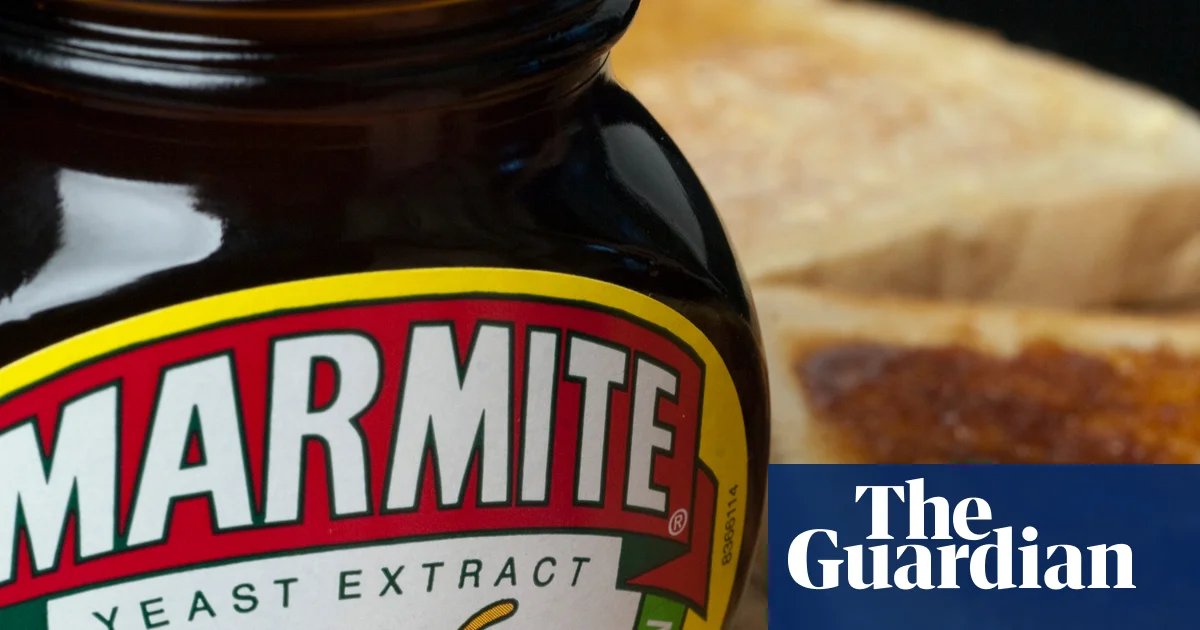
Unilever has agreed to combine its food business with US-based McCormick in a $44.8bn deal that will give the Marmite-to-Hellmann’s mayonnaise owner majority control of a food empire.
The Anglo-Dutch company will control 65% of the new spin-off, which will combine brands such as Knorr and Pot Noodle with McCormick’s condiments and spices including French’s mustard, Old Bay seasoning and Cholula hot sauce.
However, the combined company will be called McCormick and led by its executives, with senior management representation from the ranks of Unilever’s food business.
Under the agreement, McCormick will pay London-listed Unilever $15.7bn in cash and the equivalent of $29.1bn in shares for a stake in almost all of the Anglo-Dutch company’s food arm.
After the combination, which is forecast to result in $600m (£453m) of annual cost savings by the end of the third year, McCormick will retain its global headquarters in the US and New York stock exchange listing, with an international headquarters at the existing Unilever Foods base in the Netherlands.
Unilever’s food business employs research, development and marketing staff in the UK and has factories making Pot Noodle in Crumlin, Wales, and Hellman’s, Marmite and Colman’s mustard in Burton-on-Trent.
The companies said savings would come from changes in manufacturing, distribution and on procurement of supplies but said they were yet to confirm how many jobs might be affected and where. “It is about accelerating growth first,” said Fernando Fernández, Unilever’s chief executive.
Brendan Foley, the chief executive of McCormick, said the company had “a strong track record for retaining talent in transactions” and wanted the “talented Unilever team” to be part of running the business.
The remainder of Unilever – which last year hived off its ice-cream division, the home of Ben & Jerry’s, Magnum and Wall’s – will focus on beauty, personal care and home products.
“We are unlocking trapped value through a growth-led separation of foods, creating a scaled, global flavour powerhouse,” said Fernández. “Our retained ownership stake reflects our conviction in the strength of the combined company and its future prospects.”
Analysts at Jefferies said the deal risked reducing global economies of scale as Unilever has historically argued that the combination of food, health and beauty was “critical for … efficiency”. Jefferies said in a note that the deal could prompt the company to seek new acquisitions in health and beauty
The new company is planning a secondary stock listing in Europe to “reflect the global nature of Unilever’s current shareholder base”.
Unilever said that parts of its food business, including its operation in India and the Horlicks and Boost brands, would not be included in the new combined company, which has total annual revenues of about $20bn.
“Integrating two global organisations of this scale requires disciplined execution,” said Foley . “We are confident that our detailed integration roadmap, experienced teams from McCormick and Unilever, external advisers and our strong partnership will enable us to capture the full value of this opportunity”.
The cash-and-stock deal is being undertaken through a Reverse Morris Trust. This means it would be tax-free for US federal income tax for Unilever and its shareholders.
Shares in Unilever dived by almost 7% after the announcement of the deal, while McCormick fell by 5.6% in the US. Unilever, which is valued at about £100bn, has implemented a three-month global hiring freeze amid the impact of the widening conflict in the Middle East.
The deal marks the end of nearly a century of Unilever’s focus on selling food products, but means the maker of Dove soap and Tresemmé shampoo is now repositioned to compete directly with large household and personal care companies including L’Oréal, Beiersdorf and Estée Lauder.
“For Unilever, this transaction is another decisive step in sharpening our portfolio and accelerating our strategy towards high-growth categories,” said Fernández.
In 2017, the company sold off its spreads business, which included brands such as Flora and I Can’t Believe It’s Not Butter!. Most of its tea business, including Lipton, PG Tips and Tazo, was sold in 2022, before last year’s listing of the ice-cream business.
Unilever has also disposed of brands including The Vegetarian Butcher and the healthy snacking brand Graze.
UK News
Manchester City v Liverpool kicks off FA Cup quarter-finals, Fernández latest and more – matchday live | FA Cup

Key events
Billy Munday caught the return of Roy Hodgson to Bristol City after 44 years of absence.
Football has changed in the two years since Hodgson left Crystal Palace, including “the cult of the long throw”, with Charlton’s Harry Clarke launching a ball into the box within moments of kick-off here. “I only came across that in the 80s when we played Wimbledon,” he said.
Per Reuters, it’s a big day in Miami for MLS club Inter Miami.
Inter Miami will open the home Lionel Messi helped build when they host Austin FC on Saturday night.
The match will be the first at the Herons’ permanent home, the 26,700-seat Nu Stadium, constructed slightly northwest of downtown Miami.
While approval for construction came before Messi joined Miami (3-1-1, 10 points) and MLS in the summer of 2023, it was always billed as a project meant to attract the game’s biggest stars. And now the man considered the game’s greatest living player will lead his team there.
“Honestly, it’s spectacular getting to see the new home,” Messi said this week in Spanish. “The new stadium turned out incredible, and it’s really special to be able to experience it. We’d been eager to play there, to make our debut, to finally be competing there. And now the moment has arrived.“
We didn’t see Harry Kane this week for England, but Barney Ronay has been keeping an eye on the great man.
The Premier League does feel a distance away, doesn’t it? Perhaps the FA Cup and European action in midweek can salve our thirst for now.
don’t recall a mid-season period like this with almost 3 full weeks between PL matches, and none over an easter weekend. This afternoon’s early match should be good, you’d guess that neither want to go to penalties, but whether as has been suggested the next 5 or so matches for Liverpool decide Scot’s future is debatable ie he’s either staying or going, nobody knows which just yet but if he goes then who is in the frame to replace him…and what does his replacement do if he ain’t comfortable with Liverpool’s set up re their new and rather expensive recent signings
said before the start of this season that I’d take top 4 and a decent domestic cup run, still holding to that but actually and given how they’re played, and how they’ve not played too often, this season maybe events 4 isn’t realistic…Liverpool can be expected to concede so yet again they may have to outscore their opponents and that issue, amongst a few, needs addressing before next season

The Women’s FA Cup is being played, too. Suzanne Wrack runs the rule over the ties.
-
Arsenal v Brighton, Sunday 1pm
-
Charlton v Liverpool, Sunday 2.30pm
-
Chelsea v Tottenham, Monday 1.30pm
-
Birmingham v Manchester City, Monday 5pm
Arsenal will come up against a goalkeeper on loan from Bayern Munich when they play Southampton in the cup later today. Ben Fisher spoke to Daniel Peretz.
Peretz was inspired by the Germany goalkeeper as a boy – he had a giant photo of the 2014 World Cup-winner on his bedroom wall – but in Bavaria Neuer, who turned 40 last week, morphed into a mentor. “[It went] from admiring the players, to them becoming my friends and my teammates.
“I watched every single save [Neuer] made and then he was with me day by day and he became a friend,” Peretz says, recalling the emotions of their first encounter. “I was sweating all over, so nervous that I could not speak. I had goosebumps, everything.”
More Liverpool, more Slot. More Salah.
Slot, however, insisted he would not have handled the situation with the club legend any differently. He explained: “Yes [he is happy with how he managed it]. I look back at this season thinking that I made a few decisions that could have been better, but I’m not talking about this specific thing with Mo. I don’t regret many things I did during our one-and-a-half years together, or just longer.
Ed Aarons takes up genealogy in this deep dive on the Arsenal family.
George Male was a key figure in Arsenal’s dominant side of the 1930s, helping them win five league titles in eight seasons. Known for his consistency and leadership in defence, he remains one of the club’s historic figures and is pictured in two places outside the Emirates Stadium. Male went on to become a long-serving youth-team coach and then a scout at Arsenal after retiring, and is remembered as the man who discovered Charlie George, who was part of the famous Double-winning team of 1970-71.
That Easter double-header got off to a great start for Frank Lampard’s Coventry. And: Millwall in the Premier League? It may well be happening.
Mikel Arteta wasn’t holding back in his press conference, either. This on the Carabao Cup.
During the first part, it’s like a ball of poison that you have in your tummy,” said Arteta when asked whether he had spent the international break stewing over the final.
“Take that out as quick as possible. How can I use that to make myself better, to make the team better? There is a part that I think has to be there and I think this is not going to go in the next 30 years. Because when you have the opportunity to win a final in Wembley, you have to get it done. So that has to stay there.
Talking of players linked with Madrid and City v Liverpool, Rodrí and Guardiola from Friday.
As mentioned in the preamble, today’s is a huge game for Liverpool. Andy Hunter has run the rule over the Arne Slot regime.
Let’s start with that Chelsea story. Ben Bloom was at the Liam Rosenior press conference while Jacob Steinberg has analysed the latest Cobham crisis.
Preamble
Good morning, football. Happy Easter, you happy eaters.
We’re up for the FA Cup, and it’s the last eight, with a huge game between Manchester City and Liverpool starting the weekend’s quartet of matches. Perhaps that’s not as amped up as it might have been, with both teams having tough seasons by contrast to previous successes but: City won the Carabao Cup in style and Liverpool look to rescue something from their season.
So, the games today are:
-
Manchester City v Liverpool, 12.45pm
-
Chelsea v Port Vale, 5.15pm
-
Southampton v Arsenal, 8pm
With the EFL being played on Good Friday and Easter Monday, there’s a lack of action in England’s 92. But: there’s action in Scotland and across Europe, and a series of stories to look at, including L’affaire Fernandez at Chelsea.
Join me.

It launched LimePrime at the end of February – a monthly subscription giving riders in Salford, Nottingham, London, Oxford and Milton Keynes a fixed price for the first 20 minutes of their journey. After that, riders are charged per minute at a discounted rate.
UK News
Claim sooner rather than later, experts urge, after £7.5bn car loan compensation scheme launched | Motor finance
Complain now to be at the front of the queue. That is the message from the City regulator and the consumer champion Martin Lewis as a scheme gets under way to pay out about £7.5bn in total to millions of motorists mis-sold car loans.
More information emerged this week about how much money the different categories of people might get and how it will all work after Monday’s announcement that an industry-wide compensation scheme for victims of the UK’s car finance scandal is definitely going ahead.
Here are five main takeaways:
Technically it’s two schemes. The plan was always for a single compensation scheme, but this week it emerged that the Financial Conduct Authority (FCA), has set up two.
Scheme 1 covers older motor finance agreements, those taken out between 6 April 2007 and 31 March 2014; scheme 2 is for more recent ones, those taken out between 1 April 2014 and 1 November 2024.
As they are broadly similar, the FCA is generally referring to them collectively as “the scheme”.
A very brief recap of the story so far: millions of people were treated unfairly when they took out motor finance to buy a new or secondhand vehicle and ended up paying more than they should have done.
It is lenders (typically banks) who are on the hook for the compensation.
The scheme, which will be free to use, covers motor finance taken out over a 17-year period during which commission was paid by the lender to whoever sold the loan – usually the dealer.
You will only get a payout if important information was not properly disclosed to you.
The vast majority of new cars and an increasing number of used vehicles are bought with motor finance – typically either a personal contract purchase (PCP) plan or a hire purchase agreement.
The average payout has gone up. The FCA said in October last year it expected eligible consumers to receive an average of £695 an agreement. But tweaks mean this has increased to £829.
Most people will receive the average of the estimated financial disadvantage and the commission paid, plus interest. The formula for calculating loss depends on which scheme you are in.
In scheme 1, the average for each agreement is £734; in scheme 2, it is £881.
How much those getting a payout will receive also depends on which type of case theirs is – there are three. By far the biggest category is deals that included a “discretionary commission arrangement” (DCA) – a now-banned type of finance which allowed the dealer or broker to adjust (ie, increase) the interest rate the customer would pay to get a higher commission.
There are two other main types of case. One is where there was an arrangement that gave a lender exclusivity or ‘first dibs’ when it came to providing the credit to the individual (these are known as “contractual tie” cases).
The other involves unfairly high commission (where it was at least 39% of the total cost of the credit and 10% of the amount borrowed).
FCA documents suggest that for the DCA people, the average payout will be £810. For the second category named above, it’s £807. For the third category, involving an unfairly high commission, it’s quite a bit higher: £1,203.
Interest will be paid on compensation, based on the annual average Bank of England base rate per year plus 1%. The minimum interest people will receive is 3% in any year.
The FCA says consumers should not be put into a better position financially than they would have been in had they been treated fairly. This means that in about one in three cases, compensation will be capped (details of the formula being used are available online).
Fewer people will get compensation. The FCA previously estimated 14.2m loan agreements would be considered unfair, but on Monday it cut this to 12.1m. “We have tightened eligibility so only those treated unfairly receive compensation,” says the regulator. For example, agreements involving “minimal” commission (less than £150 or less than £120 depending on the date) will be excluded from redress.
Also, where a lender can prove there were visible links between the finance and the car manufacturer/dealer, a contractual tie alone will not trigger compensation. In other words (this is a made-up example), if you used a Volkswagen dealer and the car loan you signed up for was branded something like “Volkswagen Finance”.
Payouts could begin immediately. In theory, at least. Nikhil Rathi, the chief executive of the FCA has said : “There’s nothing stopping lenders moving tomorrow now they’ve seen the rules.”
Technically, the scheme has launched, but there will now be a short “implementation period” so lenders can get their ducks in a row. This will be up to 30 June this year for loans taken out after 1 April 2014, and up to 31 August this year for the older agreements.
The FCA says millions of people will receive compensation this year, but the complexities of the scheme mean it is hard to say exactly how many will get their cash this year and how many will have to wait until next year or the very start of 2028.
Get your complaint in now. Lenders will have three months from the end of the relevant implementation period to let people who have complained know whether they are owed compensation and how much.
The FCA says: “People who have already complained, or who complain before the end of the relevant implementation period, will be compensated sooner.”
Lewis says: “The only way to know if you were mis-sold is to complain. To know if you’ve got a complaint, you have to complain.”
The FCA says there is no need to use a claims management company (CMC) or law firm as people can complain now for free using a template letter on its website.
Lewis’s MoneySavingExpert website also has a free complaint tool and template letter. “You just put your details in, it formulates an email for you and tells you where to send it. You check it and you press send,” he says.
If you are unsure about who your car finance provider was, the FCA website includes details of a few ways that you can check.
Meanwhile, while the credit reference agency Equifax’s myEquifax app includes a free car finance checker tool to help track down and access past loan records.
Lenders will only contact people who have not complained if they are likely to be owed money. They have six months from the end of the relevant period to do so.
Anyone not contacted has until 31 August 2027 to make a claim.


Manchester City v Liverpool kicks off FA Cup quarter-finals, Fernández latest and more – matchday live | FA Cup

Oxford United should have beaten Hull City, Bloomfield says

Didcot event shines spotlight on South Oxfordshire culture
-

 Crime & Safety2 weeks ago
Oxford: ‘Next generation’ LimeBikes in city from today
-

 Jobs & Careers3 weeks ago
Why Join Oxford | Oxford University Jobs
-

 Jobs & Careers3 weeks ago
Explore our Careers
-

 Oxford Events3 weeks ago
Oxford News and Events, What’s on in Oxford, Exhibitions
-

 Jobs & Careers3 weeks ago
Internal Job Board for University vacancies
-

 Student Life3 weeks ago
The independent cinema battling Oriel College to stay open
-

 Oxford Events3 weeks ago
Michelin Guide Oxfordshire Restaurants – The Oxford Magazine
-

 Crime & Safety3 weeks ago
Crash partially blocks A40 and causes severe Oxfordshire traffic