
UK News
Iran didn’t have a nuclear weapon before this war. But you can see why it would develop one now | Simon Tisdall


With every bomb dropped, ship seized and blood-curdling threat of annihilation, Donald Trump increases Iran’s incentive to reject his “grand bargain” peace deal and sprint instead to acquire nuclear weapons for future self-defence. Justifying his declaration of war on 28 February, Trump claimed that Iran – and primarily its nuclear programme – posed an “imminent threat”. But Iran does not possess nukes. The US and Israel do.
US intelligence chiefs and UN inspectors agree there’s no firm evidence that the regime, while developing its technical capabilities and keeping political options open, has built, or ever tried to build, a nuclear weapon since at least 2003, when a covert scheme was exposed. But after Trump’s second unprovoked attack in a year, and his vow to bomb Iranian civilisation back to the “stone ages”, that is very likely to change.
It’s increasingly difficult to argue with the view, attributed to the hardline Islamic Revolutionary Guard Corps generals now running Iran, that nukes are the only sure way of deterring future onslaughts. The US and Israel have twice struck without warning, in the middle of diplomatic negotiations. Even if a peace deal were agreed, Iranians know the ever-vengeful Trump and Benjamin Netanyahu cannot be trusted. The US-Israel axis could sustain its aggression for years to come.
Trump’s focus on “obliterating” Iran’s nuclear programme is as woefully wide of the mark as any misdirected US Tomahawk cruise missile. Indigenous nuclear knowhow cannot be easily bombed away, no matter how many scientists Israel kills. And in any case, Tehran does not necessarily need to reconstitute the capacity and skills required to build nuclear weapons at home. It may be able to buy them off the shelf abroad.
North Korea, a longtime ally, would be the most likely source, while help from Vladimir Putin’s Russia (already collaborating on nuclear energy projects) cannot be entirely ruled out. Kim Jong-un, Pyongyang’s dictator, has steered clear of the war so far. But just as he covertly sent troops to assist Putin in Ukraine, he could yet secretly step in to arm Tehran. On nuclear proliferation, Kim has form.
Iran has joined a growing number of non-nuclear armed countries that have suffered grievously at the hands of domineering nuclear powers. In 1994, Ukraine surrendered its nukes in return for what turned out, when Russia first attacked it in 2014, to be valueless western security assurances. Iraq’s regime, lacking a nuclear deterrent, succumbed to US invasion in 2003. Would Trump have attacked Venezuela in January had it been nuclear-armed?
If the acknowledged nuclear weapons states honoured their 1968 Nuclear Non-Proliferation treaty (NPT) obligation to reduce and ultimately eliminate their nukes, others might feel less need of a nuclear shield. But they persistently break their word. Increasingly, the US and Russia abuse their dominant position – abuses that the NPT was specifically designed to prevent. Israel (unlike Iran) never signed the treaty.
Trump’s alarmingly irrational, impulsive and threatening behaviour creates uncertainty and insecurity by itself. But his militarism also fuels global nuclear weapons proliferation. The US is spending billions modernising its arsenal. Russia, North Korea, France and the UK are doing likewise, while China is rapidly, hugely expanding its forces. Yet Trump has refused to renew a series of cold war arms control treaties.
He trashed Barack Obama’s European-backed 2015 nuclear deal with Iran, a foolish decision that has led directly to today’s confrontation. On the first day of the war, Iran’s supreme leader, Ayatollah Ali Khamenei, was targeted and killed. His binding fatwa expressly forbidding development of an Iranian bomb probably died with him.
Regarding Iran, Trump and Netanyahu labour under two fundamental misconceptions. Even if some form of cold peace is eventually established, Iranians will neither forgive nor forget atrocities such as the Minab school massacre, the wanton destruction visited on their country, and Washington’s diplomatic betrayals – whether or not the current regime remains in power. The “Iran threat” will persist. Second, Tehran still has options over which the US and Israel, despite military superiority, have no control.
Sanctioned, ostracised North Korea offers a possible template for Tehran. The Pyongyang regime originally developed its own atomic weapons using hidden market technology obtained from Pakistan. The Kim dynasty later made nuclear-related transfers to Bashar al-Assad’s Syria. It currently sells ballistic missiles to, among others, Iran and Russia.
It’s speculation at this point, but who’s to say Kim will not provide Iran with complete nuclear warheads? Or if that is too risky, he could supply highly enriched uranium, warhead designs and expertise in return for oil, suggested Mark Fitzpatrick, an International Institute for Strategic Studies non-proliferation expert and former senior US diplomat. If Kim did so, who would know and who could stop him?
Kim has grown increasingly emboldened since the failure of Trump’s embarrassing first-term charm offensive. Ignoring White House signals about renewed contacts when Trump visits Beijing next month, the North Korean leader ostentatiously test-fires new missiles, taunts South Korea and Japan, and stresses closer ties with China, Russia and Belarus. Speaking in March, he said US aggression in Iran “proved” North Korea was right to develop a nuclear deterrent. Tehran has surely heard that message.
If Kim is wrong, then why exactly does Trump treat North Korea so differently from Iran? After all, both countries menace their neighbours and embrace anti-western alliances, both are authoritarian regimes oppressing their citizens, and the North Korean nuclear threat is demonstrably genuine. The reason for the double standard seems obvious. Even Trump is not stupid enough to attack a nuclear-armed state.
The way Trump’s and Putin’s bellicose behaviour is legitimising arguments favouring the possession of nuclear weapons is prospectively disastrous for global non-proliferation efforts. If Iran does seek to acquire nukes to defend itself, will Saudi Arabia, Egypt and Turkey follow? And that’s just in the Middle East. Like Ukraine, the Iran war also provides cover and precedent for other nuclear weapons states if they, too, decide to attack non-nuclear-armed countries. Might China follow suit in Taiwan? Given Iran’s fate, should Taipei rush to acquire nukes? Should Japan and South Korea?
Little wonder that an air of gloom hangs over the five-yearly NPT review conference, which opens in New York on Monday. Its challenges include ubiquitous nuclear weapons modernisation and expansion programmes; the collapse of arms control diplomacy; resumed nuclear testing; and what the Arms Control Association calls “rising nuclear dangers” and proliferation risks. “The idea of ‘global zero’, or a world without nuclear weapons, is seen to be steadily eroding,” a House of Commons Library research briefing warned this month.
This is no made-up story with which to scare the children. It’s real. Since invading Ukraine, Russia has repeatedly threatened to use nuclear weapons. So far, fortunately, it has not. In recent weeks, as Trump flailed in Iran, there was a flurry of reports, later denied, that the US, too, might resort to nukes. Sabre-rattling or not, such threats are becoming way too familiar. If a just and reasonable negotiated path can be found out of the present morass, Iran and similarly vulnerable middle-ranking countries may be persuaded to continue to forego nuclear weapons. But if lawless aggression by domineering “might is right” nuclear-armed powers spreads unchecked, the old cold war nightmare of mutually assured destruction will become today’s waking reality.

Key events

Greg Wood
Gosden and O’Brien rivalry crackles in Gold Cup
The rivalry between top trainers John Gosden and Aidan O’Brien is a long way short of a feud – “Aidan and I are big rivals”, Gosden said on Wednesday, “but we get on and we tease each other a lot. There’s no harm in that and it’s a little bit of banter.”
But it still makes for an interesting undercurrent as Gosden’s Trawlerman, bidding to become only the second eight-year-old winner since 1900, takes on the up-and-coming Scandinavia, last year’s St Leger winner, in the feature event of the week.
Gosden’s “teasing” has included frequent references to the big teams of runners that Ballydoyle sends to many Group Ones, and when O’Brien suggested last autumn that he would love to see Ombudsman, the winner of Wednesday’s Prince of Wales’s Stakes, line up for the Irish Champion Stakes, Gosden responded that his stable star would not “appreciate running against multiple entries from one stable on a track with a short straight.”
The possibility that Ballydoyle was employing “team tactics” with its runners was also highlighted after Tuesday’s St James’s Palace Stakes, when Christophe Soumillon, on the O’Brien second-string, Puerto Rico, picked up an eight-day ban for riding “in a manner to benefit” his stable companion and second-favourite, Gstaad.
There is little chance of a dust-up over tactics in the Gold Cup, however, as Scandinavia is O’Brien’s only runner in the race and Trawlerman is likely to make his own running. The regular to-and-fro between the two trainers, though, will add extra spice to the closing stages if Trawlerman and Scandinavia are duking it out in the final furlong.
Greg Wood
6.10 BUCKINGHAM PALACE STAKES HANDICAP preview
The money is all for runners in high-numbered stalls in the finale, and that’s hardly surprising given the way that races on the straight course have been unfolding this week. Jack Channon’s Mezcala, in stall 30, is currently a narrow favourite and remains feasibly handicapped dropping back to seven furlongs from a mile, while Cosi Bello (26) was a bit better than his narrow winning margin might imply at Haydock last time and also has form in a big field on this course. Elerak, highest of all in 31, is also attracting support to give Billy Loughnane another winner at the meeting, while Blue Brother, unraced since suffering all manner of bad luck when fancied for the Hunt Cup here last summer, is another fascinating contender from stall 28.
Timeform top-rated: Dance In The Storm
SELECTION: BLUE BROTHER
Greg Wood
5.35 HAMPTON COURT STAKES preview
Not the loftiest event on the Royal Ascot schedule by any means, but still an interesting contest for three-year-olds that are just below the top rung, for the moment at least, and it occasionally highlights a colt on the way to better things. Endorsement, the Aidan O’Brien-trained favourite, was still engaged in the Derby until quite late in the day, and drops back to 10 furlongs having skated up in a Listed race over a mile-and-a-half just a fortnight ago. Maho Bay too was seen as a possible for a run in the Derby until blotting his copy book by finishing fourth behind Maltese Cross in the Lingfield Derby Trial, but the winner there went on to finish second at Epsom and so the form may well be better than it seems. The list of Derby trial disappointments also includes Morshdi, fifth in the Dante, while Oxagon, the Craven Stakes winner in April, has failed to build on that in two runs since, though the latest was admittedly a Classic as he finished 12th of 16 in the French Derby at Chantilly. Generic, meanwhile, was seven lengths behind Constitution River – surely the best three-year-old colt seen out this year – in the Dee Stakes at Chester, having only started his racing career in March, and will also be bang there on that form with only marginal improvement.
Timeform top-rated: Endorsement.
SELECTION: GENERIC
Greg Wood
4.50 BRITANNIA STAKES preview
This straight-mile handicap for three-year-olds is, for me at least, the toughest Royal Ascot test of them all from a betting point of view – looking down the list of previous winners, I’m fairly sure that Perotto, in 2021, is the only winner I’ve had this century – and this year’s renewal looks as competitive as always. It looks as though I’ve managed to find the favourite, though, as David Marnane’s Jamestown has attracted plenty of support this morning, and has both the high draw and the run style that you need to be looking for on the straight course this week. A list of dangerous opponents is effectively everything else – even the 80-1 shot Winding Stream is within 7lb of the top-rated horse on Timeform’s numbers and was racing in Group company last time – but We’re Goosers is sure to be popular as a result of his nine-and-a-half length win last time, and so too Organise, from the John & Thady Gosden yard, who was touched off in a well-run race last time and sports first-time cheekpieces today. Moonfall, an eye-catcher at Chester in May, and Exclusive Code, the winner of a big-field maiden at Newbury, are also on the short-list, but frankly, your guess is as good as mine.
Timeform top-rated: We’re Goosers.
SELECTION: JAMESTOWN
An inaugural “Royal Ascot colour of the year” has been introduced this year, and on Gold Cup day guests were encouraged to wear their best “bright tomato” shade as part of the dress code. This chap got the memo.
Oddschecker market movers
Greg Wood
4.15 GOLD CUP preview
The staying division is currently missing a truly “public” horse like the three-time winner, Stradivarius, but Trawlerman, last year’s winner, will be a stern test for the posse of four-year-olds in this year’s Gold Cup field that could conceivably run up a sequence over the next few years if all goes well. The list is headed by Aidan O’Brien’s Scandinavia, last year’s St Leger winner, who arrives in Berkshire looking for a sixth straight success, while Rahiebb and Carmers, second and fifth at Doncaster, are also looking to establish themselves as Cup horses with a win in the most prestigious staying event of them all. Other live runners include Al Riffa, last season’s Irish St Leger winner, for the Joseph O’Brien stable, and George Scott’s Caballo De Mar, a Group One winner over two miles in France last time out. My idea of the best bet in the race, though, is Carmers, on the basis that Trawlerman missed his intended prep race in May and may be slightly short of his best, while Paddy Twomey’s runner – who beat both Scandinavia and Rahiebb in the Queen’s Vase here last summer – has as much chance as either of his fellow four-year-olds of finding the necessary improvement stepping up to two-and-a-half miles.
Timeform top-rated: Trawlerman
SELECTION: CARMERS
Royal Ascot Procession List
1st Carriage
The King
The Queen
The Earl of Snowdon
Ms Isabelle de la Bruyère
2nd Carriage
The Princess Royal
Vice Admiral Sir Tim Laurence
The Duke of Edinburgh
The Duchess of Edinburgh
3rd Carriage
Princess Zahra Aga Khan
HH Sheikh Hamad bin Abdullah al-Thani
Mrs Zara Tindall
Mr Willie Mullins
4th Carriage
Lord Cavendish
Lady Cavendish
Mr Stanley Tucci
Ms Felicity Blunt
Stanley Tucci is in the carriages today. An acclaimed actor, of course, he’s also well known for his cooking so perhaps he helped with luncheon at Windsor Castle to which the carriage guests are invited before their trip down the track. Now you know why the racing doesn’t start till 2.30pm!
Andrew is innocent!
I know you would miss the regular royal spot ahead of the Royal Procession list announcement at noon if we didn’t share some and today’s concerns Lady Victoria Hervey who has arrived at the races today. For those unawarer she’s a British socialite and former model who dated Prince Andrew (now Andrew Mountbatten-Windsor) briefly in 1999. Throughout the fallout from his associations with Jeffrey Epstein, she has remained one of the prince’s most vocal defenders. In an interview with LBC in February, not only did she admit to being named in the Epstein files herself, but branded anyone who wasn’t as a “loser”. With friends like this …
Greg Wood
3.40 RIBBLESDALE STAKES preview
Sound the stat klaxon, it’s time for the one about Oaks runners in the Ribblesdale as Legacy Link attempts to win Ascot’s Group Two for three-year-old fillies having run in the Epsom Classic last time out. A total of 33 fillies have lined up for this race after running in the Oaks since 2010 and just two have won, with the list of beaten runners including three favourites and seven more that set off at 5-1 or shorter. It is a big ask, in other words, and Legacy Link, the Epsom runner-up behind impressive winner Thundering On, will deserve huge credit if she can pull it off on what will be her third start in just over a month. Earth Shot and French challenger Gilded Prize are the likeliest opponents to give her something to think about, and while neither managed to win last time out, both look sure to blossom over this trip. And there is a royal runner to look out for too, although Golden Orbit, a home-bred daughter of Sea The Stars who was a beaten favourite last time, is friendless in the market at 33-1 and the first-time blinkers will need to spark serious improvement.
Timeform top-rated: Legacy Link
SELECTION: EARTH SHOT
Greg Wood
3.05 KING GEORGE V STAKES HANDICAP preview
Plenty of future Group-race winners have won this handicap for three-year-olds in the past, and plenty have been beaten in it too, as it is a race that generally throws up a hard luck story or three. All but a handful of the 19 runners have shown enough promise already to be credible winners if they continue to progress, with Charlie Appleby’s Into the Light,Heyzoom (Owen Burrows) and Tierra Del Toro (Ralph Beckett) probably the most obvious names to note, alongside Joseph O’Brien’s Enceladus, with Ryan Moore booked to ride in the absence of a runner from the trainer’s dad’s stable. O’Brien jnr is having a stormer of a meeting so far, and was tied with O’Brien snr on three winners at the top of the trainers’ table after day two, and Enceladus is one of four from the stable in this race, including Cannes, the favourite, who got off the mark at the third attempt at Leopardstown in May. Heyzoom posted an excellent winning time when successful over 10 furlongs at Newbury last time, while Into The Light has been narrowly beaten on his last two starts but was given a lot to do by William Buick over a two-furlong shorter trip last time.
Timeform top-rated: Heyzoom.
SELECTION: HEYZOOM
2.30 CHESHAM STAKES preview
Aidan O’Brien’s first chance of the afternoon to get the one winner he needs to be the first trainer to a century at Royal Ascot comes via his colts Aix La Chapelle and second-string South Dakota, in a race that he has won five times in the last decade. Aix La Chapelle looked very rough around the edges on his debut at the Curragh just a fortnight ago but still ran out an easy winner and should find plenty for the experience. He is drawn in stall five, though, which is less than ideal on the evidence from the straight course over the first two days. Another leading Irish-trained runner, Fozzy Stack’s Nola Soul, also overcame greenness to win on debut and could give the favourite plenty to think about, while George Scott’s Sea Venture found all the trouble going on her first start over six furlongs before showing a smart turn of foot to win with plenty to spare. As a daughter of the Derby winner, Sea The Stars, she looks certain to improve for the extra furlong today.
Timeform top-rated: Aix La Chapelle
SELECTION: SEA VENTURE
Going to start putting up some previews of the day’s action from our racing correspondent and tipster Greg Wood, who is currently leading the national press challenge in the Racing Post.
Good morning. It was overcast this morning but no precipitation so the going for day three of Royal Ascot is: Good to Firm and there’s very little between the different sides of the track.
GoingStick readings at 8.30am:
Stands’ side: 8.8
Centre: 8.7
Far side: 8.7
Round course: 7.5
We have one non-runners so far so cross this off your list of possible wagers …
4.50pm Britannia Stakes: 16 Bobby McGee (vet’s certificate – temperature)
Preamble
Good morning from Ascot on the third morning of the Royal meeting 2026 – Gold Cup day – where Aidan O’Brien is poised to become the first trainer to saddle a century of winners at Flat racing’s showpiece event, having moved to 99 with a winner in the first race on Wednesday.
There are more races to aim at these days than there were in the era when the late Sir Henry Cecil racked up what was, at the time, a record 75 winners, and while the Sir Michael Stoute was active well into the five-day Ascot era and had saddled 82 by the time of his recent retirement, O’Brien’s record is still an astonishing achievement, even by the standards of the pre-eminent trainer of the last 25 years.
He has a total of seven runners on today’s card as he looks to reach three figures, including Scandinavia, the somewhat uneasy favourite, in the Gold Cup at 4.15 and opening up with Aix La Chapelle in the Chesham Stakes at 2.30.
Scandinavia’s main Gold Cup rival, according to the betting at least, is last year’s winner, Trawlerman, and there is now less than a point between them in the betting. Elsewhere on the day three card, the Oaks form gets an early test as Legacy Link, the Epsom runner-up, lines up for the Ribblesdale Stakes (3.40) just two weeks on from her big run in the Classic, while the Britannia Handicap at 4.50 could well turn out to be the most competitive event of the entire meeting – just two of the 30 runners are currently on offer at single-figure odds.
Another 5mm of water was applied overnight to maintain the going at good-to-firm, thoughts on possible winners are here, and the action is underway at 2.30 on what could be a historic day at Royal Ascot. One hundred is only a number, but it’s an impressive number all the same.
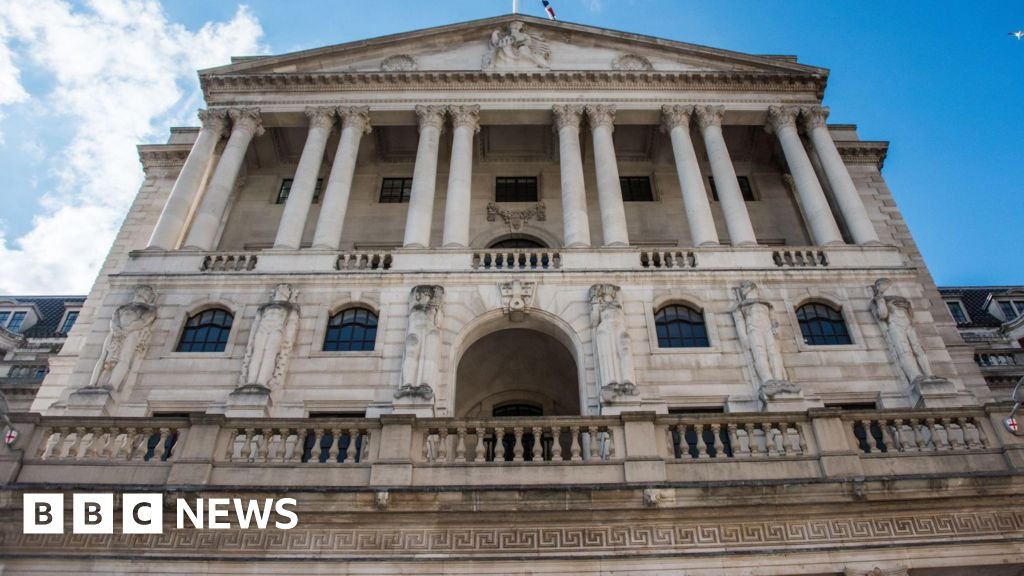
The Bank last cut interest rates in December but upheaval in the Middle East has stalled any further reductions.
Source link
UK News
US to review benefits of having troops in Europe with ‘era of free-riding’ over – Europe live | World news
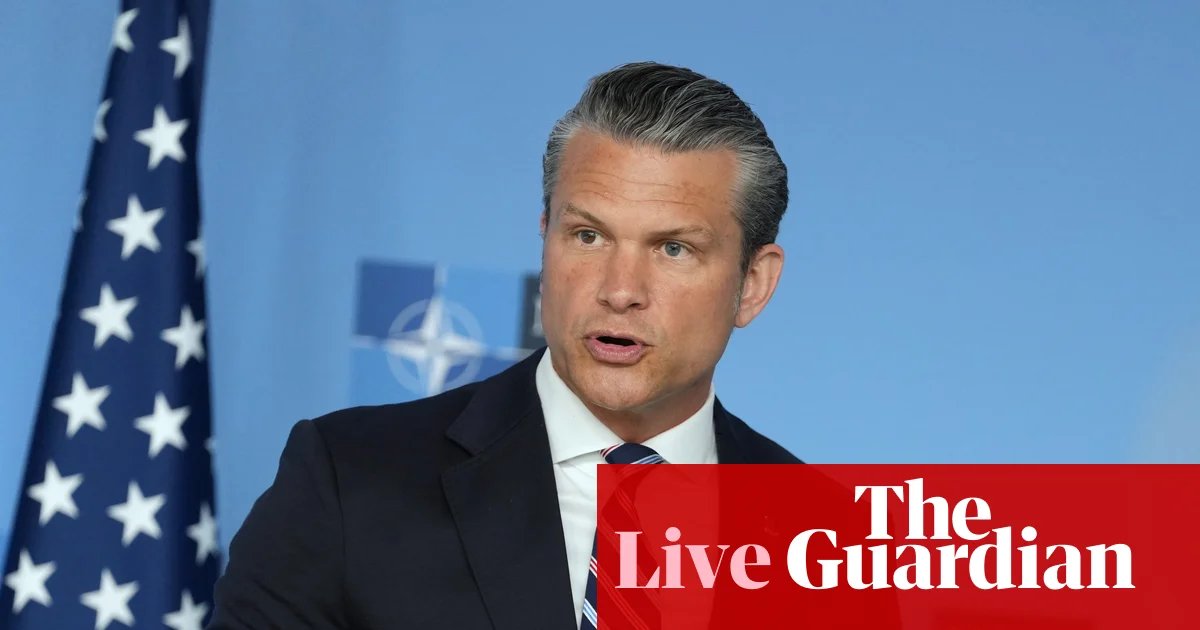
US to conduct a review of forces in Europe
Hegseth says the US will be “doubling down” on its efforts to get allies to spend what they need to spend.
He says his department will conduct a six-month review of US forces in Europe.
He says it will look at actual benefits of having US military in Europe – and will be a real review.
“It will be designed to ensure that Nato is moving fast and irreversibly toward Europe leading, stepping up to take primary responsibility for the defence of Europe.”
He then goes further to say that the US dues to the Nato budget will be contingent on other countries meeting their defence spending targets.
“Where other allies do not spend with urgency, our dues, contributions will go down. Nato will be a two-way street.”
He adds:
“America cannot care for or pay more for Europe’s defence than our allies do.”
Key events
-
US defence secretary urges UK to spend more on defence, ‘step up and do even more’
-
US force review will ‘change how we look at continent,’ Hegseth says
-
Russian oil refinery on fire after barrage of Ukrainian drones strike Moscow
-
Trump was ‘pumped with’ harmful ideas during G7 summit, Kremlin says
-
Nato agrees to modernise nuclear capabilities, strengthen planning
-
Hegseth’s frustration is not new, but still striking – snap analysis
-
‘Our direction of travel is and has been clear,’ Hegseth tells Nato
-
Some Nato countries ‘will fail’ US posture review, Hegseth says
-
US to conduct a review of forces in Europe
-
Hegseth says ‘era of free riding’ is over
-
Nato allies refusal to help on Iran ‘shameful,’ Hegseth says
-
US ‘gave allies test to support America … and too many failed it,’ Hegseth says
-
‘There have been real setbacks we cannot ignore,’ Hegseth tells Nato
-
‘Europe was not supposed to be a dependency of the US,’ Hegseth tells Nato
-
‘Nato has been a paper tiger and a one-way street,’ US Hegseth tells Nato ministers
-
Morning opening: Ukraine hits Moscow oil refinery, disrupts flights in retaliation attack as Nato, EU leaders meet for talks
US defence secretary urges UK to spend more on defence, ‘step up and do even more’
US defence secretary Pete Hegseth has also offered his view on the relationship with the UK, after meeting Britain’s new defence minister Dan Jarvis.
His predecessor resigned in protest against low government spending on defence.
Hegseth said it was “a good meeting,” stressing that “the US-British defence alliance is an important one.”
He praised Jarvis for having first-hand experience of serving in a combat zone.
But he said “the message was the same: hey, we need you guys to step up and do even more, spend even more.”
He added:
“If we need access and basing, whether it’s in the UK or say at Diego Garcia, we can’t live in a world where other countries are standing at the end of a runway with a clipboard trying to decide what flies and what doesn’t. It’s not gonna, it’s not gonna work for us. It’s not good in contingencies, and I don’t think it’s what he wants either.”
He continued saying that “the more the UK spends on defence, the stronger Nato is going to be, the stronger western civilization is, and that’s a good thing.”
“I think [it was] a good start to a relationship that we need to renew even more,” Hegseth said.
US force review will ‘change how we look at continent,’ Hegseth says
We are now again hearing from US defence secretary Pete Hegseth again, as he’s speaking with reporters after his explosive speech at the Nato ministerial in Brussels this morning.
Just as I argued (10:15), he tells them that the message is not new, with many countries already stepping up – but not all of them.
“We will be clear with them, and as we do this review, we’ll change how we look at the continent as a result,” he says.
Separately, speaking on Iran, he also notes that a number of European countries are “prepared to step up” to help with the strait of Hormuz.
“It’s an international water bill, and frankly, European countries and Asian countries use it a lot more than we do,” he says.
Russian oil refinery on fire after barrage of Ukrainian drones strike Moscow
Peter Beaumont in Pavlograd and Warren Murray
Ukrainian drones have hit several locations across Moscow, including setting an oil refinery on fire, sending out flames and towering plumes of smoke over the city and forcing the capital’s airports to suspend flights.
The scale of the long-range attack, apparently designed to shut down operations at the key oil refinery in the Kapotno area, caught most Muscovites by surprise in a city that does not typically warn residents with air raid alarms, and prompted panicked messages on social media.
Footage posted online showed three plumes of smoke rising from the refinery.
The strike was the second in two days on the facility, in what the Ukrainian president, Volodymyr Zelenskyy, then called “a just response to Russian strikes”.
“Air defence forces are continuing to repel a large-scale attack. Several drones managed to reach the [Moscow oil refinery],” said Sergei Sobyanin, Moscow’s mayor, adding that a shopping centre was also damaged. He claimed about 180 drones heading for the capital had been downed.
Sobyanin said emergency crews were working at the site and also reported “damage” to Sadovod shopping centre in the south-eastern part of the city. At least seven drones appear to have beaten Russia’s air defences to strike targets in the city.
Traffic was halted on Moscow’s ring road near the refinery, the broadcaster RIA cited the interior ministry as saying, while air traffic was disrupted at Vnukovo, Sheremetyevo, and Zhukovsky airports.

Jakub Krupa
Let’s get a bit more on these Ukrainian drone strikes on Moscow.
Trump was ‘pumped with’ harmful ideas during G7 summit, Kremlin says
Meanwhile, the Kremlin has offered its take on yesterday’s G7 summit – including a supportive statement on Ukraine (Europe Live, Wednesday) – saying that the US president, Donald Trump, was “pumped with” harmful ideas by the EU.
The US had no contacts with Moscow after the meeting, Kremlin adviser Yuri Ushakov was quoted by Interfax and Reuters as saying.
Ushakov also disputed the EU’s assumption that the battlefield situation was changing in Ukraine’s favour.
Nato agrees to modernise nuclear capabilities, strengthen planning
Separately, Nato has agreed to modernise its nuclear capabilities and strengthen its nuclear planning capacity, the alliance’s senior body for nuclear deterrence said in a statement quoted by Reuters.
All Nato allies except France are members of the Nuclear Planning Group, which serves as a forum for consultation and decision-making on nuclear deterrence.
Defence ministers taking part in the meeting “recalled that the strategic nuclear forces of the Alliance remain the supreme guarantee of Allied security and underpin Nato’s extended deterrence architecture,” the statement said.
Hegseth’s frustration is not new, but still striking – snap analysis
Jakub Krupa
None of this is really new new – Hegseth largely repeats the US’s main frustrations and grievances with the alliance, repeatedly expressed by Trump – but the tone of the delivery is still very, very striking.
Hegseth has laid into Nato allies for not helping enough with bases and overflights during its early Iran operations – and once he did not name any countries, it’s likely targeted at the likes of Spain, Italy, Portugal.
In other parts, it is just a broader criticism of what the US sees as “free riding” from the allies, as they do not move quickly enough on spending.
Coming just weeks before the Nato summit in Ankara, it is clearly intented to serve as a warning to several of the allies that still don’t spend enough and don’t seem to act with the urgency the US is expecting them to increase that spending – or even offer a credible path towards it.
The proposed posture review – and explicit threat that some of them will fail it – and the suggestion the US could reduce its contributions if others do not pay enough, will make some think twice about their plans in the next few weeks.
As Hegseth ends his remarks, Rutte says “there’s much to discuss and decide today.”
You bet it’s going to be lively.
‘Our direction of travel is and has been clear,’ Hegseth tells Nato
Hegseth says “our direction of travel is and has been clear.”
“This is the right thing to do by the American people. It’s the right thing to do by this alliance.
Europe can and must take primary responsibility for its conventional defence as it pledged at The Hague Summit, and in the process safeguarding Europe’s defence for generations to come, we know our allies can do it, and it’s time.”
Some Nato countries ‘will fail’ US posture review, Hegseth says
Hegseth makes it clear that the review will not be just a box-ticking exercise.
“It’s a review that some countries will fail and others will pass with flying colours. In the end, the review is intended to both improve US force posture and basing and strengthen Nato 3.0.”
US to conduct a review of forces in Europe
Hegseth says the US will be “doubling down” on its efforts to get allies to spend what they need to spend.
He says his department will conduct a six-month review of US forces in Europe.
He says it will look at actual benefits of having US military in Europe – and will be a real review.
“It will be designed to ensure that Nato is moving fast and irreversibly toward Europe leading, stepping up to take primary responsibility for the defence of Europe.”
He then goes further to say that the US dues to the Nato budget will be contingent on other countries meeting their defence spending targets.
“Where other allies do not spend with urgency, our dues, contributions will go down. Nato will be a two-way street.”
He adds:
“America cannot care for or pay more for Europe’s defence than our allies do.”
Hegseth says ‘era of free riding’ is over
Hegseth says that “some of Nato’s largest economies, some of our richest countries, allies that are happiest to go on about the rules-based international order and middle powers banding together still think the era of free riding is here.”
He says Trump disagrees.
“This is not what any reasonable person would expect, and it’s not going to cut it any more.”
(He may be thinking of, among others, Spain, which has long been the target of US criticism, and has clashed with it in recent months.)
Nato allies refusal to help on Iran ‘shameful,’ Hegseth says
Hegseth makes it very clear how the US is annoyed about the perceived lack of support on Iran.
“The United States has defended Europe for generations, and the President said all he said was that our jets would need to take off from bases in Europe or our ships from ports to strike targets in the Middle East, Iranian targets that threaten European interests even more directly than they threaten us.
But too many of our allies said no, or tried to drown us in arcane legal debates, or criticised us publicly for doing what they aren’t prepared or able to do themselves. It was shameful.
These allies, they put America’s sons and daughters, our sons and daughters, at risk by denying them the predictable access facing an overflight that never should have been in question at all.”
US ‘gave allies test to support America … and too many failed it,’ Hegseth says
Hegseth now goes hard on some Nato countries that are still paying below the expected levels.
He says “for all of our clarity, too many allied capitals seem to still miss something in translation” and “too many allies still do not recognise the historic need … to forge a relevant, powerful military alliance.”
He says the US “gave our allies a test to support America when we asked for their help and too many failed it.”
‘There have been real setbacks we cannot ignore,’ Hegseth tells Nato
Hegseth says that Trump is clear about his intention to increase defence spending so the US leads and shows others “it’s not do as I say, it’s do as we do.”
He says he believes the US approach has been validated on Ukraine, with allies taking more responsibility for Ukraine’s defence – and this approach actually yielding positive results.
“It is happening, and it’s a validation of President Trump’s approach, an approach that will set the table for peace.”
But he says that “for all these early steps in the right direction, there have also been real setbacks that we cannot ignore.”
Hegseth continues by saying that Nato 2.0 was “an era of distraction, de-industrialisation and demilitarisation,” with “an era of free riding.”
“Those were lost years that we are not going back to.”
He says that’s why his department is “so clear and so candid” about the need to “restore Nato’s core military role and character” and why it’s returned US troop levels to pre-2022.
He says the alliance needs to return to its roots to be as strong as required and “if need be, make good on Article Five.”
He says some countries “got the message and stepped up,” but others are still failing.
‘Europe was not supposed to be a dependency of the US,’ Hegseth tells Nato
Hegseth seems to praise spending commitments adopted at last year’s Nato summit in The Hague, saying they were “all about transforming Nato back into a real military alliance that is focused on hard power and real deterrence.”
But in another eye-catching quote, he goes on to say:
“Europe was not supposed to be a dependency of the United States. That’s not what Winston Churchill or Charles de Gaulle or Konrad Adenauer wanted or expected. No, Europe was supposed to be a military power, allied with a strong America.”
He goes back in Nato history to 1951, quoting Eisehower comments that “if in 10 years all American troops stationed in Europe for national defence purposes have not been returned to the US, then this whole process will have failed.”
But he says that Nato 2.0 in the following decades increasingly focused on “gender equality and climate change” instead of “tanks and fighters and air defences.”
“Europe’s borders flew wide open, welfare states expanded, defence budgets cratered, along with Europe’s belief in itself and its civilization. Nato lost its way.”
Ouch, again.
‘Nato has been a paper tiger and a one-way street,’ US Hegseth tells Nato ministers
US secretary of defence Pete Hegseth has asked to speak at the beginning of the Nato ministerial in Brussels, and it very much looks like his comments will set the tone for the day.
He begins by saying that Trump “has said again and again … our allies must step up.”
“Nato has been a paper tiger and a one-way street. No more.”
Ouch.
Morning opening: Ukraine hits Moscow oil refinery, disrupts flights in retaliation attack as Nato, EU leaders meet for talks
Jakub Krupa
Ukraine hit an oil refinery near Moscow and other targets in Russia overnight in what president Volodymyr Zelenskyy called “a justified response” to recent strikes on Ukraine.
Russian officials were quoted as saying that the attack forced commercial flights and airports to be suspended for safety reasons and caused a temporary halt on Moscow’s ring road, after some 180 drones were shot down over the Russian capital.
“This is a fully justified response to Russian attacks on our cities and communities, and another important result of our warriors’ work against facilities that sustain Russia’s war machine,” Zelenskyy said.
The strikes come on the day of a Nato ministerial meeting in Brussels, the last before next month’s summit in Ankara.
Nato allies are expected to discuss the latest on their defence spending plans, with the US pressing Europe to take more responsibility for the defence of the continent.
Later on, the ministers will also take part in the Ukraine Defence Contact Group meeting, a key forum to coordinate on support for Ukraine, which is expected to be attended by Zelenskyy.
The main event comes fairly late in the day, as EU leaders are expected to gather for the European Council meeting on Ukraine and the Middle East. It’s a two-day summit, likely to go late into the night.
Lots for us to cover.
It’s Thursday, 18 June 2026, it’s Jakub Krupa here, and this is Europe Live.
Good morning.



-
 UK News4 weeks ago
Ex-minister Shapps quits aerospace firm over rule concerns
-

 Crime & Safety4 weeks ago
Ryan Bridge speaks of London arrest after Oxford incident
-

 Oxford News3 weeks ago
Oxfordshire families invited to free day of fun in Bicester
-

 UK News4 weeks ago
Russian threats against Baltics ‘unacceptable’ and danger to ‘our entire union’, EU’s von der Leyen says – Europe live | Europe
-

 Oxford Events4 weeks ago
Salon Privé 2026 unveils first concours entries led by one-off 1952 Ferrari once owned by Juan Perón
-
 Crime & Safety3 weeks ago
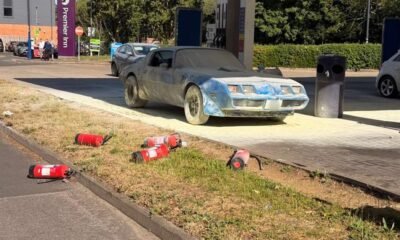
Photos as 1979 Pontiac Firebird ‘bursts in flames’ at Tesco
-

 Business & Technology3 weeks ago
New ‘high-quality’ mushroom business launched in Oxford
-

 Business & Technology4 weeks ago
Oxford: Rare watch sold for £40k after being saved from skip